Close-ups
Framed and on the wall
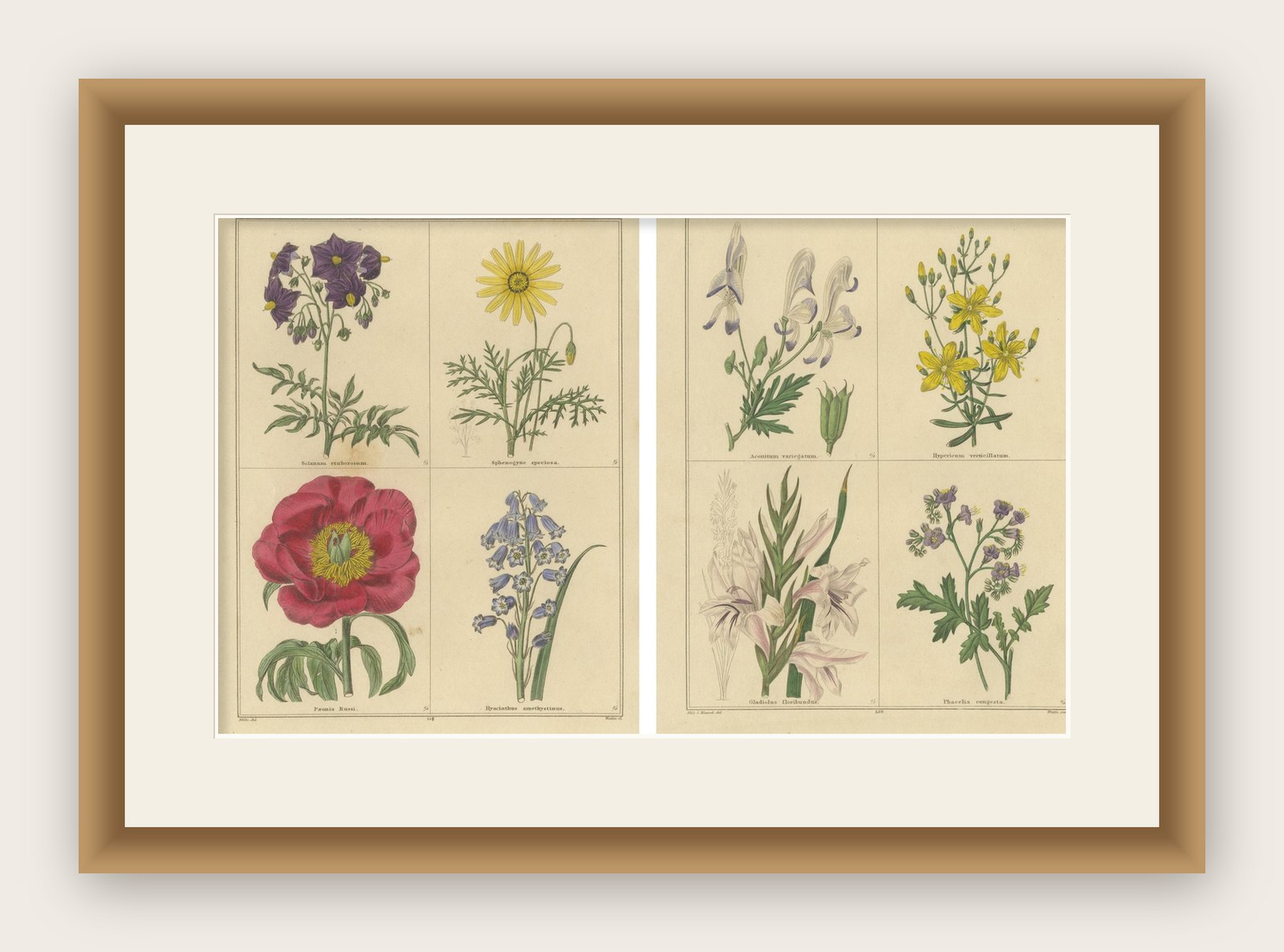


Frame and rooms are illustrations of how the print could look; the description says what is included.
Botanical Flower Engravings from The Botanic Garden, London 1836
£290 ($380, €340)
Period original, not a reproduction.
Shipped from the Netherlands, flat, insured and tracked, worldwide. Returns accepted within 14 days.
- Date
- 1836
- Size
- 9.4 × 7.1 in (24 × 18 cm)
- Condition
- Good. Very good condition with rich, original color. Minor age toning and light foxing in margins, consistent with age. Plate marks crisp and distinct.
- Period
- Early 19th century
- Artist or book
- Benjamin Maund
- Section
- Botanical
- Reference
- f_47335482
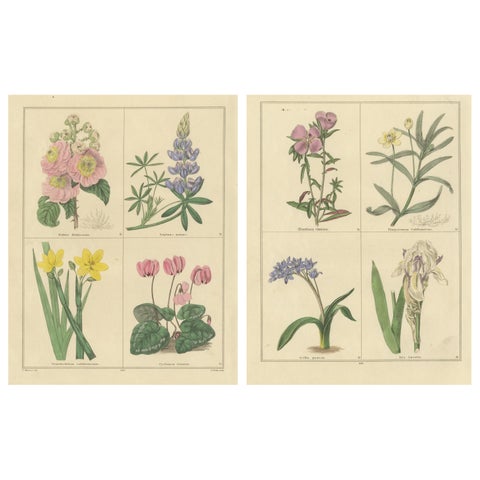
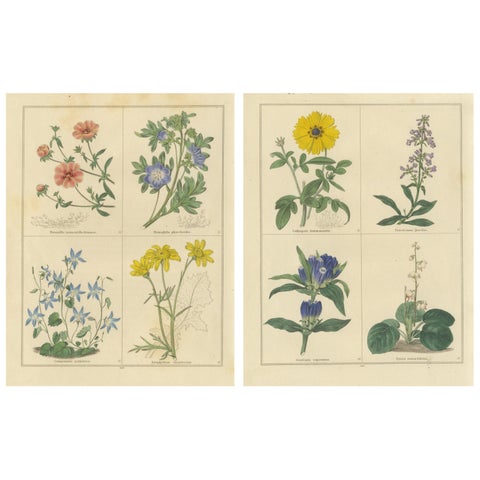
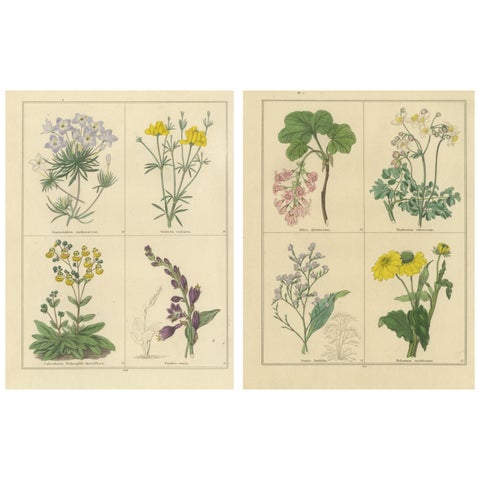
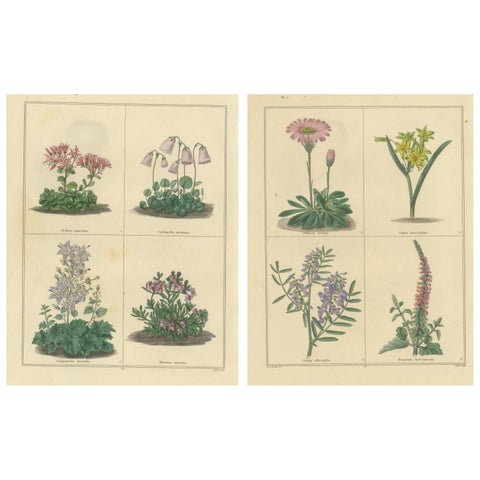
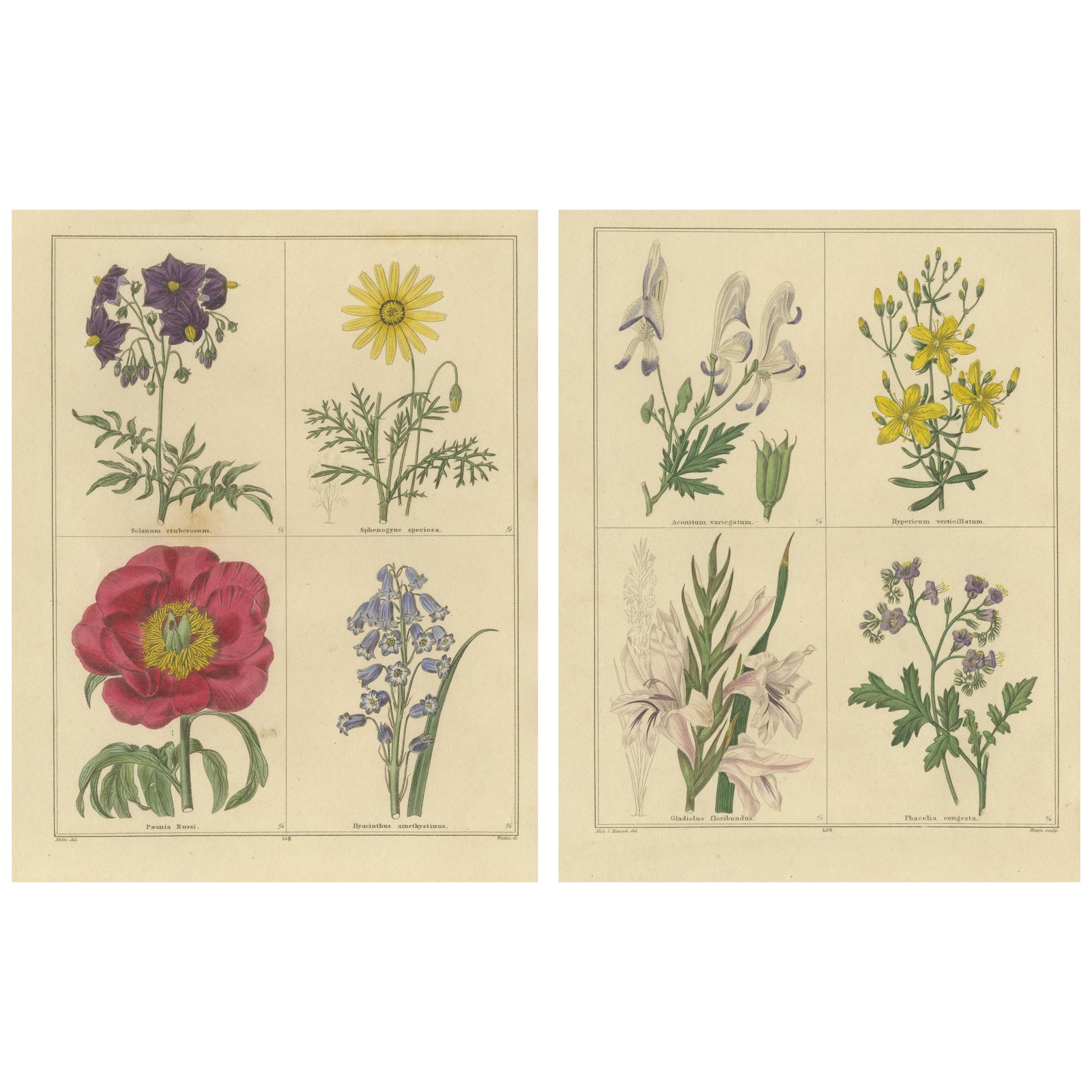
Pair of Botanical Engravings from *The Botanic Garden* by B. Maund, London c.1836
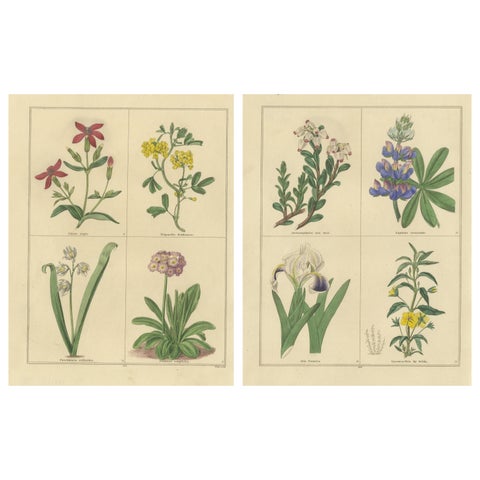
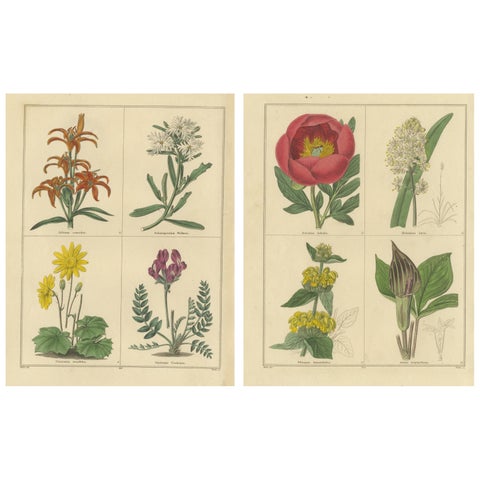
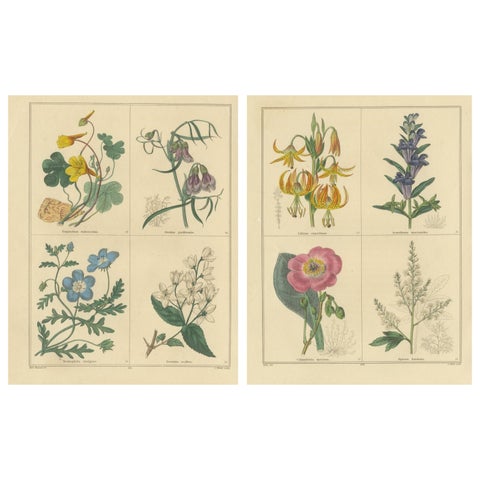
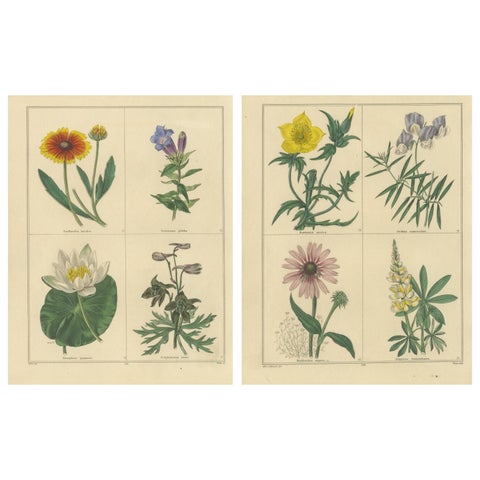
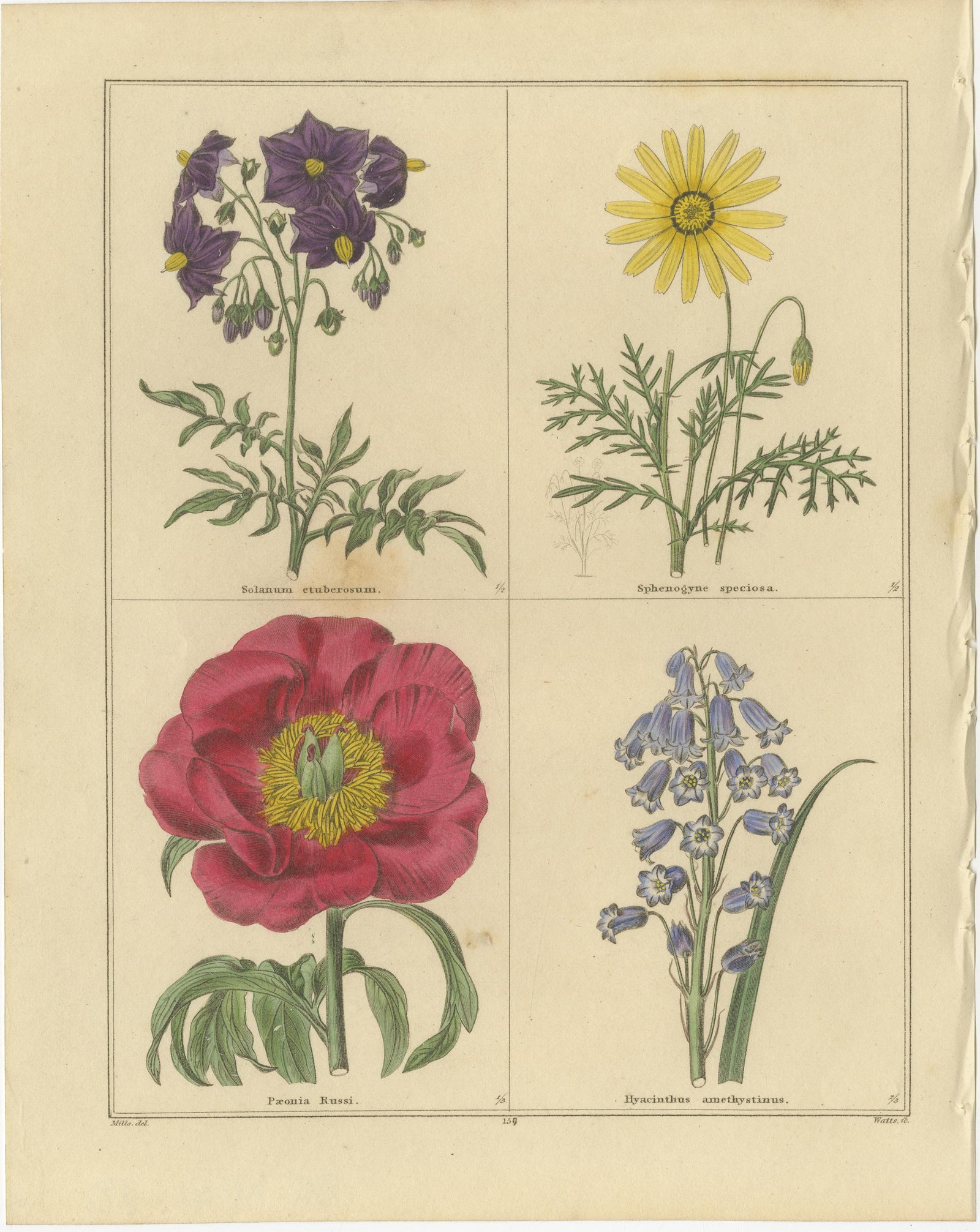
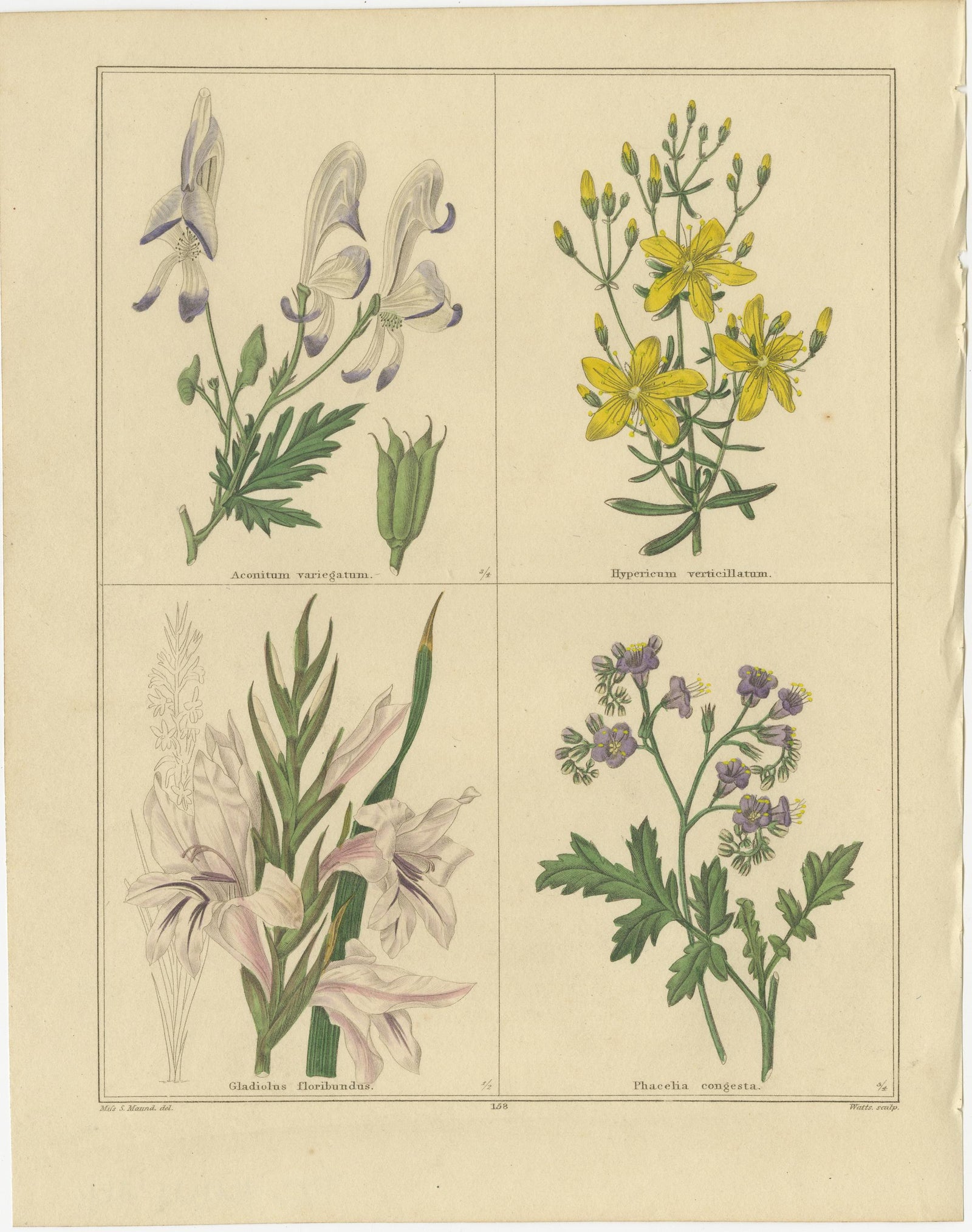
A charming pair of original hand-colored botanical engravings from *The Botanic Garden* by Benjamin Maund (1790–1864), Volume VII, published in London around 1836. Each plate displays four species of ornamental flowering plants, arranged with both scientific accuracy and artistic harmony. These engravings exemplify early Victorian botanical illustration at its most elegant, clear in detail, balanced in composition, and delicately colored by hand.
The left-hand sheet depicts *Solanum tuberosum* (potato plant, with purple blossoms), *Sphenogyne speciosa* (yellow daisy), *Paeonia Russi* (peony), and *Hyacinthus amethystinus* (Spanish bluebell). The right-hand engraving presents *Aconitum variegatum* (monk’s hood), *Hypericum verticillatum* (St. John’s wort), *Gladiolus floribundus*, and *Phacelia congesta* (Texas bluebell). Together, they capture a delightful variety of color and form, from deep purples and rich reds to delicate blues and sunny yellows.
Benjamin Maund’s *The Botanic Garden; consisting of Highly Finished Representations of Hardy Ornamental Flowering Plants Cultivated in Great Britain* was one of the most important 19th-century works of horticultural illustration. Drawn by E.D. Smith and engraved by S. Watts, each plate was finely executed in copperplate and then hand-colored to achieve a lifelike rendering of the plants. Maund, a Fellow of the Linnean Society, was devoted to combining scientific education with visual beauty, producing works that appealed equally to botanists and art collectors.
These engravings are prized for their meticulous linework, refined hand-coloring, and balanced presentation, making them ideal examples of early Victorian botanical art. They are not only informative but also decorative, representing the high aesthetic standards of natural history publishing in the mid-19th century.
Condition report:
Very good condition with rich, original color. Minor age toning and light foxing in margins, consistent with age. Plate marks crisp and distinct.
Framing tips:
For an elegant display, mount in soft ivory or sage-green mats with narrow gilt or light wood frames. Their complementary hues and symmetry make them ideal as a decorative botanical pair.
Technique: Hand-colored copperplate engraving
Maker: Engraved by S. Watts after E.D. Smith; published by Benjamin Maund, London, c.1836