Close-ups
Framed and on the wall
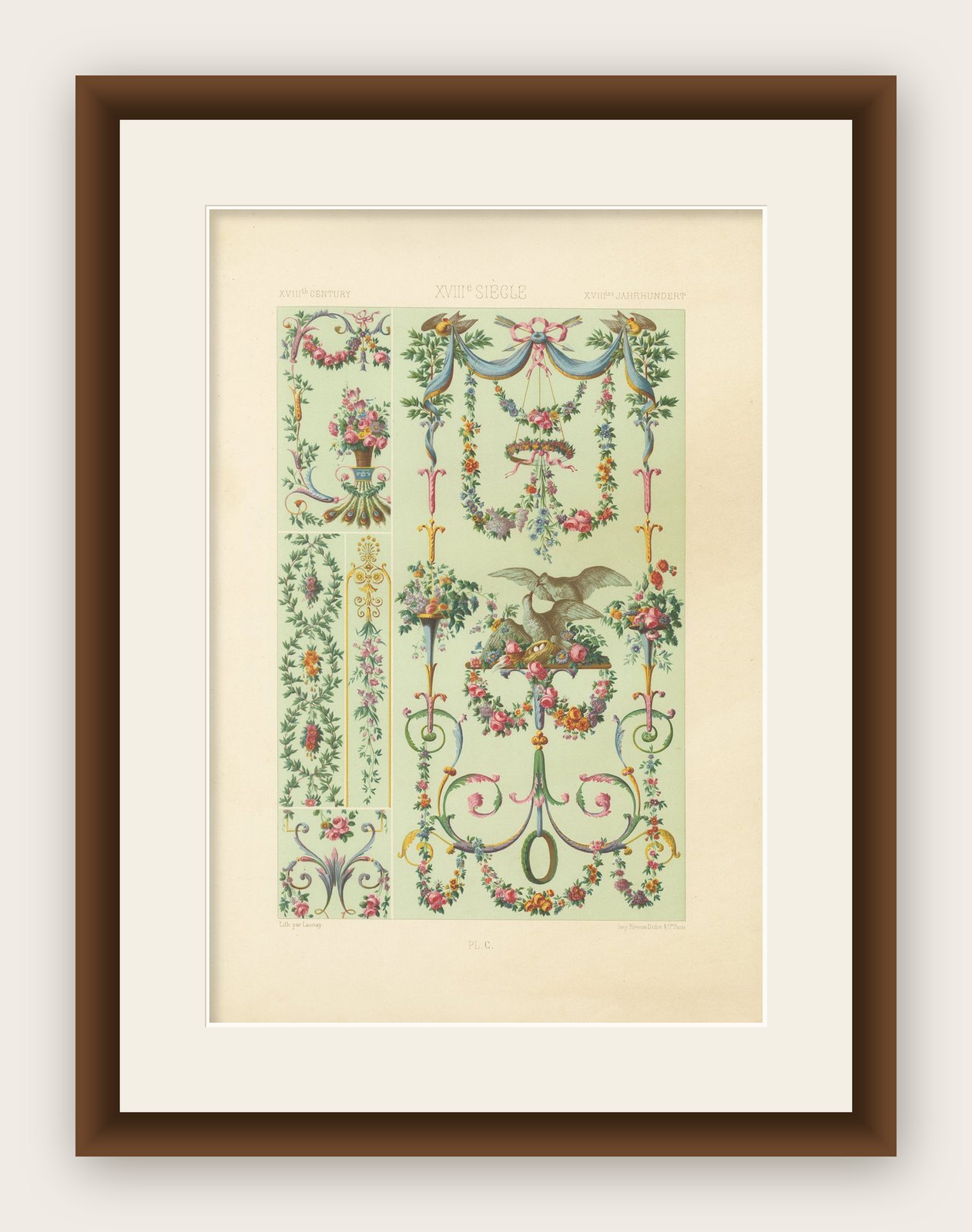
Frame and rooms are illustrations of how the print could look; the description says what is included.
Rococo Floral Garland Design, 18th-Century French Ornament with Doves, 1869
£195 ($260, €230)
Period original, not a reproduction.
Shipped from the Netherlands, flat, insured and tracked, worldwide. Returns accepted within 14 days.
- Date
- 1869
- Size
- 15.9 × 11.3 in (40.4 × 28.8 cm)
- Condition
- Excellent. Bright, unfaded colors. Paper is clean with only mild age-toning to the margins. No tears or foxing.
- Period
- Late 19th century
- Section
- Birds
- Reference
- f_46127662
Rococo Floral Garland Design, 18th-Century French Ornament with Doves, Plate C
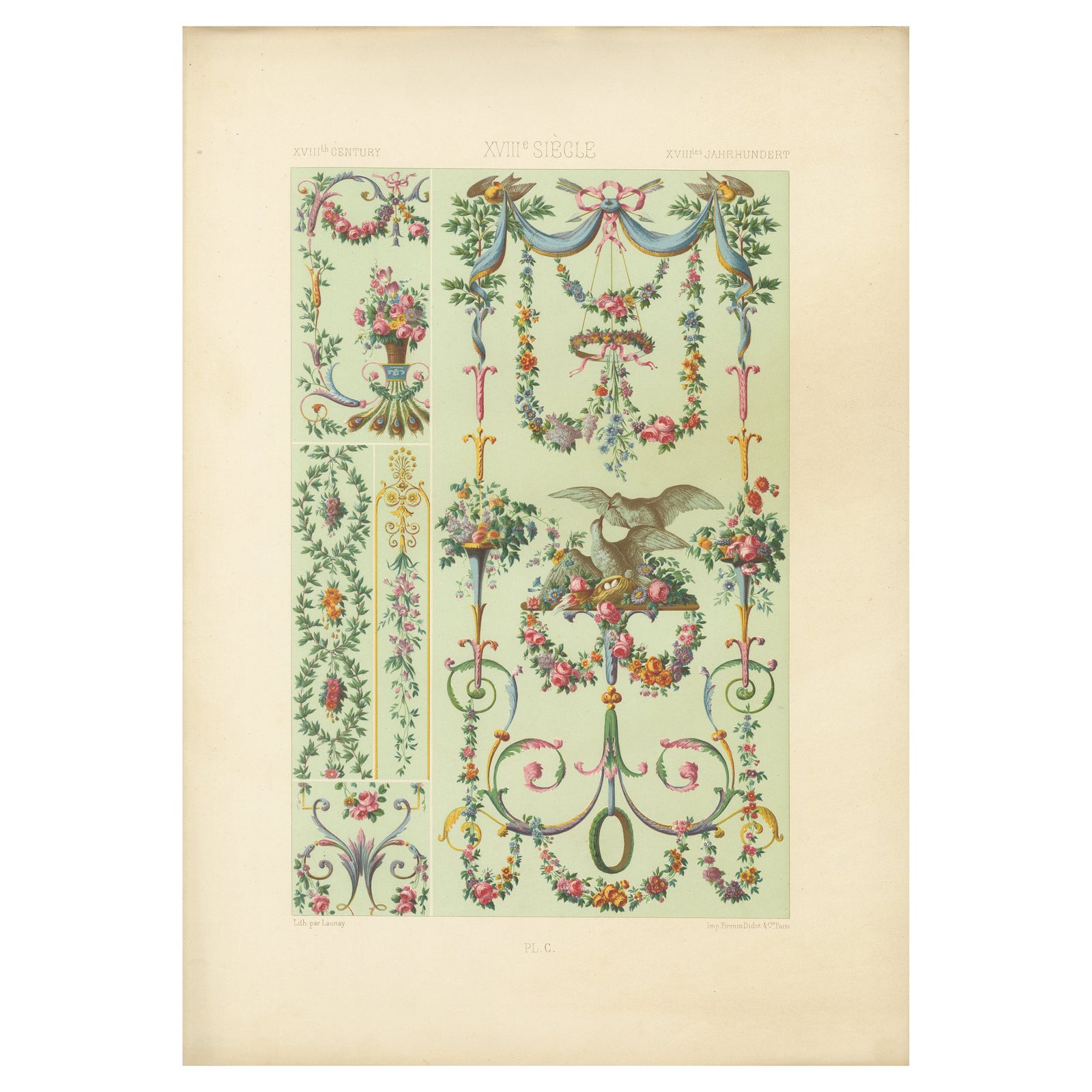
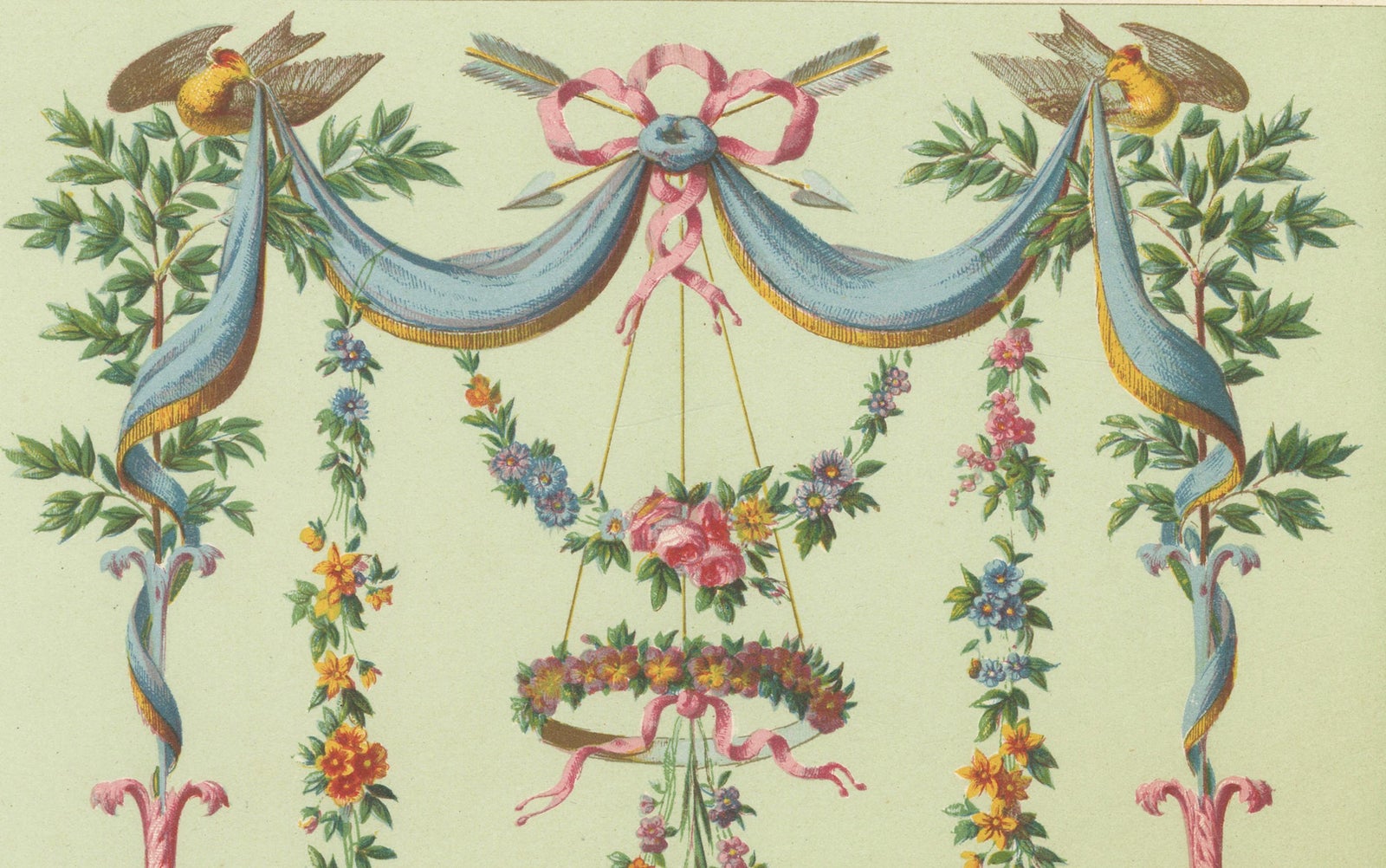
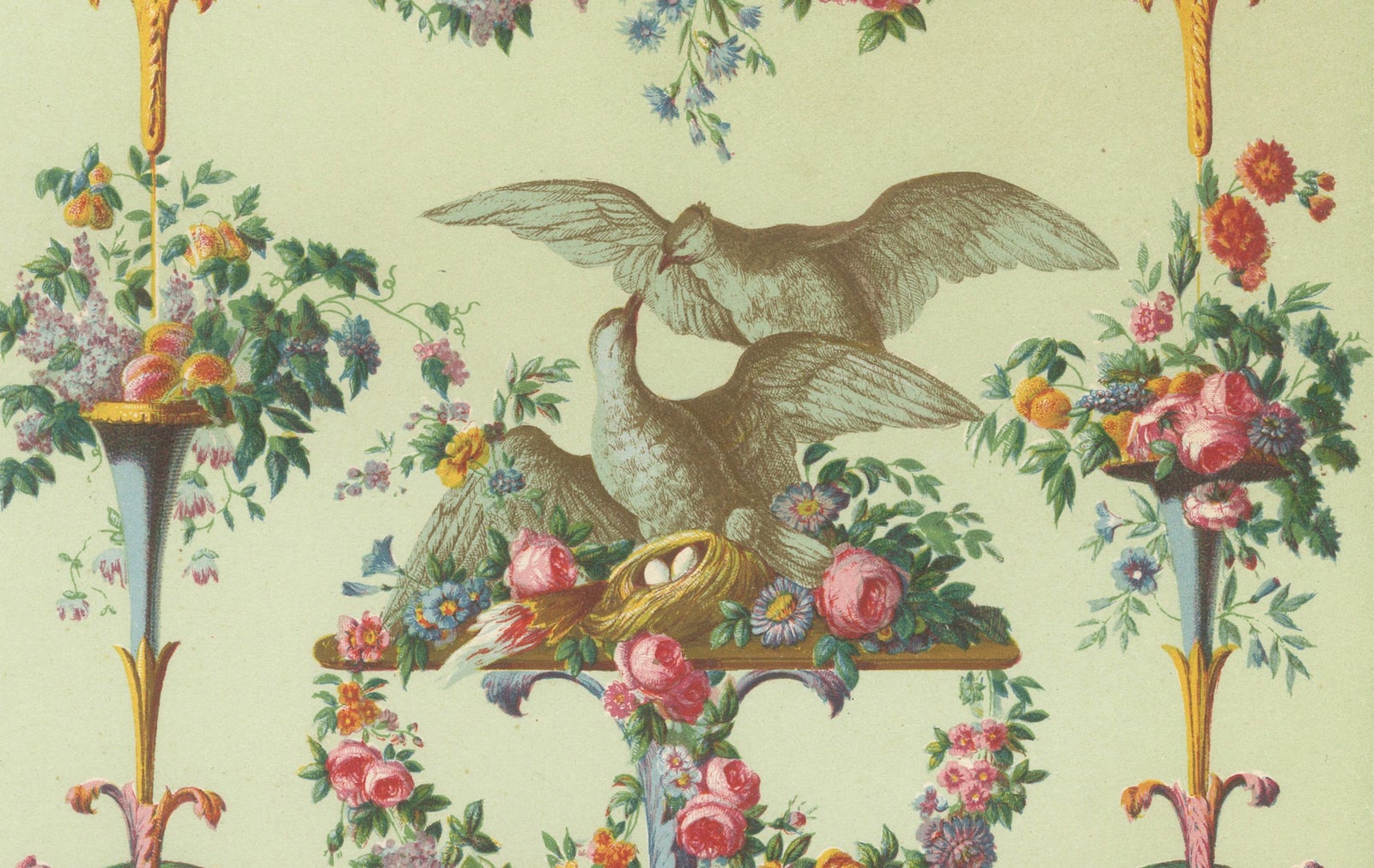
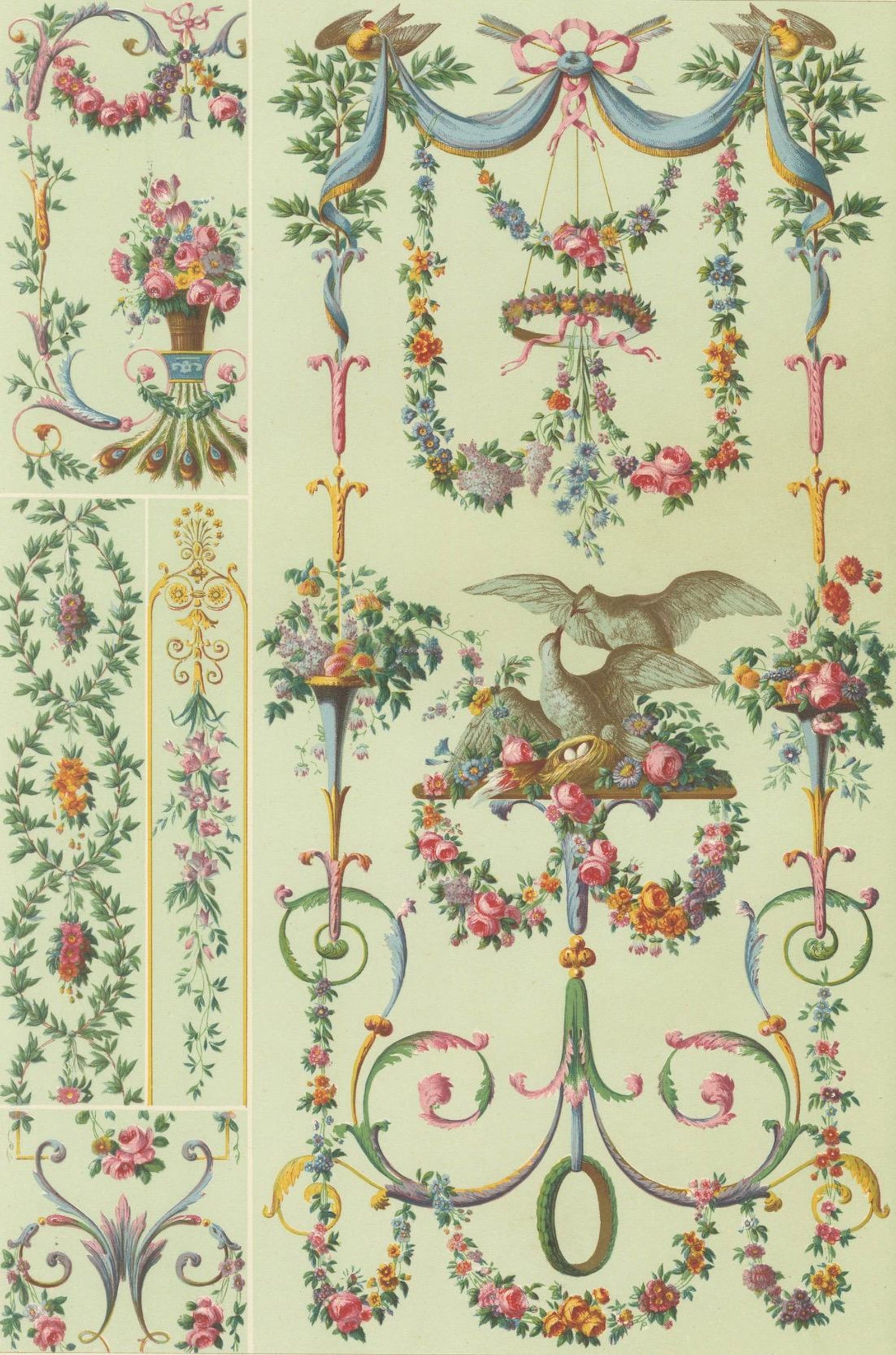
This exquisite 19th-century chromolithograph, Plate C from *L'Ornement Polychrome*, showcases the vibrant floral ornamentation of 18th-century France at its most delicate and expressive. Reflecting the full flourish of Rococo style, the print presents a charming composition of garlands, scrolls, urns, and allegorical imagery, executed in pastel tones and rich botanical detail.
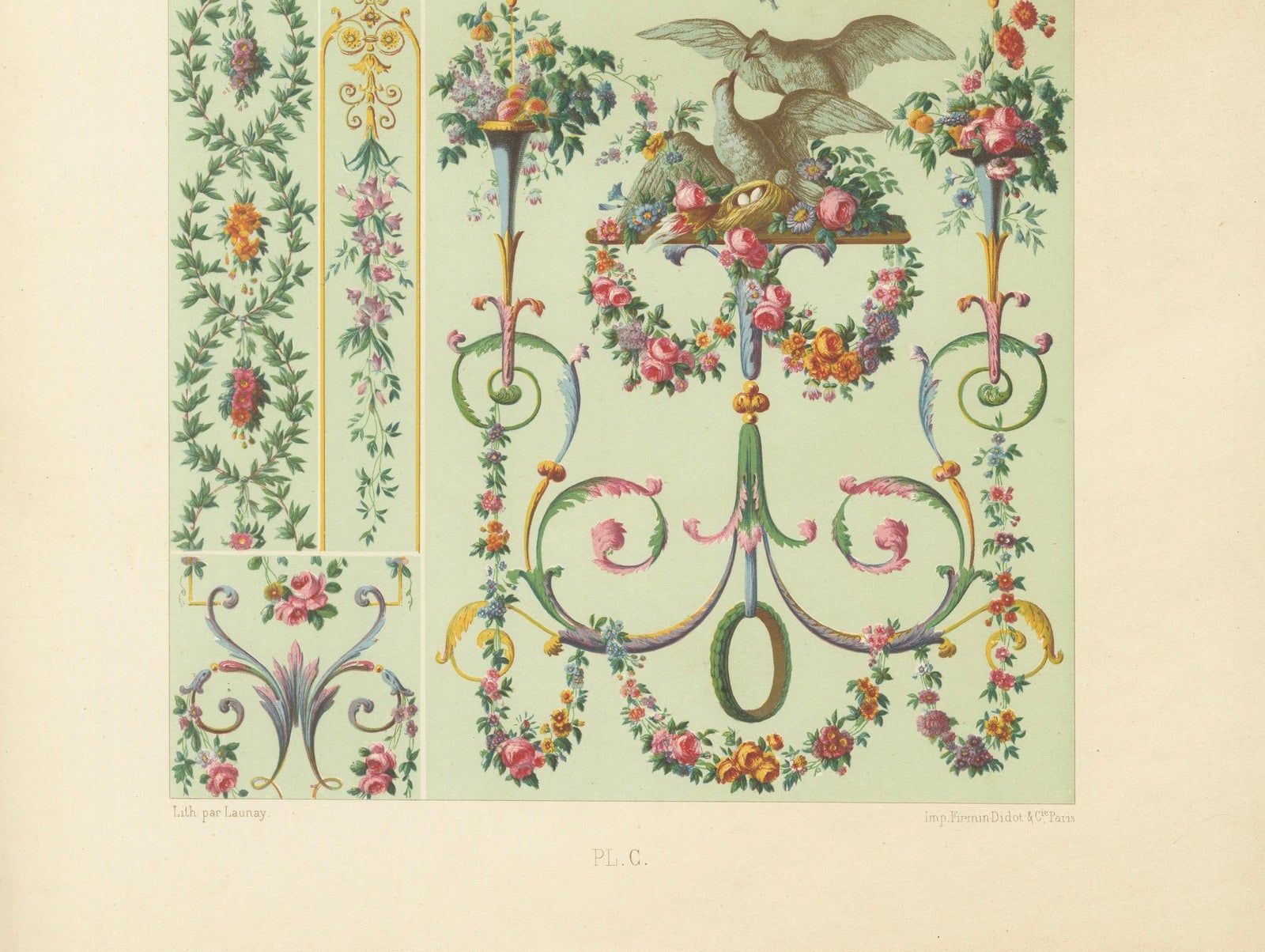
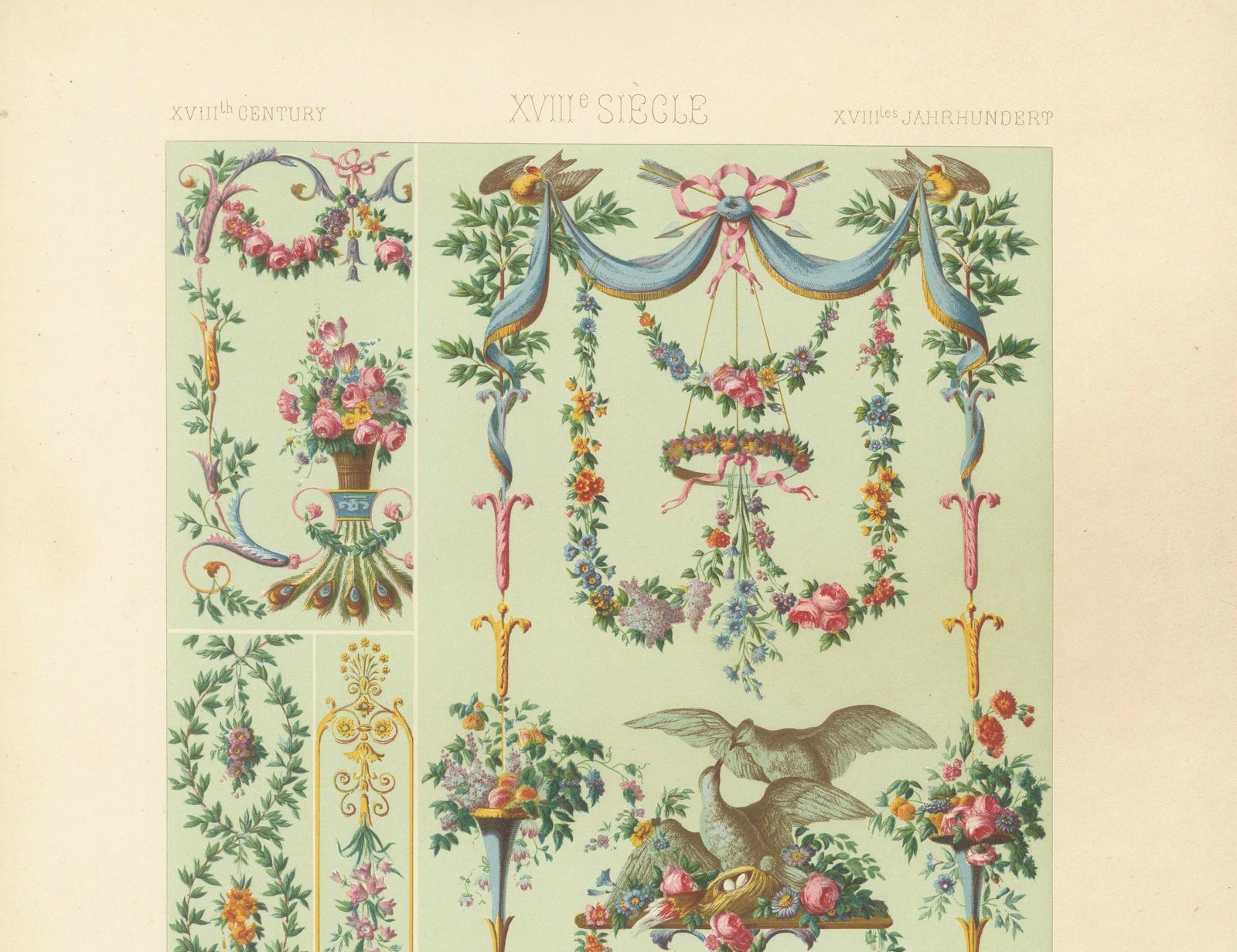
The central panel features a symmetrical garland design, festooned with roses and tied with blue and pink ribbons. At its heart, a pair of doves nest tenderly above an arrangement of eggs, evoking themes of love, fertility, and domestic harmony, a favorite motif of the Louis XV period. Above, two birds support a suspended wreath of roses, completing the romantic allegory.
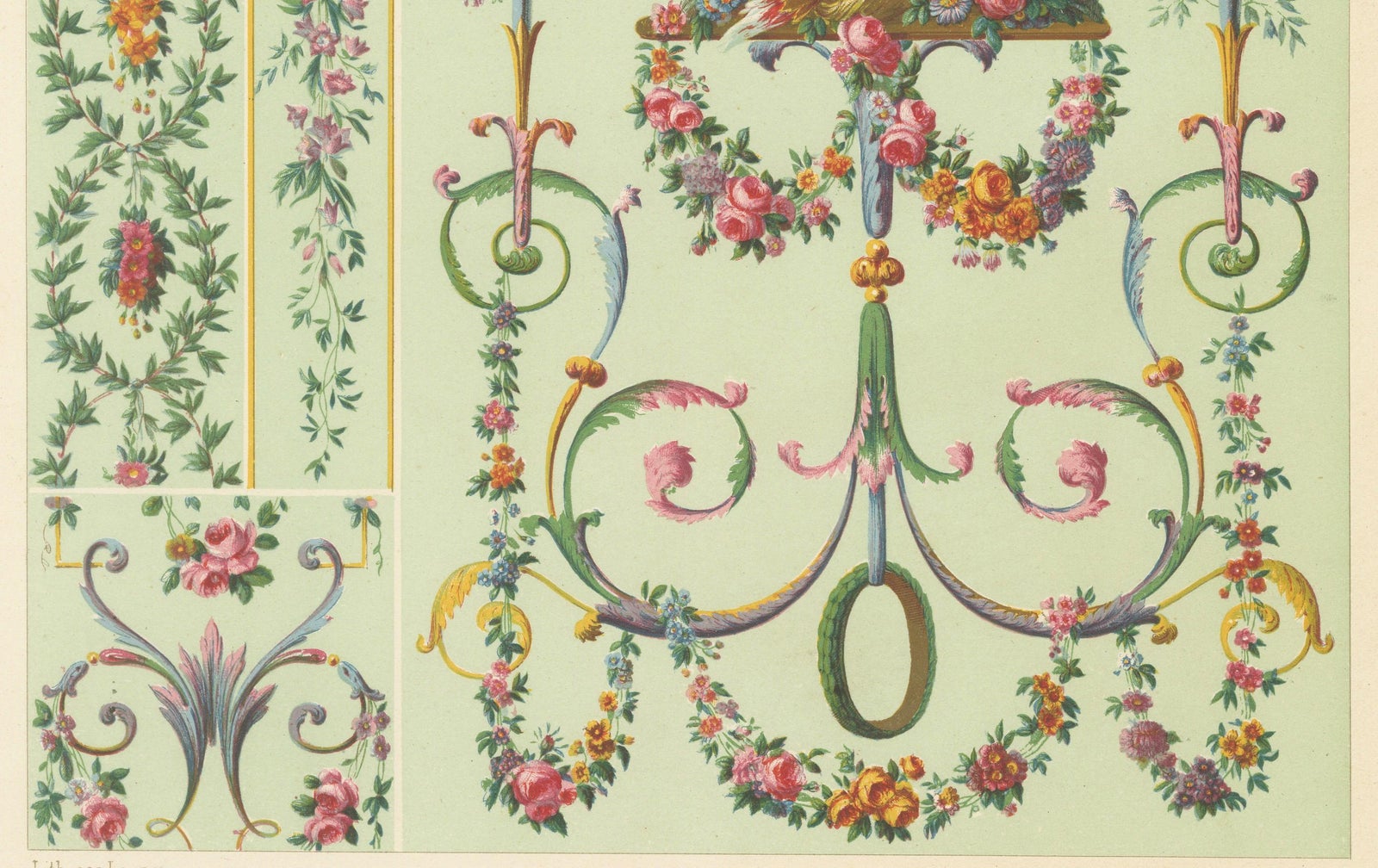
Surrounding this central motif are vertical and horizontal panels showing varied floral arrangements: flowering urns, foliate swags, meandering tendrils, and stylized rocaille scrollwork, all presented in a fresh palette of pinks, greens, blues, and yellows. These motifs exemplify the ornate yet light-hearted aesthetic of Rococo interior design, often found in panelling, textiles, or painted ceilings of the mid-18th century.
The print was lithographed by Launay and printed by Firmin-Didot et Fils in Paris around 1869. As part of Auguste Racinet’s *L'Ornement Polychrome*, this plate served not only as a celebration of historic design but also as a practical guide for architects, decorators, and craftsmen in the 19th-century decorative arts revival.
Condition: Excellent. Bright, unfaded colors. Paper is clean with only mild age-toning to the margins. No tears or foxing.
Framing tips: Best presented in a gilt or cream-colored neoclassical frame with a soft green or blush mat to enhance the pastel palette. Ideal for a feminine or romantic interior, or a space inspired by French boudoir aesthetics.
Technique: Chromolithograph
Maker: Launay after Racinet, Paris, c.1869