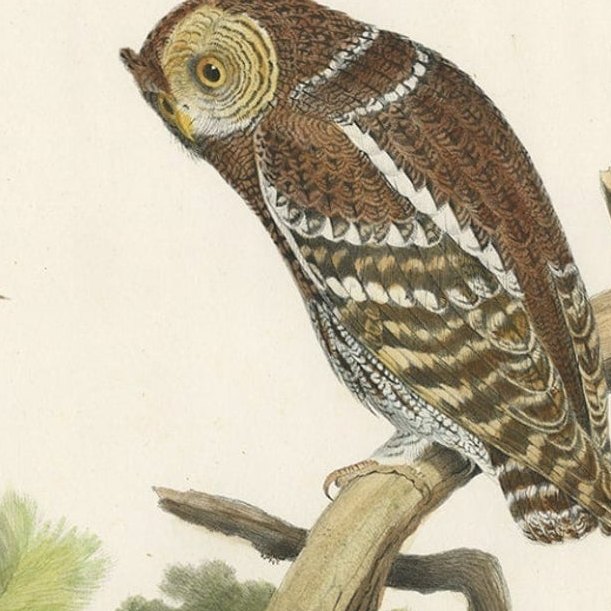
Close-ups
Framed and on the wall

Frame and rooms are illustrations of how the print could look; the description says what is included.
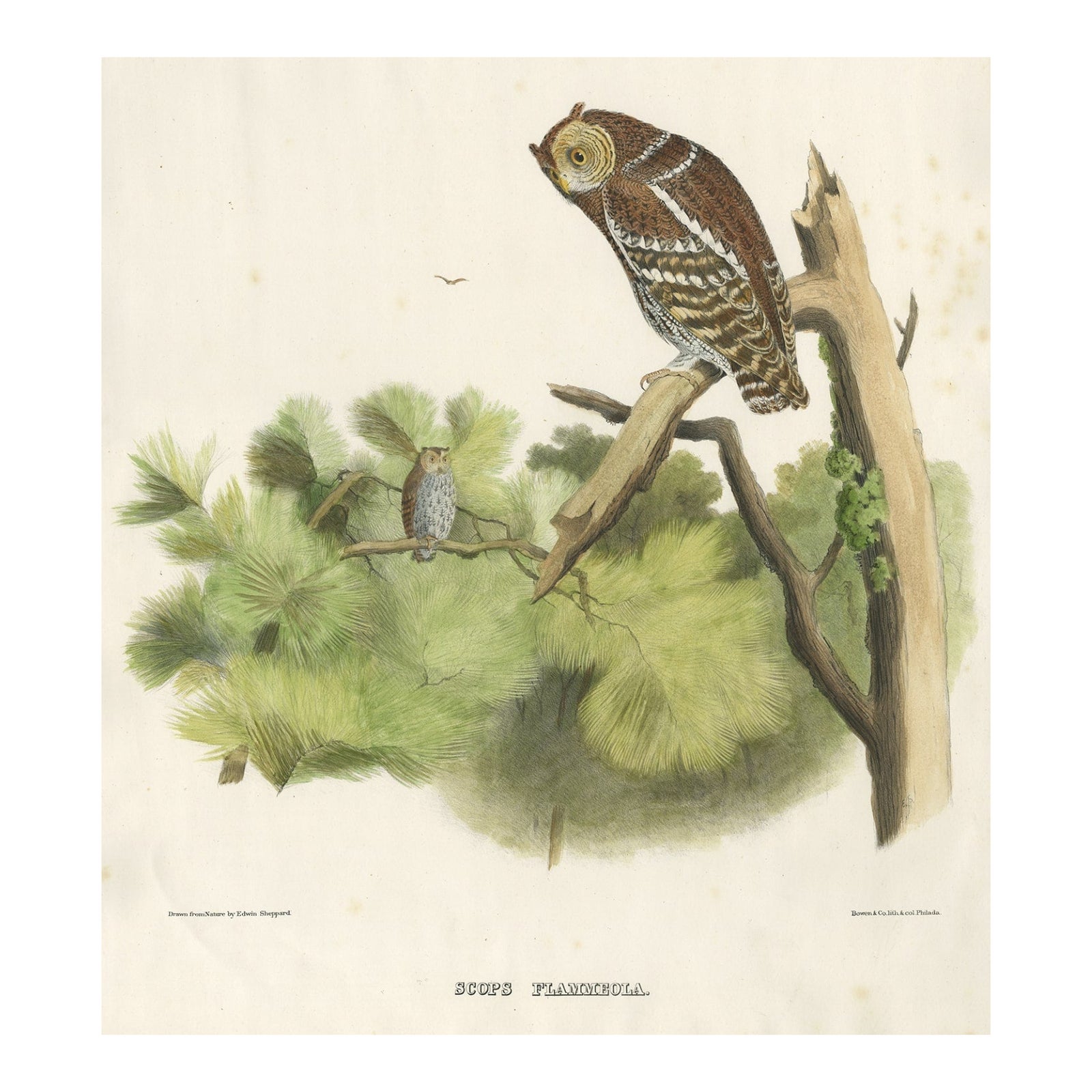
Rare Large Antique Print of the Flammulated Owl (Psiloscops flammeolus), 1869
£1,225 ($1,620, €1,450)
Period original, not a reproduction.
Shipped from the Netherlands, flat, insured and tracked, worldwide. Returns accepted within 14 days.
- Date
- 1869
- Size
- 21.5 × 16.7 in (54.6 × 42.5 cm)
- Condition
- Good. Given age. Some foxing, mainly near the edges. A few minor crinkles. General age-related toning and/or occasional minor defects from handling. Please study scan carefully.
- Period
- Late 19th century
- Section
- Birds
- Reference
- f_27226702
- Colour
- Hand coloured
What the condition grades mean
- Excellent
- Bright and clean, with no faults worth mentioning.
- Very good
- Only light signs of age, such as faint toning.
- Good
- Normal signs of age for a sheet of this period: toning, some foxing, small marks or neat old repairs.
- Fair
- Clear faults such as staining, tears or repairs, priced to match.
Every fault we see is written in the condition note, and the whole sheet is shown uncropped in the photos.
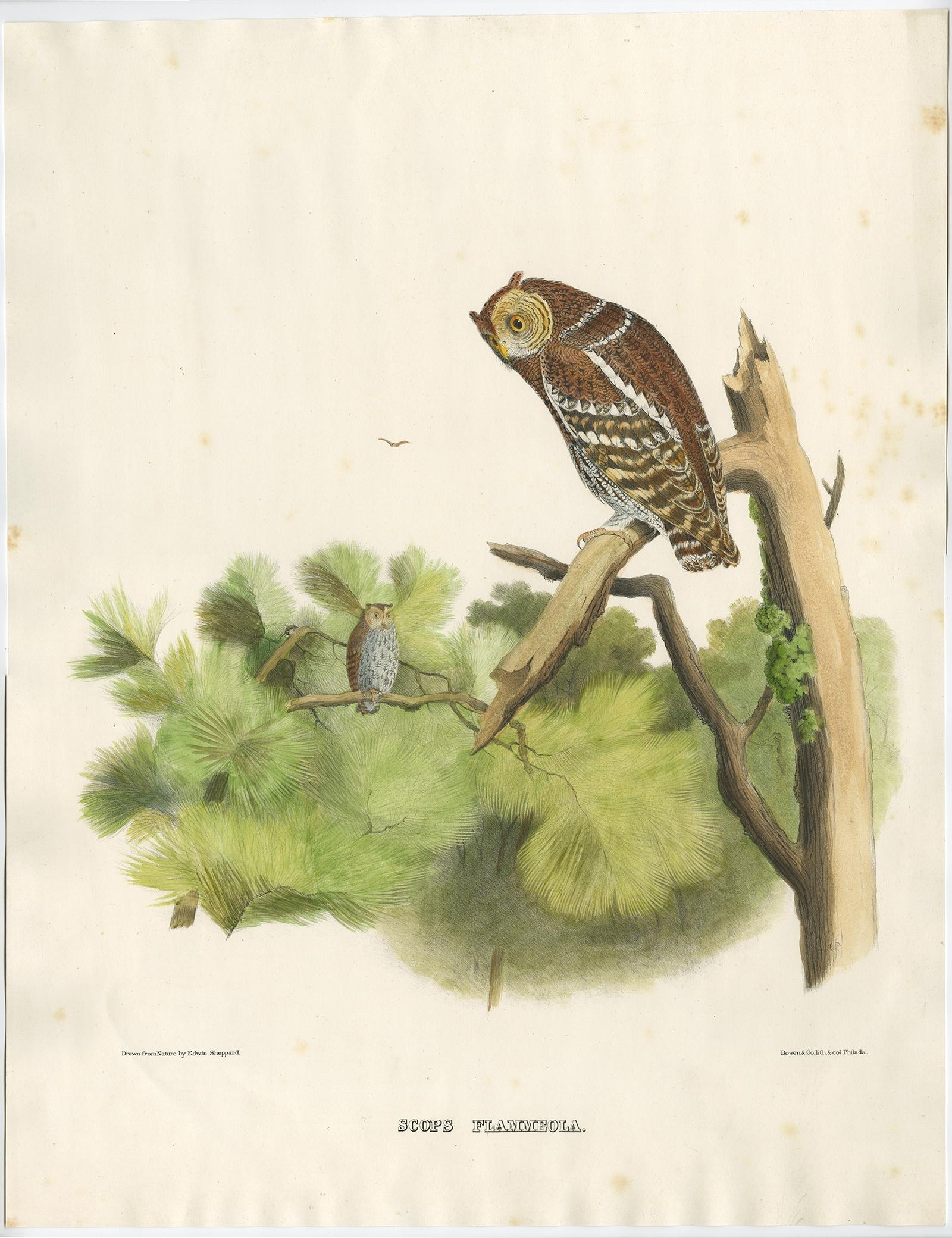
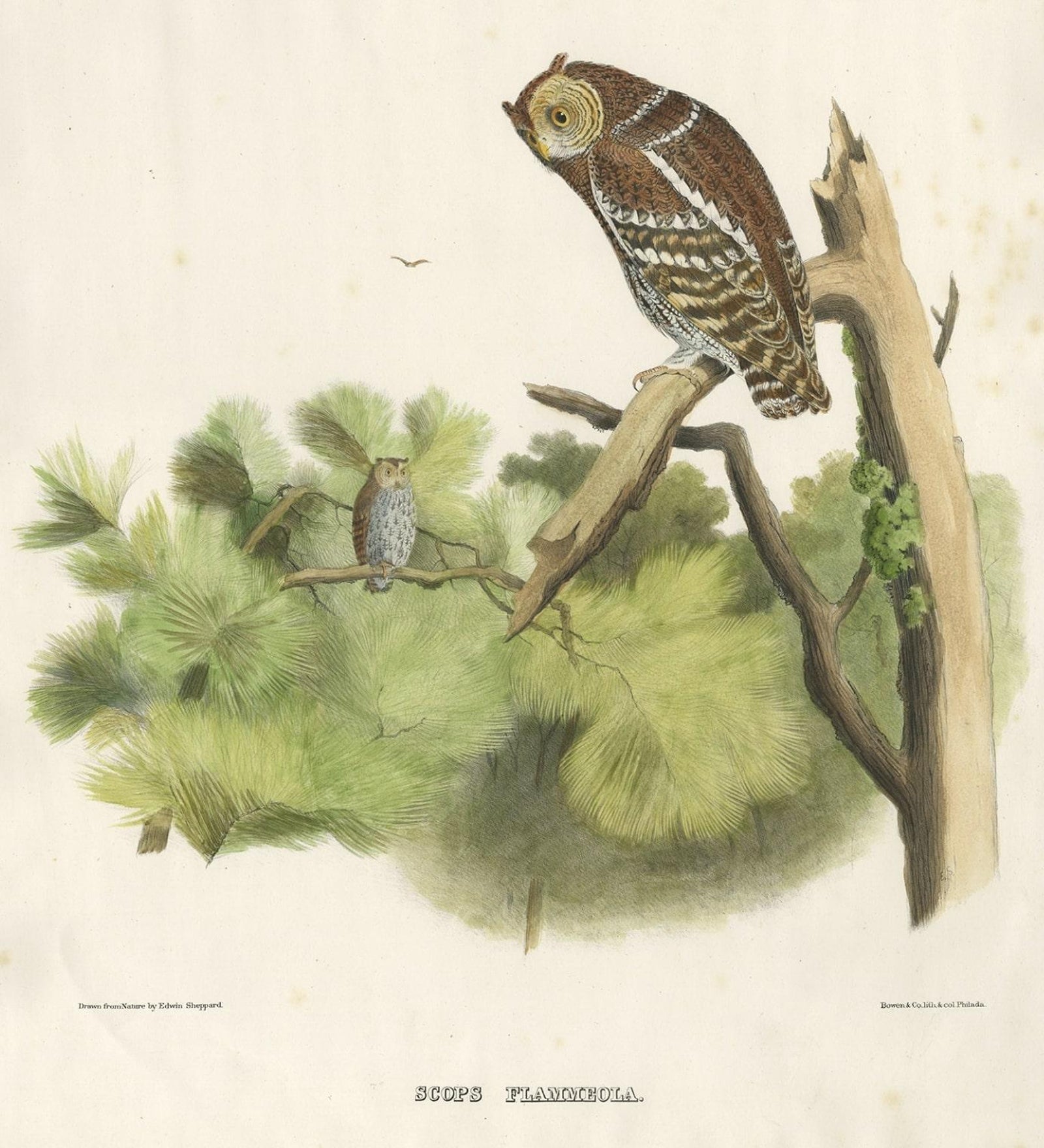
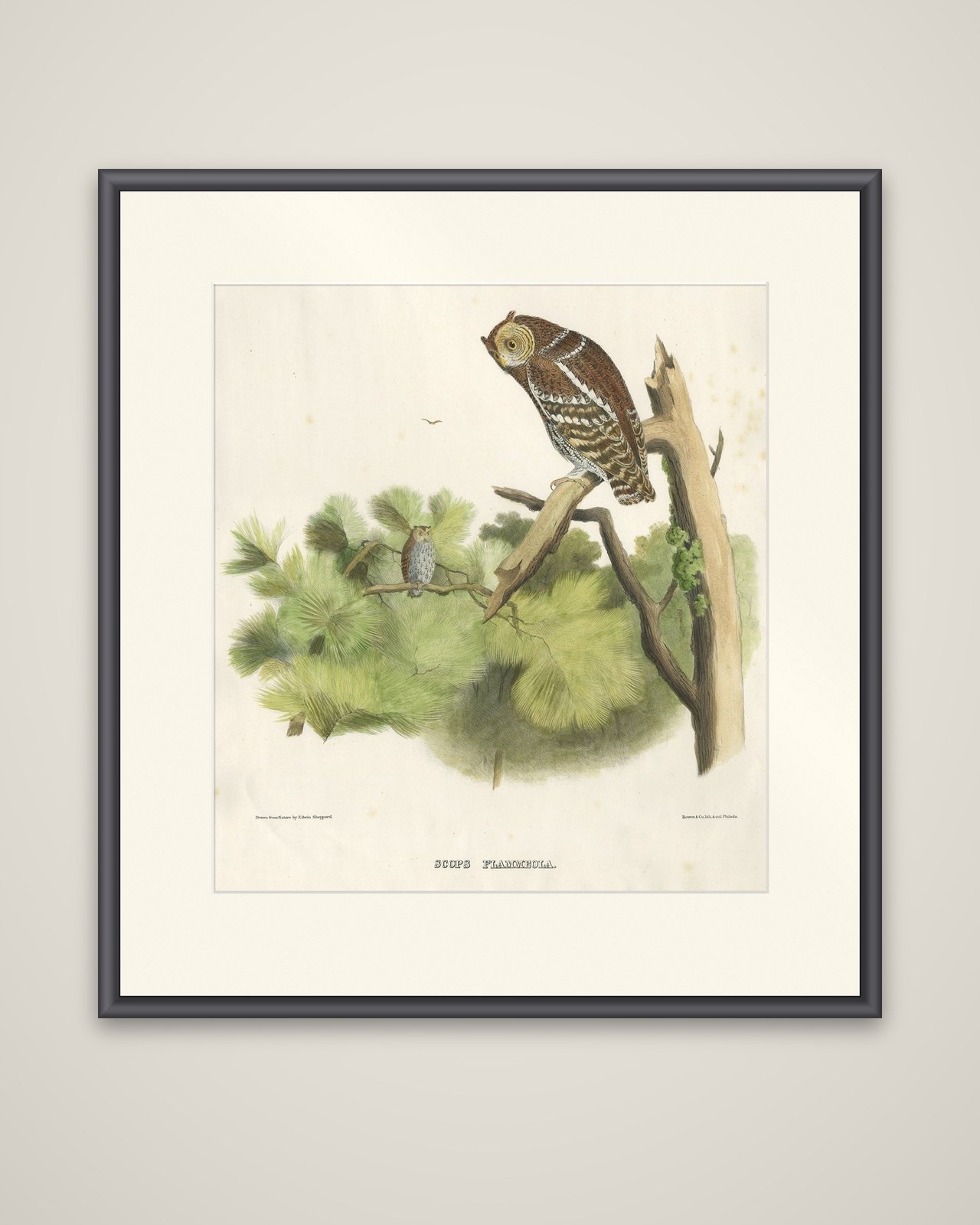
The flammulated owl (Psiloscops flammeolus), shown under the plate title "Scops Flammeola", an original large folio lithograph with hand color from Daniel Giraud Elliot's The New and Heretofore Unfigured Species of the Birds of North America. The work was published in New York for the author between 1866 and 1869, and the plates were lithographed and colored by Bowen & Co. of Philadelphia.
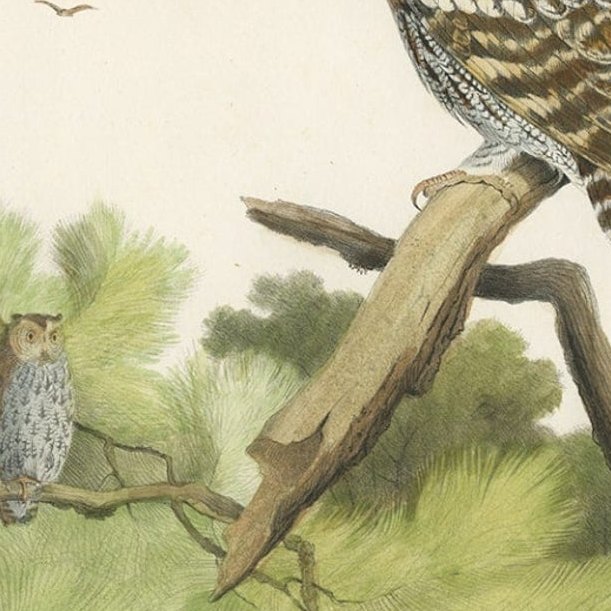
A large owl with a pale yellow facial disc perches on a broken pine branch at the upper right, its brown plumage streaked and barred in white and rust. A second, smaller owl sits on a twig in the foliage below left, set against soft green clusters of pine needles. A tiny bird flies across the sky above. The lettering at the lower left reads "Drawn from Nature by Edwin Sheppard", and the Bowen & Co. imprint appears at the lower right.
Elliot's work illustrated North American birds not previously figured by Wilson or Audubon, with particular attention to the American West, including California, Arizona, New Mexico, Texas and the Rocky Mountains. Many of the birds were drawn from specimens brought back by government expeditions and private collectors.