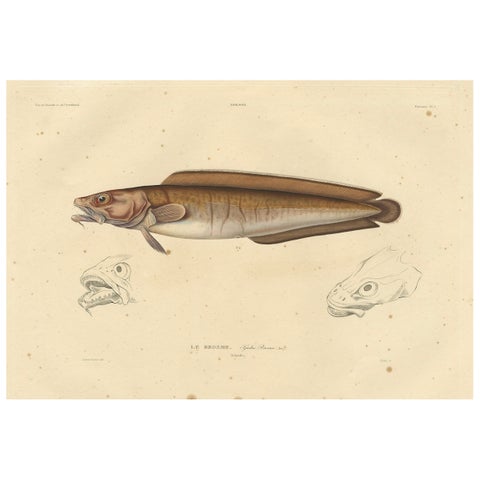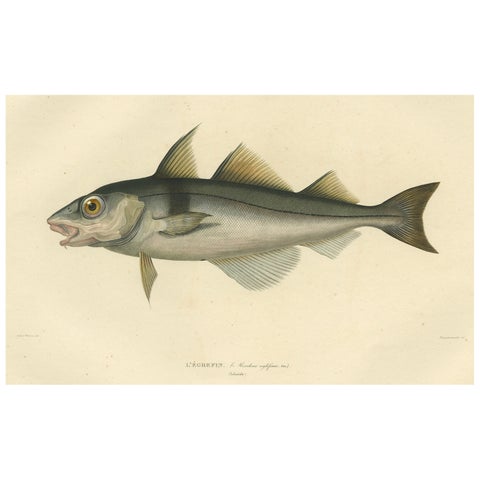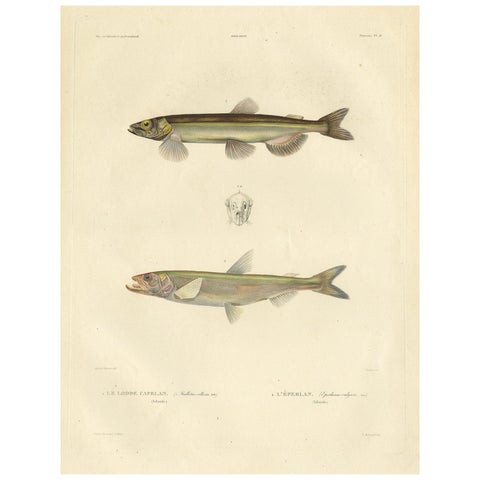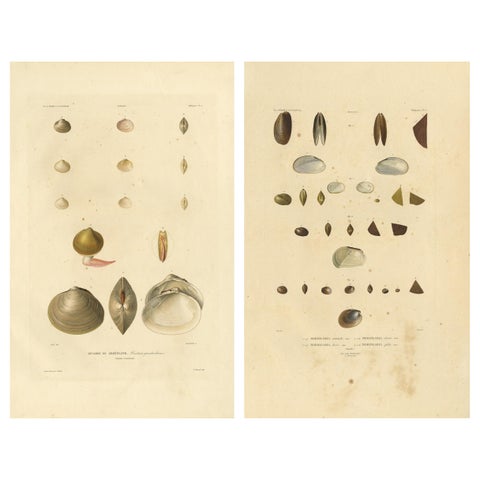



Rare Hand-Colored Antique Engraving of A Greenland Shark, 1842
$1,065 (£805, €950)
Period original, not a reproduction.
Shipped from the Netherlands, flat, insured and tracked, worldwide. Returns accepted within 14 days.
- Date
- 1842
- Size
- 14 × 21.3 in (35.5 × 54 cm)
- Condition
- Good. Condition report: Strong impression with excellent tonal detail. Wide margins present, with light age toning and scattered foxing, mostly in the background, not affecting the image. Plate mark clearly visible.
- Period
- Early 19th century
- Section
- Fish and shells
- Reference
- f_26429632
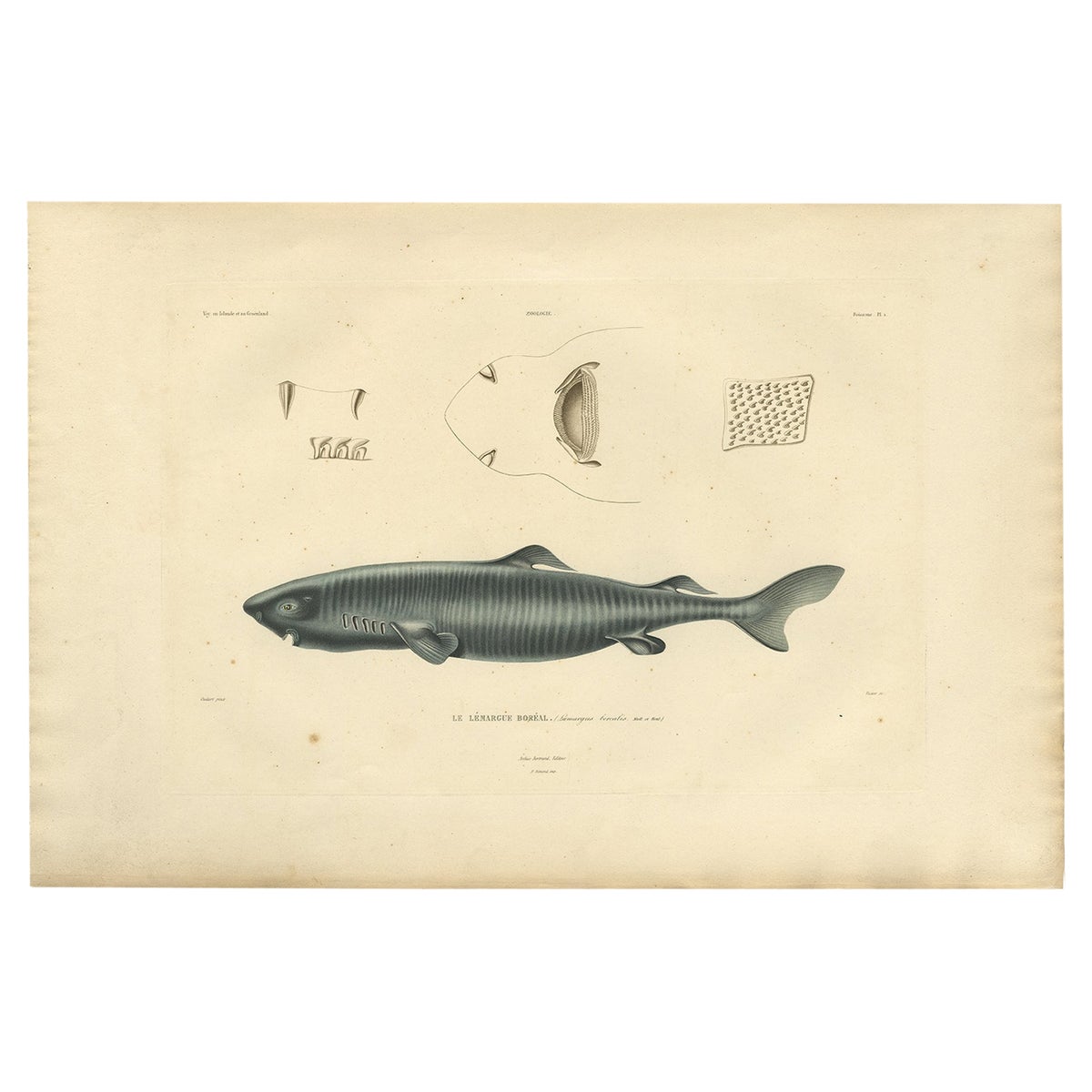
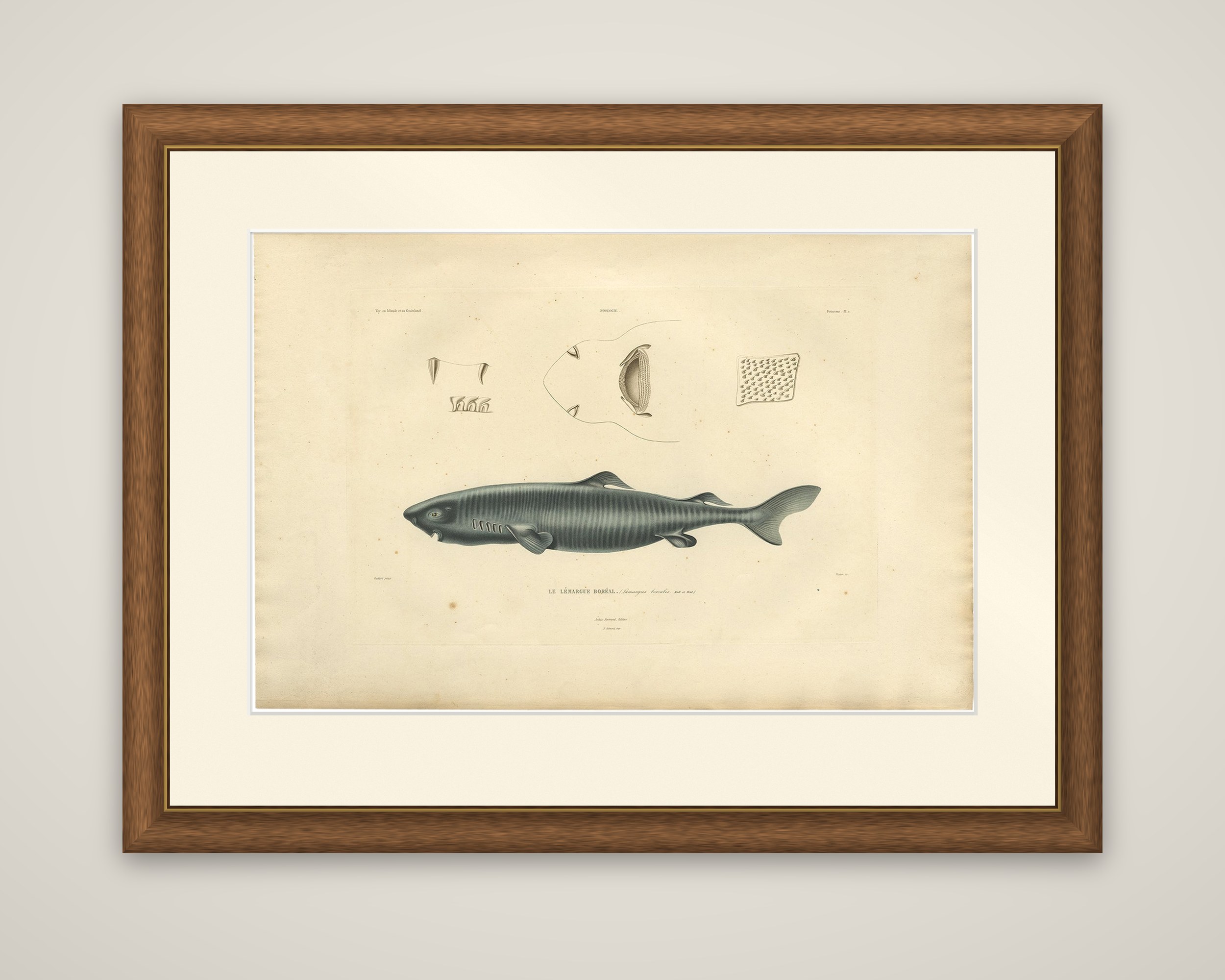
The Greenland shark (Somniosus microcephalus), known in French as "Le Lémargue Boréal," an original hand-colored lithograph from Paul Gaimard's Voyage en Islande et au Groenland, published in Paris in 1842. The plate was drawn by Louis Bévalet and lithographed by J. Bernard, and the title, French name and scientific name are lettered beneath the figure.
The shark is shown in full profile in a soft blue-gray wash, long and cylindrical, with a small rounded dorsal fin, short pectoral fin and a series of gill slits behind the eye. Above it, three studies set on the blank sheet show the structure of the animal: a pair of teeth from the upper and lower jaw, an outline of the head from below with the open mouth, and a small patch of skin showing its rough denticles. The mixture of finished figure and anatomical detail is typical of the expedition's zoological plates.
Gaimard's expedition of 1835 was originally sent to search for the lost Arctic expedition of Jean de Blosseville and brought back a wide survey of the natural history of Iceland and Greenland. The Greenland shark lives in the cold North Atlantic and Arctic waters and is among the longest-lived vertebrates known.