Close-ups
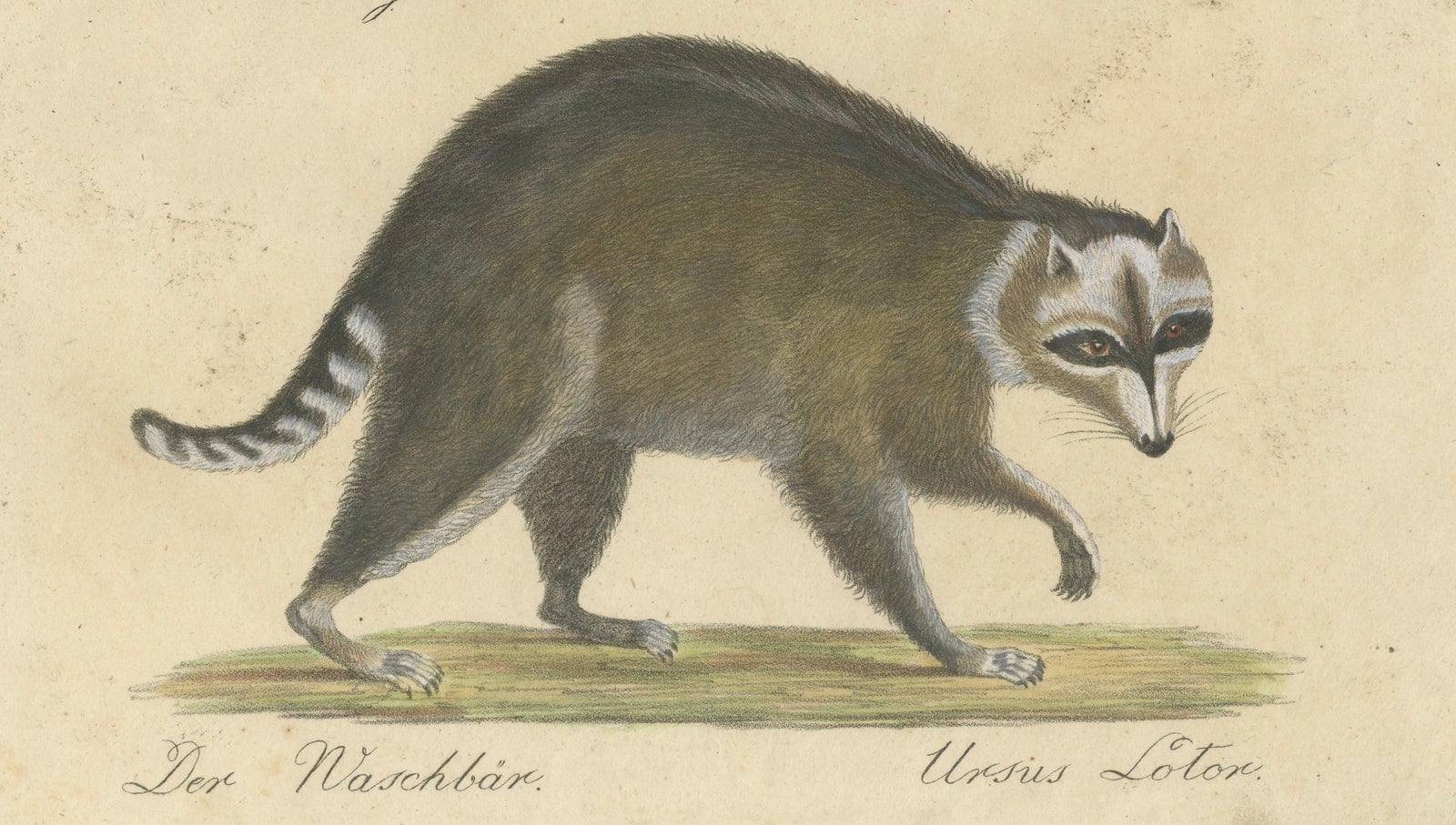
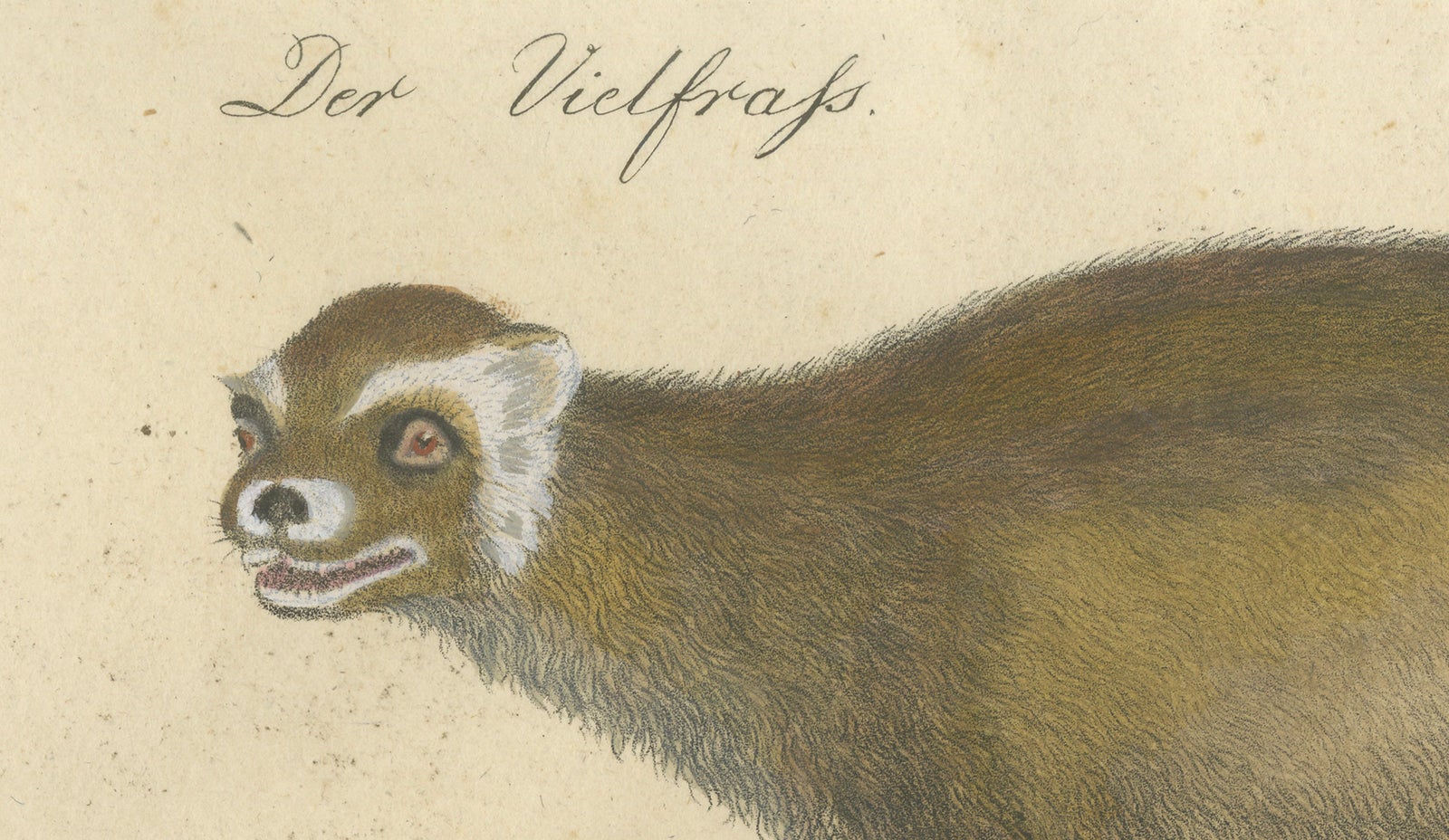
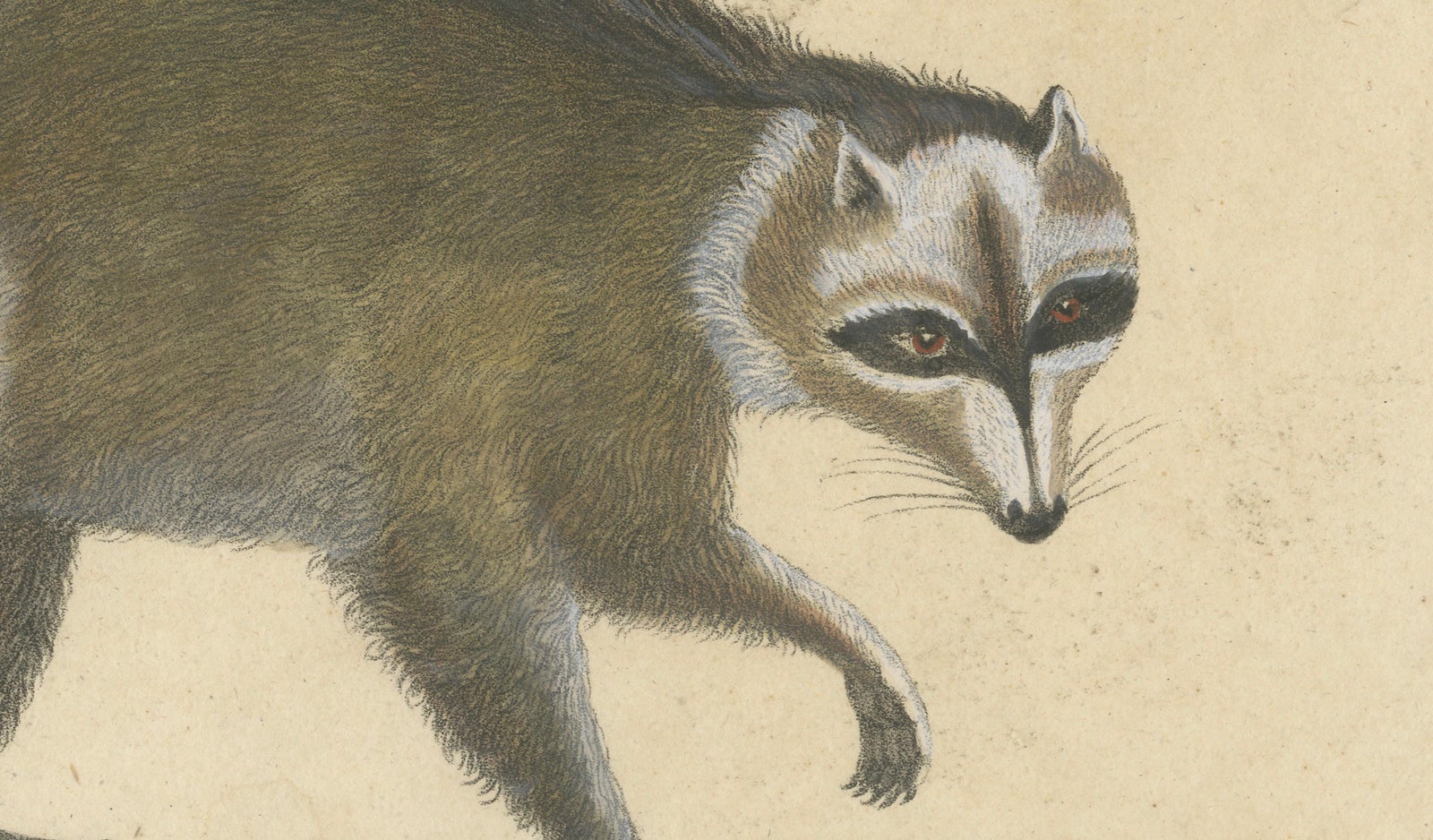
Framed and on the wall
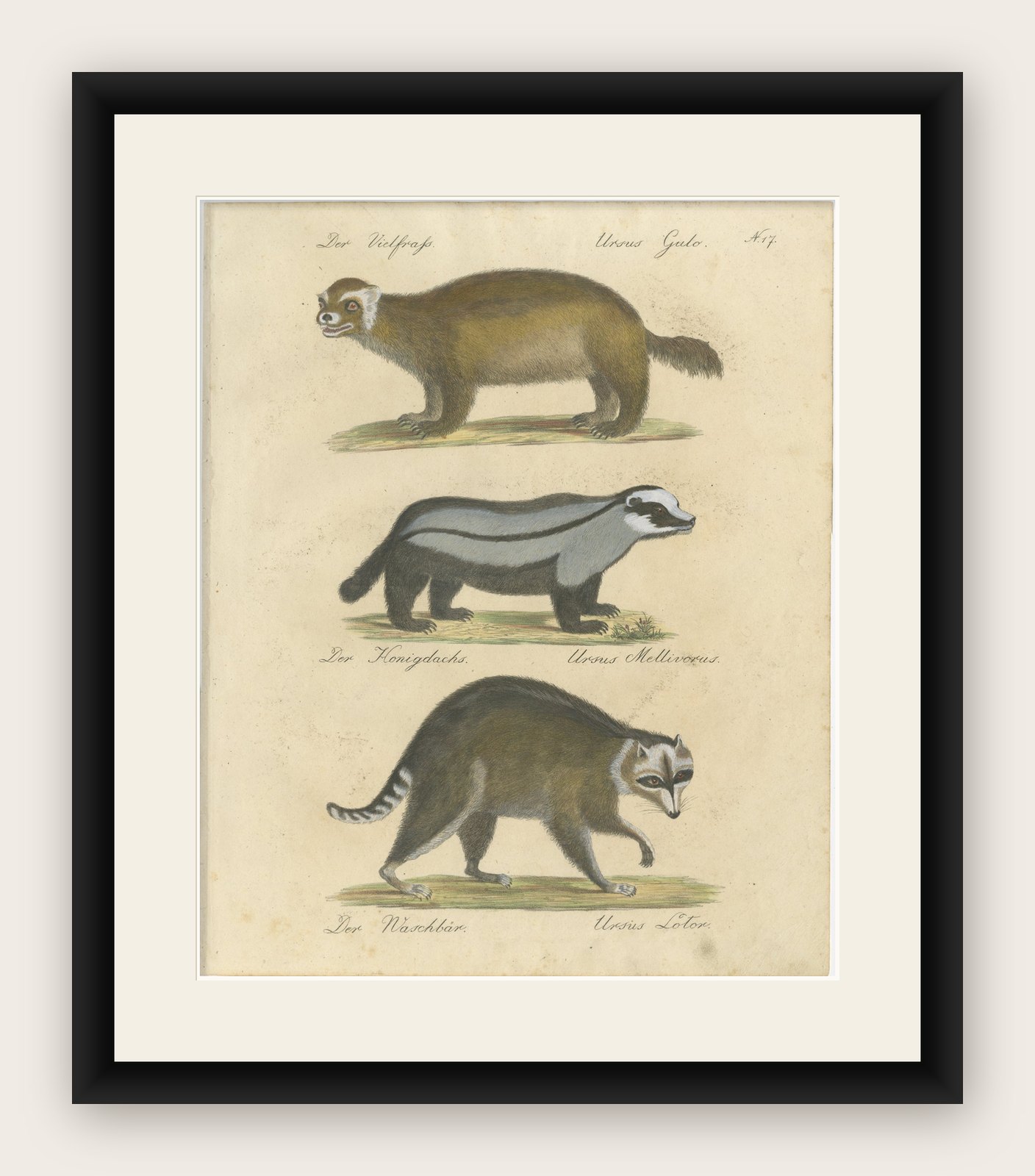



Frame and rooms are illustrations of how the print could look; the description says what is included.
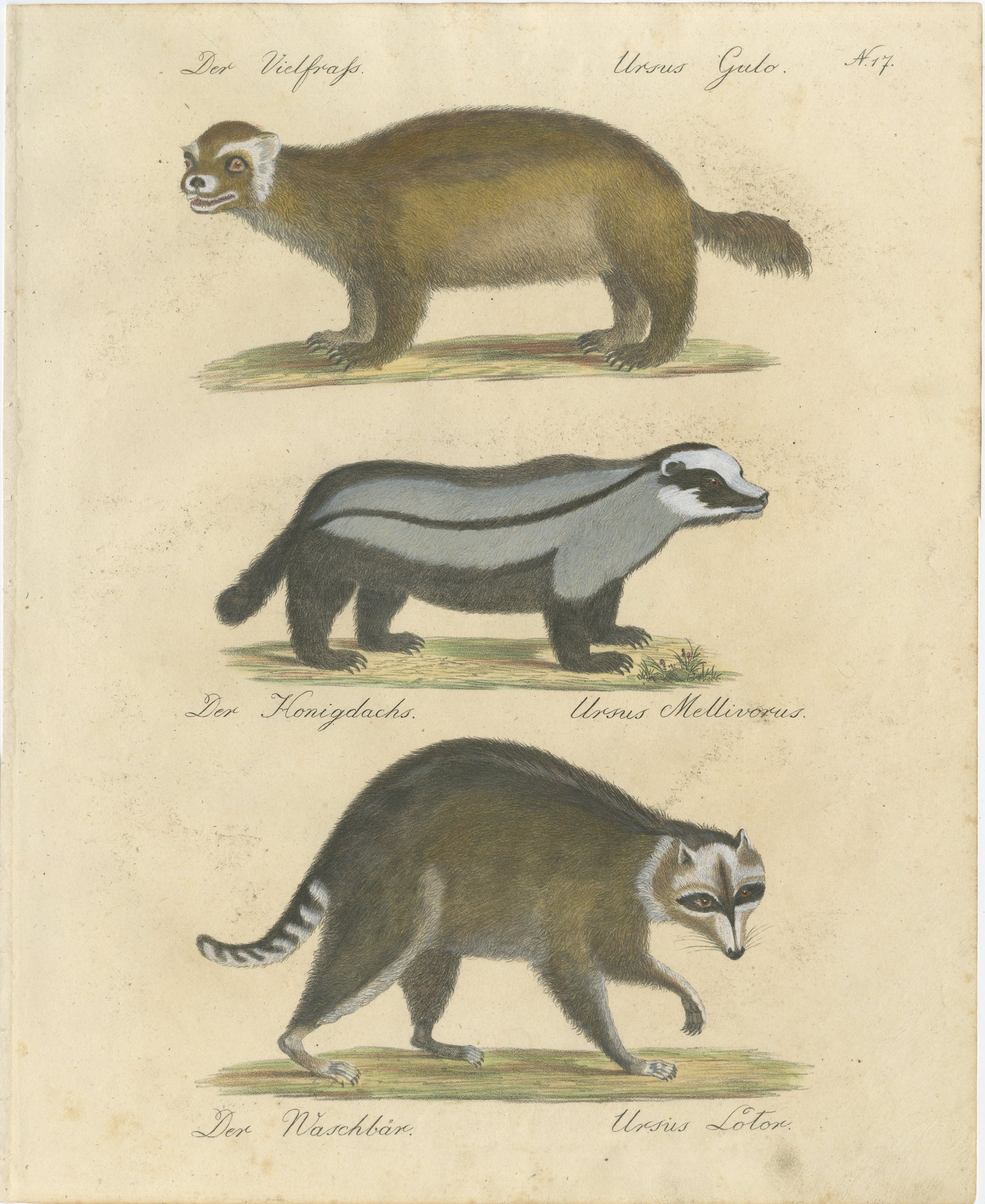
Raccoon, Honey Badger & Wolverine, Brodtmann Lithograph, 1816
$590$44525% off (£340, €405)
Period original, not a reproduction.
Shipped from the Netherlands, flat or rolled, insured and tracked, worldwide. Returns accepted within 14 days.
- Date
- 1816
- Size
- 17.5 × 14.1 in (44.5 × 35.9 cm)
- Condition
- Good. Good condition considering age. Light age toning, occasional foxing, and minor handling wear consistent with a print more than 200 years old. Original hand coloring remains attractive and well preserved. Please examine photographs carefully.
- Period
- Early 19th century
- Section
- Mammals
- Reference
- f_50609392
- Color
- Hand colored
What the condition grades mean
- Excellent
- Bright and clean, with no faults worth mentioning.
- Very good
- Only light signs of age, such as faint toning.
- Good
- Normal signs of age for a sheet of this period: toning, some foxing, small marks or neat old repairs.
- Fair
- Clear faults such as staining, tears or repairs, priced to match.
Every fault we see is written in the condition note, and the whole sheet is shown uncropped in the photos.
Raccoon, Honey Badger & Wolverine, Brodtmann Lithograph, 1816
This original hand-colored lithograph depicts three remarkable members of the carnivore family, illustrated with the scientific precision and artistic elegance characteristic of early nineteenth-century natural history publications. The sheet features the Wolverine (Ursus Gulo), Honey Badger (Ursus Mellivorus), and Raccoon (Ursus Lotor), reflecting the zoological classifications used during the early nineteenth century.
The print was created by Swiss artist and natural history illustrator Karl Joseph Brodtmann (1787–1862) and published in Lindau in 1816 as part of the celebrated Naturhistorische Bilder-Gallerie aus dem Thierreiche. Produced during the pioneering years of lithographic printing, the series introduced European audiences to both familiar and exotic animals through accurate, beautifully hand-colored illustrations.
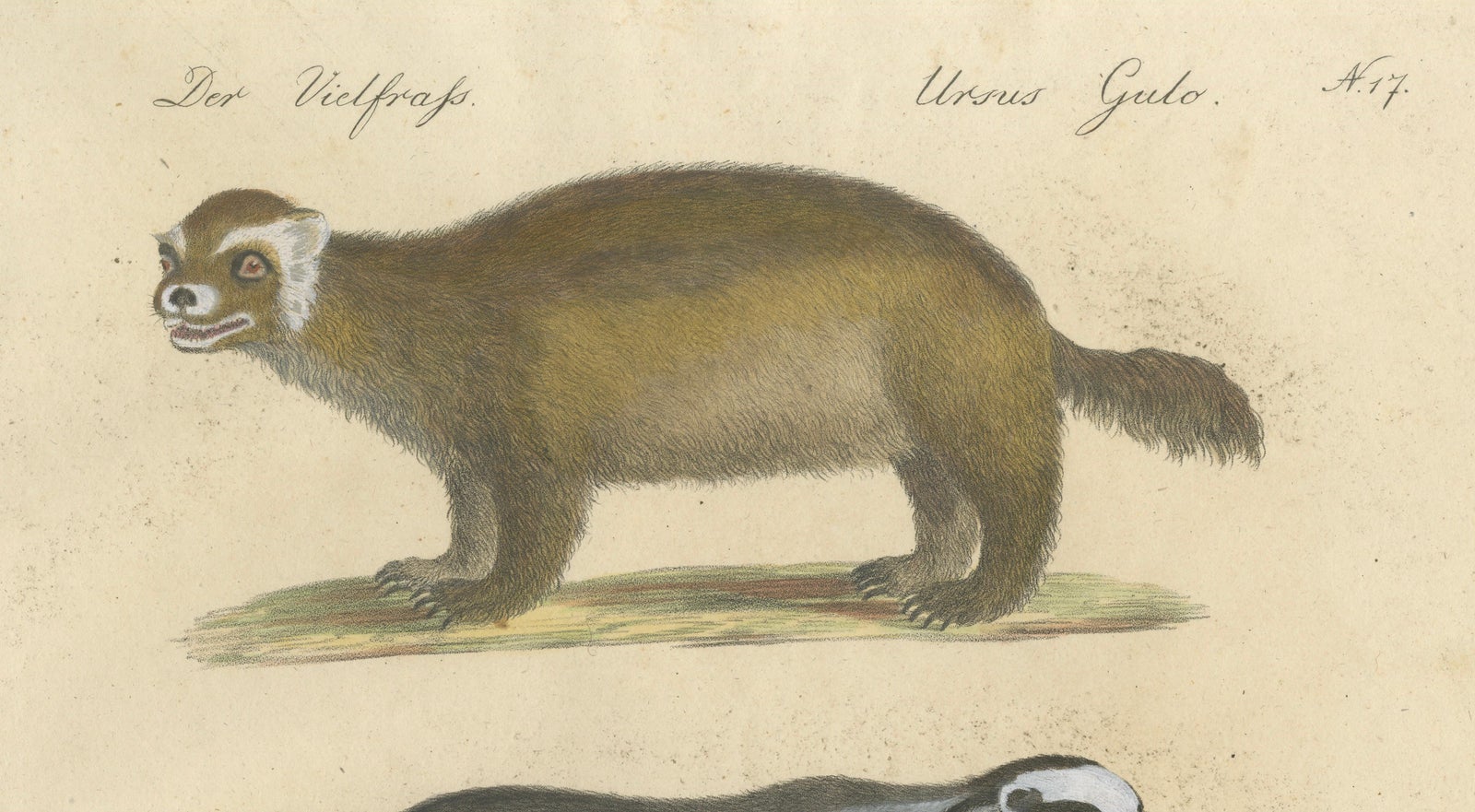
At the top of the composition appears the Wolverine, a powerful and fearless predator of the northern forests and tundra regions of Europe, Asia, and North America. Renowned for its strength and resilience, the wolverine has long occupied a legendary place in northern folklore.
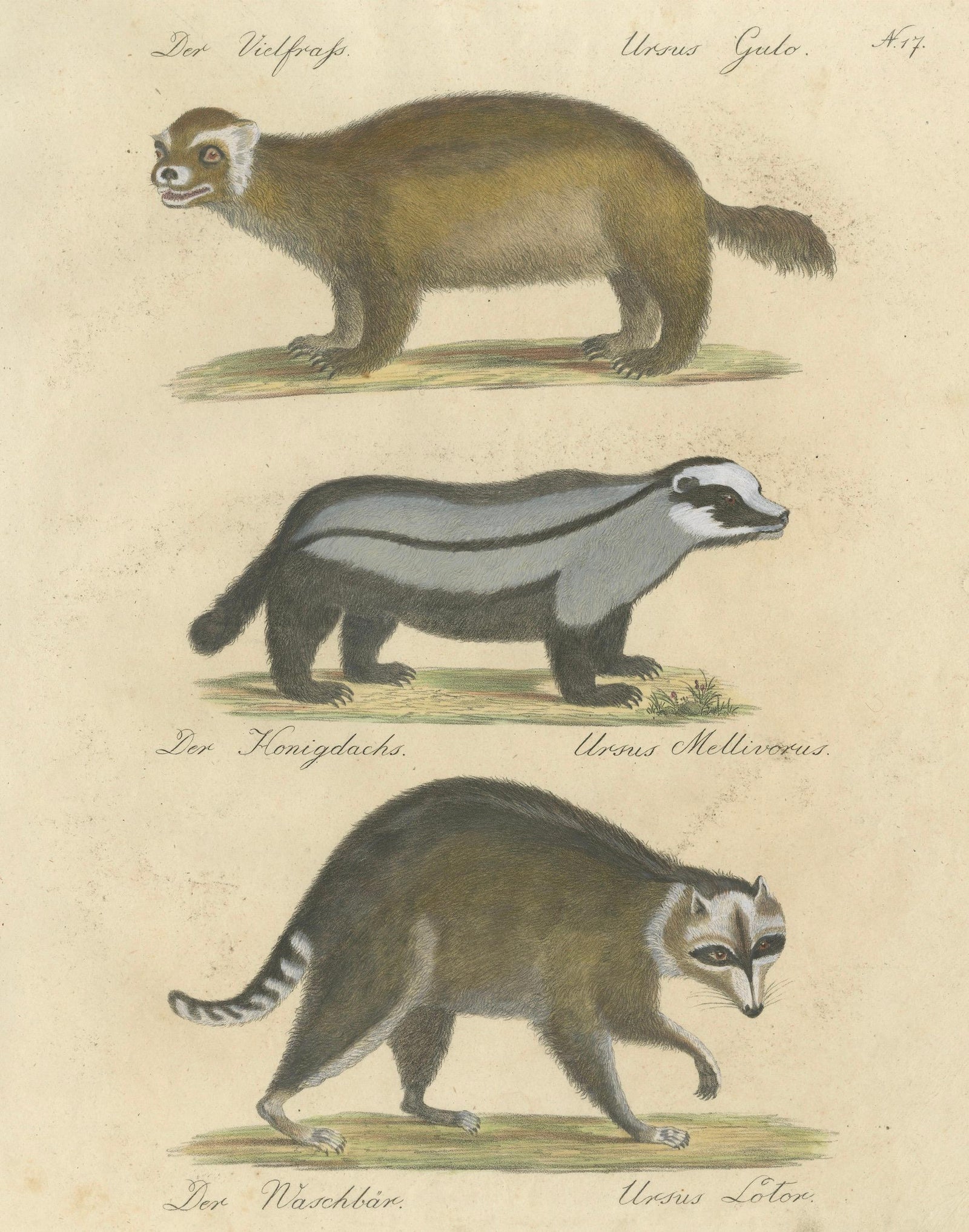
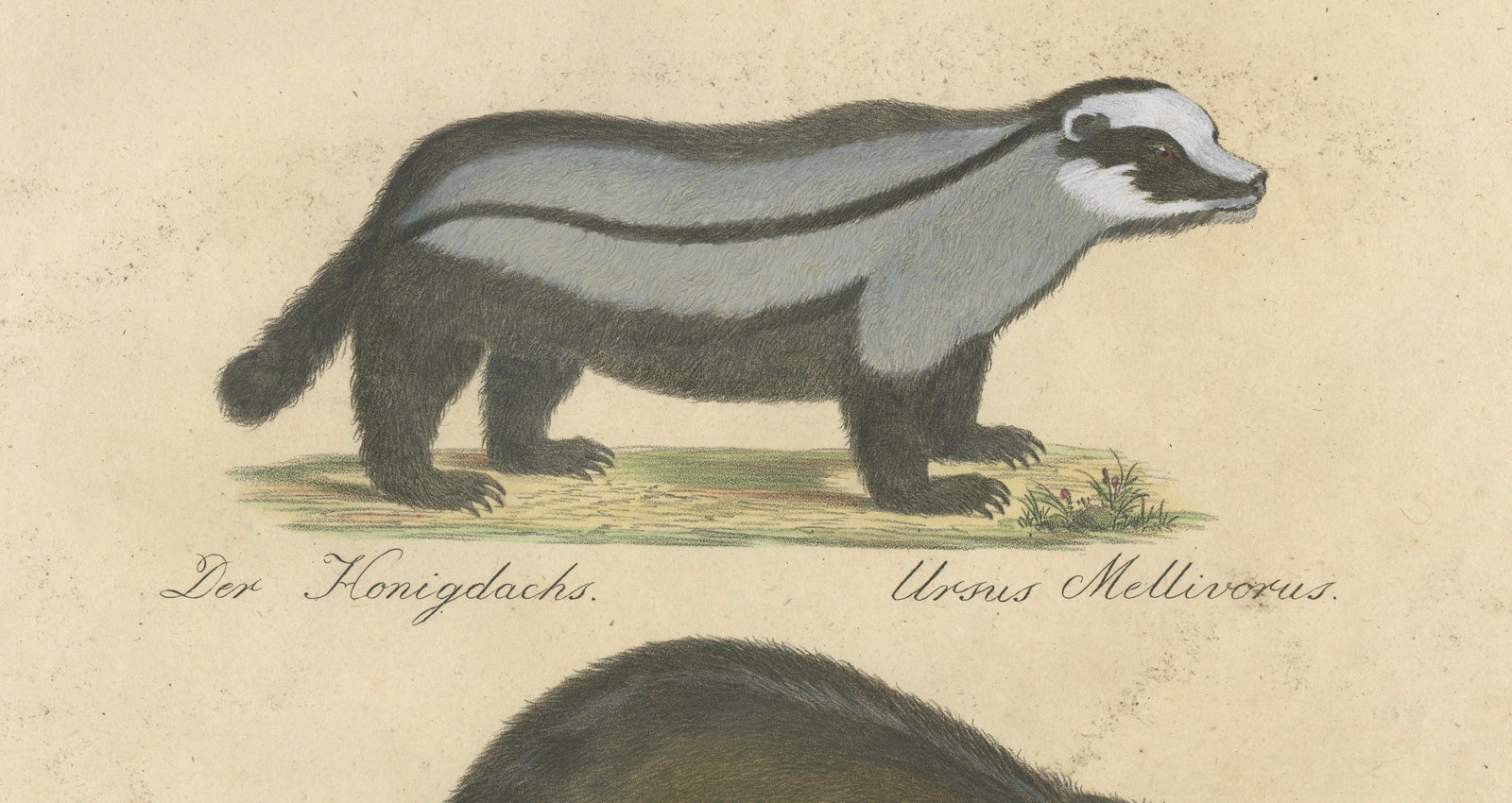
The center illustration depicts the Honey Badger, one of Africa's most formidable small carnivores. Famous for its fearlessness and remarkable ability to withstand attacks from larger predators, the honey badger remains one of the most iconic mammals of the African wilderness. Brodtmann carefully captures its distinctive black-and-silver coloration.
The lower section features the Raccoon, native to North America and instantly recognizable by its mask-like facial markings and ringed tail. During the early nineteenth century, raccoons fascinated European naturalists as examples of the unique wildlife found in the New World.
Brodtmann's restrained compositions focus attention entirely on the animals themselves, allowing the viewer to appreciate their anatomical differences, fur patterns, and characteristic postures. The subtle hand coloring and refined lithographic technique create a balance between scientific observation and decorative appeal.
Today, original Brodtmann lithographs are highly sought after by collectors of zoology, natural history, wildlife art, and early scientific illustration. This sheet is especially desirable because it combines three of the world's most charismatic and unusual carnivores on a single plate.
Condition report:
Good condition considering age. Light age toning, occasional foxing, and minor handling wear consistent with a print more than 200 years old. Original hand coloring remains attractive and well preserved. Please examine photographs carefully.
Framing tips:
This print displays beautifully in a dark walnut, black-gilt, or ebonized frame with an ivory museum mat. The earthy tones and striking animal subjects make it an excellent choice for studies, libraries, country houses, and modern interiors inspired by natural history collections.
Technique: Hand-colored lithograph
Maker: Karl Joseph Brodtmann, Switzerland, published in Lindau, 1816.