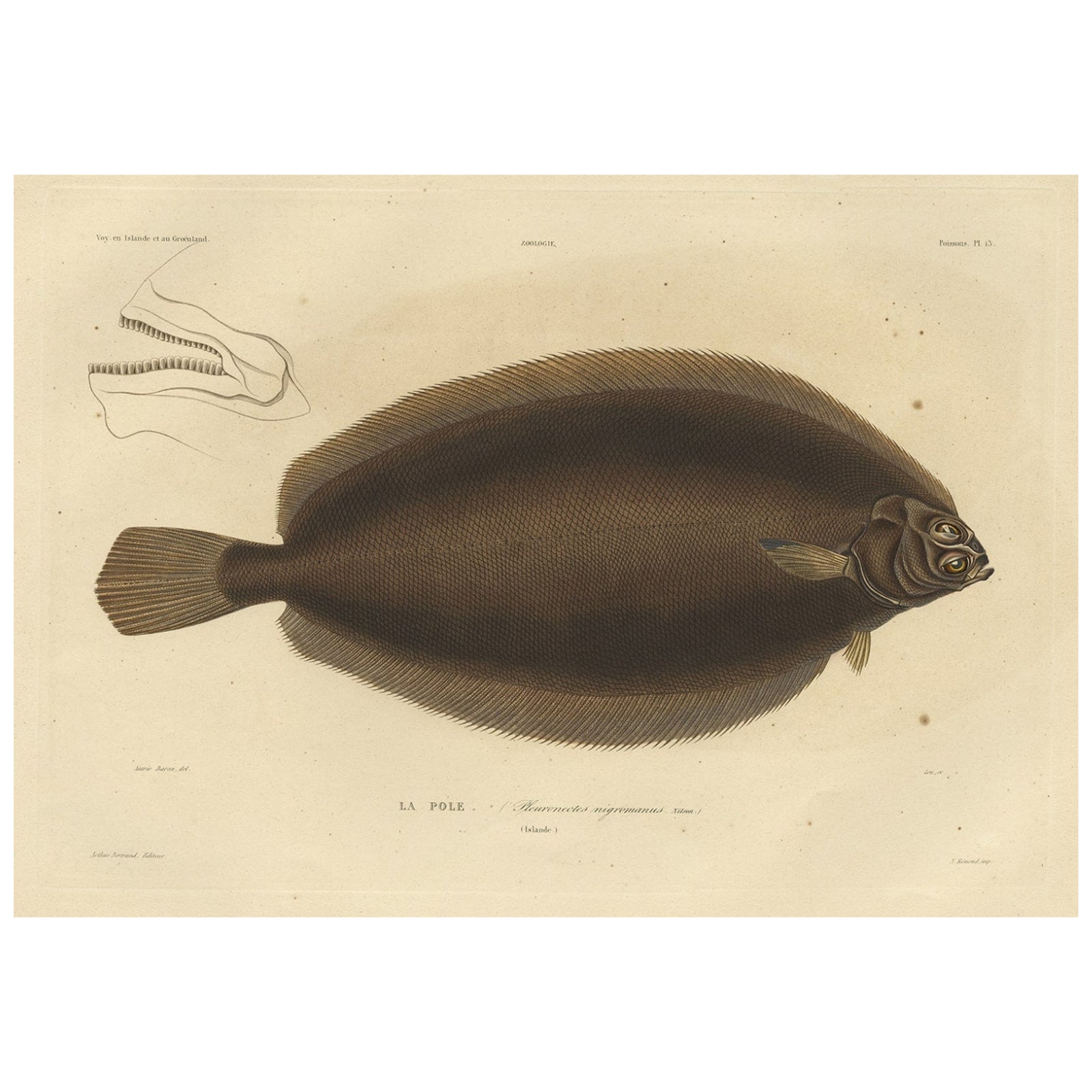
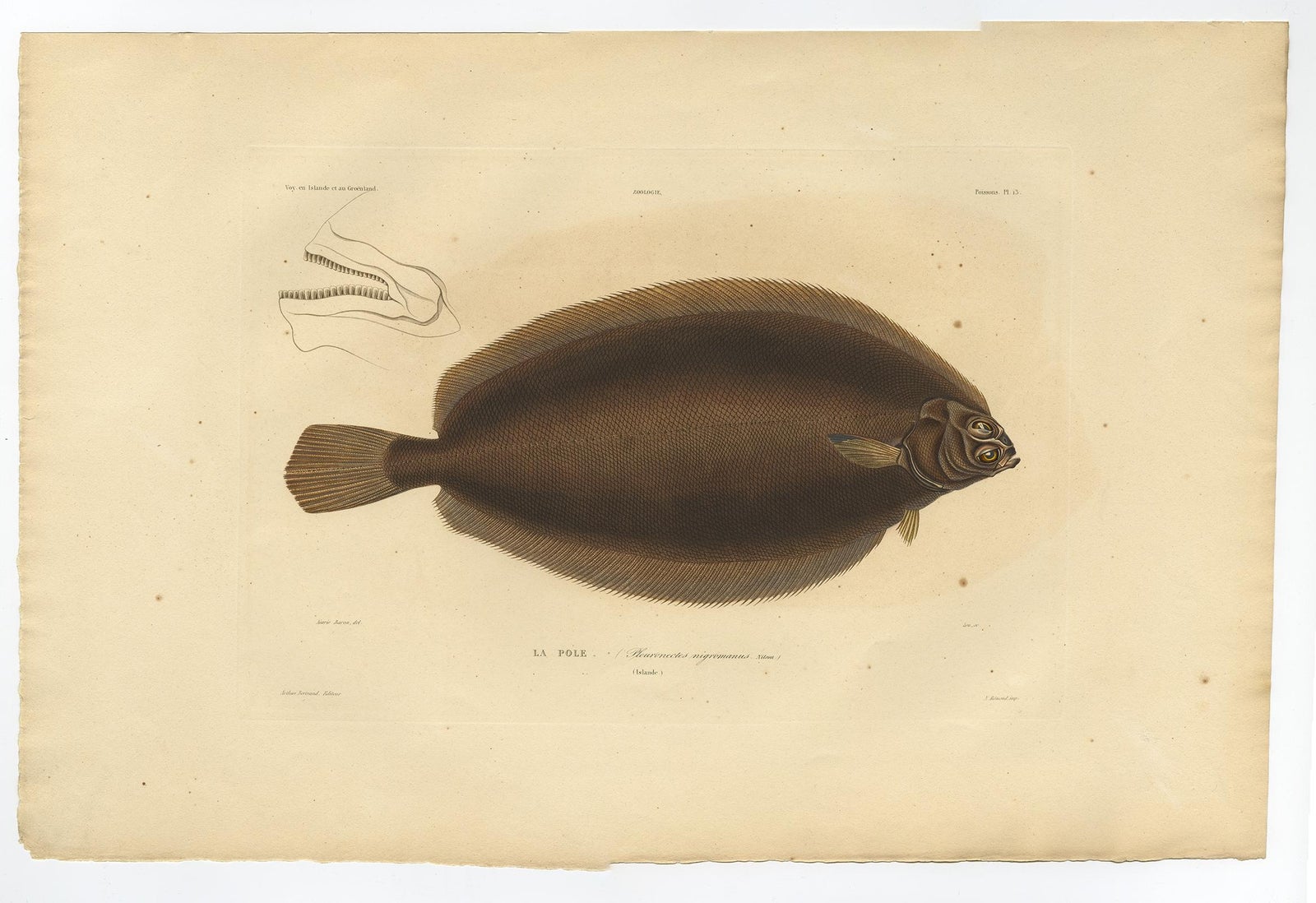
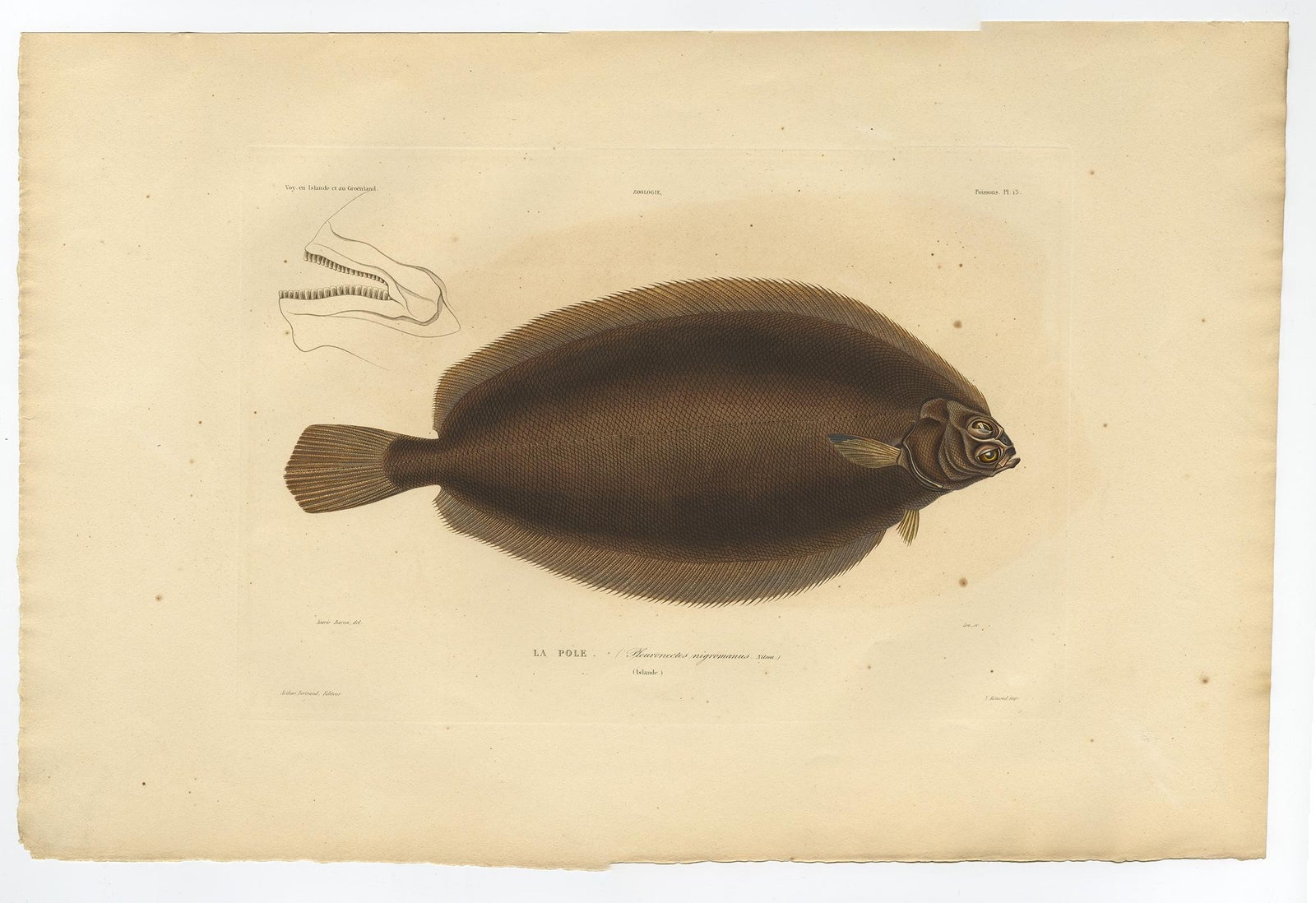
Close-ups
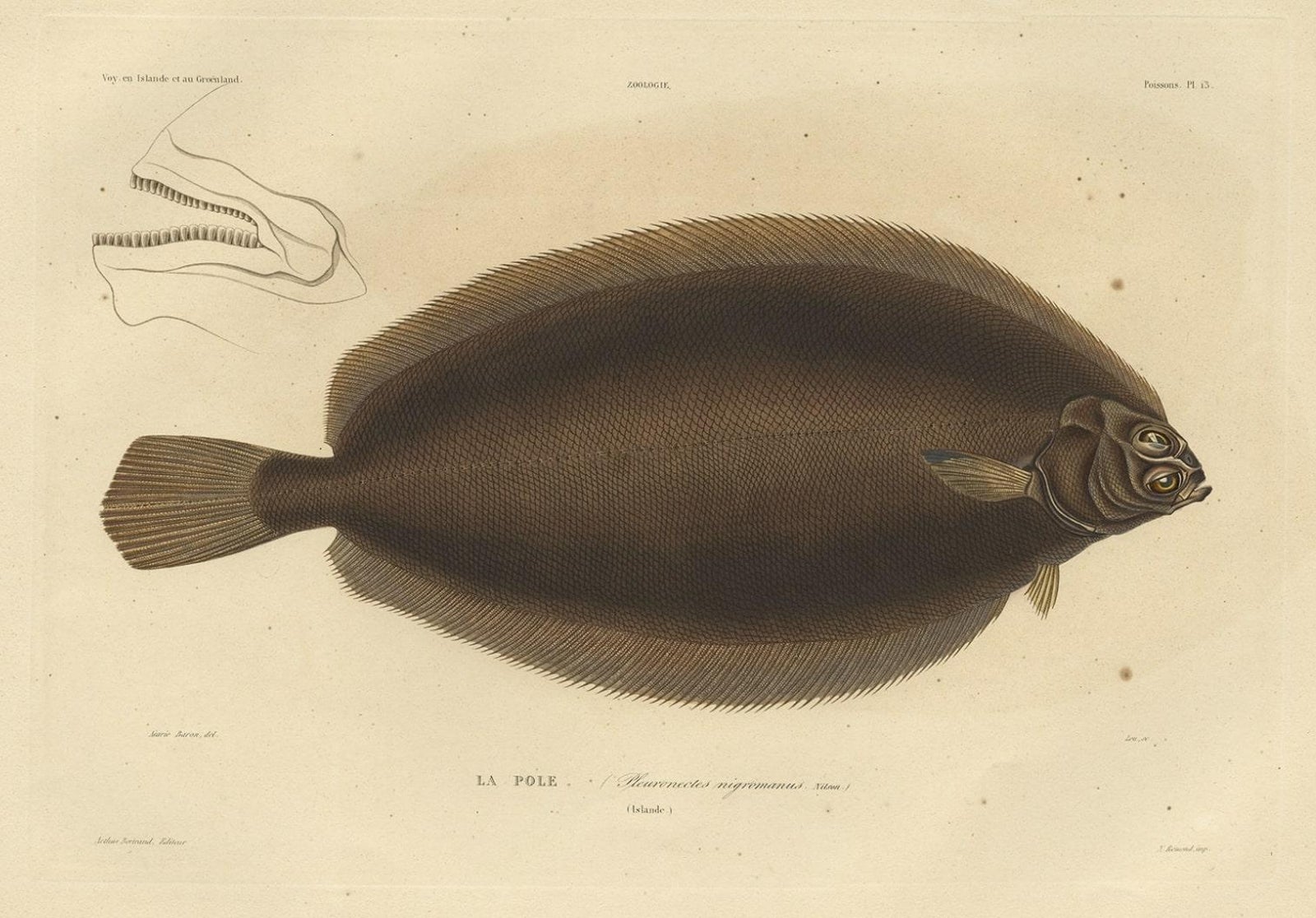
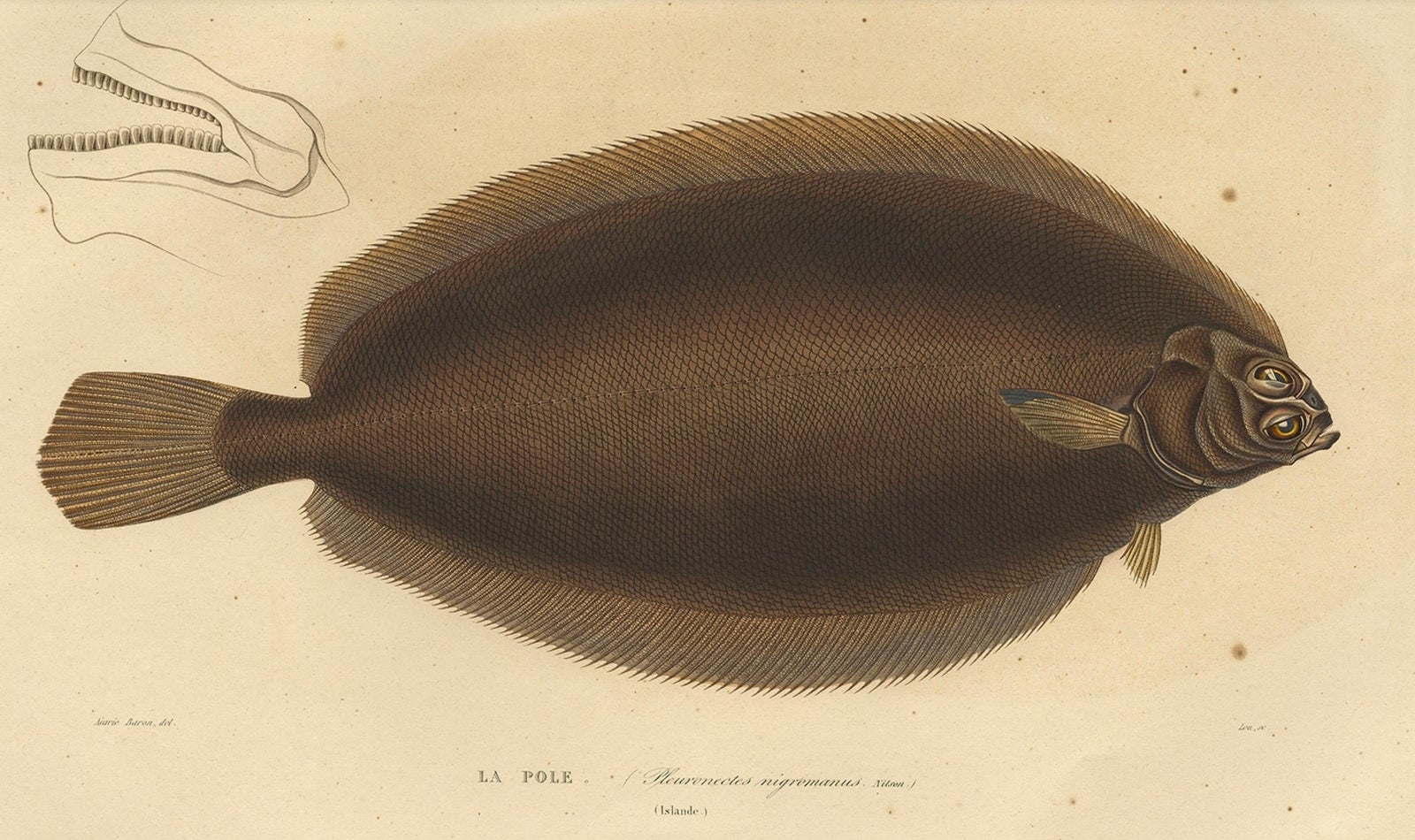
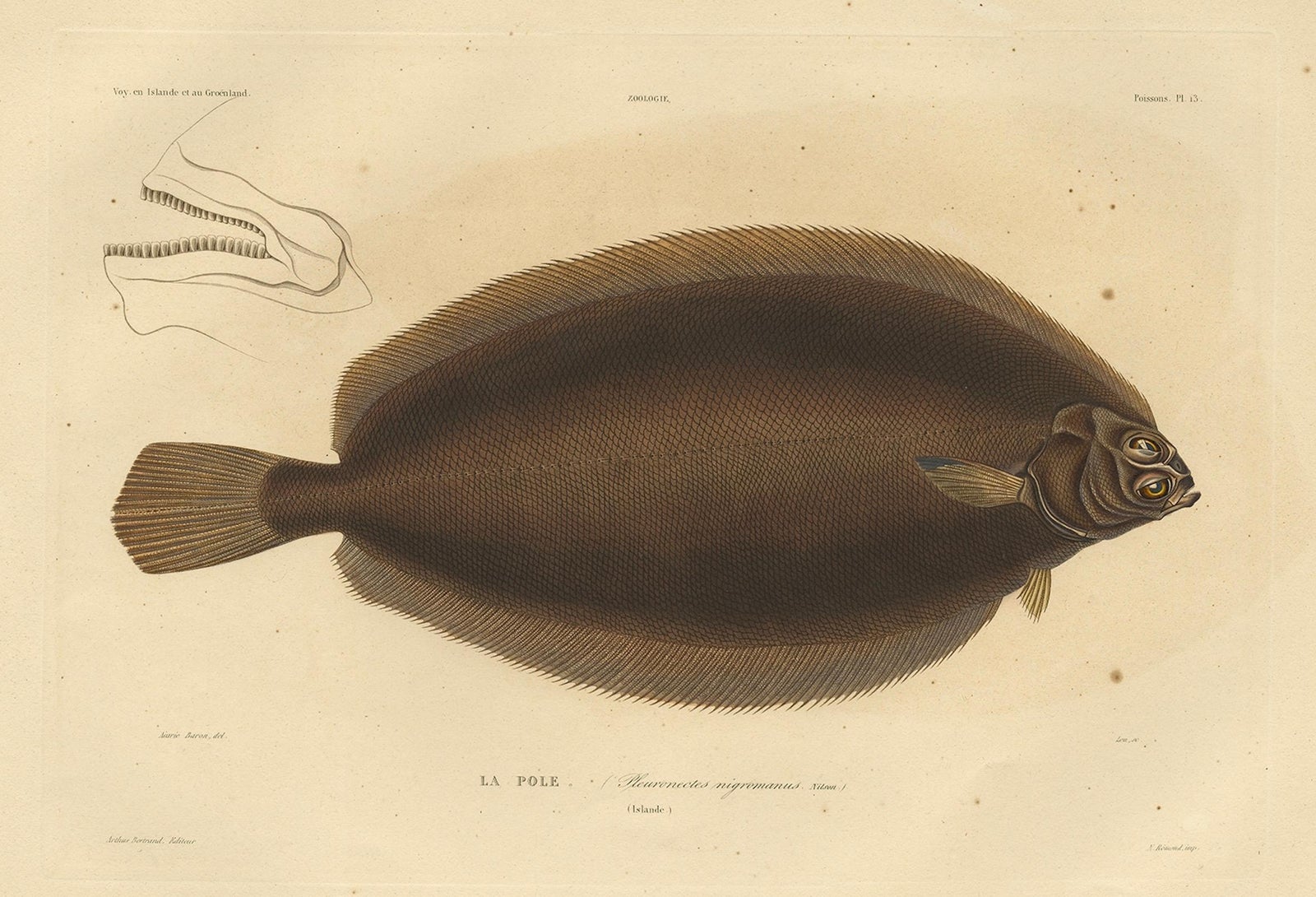
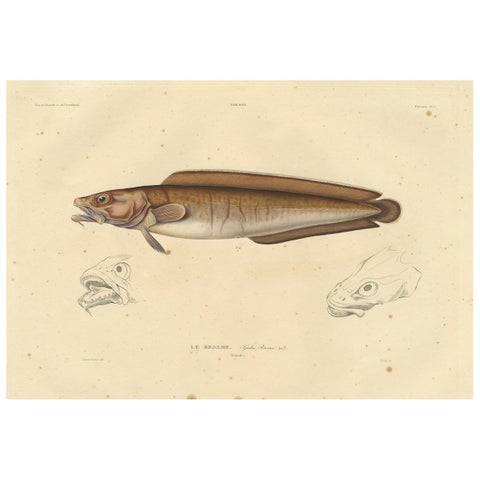
Old Rare Fish Print of the Witch Flounder or Torbay Sole, 1842
$920 (£695, €820)
Period original, not a reproduction.
Shipped from the Netherlands, flat, insured and tracked, worldwide. Returns accepted within 14 days.
- Date
- 1842
- Size
- 13.8 × 21.3 in (35 × 54 cm)
- Condition
- Good. Condition report: Strong impression with excellent hand coloring. Some foxing and mild age toning, mainly in the margins, not detracting from the image. Plate mark visible.
- Period
- Early 19th century
- Section
- Fish and shells
- Reference
- f_27387392
- Color
- Hand colored
What the condition grades mean
- Excellent
- Bright and clean, with no faults worth mentioning.
- Very good
- Only light signs of age, such as faint toning.
- Good
- Normal signs of age for a sheet of this period: toning, some foxing, small marks or neat old repairs.
- Fair
- Clear faults such as staining, tears or repairs, priced to match.
Every fault we see is written in the condition note, and the whole sheet is shown uncropped in the photos.
Antique Print of the Witch Flounder (La Poile), Gaimard, 1842
This fine hand-colored lithograph depicts the Witch Flounder (Glyptocephalus cynoglossus), here titled La Poile. Characterized by its oval body, dark brown coloration, and distinctive eye placement on the right side, the species is a member of the flatfish family, commonly inhabiting the cold northern waters around Iceland and Greenland. The plate also includes a smaller anatomical vignette of the fish’s jaws and dentition, demonstrating the scientific rigor behind the illustration.
The Witch Flounder was well known to 19th-century fishermen as a common food fish, though its unusual body form and behavior on the sea floor made it of great interest to naturalists. This print balances scientific precision with visual elegance, presenting the fish in a way that highlights both its anatomy and its smooth, scale-like texture.
It was published in Voyage en Islande et au Groenland (Paris, 1842), Paul Gaimard’s monumental account of his 1835 expedition. Originally launched to search for Jean de Blosseville’s lost Arctic voyage, the mission instead produced one of the century’s most important natural history surveys of Iceland and Greenland. The ichthyological plates, such as this one, are among the rarest and most decorative components of the atlas.
The work was drawn by Louis Bévalet, one of the leading natural history illustrators of his era, and lithographed by J. Bernard. The original hand coloring gives depth to the flounder’s rich brown tone and subtle texturing, making it an attractive piece for collectors of marine art and Arctic exploration.
Condition report: Strong impression with excellent hand coloring. Some foxing and mild age toning, mainly in the margins, not detracting from the image. Plate mark visible.
Framing tips: A wide ivory mat with a dark wood or walnut frame will emphasize the rich brown body of the flounder. For a more refined look, a double mat with a pale blue or gray inner border can evoke the marine setting.
Technique: Hand-colored lithograph
Maker: Drawn by Louis Bévalet, lithographed by J. Bernard, from Paul Gaimard, Paris, 1842