Close-ups
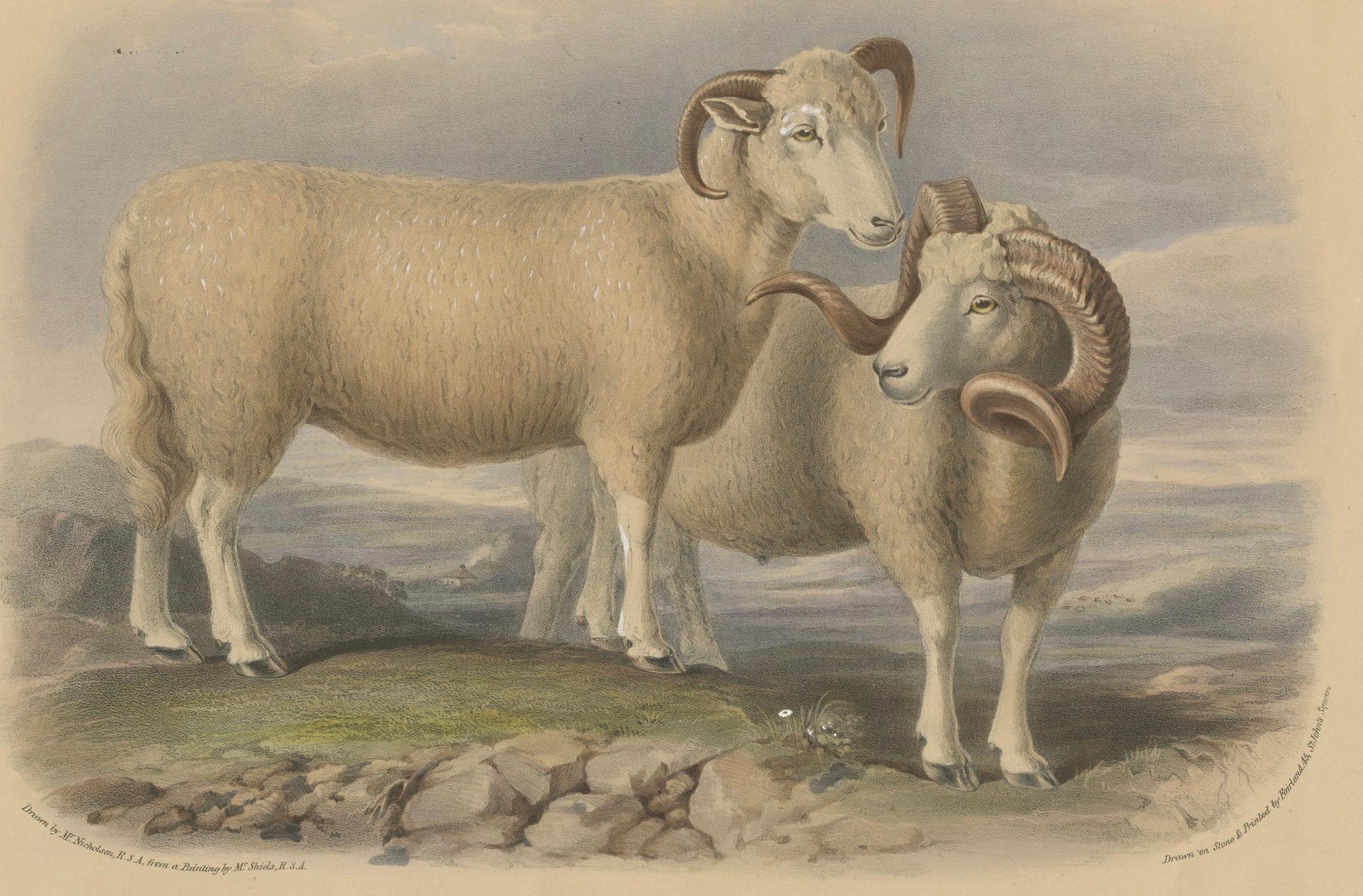
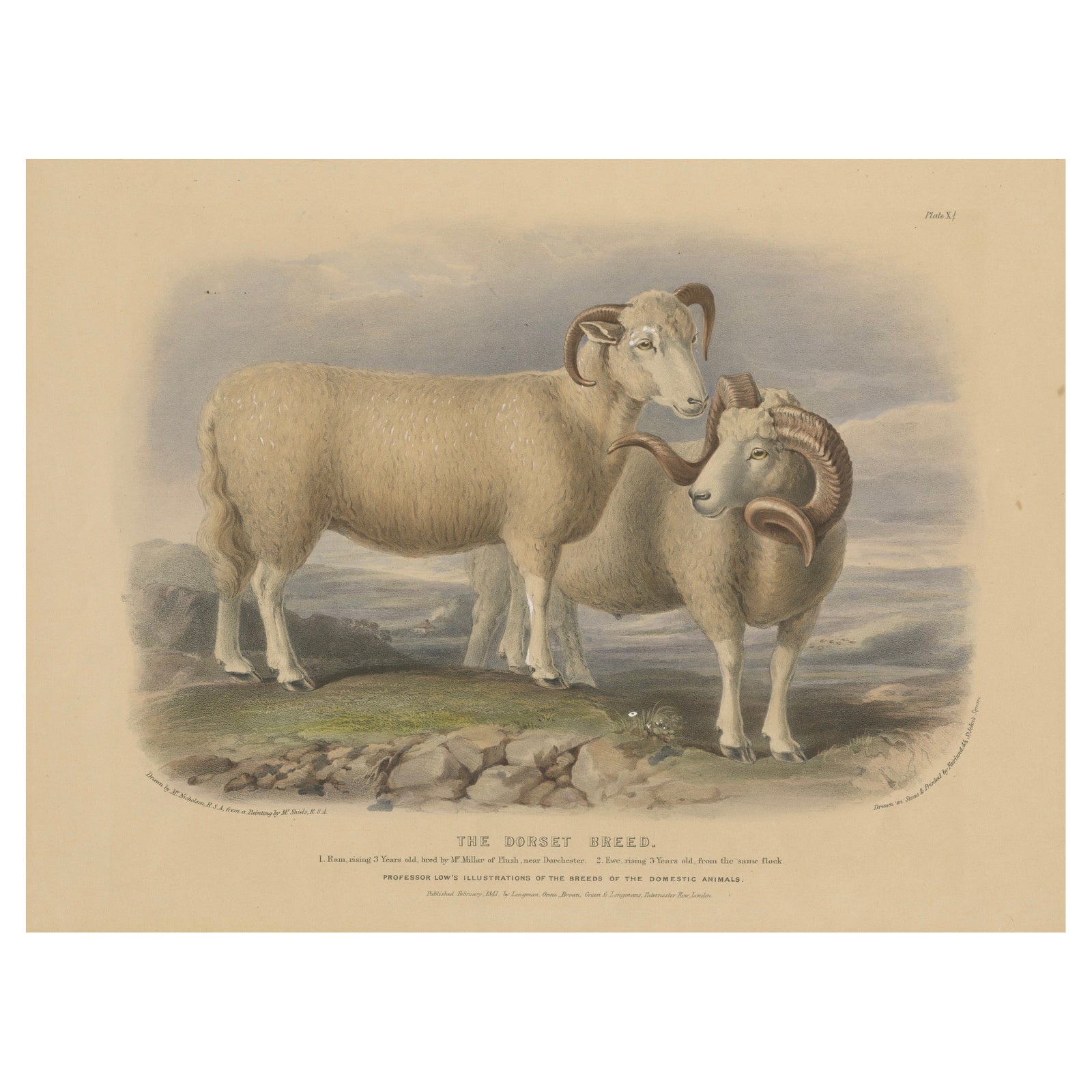
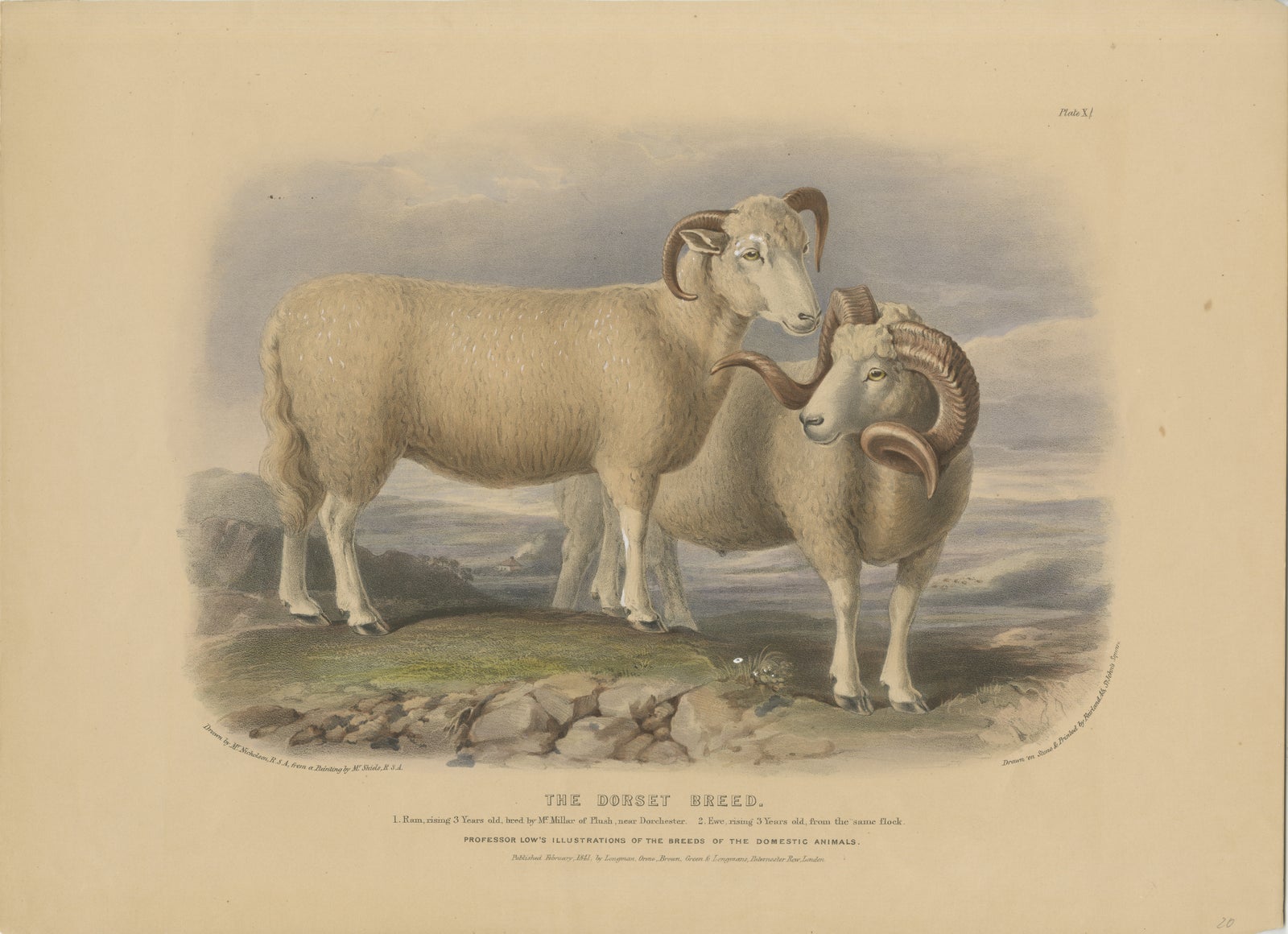
Old Lithograph of a Ram and Ewe of the Dorset Breed - 1841
€290 ($325, £245, €290)
Period original, not a reproduction.
Shipped from the Netherlands, flat, insured and tracked, worldwide. Returns accepted within 14 days.
- Date
- 1841
- Size
- 12.3 × 16.7 in (31.2 × 42.5 cm)
- Condition
- Good. Good, considering age. The artwork is lightly browned overall due to aging, but otherwise fine. Please study scans carefully.
- Period
- Early 19th century
- Section
- Mammals
- Reference
- f_40595782
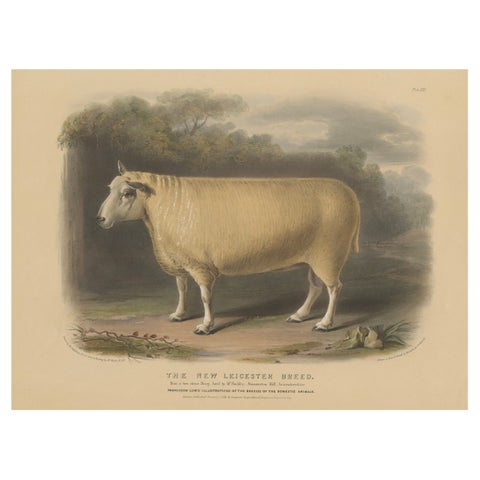
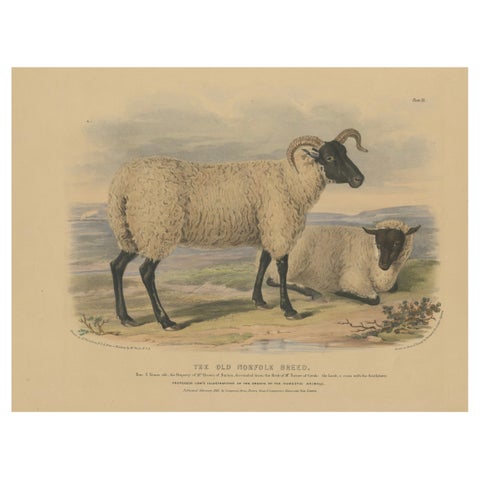
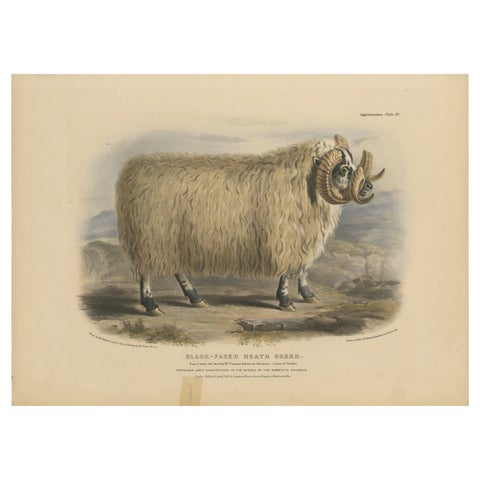
Old colored lithograph by Fairland after W. Nicholson, from "The Breeds of the Domestic Animals of the British Isles" by David Low, published in London, 1842.
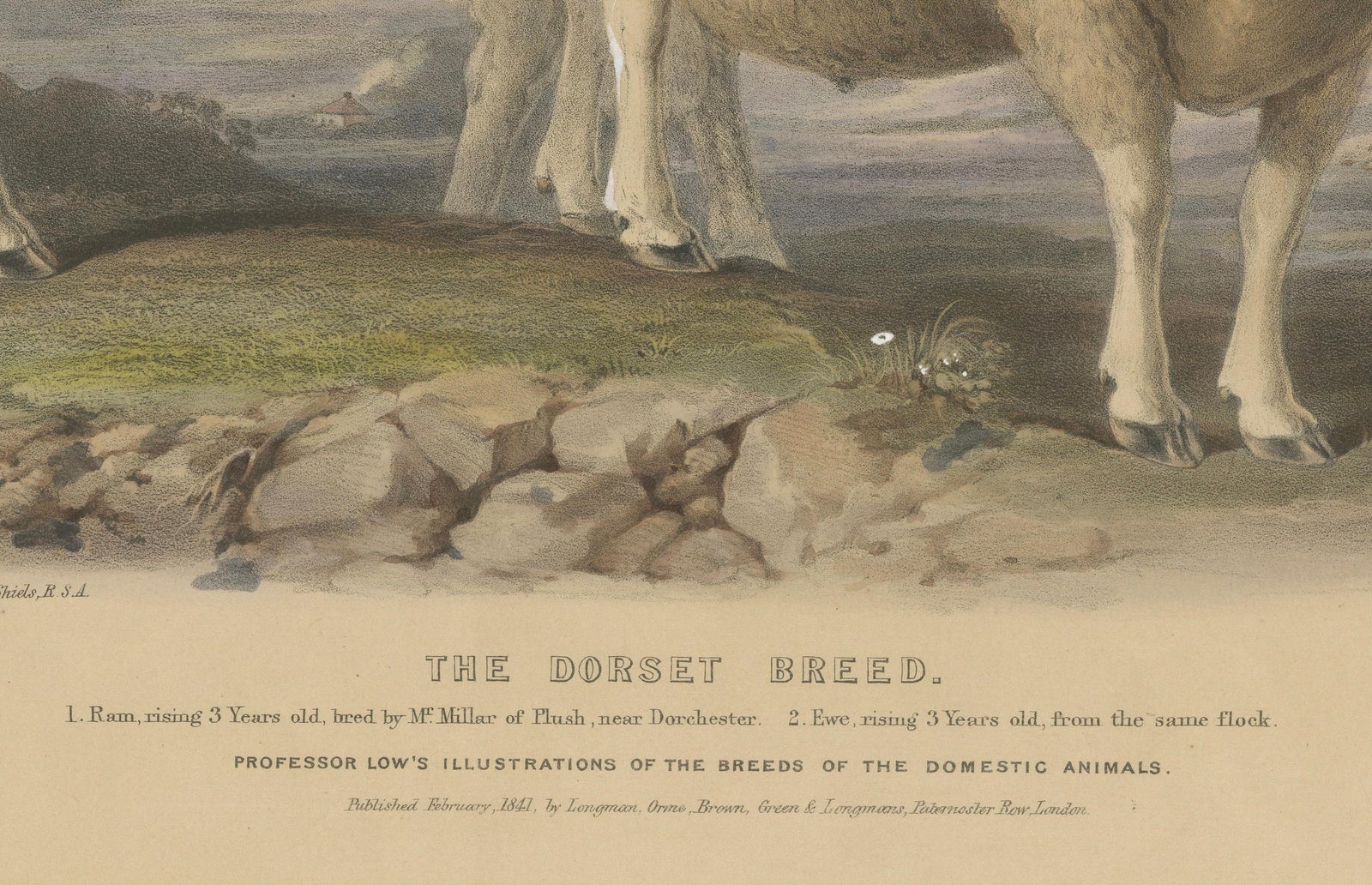
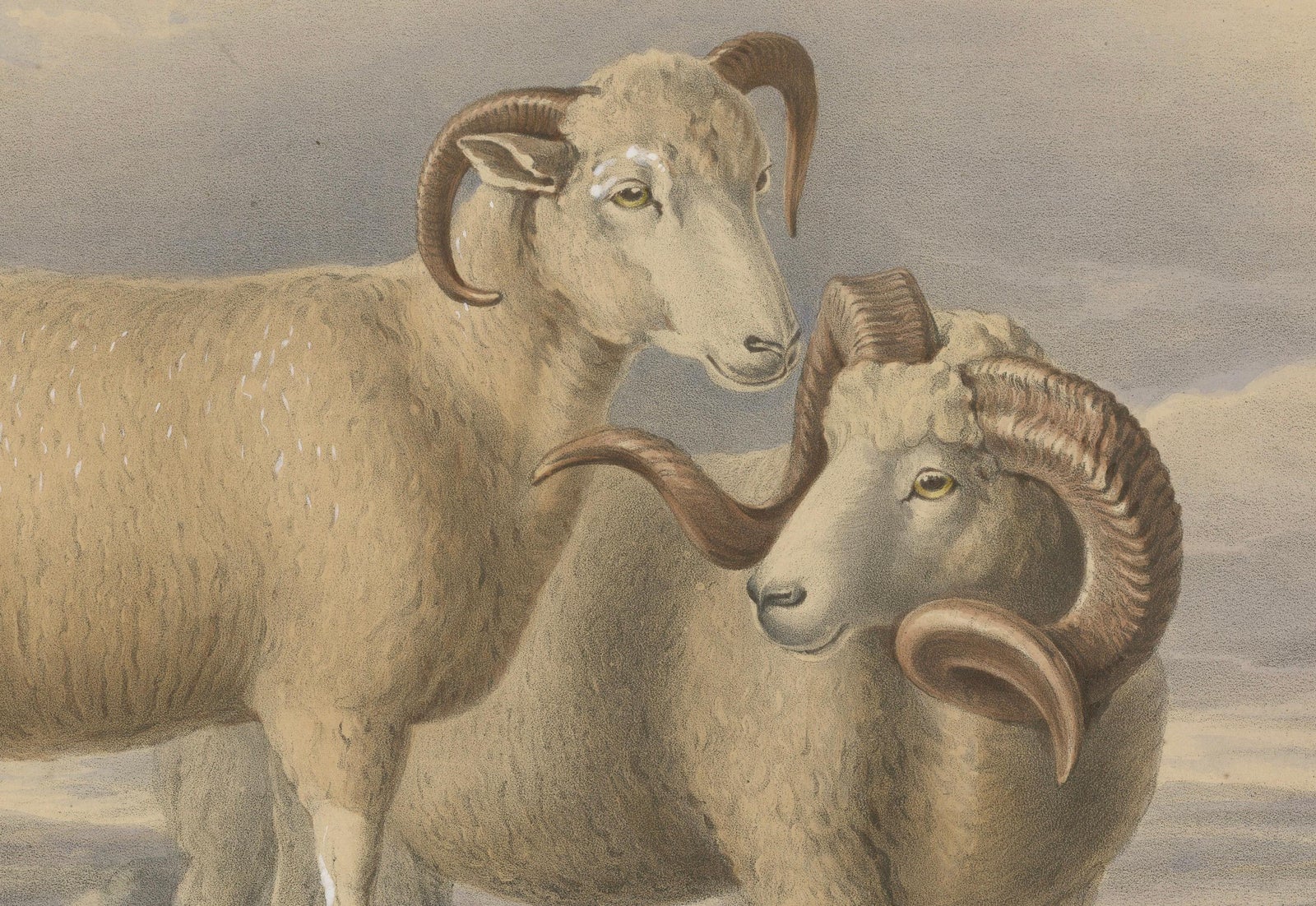
The lithograph depicts the Dorset breed, showing a ram and ewe, both rising three years old, bred by Mr. Miller of Thush, near Dorchester.
The image showcases detailed illustrations of the breed, with particular attention to their wool and physical characteristics, set against a pastoral backdrop. The lithograph was drawn on stone and printed by Fairland, with publication details indicating its release in February 1841 by Longman, Orme, Brown, Green, & Longmans, Paternoster Row, London.
Current Status of the Dorset Breed
The Dorset breed, specifically the Dorset Horn and Poll Dorset, remains a prominent and valued breed in modern sheep farming.
1. **Breeding and Distribution:** The Dorset breed is widely bred in the UK and around the world, including in Australia, New Zealand, and North America. The breed is known for its ability to breed out of season, making it highly desirable for year-round lamb production.
2. **Economic Importance:** Dorset sheep are valued for their meat quality. The breed produces a high yield of lean, flavorful lamb. Additionally, Dorset ewes are known for their excellent mothering abilities and high fertility rates.
3. **Conservation and Popularity:** Both the Dorset Horn and Poll Dorset are not considered endangered and continue to be popular among sheep farmers. The Poll Dorset, in particular, has gained popularity due to its lack of horns, making it easier to handle and manage.