Close-ups
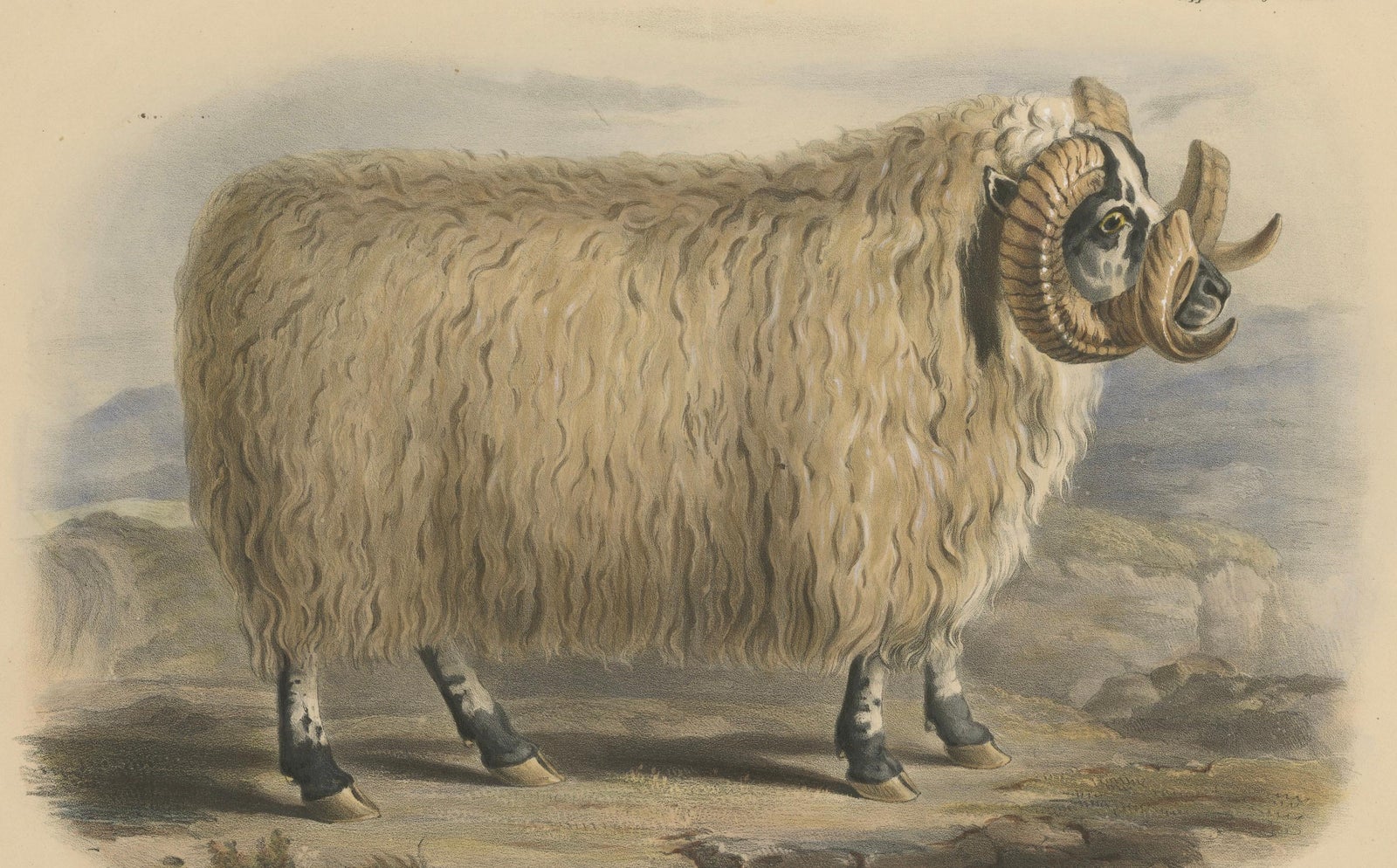
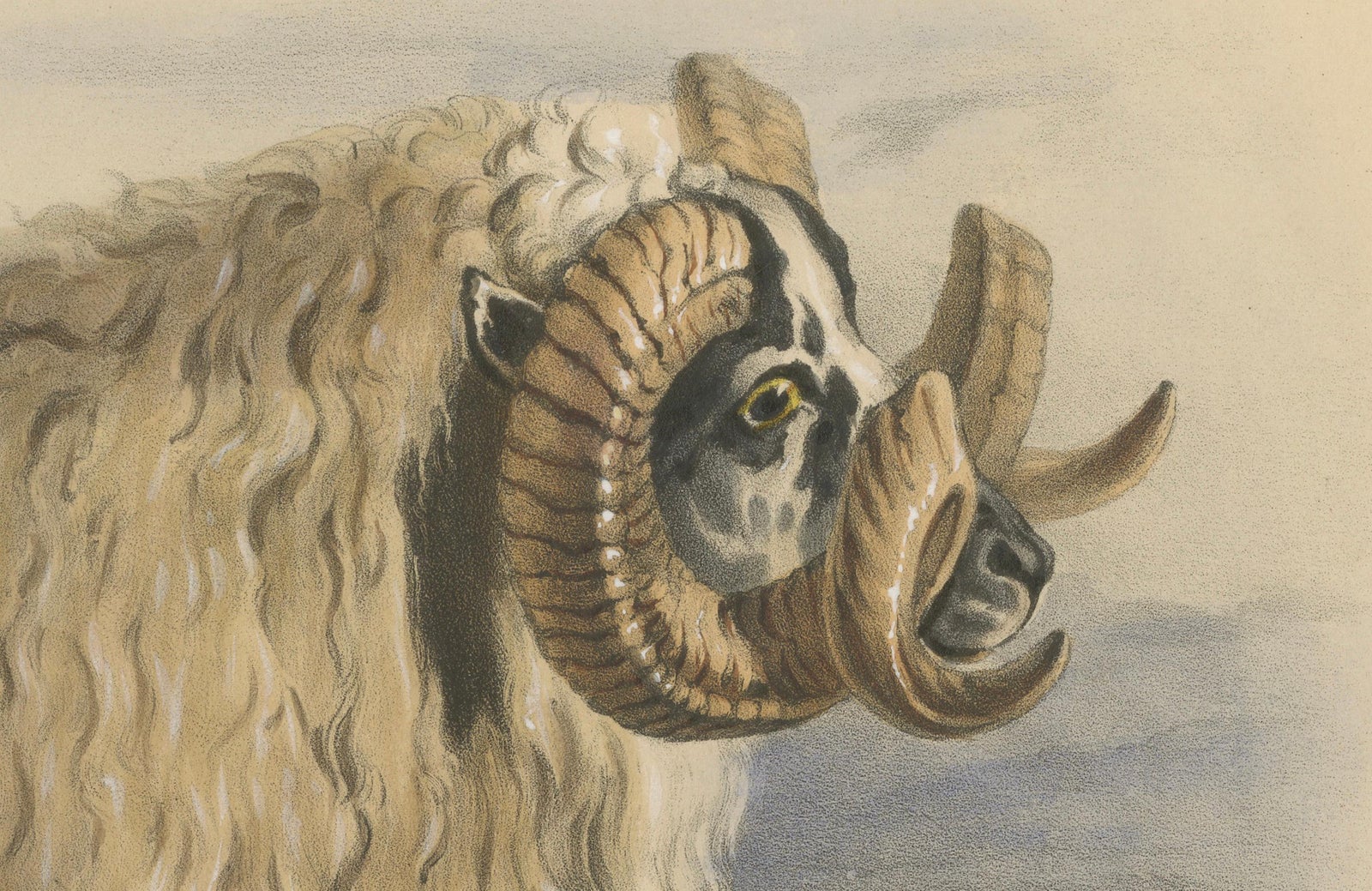
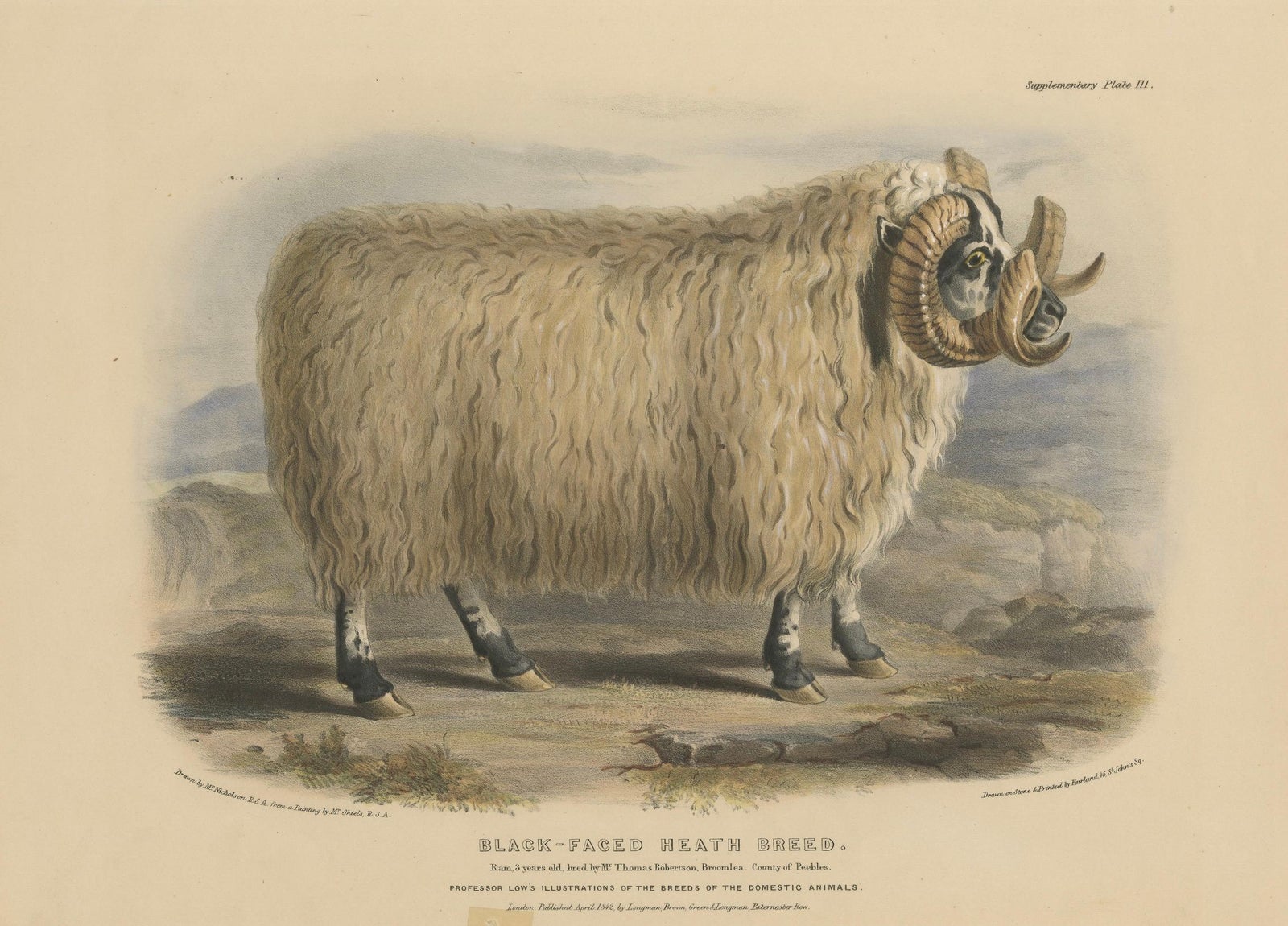
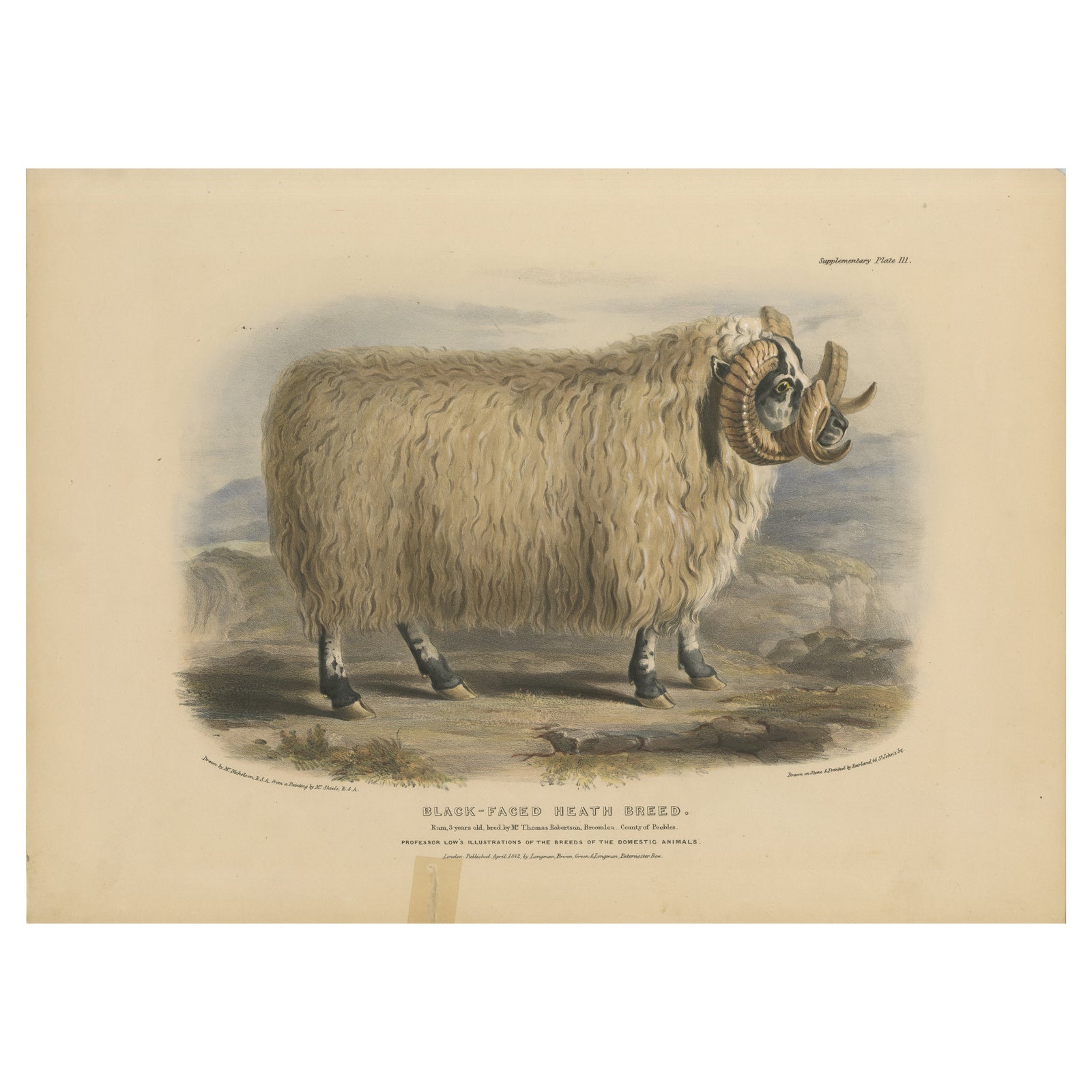
Lithograph of a Ram of the Black-Faced Heath Breed or Scottish Blackface, 1841
$305 (£230, €270)
Period original, not a reproduction.
Shipped from the Netherlands, flat, insured and tracked, worldwide. Returns accepted within 14 days.
- Date
- 1841
- Size
- 12.3 × 16.7 in (31.2 × 42.5 cm)
- Condition
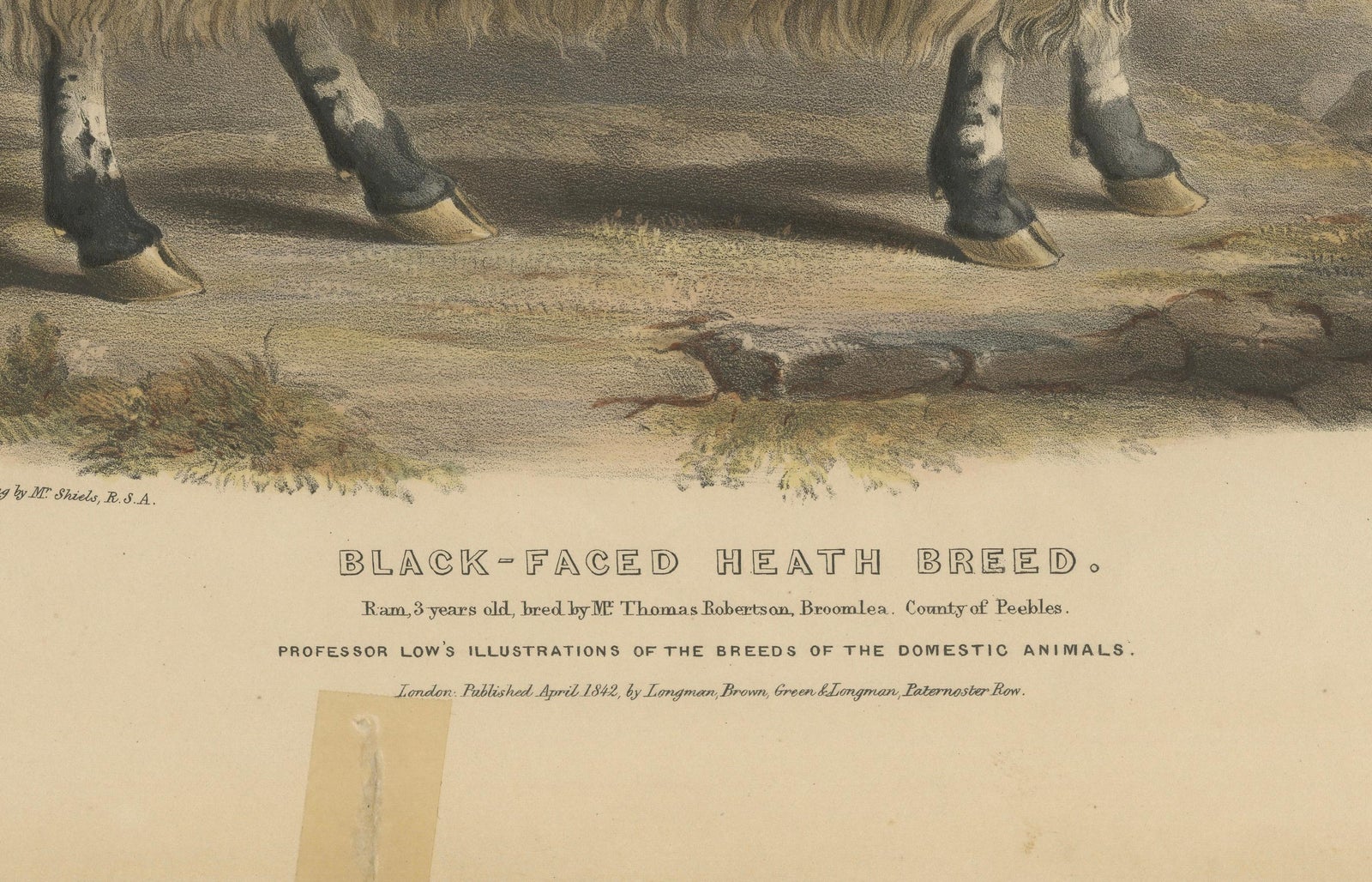
- Good. Good, considering age. The artwork is lightly browned and has a tape repair, touching the lower text but not the image. Please study scans carefully.
- Period
- Early 19th century
- Section
- Mammals
- Reference
- f_40595332
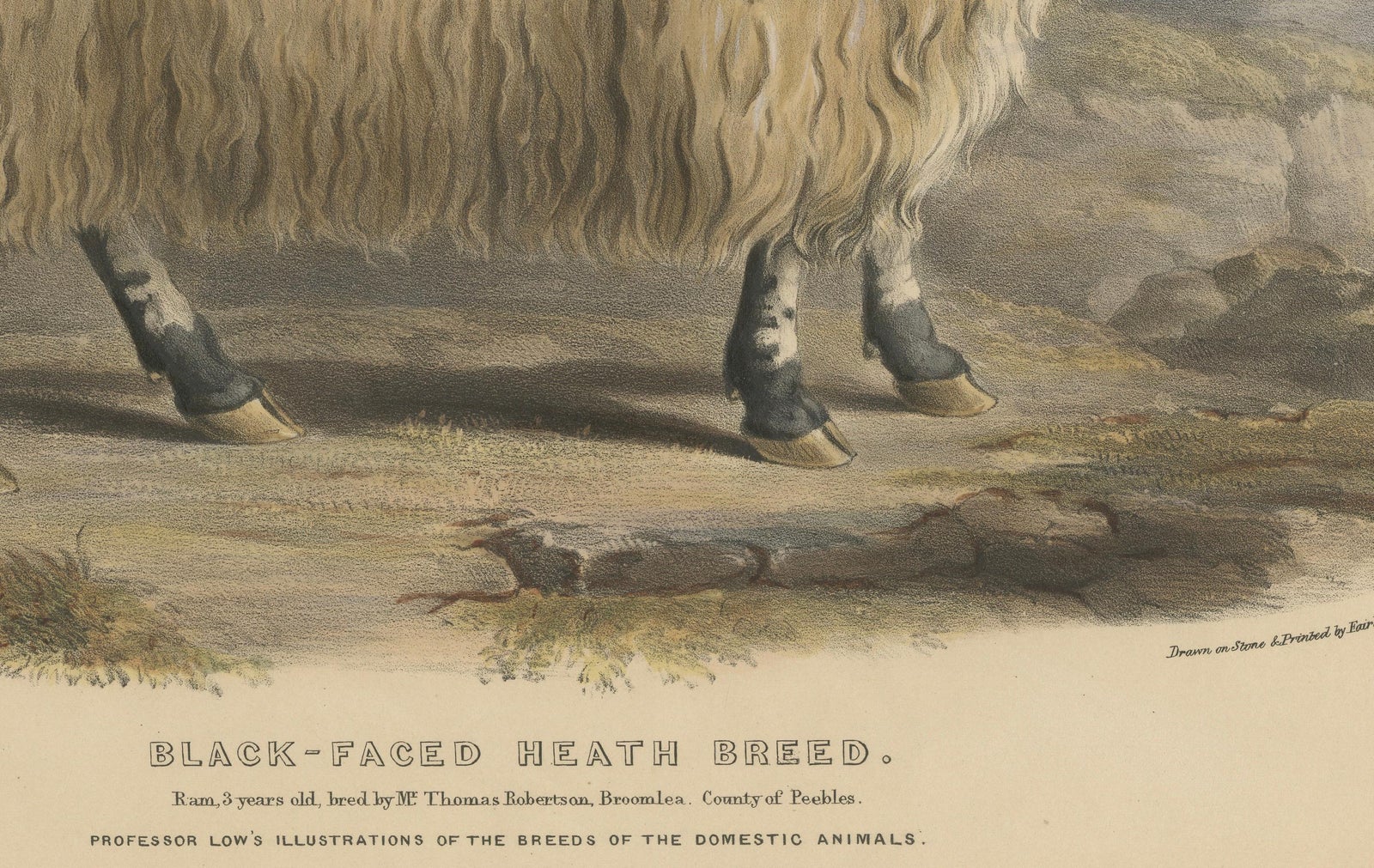
Old colored lithograph by Fairland after W. Nicholson, from "The Breeds of the Domestic Animals of the British Isles" by David Low, published in London, 1842.
The lithograph depicts the Black-Faced Heath breed, specifically a ram aged three years, bred by Mr. Thomas Richardson of Broomlee, County of Peebles.
The image showcases detailed illustrations of the breed, with particular attention to their physical characteristics, set against a rugged heathland backdrop. The lithograph was drawn on stone and printed by Fairland, with publication details indicating its release in April 1841 by Longman, Orme, Brown, Green, & Longmans, Paternoster Row, London.
Current Status of the Black-Faced Heath Breed
The Black-Faced Heath breed, also known as the Scottish Blackface, is still widely prevalent today. Known for its resilience and adaptability, the breed remains a cornerstone of upland sheep farming.
1. **Breeding and Distribution:** The Scottish Blackface is extensively bred across the UK, particularly in Scotland, Northern England, and Northern Ireland. The breed's hardiness makes it ideal for the challenging conditions of upland and hill farming.
2. **Economic Importance:** This breed is highly valued for both its wool and meat. The wool is coarse and suitable for carpets and tweeds, while the meat, particularly lamb, is sought after for its quality and flavor.
3. **Conservation and Popularity:** The Scottish Blackface is not considered endangered. It continues to be a popular choice among farmers due to its strong mothering abilities and robust nature, which are essential for surviving harsh weather conditions