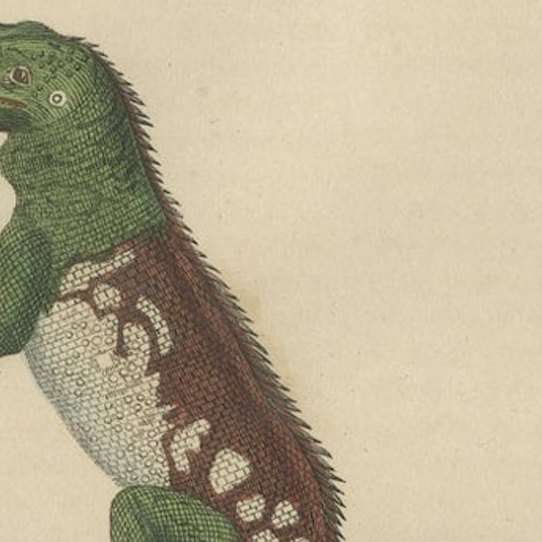
Close-ups
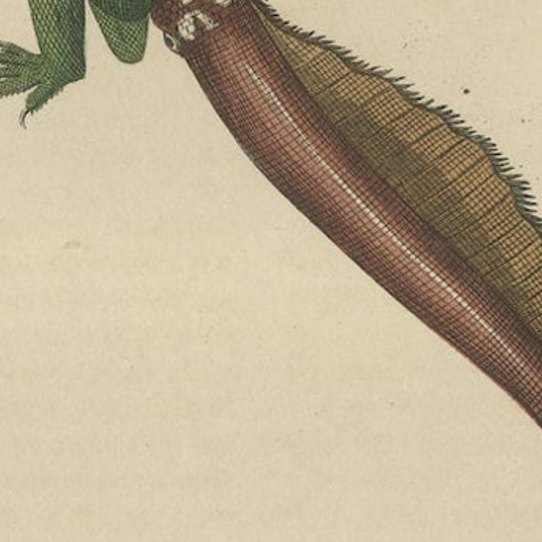
Framed and on the wall
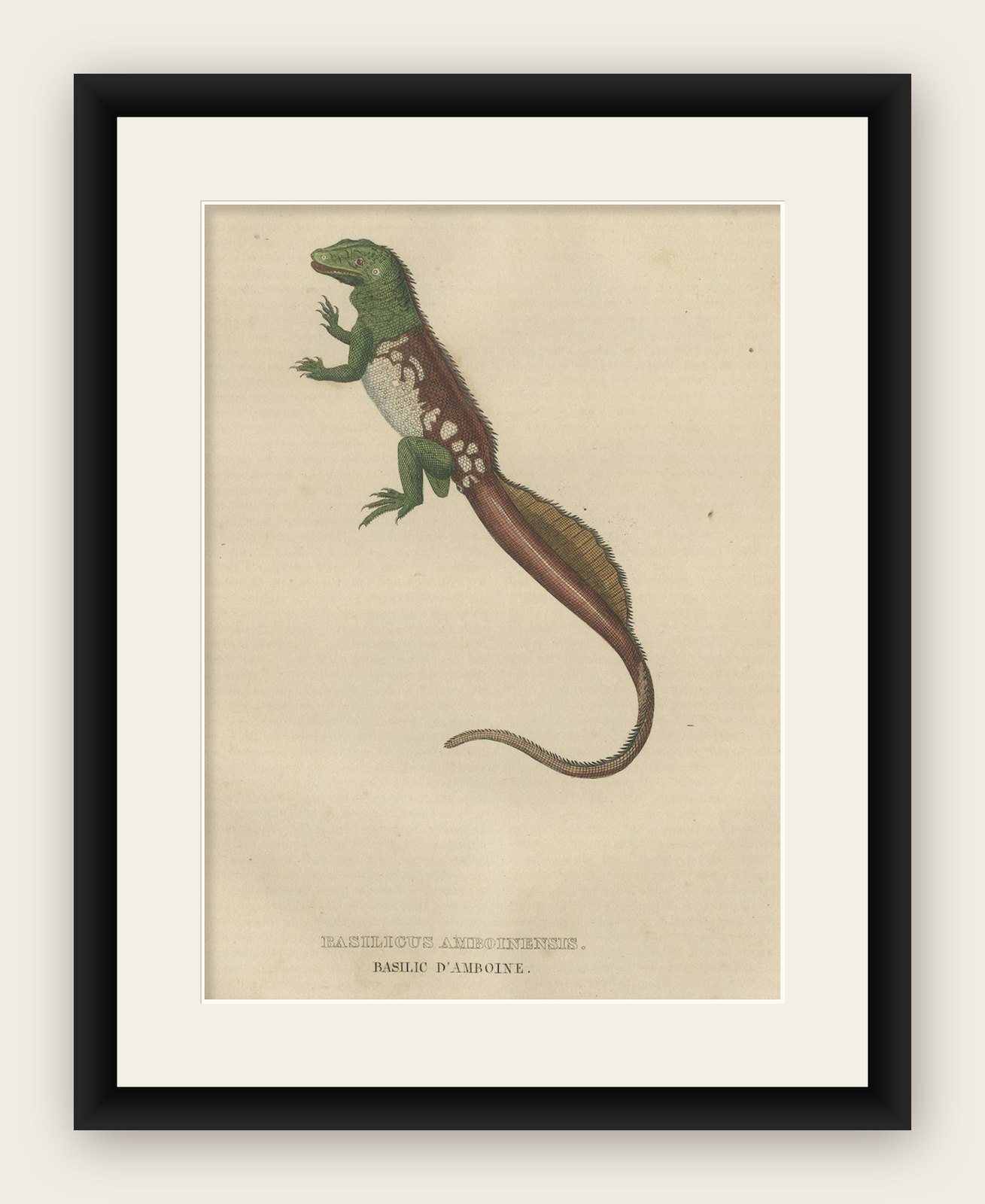


Frame and rooms are illustrations of how the print could look; the description says what is included.
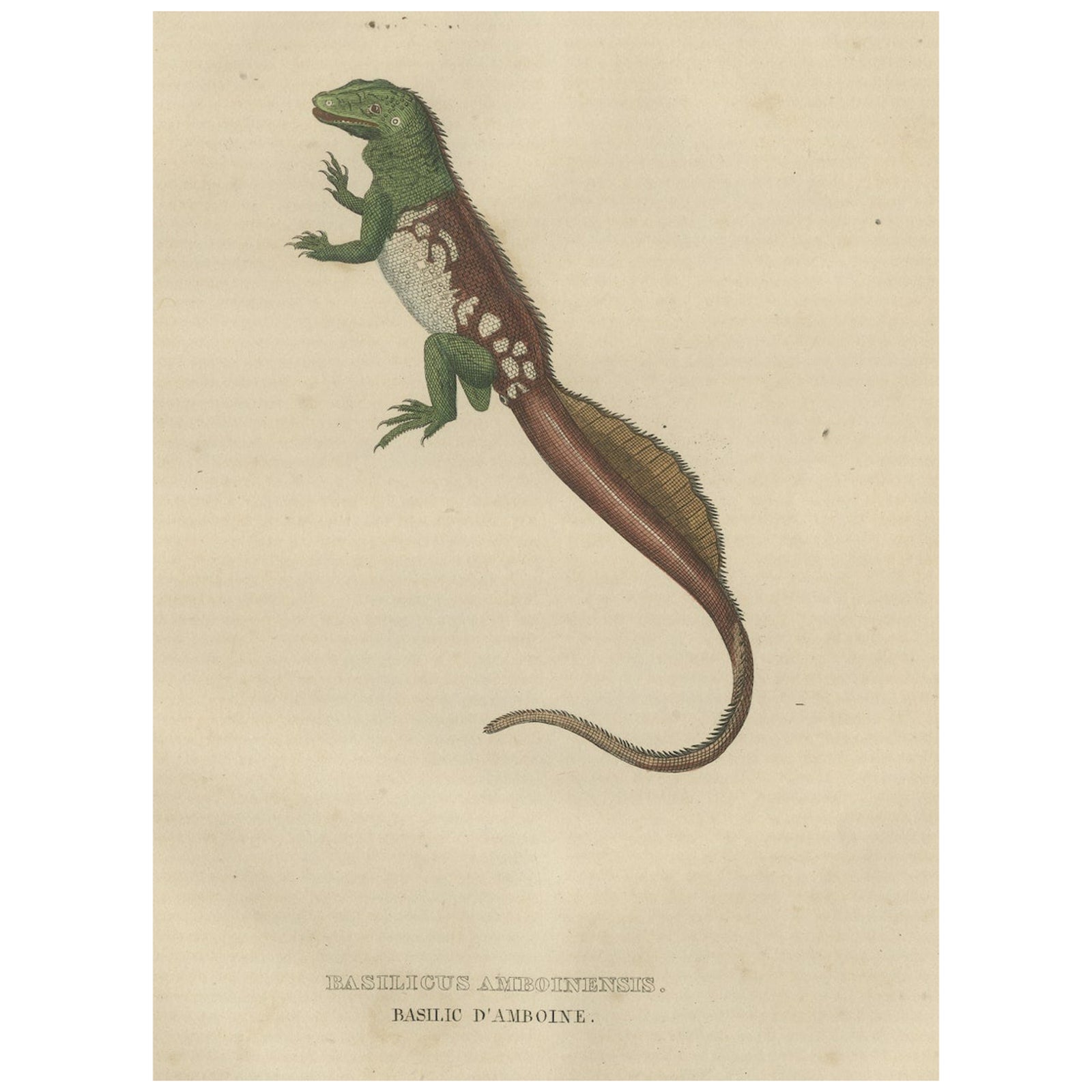
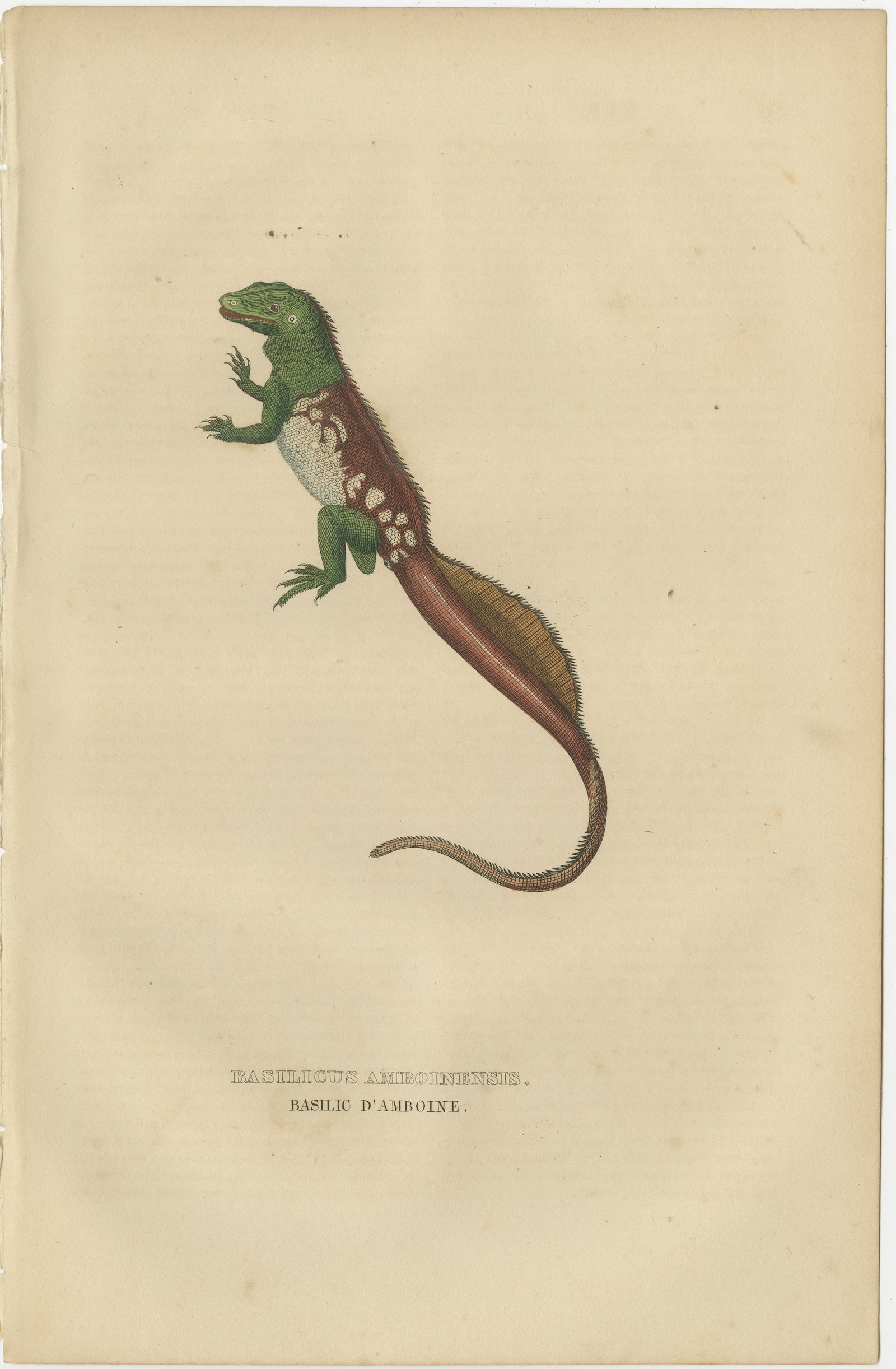
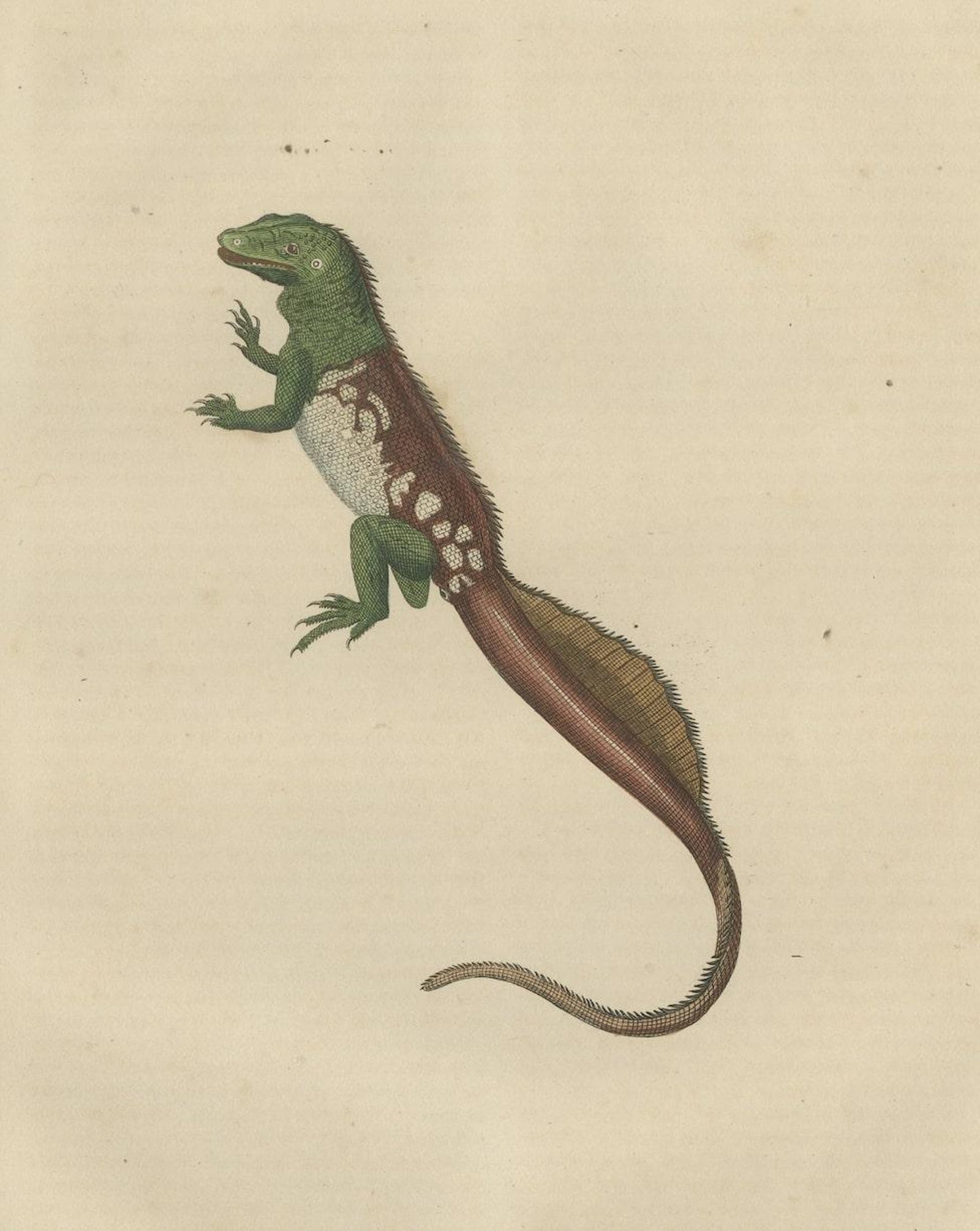
Old Hand-colored Print of a Rare Amboina Sailfin Lizard
£195 ($260, €230)
Period original, not a reproduction.
Shipped from the Netherlands, flat, insured and tracked, worldwide. Returns accepted within 14 days.
- Date
- Not stated
- Size
- 10.4 × 6.7 in (26.5 × 17 cm)
- Condition
- Very good, given age. General age-related toning and/or occasional minor defects from handling. Please study scan carefully.
- Section
- Reptiles and amphibians
- Reference
- f_37412312
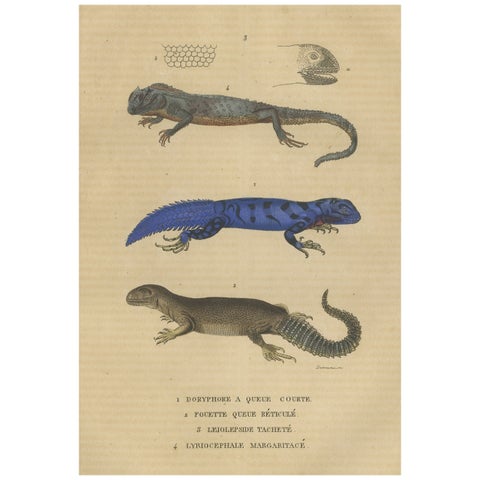
The Amboina Sailfin Lizard, scientifically known as Hydrosaurus amboinensis, is a real reptile species native to the Moluccan Islands of Indonesia, including Amboina (now known as Ambon). It's commonly referred to as the Amboina Sailfin or the Indonesian Sailfin Lizard.
These striking creatures are known for their impressive sail-like crests along their backs and tails, which they can raise for display or to regulate body temperature. The crests, often adorned with vibrant patterns or colors, make them visually striking and distinctive among reptiles.
Amboina Sailfin Lizards are semi-aquatic, spending much of their time near water bodies like rivers or streams. They are excellent swimmers and climbers, utilizing their long, powerful tails and webbed feet to navigate both land and water with ease.
Physically, they have elongated bodies, robust limbs, and a tail that can make up over two-thirds of their total body length. Their coloration can vary from shades of green to brown, aiding in camouflage in their natural habitats.
While the Amboina Sailfin Lizard is a real species and not a mythical creature like the Basilisk of Amboina, its striking appearance, coupled with its unique behavior and habitat, has likely contributed to its prominence and fascination, even earning it nicknames like the "Basilic d'Amboine" in some contexts or cultures.
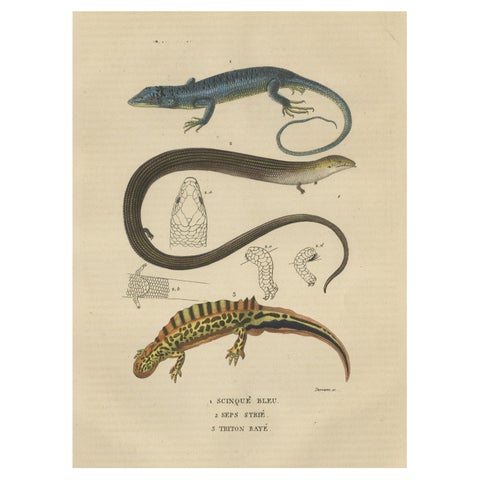
Made by F.J. Desmares after Pierre Auguste Joseph Drapiez (1778-1856).
Engraving with original hand colouring, heightened with arabic gum on wove (vellin) paper.
More info on the book in which it was published:
The 'Dictionnaire Classique des Sciences Naturelles' by Pierre Auguste Joseph Drapiez stands as a remarkable testament to 19th-century natural sciences. Published in Brussels in 1845, this work represents an expansive collation of knowledge, building upon the pioneering works of Buffon, Daubenton, Lacepede, Cuvier, de Jussieu, and other influential naturalists.
The prints within this compendium likely showcase a rich amalgamation of artistic precision and scientific accuracy. Drapiez, himself a Belgian naturalist, would have aimed for detailed representations of flora, fauna, and scientific phenomena, mirroring the illustrative styles prevalent during his time. Given the era's emphasis on illustration, these prints were likely engraved meticulously, possibly portraying intricate anatomical details or lifelike depictions of the natural world.
With Drapiez's background in natural history, the prints might bear testament to his commitment to scientific authenticity, aiming to educate and inspire scholars and enthusiasts alike. These engravings would have complemented the text, offering visual aids that elucidate the concepts and specimens discussed in the volume.
Overall, the prints of 'Dictionnaire Classique des Sciences Naturelles' likely serve as both artistic representations and invaluable scientific resources, encapsulating the essence of 19th-century natural history exploration and documentation.