Close-ups
Framed and on the wall
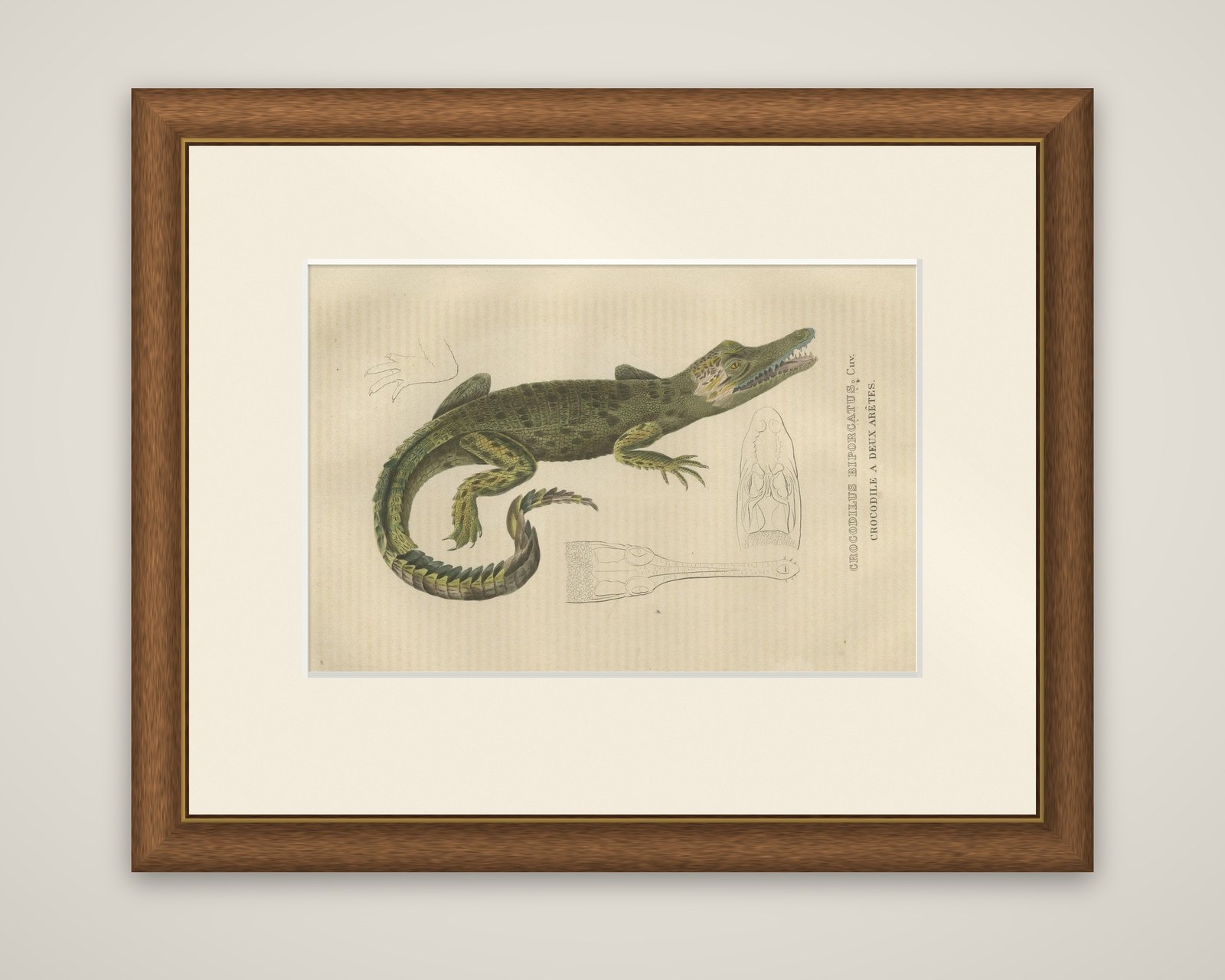


Frame and rooms are illustrations of how the print could look; the description says what is included.
Old Hand-colored Print of a Cuban Crocodile
£170 ($225, €200)
Period original, not a reproduction.
Shipped from the Netherlands, flat, insured and tracked, worldwide. Returns accepted within 14 days.
- Date
- Not stated
- Size
- 10.4 × 6.7 in (26.5 × 17 cm)
- Condition
- Very good, given age. General age-related toning and/or occasional minor defects from handling. Please study scan carefully.
- Section
- Reptiles and amphibians
- Reference
- f_37412432
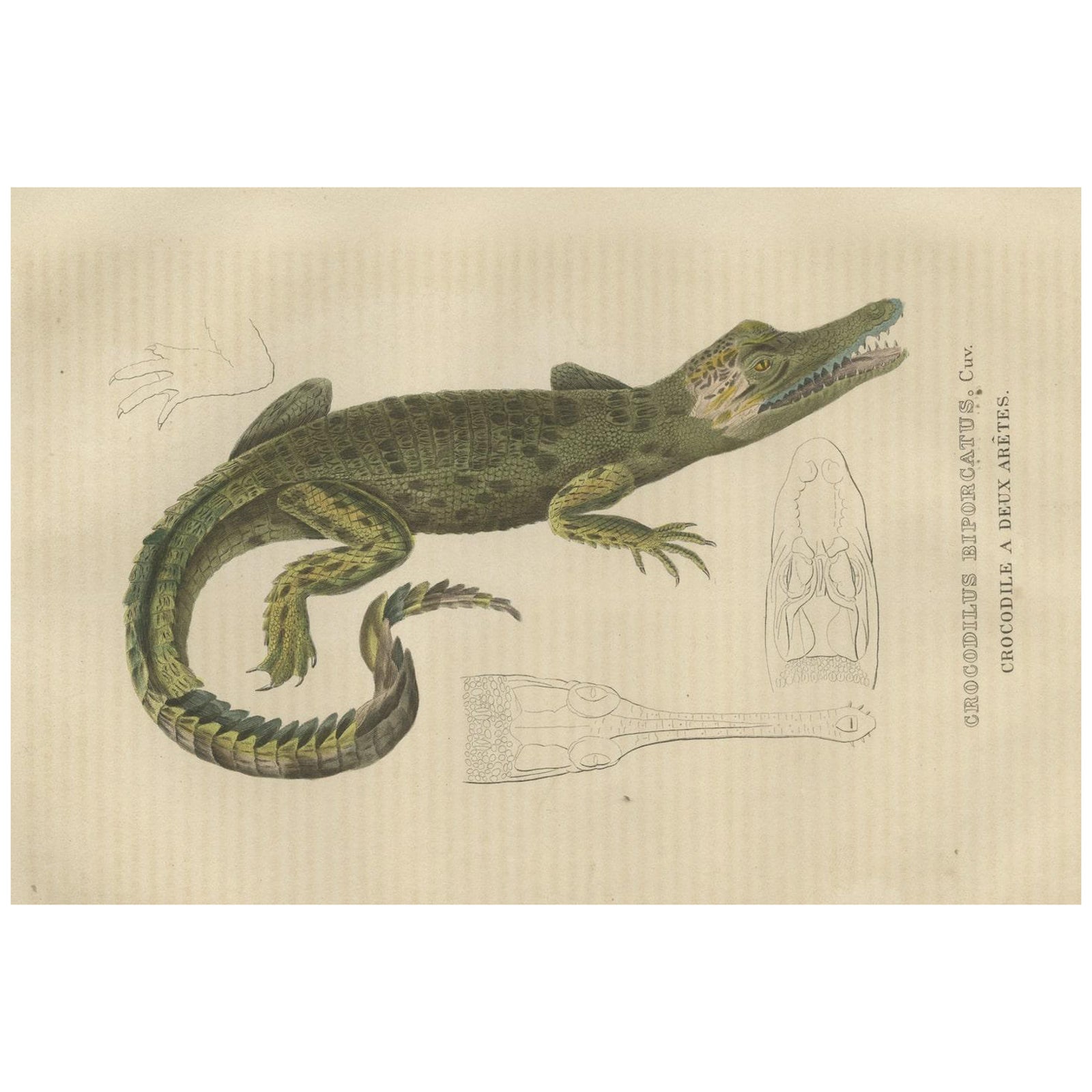
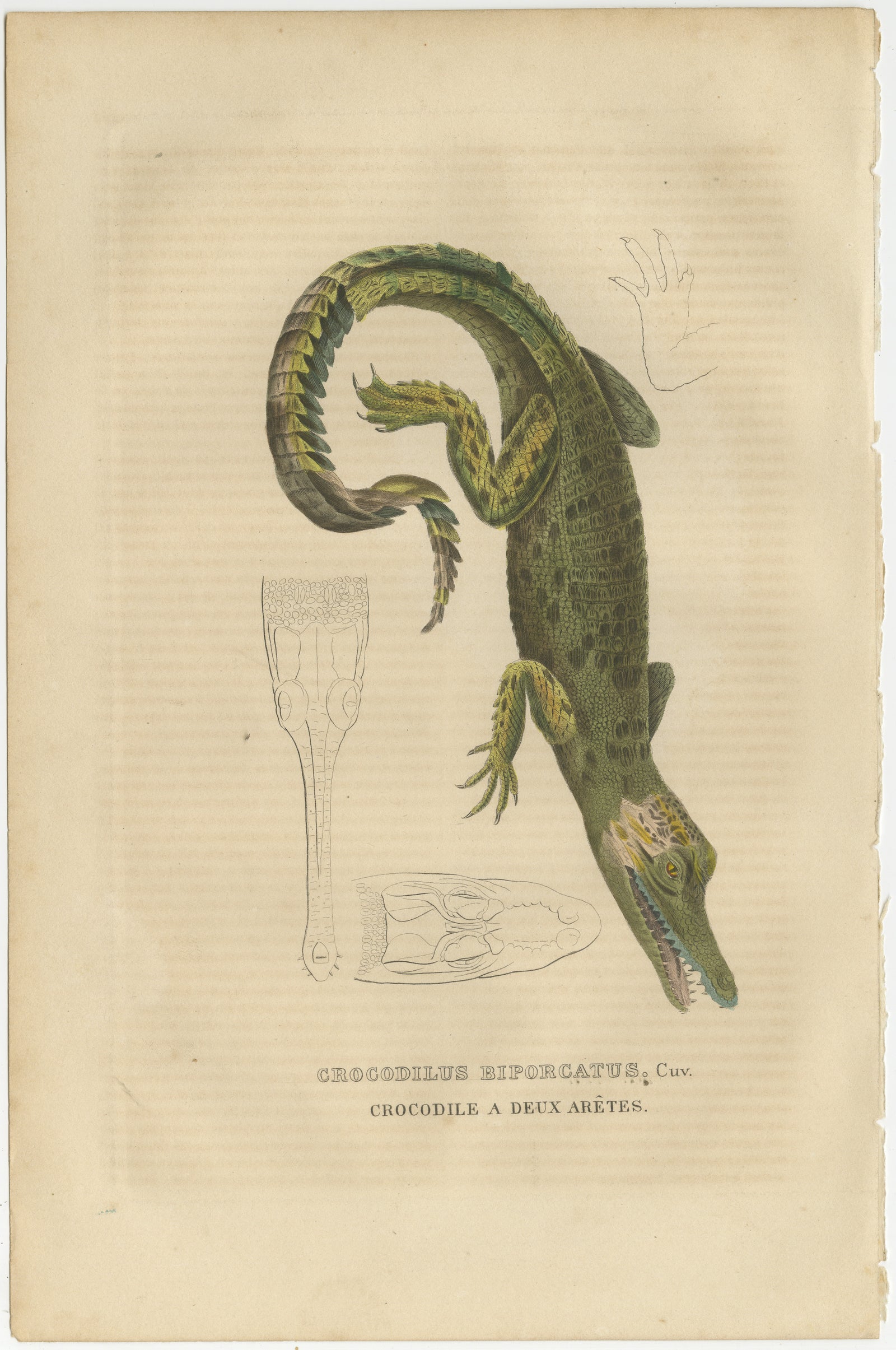
Crocodilus biporcatus, "Crocodile a deux aretes", a hand-colored engraving from Pierre Auguste Joseph Drapiez's Dictionnaire Classique des Sciences Naturelles, published in Brussels in 1845. The engraver was F. J. Desmares, working after Drapiez. The sheet is an engraving with original hand coloring, heightened with gum arabic, on wove paper.
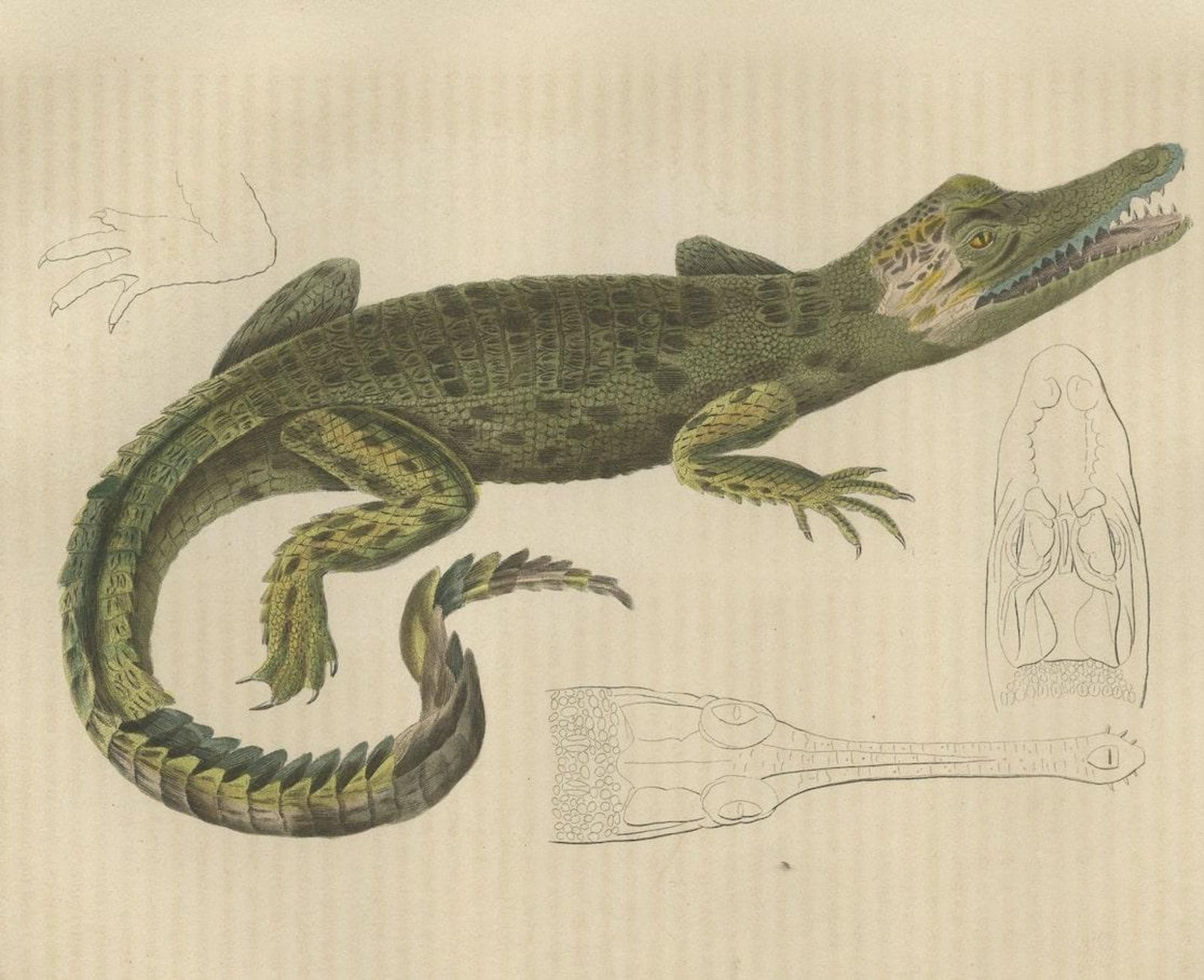
The plate shows the whole animal in profile, its olive-green body marked with yellow and dark scutes along the back and a long, banded, double-crested tail curled below. Its mouth is open to show the teeth, and a hind foot is drawn in outline at upper left. Two line studies of the skull, one from above and one from below, complete the plate. The title is engraved at the right in two lines, with the authority "Cuv." after the Latin name.
The authority "Cuv." after the Latin name credits Cuvier, and the French common name refers to the two raised ridges behind the eyes. Drapiez was a Belgian naturalist, and his Dictionnaire was built on the work of earlier naturalists including Buffon, Daubenton, Lacepede and Cuvier.