
Oeakari, Sodenaap, Cacajao & Capuchin Monkeys, Lithographs by C.C. Last, 1836
$670 (£505, €599)
Period original, not a reproduction.
Shipped from the Netherlands, flat, insured and tracked, worldwide. Returns accepted within 14 days.
- Date
- 1836
- Size
- 12.7 × 10.2 in (32.2 × 26 cm)
- Condition
- Good, given age. Light foxing / soiling. General age-related toning and/or occasional minor defects from handling. Please study scan carefully.
- Period
- Early 19th century
- Section
- Mammals
- Reference
- f_41748252
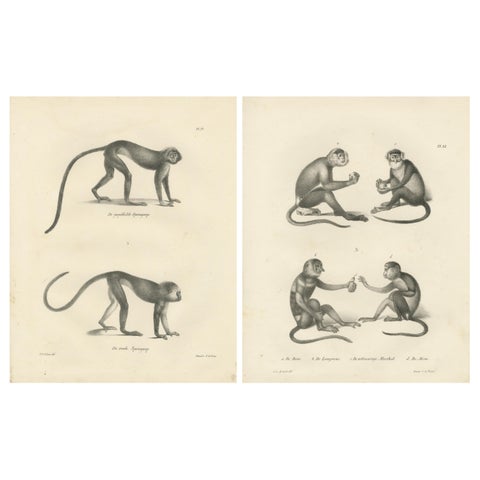
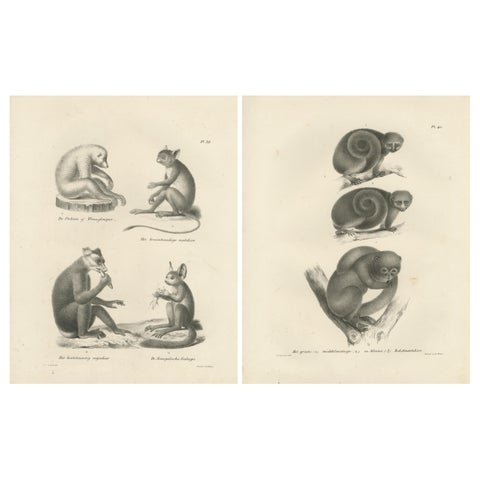
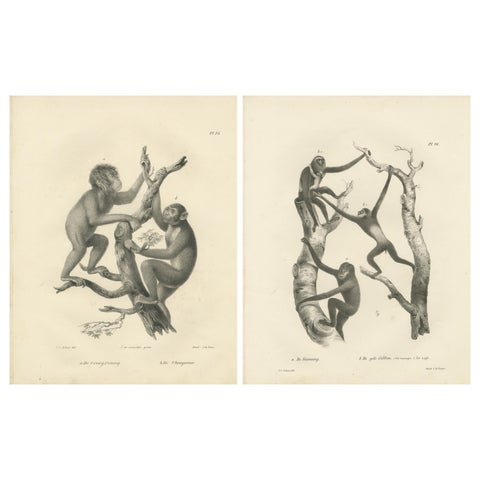
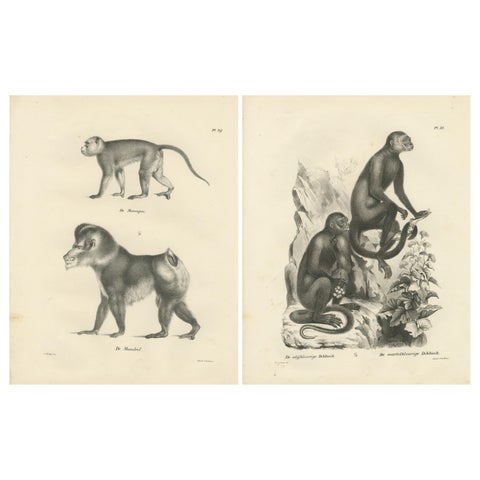
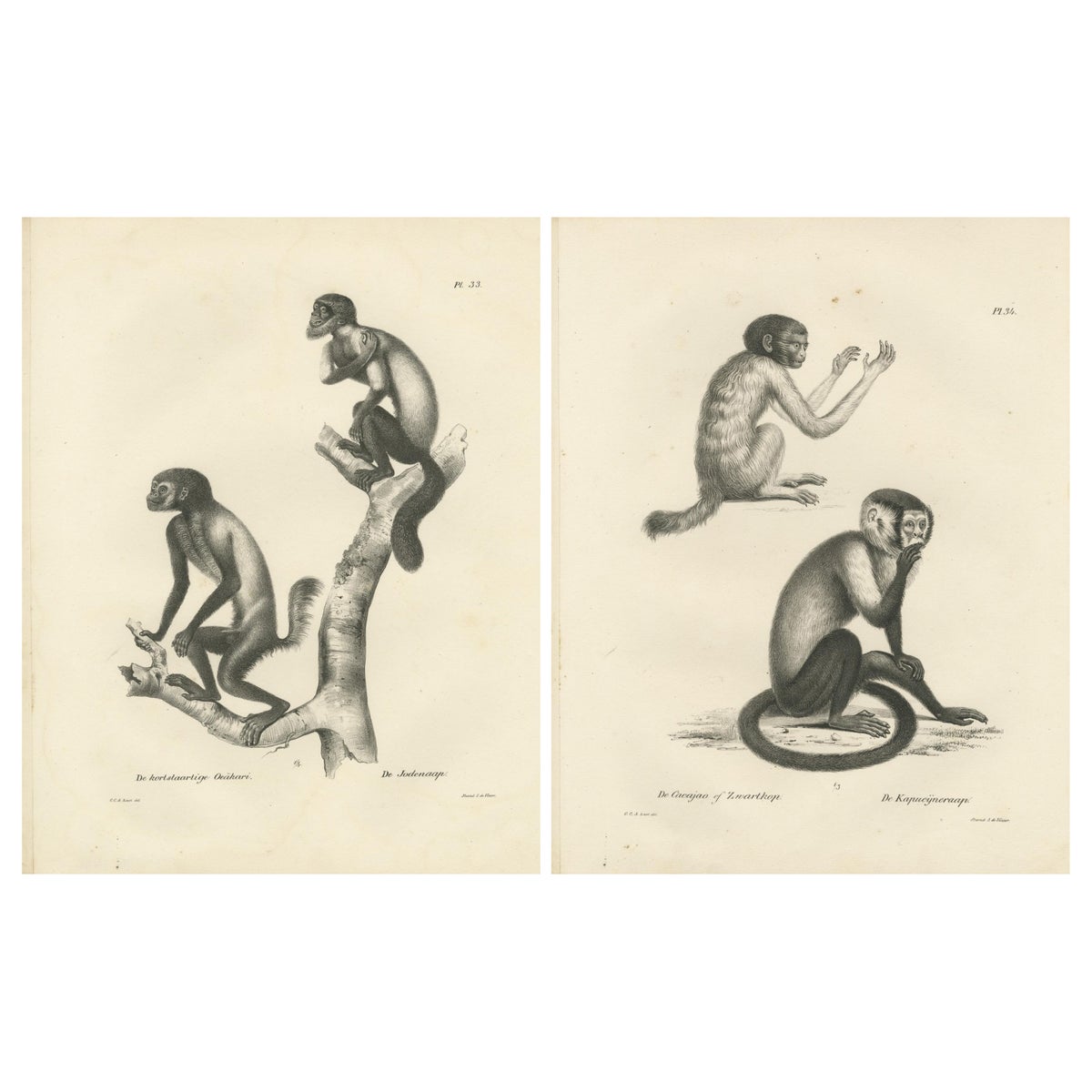
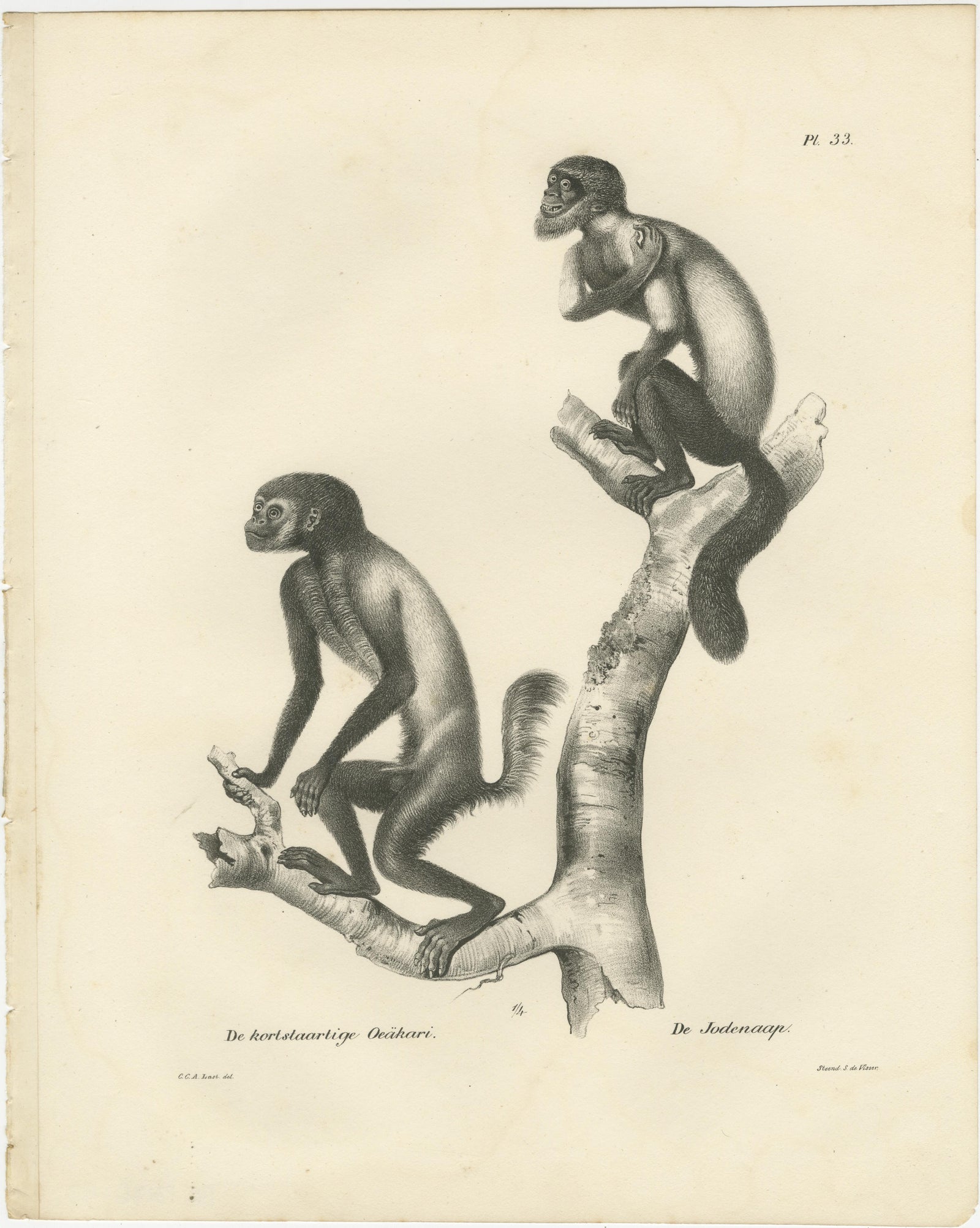
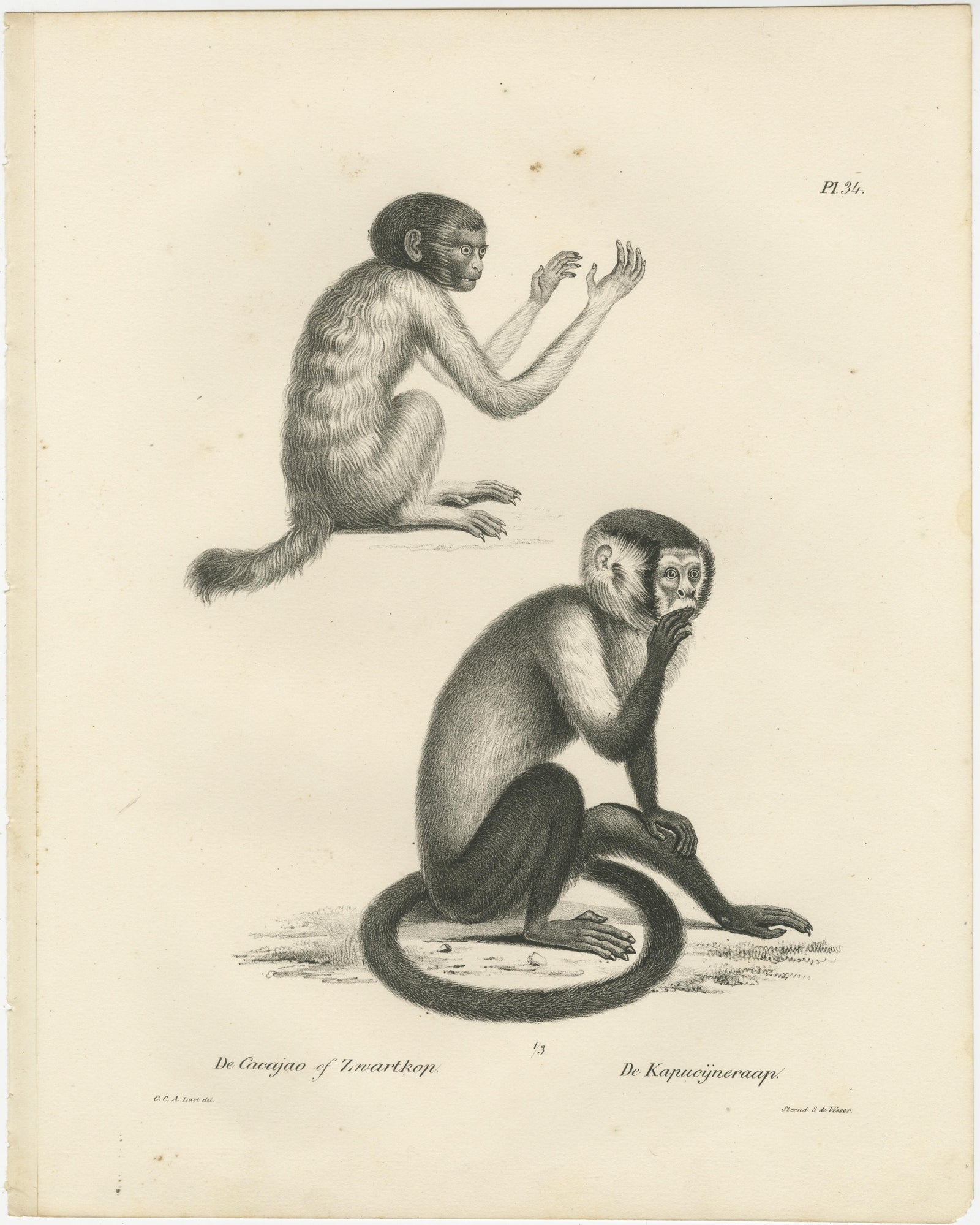
These two lithographs feature various species of monkeys, carefully depicted by Carel Christiaan Antony Last for Heinrich Rudolf Schinz's *Volledige Natuurlijke Historie der Zoogdieren* (1836), a comprehensive natural history publication. These prints were produced by the printing house S. de Visser en Zoon in The Hague, as part of a larger effort to document and catalog the animal kingdom for European audiences.
The first lithograph (Pl. 33) shows the *Kortstaartige Oeakari* and the *
Jodenaap*. Both monkeys are perched on tree branches, with their body proportions and fur texture rendered in great detail. The *Oeakari* is shown seated, its compact form highlighting the "short-tailed" aspect of its name, while the *Jodenaap* gazes outward from its elevated perch. These depictions provide insight into their arboreal lifestyle and emphasize their characteristic features.
The second lithograph (Pl. 34) depicts the *Cacajao* or *Zwartkop* and the *Kapucijneraap*. The *Cacajao*, with its distinctive dark head, is portrayed sitting contemplatively, while the *Kapucijneraap*, or capuchin monkey, is shown with its hand to its mouth, in a posture suggesting its natural behavior. The detailed rendering of their fur and poses captures the scientific interest in these animals' anatomy and behaviors.
These lithographs combine artistic skill with scientific inquiry, reflecting the fascination with documenting exotic animals in 19th-century Europe. The attention to detail in these representations was intended to educate the public while also providing aesthetically pleasing images for natural history collections.