

Anatomical Studies of Bats from 'The Mammals' Natural History Lithographs, 1836
$435 (£330, €390)
Period original, not a reproduction.
Shipped from the Netherlands, flat, insured and tracked, worldwide. Returns accepted within 14 days.
- Date
- 1836
- Size
- 12.7 × 10.2 in (32.2 × 26 cm)
- Condition
- Good, given age. Light foxing / soiling. General age-related toning and/or occasional minor defects from handling. Please study scan carefully.
- Period
- Early 19th century
- Section
- Mammals
- Reference
- f_41763742
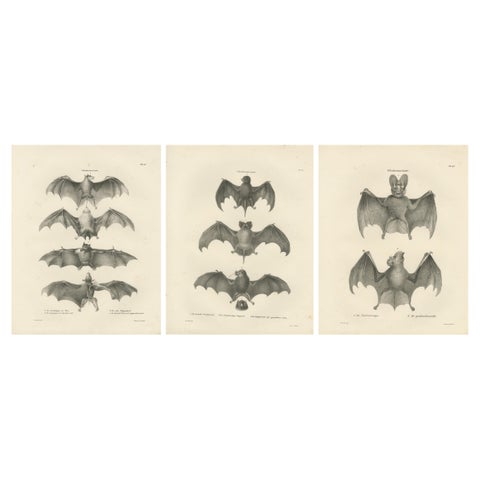
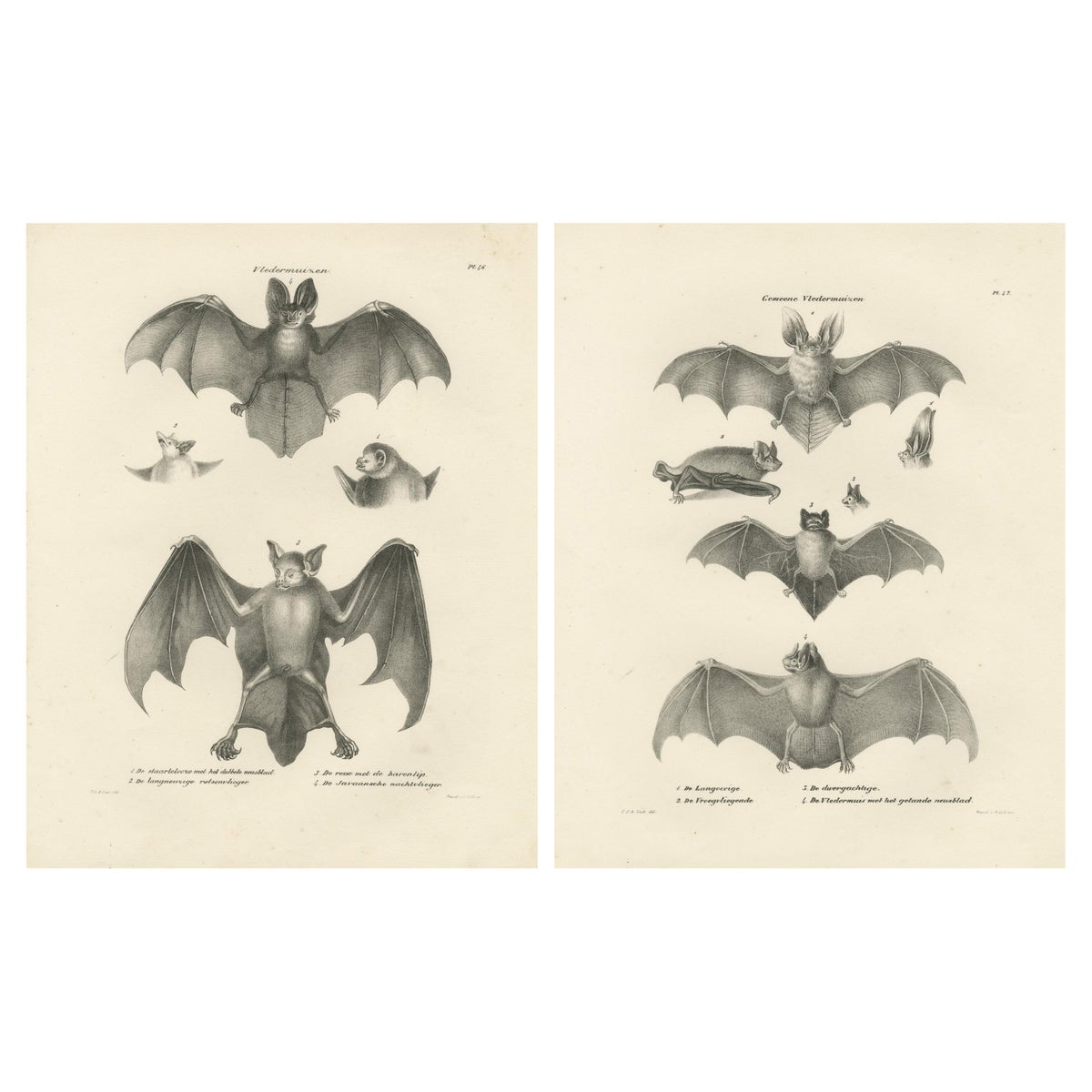
Here is a detailed description of the two bat lithographs:
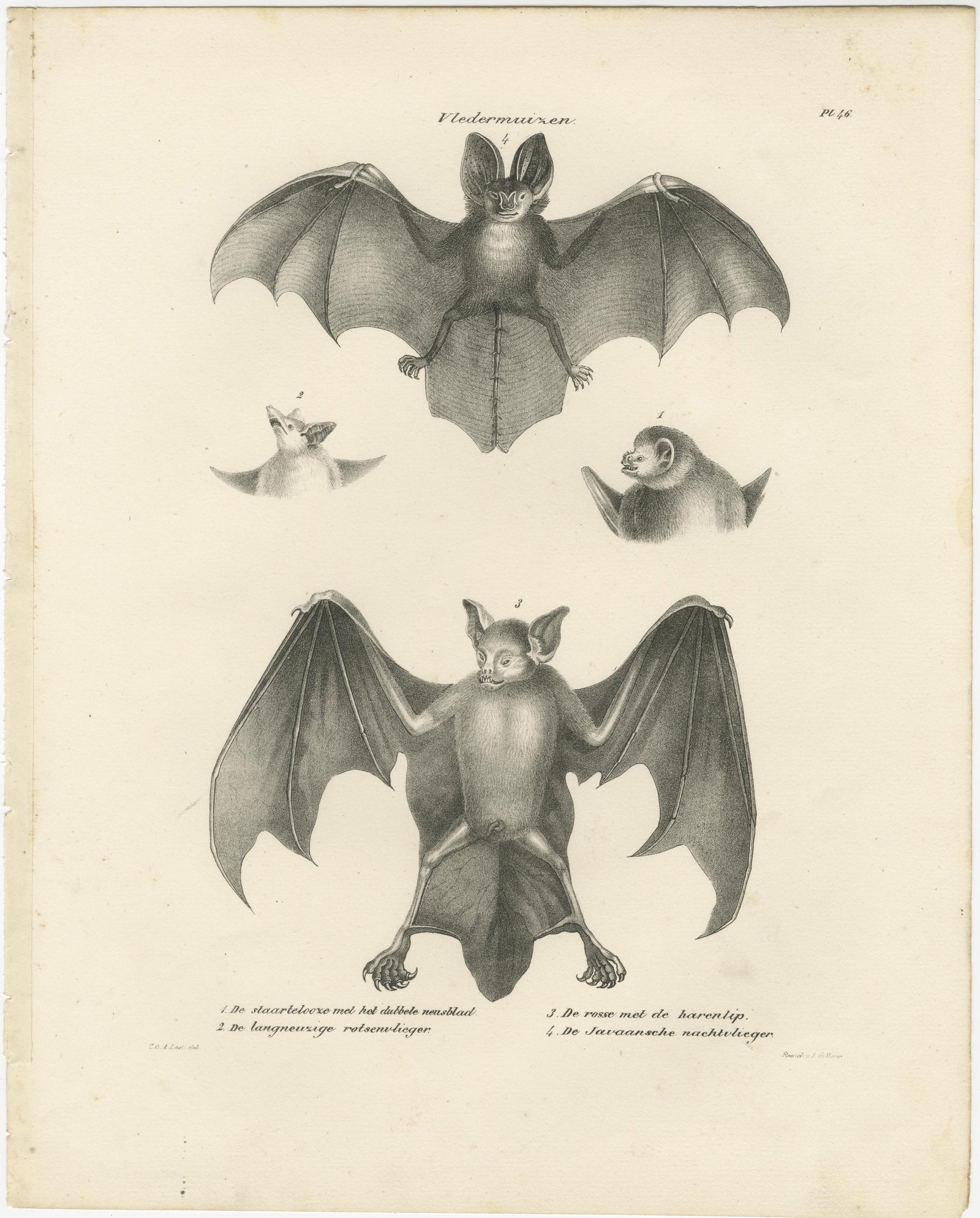
One print presents four different species of bats, meticulously rendered with a focus on their anatomical features. The bats are shown either fully extended or in profile, highlighting the unique physical traits of each species.
1. De staartloore met het dikke mondblad
English: Tailless Bat with Thick Mouth Leaf
This bat is characterized by its lack of a visible tail and a pronounced thick leaf-like structure around its mouth, typical of bats that rely on echolocation.
2. De langneusige rozenvlieger
English: Long-nosed Rosette Bat
Known for its elongated nose, this bat is part of a group that often feeds on fruit or nectar, and its nose likely aids in detecting food.
3. De rozen met de haarelip
English: Bat with Hairy Lip
This species stands out due to its distinctive "hairy" lip feature, possibly linked to sensory or feeding adaptations.
4. De Javaansche nachtvlieder
English: Javanese Night-flyer
Native to the Indonesian island of Java, this bat is adapted for night hunting, with large wings and keen senses for detecting prey in the dark.
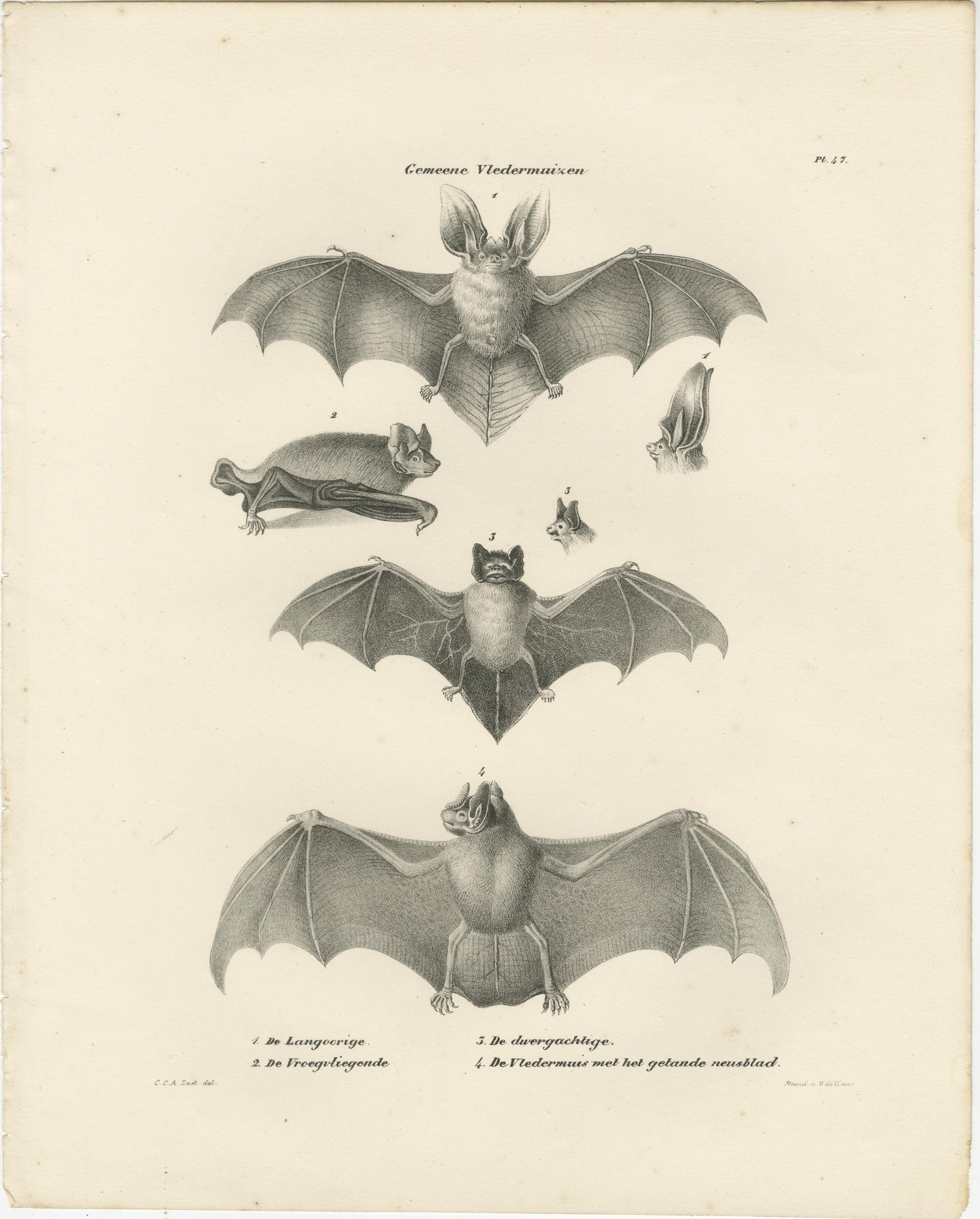
The second print shows a variety of common bat species (labeled "Gemeene Vledermuizen"), each depicted in their characteristic postures. The details highlight the diversity of forms, including differences in wing shape, ear size, and facial structure.
1. De langoorige
English: Long-eared Bat
As the name suggests, this species has prominently long ears, aiding in its ability to echolocate prey, often insects.
2. De Vreegvliegende
English: Frog-eating Bat
This bat is specialized for hunting frogs and other small amphibians, using its keen sense of hearing to detect the calls of its prey.
3. De dwergachtige
English: Dwarf Bat
One of the smallest bats depicted, the dwarf bat is noted for its compact size and rapid flight, often found in dense forests or urban environments.
4. De vledermuis met het gelande neusblad
English: Bat with Folded Nose Leaf
This species is distinguished by its complex nose structure, often used to focus echolocation calls for precise hunting.
These lithographs, produced by Cornelis Christiaan Antonie Last and published by S. de Visser, form part of "De Zoogdieren: afgebeeld en in hunne levenswijze geschetst". Each bat is captured in detailed anatomical accuracy, providing insight into the physical diversity and adaptations of bat species. These illustrations not only serve as scientific documentation but also as a testament to the aesthetic and technical skill of the artist and the lithographic process.