Close-ups
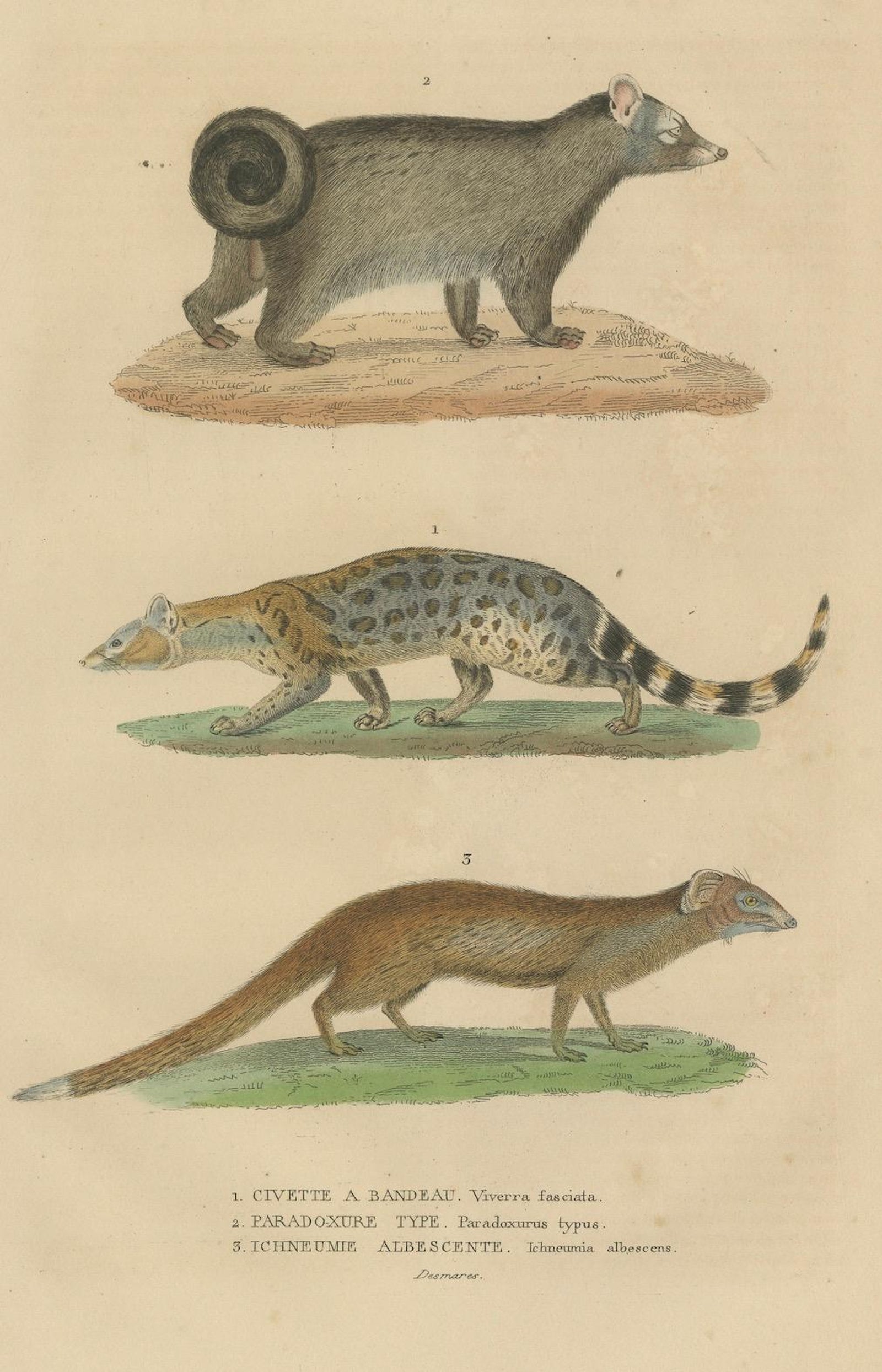
Nocturnal Foragers: A Banded and Asian Palm Civet and Enigmatic Mongoose, 1845
£255 ($335, €300)
Period original, not a reproduction.
Shipped from the Netherlands, flat, insured and tracked, worldwide. Returns accepted within 14 days.
- Date
- 1845
- Size
- 10.4 × 6.7 in (26.5 × 17 cm)
- Condition
- Good. Good. Edge on the left side roughly cut. Very light offsetting and some soiling or browning, mostly around the edges. Please study the image carefully.
- Period
- Early 19th century
- Section
- Mammals
- Reference
- f_37855062
- Colour
- Hand coloured
What the condition grades mean
- Excellent
- Bright and clean, with no faults worth mentioning.
- Very good
- Only light signs of age, such as faint toning.
- Good
- Normal signs of age for a sheet of this period: toning, some foxing, small marks or neat old repairs.
- Fair
- Clear faults such as staining, tears or repairs, priced to match.
Every fault we see is written in the condition note, and the whole sheet is shown uncropped in the photos.
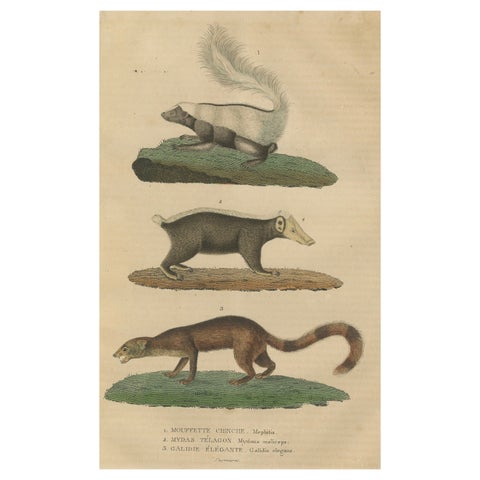
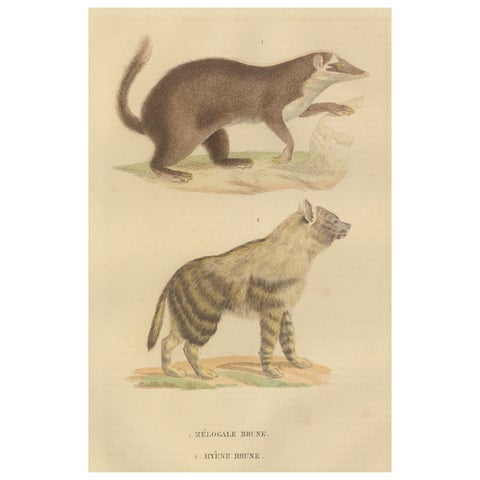
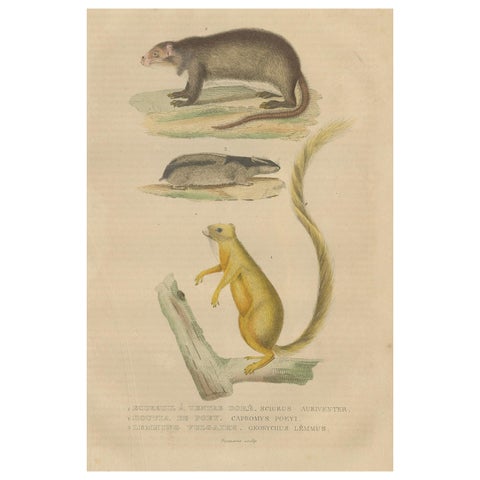
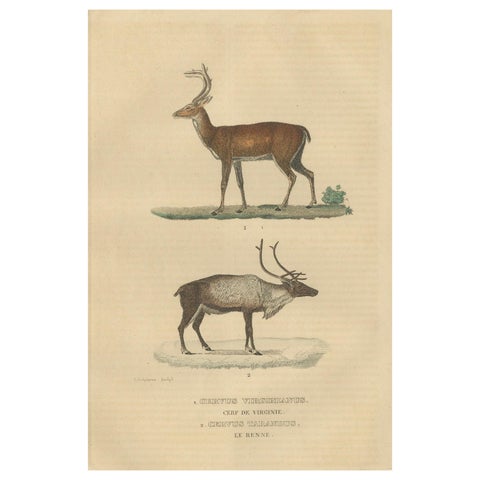
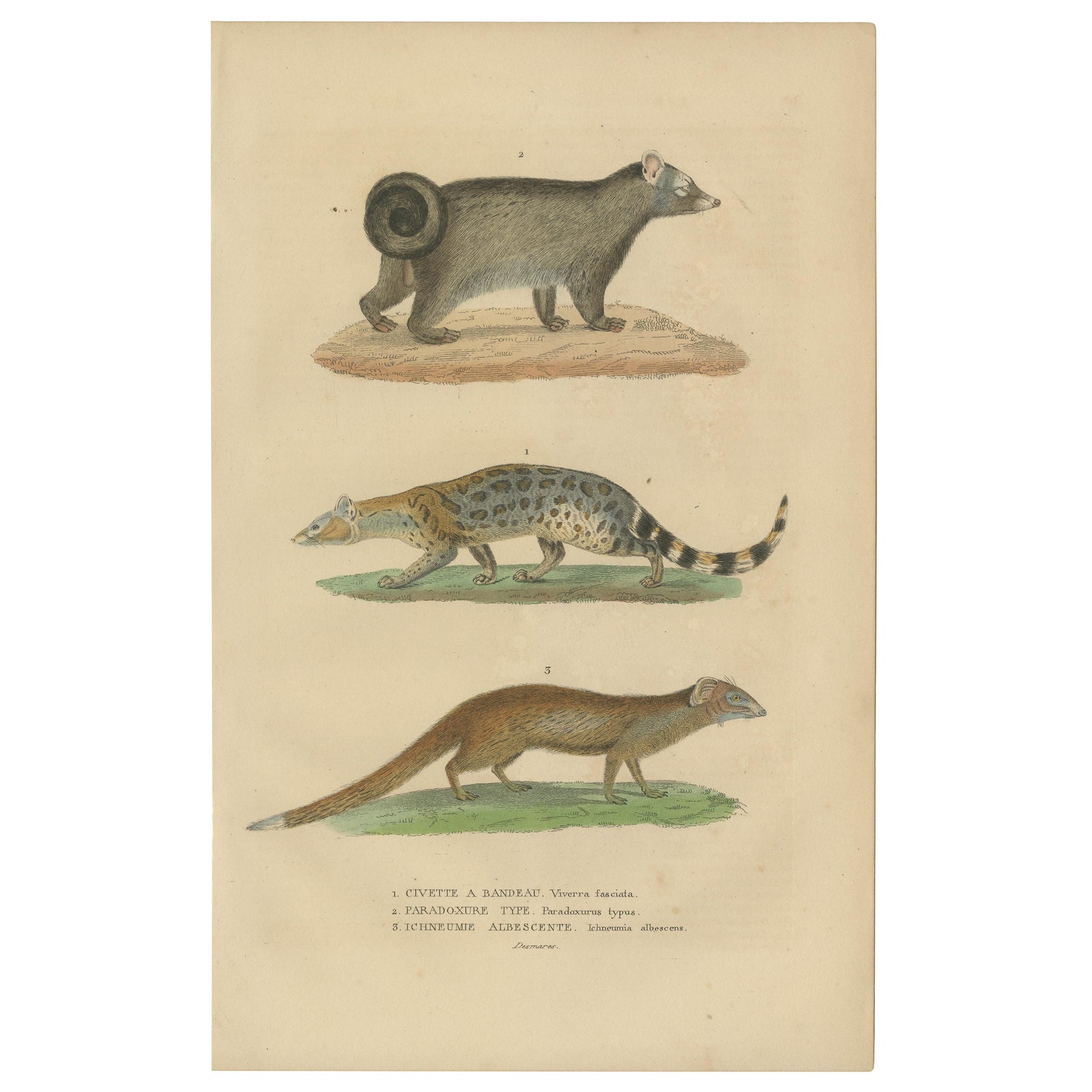
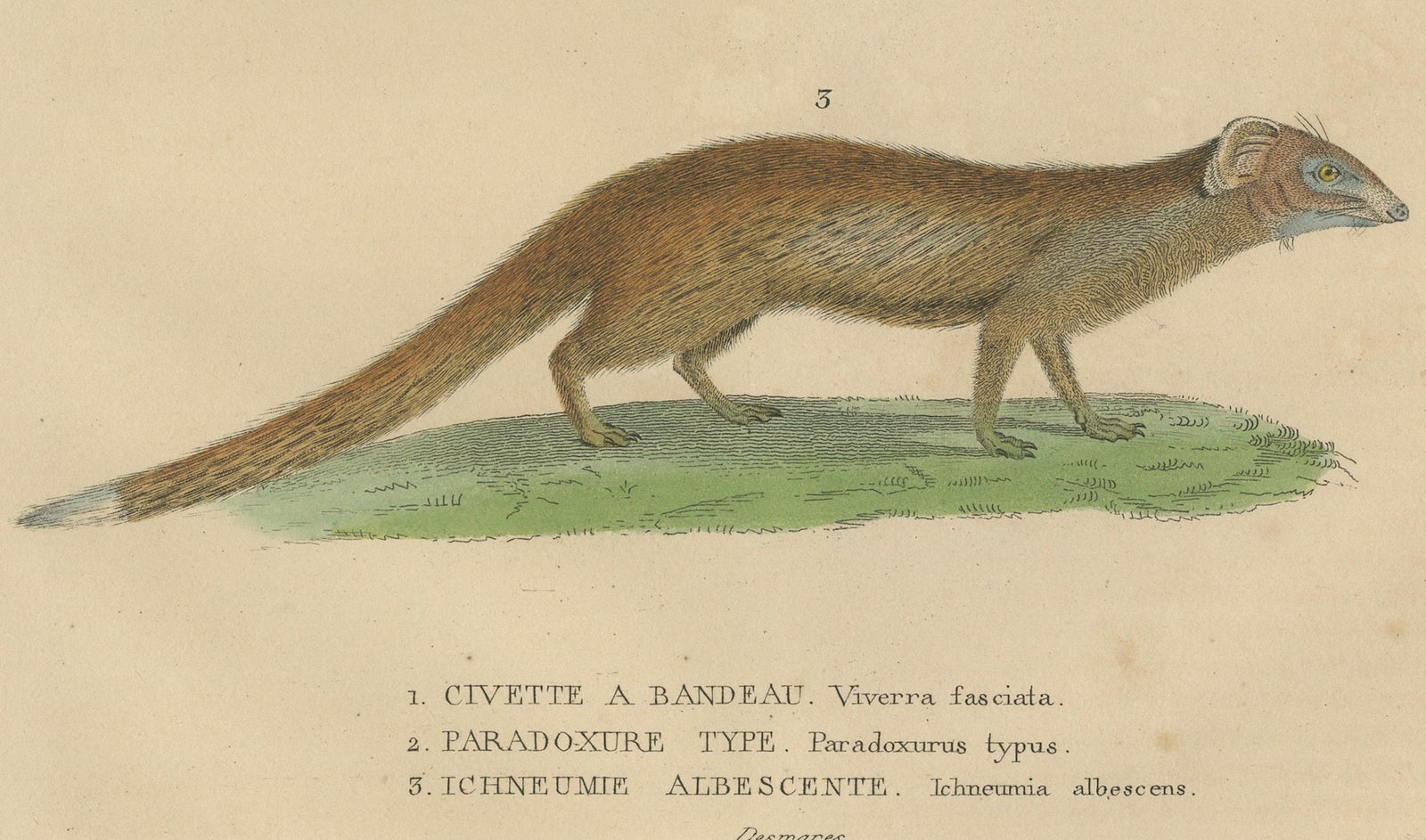
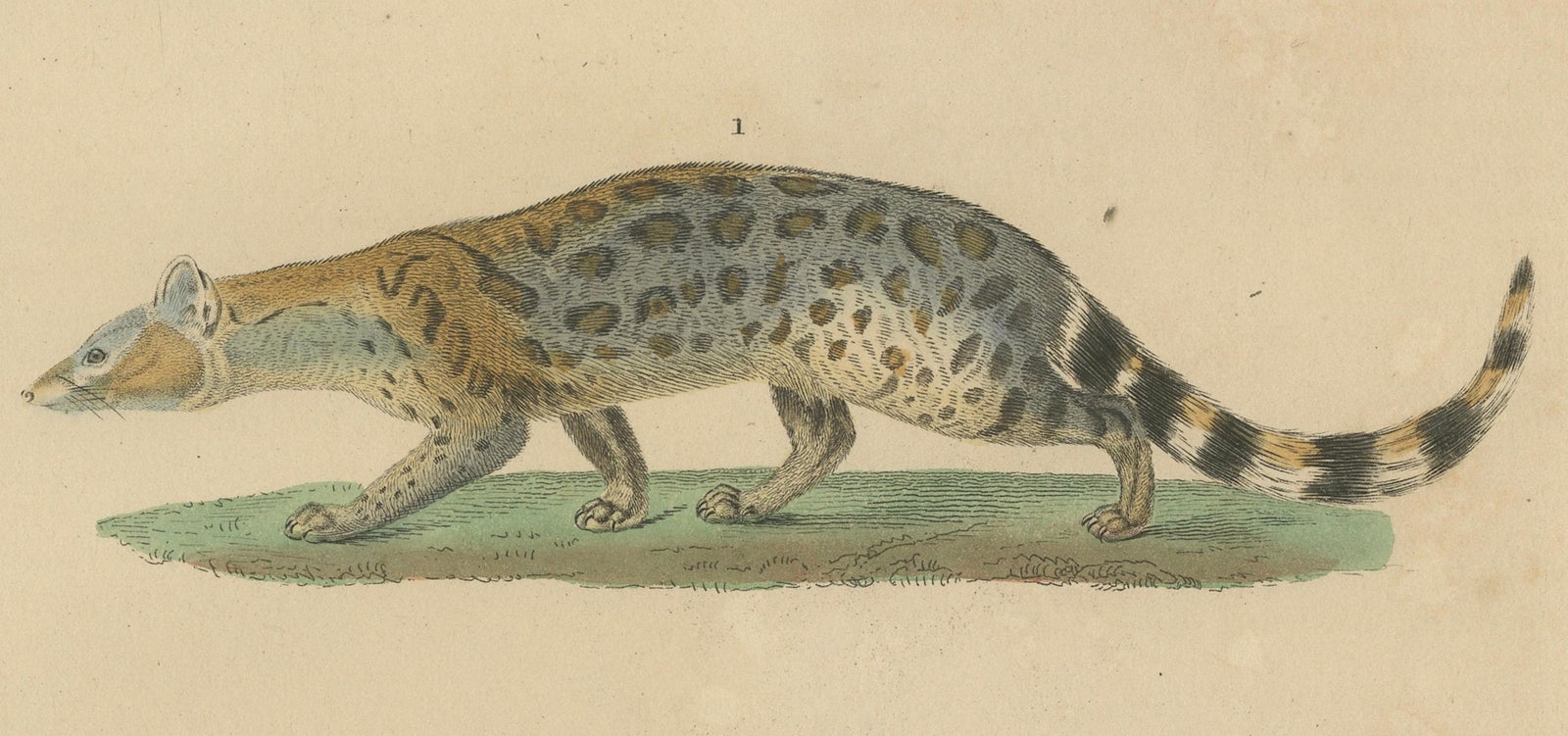
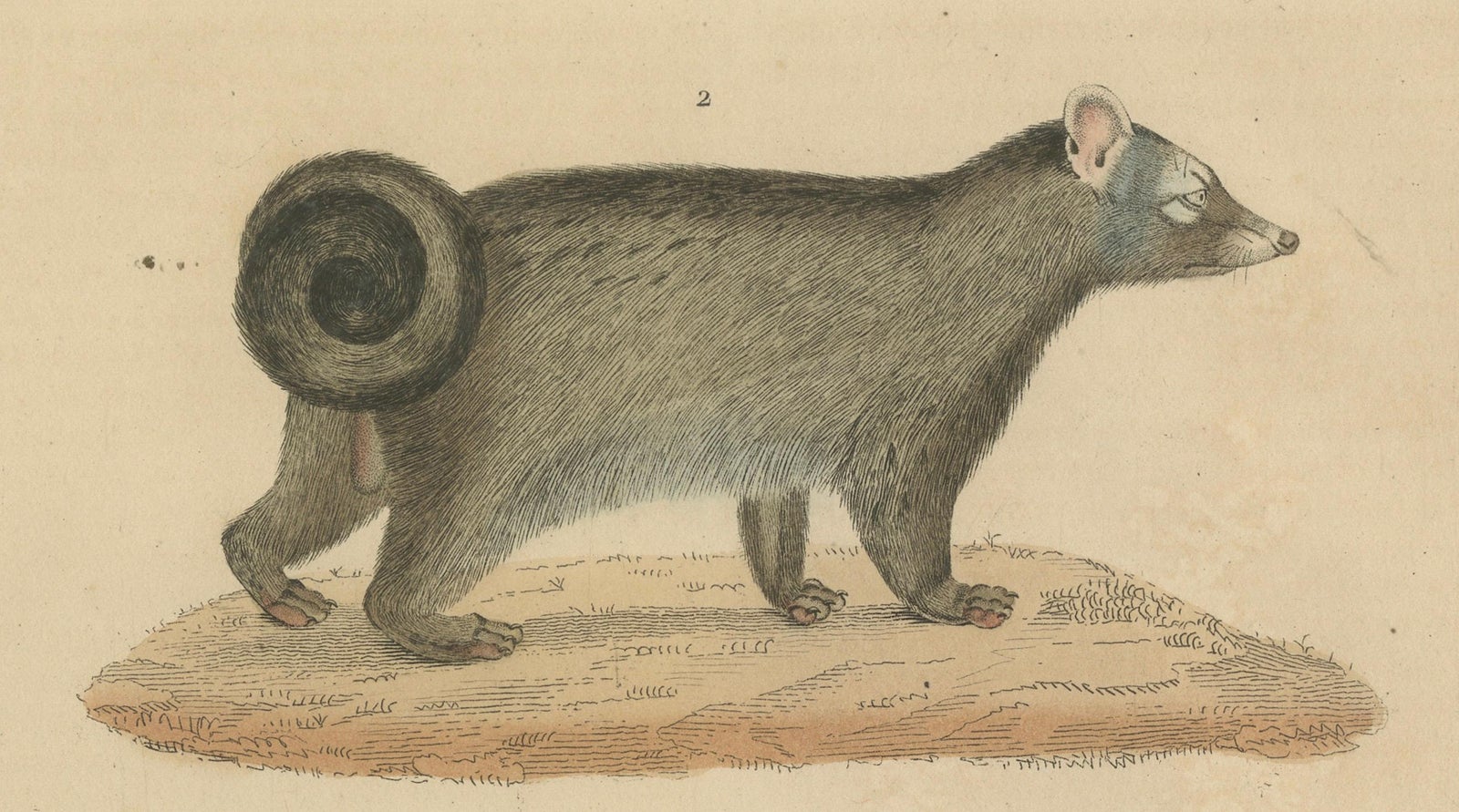
This original hand-colored engraving showcases three distinct mammals, each labeled in French with their scientific names:
1. **Viverra fasciata** - Known as the banded palm civet. It's characterized by the dark bands across its back and long body, which is typical of civets. Its fur appears to be marked with a combination of spots and stripes, and it has a notably long, banded tail.
2. **Paradoxurus typus** - This is the Asian palm civet, often referred to as the common palm civet or the toddy cat. This species is recognized for its ability to use its tail for balance as it moves through the trees, which is reflected in the illustration.
3. **Ictonyx albescens** - Likely a mislabeling or outdated taxonomy, as Ictonyx refers to the African genus that includes animals like the zorilla. However, the illustration more closely resembles a mongoose or perhaps a species of civet. The term "albescens" suggests a lighter color, which doesn't fully match the animal depicted.
The print is a fine example of a hand-colored engraving, which would have been colored after the initial printing process. The subtle coloring adds a realistic touch to the animals, showcasing their natural hues and patterns. These illustrations would have been instrumental in the study and classification of these species during the 19th century.
The print itself is delicately hand-colored, a common practice of the time to bring life to the engravings. The animals are presented on a neutral background with a hint of their natural habitats suggested at their feet. The precision of the engravings, coupled with the hand coloring, would have made these illustrations both a valuable scientific tool and a work of art.