Close-ups
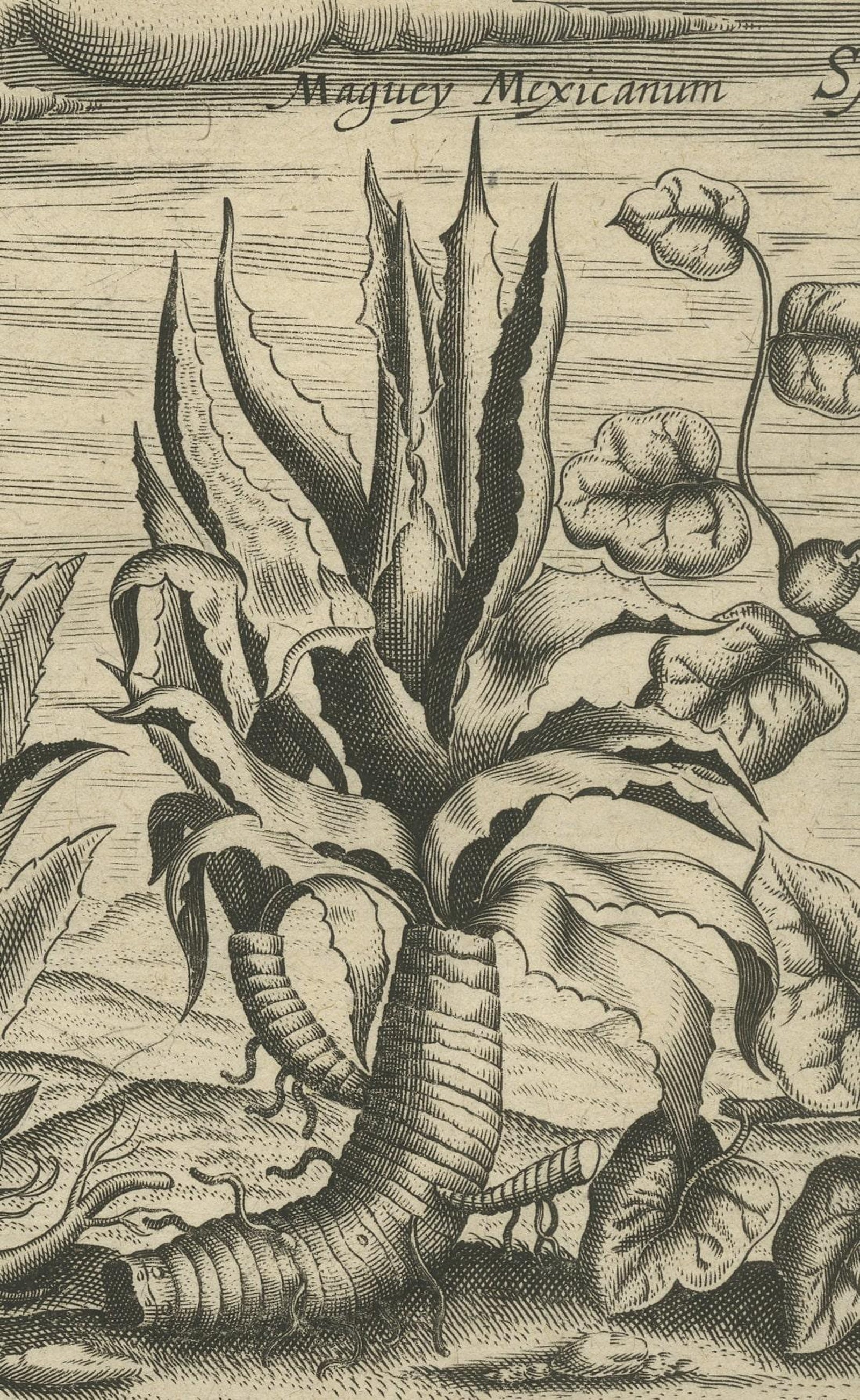
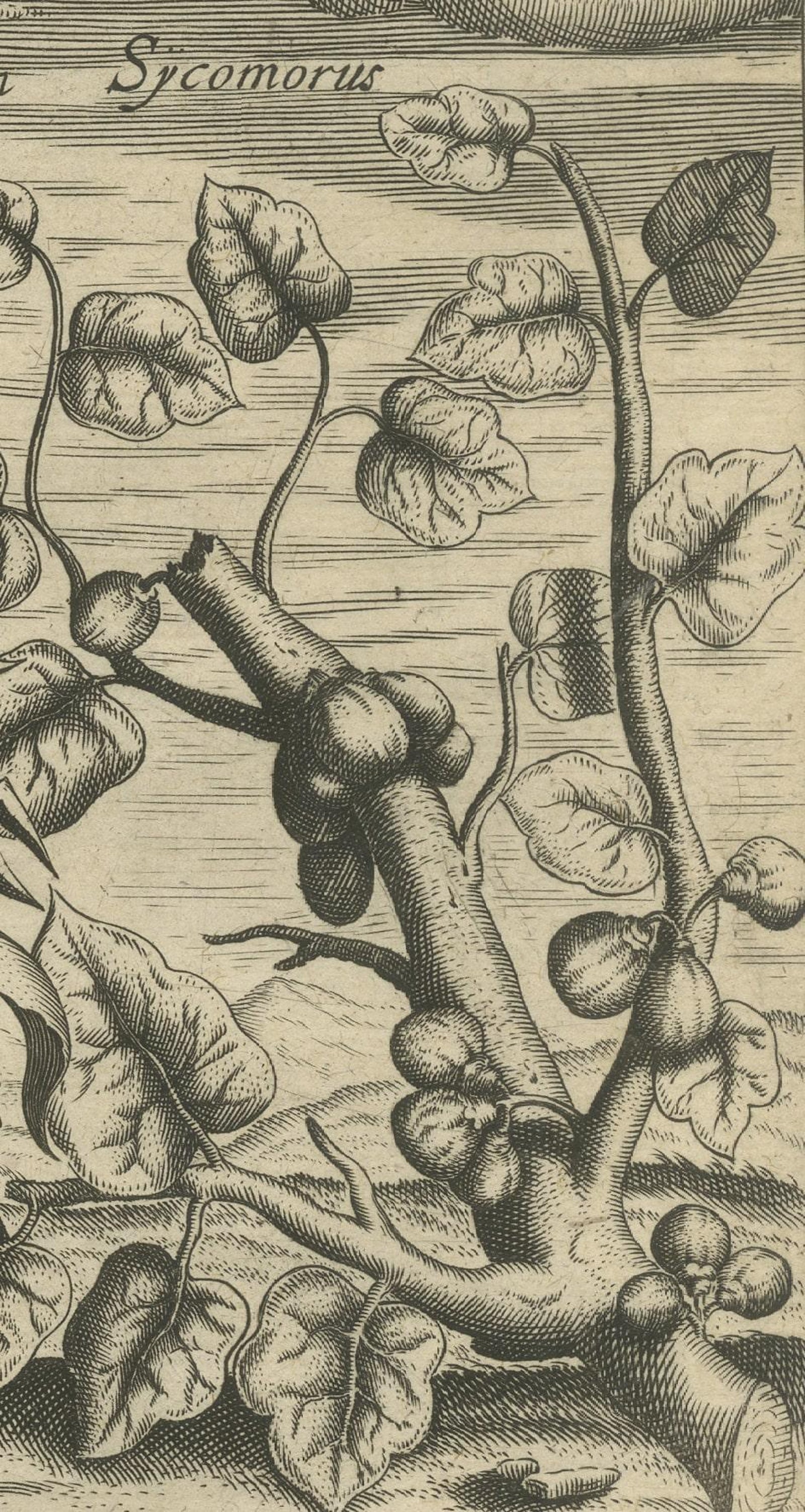
Framed and on the wall
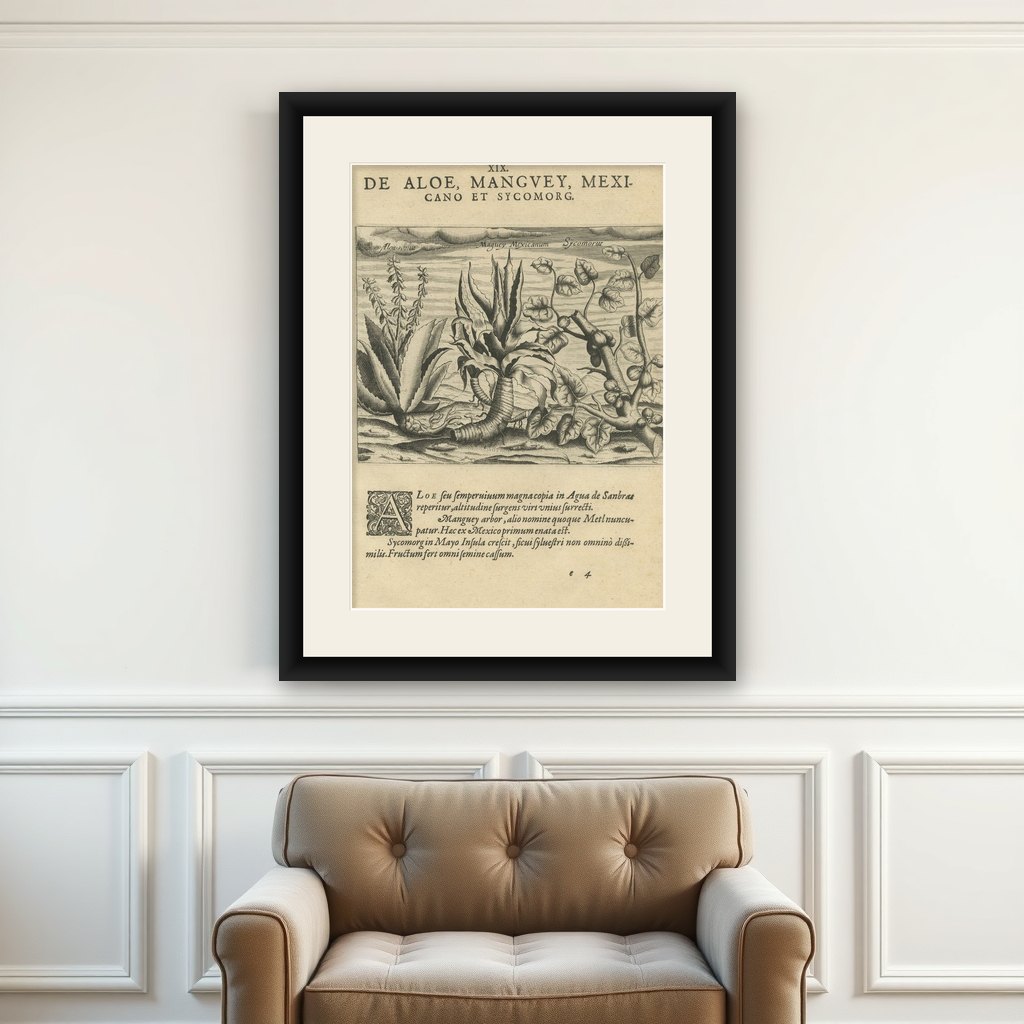
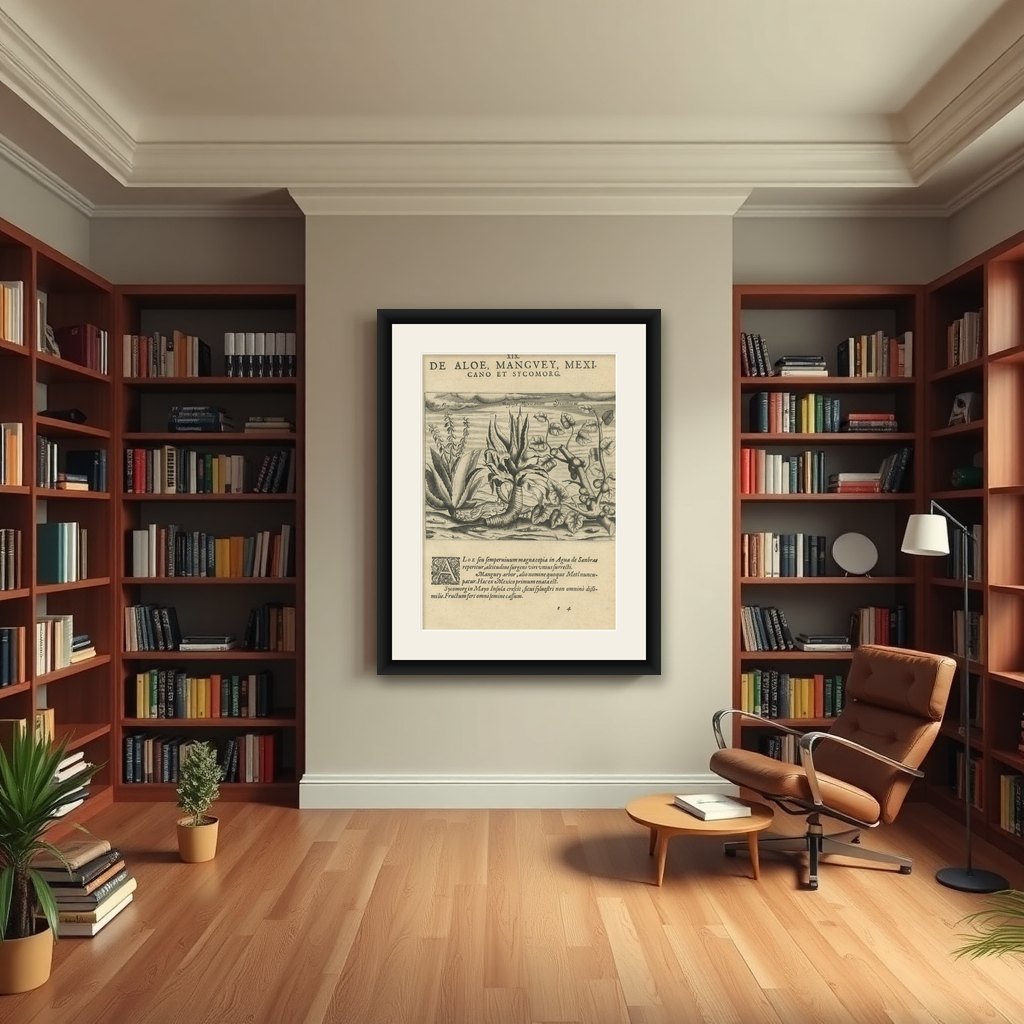
Frame and rooms are illustrations of how the print could look; the description says what is included.
New World Flora: Aloe, Maguey, and Mexican Plants in De Bry's 1601 Work
$540 (£405, €480)
Period original, not a reproduction.
Shipped from the Netherlands, flat, insured and tracked, worldwide. Returns accepted within 14 days.
- Date
- 1601
- Size
- 11.8 × 7.9 in (30 × 20 cm)
- Condition
- Fair. The condition of the print is fair to good, considering its age of over 400 years. Light browning mainly around the edges. One corner chipped, otherwise fine. Please study this image carefully.
- Period
- Before 1700
- Section
- Botanical
- Reference
- f_37756612
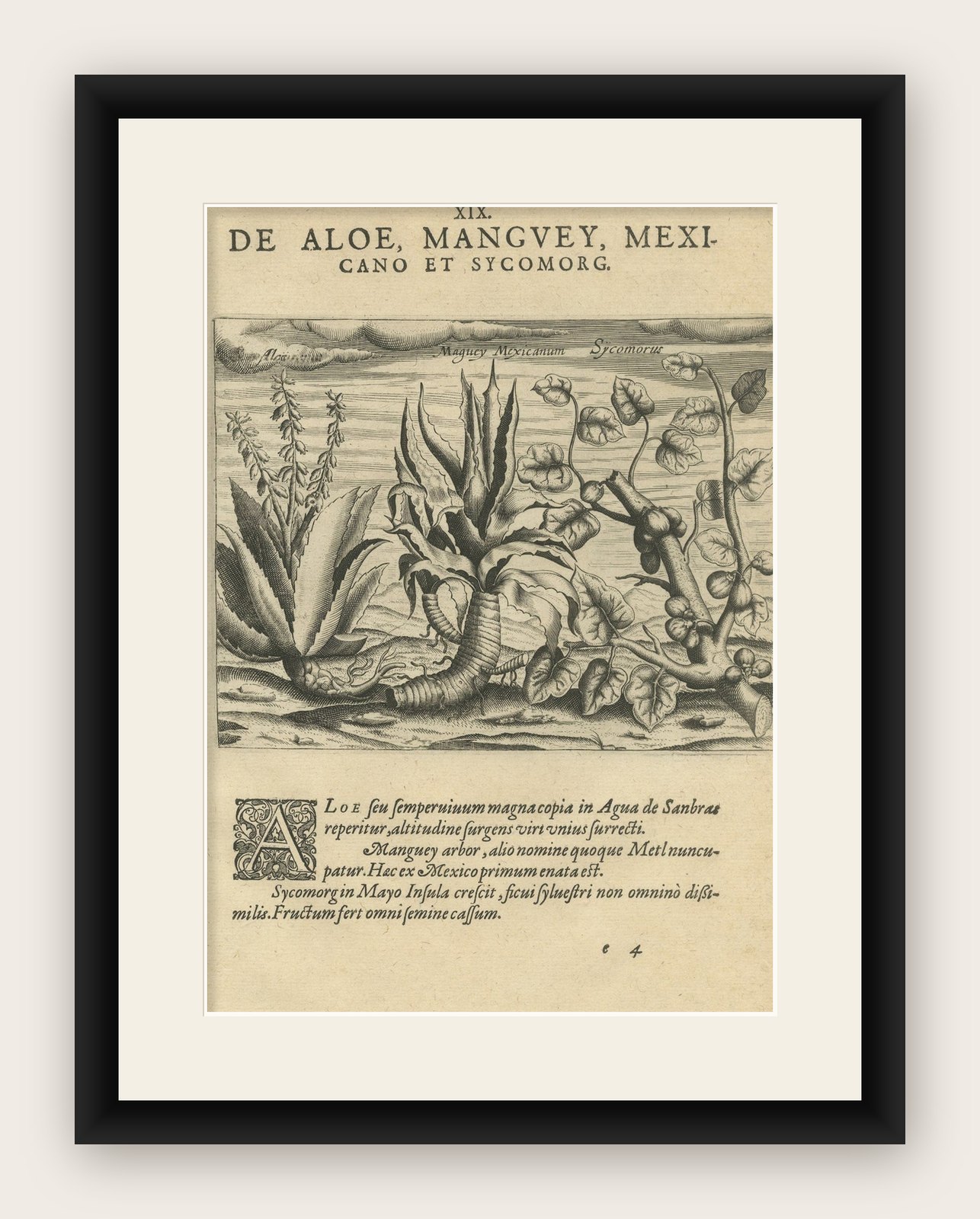
Title: "New World Flora: Aloe, Maguey, and Mexican Plants in De Bry's 1601 Work"
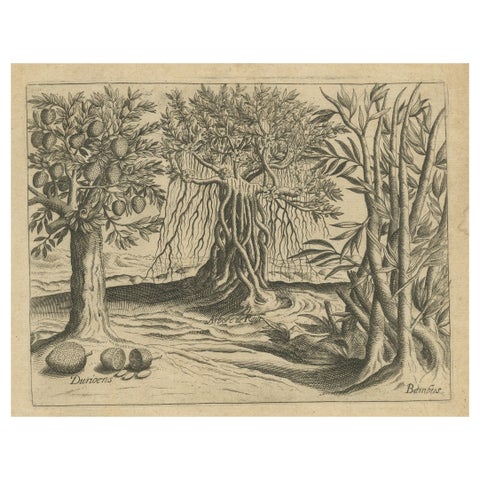
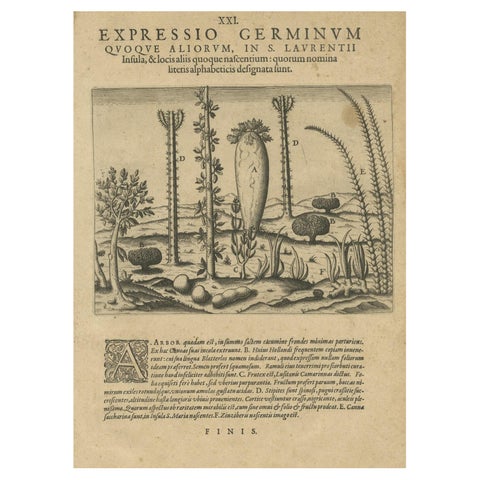
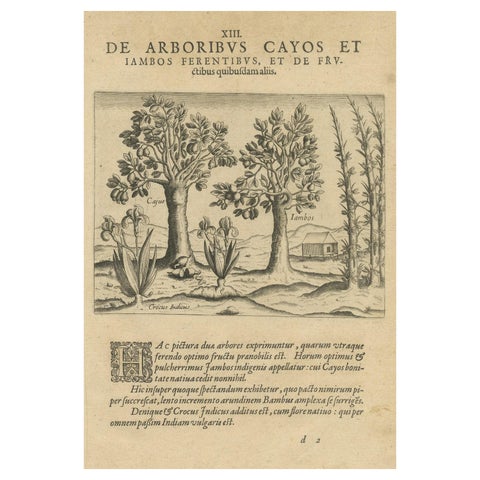
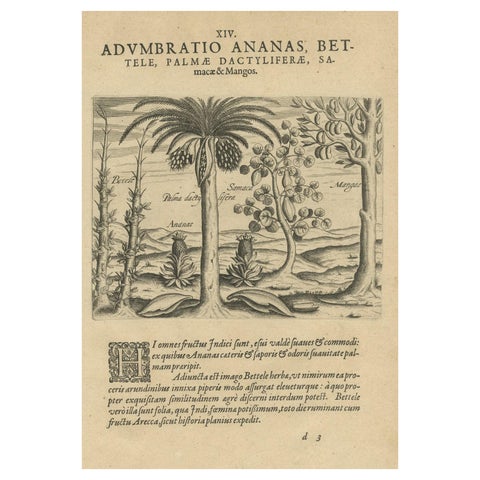
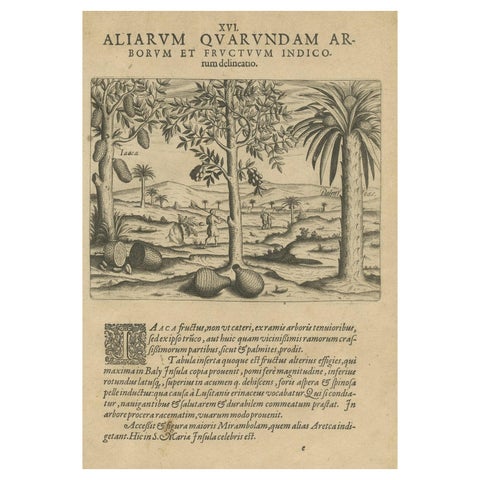
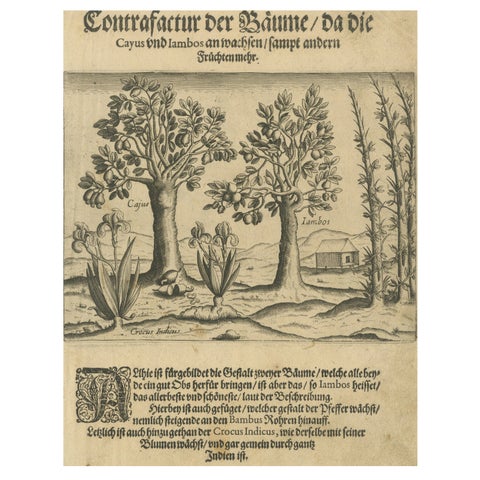
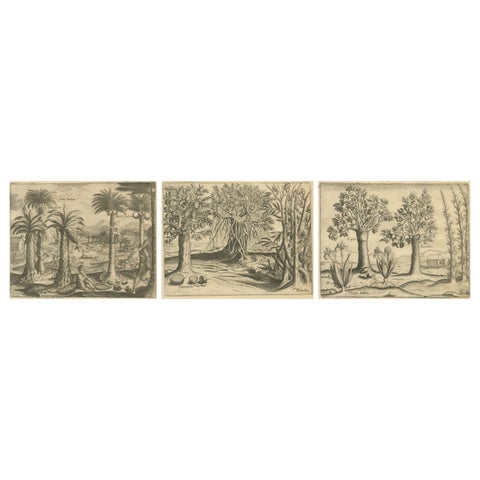
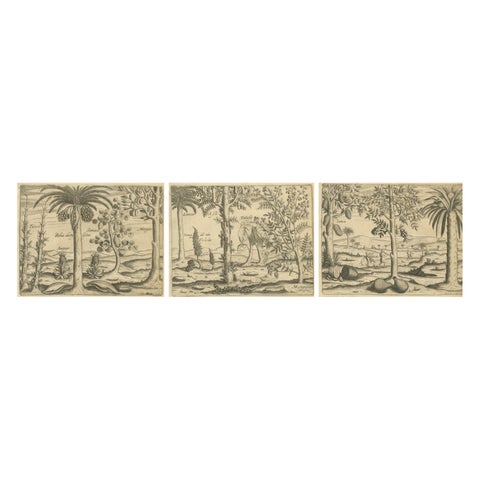
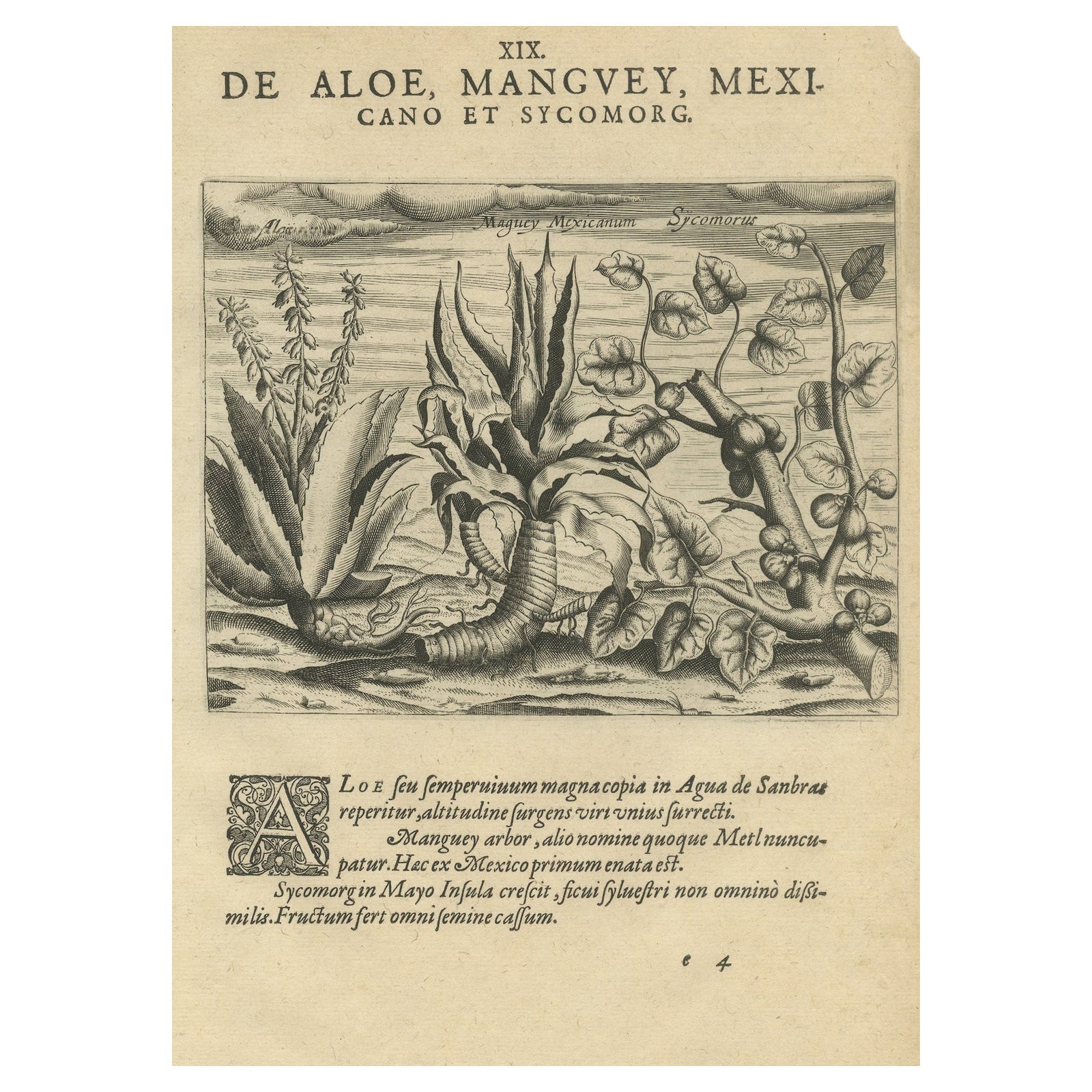
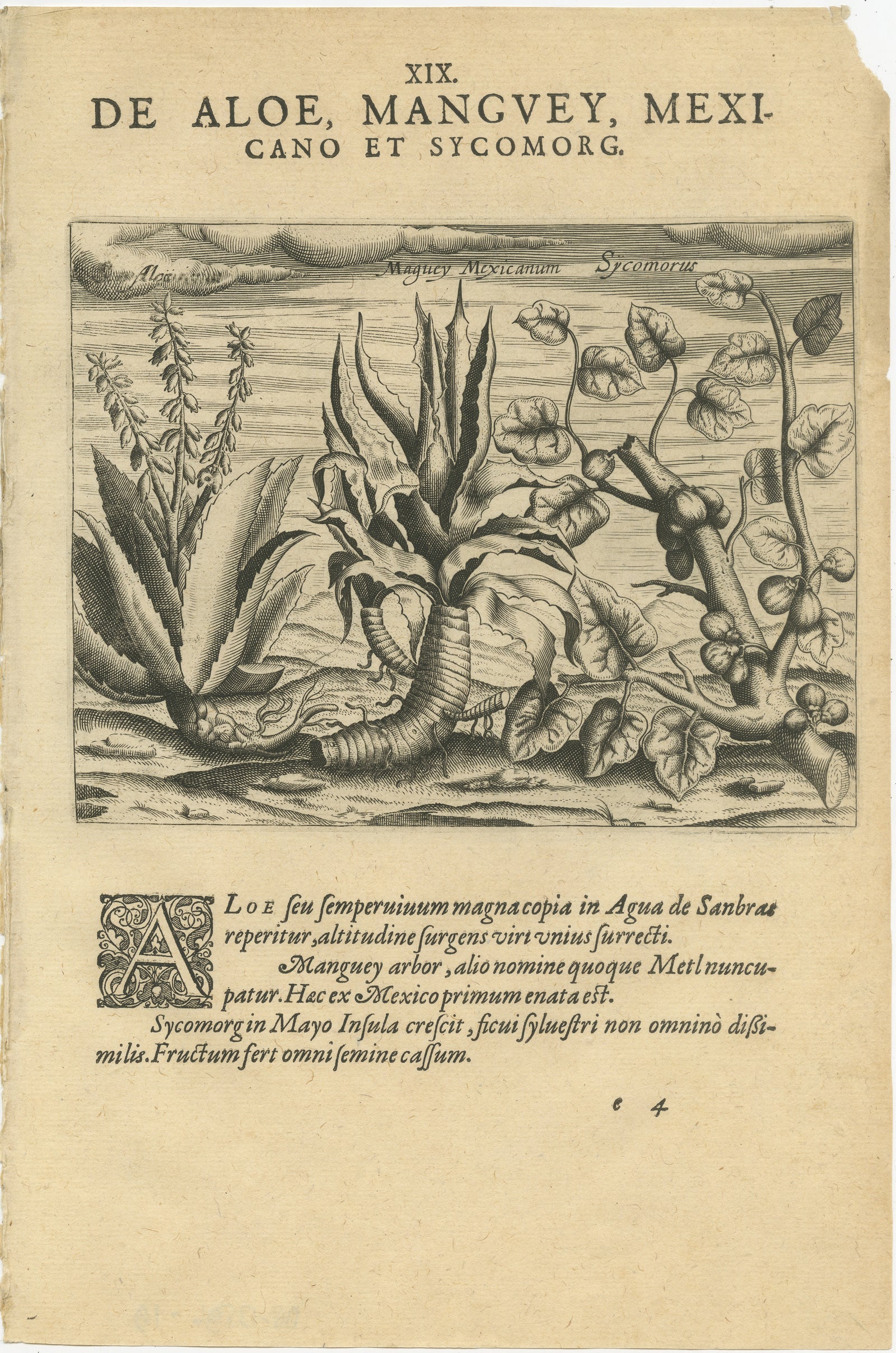
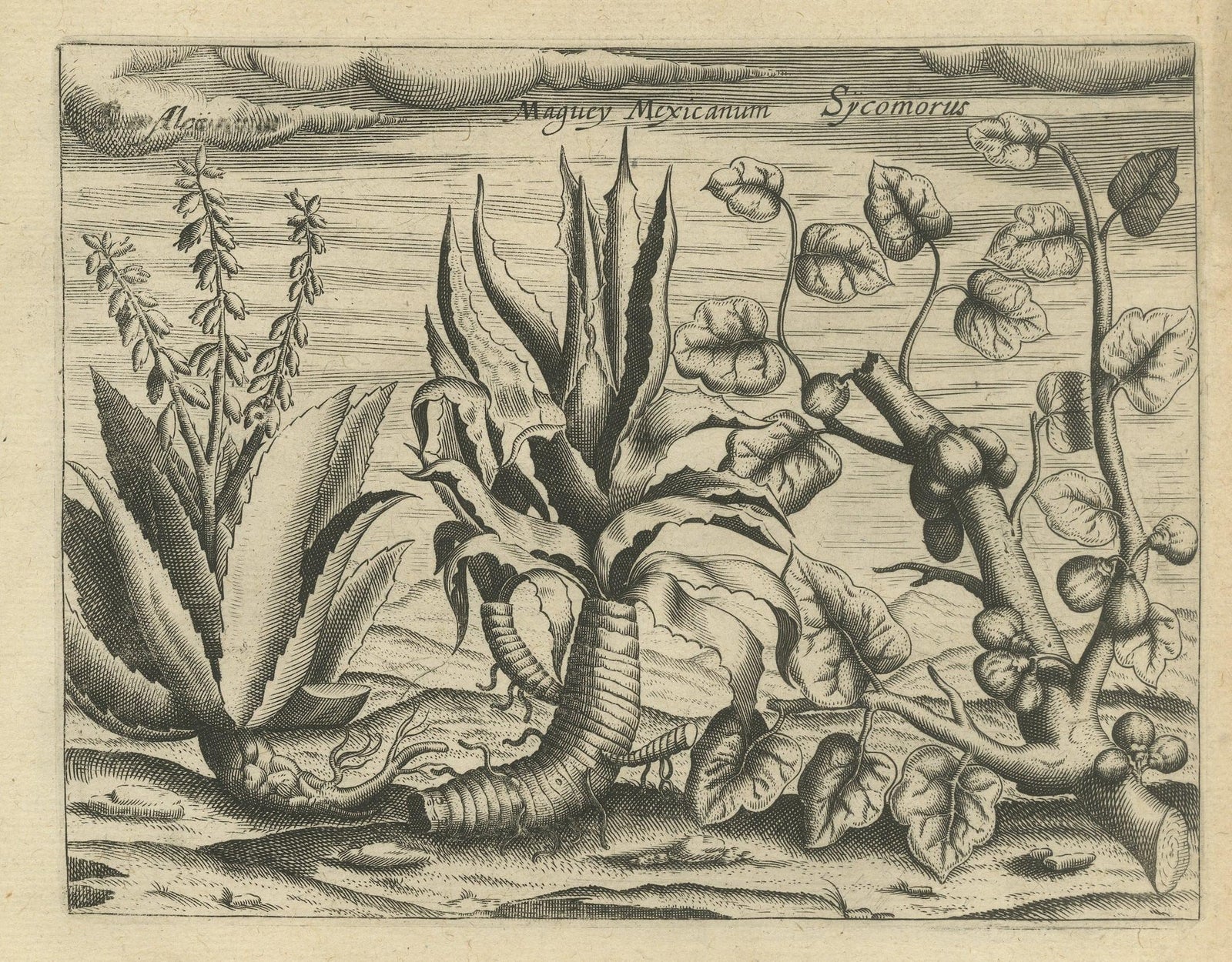
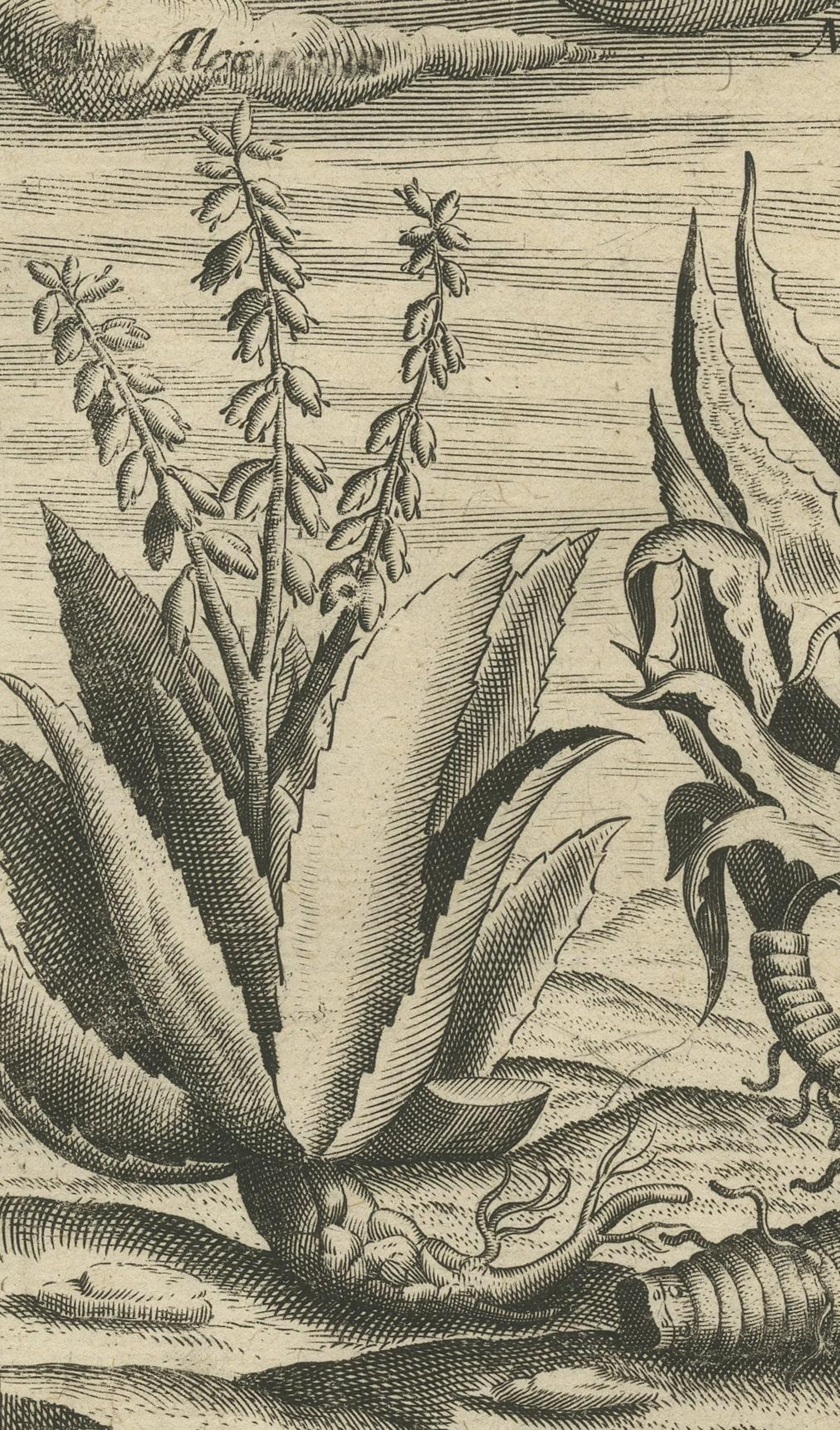
Description: This engraving by Theodore de Bry from 1601 offers a detailed depiction of various plants from the New World, specifically the aloe, maguey, and sycamore, known for their unique properties and uses. The aloe is shown with its succulent leaves, a plant known for its healing sap. The maguey, also known as agave, stands out with its large rosettes of tough, spiky leaves, a vital plant in Mexican culture for producing pulque and later tequila. The sycamore, with its broad leaves and distinctive fruit, adds to the diversity of this botanical collection.
These illustrations were crucial in introducing the botanical richness of the Americas to European audiences. De Bry's collection allowed Europeans to visualize and learn about plants that were otherwise unknown to them, contributing significantly to the botanical and economic knowledge of the time.
Translation of the Latin text:
"Aloe or sempervivum is found in great abundance in Agua de Sanbras and grows in saltiness surging with green force. The Maguey tree, also called by another name Metlmenuncupatum, first sprouted from Mexico. The Sycamore in Mayo Impula grew up, the juice is not entirely sweet. The fruit bears all seedless."
The engraving is a page from Part IV of de Bry's "Petits Voyages," which narrates significant expeditions to the East Indies, including those led by Jan Juygen van Linschoten and Cornelis de Houtman between 1595-97, as well as the journey by Jacob van Neck and Wybrandt van Warwijck in 1598-99. These works were not merely artistic endeavors but also ethnographic records, showcasing indigenous peoples, fauna, flora, and the diverse riches of lands like India, Madagascar, and the East Indies.
Though Theodore de Bry began this ambitious project, it was continued posthumously by his family and later completed by his son-in-law, Matthaus Merian, in 1644. This particular engraving, rich in detail and drama, offers a window into the perilous and wondrous experiences of early explorers, and the ways in which these moments were captured and communicated to a European audience hungry for knowledge of the wider world.