Close-ups
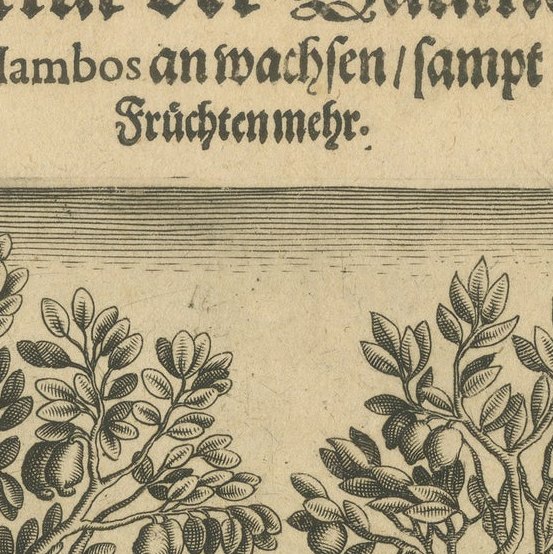
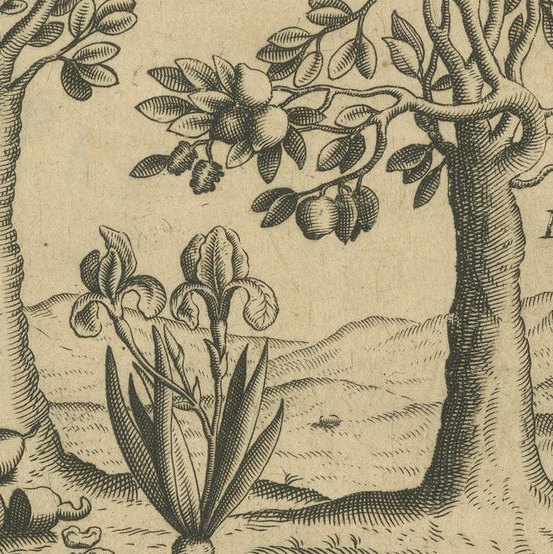
Framed and on the wall
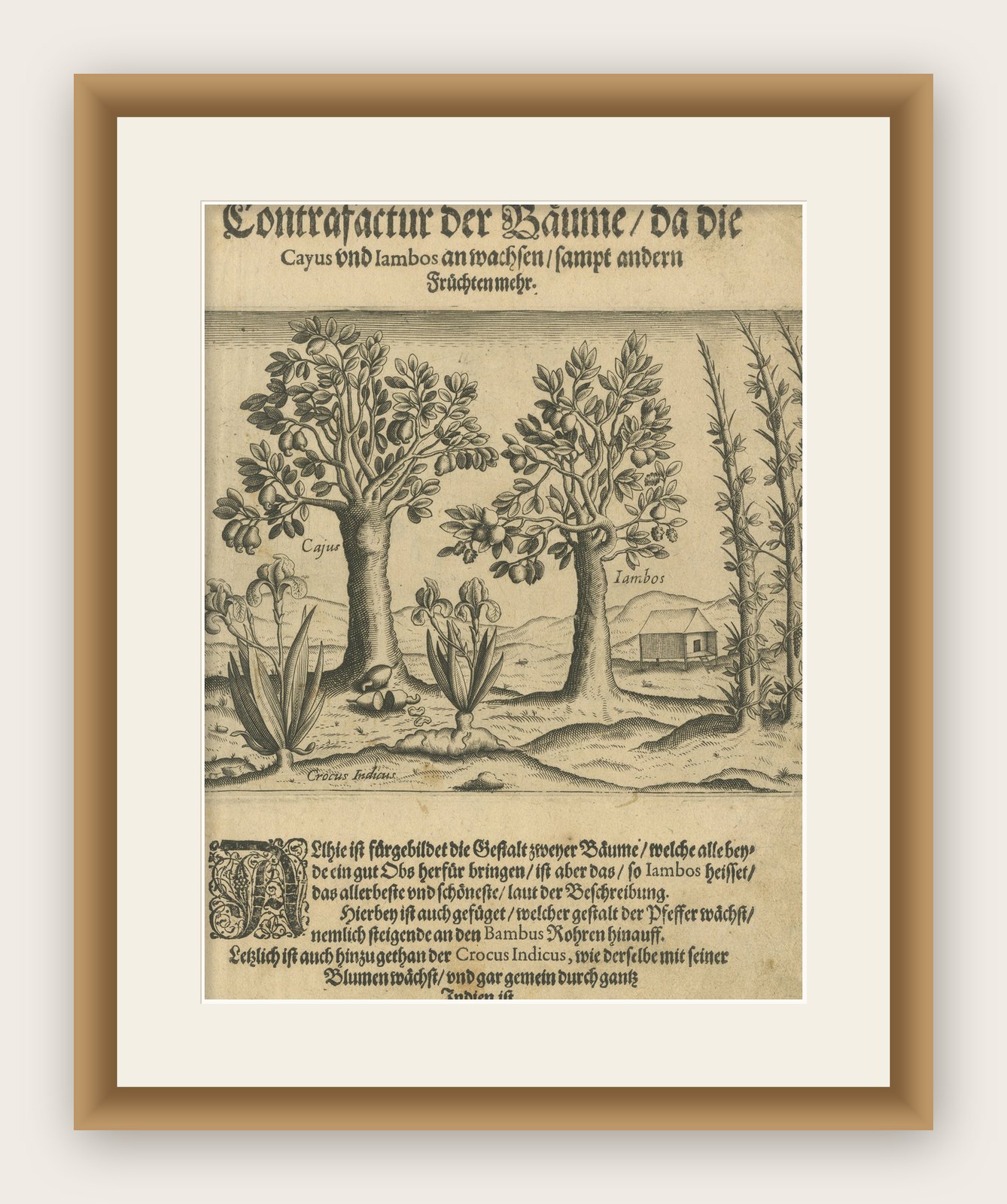

Frame and rooms are illustrations of how the print could look; the description says what is included.
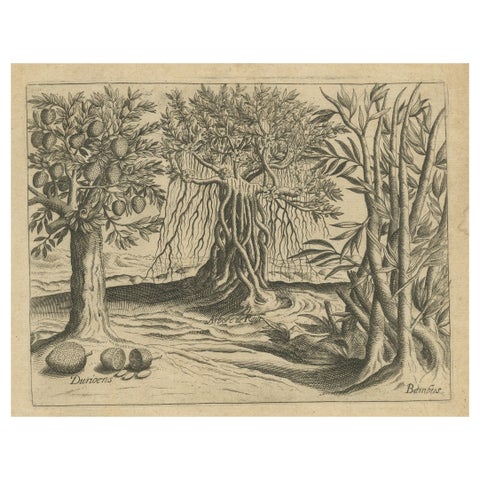
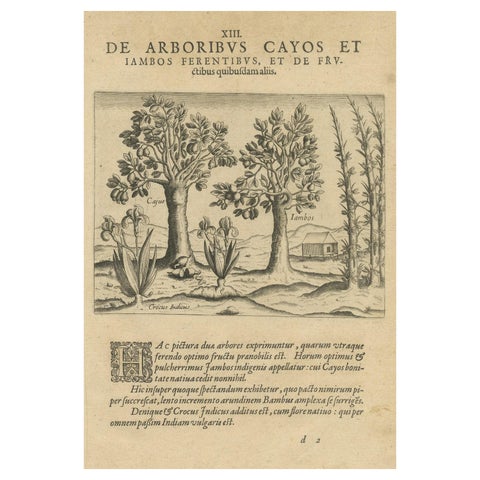
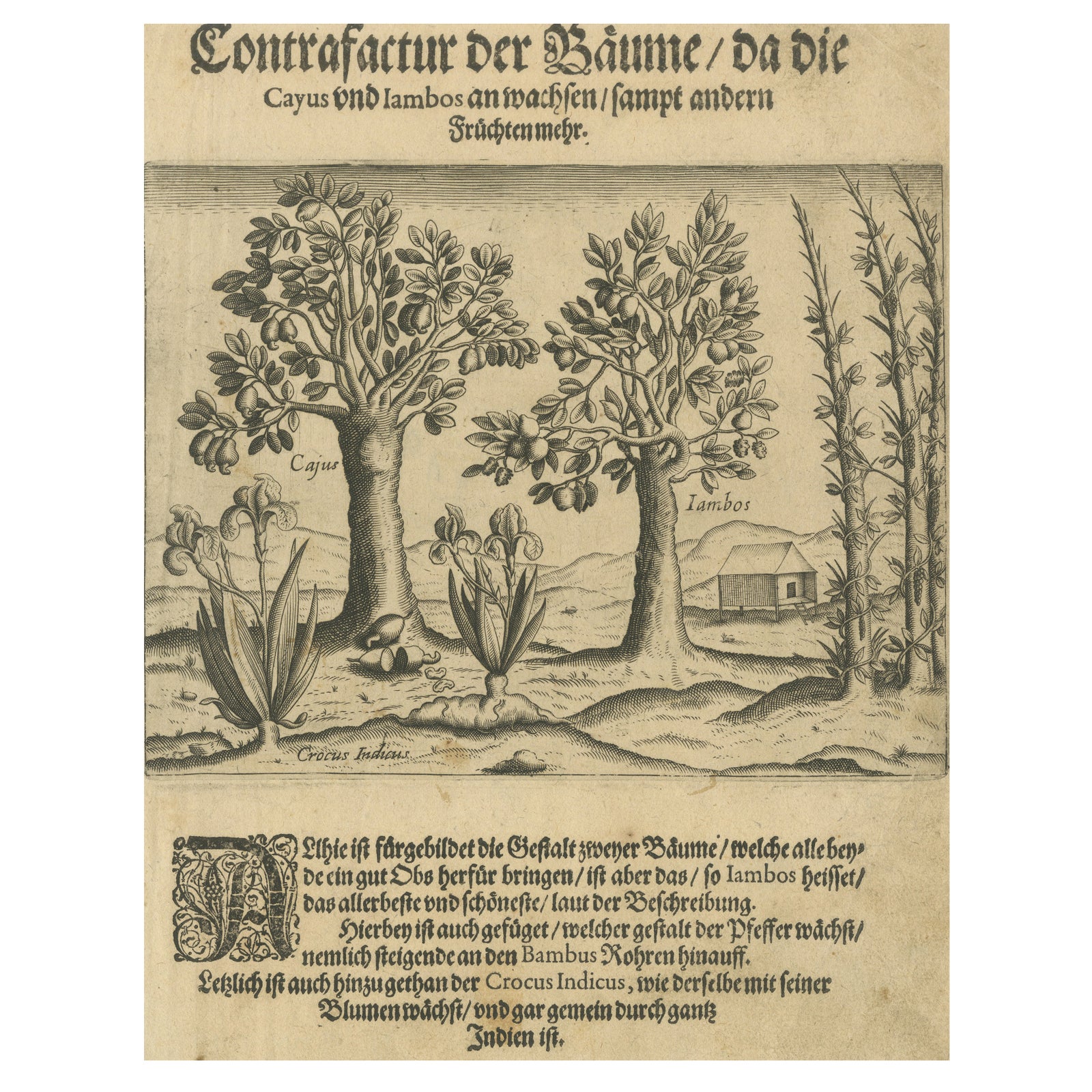
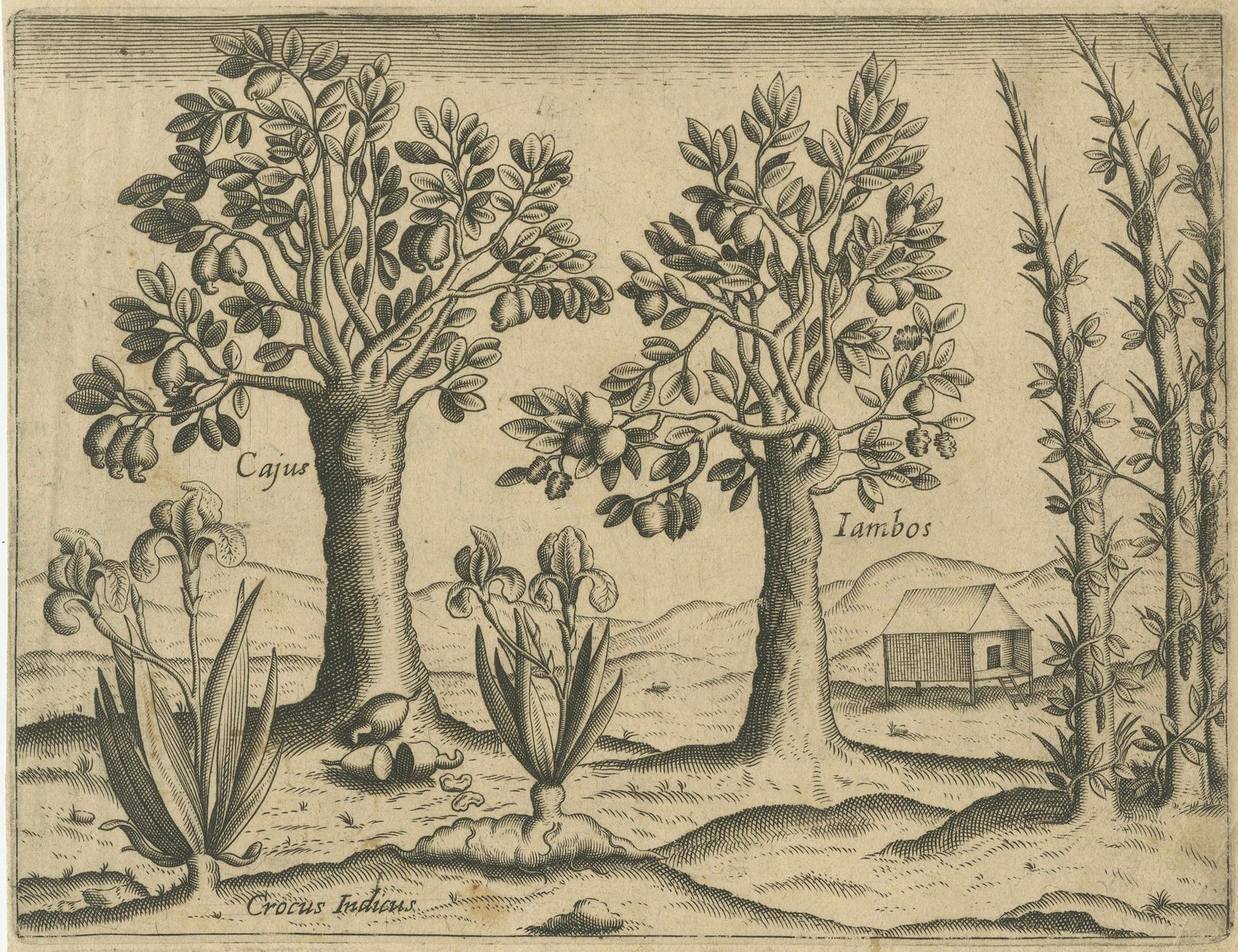
Cashew and Rose Apple Trees with Pepper and Crocus Indicus, de Bry, 1600
$200 (£150, €180)
Period original, not a reproduction.
Shipped from the Netherlands, flat, insured and tracked, worldwide. Returns accepted within 14 days.
- Date
- 1600
- Size
- 9.1 × 7 in (23 × 17.7 cm)
- Condition
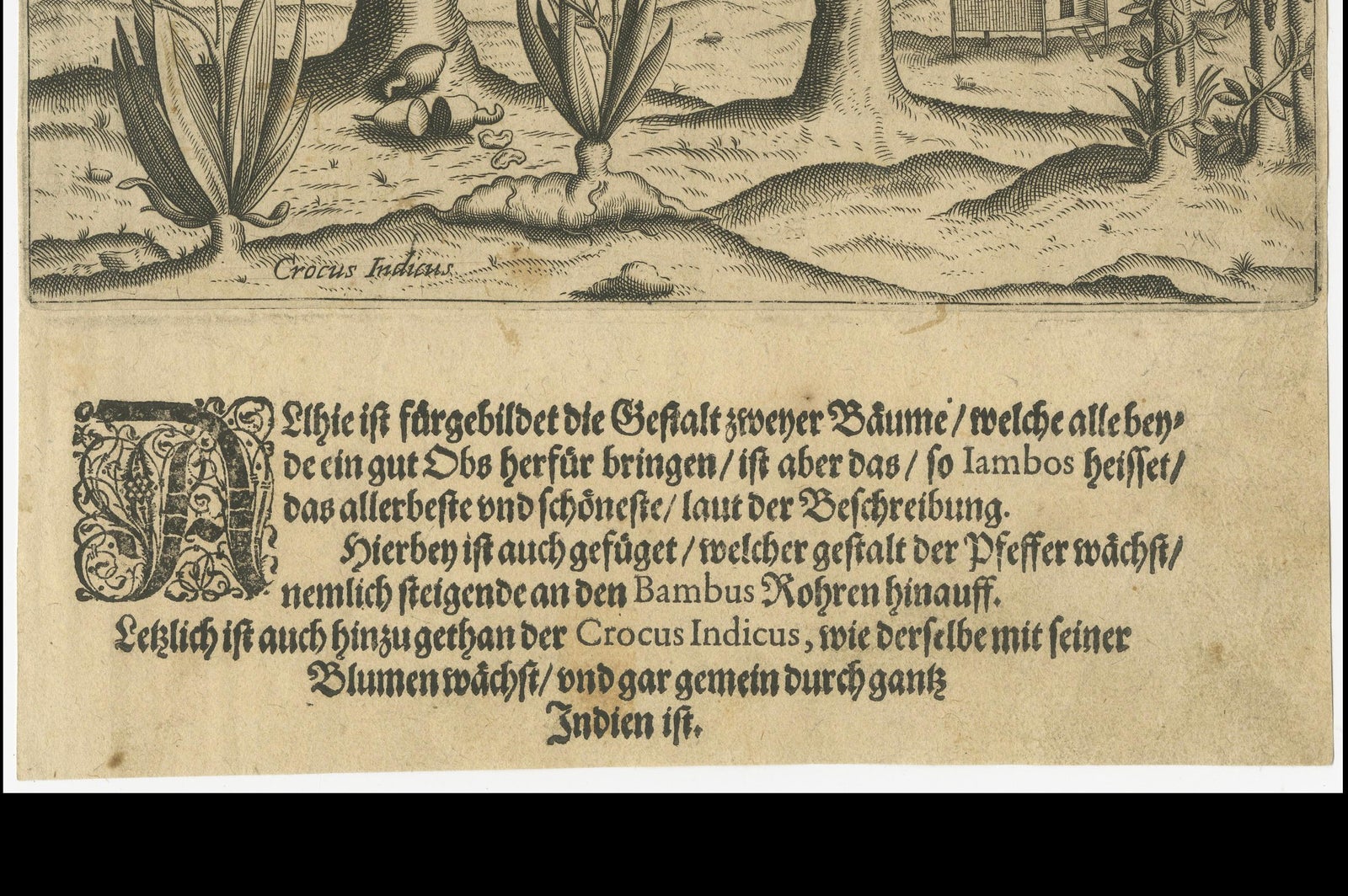
- Fair. Condition report: Fair to Good. Strong impression on laid paper. A few creases, minor toning and faint age browning in the margins, as usual. Plate mark clearly visible. Reverse blank. Margins cut short.
- Period
- Before 1700
- Section
- Botanical
- Reference
- f_46299372
Cashew and Rose Apple Trees with Pepper and Crocus Indicus, de Bry, 1600
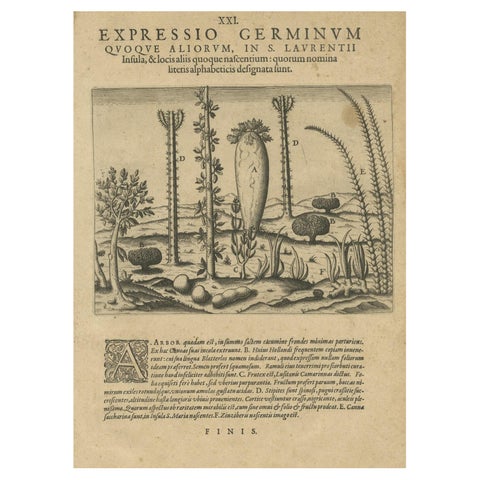
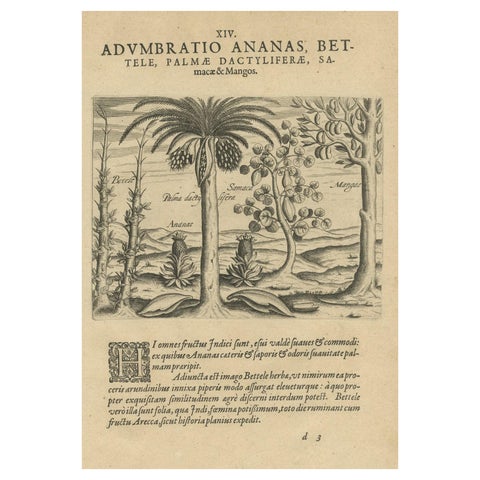
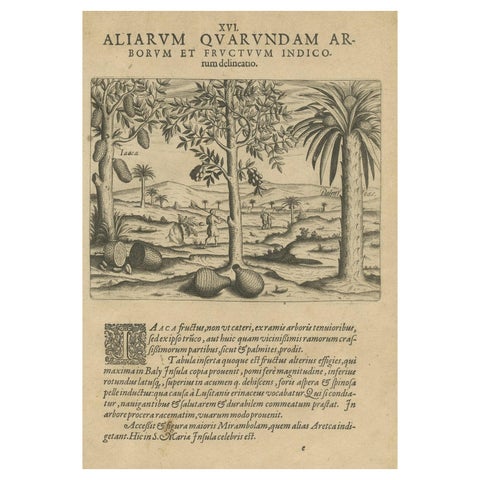
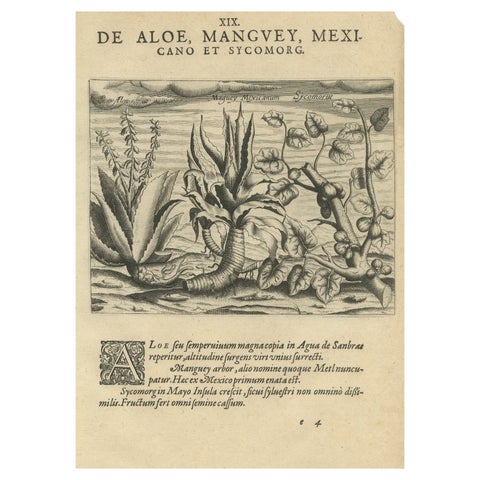
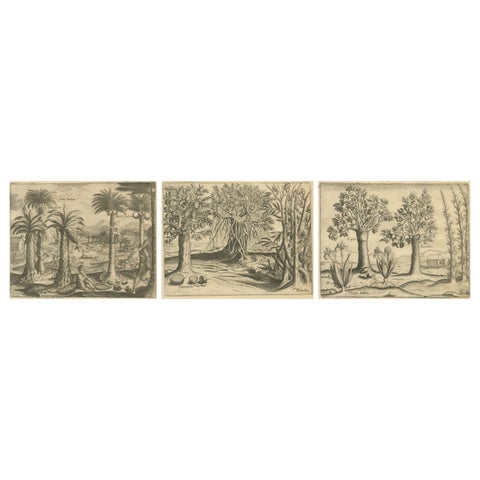
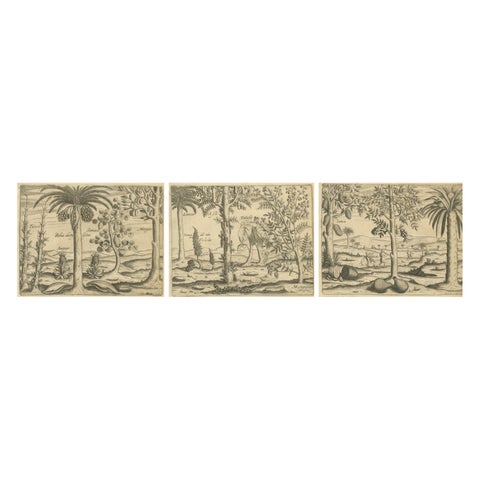
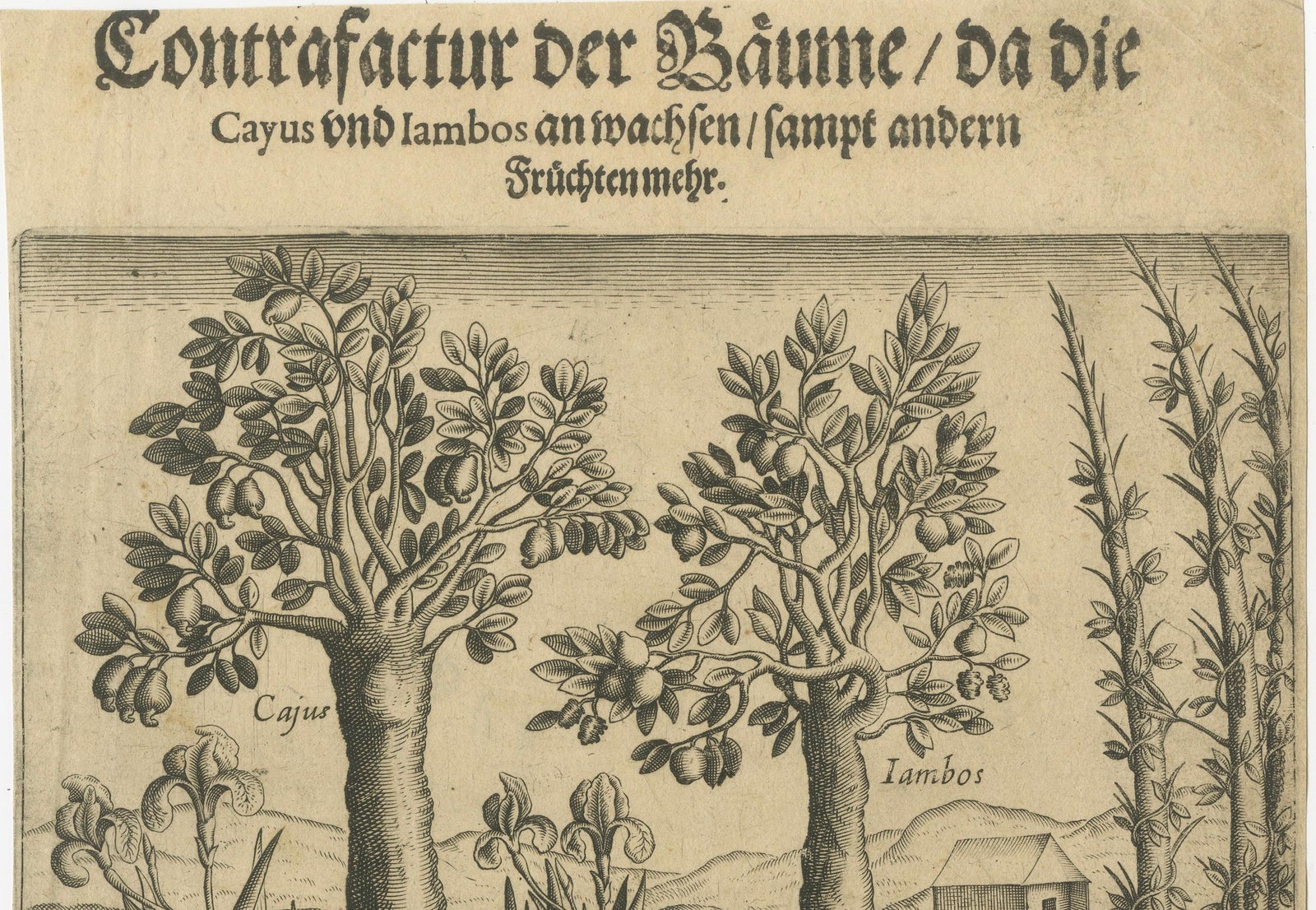
Exotic early engraving from Johann and Israel de Bry’s illustrated edition of Jan Huygen van Linschoten’s travel accounts, showing the tropical trees Cajus (Cashew tree) and Iambos (Rose Apple tree). To the right is a pepper plant climbing up bamboo canes, while in the foreground the Crocus Indicus is depicted. The detailed composition is accompanied by descriptive German text that highlights the value and beauty of these fruits and plants in India.
This copper engraving was published in Frankfurt in 1600 by W. Richter as part of the monumental series “Vierder Theil der Orientalischen Indien.” De Bry’s series brought exotic landscapes, peoples, and flora to a European audience at the dawn of global exploration. These images, based on the accounts of Linschoten and other travelers, played a key role in shaping Europe’s understanding of the East Indies and their wealth of natural resources.
The illustration not only reflects contemporary botanical curiosity but also the commercial significance of tropical plants. Pepper was one of the most coveted spices in the European market, while cashew and rose apple were admired both for their fruits and exotic origins. Prints like these combined visual appeal with educational purpose, serving as early records of species unfamiliar to most Europeans. Today, they are considered valuable works of both art and cultural history, representing the Age of Discovery’s blending of science, exploration, and trade.
Condition report: Strong impression on laid paper. Minor toning and faint age browning in the margins, as usual. Plate mark clearly visible. Reverse blank.
Framing tips: A dark wooden or ebony frame with a cream or ivory mount would emphasize the engraving’s historic detail. Alternatively, a green or muted red mount would highlight the botanical subject matter and bring out the exotic theme.
Technique: Copper engraving
Maker: Johann & Israel de Bry, Frankfurt am Main, 1600