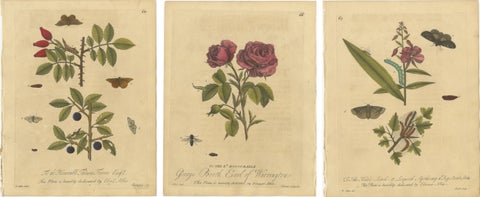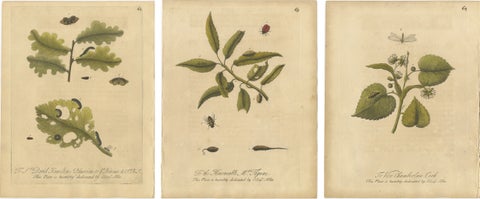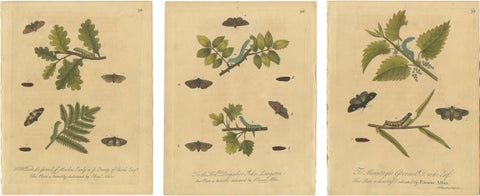
Close-ups
Framed and on the wall
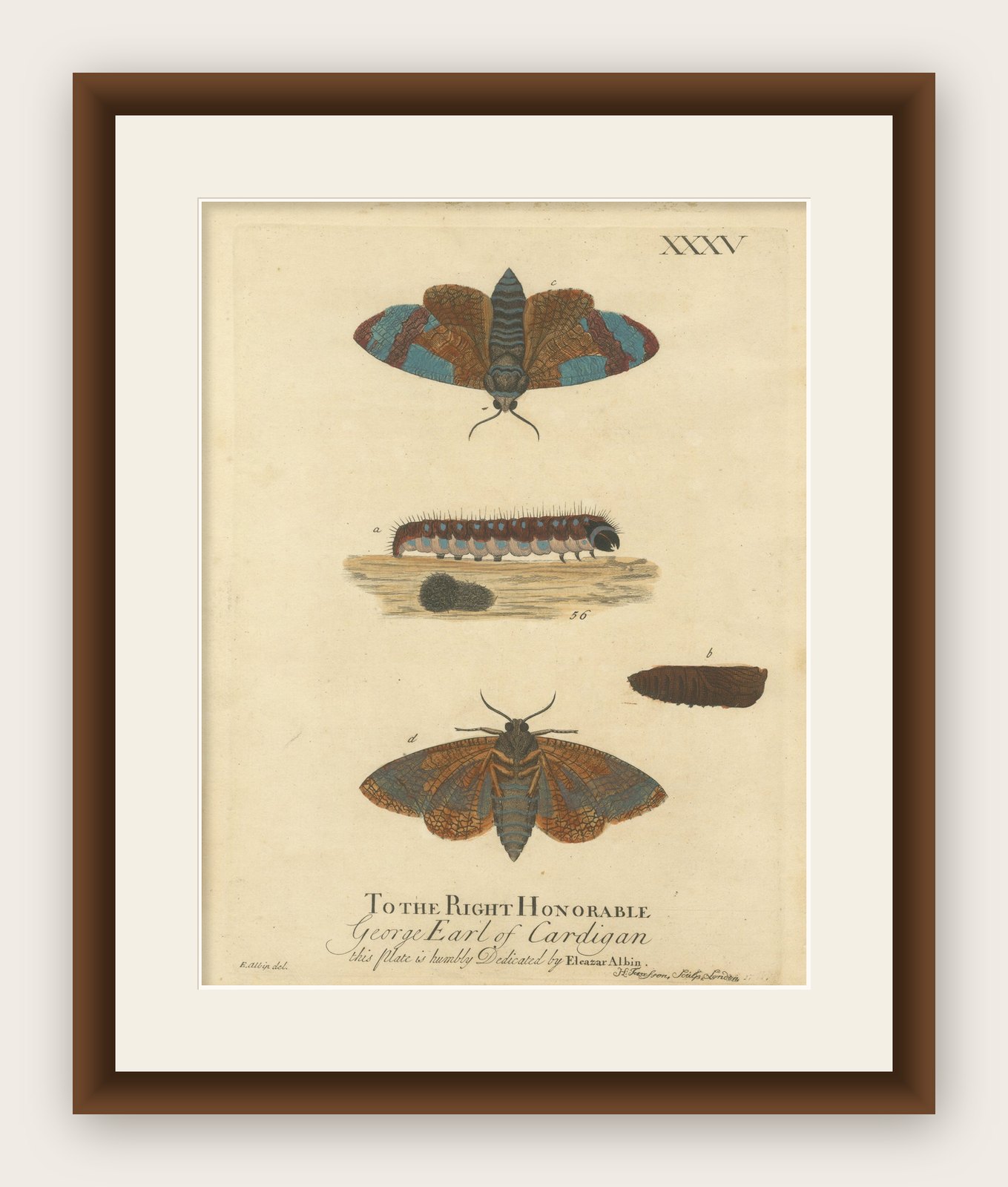
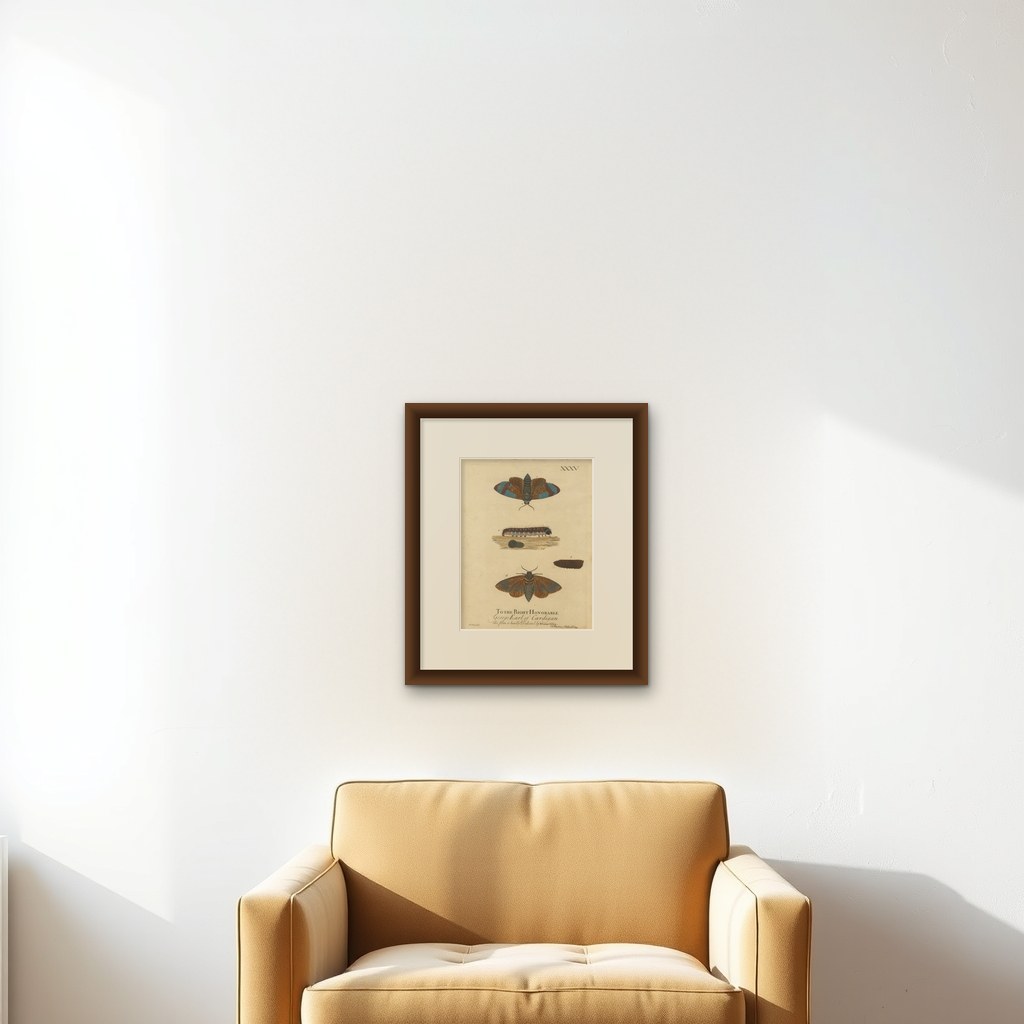

Frame and rooms are illustrations of how the print could look; the description says what is included.
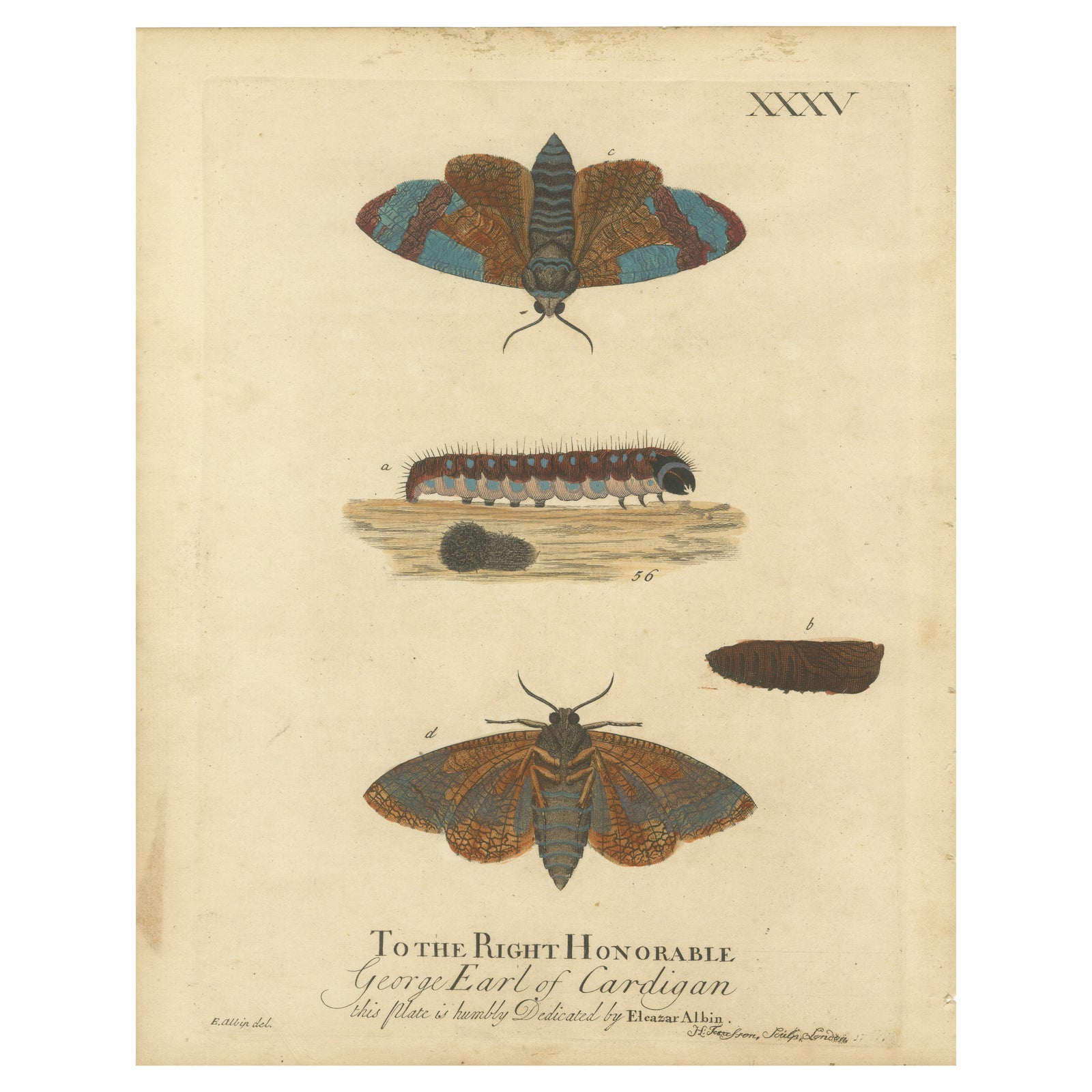
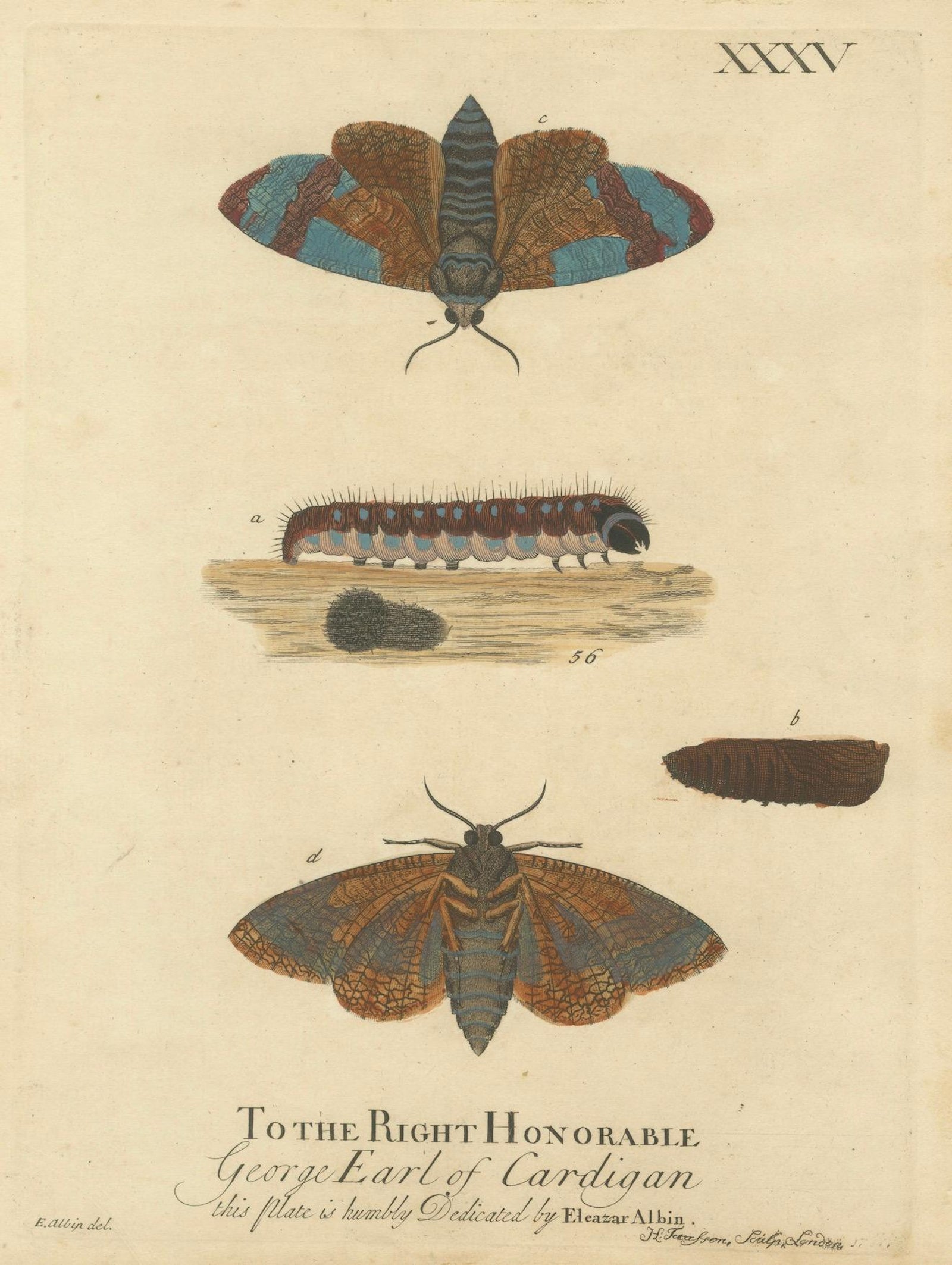
Moth Metamorphosis Dedicated to Earl of Cardigan, 1724
£220 ($290, €260)
Period original, not a reproduction.
Shipped from the Netherlands, flat, insured and tracked, worldwide. Returns accepted within 14 days.
- Date
- 1724
- Size
- 11.3 × 8.9 in (28.6 × 22.5 cm)
- Condition
- Good. Good. Due to age, the paper has a light brownish hue over it. Soiling around the edges. Original hand-coloring. Study the images carefully.
- Period
- 18th century
- Section
- Insects and butterflies
- Reference
- f_38220402
What the condition grades mean
- Excellent
- Bright and clean, with no faults worth mentioning.
- Very good
- Only light signs of age, such as faint toning.
- Good
- Normal signs of age for a sheet of this period: toning, some foxing, small marks or neat old repairs.
- Fair
- Clear faults such as staining, tears or repairs, priced to match.
Every fault we see is written in the condition note, and the whole sheet is shown uncropped in the photos.
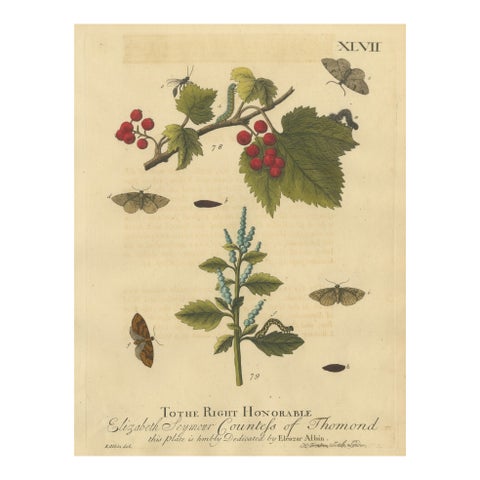
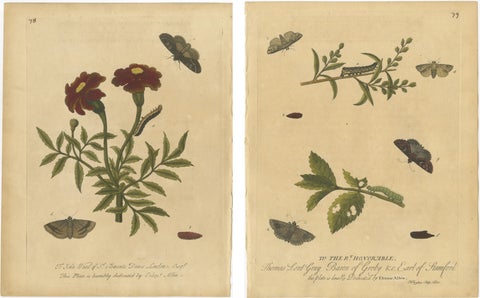
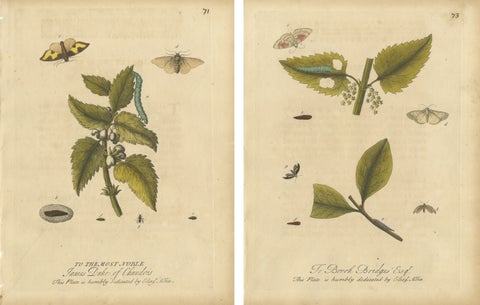
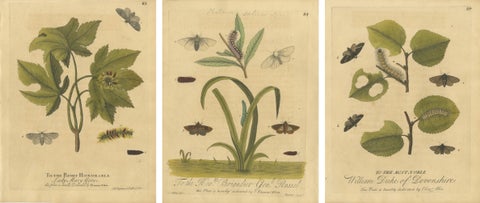
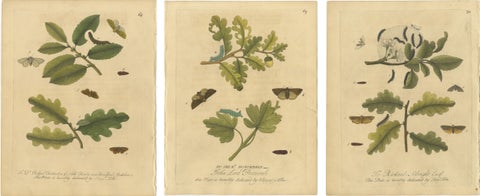
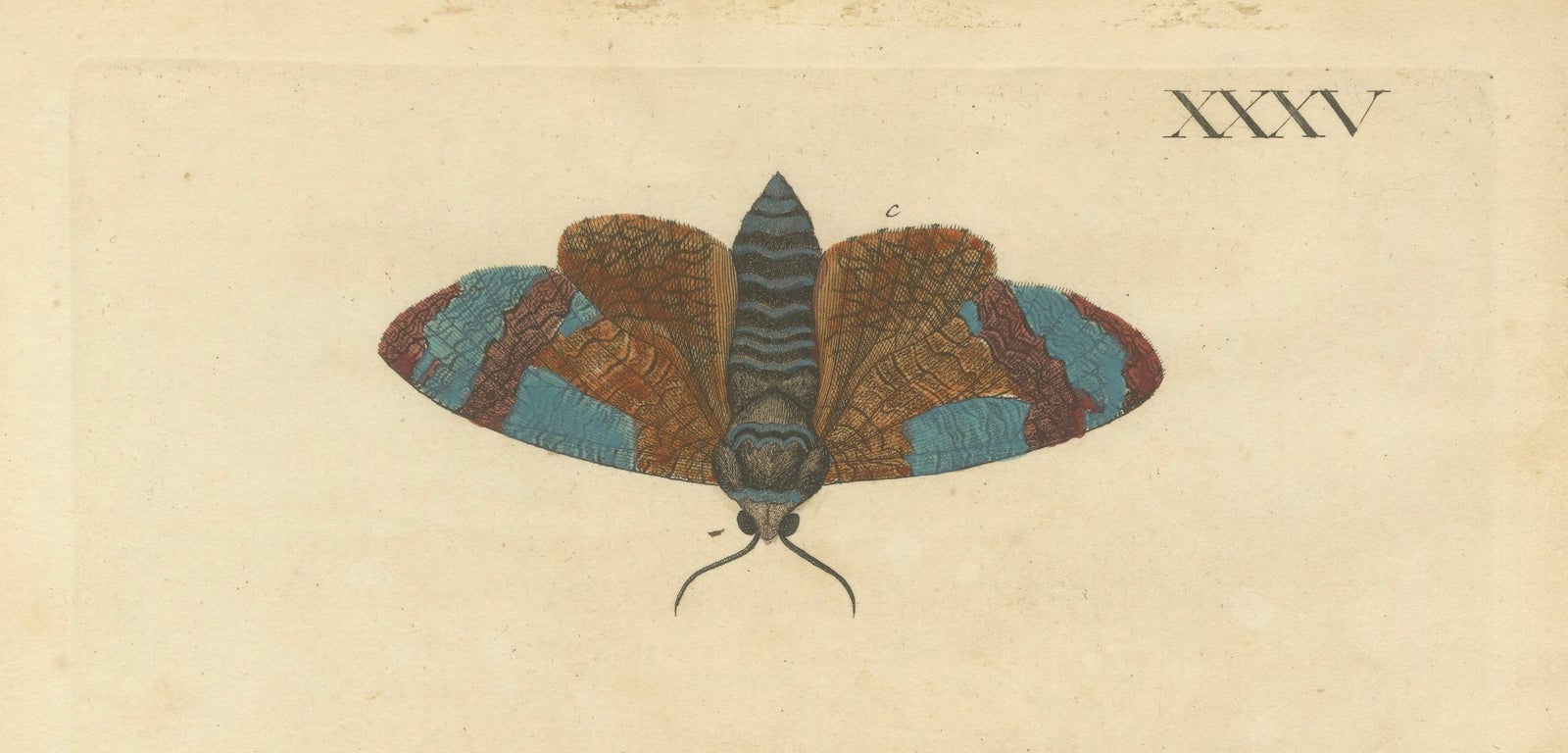
This illustration is from Eleazar Albin's work, as indicated by the signature "E. Albin del.", meaning "drawn by Eleazar Albin". It is a plate from his series on natural history, specifically focusing on the life cycle of a moth species.
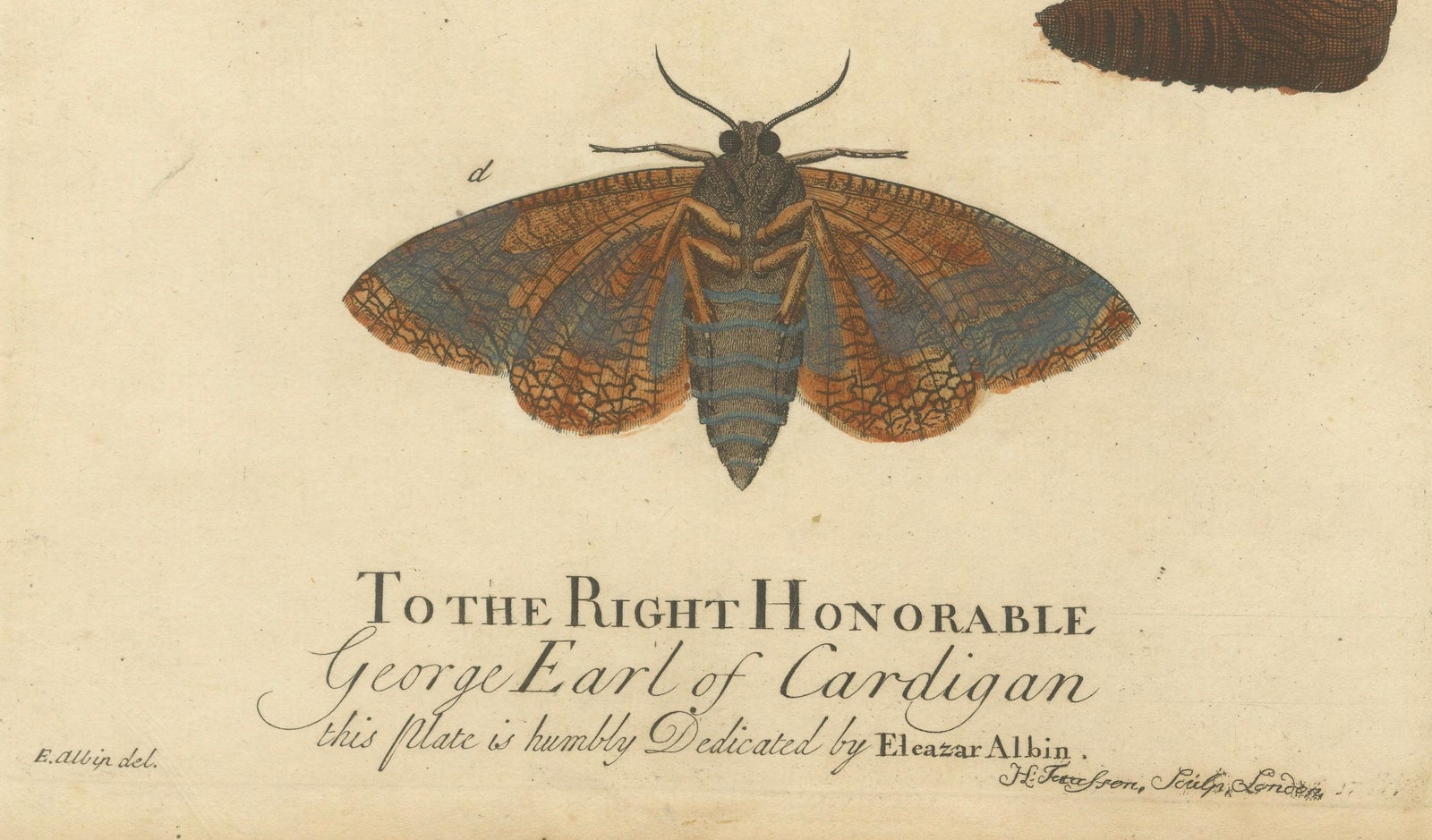
At the bottom, the dedication reads: "To the Right Honorable George Earl of Cardigan this plate is humbly Dedicated by Eleazar Albin."
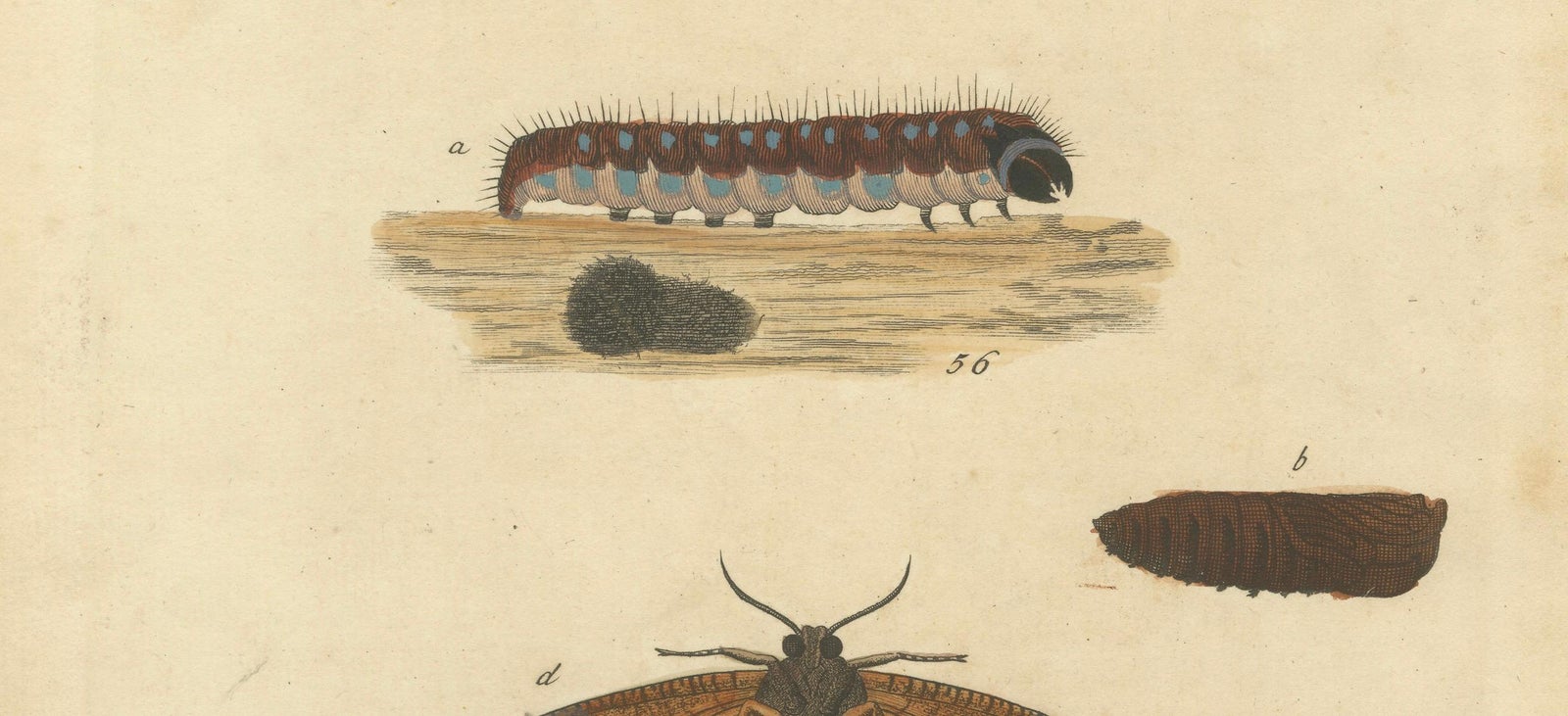
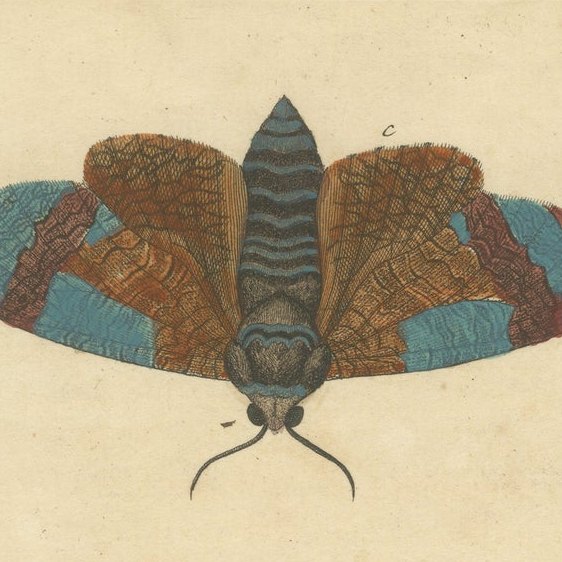
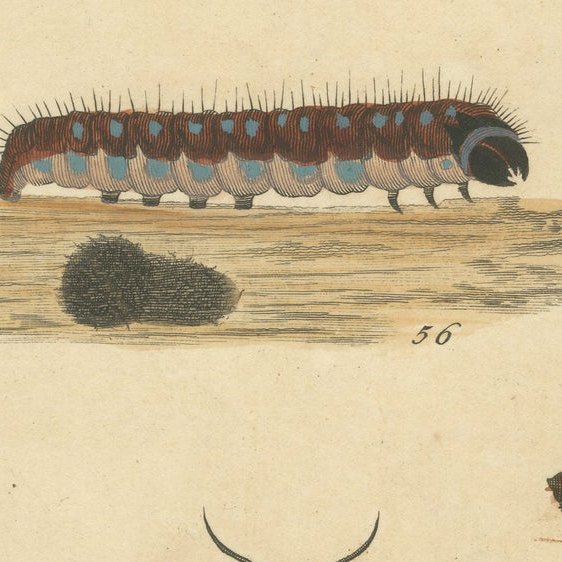
The image depicts three stages of a moth's life cycle: the caterpillar (labeled 'a'), the chrysalis or pupa (labeled 'b'), and the adult moth in two different positions or possibly two different individuals (labeled 'c' and 'd'). The illustration is detailed and colored, following Albin's method of accurately depicting the life stages of insects from life observations.
The dedication to George Earl of Cardigan suggests that this work was also supported by the patronage of nobility. Such dedications were common in Albin's time, serving both as a mark of respect and a means of securing financial support for scientific publications.
The roman numeral "XXXV" at the top right corner likely indicates that this is plate number 35 in a series, which was a typical way of ordering illustrations in natural history volumes of that period.