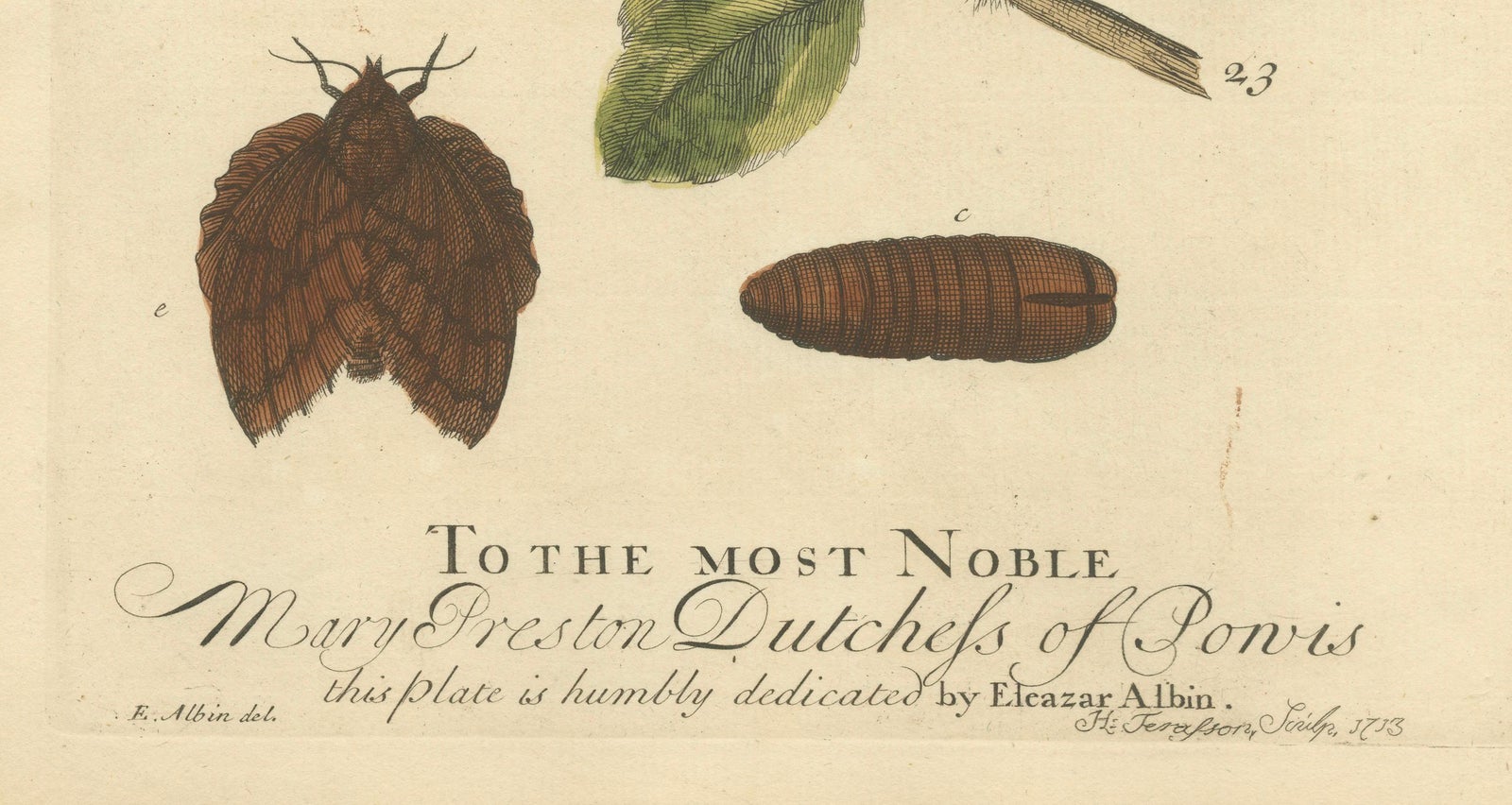
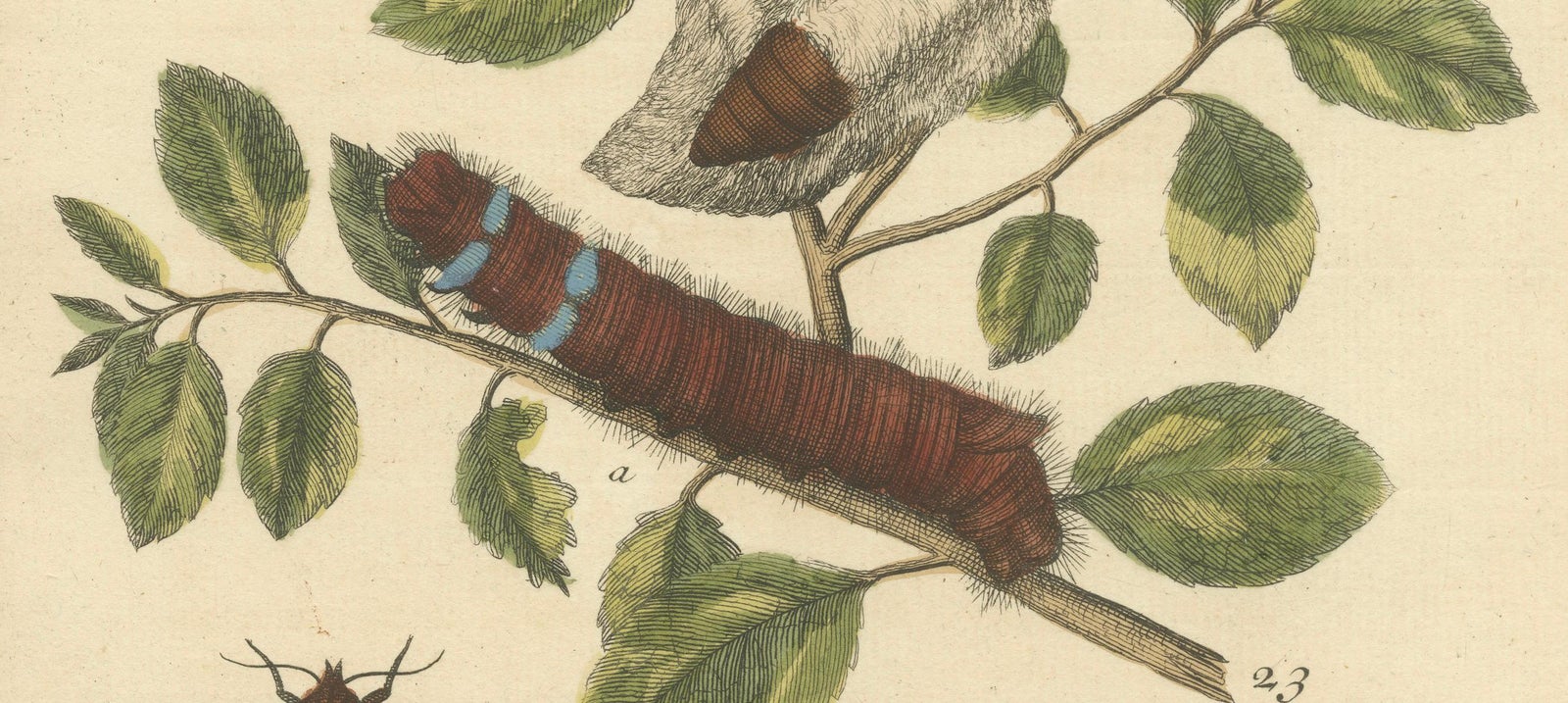
Close-ups
Framed and on the wall
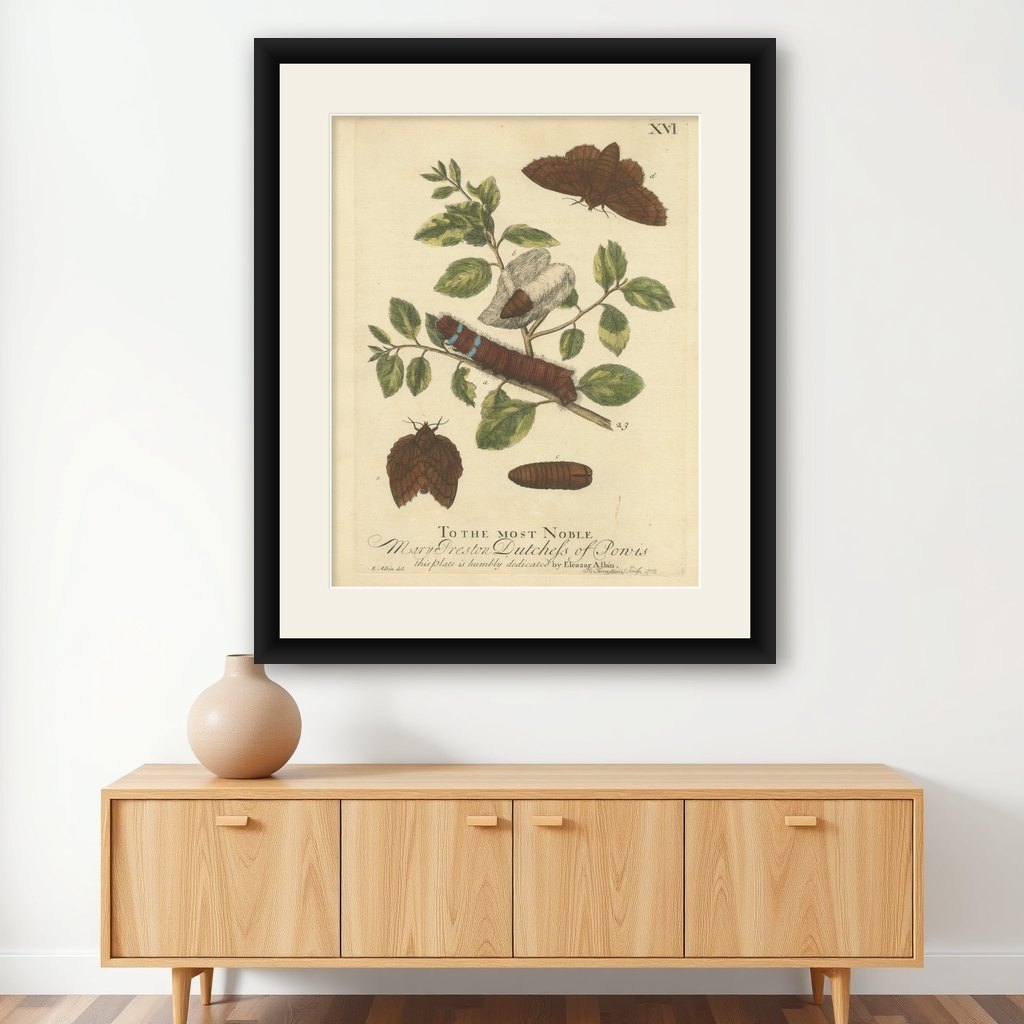
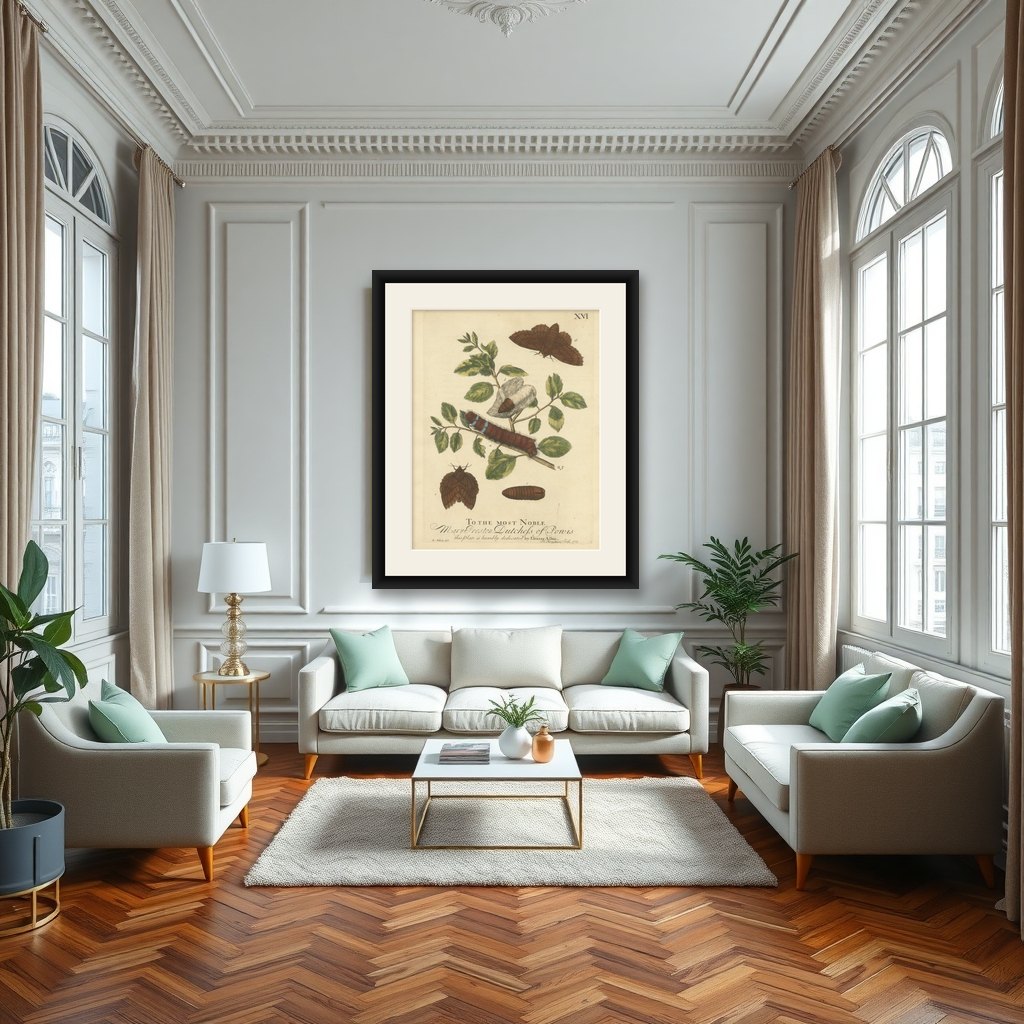
Frame and rooms are illustrations of how the print could look; the description says what is included.
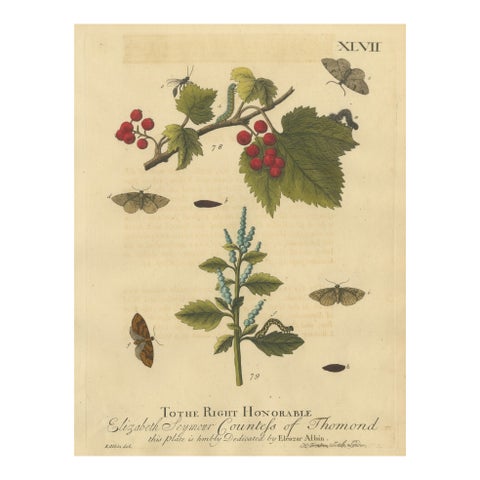
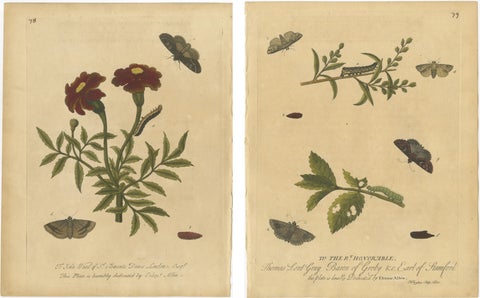
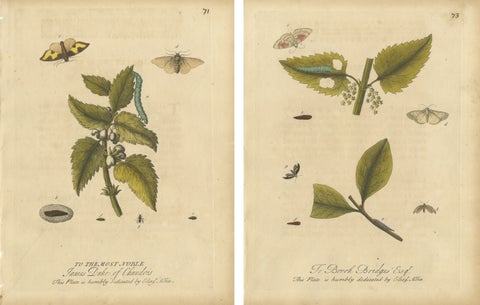
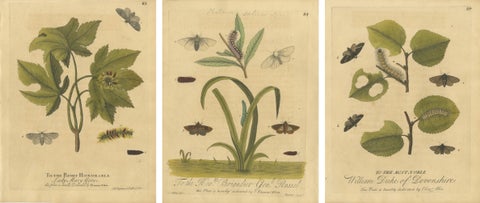
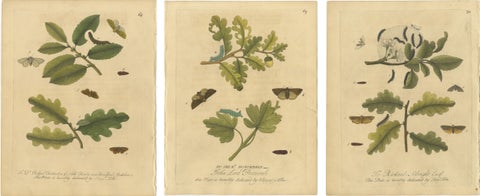
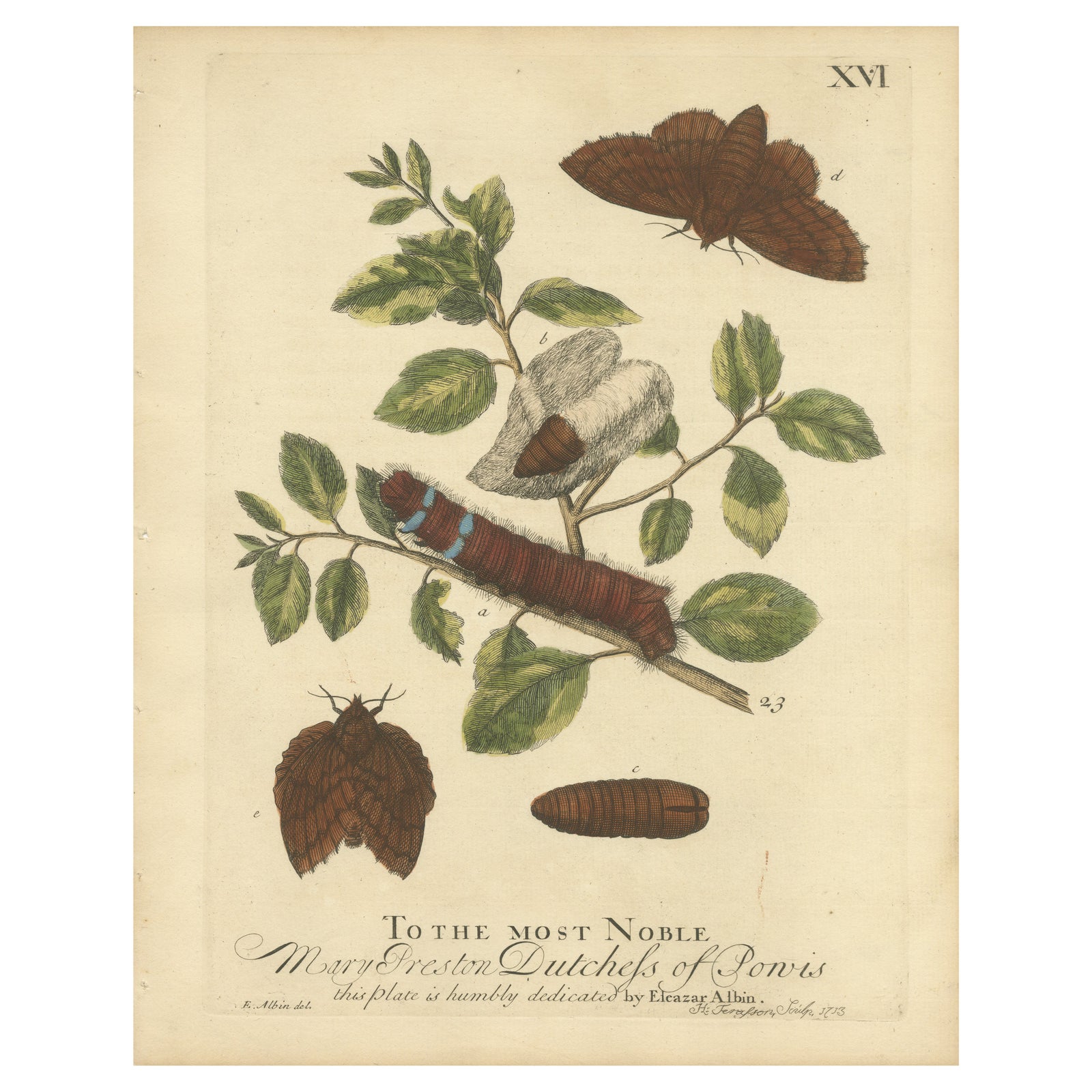
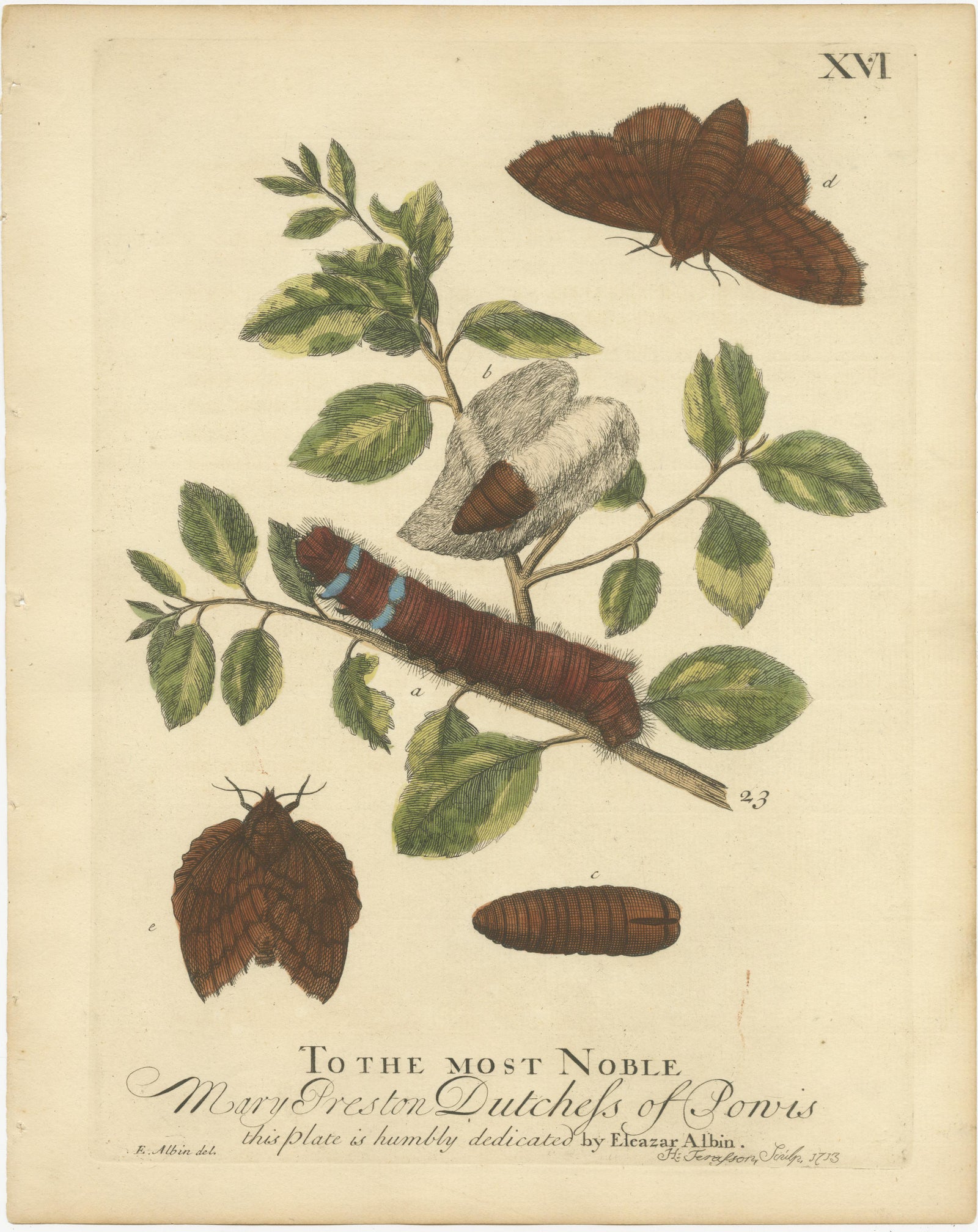
Moth Lifecycle and Host Plant, Engraved and Hand-Colored, 1713
€260 ($290, £220, €260)
Period original, not a reproduction.
Shipped from the Netherlands, flat, insured and tracked, worldwide. Returns accepted within 14 days.
- Date
- 1713
- Size
- 11.3 × 8.9 in (28.6 × 22.5 cm)
- Condition
- Good. Good. Due to age, the paper has a light brownish hue over it, adding to its patina. Original hand-coloring. Study the images carefully.
- Period
- 18th century
- Section
- Insects and butterflies
- Reference
- f_38220362
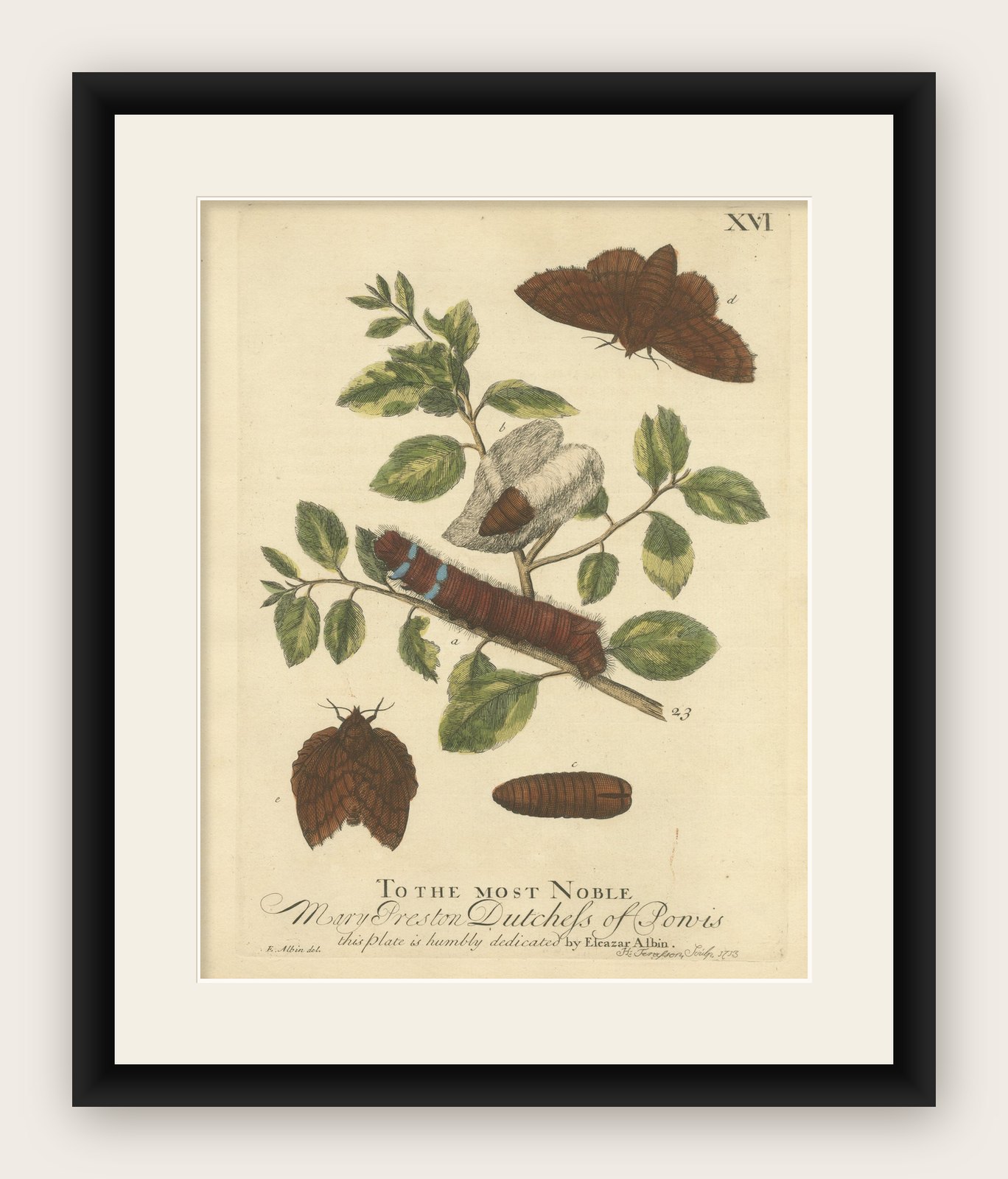
This image is a botanical illustration by Eleazar Albin, from "A Natural History of English Insects." The dedication at the bottom reads: "To the most Noble Mary Preston Dutchess of Pontis this plate is humbly dedicated by Eleazar Albin." This indicates that this particular plate was dedicated to Mary Preston, Duchess of Pontis, which aligns with Albin's practice of dedicating his work to members of the nobility, who were often patrons of the arts and sciences.
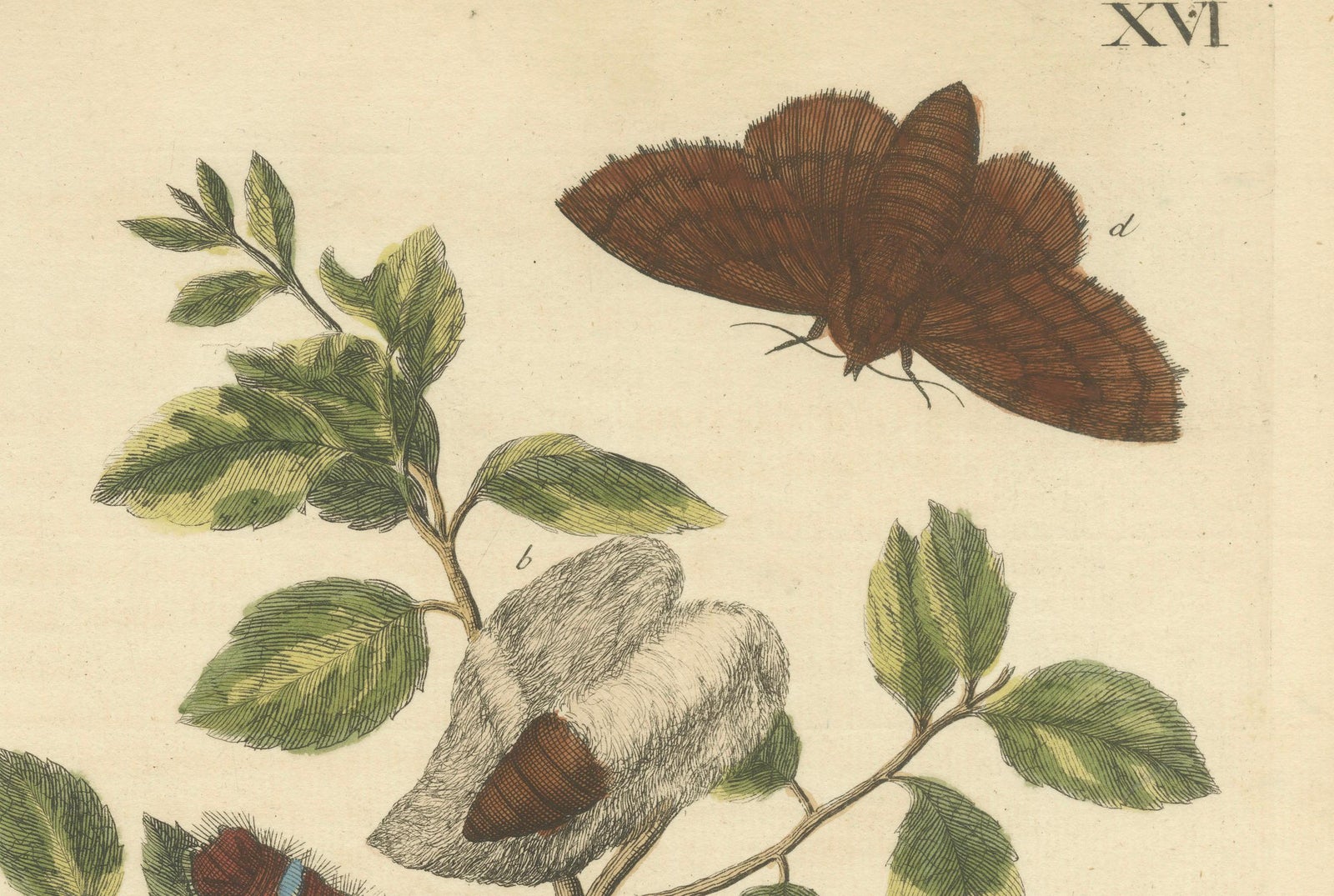
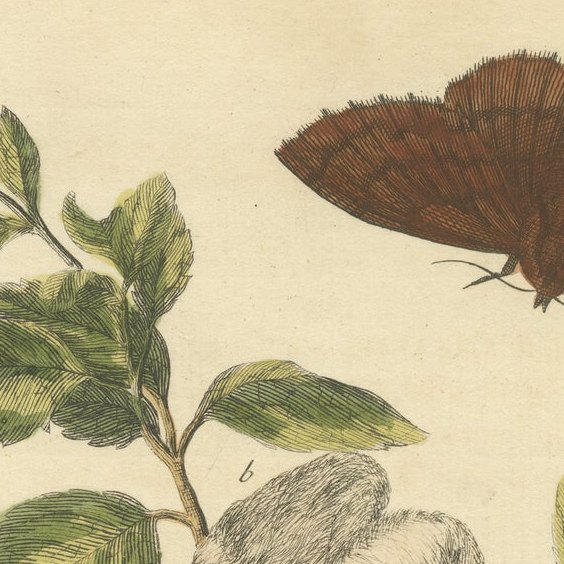
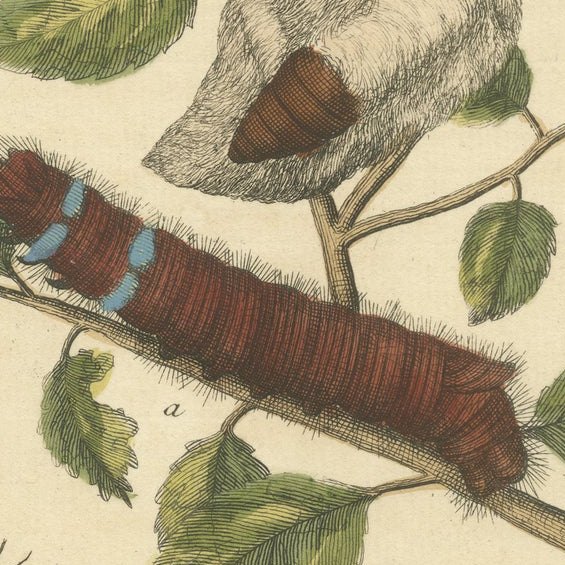
The illustration itself depicts a moth in various stages of its life cycle: the caterpillar (labeled 'a'), the pupa (labeled 'b'), and the adult moth in two positions (labeled 'd' and 'e'). The plant upon which the caterpillar is resting is also intricately rendered, though without a direct reference to the species, it is not immediately clear what type of plant it is. The life stages of the moth are represented with precise detail, consistent with Albin's commitment to depicting insects as accurately as possible.
The title for this print "Moth Lifecycle and Host Plant." reflects the content of the illustration and the scientific interest in the developmental stages of moths. The inclusion of the plant also suggests a specific ecological relationship, as many moths rely on particular host plants for their development.
Considering the dating "Eleazar Albin delin. et fecit", this illustration was both drawn and made by Eleazar Albin, confirming his role as both the artist and the engraver of the plate, which was common practice for natural history illustrations of that era. The date "1713" is also visible, which helps to place this work in the context of Albin's career and the period in which he was active.