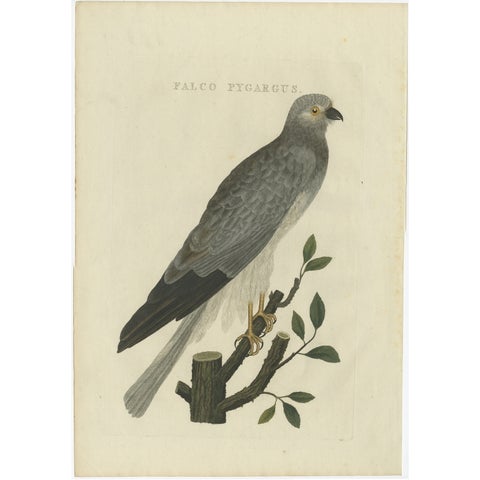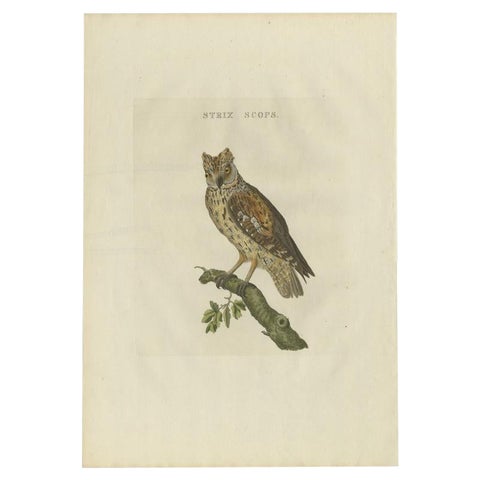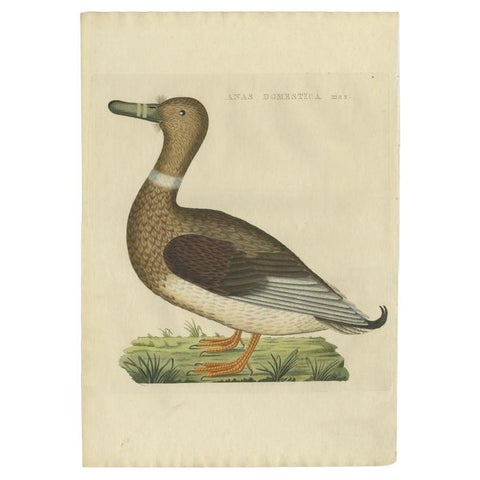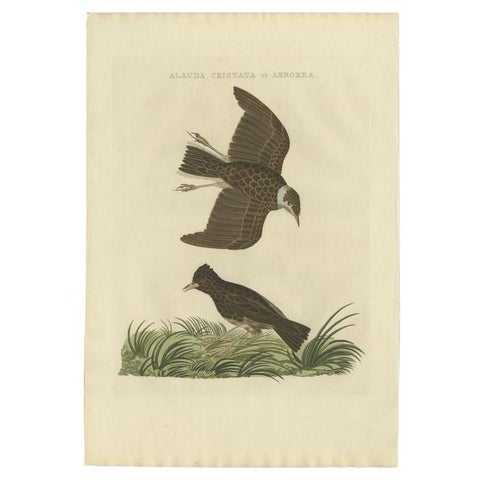
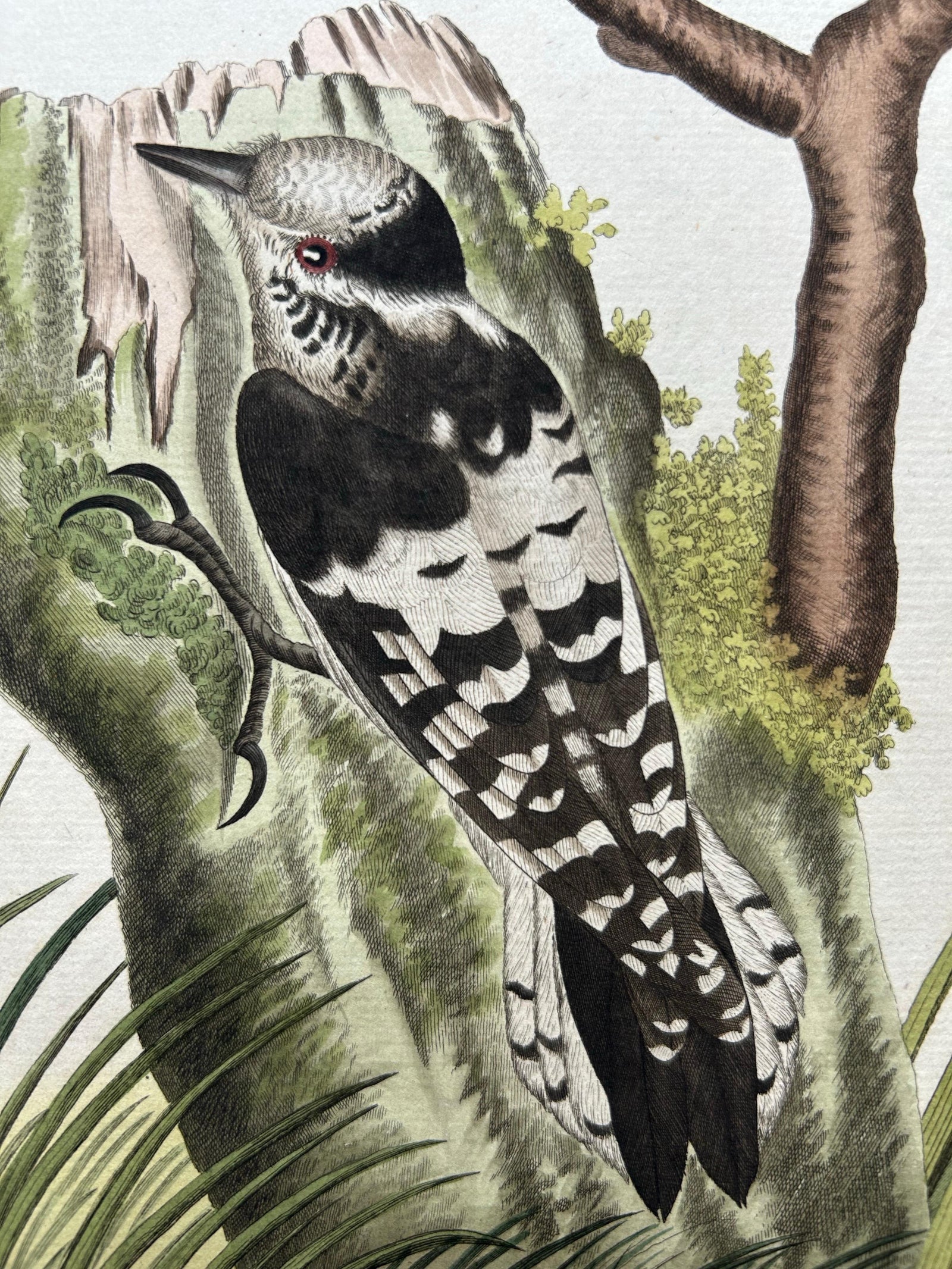
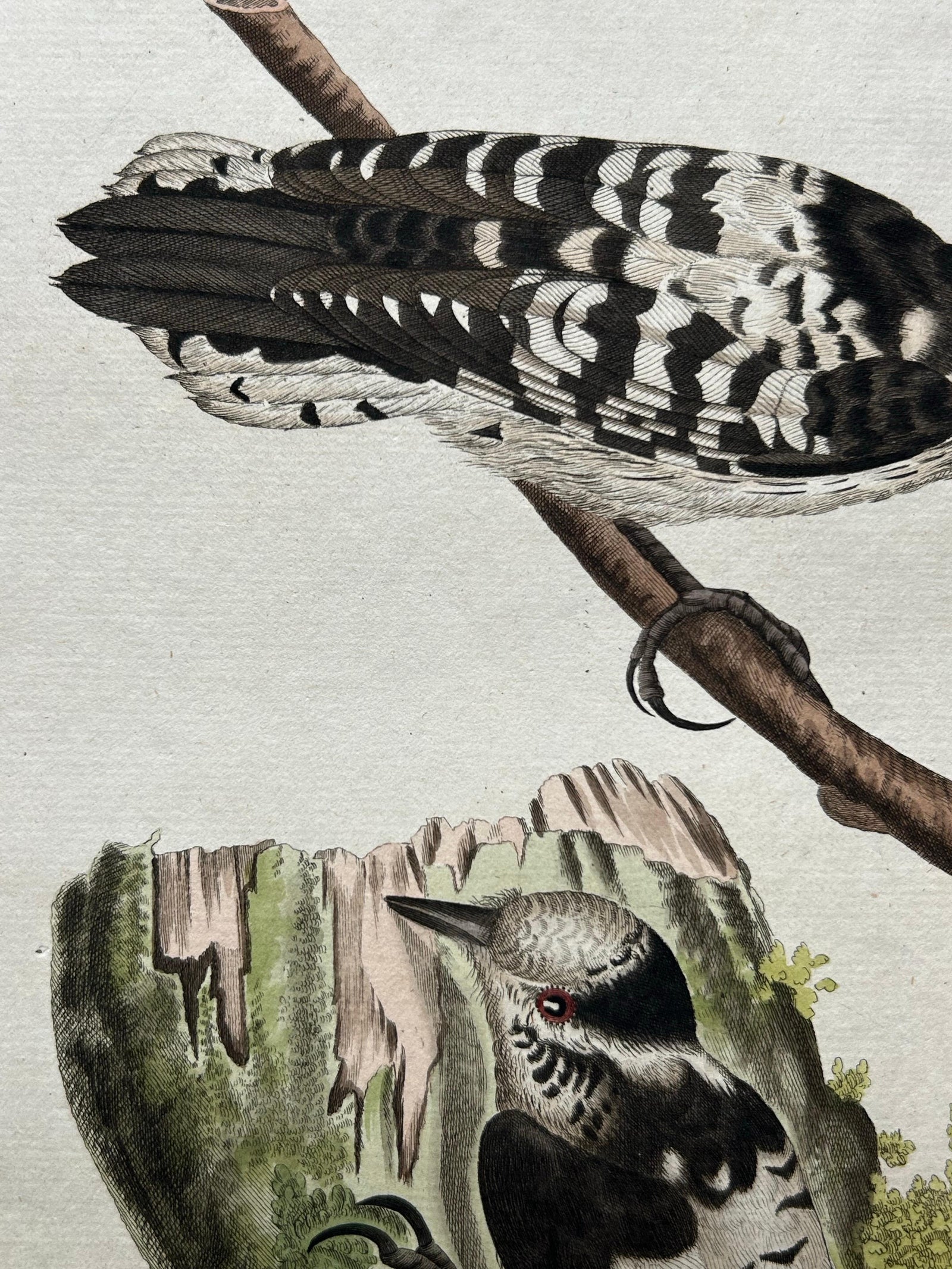
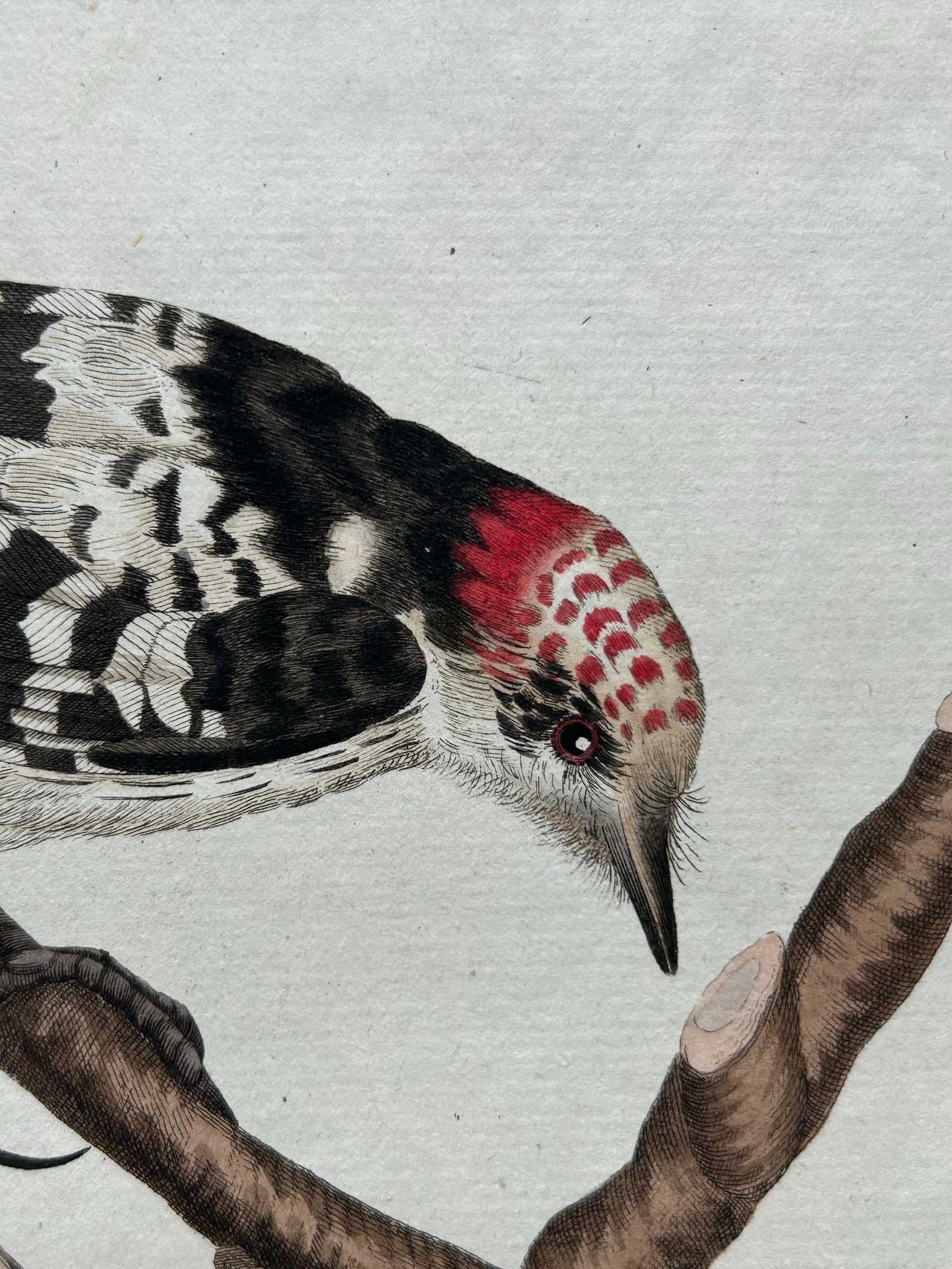
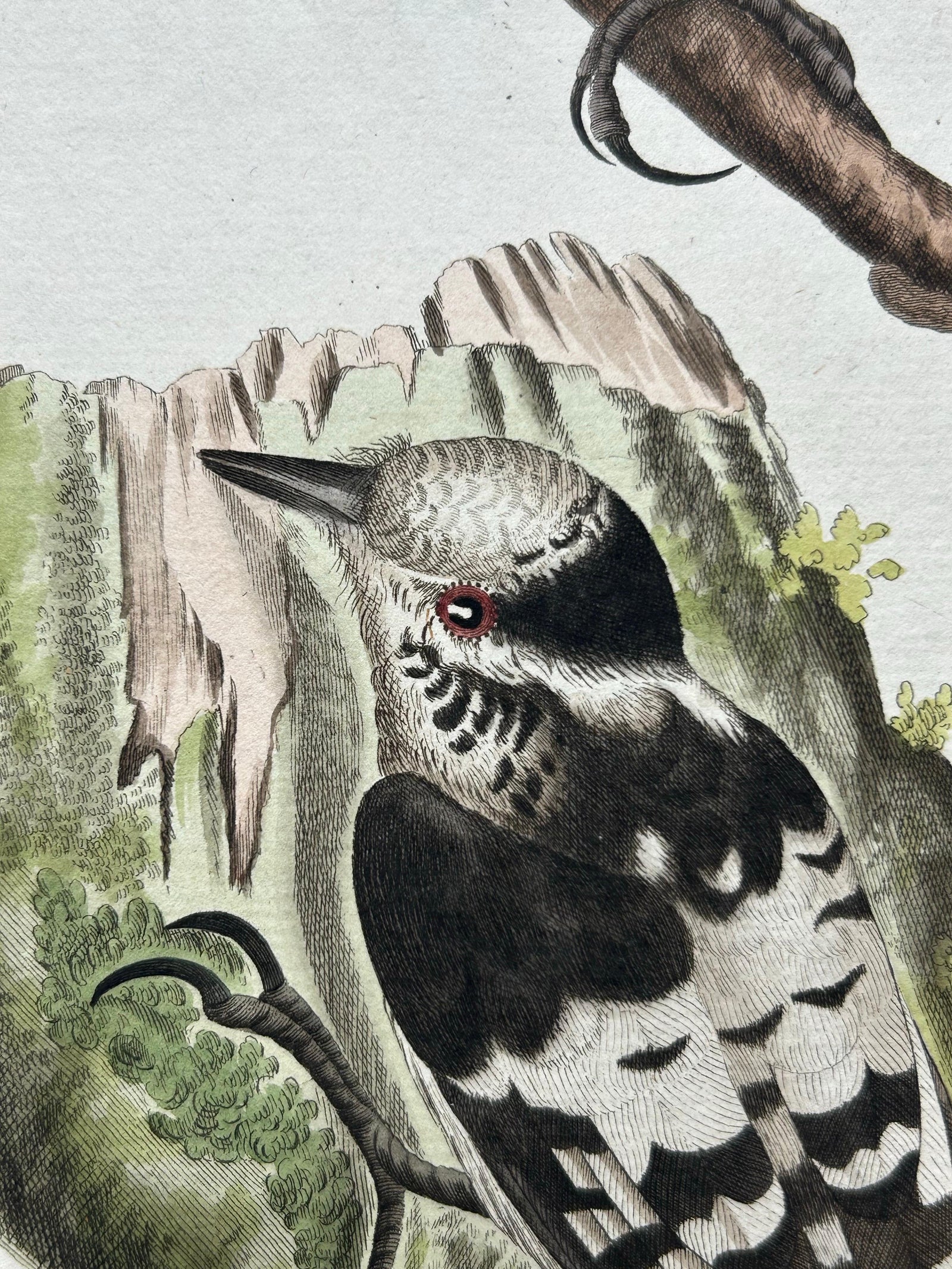
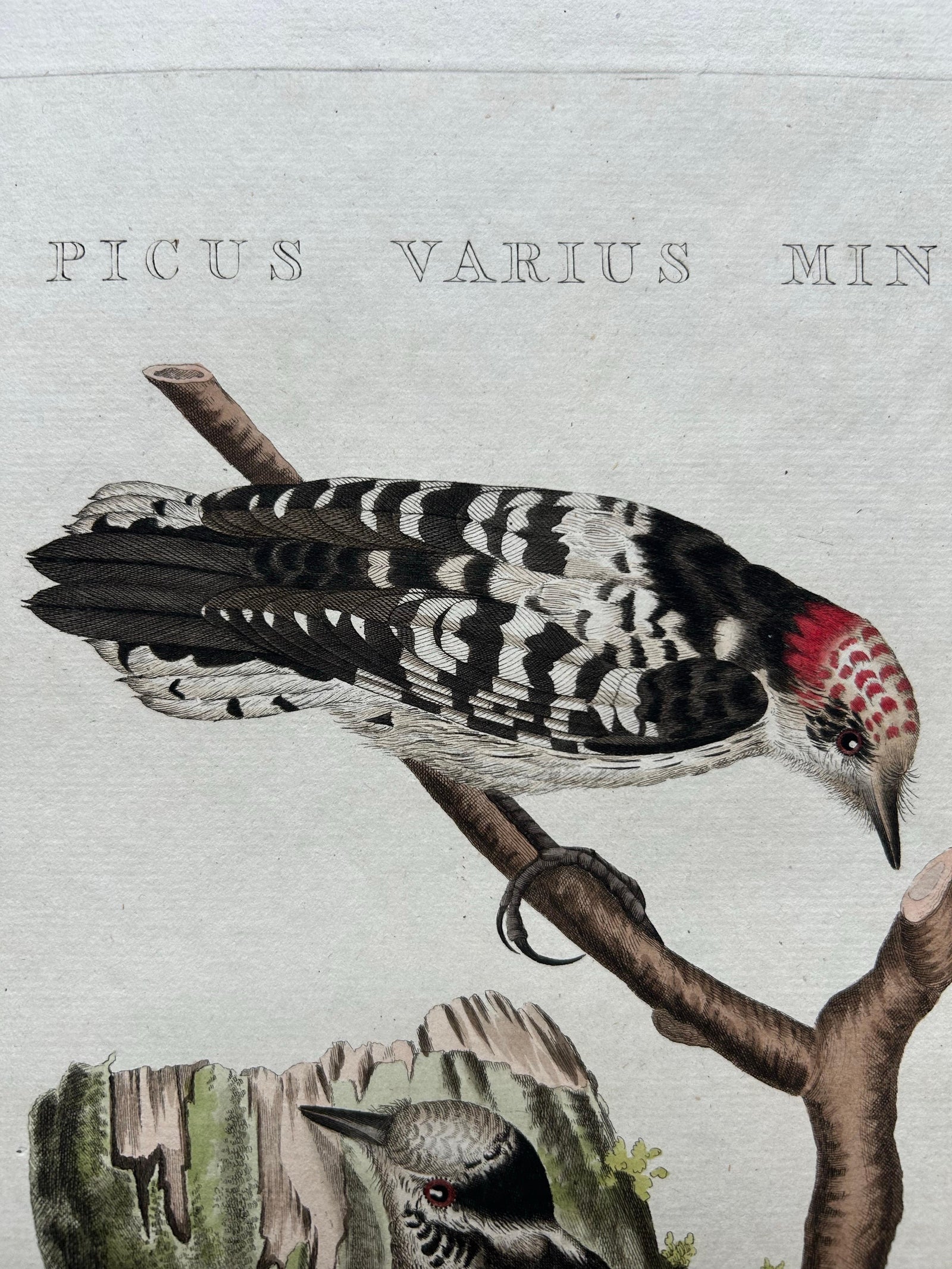
Close-ups
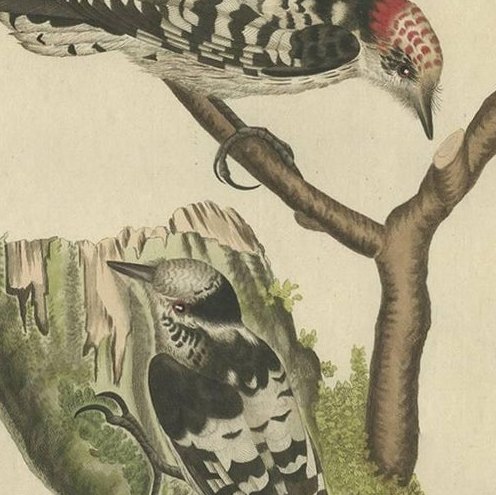
Framed and on the wall
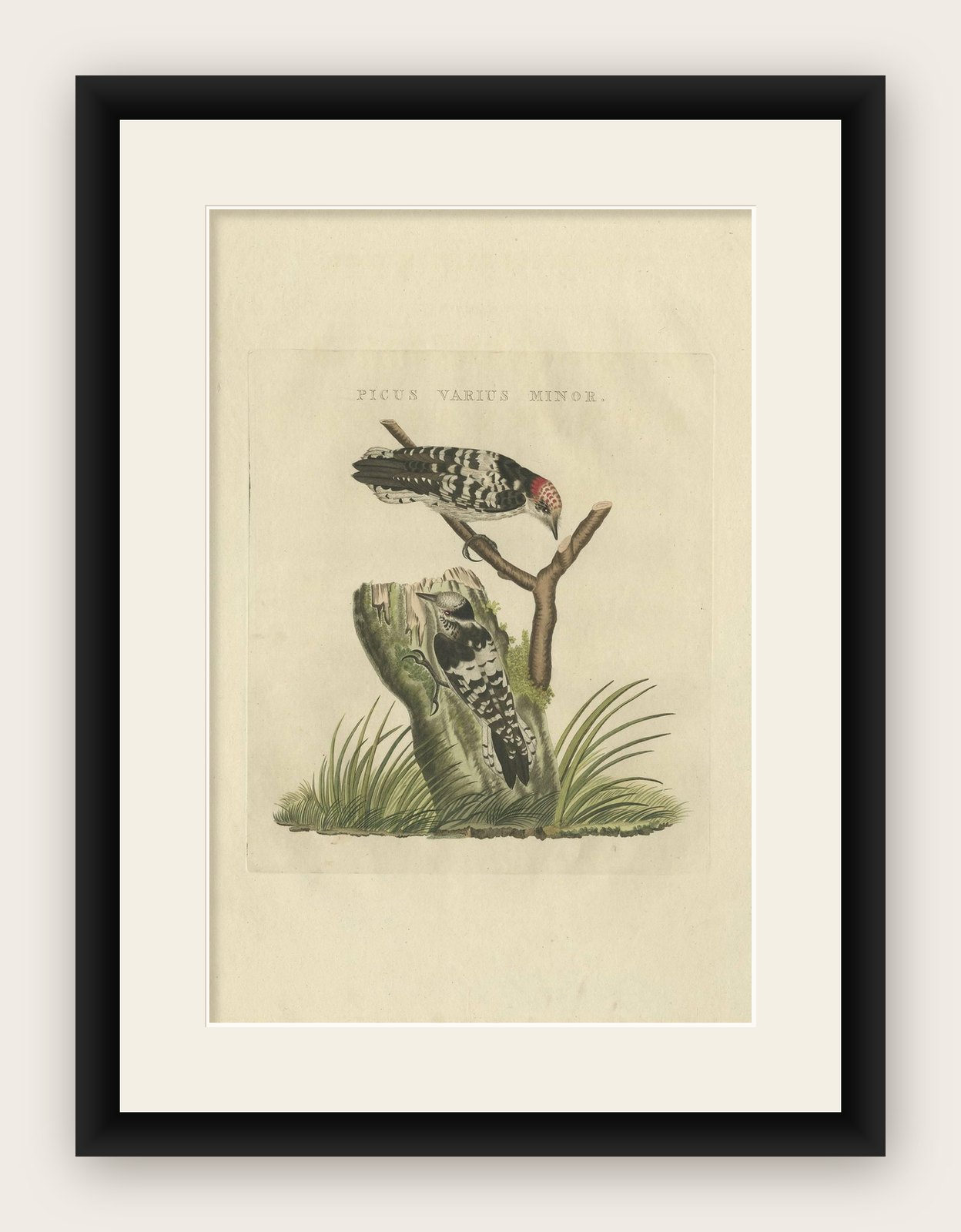
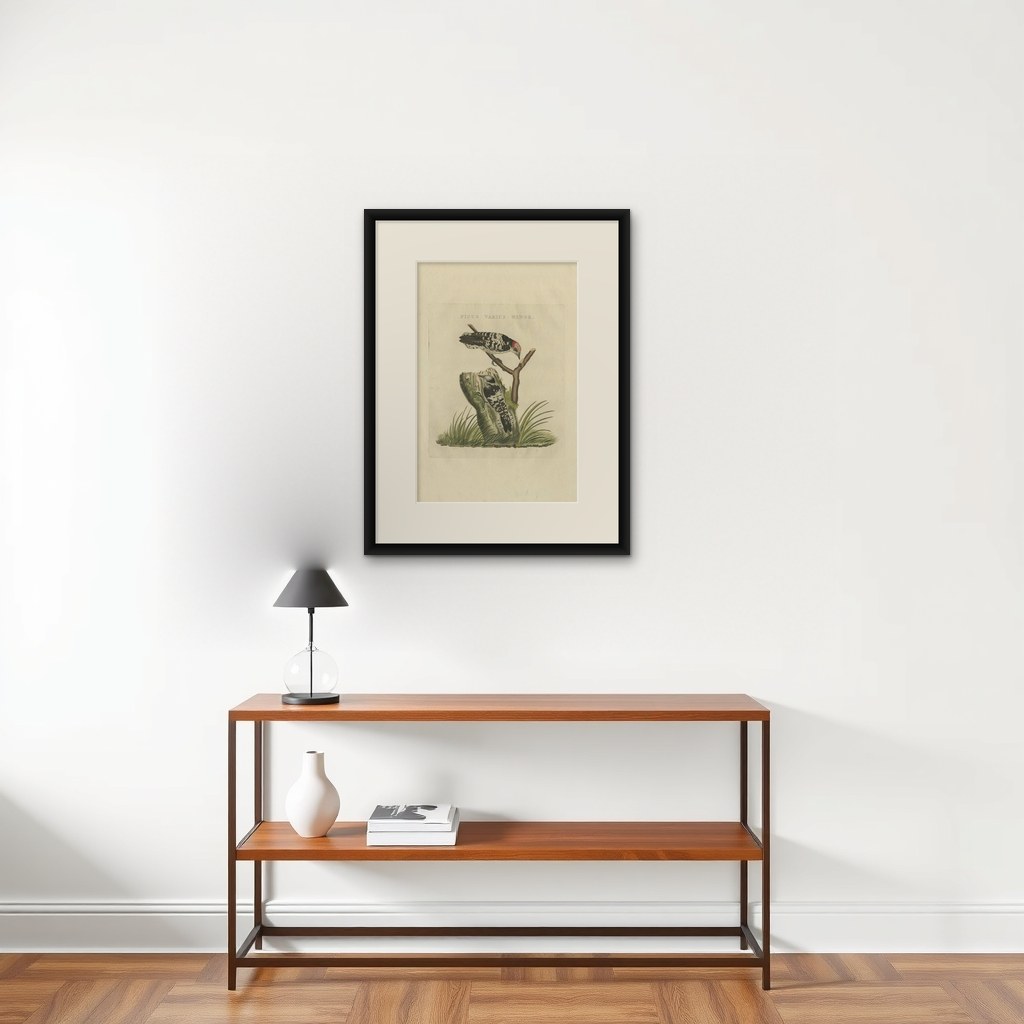
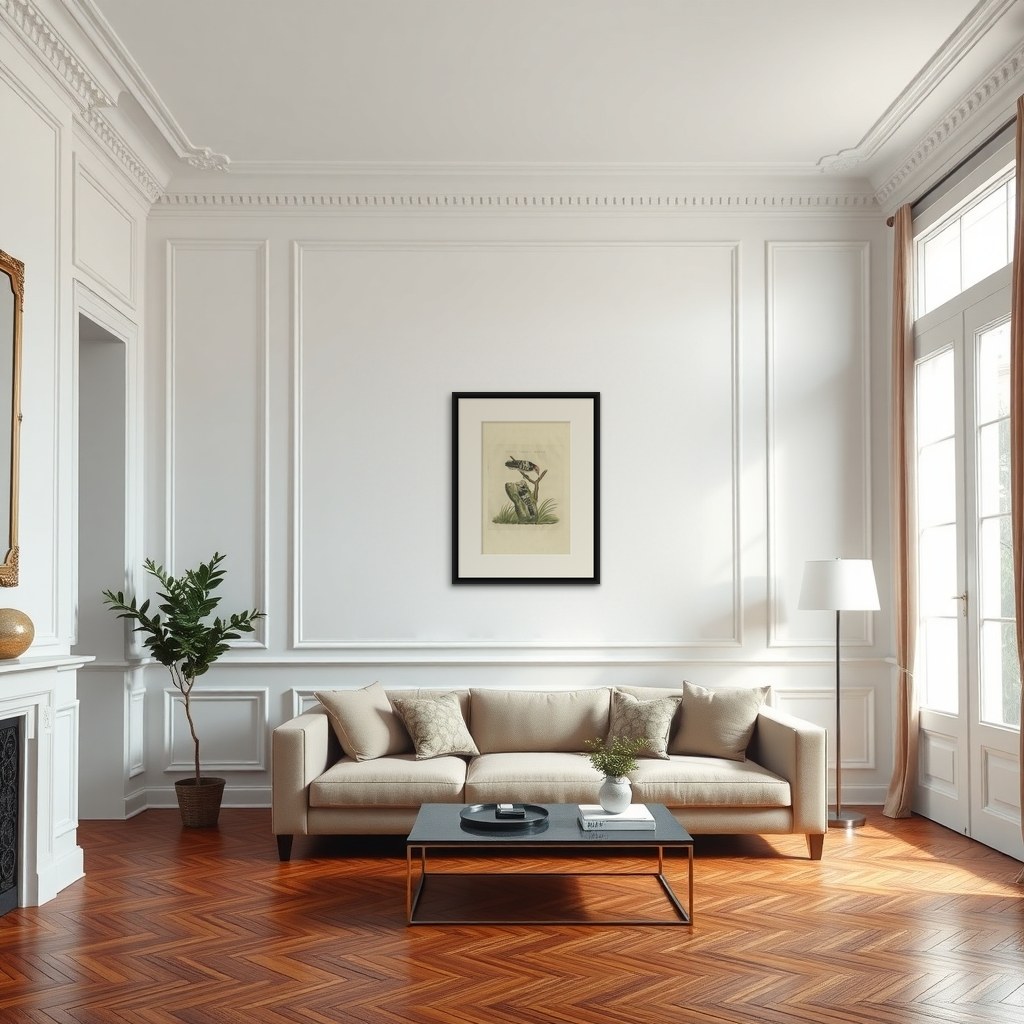
Frame and rooms are illustrations of how the print could look; the description says what is included.
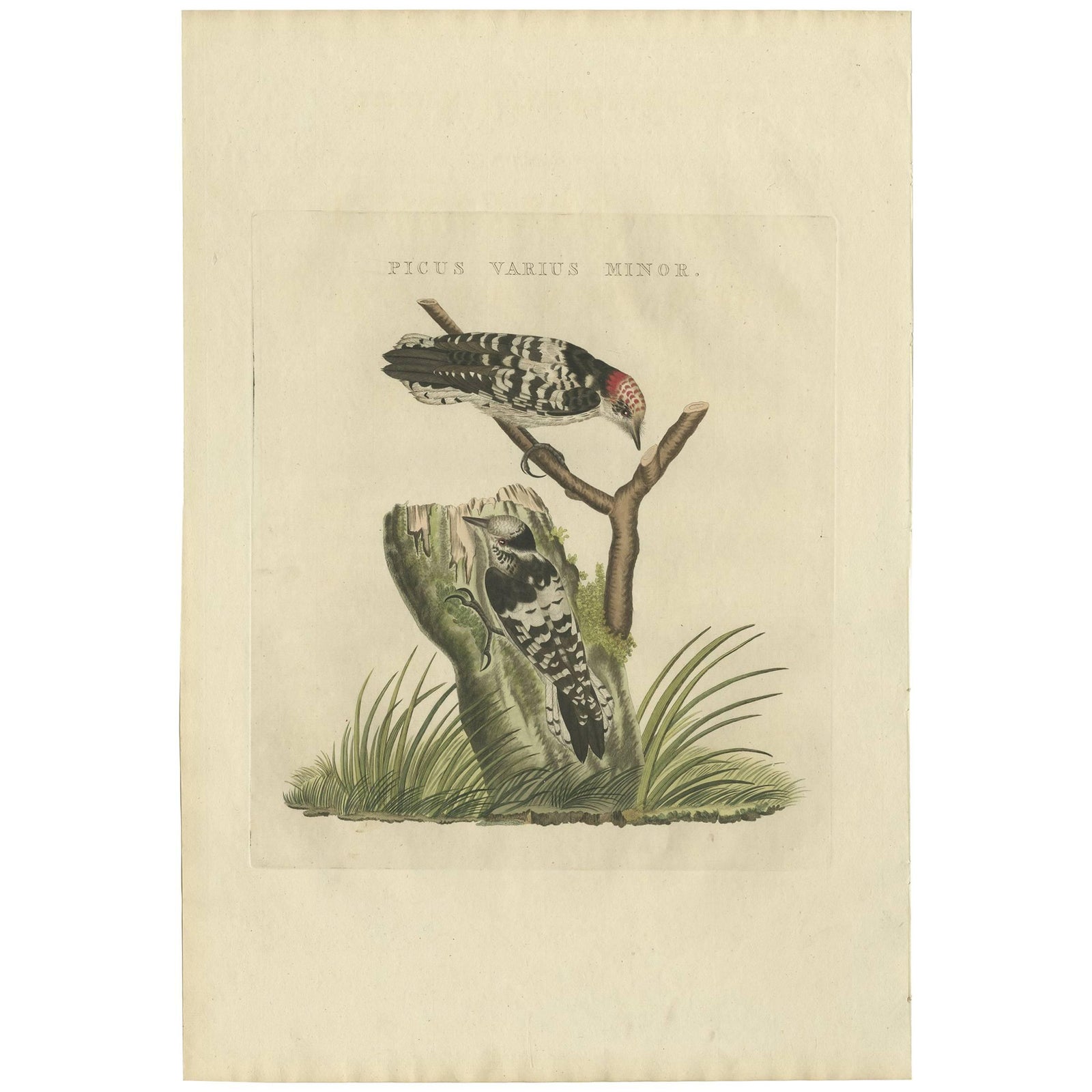
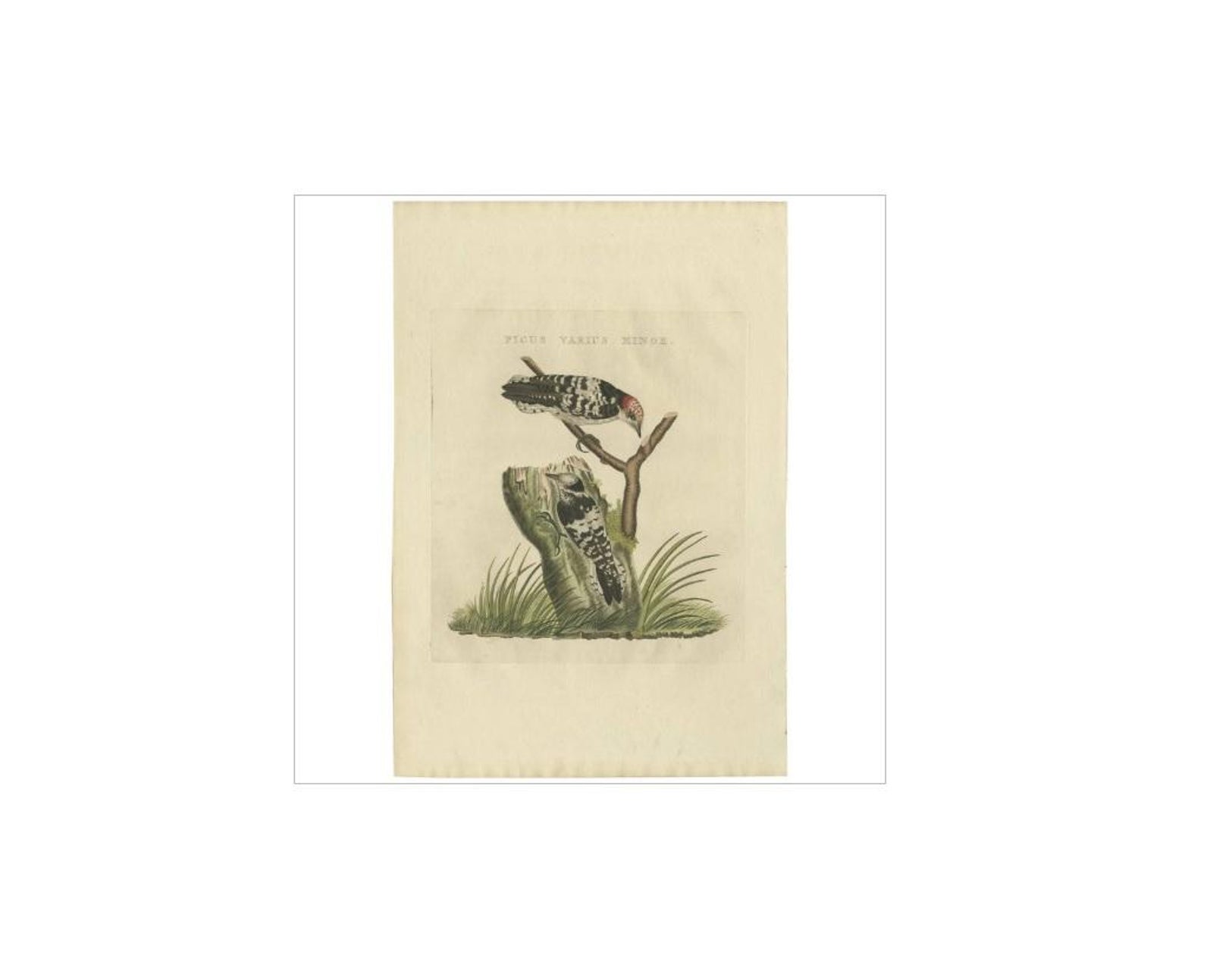
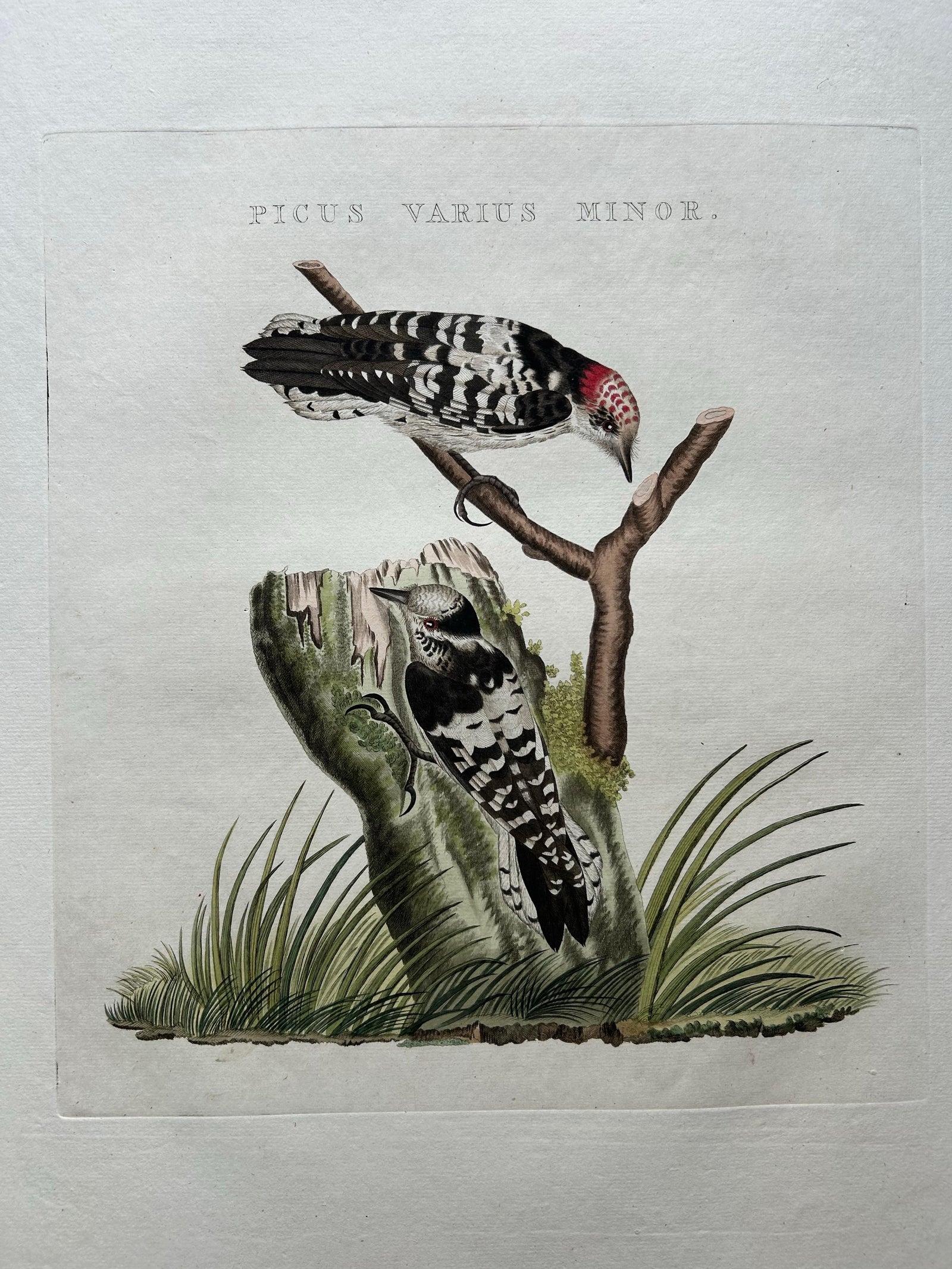
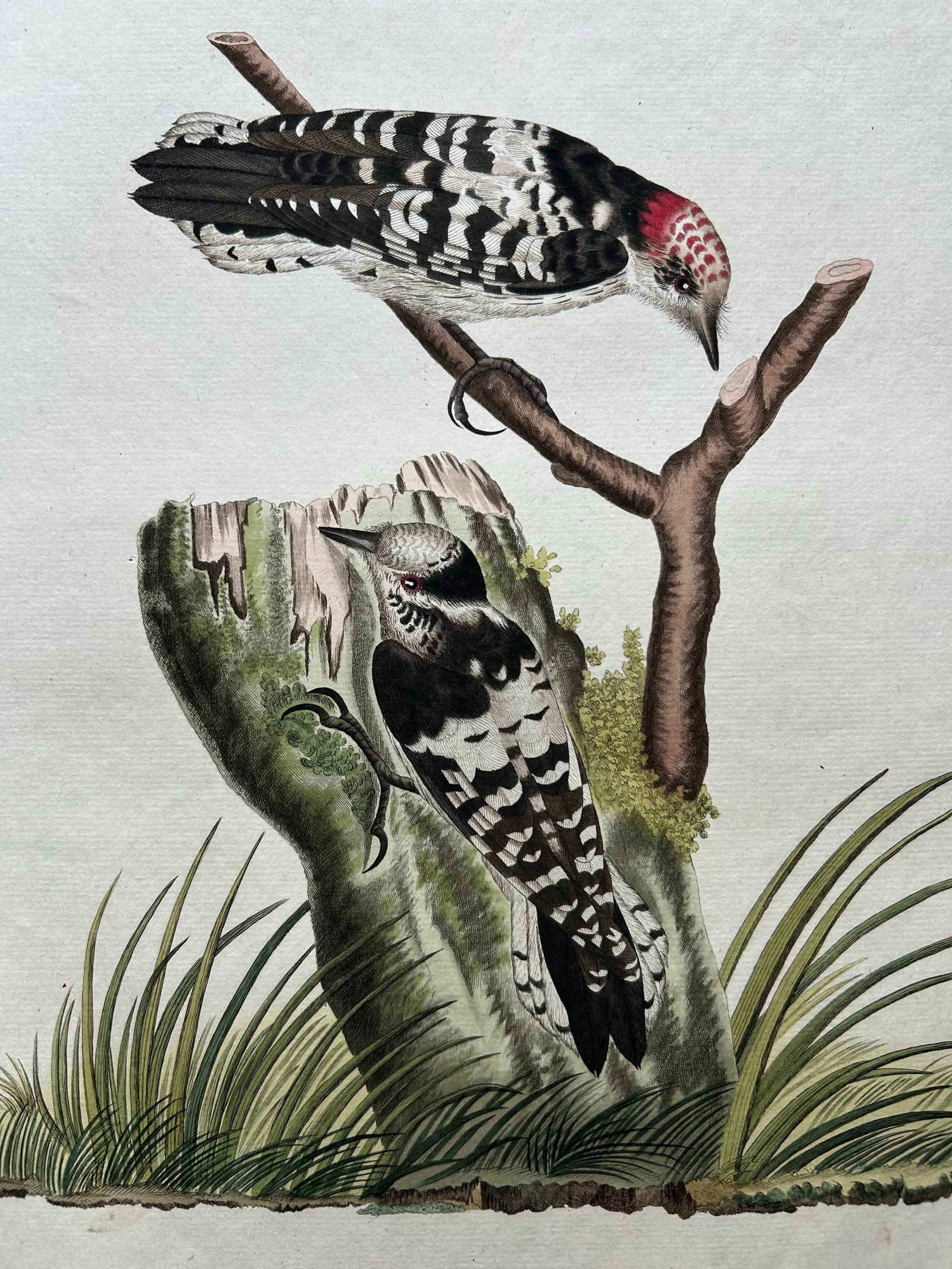
Lesser Spotted Woodpecker, Picus Varius Minor, c.1809
$1,010 (£760, €900)
Period original, not a reproduction.
Shipped from the Netherlands, flat, insured and tracked, worldwide. Returns accepted within 14 days.
- Date
- 1809
- Size
- 21.1 × 14.6 in (53.5 × 37 cm)
- Technique
- Engraved
- Condition
- Good. Excellent impression with strong, fresh colours. Paper is clean and stable with only the faintest marginal toning. The original text pages are also in excellent condition, with minimal handling marks and crisp, clear printing.
- Period
- Early 19th century
- Artist or book
- Nozeman and Sepp
- Section
- Birds
- Reference
- f_10927183
Lesser Spotted Woodpecker, Picus Varius Minor, c.1770–1829
This finely hand-coloured engraving depicts the lesser spotted woodpecker (Dryobates minor), the smallest member of the woodpecker family native to the Netherlands and much of Europe. Perched on a bare branch above a moss-covered tree stump, the bird is shown in exquisite detail, highlighting its black-and-white barred plumage and the male’s distinctive red crown. Its small size, delicate proportions, and characteristic foraging posture are faithfully rendered, making this both an accurate scientific record and an artwork of natural elegance.
The engraving was produced for Nederlandsche Vogelen; volgens hunne huisdouding, aert, en eigenschappen beschreeven, Amsterdam, 1770–1829, by Cornelius Nozeman, Martinus Houttuyn, and Christiaan Sepp. This monumental work was the first comprehensive ornithological study published in the Netherlands and remains one of the most beautiful bird books ever produced. Each species is depicted close to life size and in naturalistic surroundings, accompanied by extensive descriptions of its habits, distribution, and characteristics.
The accompanying original Dutch text pages provide rich historical and scientific observations on the species, its behaviour, nesting habits, and physical characteristics, as understood in the late 18th and early 19th centuries.
Condition: Excellent impression with strong, fresh colours. Paper is clean and stable with only the faintest marginal toning. The original text pages are also in excellent condition, with minimal handling marks and crisp, clear printing.
Framing tips: A soft ivory or pale cream mount will set off the bird’s fine detail, while a dark wood or black frame will give it a museum-quality presence. UV-protective glass is recommended to preserve the colours.