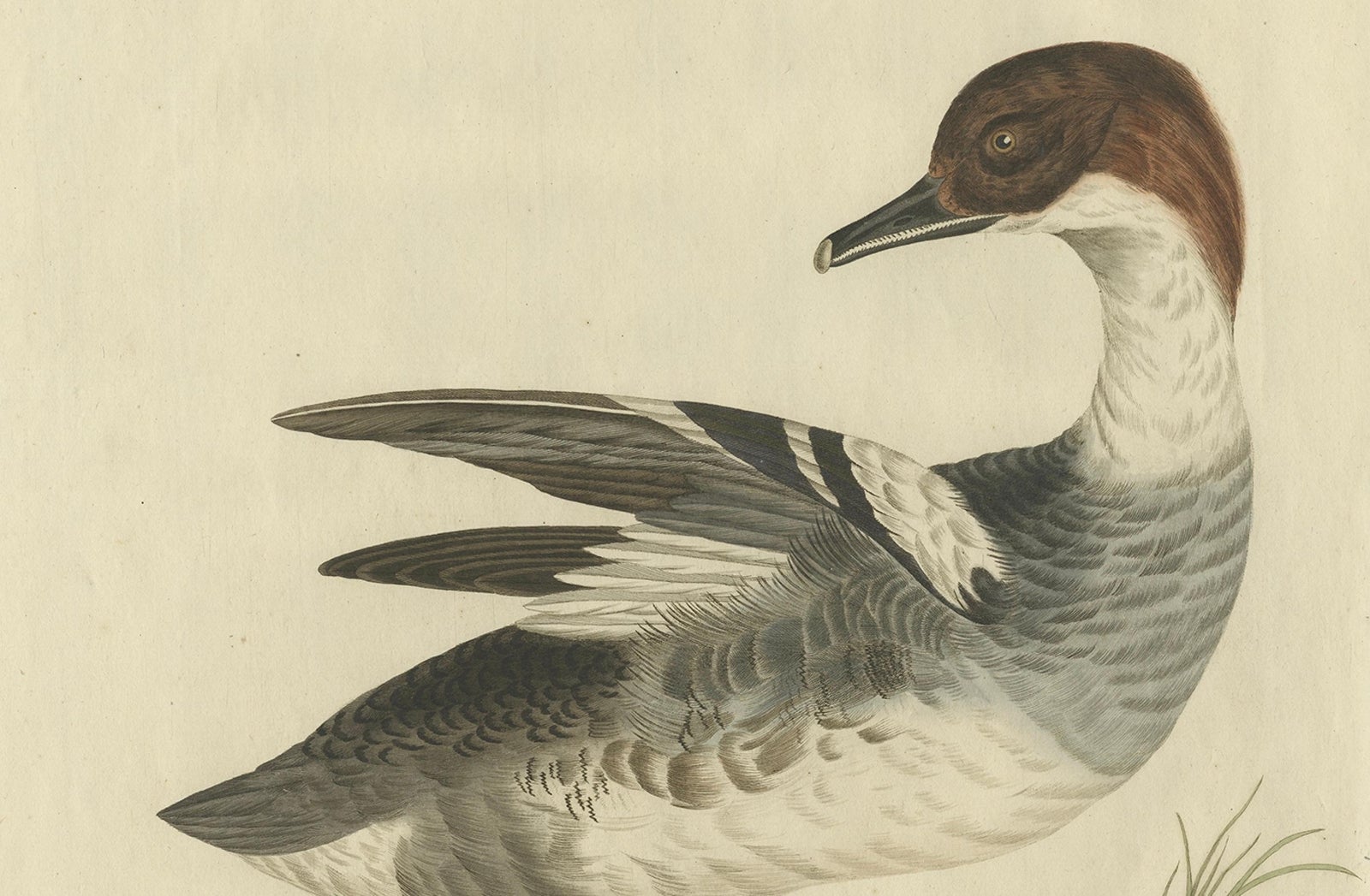
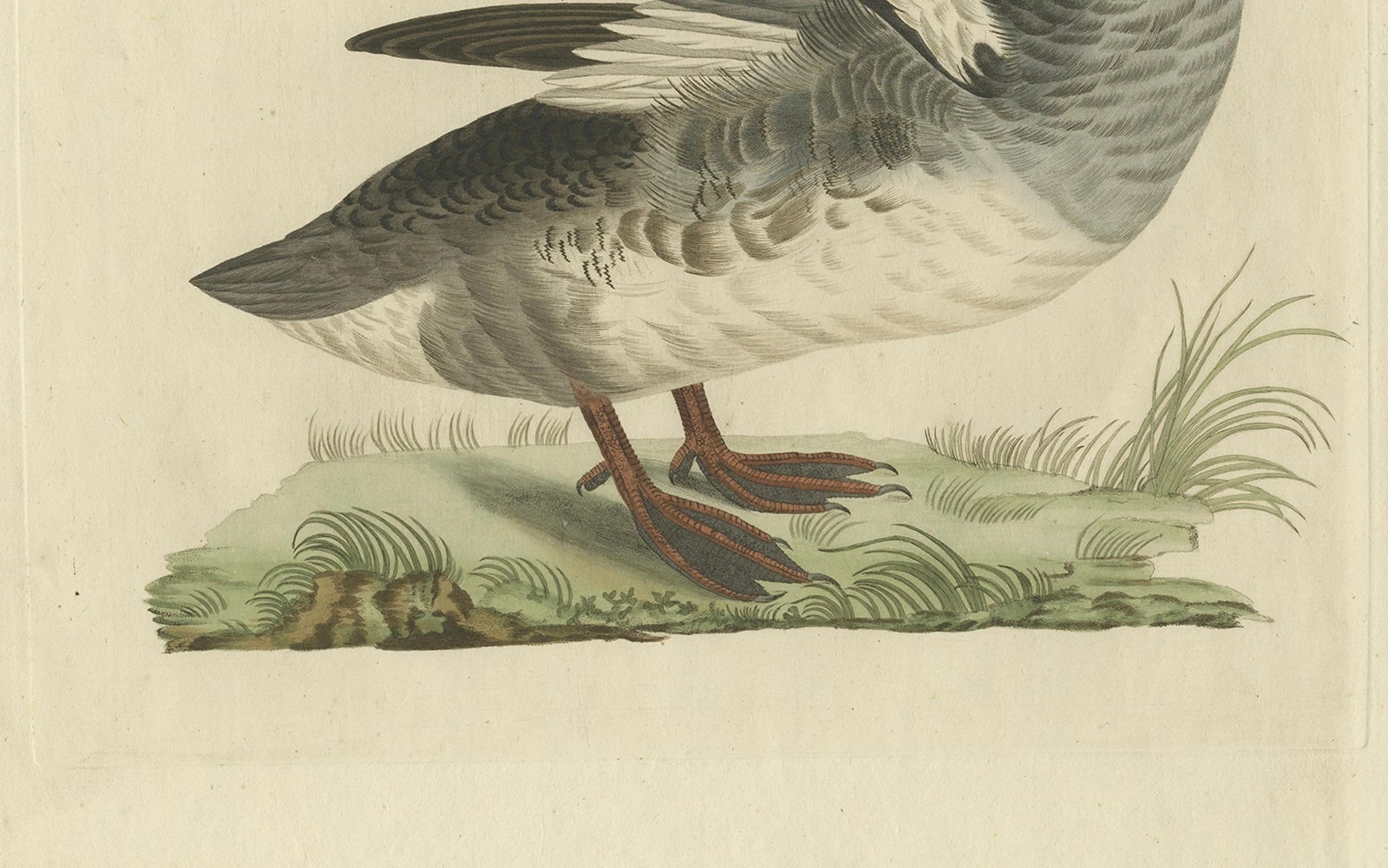
Close-ups
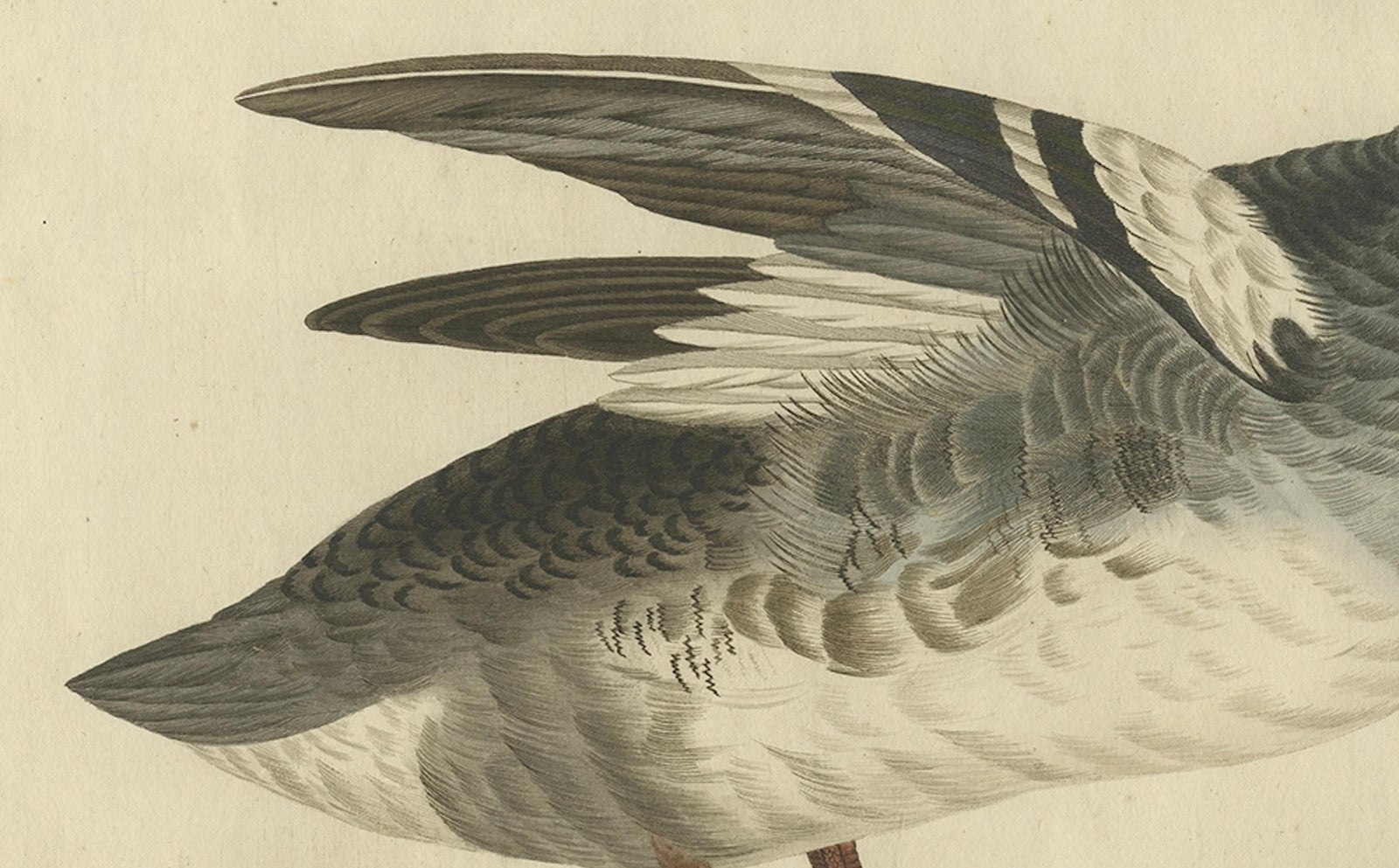
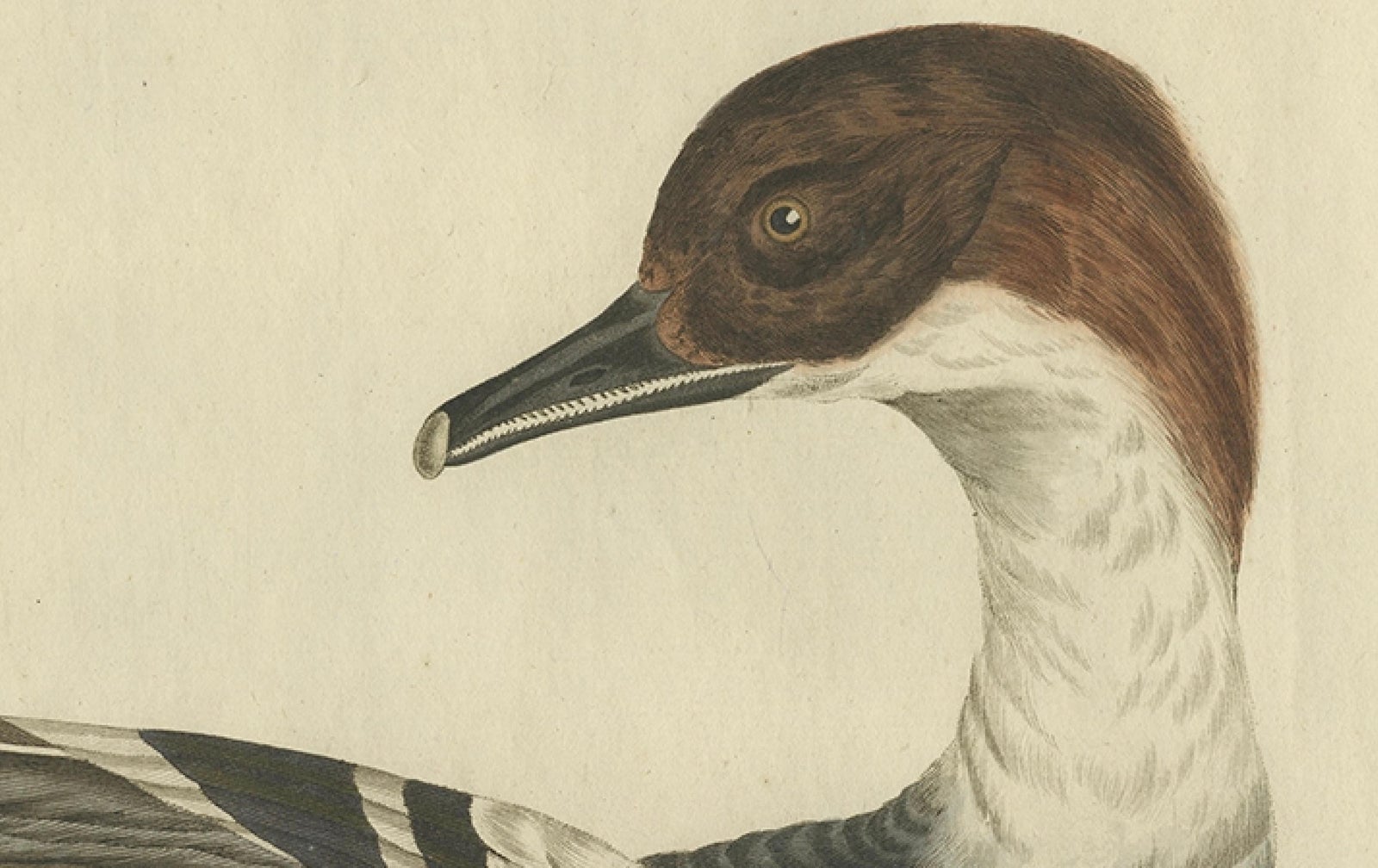
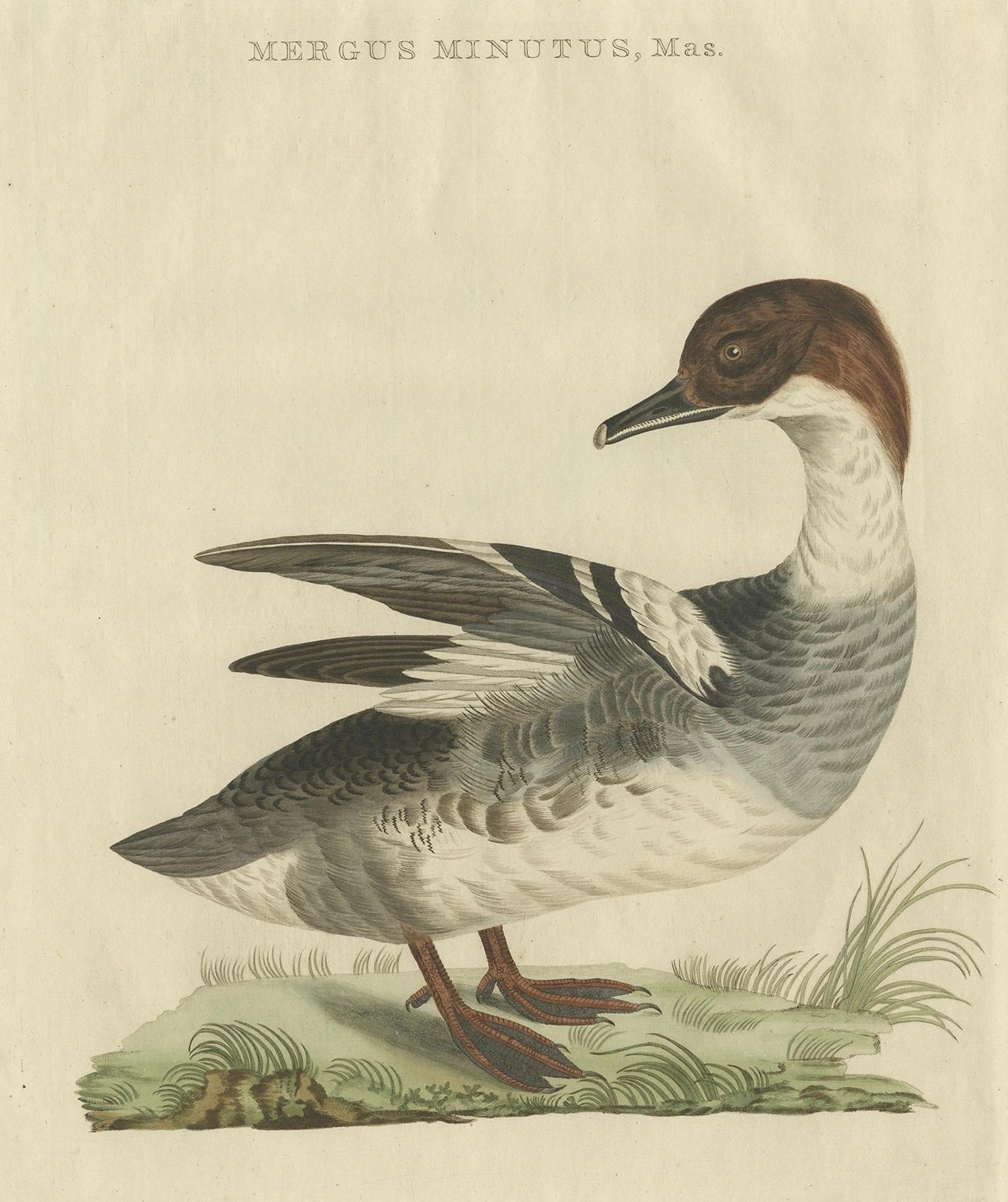
Framed and on the wall
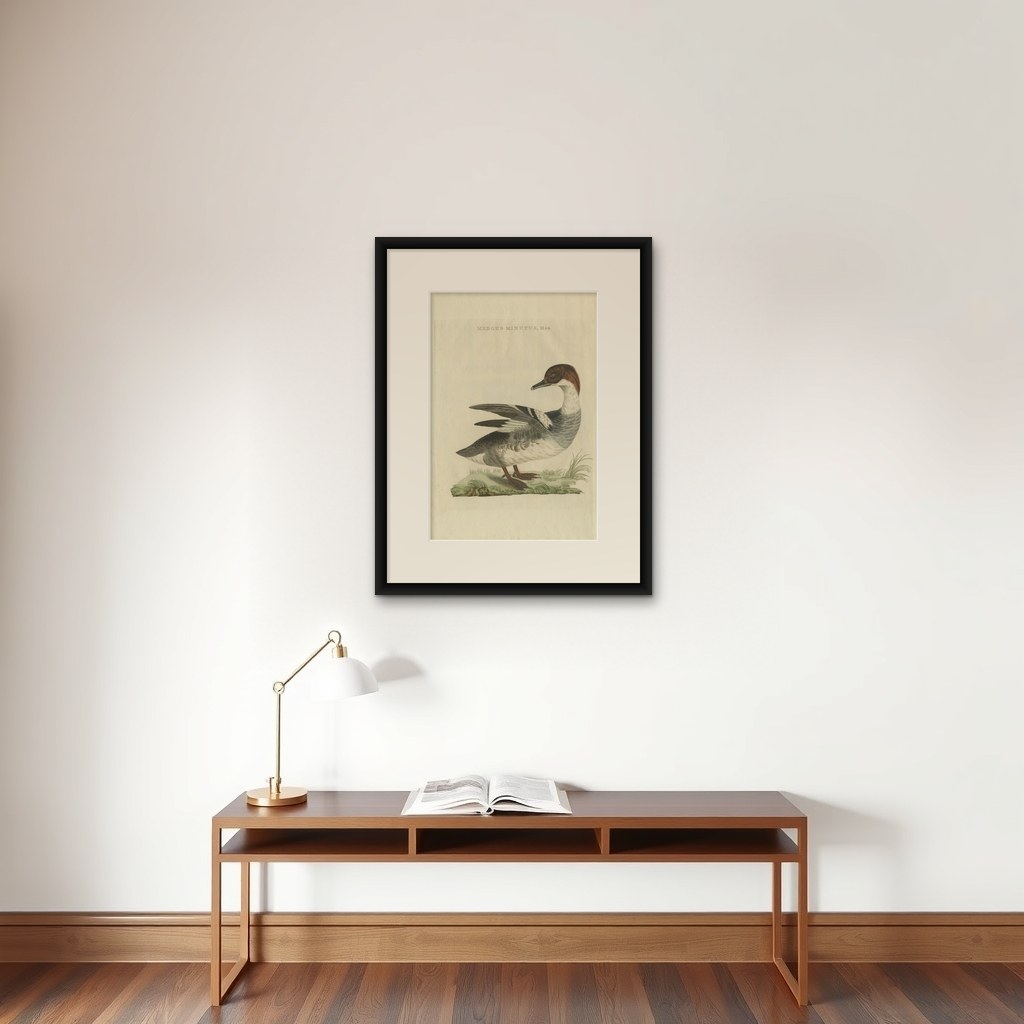
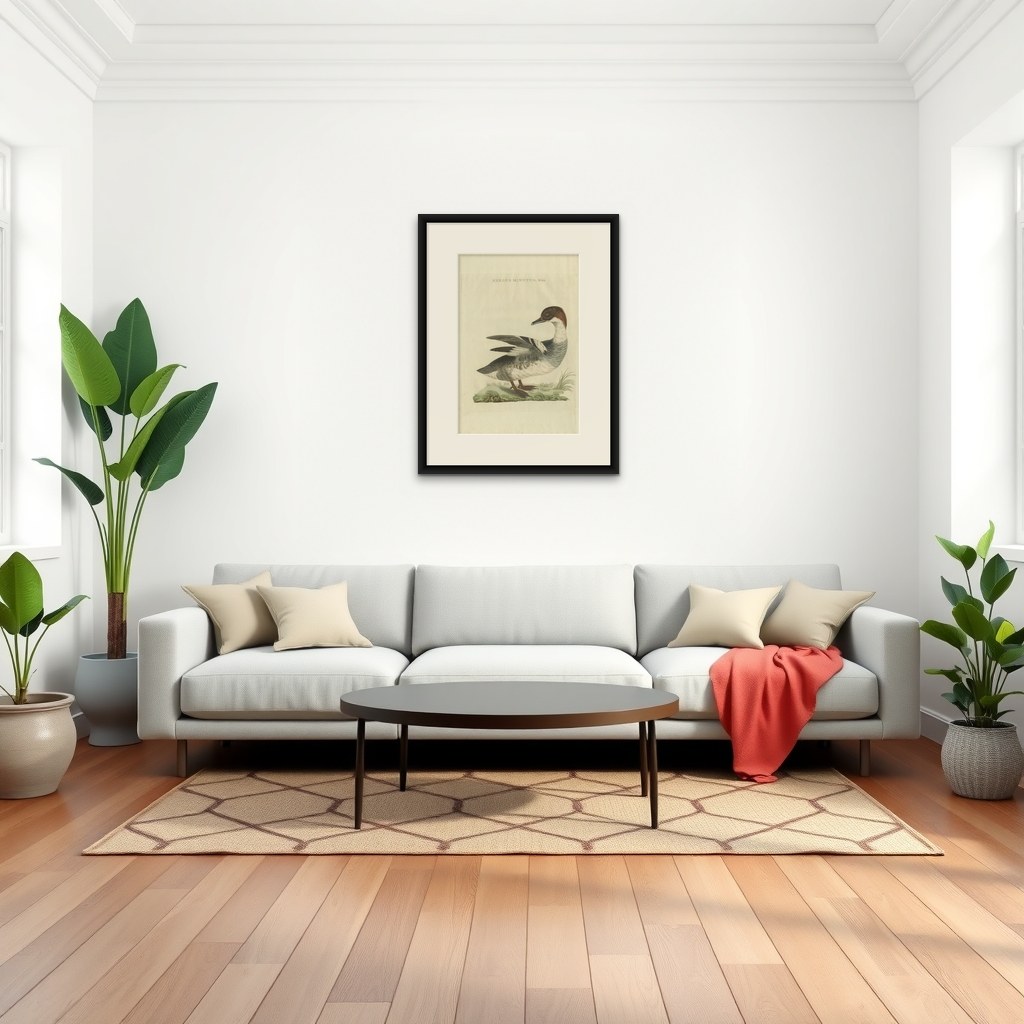
Frame and rooms are illustrations of how the print could look; the description says what is included.
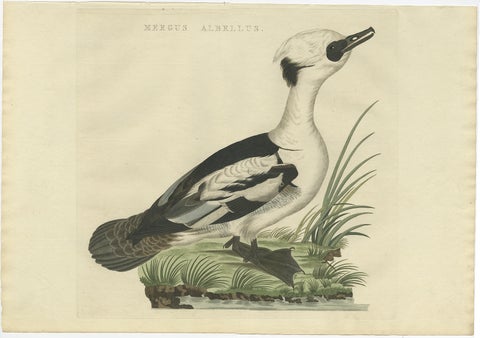
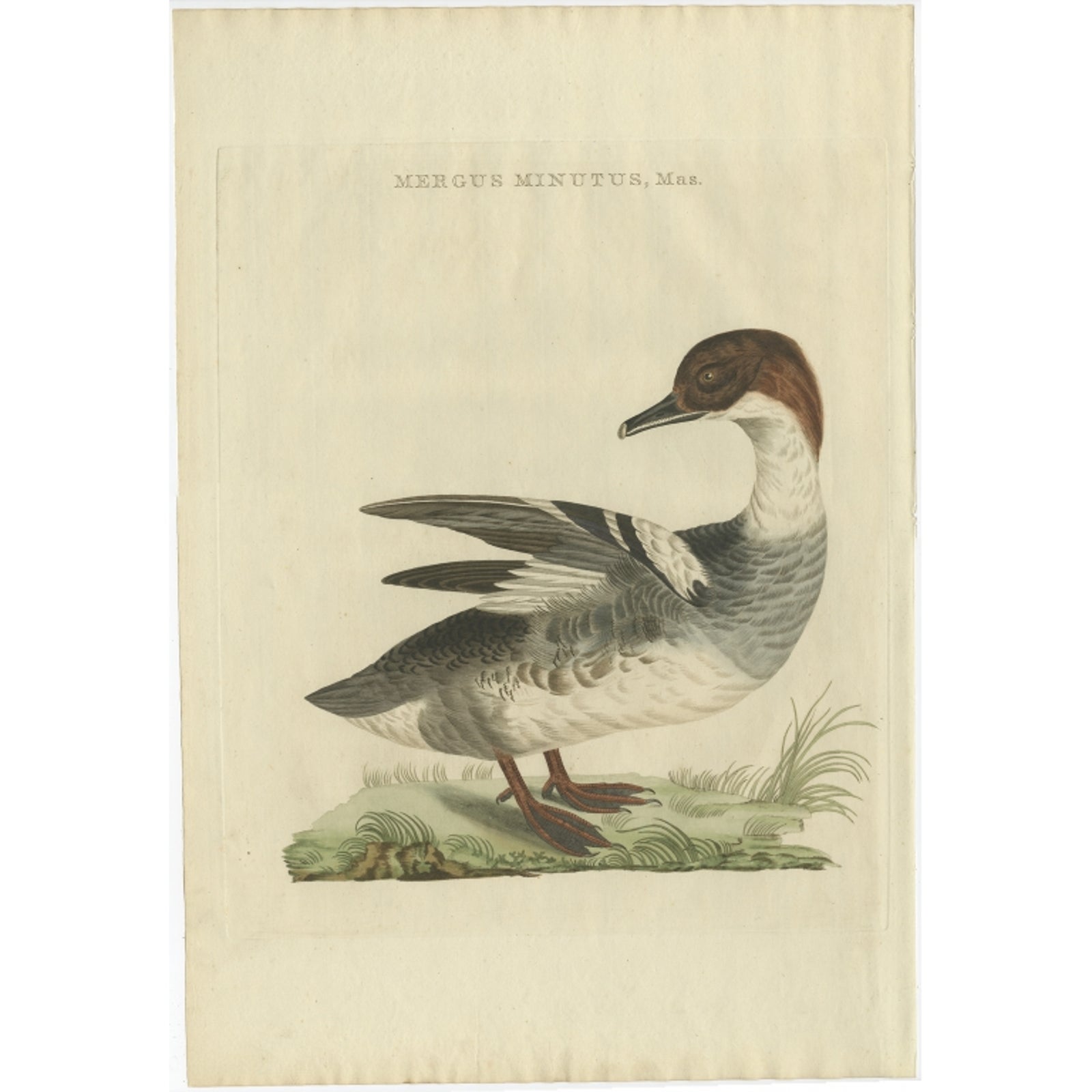
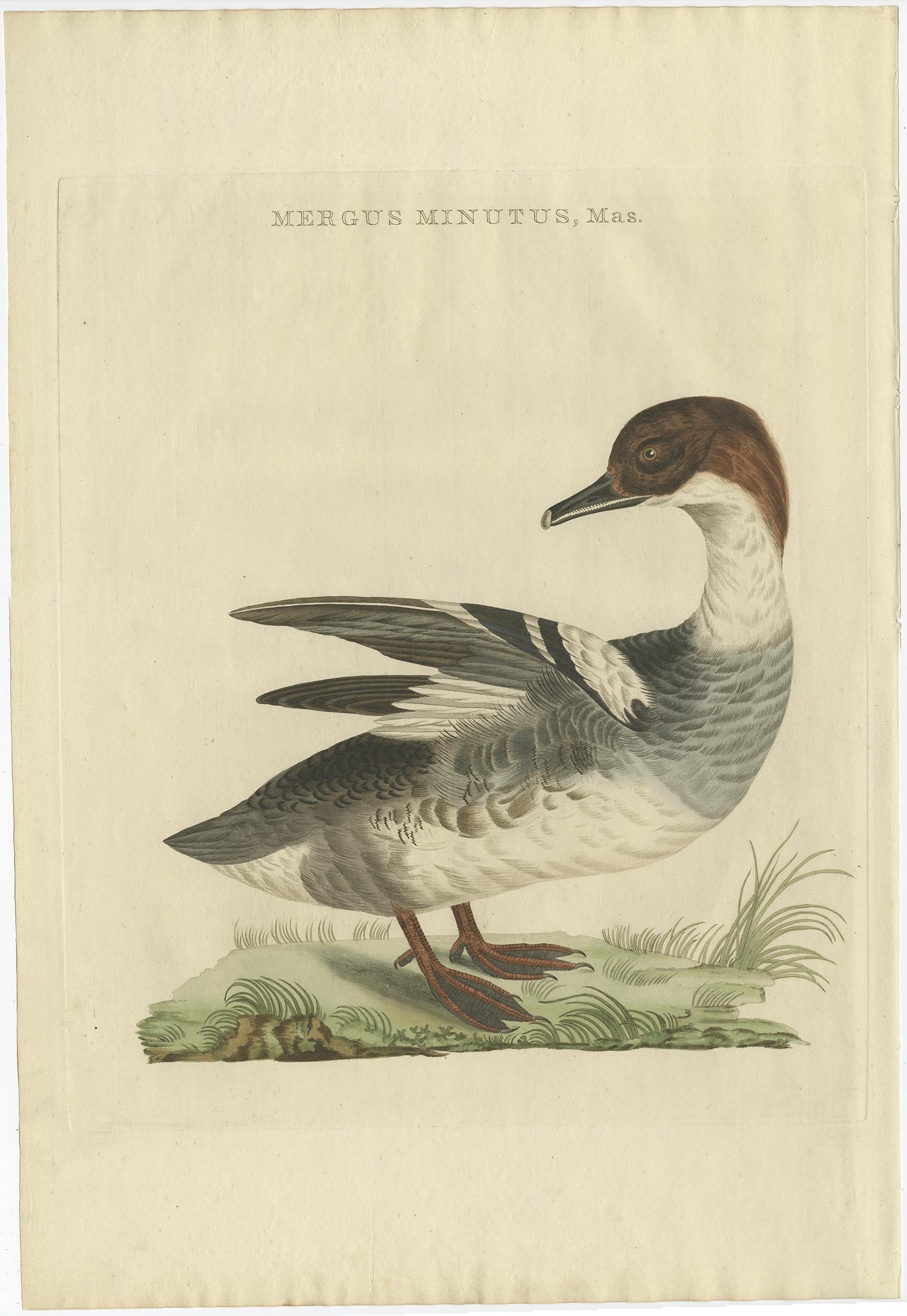
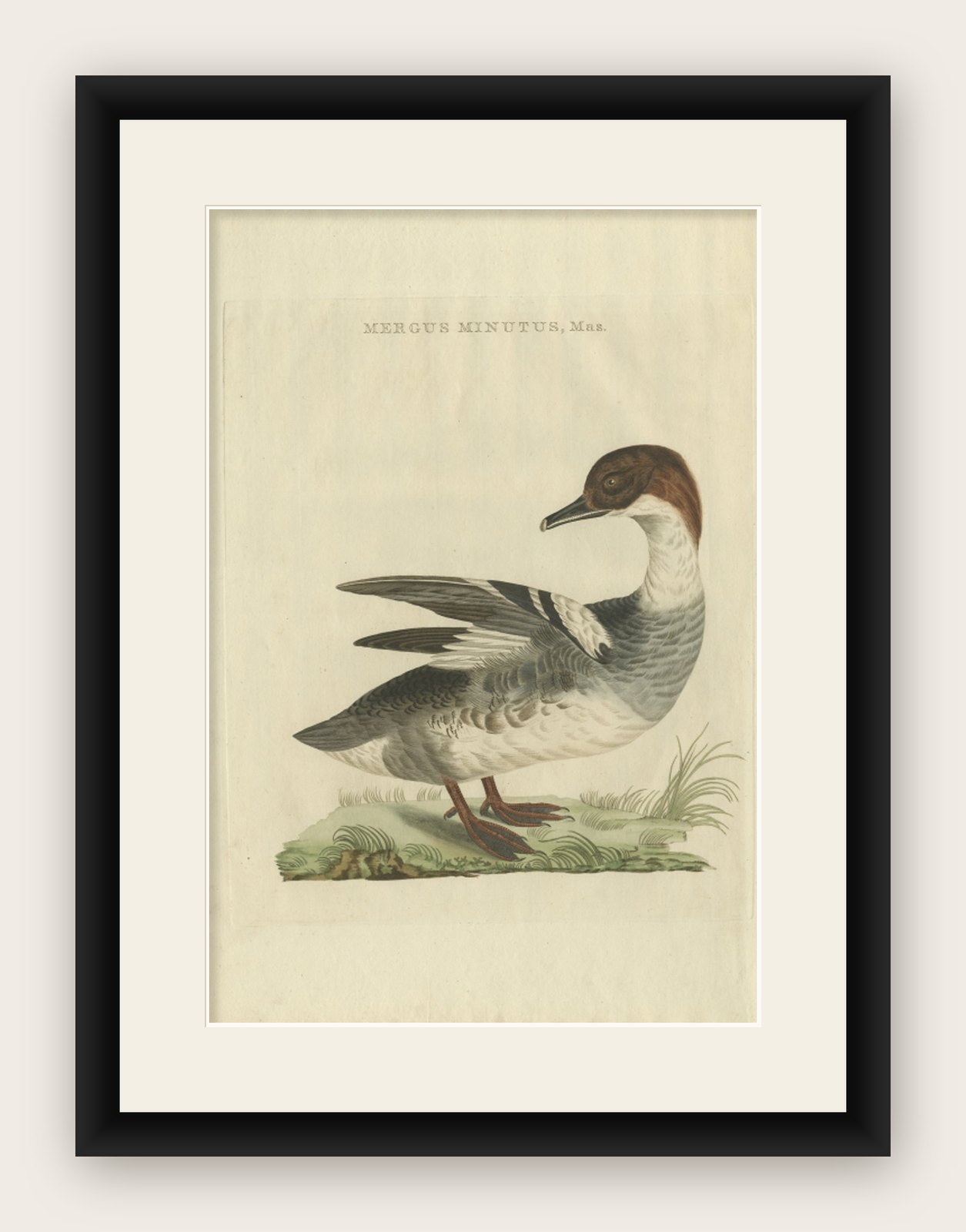
Male Common Merganser Antique Bird Print by Sepp & Nozeman, circa 1809
€1,150 ($1,290, £975, €1,150)
Period original, not a reproduction.
Shipped from the Netherlands, flat, insured and tracked, worldwide. Returns accepted within 14 days.
- Date
- 1809
- Size
- 20.9 × 14.6 in (53 × 37 cm)
- Technique
- Engraved
- Condition
- Good. An almost excellent impression with original hand coloring. Minor age-toning to margins but no tears or restorations. Wide margins, clean plate mark. Accompanied by the original descriptive text sheet.
- Period
- Early 19th century
- Artist or book
- Nozeman and Sepp
- Section
- Birds
- Reference
- f_25795292
Male Common Merganser Antique Bird Print by Sepp & Nozeman, circa 1809
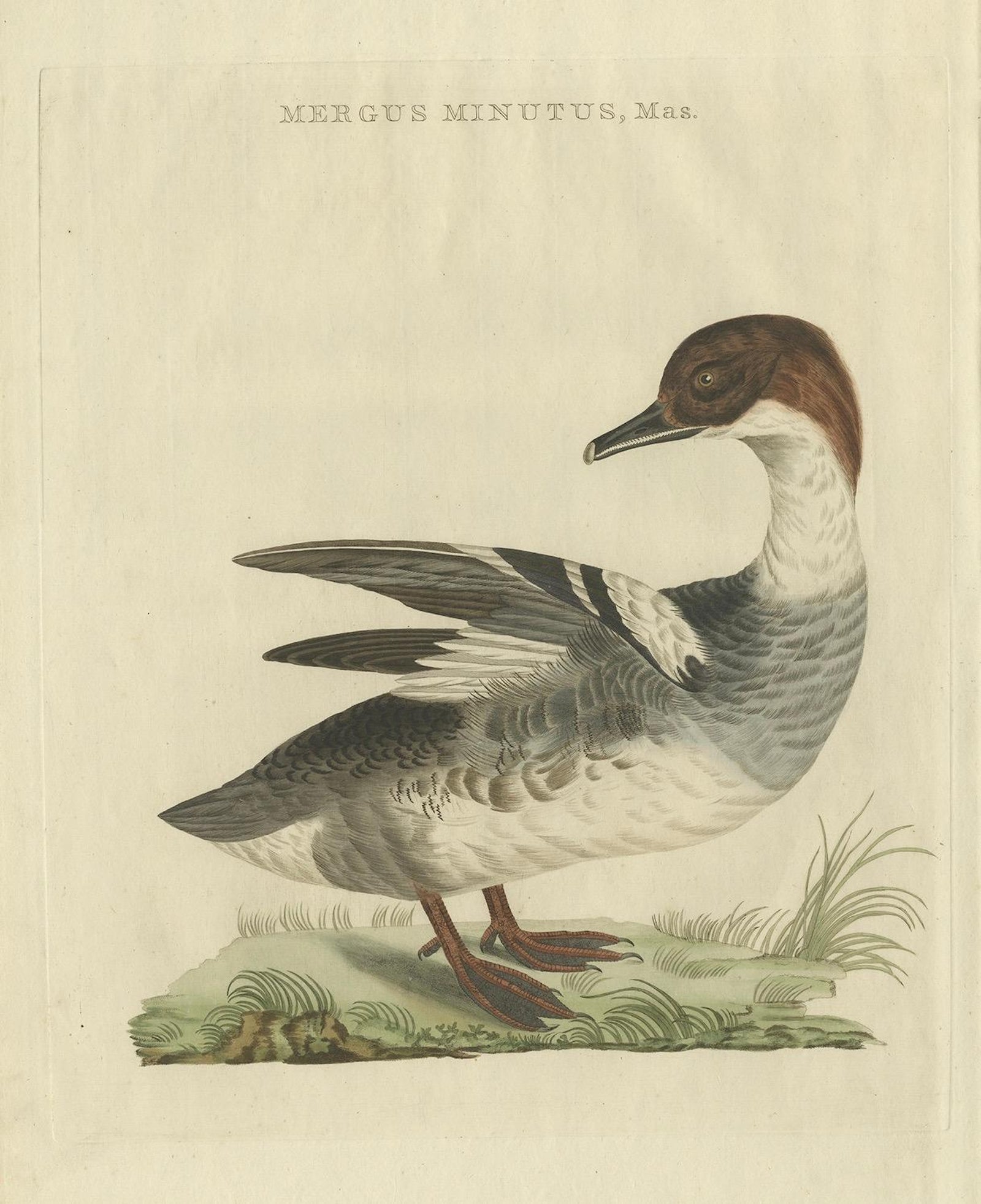
This refined and lifelike antique bird print portrays the male Common Merganser, identified in Latin as 'Mergus minutus, Mas.' Also known as the Goosander in Europe, the Common Merganser (Mergus merganser) is a striking species of large duck, known for its long, serrated bill adapted for catching fish and its preference for nesting in tree hollows near rivers and forested lakes. The elegant pose and natural surroundings in the print evoke both scientific clarity and artistic grace.
This engraving is drawn from the renowned Dutch ornithological masterpiece Nederlandsche Vogelen, published in Amsterdam between 1770 and 1829. It remains one of the most important natural history publications of its time and the very first comprehensive bird study issued in the Netherlands. The work’s lasting value lies in its detailed illustrations that combine scientific accuracy with exceptional aesthetic execution. Birds were shown in realistic size, color, and setting, often close to life-size and always situated within their natural habitats.
The illustration highlights the male merganser’s distinct plumage, with a rich chestnut head, a sharply contrasting white neck and belly, and subtly patterned grey and black wings. The engraving captures the fine detail of the bird’s feathers, the natural curve of its neck, and its poised stance on a mossy patch by water’s edge, all rendered with the precision and care characteristic of the *Nederlandsche Vogelen* series.
Artists and engravers involved in this monumental project include Christiaan Andreas Sepp, Jan Christiaan Sepp, Jan Sepp, Cornelis Nozeman, Martinus Houttuyn, and Coenraad Jacob Temminck, all leading naturalists and illustrators of their time. Their collaboration brought both scientific rigor and artistic excellence to early ornithology.
Condition:
An almost excellent impression with original hand coloring. Minor age-toning to margins but no tears or restorations. Wide margins, clean plate mark. Accompanied by the original descriptive text sheet.
Framing tips:
This print will pair well with a classic walnut or dark maple frame and a light cream or antique white mat. A thin gold filet can subtly complement the warm tones in the bird’s plumage, making it an attractive focal point in any natural history-themed display.