Close-ups
Framed and on the wall
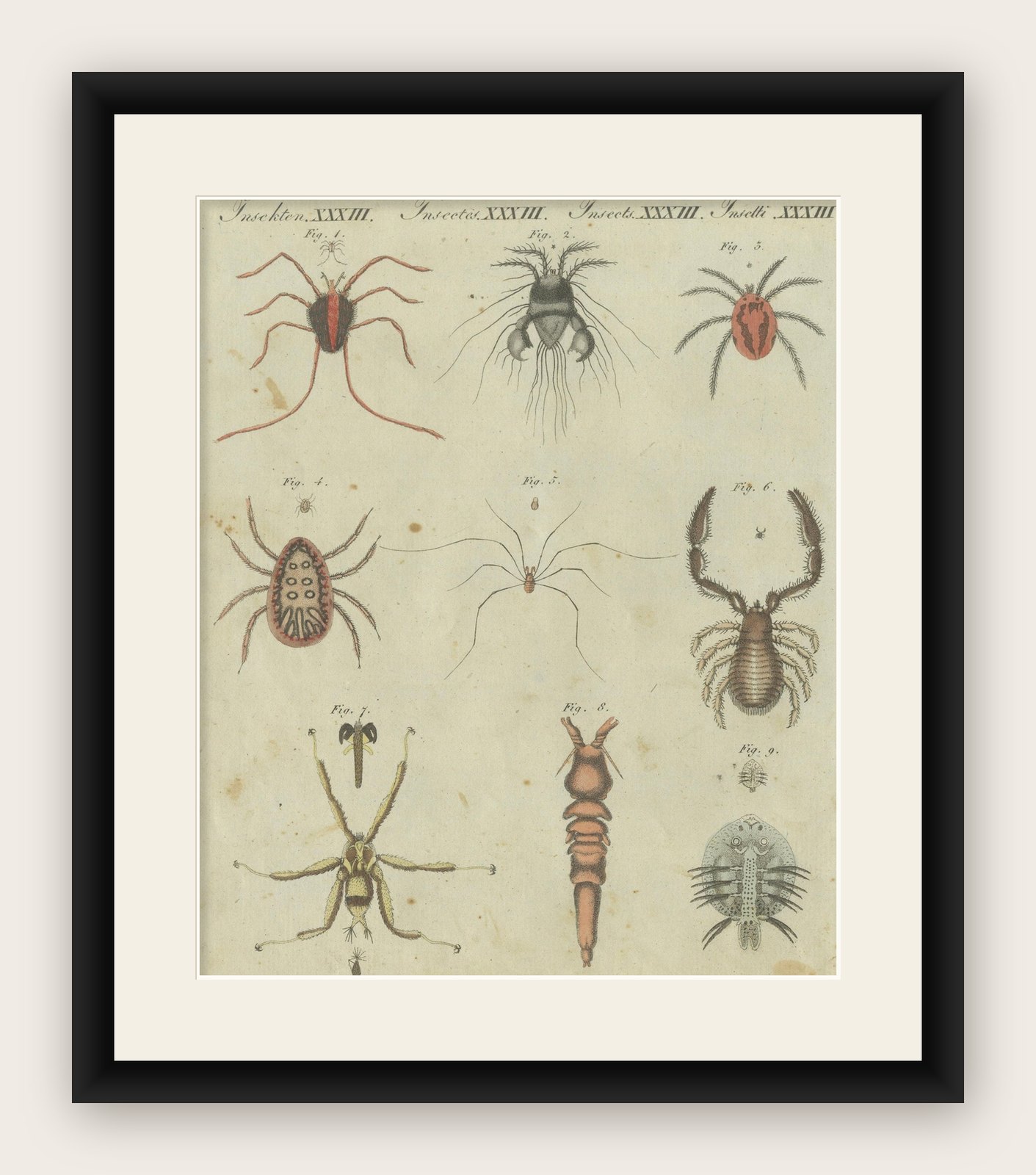


Frame and rooms are illustrations of how the print could look; the description says what is included.
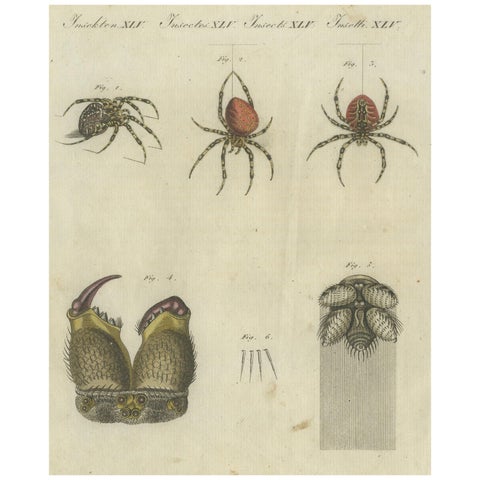
Intricate Arachnids and Insects: Hand-Colored Engraving Published in 1805
$110 (£85, €99)
Period original, not a reproduction.
Shipped from the Netherlands, flat, insured and tracked, worldwide. Returns accepted within 14 days.
- Date
- 1805
- Size
- 9.1 × 7.5 in (23 × 19 cm)
- Condition
- Good. The engraving is well-preserved with age-related foxing due to age and handling and light discoloration typical of its time. The paper remains stable, and the colors are vibrant, retaining their original charm. Please study the images carefully.
- Period
- Early 19th century
- Section
- Insects and butterflies
- Reference
- f_42875072
Title: Engraving of Arachnids and Insects from Early 19th-Century Natural History Collection
Description:
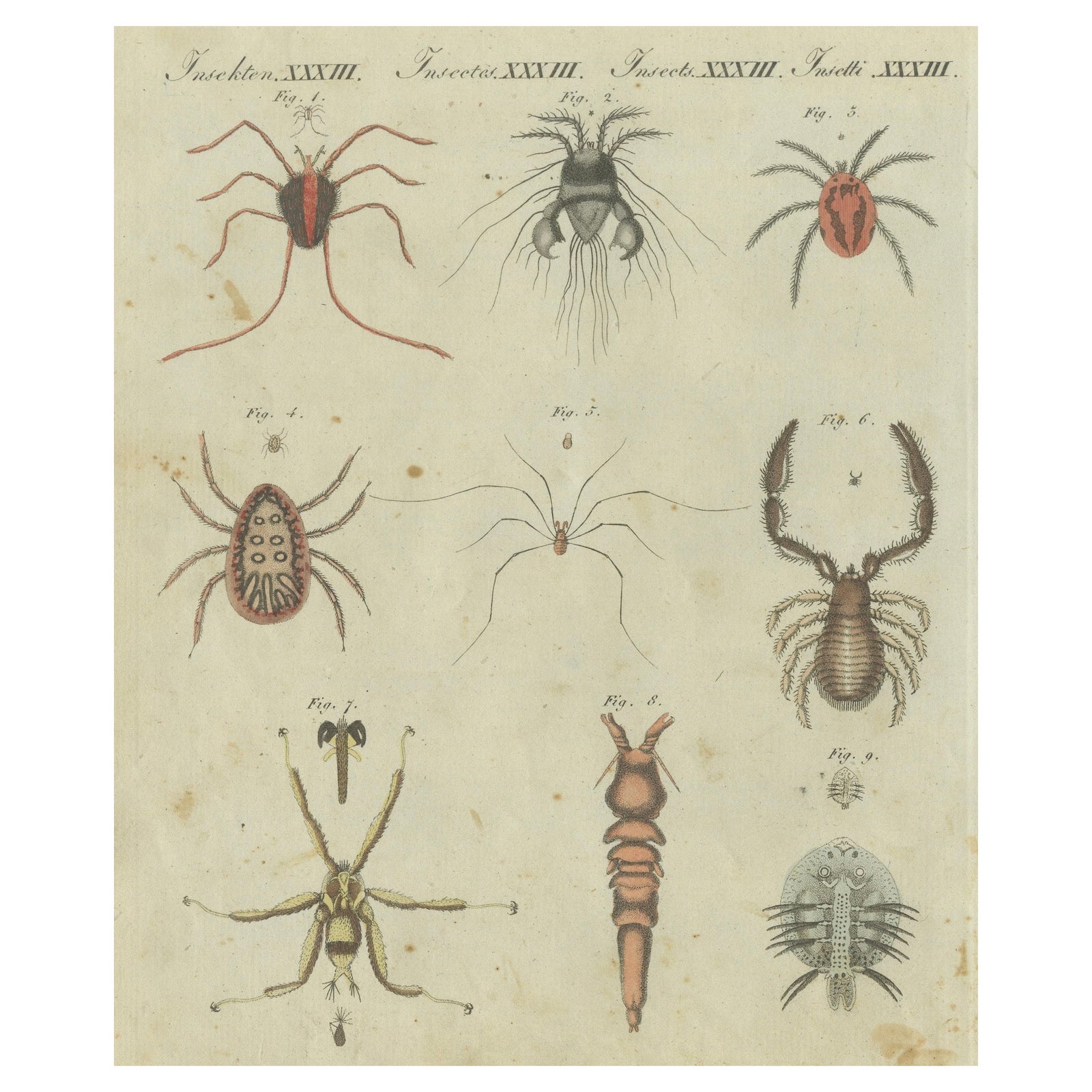
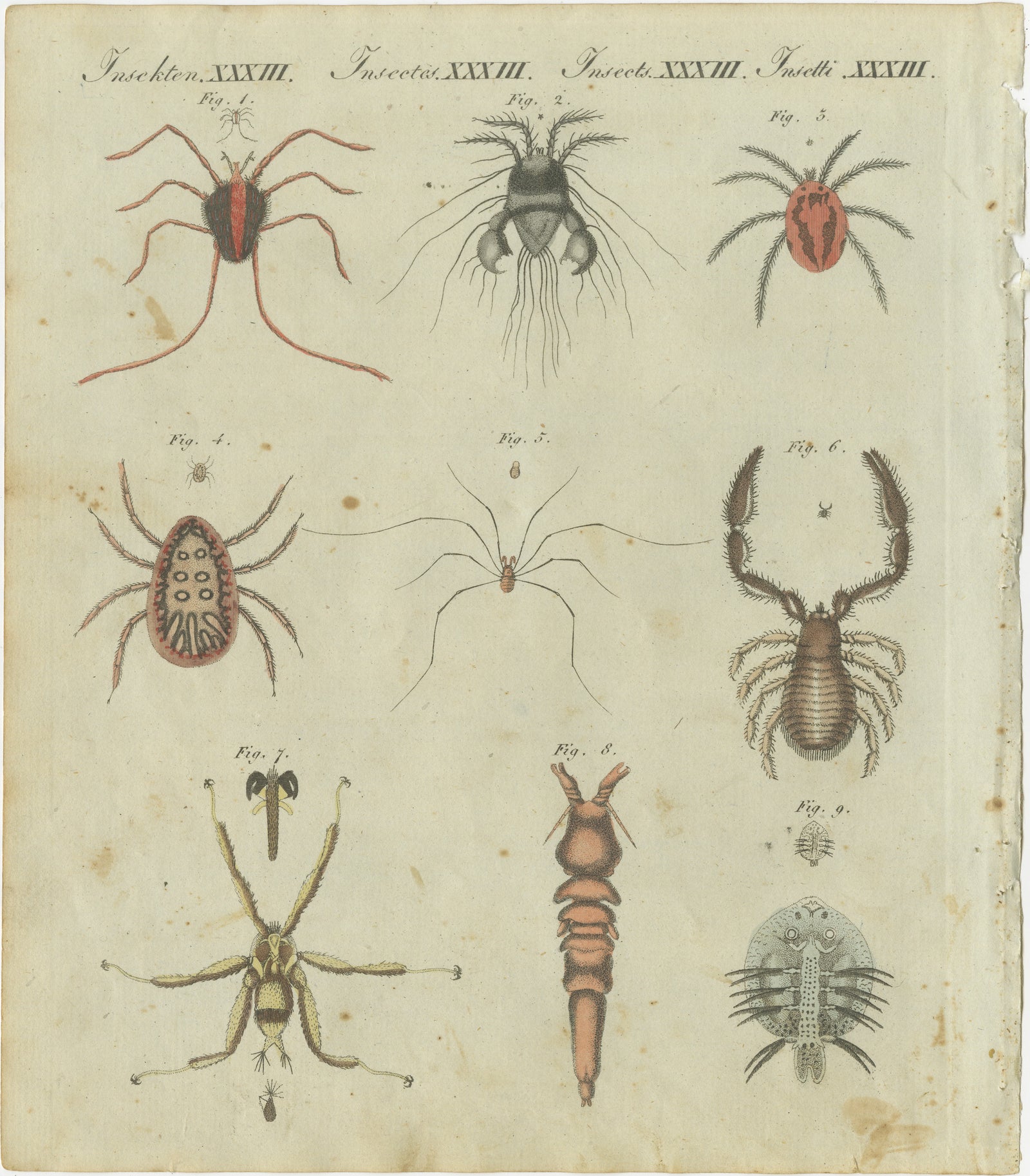
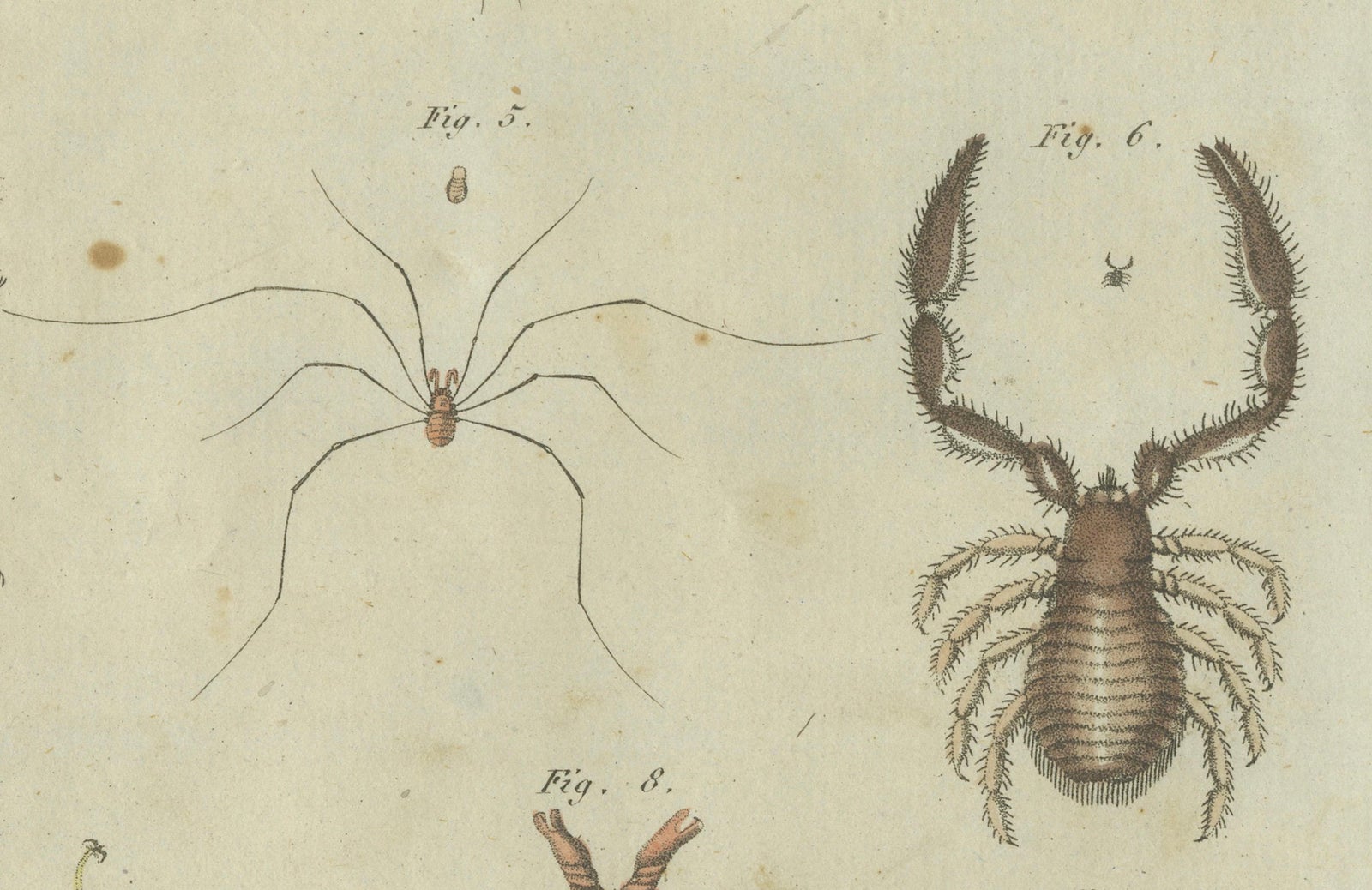
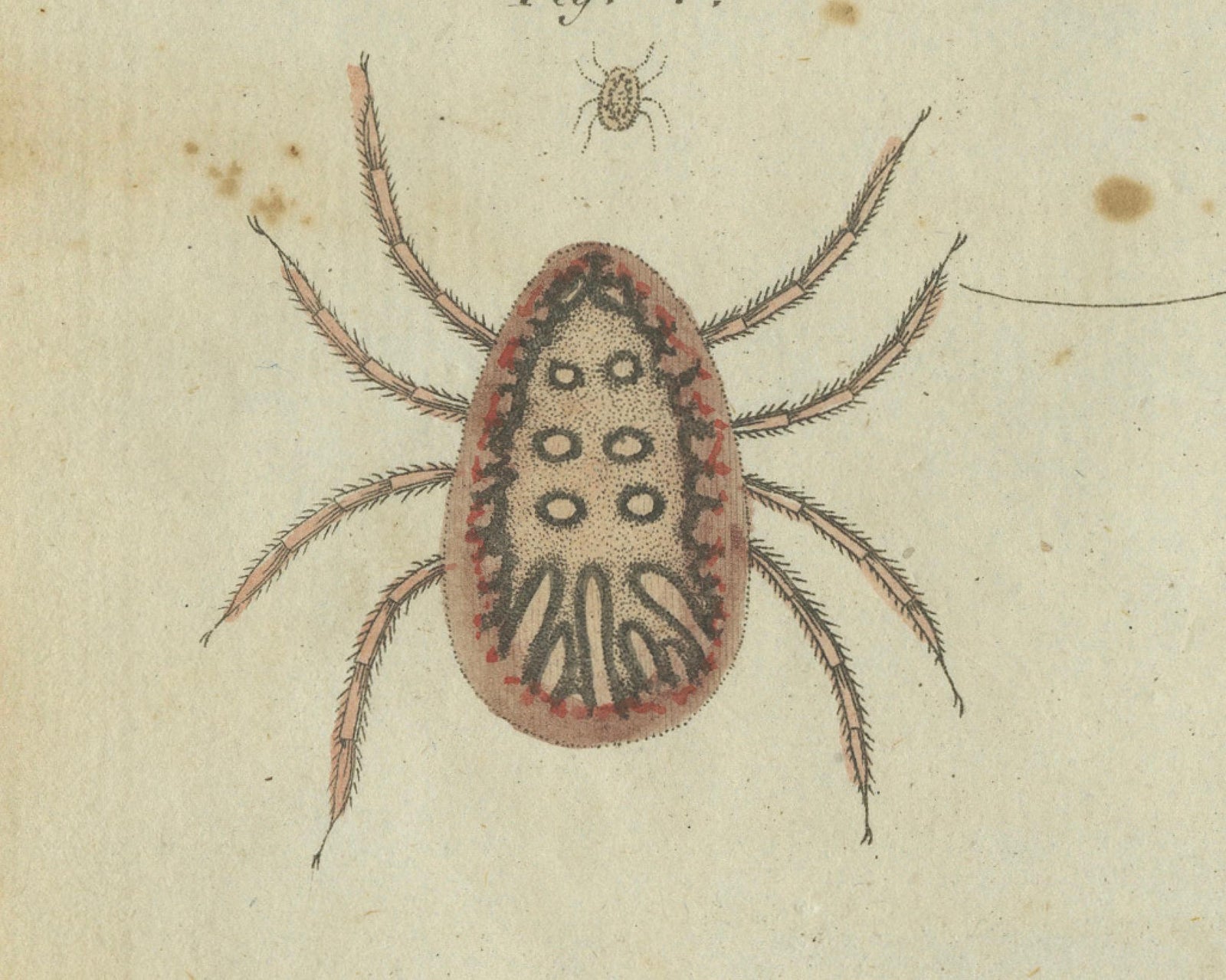
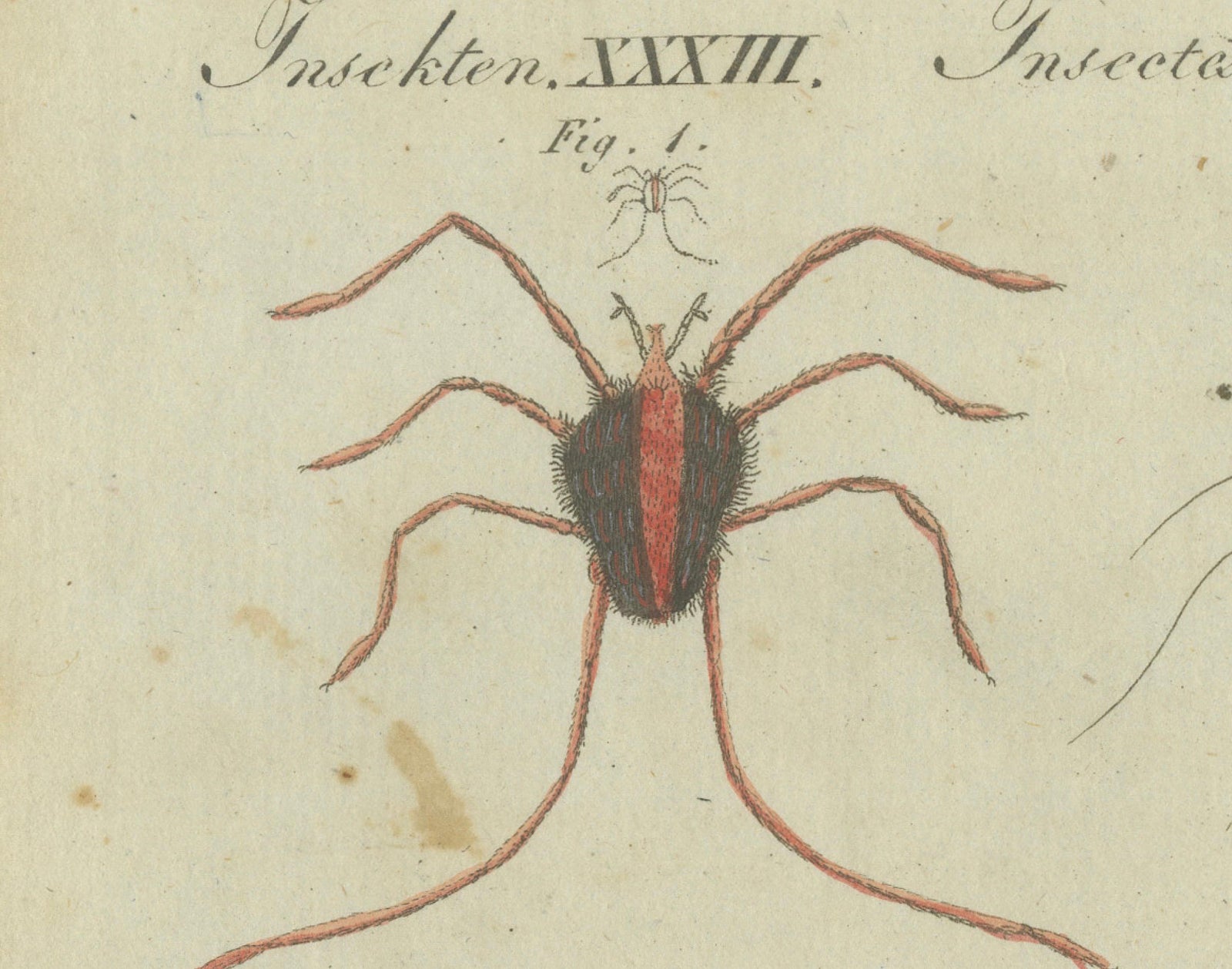
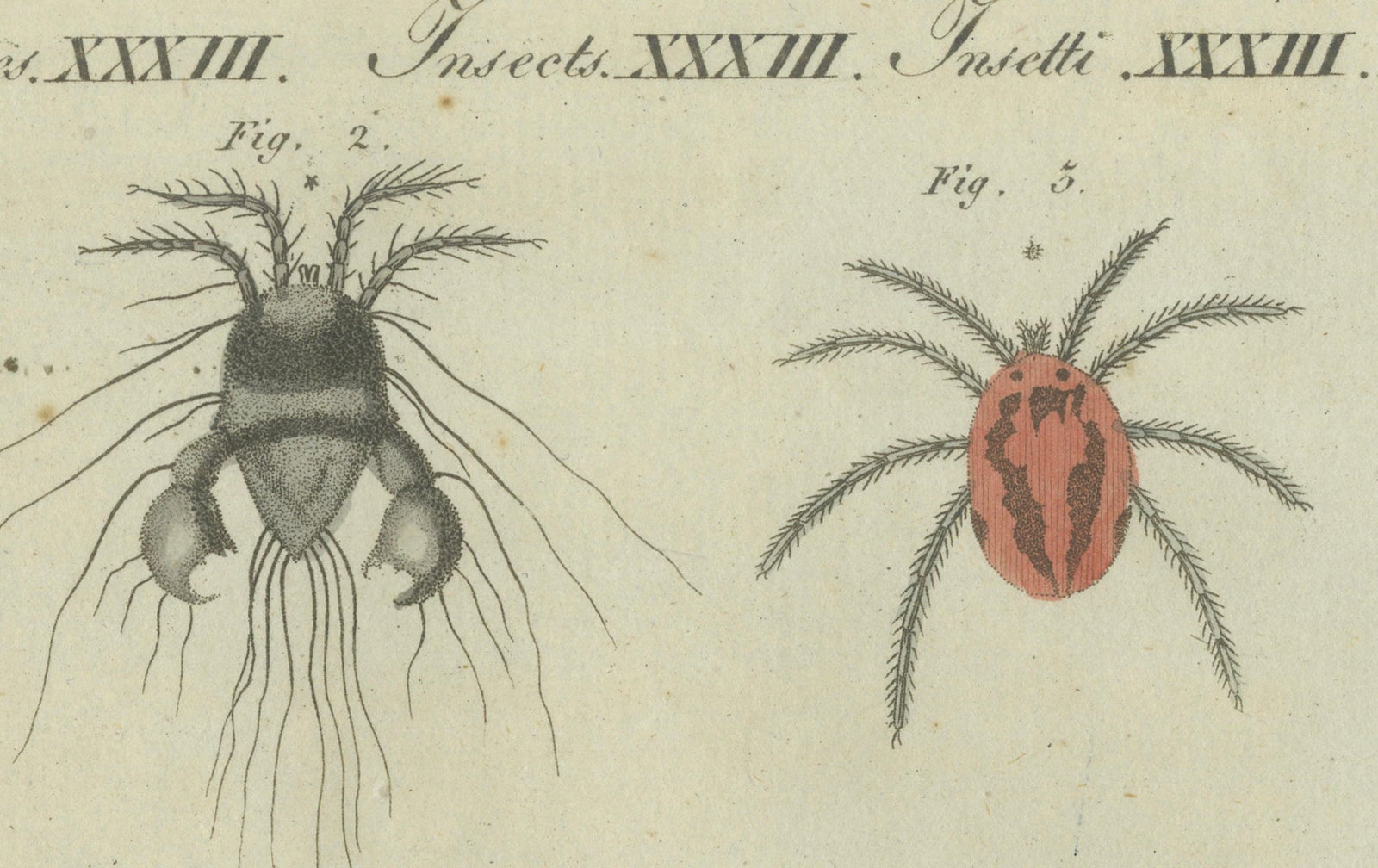
This detailed engraving, part of an early 19th-century natural history compendium, depicts a fascinating array of arachnids and insects. The meticulously hand-colored illustrations showcase the diversity and complexity of these small creatures, each labeled with precision. The plate includes a variety of species, from spiders and mites to scorpions and aquatic crustaceans, illustrating both terrestrial and aquatic life forms.
Figures include:
1. A spider with prominent red coloration, possibly a species of hunting or garden spider.
2. A water mite or crustacean with extended limbs adapted for an aquatic environment.
3. A tick or similar arachnid with its characteristic round body and legs.
4. A mite with intricate patterns, emphasizing its detailed exoskeleton.
5. A harvestman, commonly referred to as a daddy longlegs, known for its elongated legs and small body.
6. A scorpion-like arthropod, showcasing its robust pincers and segmented body.
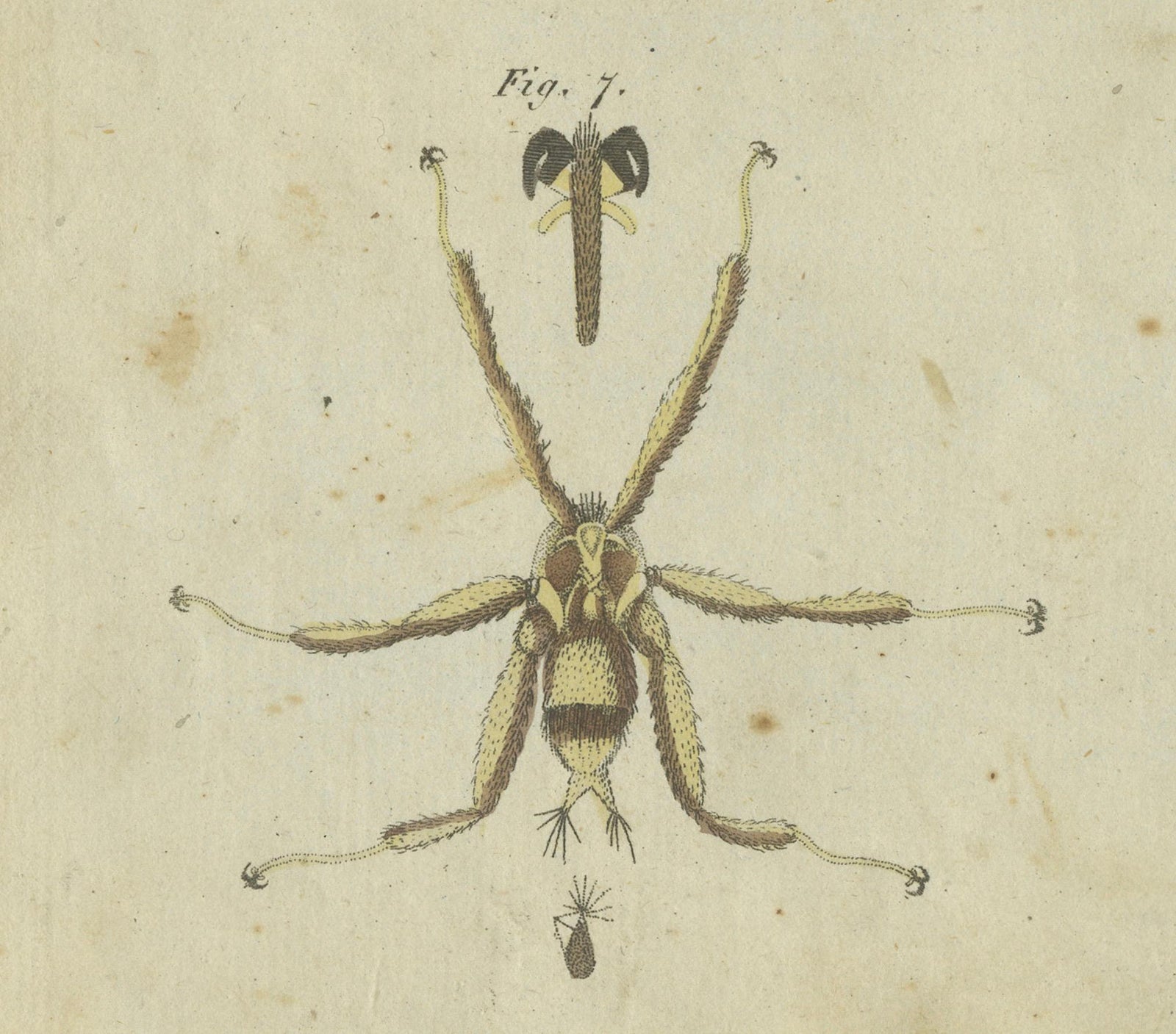
7. A long-legged insect with an extended abdomen, possibly a crane fly or related species.
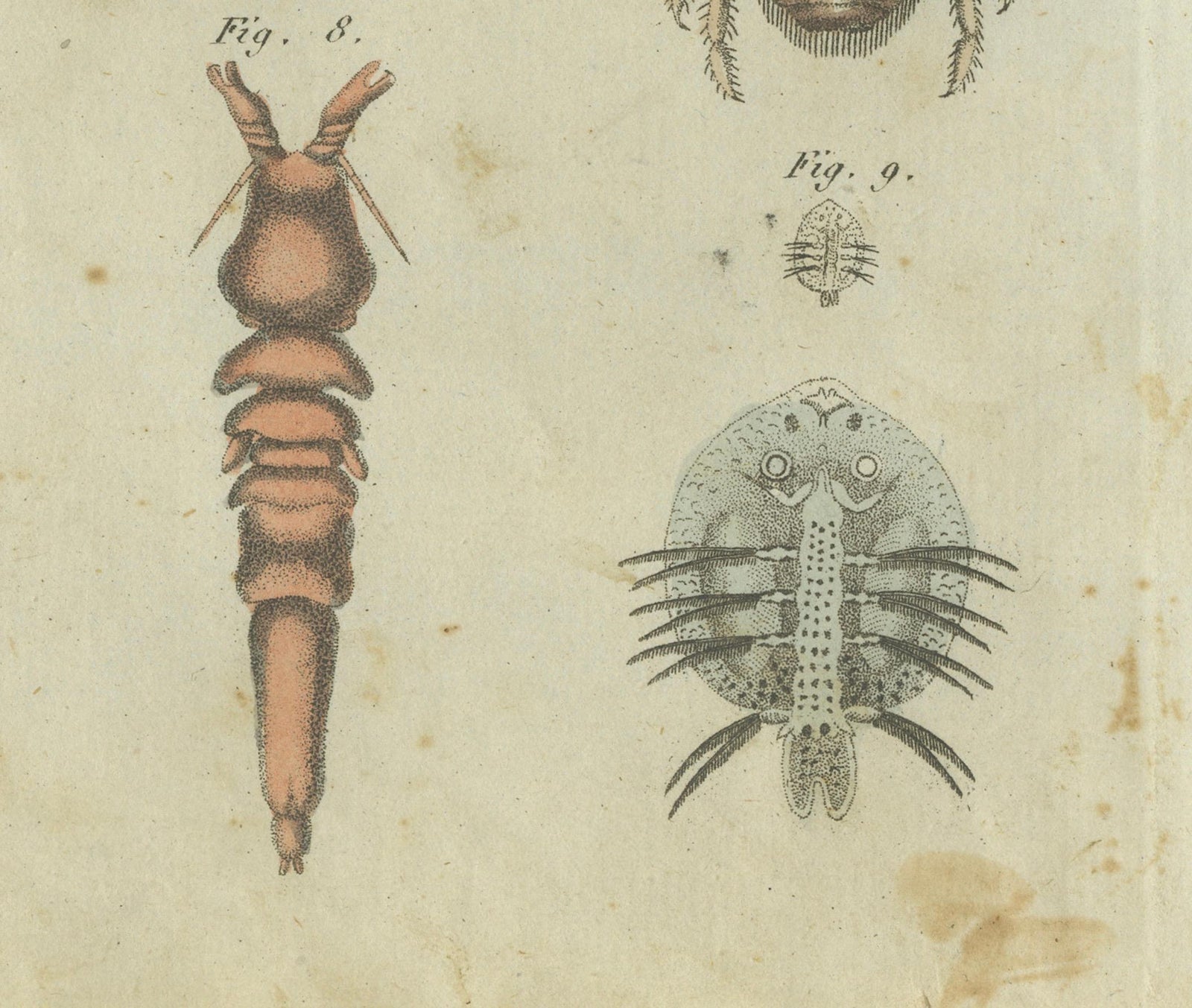
8. A larval or worm-like form, representing an early stage in an insect's life cycle.
9. An aquatic crustacean resembling a horseshoe crab or trilobite, with its armored body and appendages.
The plate provides a snapshot of the naturalist's dedication to documenting biodiversity during the 19th century, serving as both a scientific resource and a work of art.
Condition:
The engraving is well-preserved with age-related foxing due to age and handling and light discoloration typical of its time. The paper remains stable, and the colors are vibrant, retaining their original charm.
Advice on presentation:
1. Frame the engraving in a simple wooden or black frame to emphasize its scientific and artistic elements. Use an acid-free cream-colored mat to protect and enhance the artwork.
2. Consider displaying this engraving alongside other natural history prints for a thematic gallery wall or collection.
3. If framing is not preferred, store the piece in an archival-quality portfolio to ensure its longevity while allowing for careful study.
4. Add a descriptive plaque or caption below the engraving to highlight its scientific and artistic significance.
This piece is ideal for collectors, natural history enthusiasts, or educational institutions seeking to showcase the intersection of art and science in the 19th century.