Close-ups
Framed and on the wall



Frame and rooms are illustrations of how the print could look; the description says what is included.
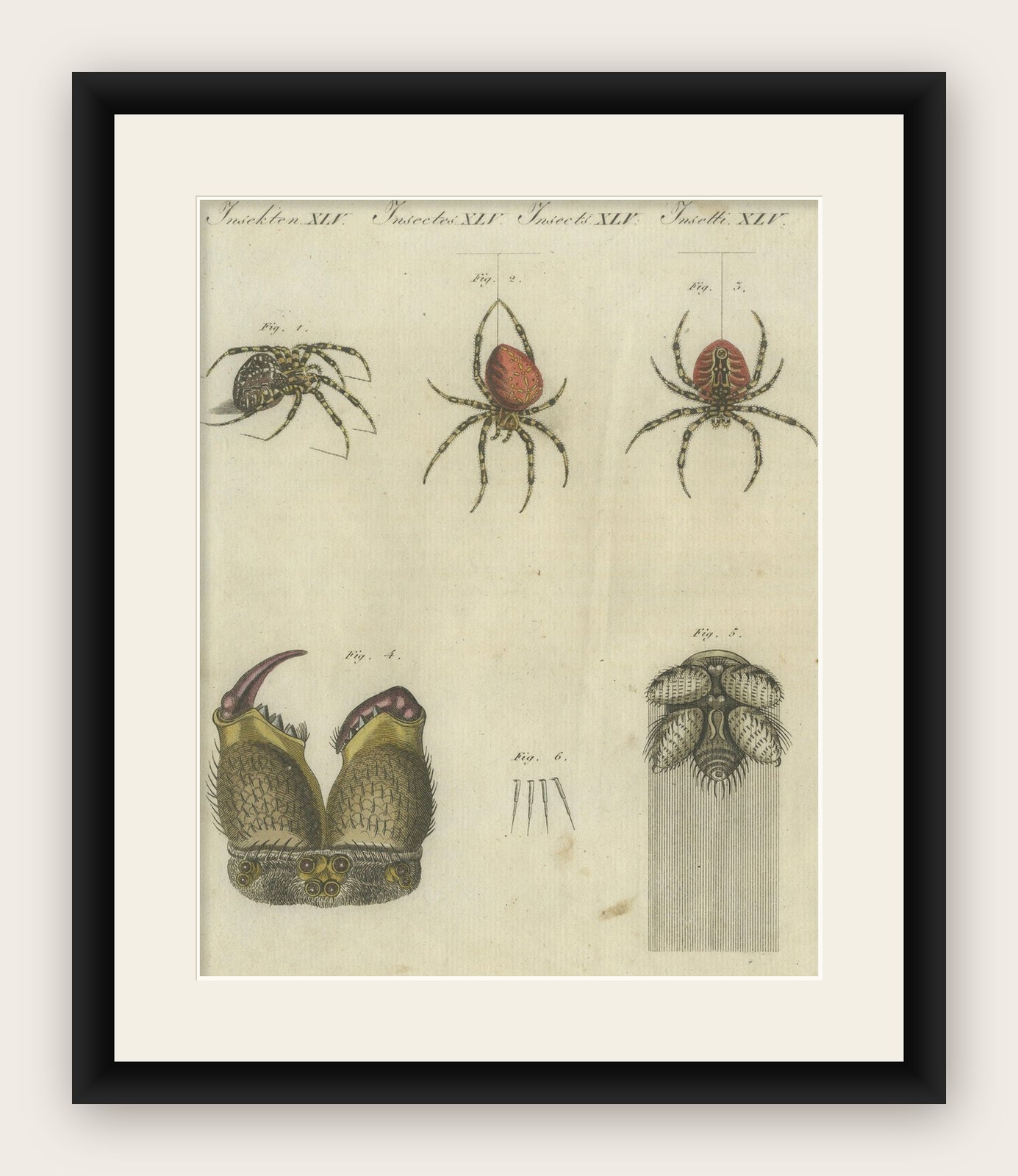
European Garden Spider Anatomy: Variations, Silk Spinnerets, and Mandibles, 1805
$155$11525% off (£90, €105)
Period original, not a reproduction.
Shipped from the Netherlands, flat or rolled, insured and tracked, worldwide. Returns accepted within 14 days.
- Date
- 1805
- Size
- 9.1 × 7.5 in (23 × 19 cm)
- Condition
- Good. Good condition with vibrant original hand coloring. Slight foxing and light toning on margins, consistent with age. Plate edges intact.
- Period
- Early 19th century
- Artist or book
- Bertuch
- Section
- Insects and butterflies
- Reference
- f_43180582
- Color
- Hand colored
What the condition grades mean
- Excellent
- Bright and clean, with no faults worth mentioning.
- Very good
- Only light signs of age, such as faint toning.
- Good
- Normal signs of age for a sheet of this period: toning, some foxing, small marks or neat old repairs.
- Fair
- Clear faults such as staining, tears or repairs, priced to match.
Every fault we see is written in the condition note, and the whole sheet is shown uncropped in the photos.
"European Garden Spider Anatomy: Variations, Silk Spinnerets, and Mandibles"
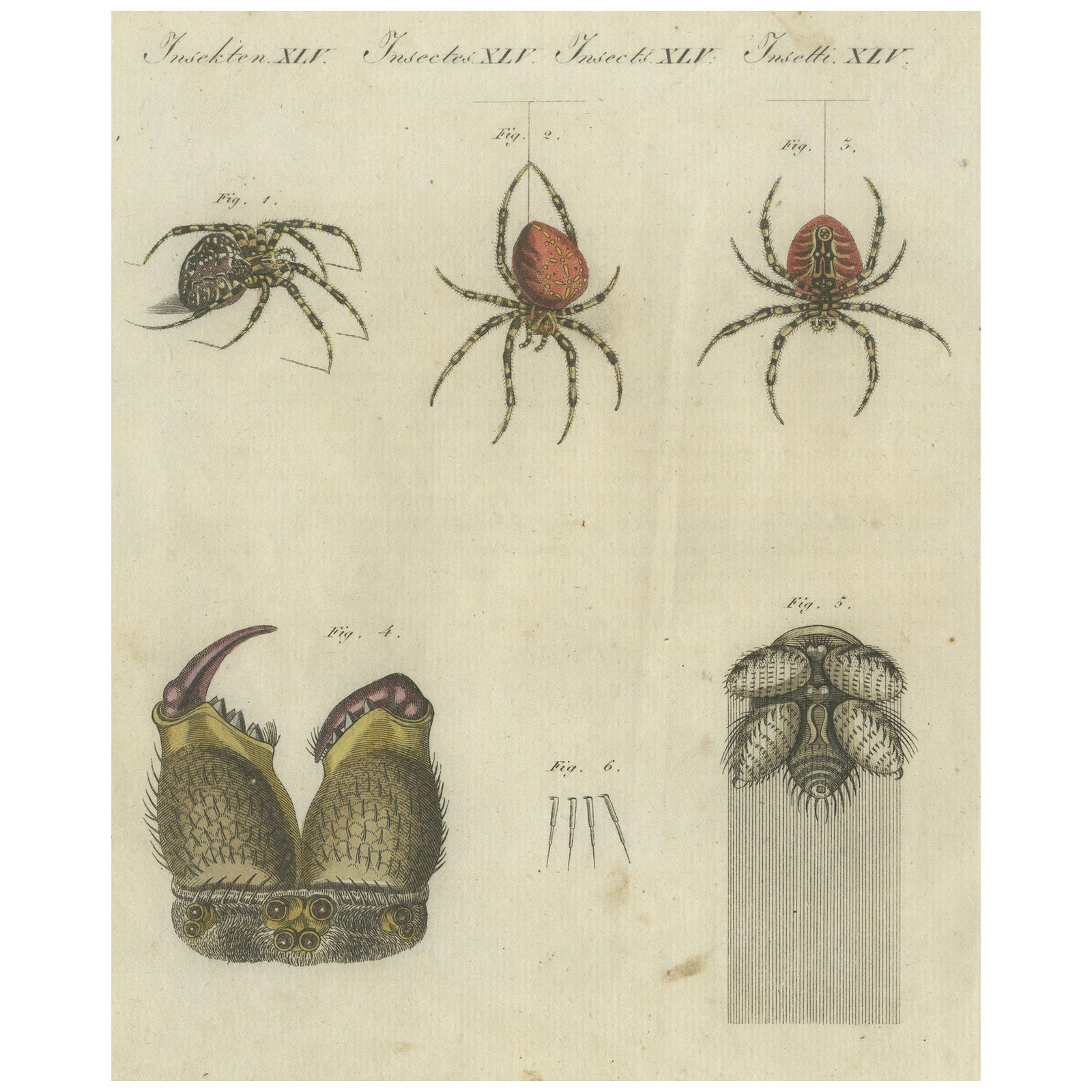
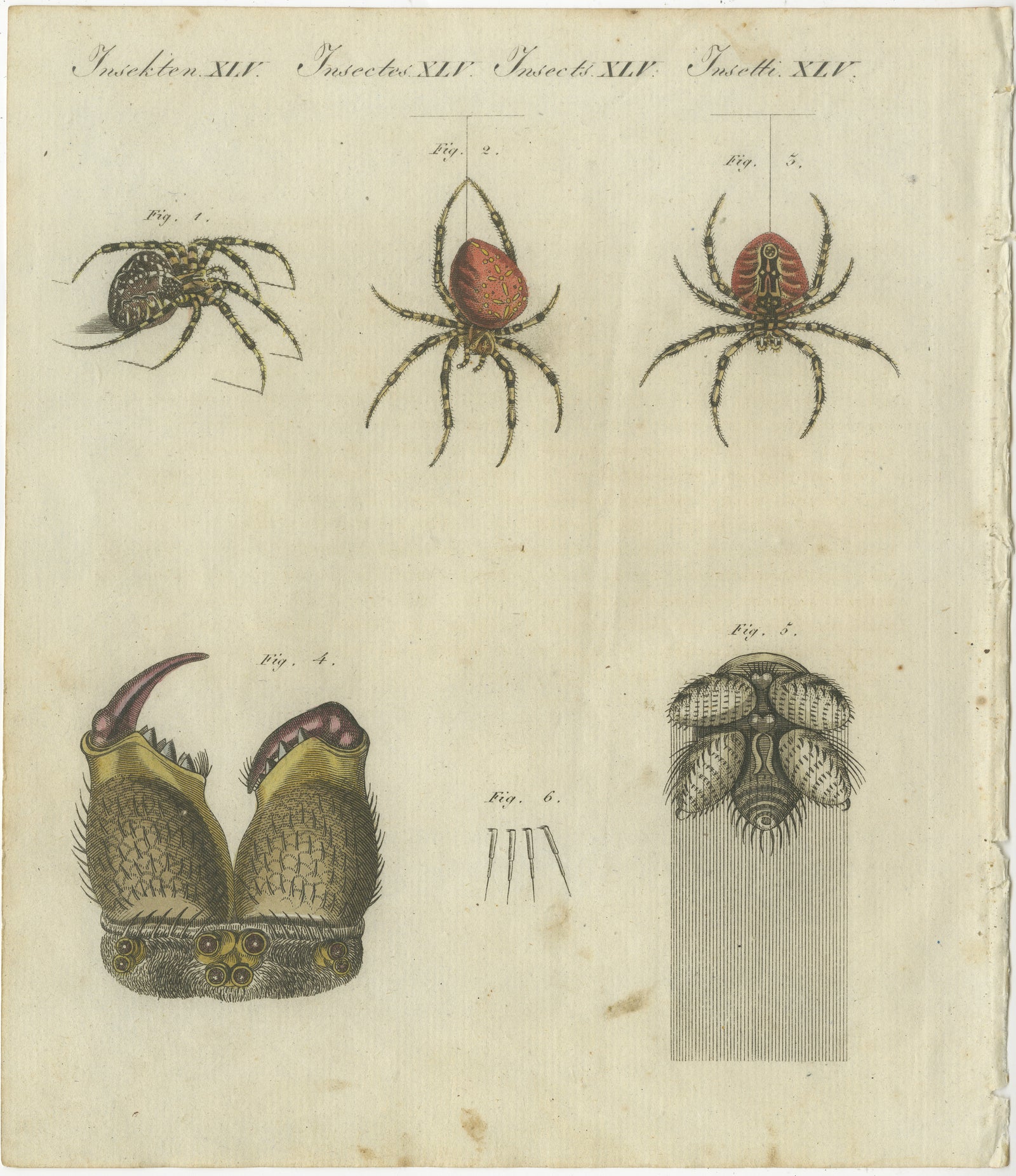
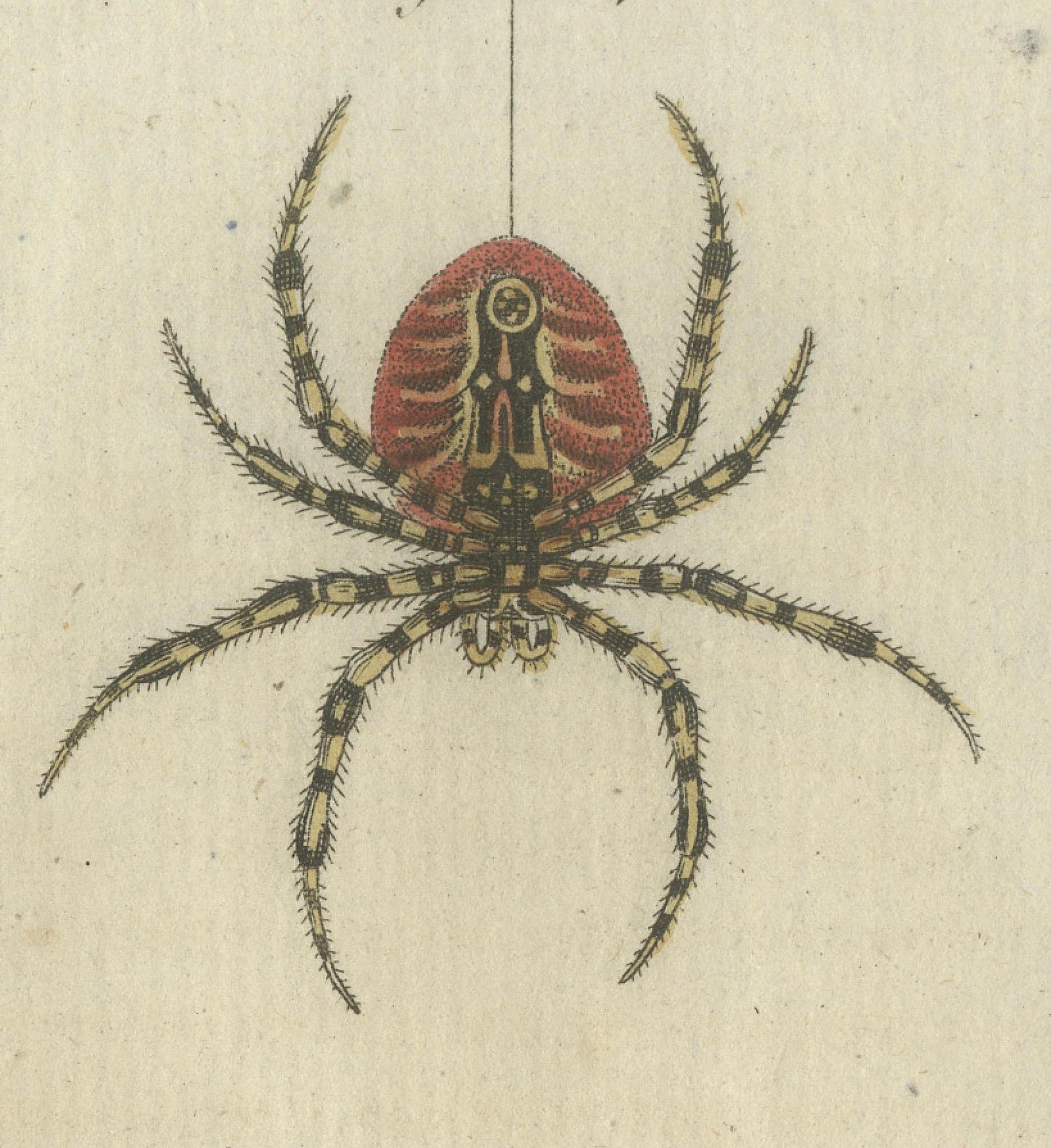
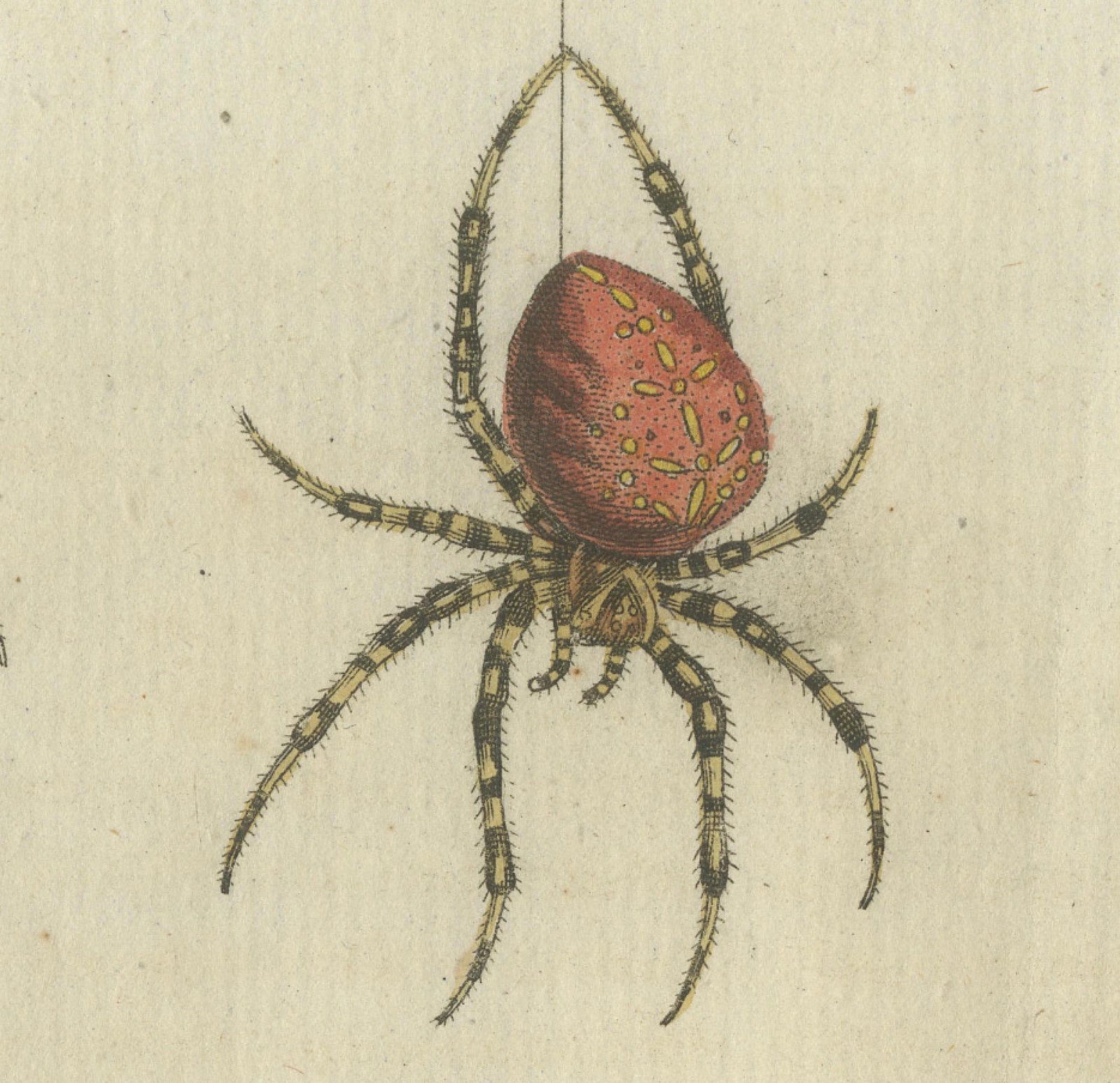
This captivating hand-colored copperplate engraving, from Friedrich Johann Bertuch’s Bilderbuch für Kinder (Picture Book for Children), Weimar, 1805, offers a detailed study of the European garden spider, also known as the diadem spider (Araneus diadematus). The illustration explores anatomical features and behavioral traits, combining scientific accuracy with artistic beauty.
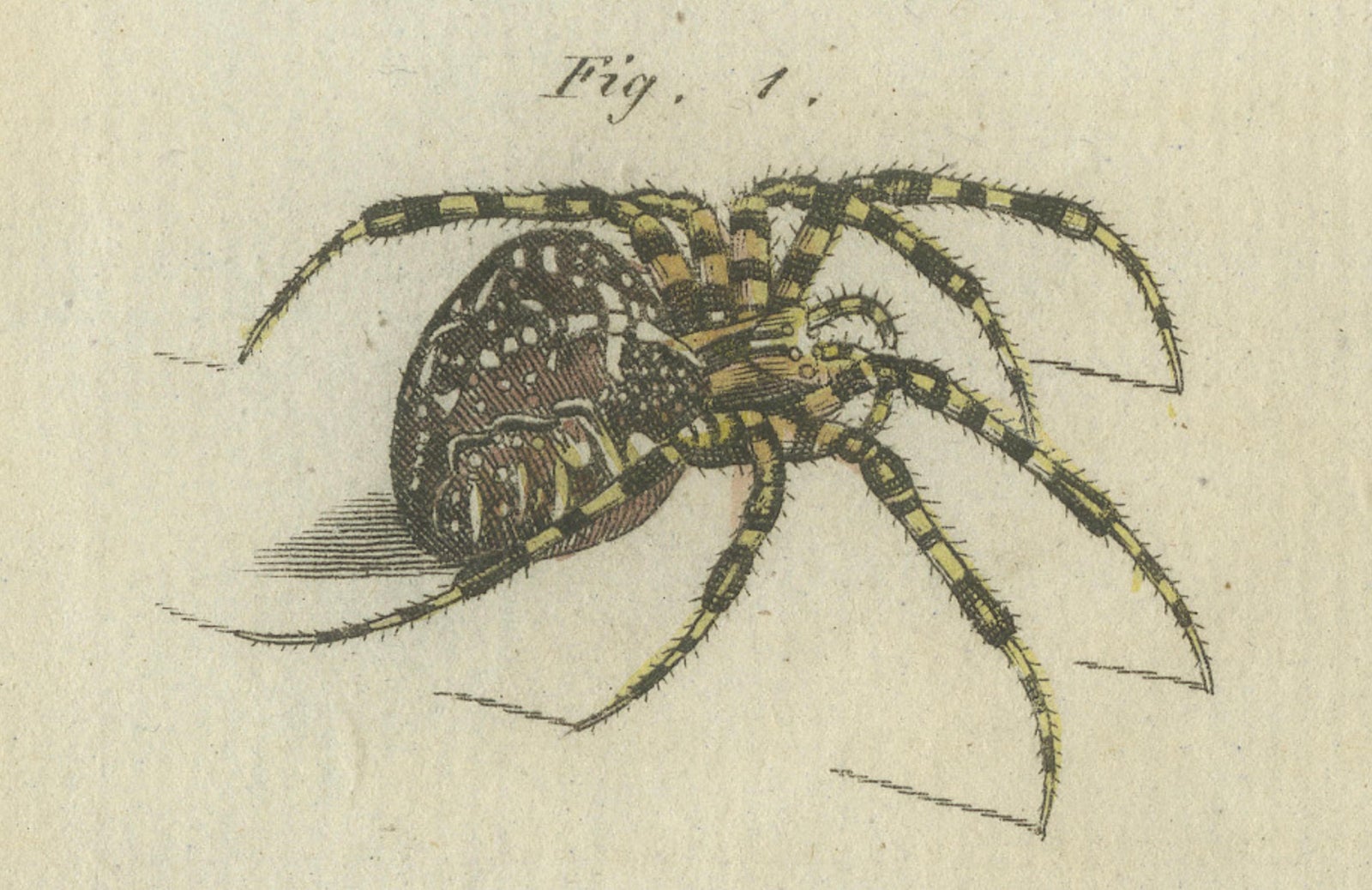
1. Figure 1: Depicts the black variety of the European garden spider, highlighting its characteristic round abdomen and intricate leg structure.
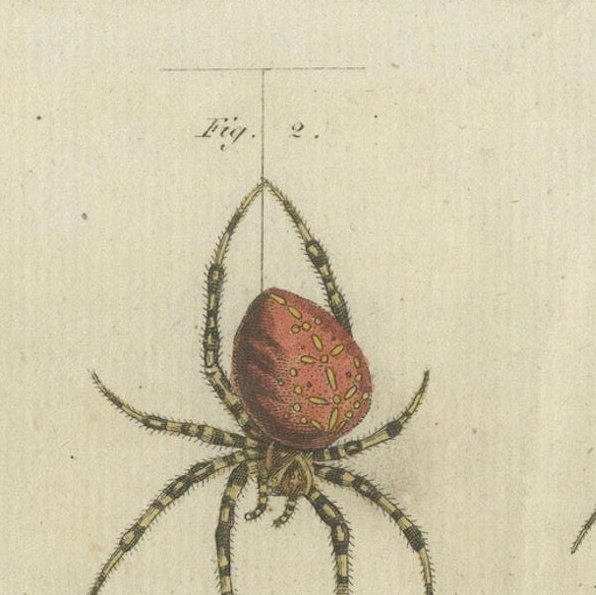
2. Figures 2-3: Illustrate the striking red variety of the spider, shown hanging from a silk line. The vibrant red markings and fine details emphasize the diversity within this species.
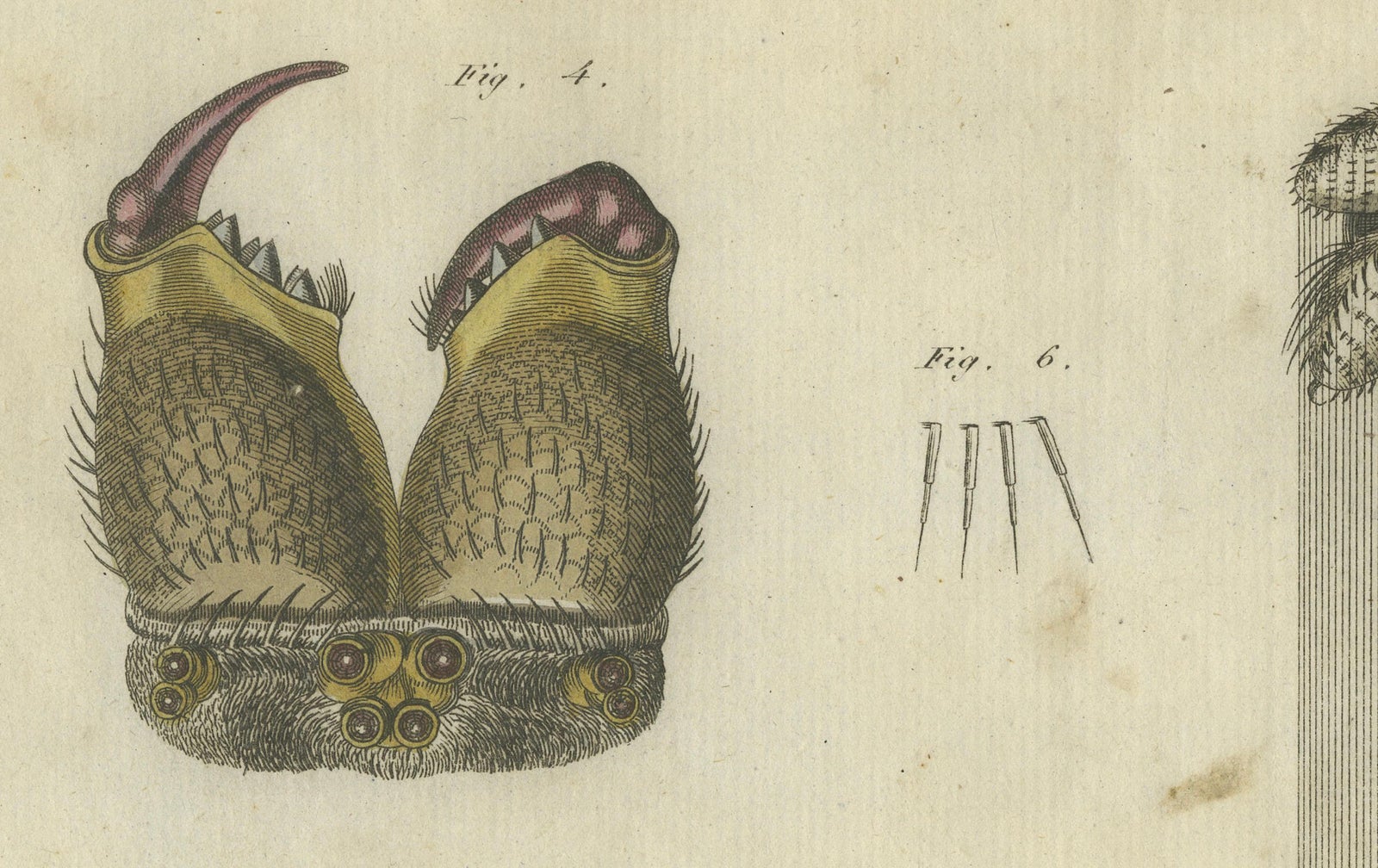
3. Figure 4: Provides a close-up view of the spider’s head, showcasing the mandibles and prominent eyes used for hunting and web construction.
4. Figure 5: Presents the silk spinnerets, revealing the intricate anatomy involved in spinning silk fibers. This fascinating aspect of spider biology is a testament to their evolutionary adaptability.
5. Figure 6: Displays detailed silk tubes, demonstrating how the spider produces and uses its web-building material.
This engraving exemplifies Bertuch’s dedication to educating young readers and adults alike, combining visual appeal with scientific observation. It is a remarkable piece of 19th-century natural history art.
Condition Report
Very good condition with vibrant original hand coloring. Slight foxing and light toning on margins, consistent with age. Plate edges intact.
Framing Tip
To highlight the intricate details, use a neutral mat and a simple, natural wood frame. UV-resistant glass will help preserve the engraving’s vibrant colors and delicate inkwork. This piece is perfect for an entomology-themed gallery or a scientific study display.