Close-ups
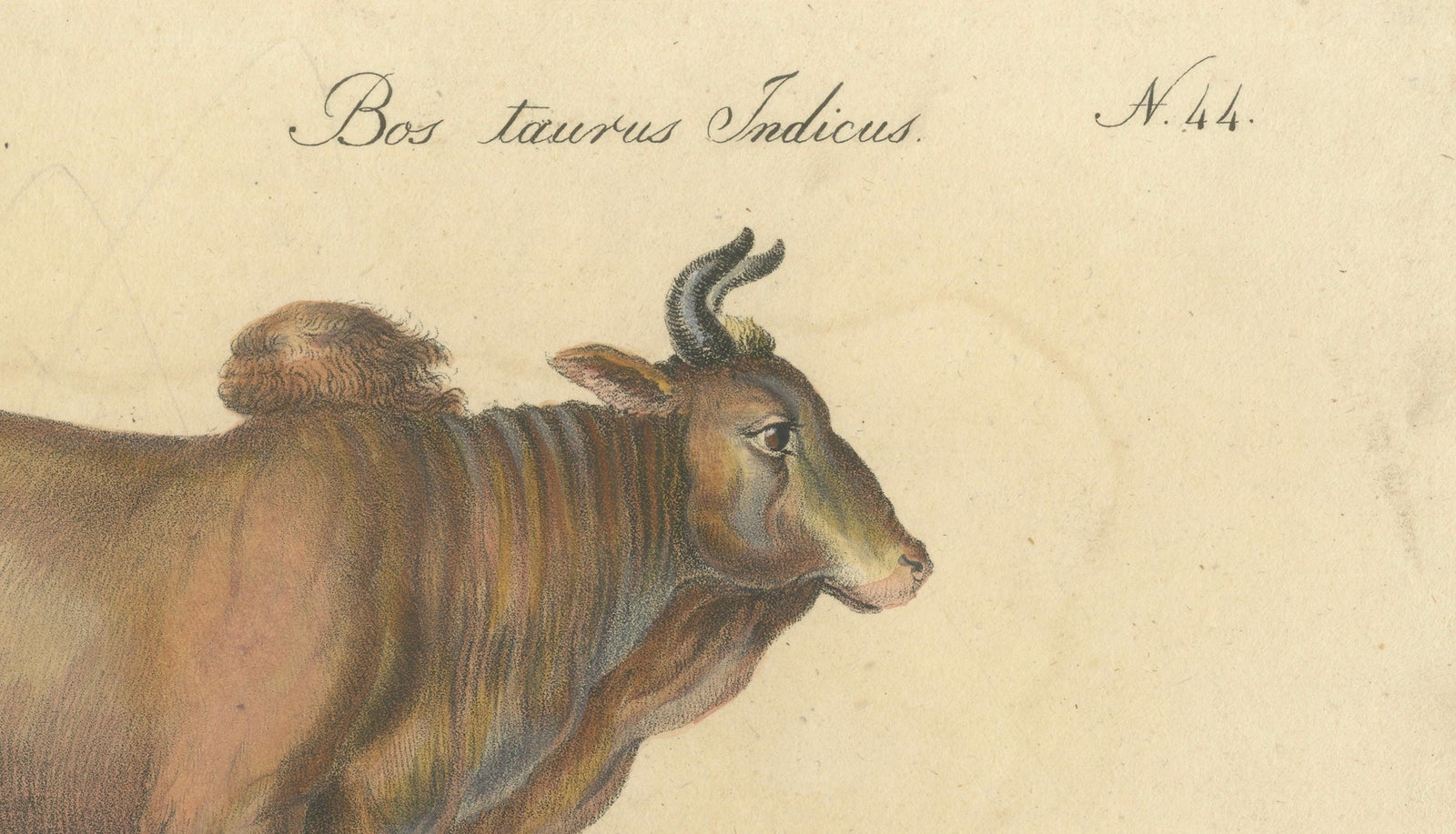
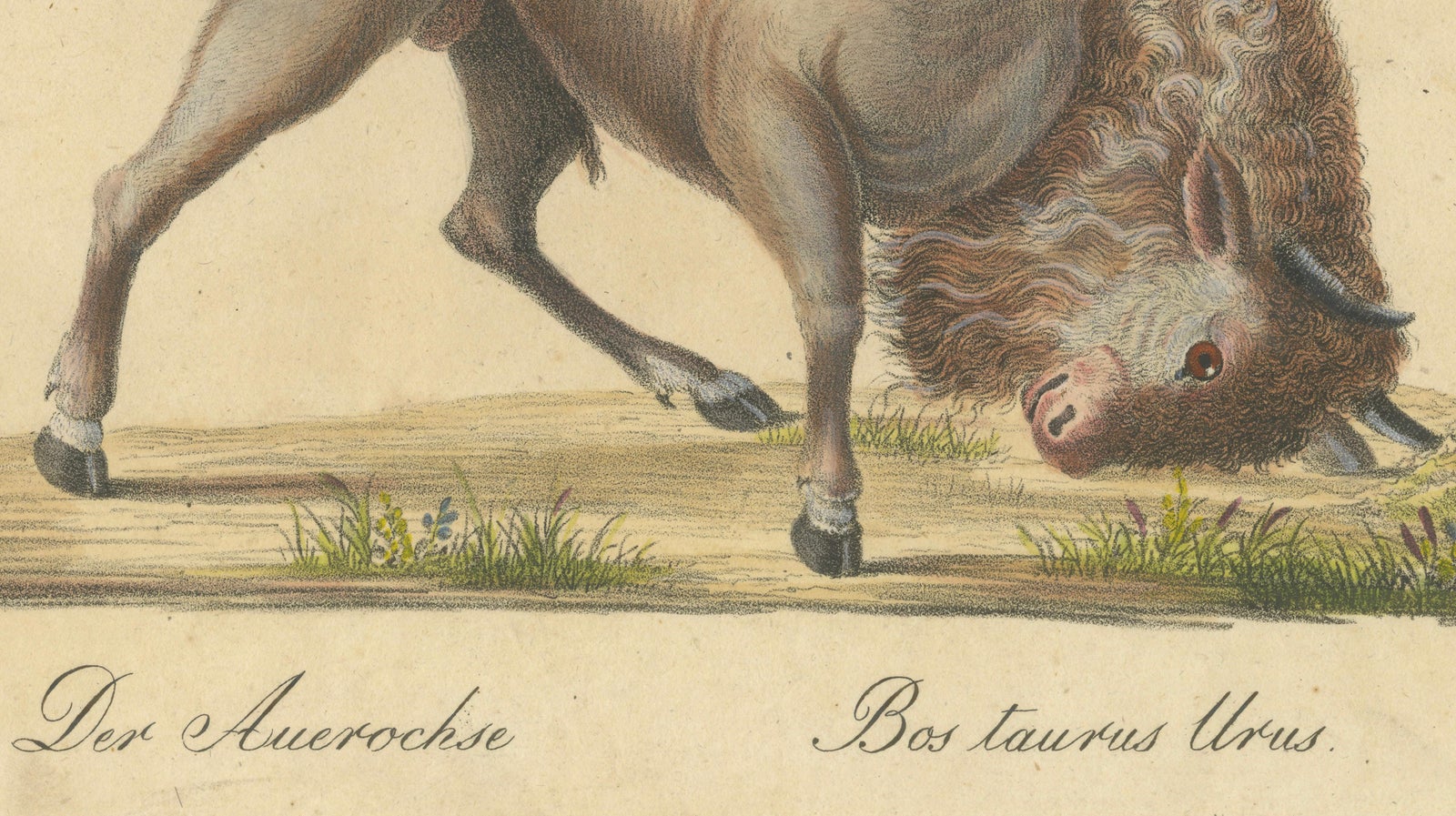
Framed and on the wall
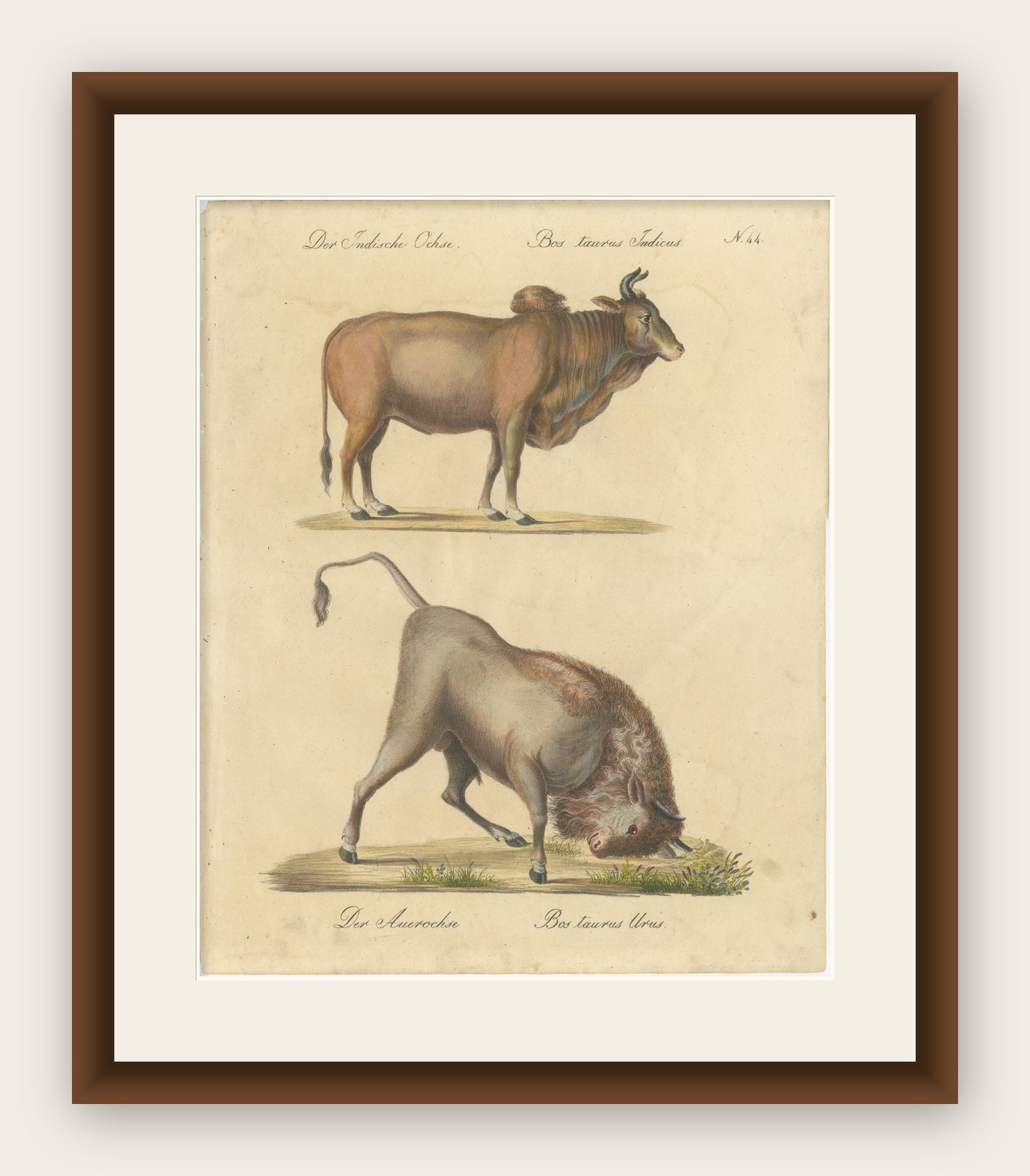

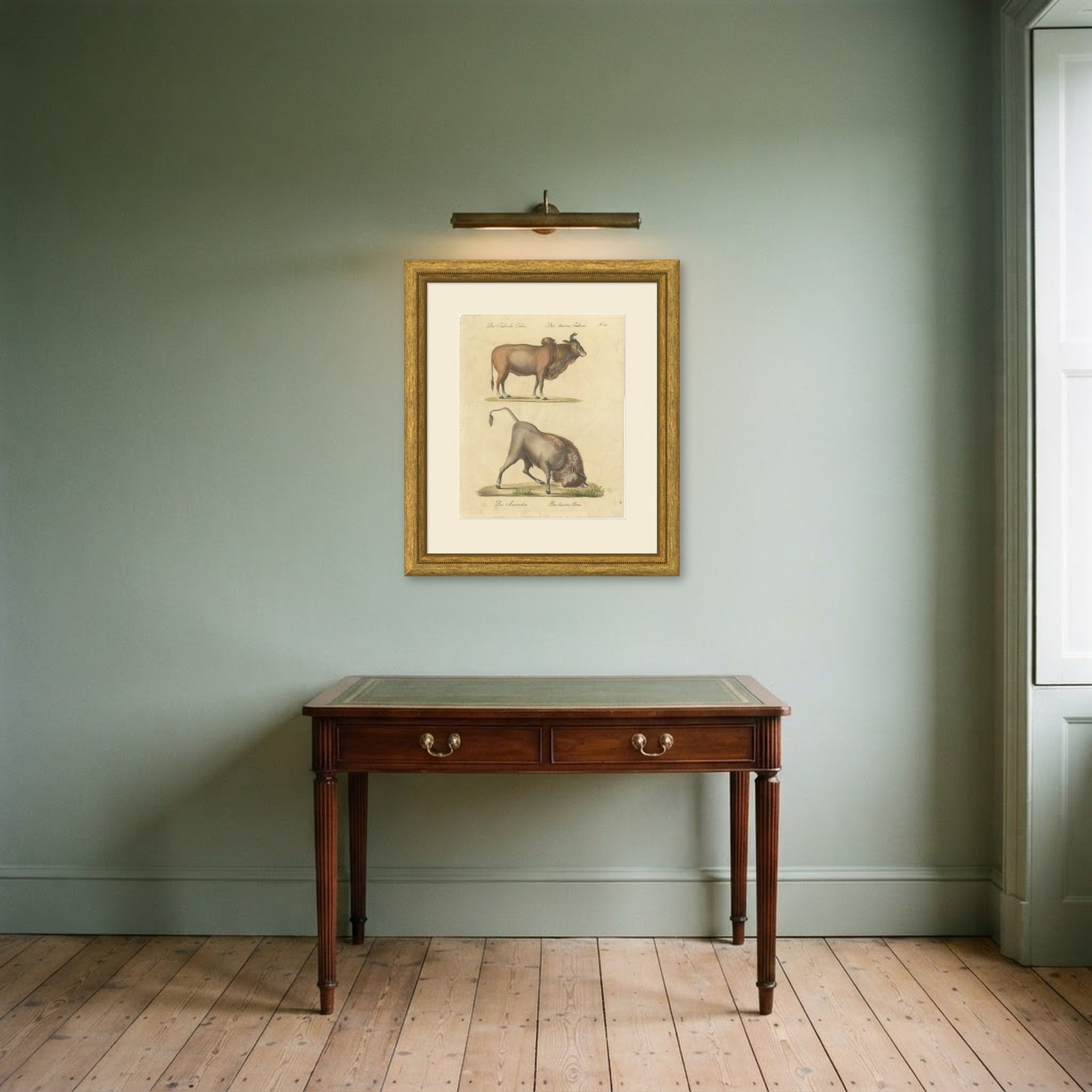
Frame and rooms are illustrations of how the print could look; the description says what is included.
Indian Zebu Bull and Extinct Aurochs Natural History Lithograph, 1816
$660$49525% off (£375, €450)
Period original, not a reproduction.
Shipped from the Netherlands, flat or rolled, insured and tracked, worldwide. Returns accepted within 14 days.
- Date
- 1816
- Size
- 17.5 × 14.1 in (44.5 × 35.9 cm)
- Condition
- Good. Good condition considering age. Light age toning, occasional foxing, and minor handling wear consistent with a print over 200 years old. Original hand coloring remains fresh and attractive. Please study photographs carefully.
- Period
- Early 19th century
- Section
- Mammals
- Reference
- f_50618602
- Color
- Hand colored
What the condition grades mean
- Excellent
- Bright and clean, with no faults worth mentioning.
- Very good
- Only light signs of age, such as faint toning.
- Good
- Normal signs of age for a sheet of this period: toning, some foxing, small marks or neat old repairs.
- Fair
- Clear faults such as staining, tears or repairs, priced to match.
Every fault we see is written in the condition note, and the whole sheet is shown uncropped in the photos.
Indian Zebu Bull and Extinct Aurochs Natural History Lithograph, 1816
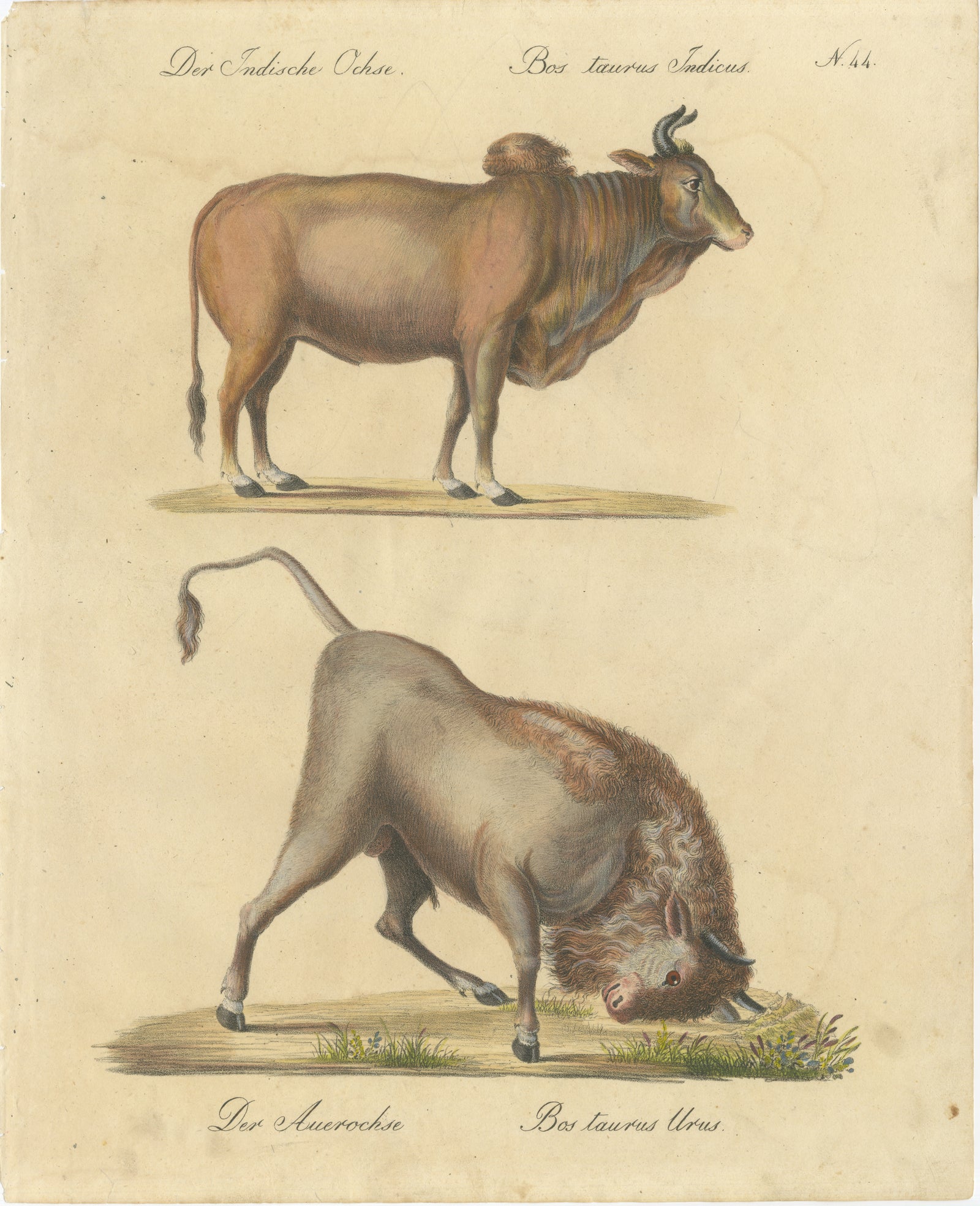
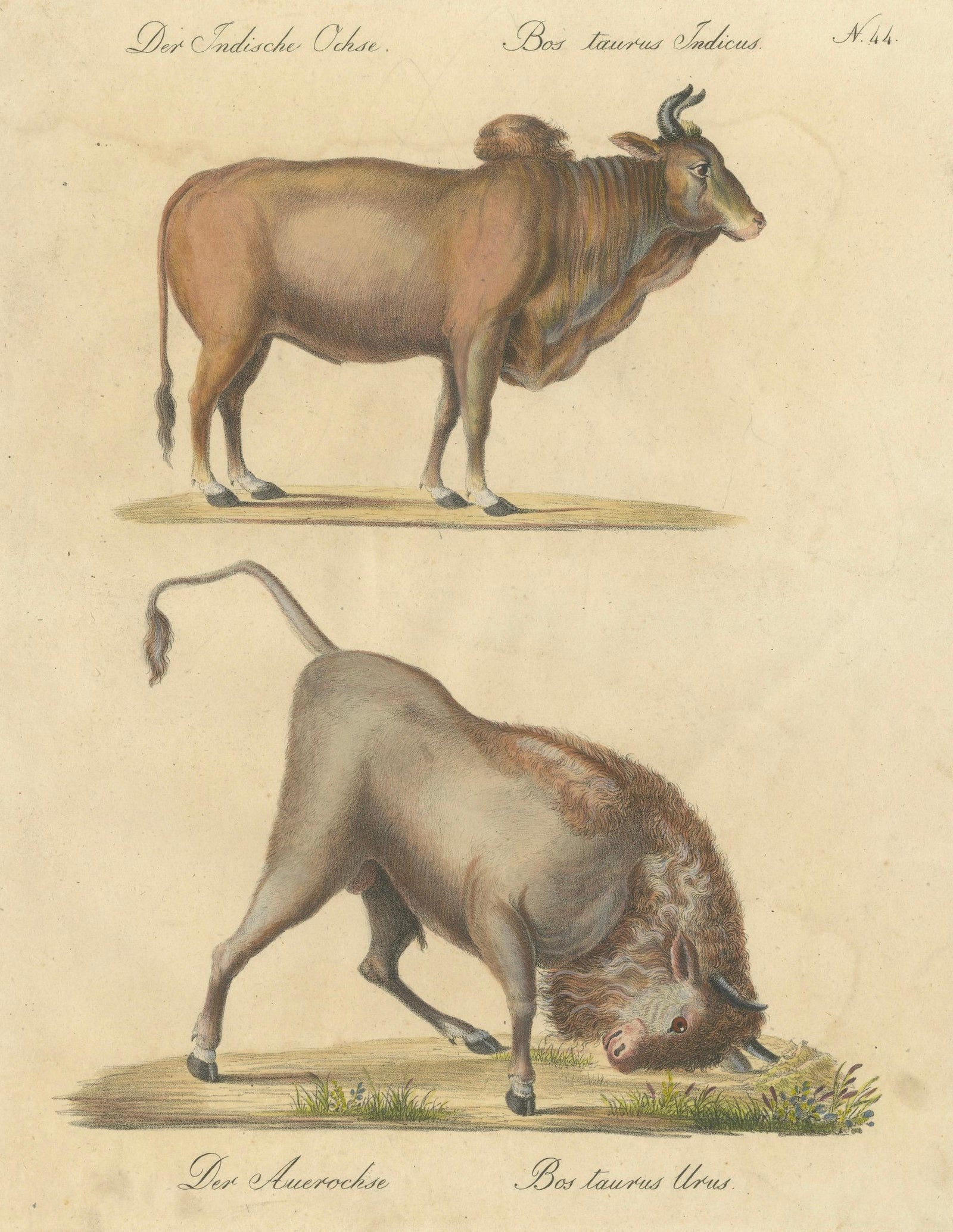
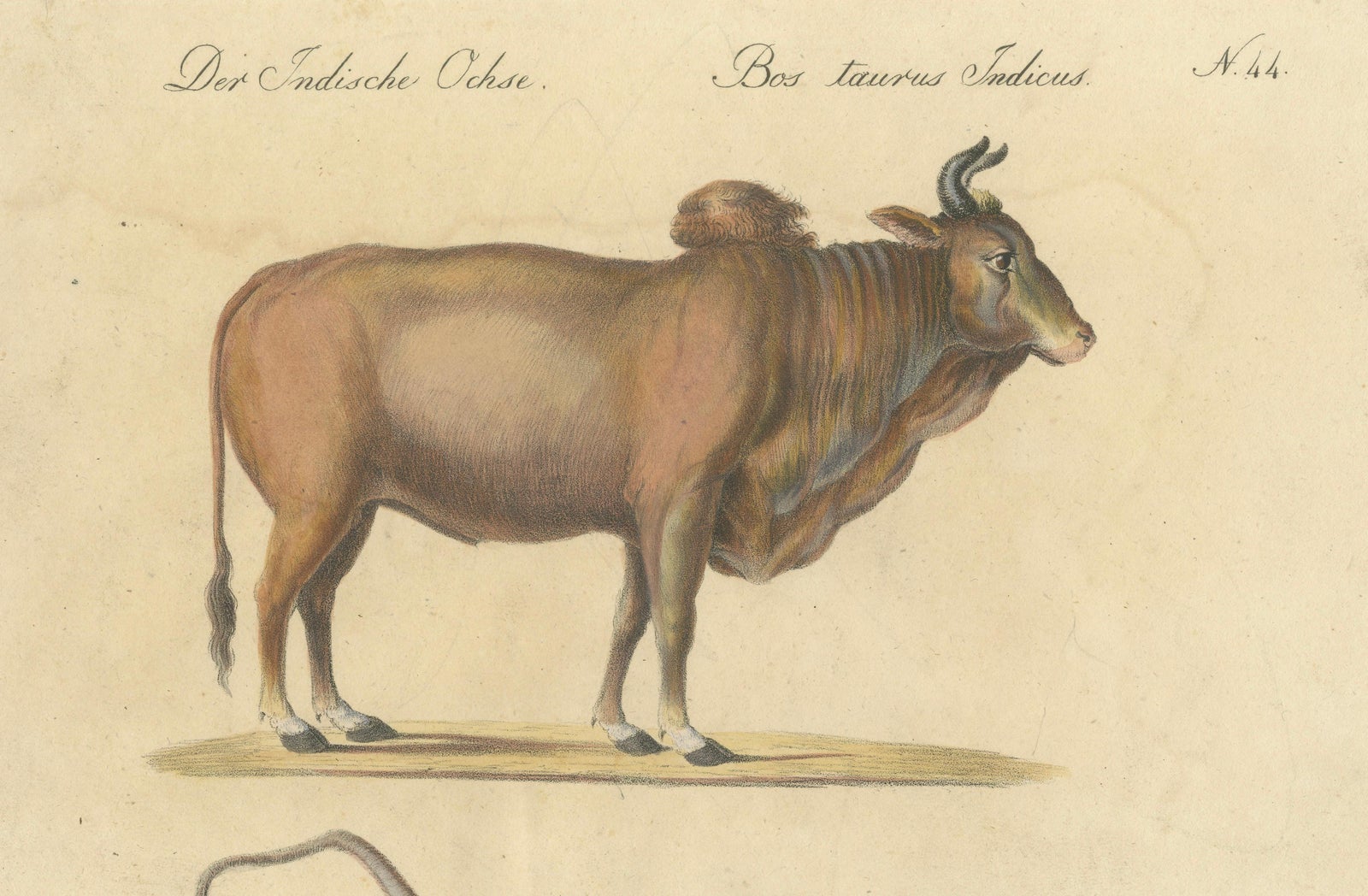
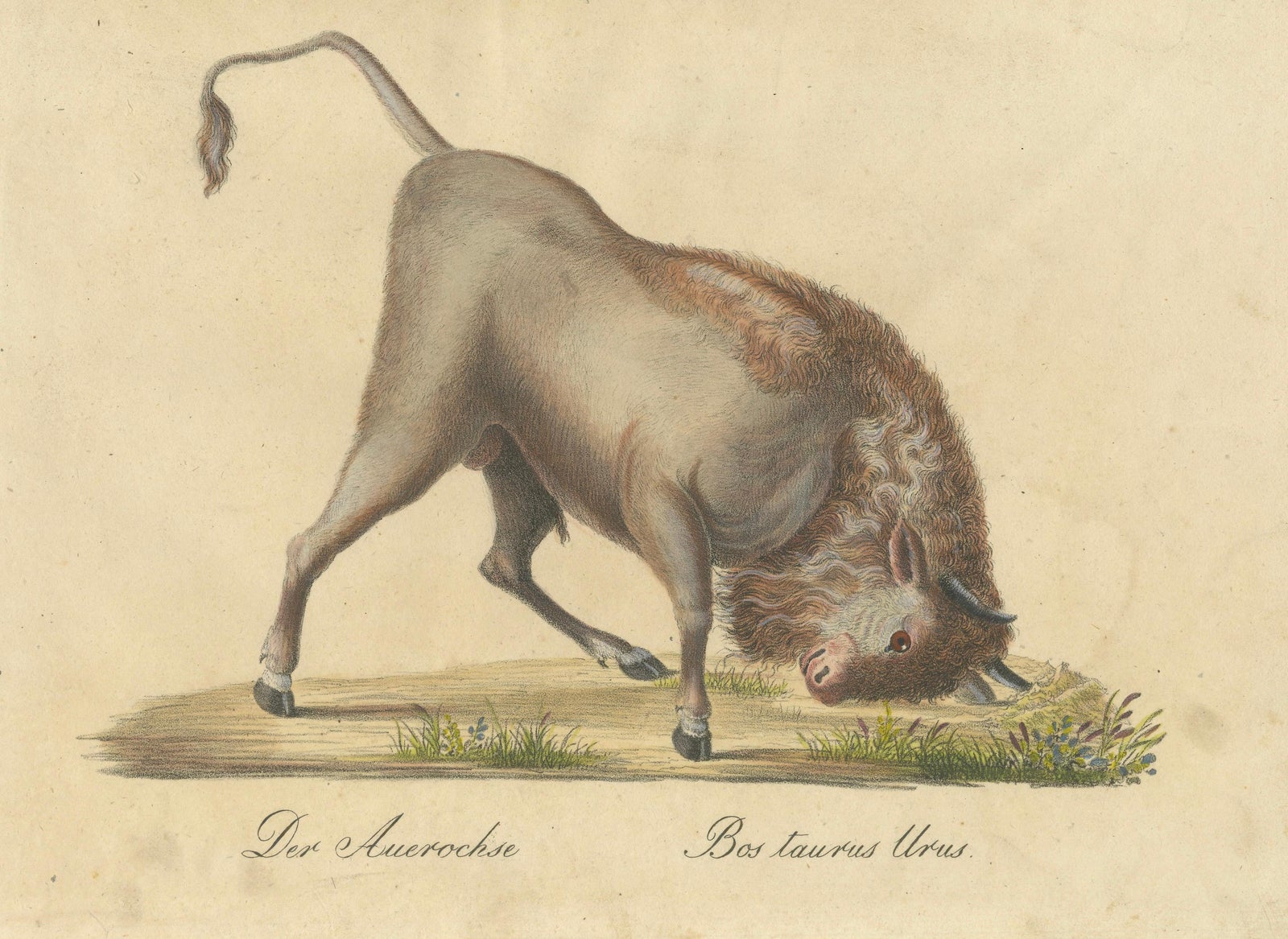
This original hand-colored lithograph depicts two historically important members of the cattle family: the Indian Zebu (Bos taurus indicus) and the Aurochs (Bos taurus urus), the legendary wild ancestor of modern domestic cattle. Executed with remarkable detail and scientific accuracy, the print was created by Karl Joseph Brodtmann and published in Lindau in 1816 as part of the celebrated Naturhistorische Bilder-Gallerie aus dem Thierreiche.
The upper illustration portrays the Indian Zebu, immediately recognizable by its prominent shoulder hump, loose dewlap, and distinctive profile. For thousands of years, zebu cattle have played a vital role throughout the Indian subcontinent, serving as working animals, sources of milk, and important cultural symbols. Their exceptional tolerance to heat and tropical climates made them among the most successful cattle breeds in the world.
The lower image depicts the mighty Aurochs, the wild bovine from which most domestic cattle descend. Once roaming across Europe, Asia, and North Africa, the aurochs was one of the largest land mammals of its time. Revered by ancient cultures and frequently depicted in prehistoric cave paintings, it became extinct in the seventeenth century. Brodtmann's dramatic portrayal captures the power and muscular build that made the species legendary among hunters and naturalists alike.
Swiss artist Karl Joseph Brodtmann (1787–1862) was one of the leading natural history illustrators of the early nineteenth century. Working during the pioneering era of lithographic printing, he combined scientific observation with artistic elegance, producing works that remain highly sought after by collectors today.
This sheet offers a fascinating comparison between domesticated and wild cattle forms, making it especially appealing to collectors interested in zoology, agricultural history, livestock breeds, natural history, and early scientific illustration. The composition combines educational value with strong decorative appeal, enhanced by the subtle hand coloring and balanced layout.
Original Brodtmann lithographs are increasingly difficult to find, particularly in attractive condition and with desirable large-mammal subjects such as these.
Condition report:
Good condition considering age. Light age toning, occasional foxing, and minor handling wear consistent with a print over 200 years old. Original hand coloring remains fresh and attractive. Please study photographs carefully. Margins and publication characteristics consistent with the period.
Framing tips:
This print displays beautifully in a dark walnut, ebonized, or black-and-gilt frame with an ivory museum mat and a fine gold fillet. The warm earth tones complement both traditional country-house interiors and sophisticated contemporary spaces. Particularly suitable for libraries, studies, farmhouses, hunting lodges, and natural history collections.
Please note: This print is sold unframed. Any images showing the artwork framed or displayed in an interior are provided for presentation and decorating inspiration only.
Technique: Hand-colored lithograph
Maker: Karl Joseph Brodtmann, Switzerland, published in Lindau, 1816.