Close-ups
Framed and on the wall
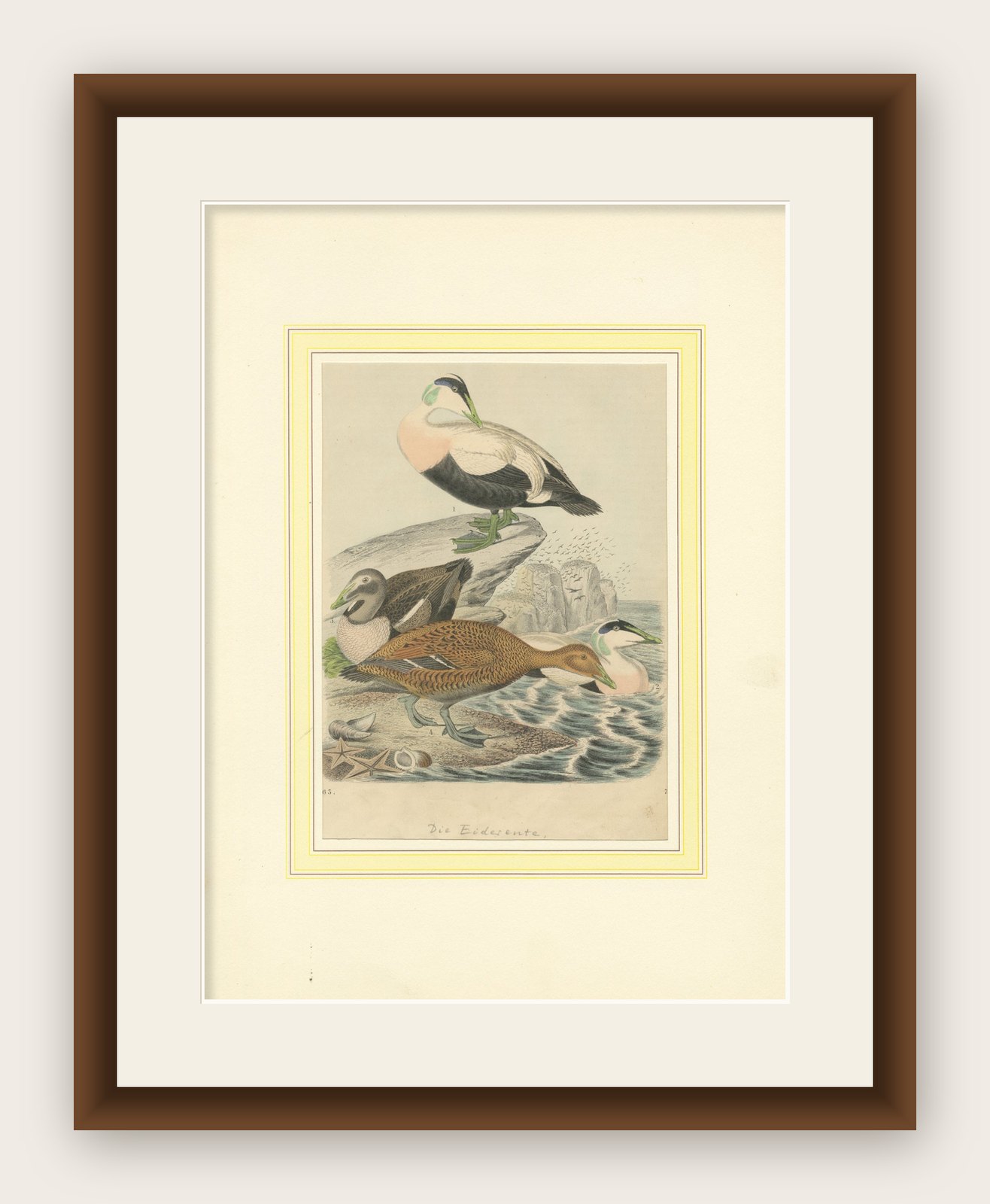


Frame and rooms are illustrations of how the print could look; the description says what is included.
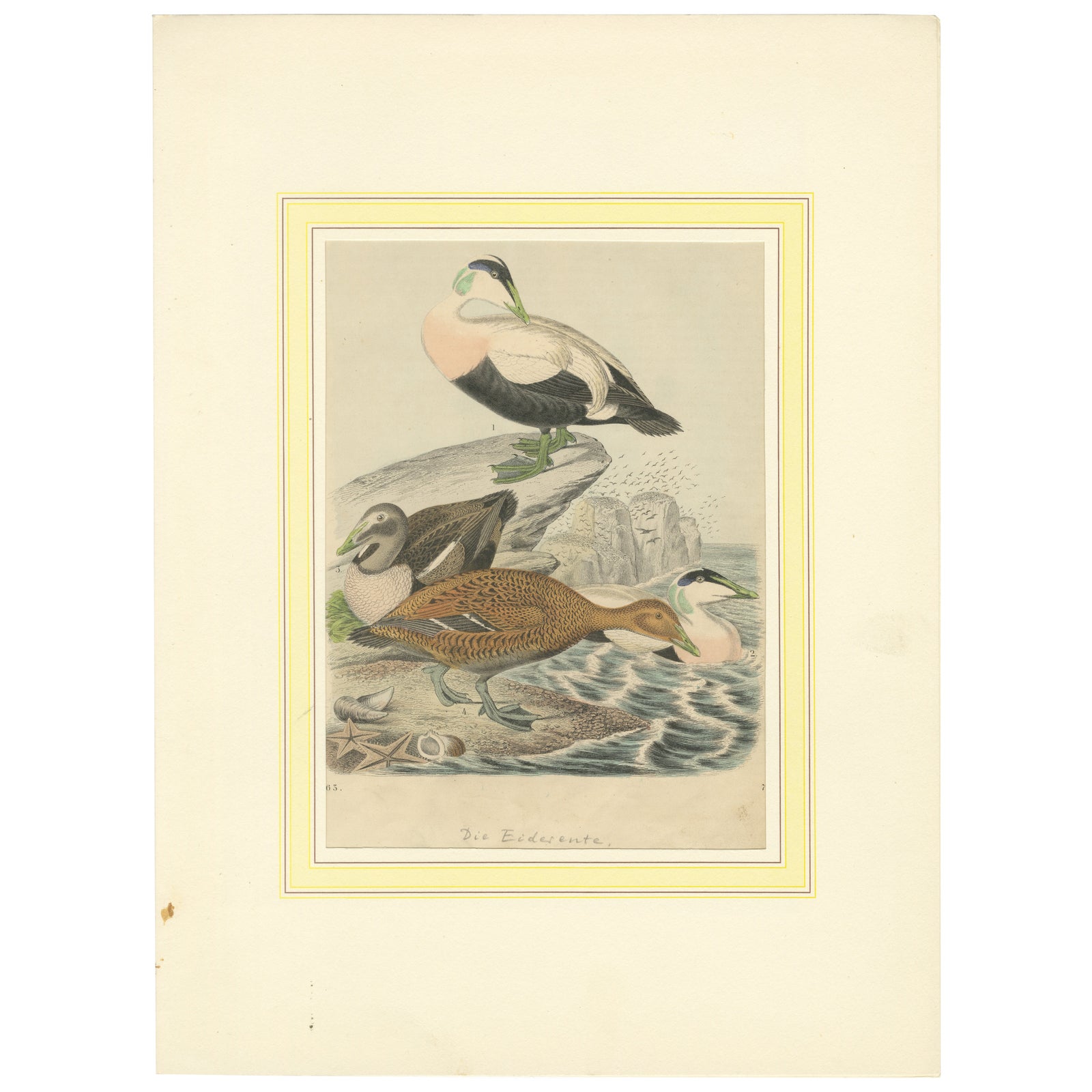
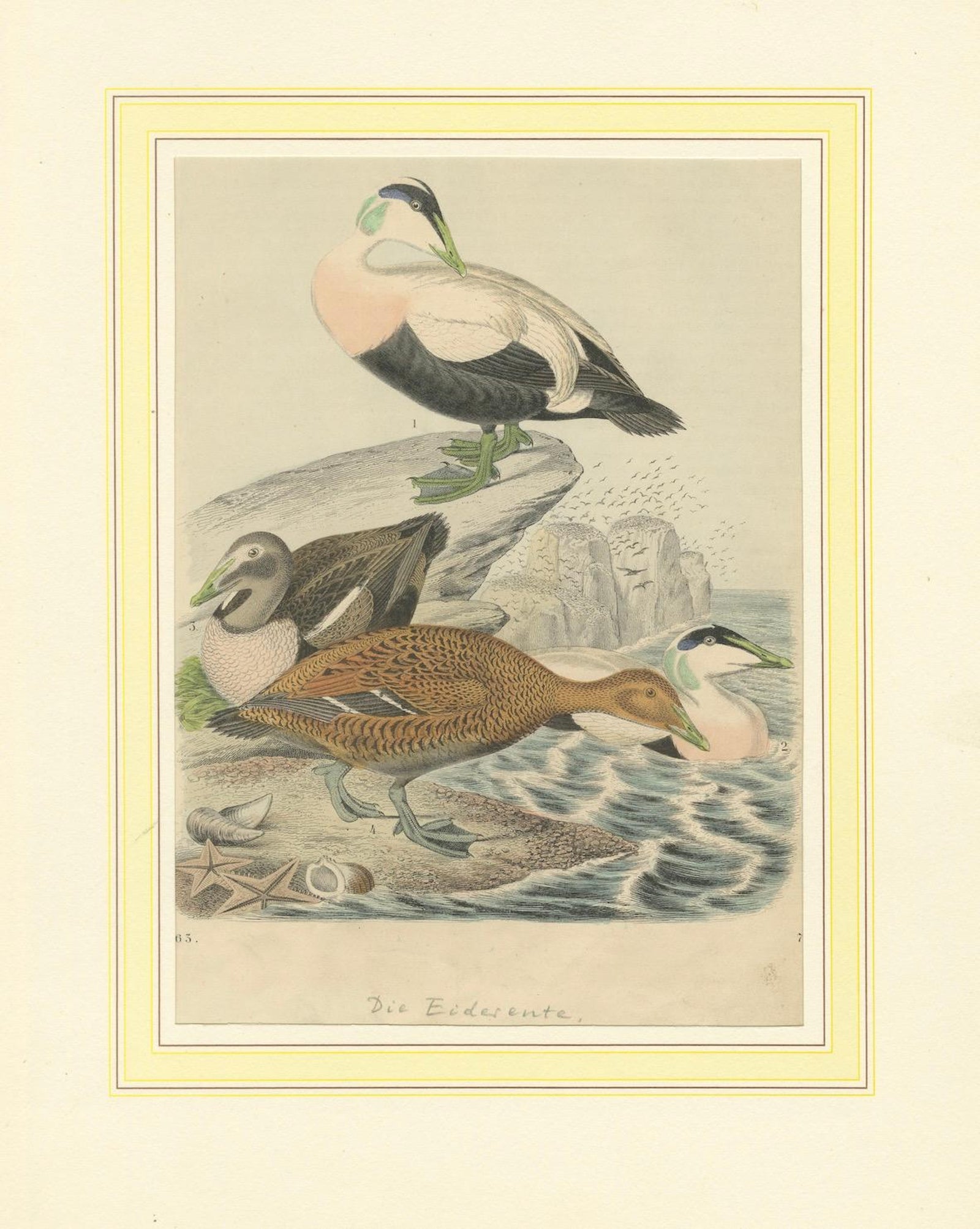
Hand-Coloured Lithograph of Eider Ducks by the Sea: An 1863 Coastal Study
$125 (£95, €110)
Period original, not a reproduction.
Shipped from the Netherlands, flat, insured and tracked, worldwide. Returns accepted within 14 days.
- Date
- 1863
- Size
- 13.7 × 10.2 in (34.8 × 25.9 cm)
- Condition
- Good. The print shows minor foxing on the edges with slight yellowing of the paper due to age. No tears or significant creases are present, and the colors remain vibrant. The mat board has light discoloration but is intact. Overall, its in good condition.
- Period
- Late 19th century
- Section
- Birds
- Reference
- f_45116962
Title: "Eider Ducks by the Sea: An 1863 Coastal Study"
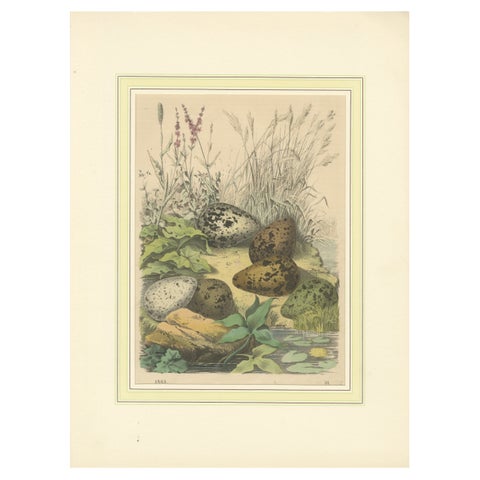
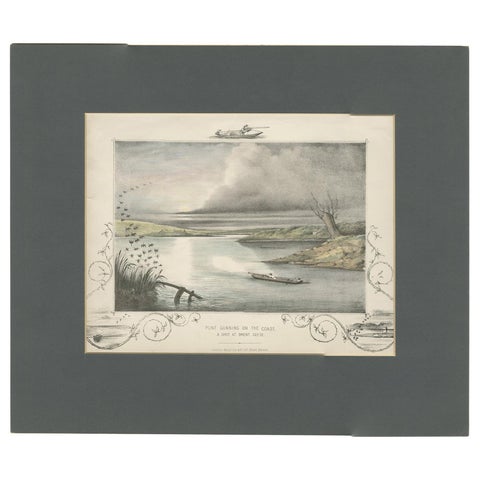
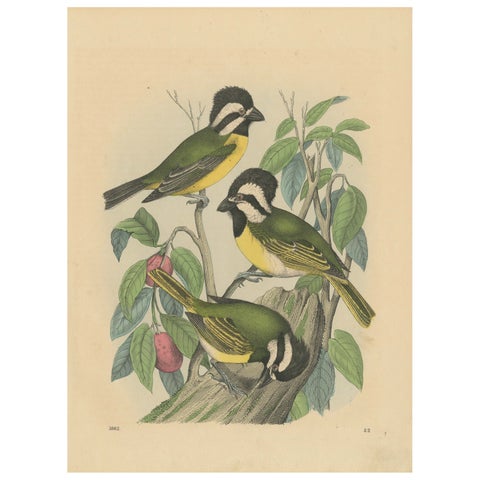
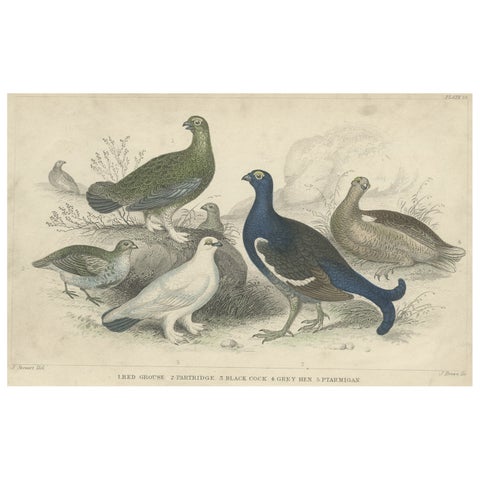
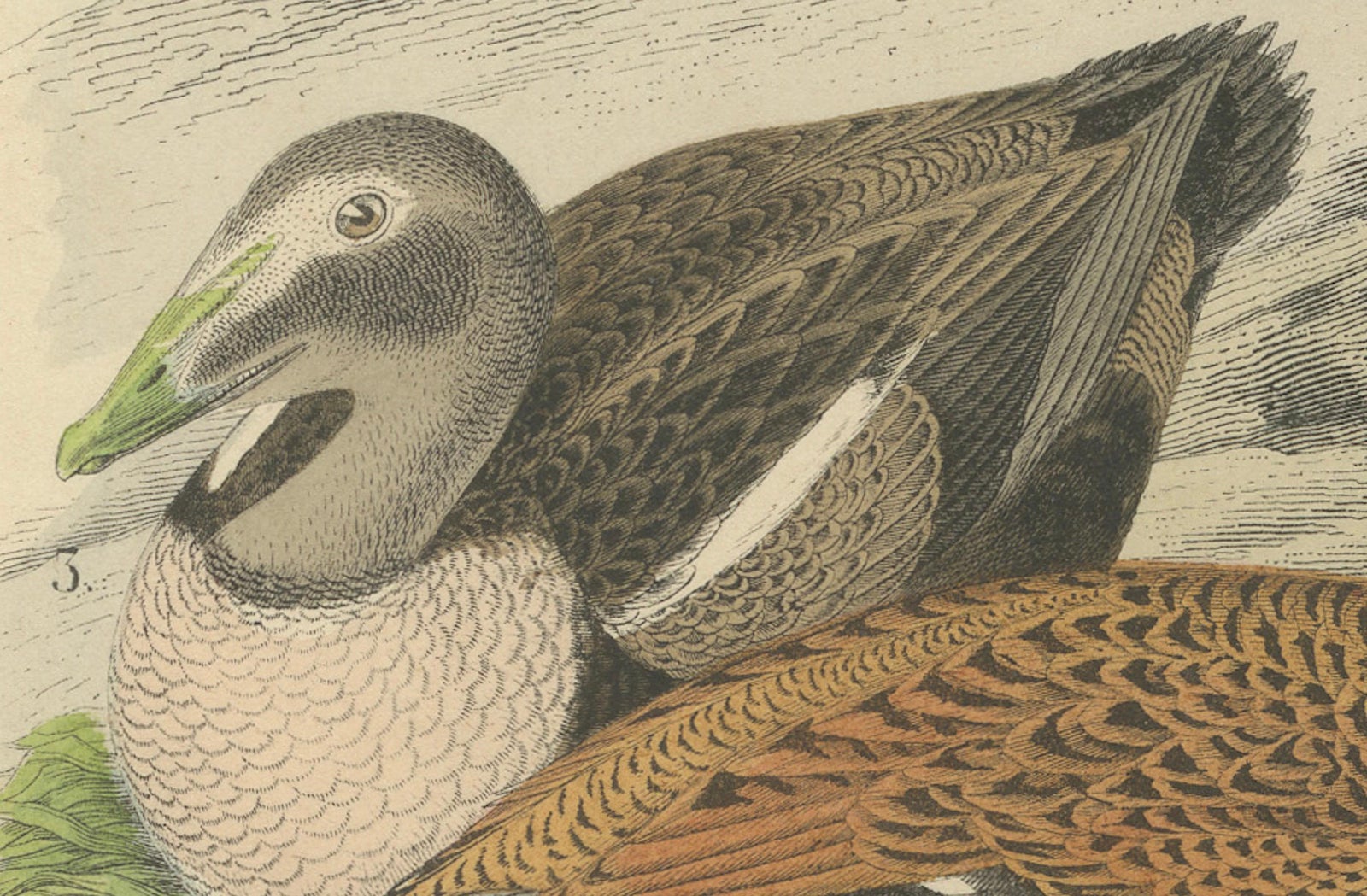
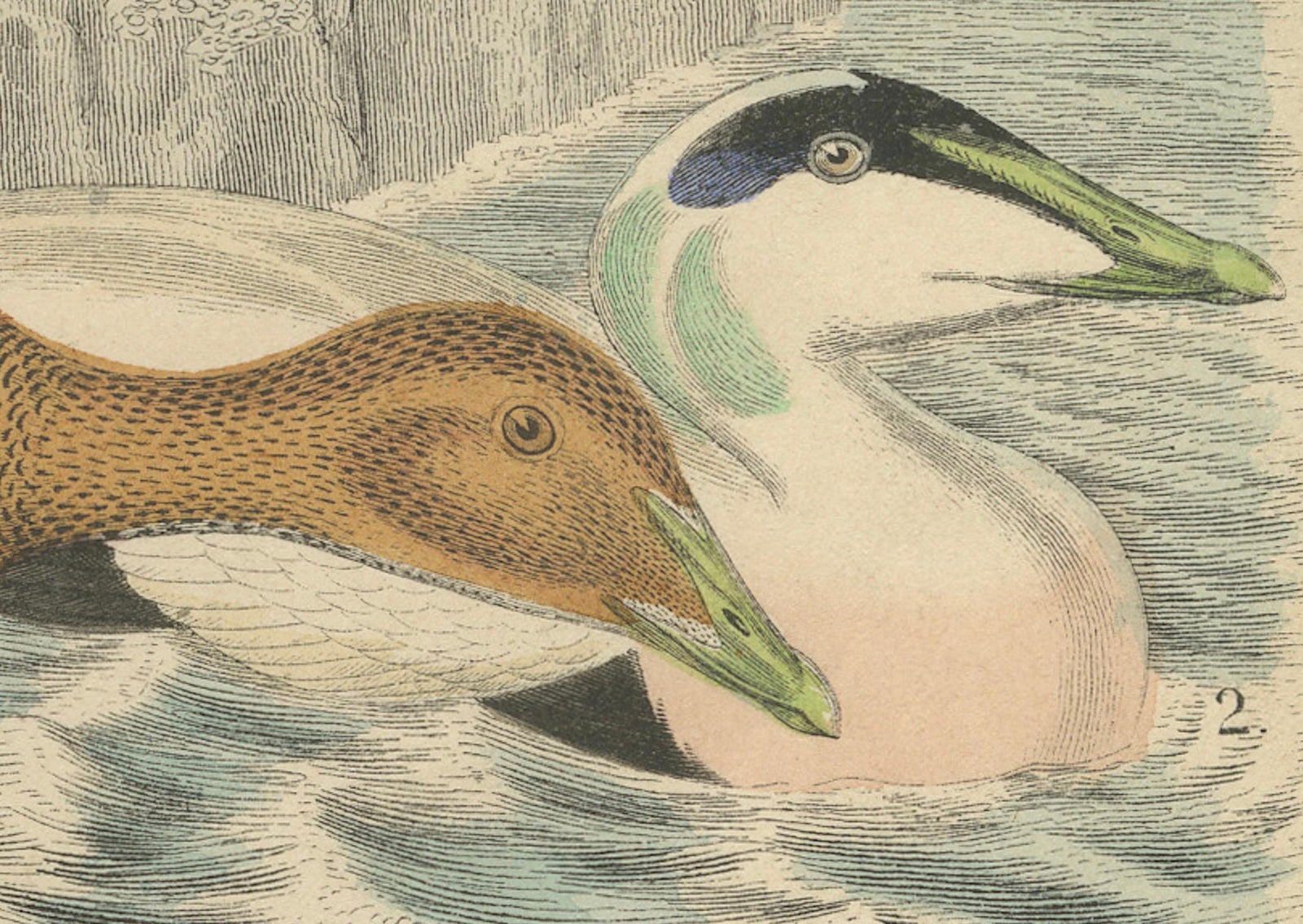
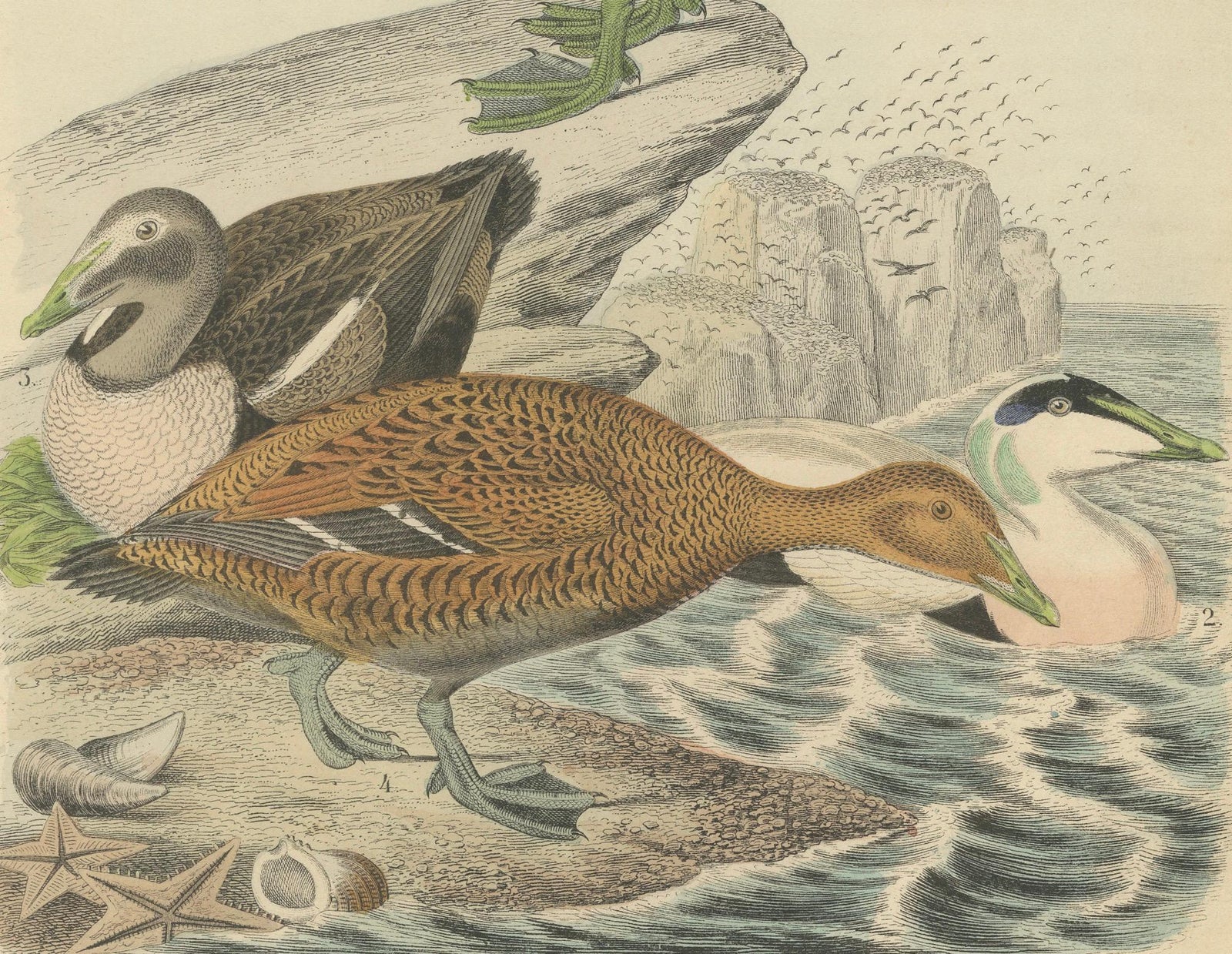
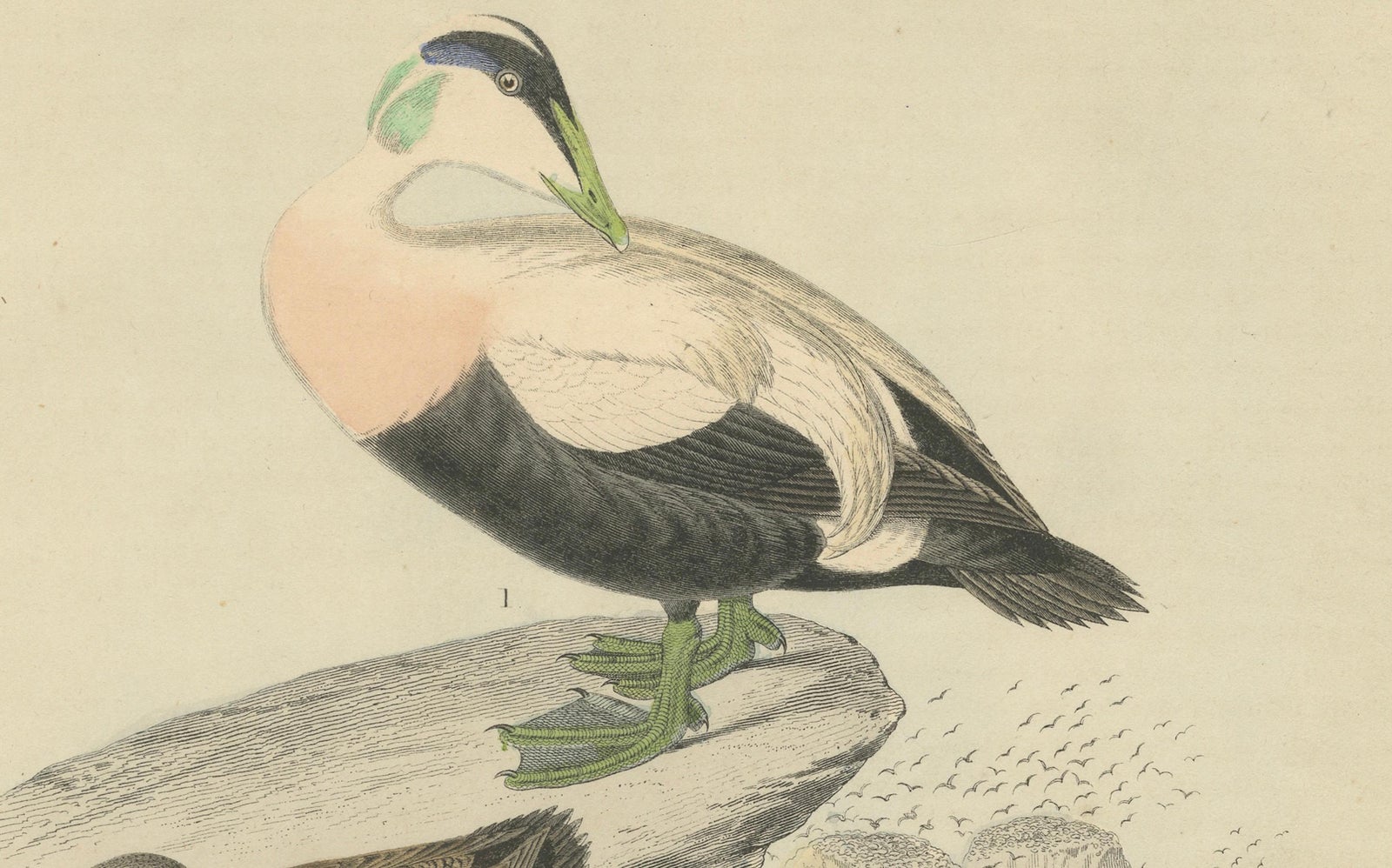
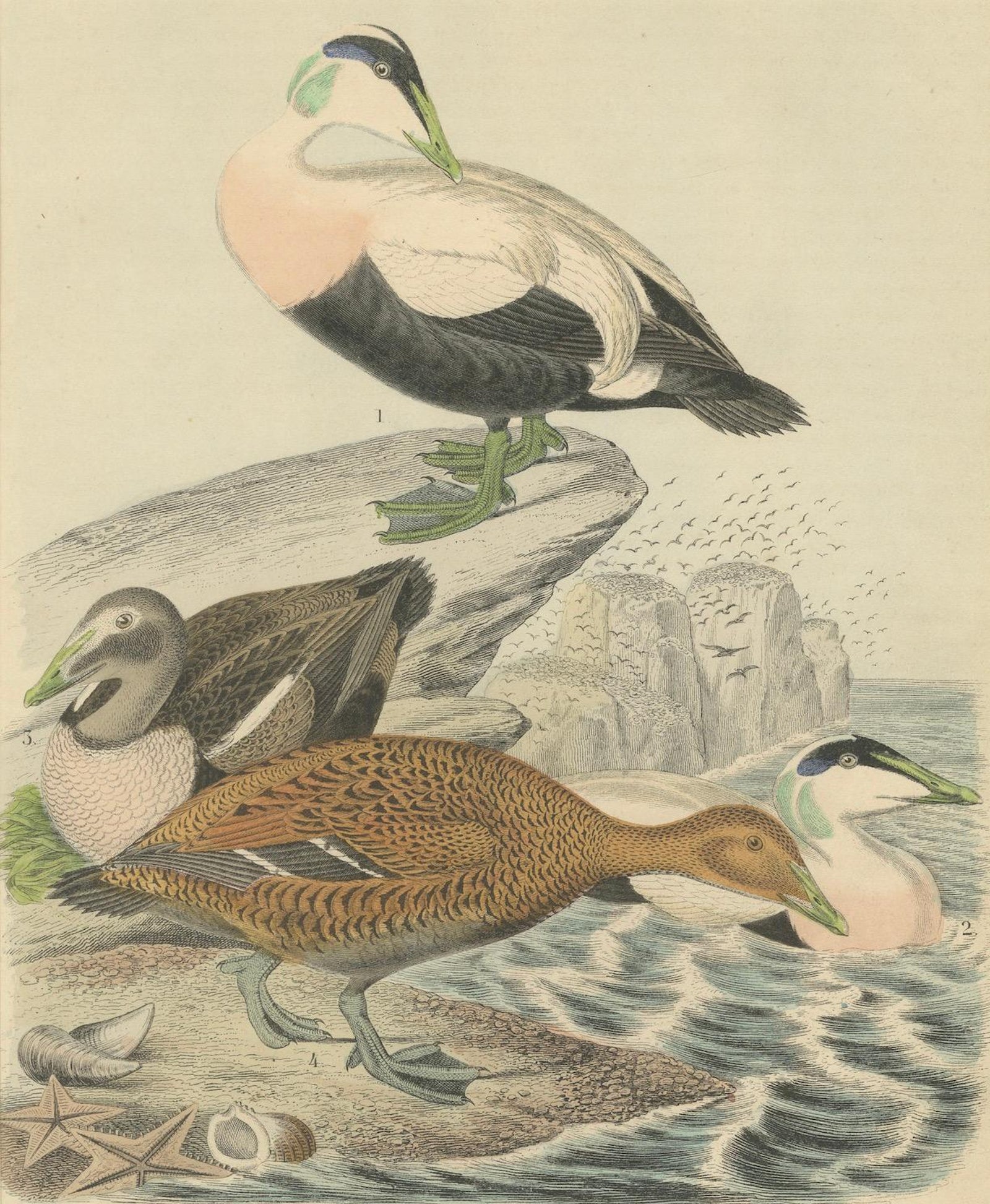
Description: This striking print, titled "Eider Ducks by the Sea," is a captivating piece from the "Book of Worlds," published in 1863 to document the natural and cultural diversity of the globe. Likely created by an artist commissioned for the book, the artwork features three eider ducks in a coastal environment, with waves crashing against rocks and a backdrop of cliffs and distant birds in flight. The ducks are depicted with remarkable detail, showcasing their distinct plumage, the males with bold black, white, and green markings, and the female with a more subdued, mottled brown coat suited for camouflage.
The birds in the 1863 print "Eider Ducks by the Sea" from the "Book of Worlds" are eider ducks, as indicated by the title "Die Eiderente" (German for eider duck). The top and bottom right birds are male eiders, likely Common Eiders (Somateria mollissima), identifiable by their striking black, white, and green plumage with a pinkish breast. The middle bird is a female eider, distinguished by her mottled brown feathers, which provide camouflage in their coastal habitat. Eiders are sea ducks known for their thick down feathers, often found in northern coastal regions.
The scene captures the rugged beauty of their seaside habitat, complete with scattered seashells and seaweed, adding a touch of realism to the composition.
The print is particularly interesting for its blend of scientific illustration and artistic expression, a hallmark of 19th-century natural history art. During this period, such prints served as both educational tools and decorative pieces, offering detailed studies of wildlife at a time when photography was not yet widespread. The "Book of Worlds" aimed to bring the wonders of nature to a broader audience, and this piece exemplifies that mission by highlighting the eider duck, a species known for its association with cold, northern waters and its valuable down feathers. The careful use of color and fine engraving techniques brings out the texture of the ducks' feathers and the dynamic movement of the ocean, creating a vivid and engaging scene. This print not only appeals to collectors of historical wildlife art but also provides insight into the 19th-century fascination with marine birds, making it a valuable piece for those interested in ornithological history.
Condition Report: The print shows minor foxing on the edges with slight yellowing of the paper due to age. No tears or significant creases are present, and the colors remain vibrant. The mat board has light discoloration but is intact. Overall, the piece is in good condition for its age.
Framing Tips: Use a pale blue or sandy beige mat board to reflect the coastal tones of the scene. A simple wooden frame in a driftwood gray finish would complement the 1863 seaside theme. Ensure acid-free materials to preserve the print's condition.