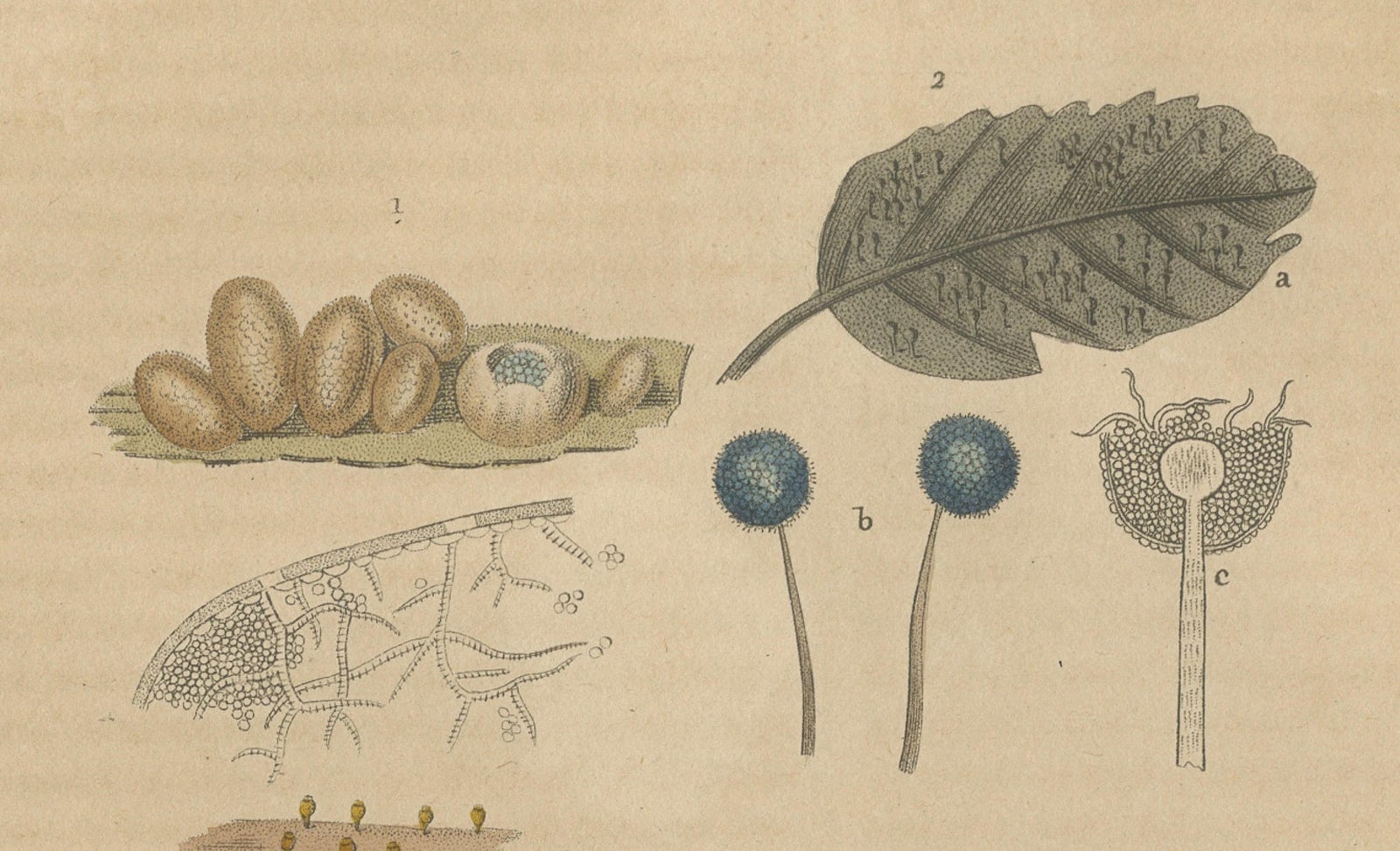
Close-ups
Framed and on the wall
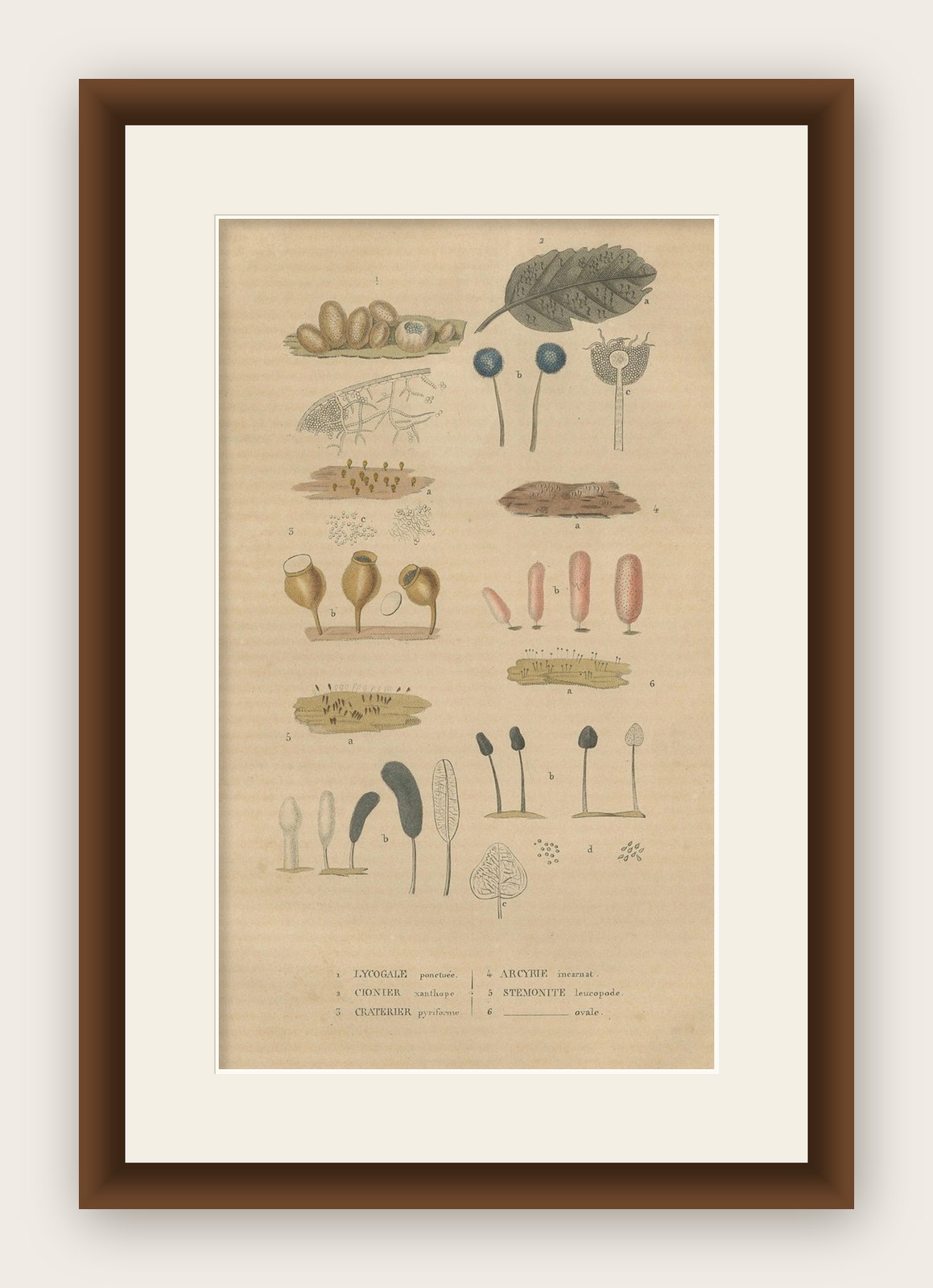


Frame and rooms are illustrations of how the print could look; the description says what is included.
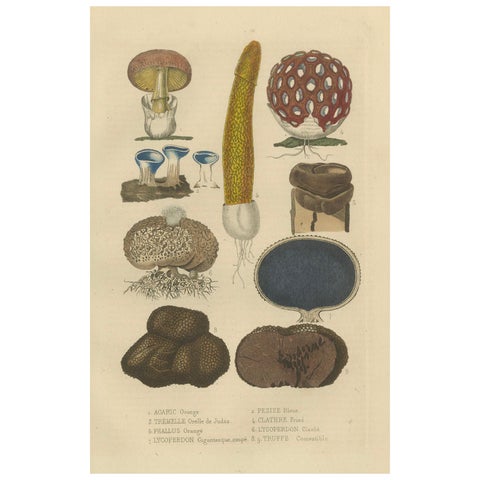
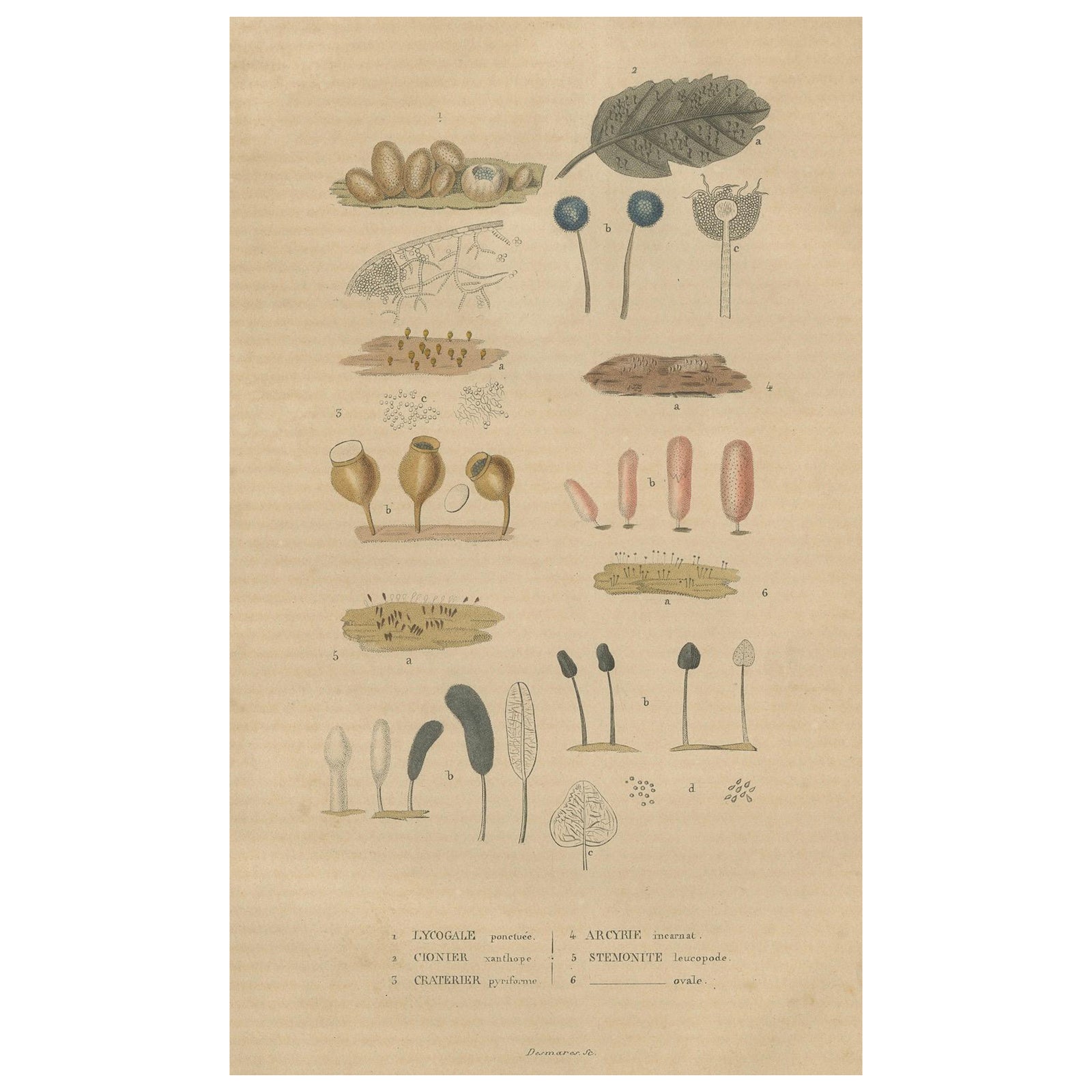
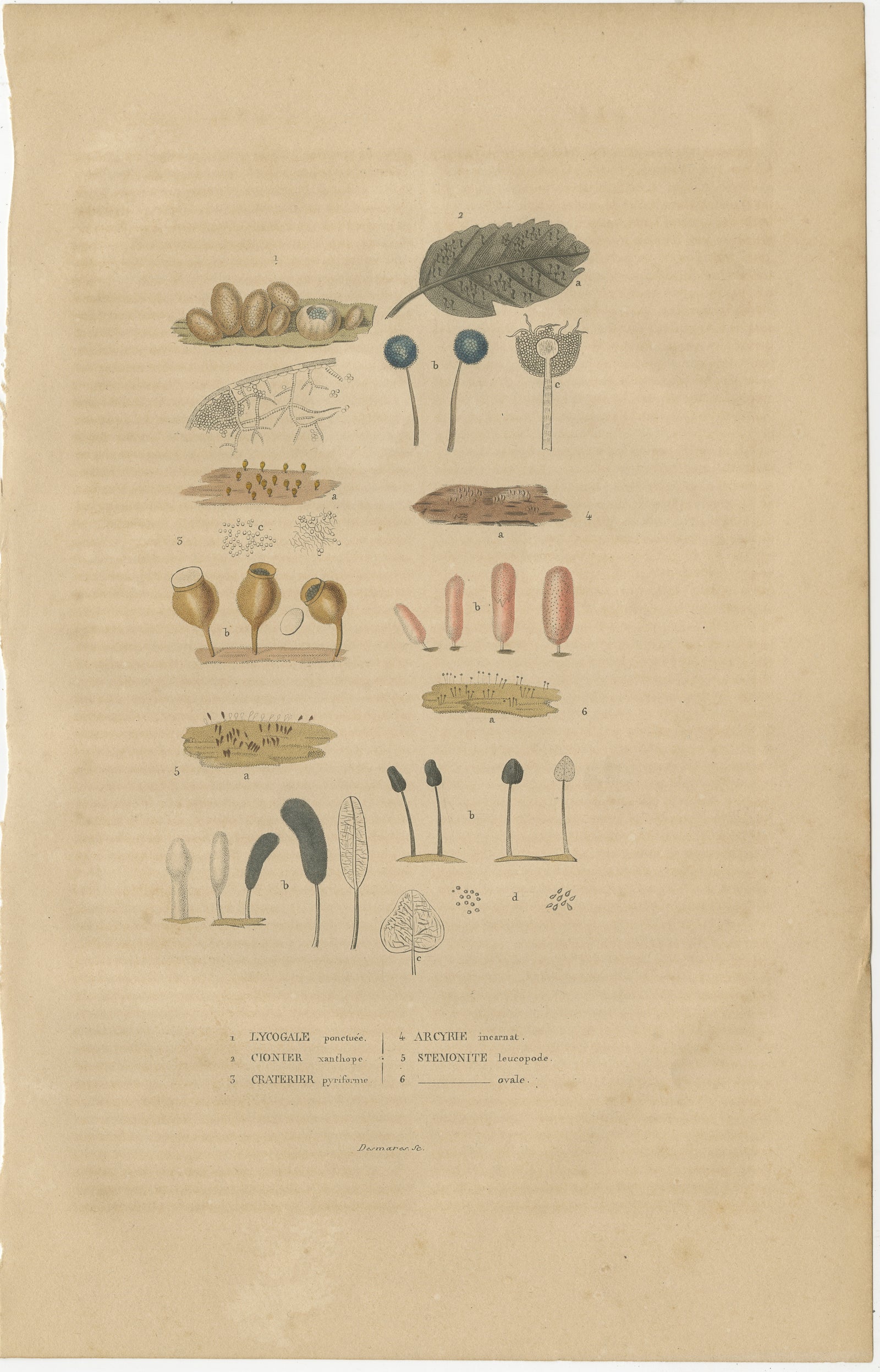
Fungal Forms: Illustrations of Mycological Diversity, 1845
£95 ($125, €110)
Period original, not a reproduction.
Shipped from the Netherlands, flat, insured and tracked, worldwide. Returns accepted within 14 days.
- Date
- 1845
- Size
- 10.4 × 6.7 in (26.5 × 17 cm)
- Condition
- Fair. Fair. Aged paper with typically warm, yellowish-brown hue. Left edge cut rough. Soiling, especially around the edges. Please study the image carefully.
- Period
- Early 19th century
- Section
- Botanical
- Reference
- f_37855392
- Colour
- Hand coloured
What the condition grades mean
- Excellent
- Bright and clean, with no faults worth mentioning.
- Very good
- Only light signs of age, such as faint toning.
- Good
- Normal signs of age for a sheet of this period: toning, some foxing, small marks or neat old repairs.
- Fair
- Clear faults such as staining, tears or repairs, priced to match.
Every fault we see is written in the condition note, and the whole sheet is shown uncropped in the photos.
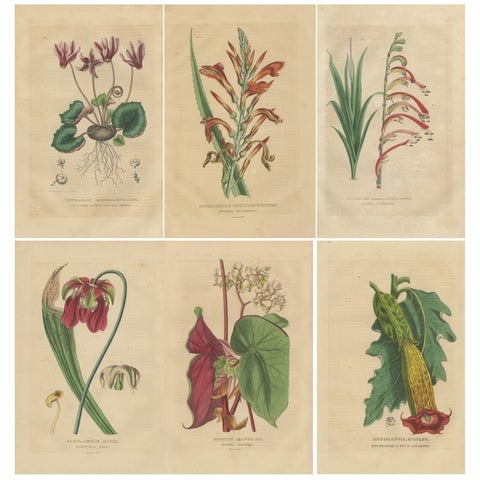
This illustration does not depict animals, but rather a variety of fungi, which are a diverse group of organisms that include yeasts, molds, and the more familiar mushrooms. They play crucial roles in the ecosystem as decomposers and in symbiotic relationships with plants.
Here are the depicted items, which are most likely scientific illustrations of various stages of fungal life cycles or specific structures within fungi:
1. **Tyrogale punctue** - This could represent a part of a fungus, perhaps a spore-producing structure.
2. **Clonertie xanthope** - Likely another fungal structure, perhaps a spore capsule or a part of the mycelium.
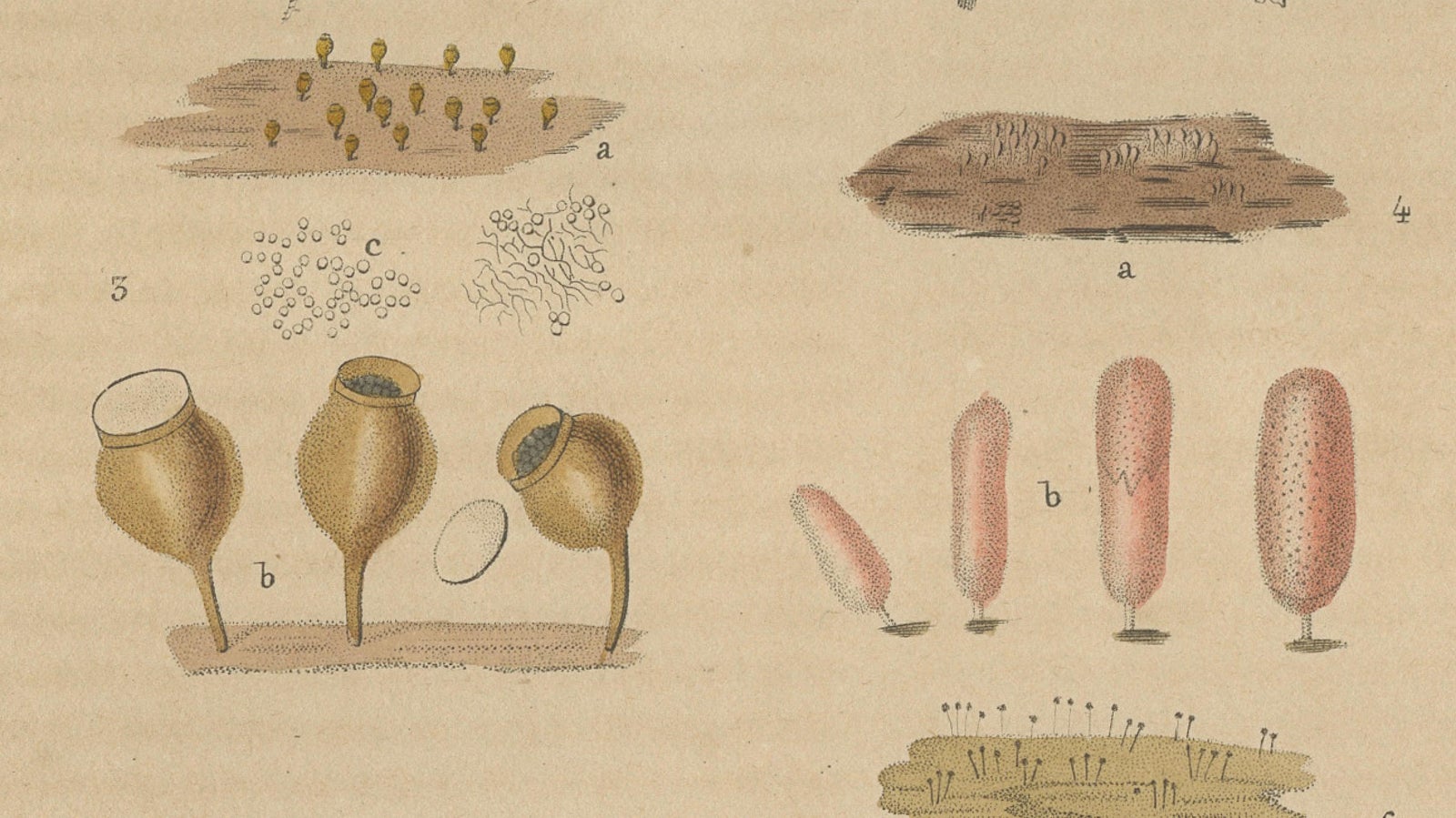
3. **Craterie parfumée** - This might be a type of cup fungus known for emitting a strong scent, indicated by the word "parfumée" which means "scented."
4. **Arcyrie menant** - Possibly an illustration of a slime mold in its fruiting body stage, which can resemble fungi.
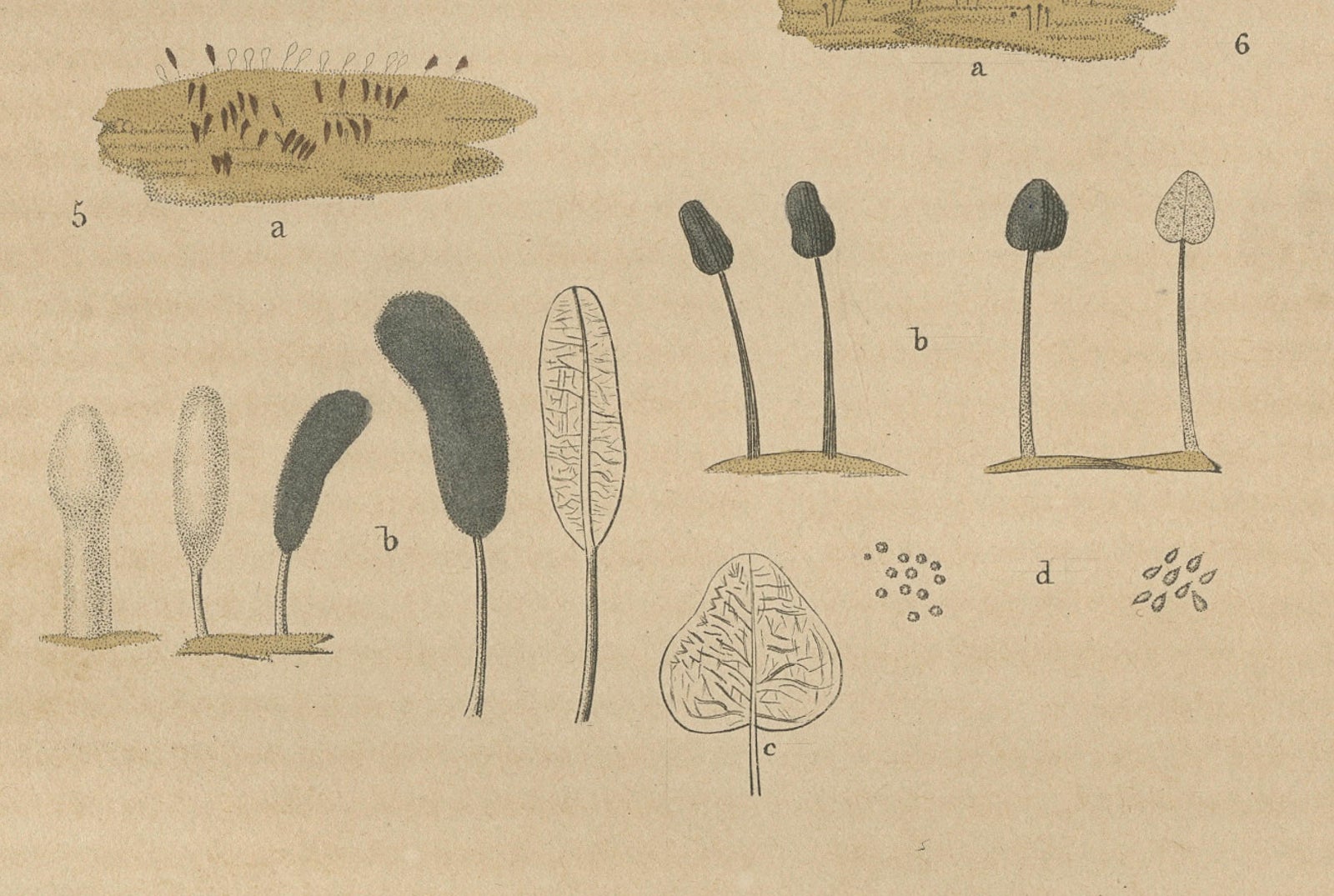
5. **Stemonite leucopode** - This could be another species of slime mold, known for their complex life cycles and varied fruiting bodies.
6. **Ovale** - This could refer to an oval-shaped fungal spore or structure.
The print is part of 'The 'Dictionnaire Classique des Sciences Naturelles', which was intended to document and describe various natural specimens for scientific education in the mid-19th century. The hand-coloring of the print would have been done to add detail and realism to the illustrations.