Close-ups
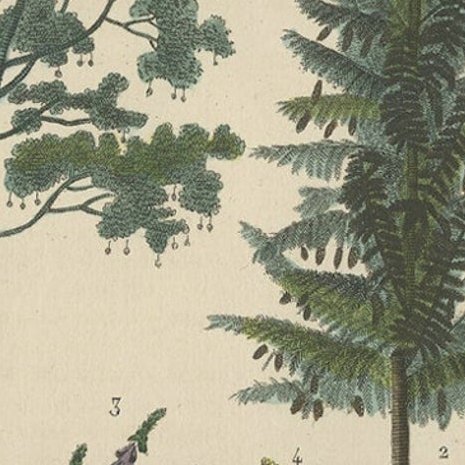
Framed and on the wall


Frame and rooms are illustrations of how the print could look; the description says what is included.
A Heritage of Flora: Original Antique Engraving of Diverse Plant Species, 1845
$215 (£160, €190)
Period original, not a reproduction.
Shipped from the Netherlands, flat, insured and tracked, worldwide. Returns accepted within 14 days.
- Date
- 1845
- Size
- 10.4 × 6.7 in (26.5 × 17 cm)
- Condition
- Good. Minor age-related toning and/or occasional minor defects from handling. Please study scan carefully.
- Period
- Early 19th century
- Section
- Botanical
- Reference
- f_37673732
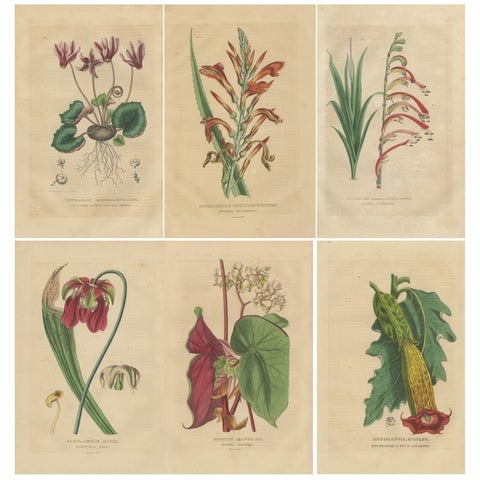
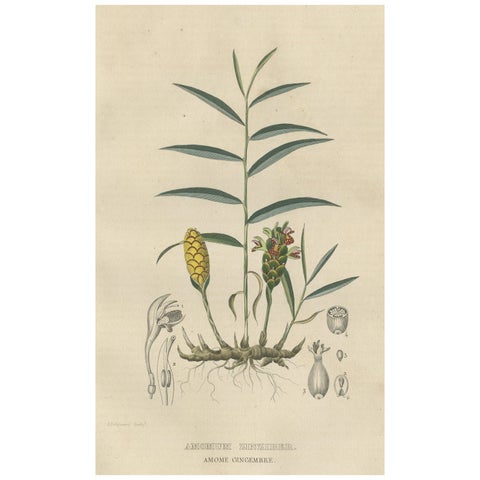
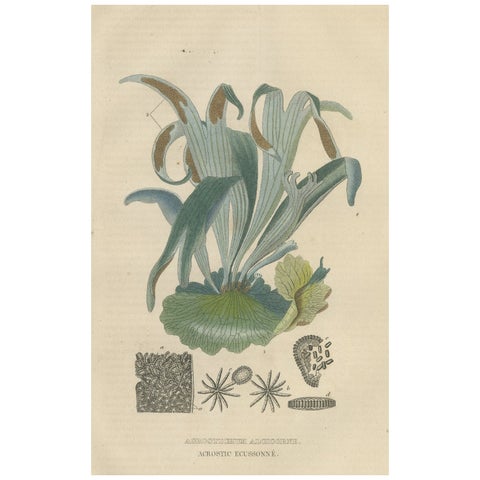
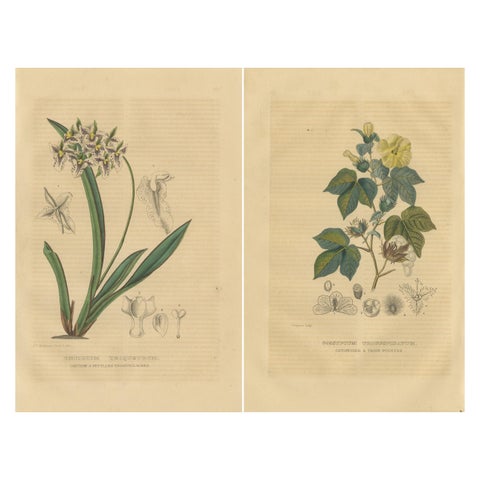
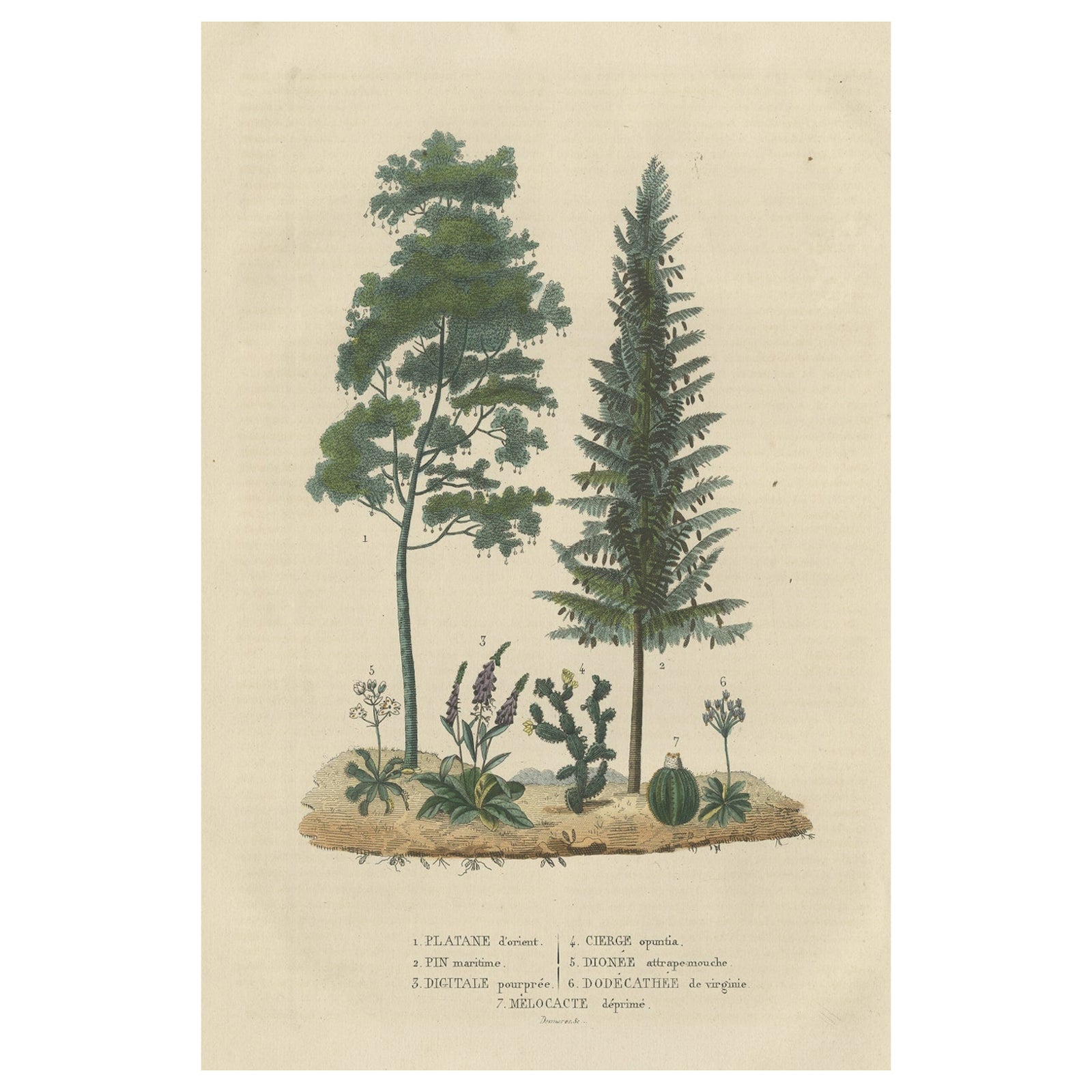
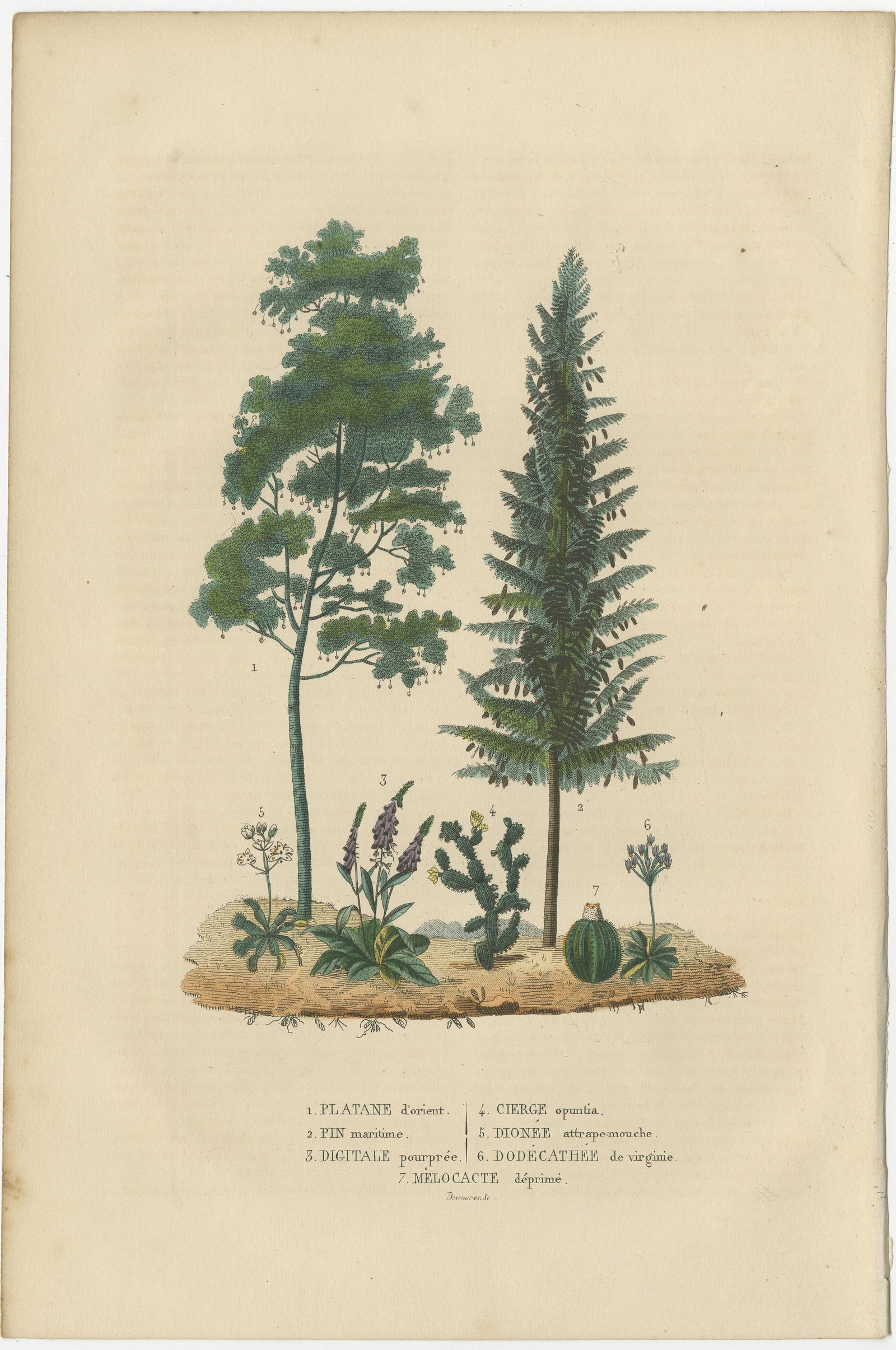
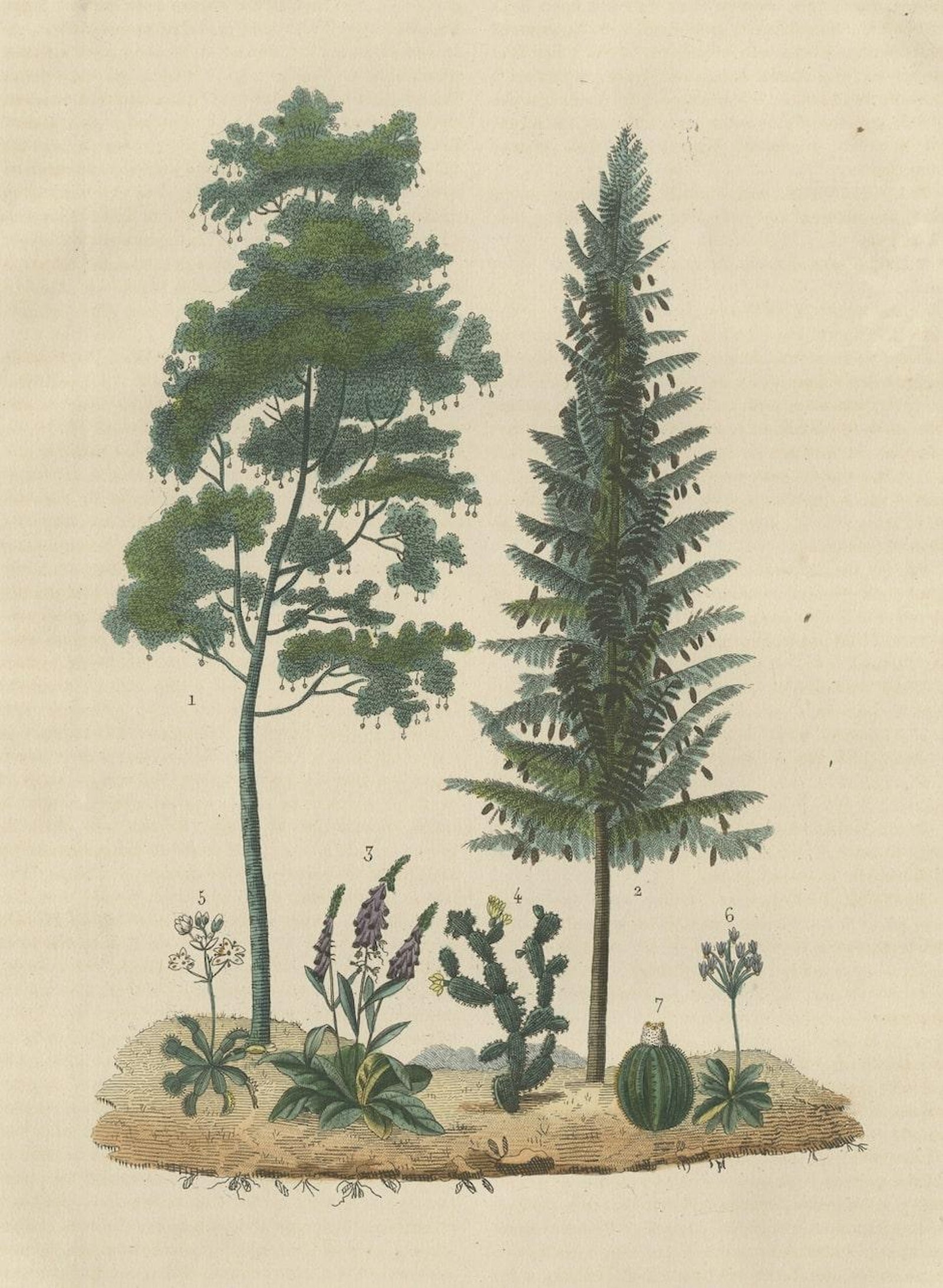
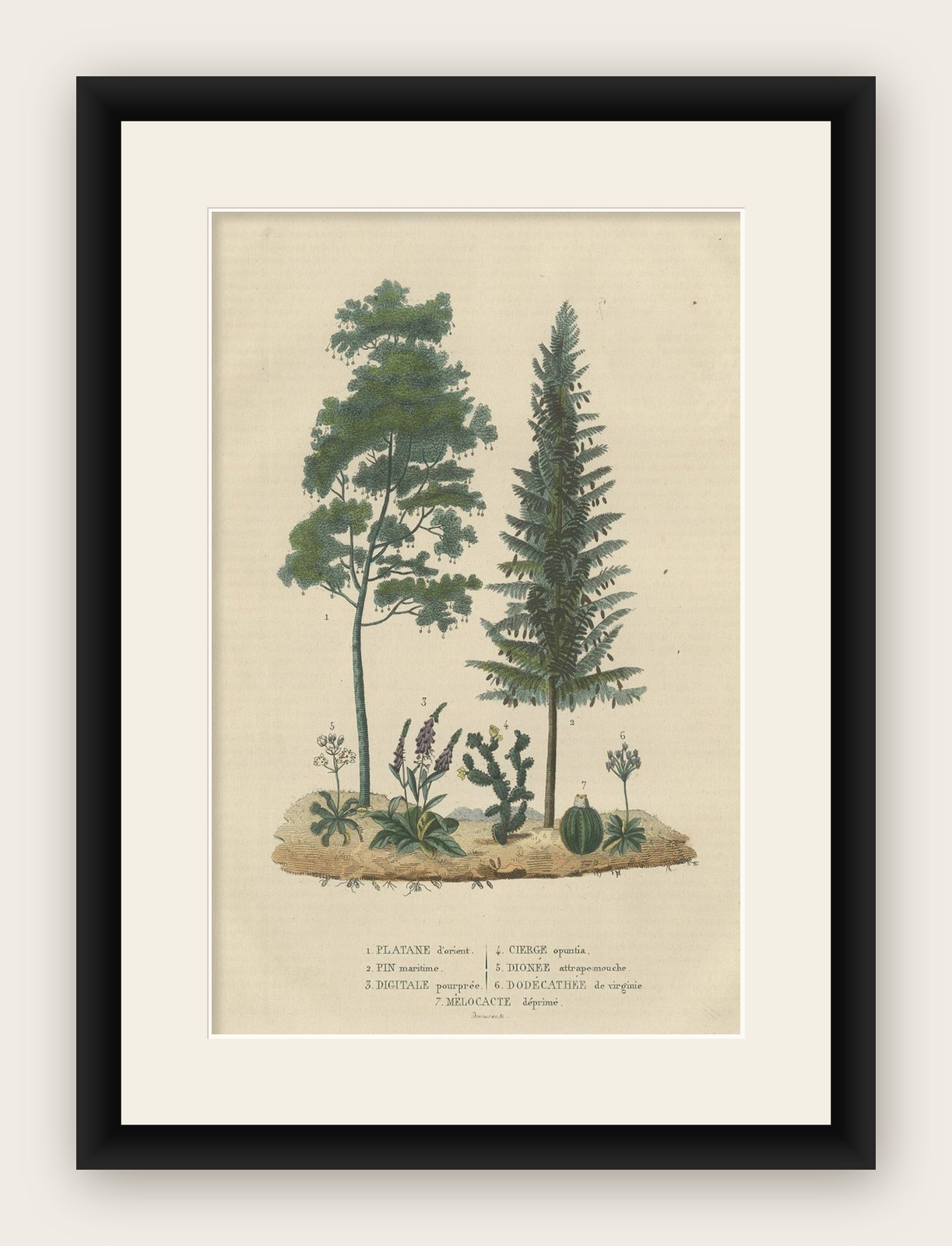
The image is an original hand-colored engraving from The Classical Natural Sciences Dictionary by Drapiez (1845), showcasing various plant species with scientific precision and aesthetic detail. The illustration includes:
1. A "Platane d'orient" or Oriental plane tree, depicted with a robust trunk and a full, leafy canopy.
2. "Pin maritime" or maritime pine, shown as a tall, slender tree with needle-like leaves.
3. "Digitale pourprée" which is the purple foxglove, a plant with tall spikes of purple flowers.
4. "Cierge opuntia," likely referring to a type of cactus, possibly the silver torch or candelabra cactus, with segmented stems and a few yellow flowers.
5. "Dionée attrape-mouche," the Venus flytrap, a carnivorous plant known for its jaw-like leaf traps.
6. "Dodecatheon de virginie," commonly known as shooting stars, with leaves at the base and small, nodding, lavender flowers.
7. "Melocacte déprimé," likely referring to a type of depressed or flattened melon cactus with a single, prominent flower on top.
At the bottom right, the word "Drevet" is visible, potentially the engraver's signature. The plants are numbered, and these numbers correspond to the labels at the bottom, providing a reference for readers to identify and learn about each species. The delicate hand-coloring brings the plants to life, highlighting the natural beauty and diversity of the species depicted. The style and detail suggest that this engraving was both a scientific document and a work of art, typical of the period's approach to natural history documentation.