Close-ups
Framed and on the wall
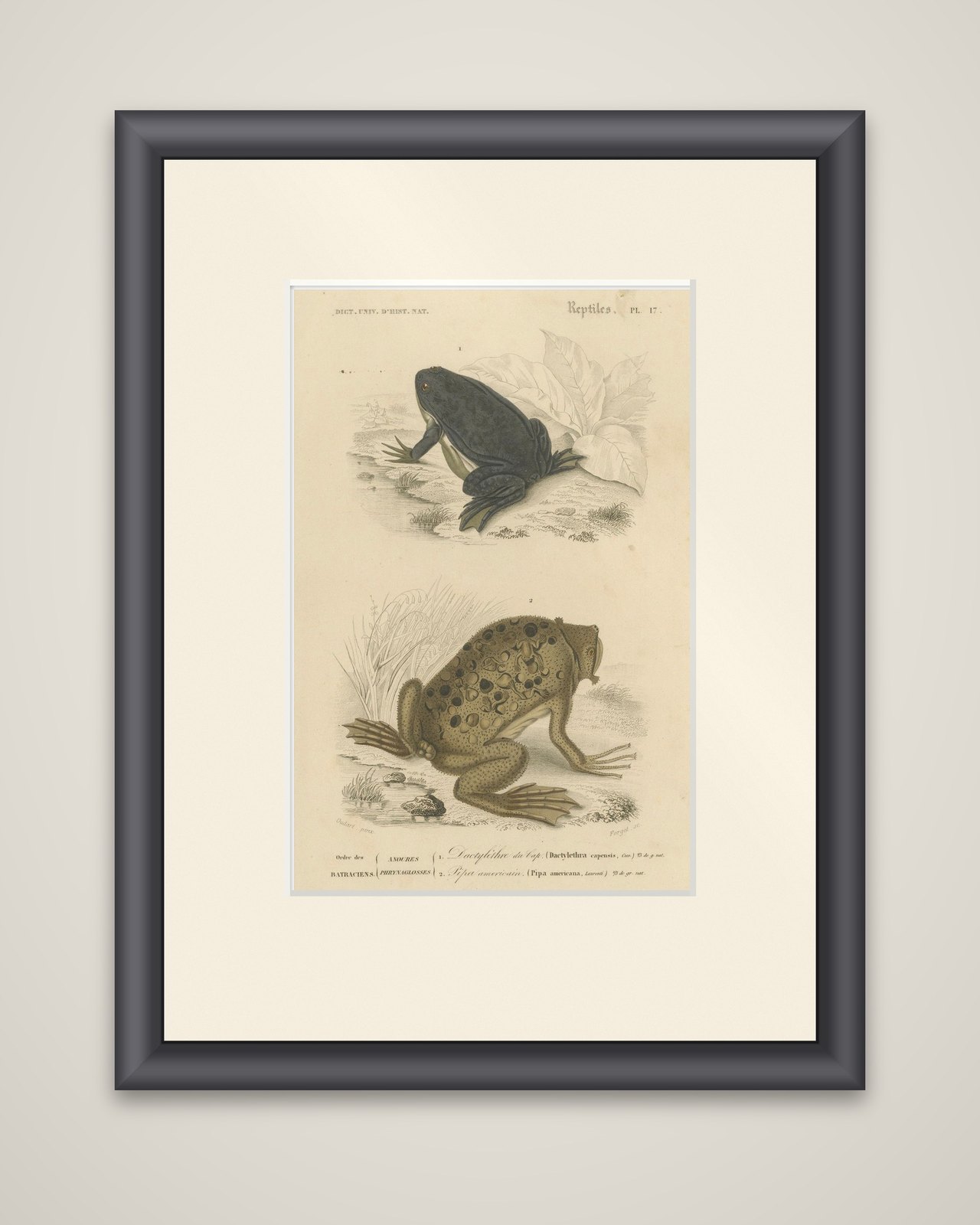


Frame and rooms are illustrations of how the print could look; the description says what is included.
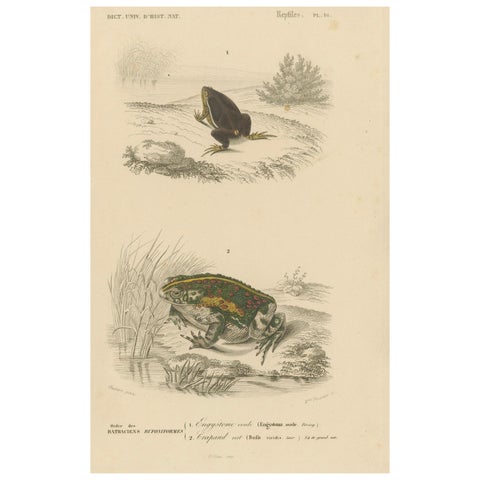
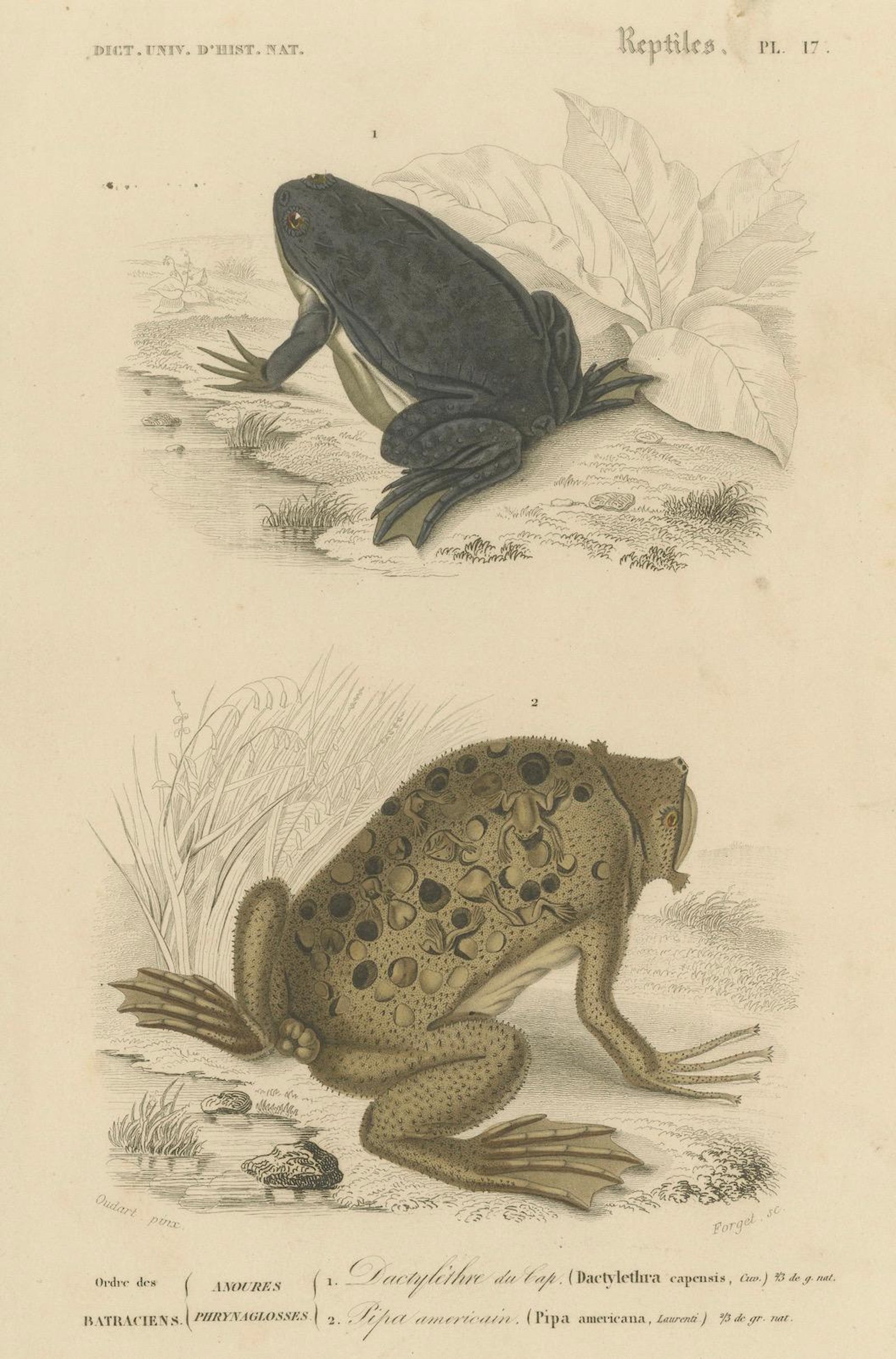
Frog Print of Cape Dactylethra and Surinam Toad, c.1850, by Orbigny
£160 ($215, €190)
Period original, not a reproduction.
Shipped from the Netherlands, flat, insured and tracked, worldwide. Returns accepted within 14 days.
- Date
- 1850
- Size
- 9.7 × 6.3 in (24.7 × 16 cm)
- Condition
- Good. Light foxing near upper right and left margins, but central image remains clean and strong. Vivid hand coloring and fine line detail intact. No tears or repairs.
- Period
- Late 19th century
- Section
- Reptiles and amphibians
- Reference
- f_45338482
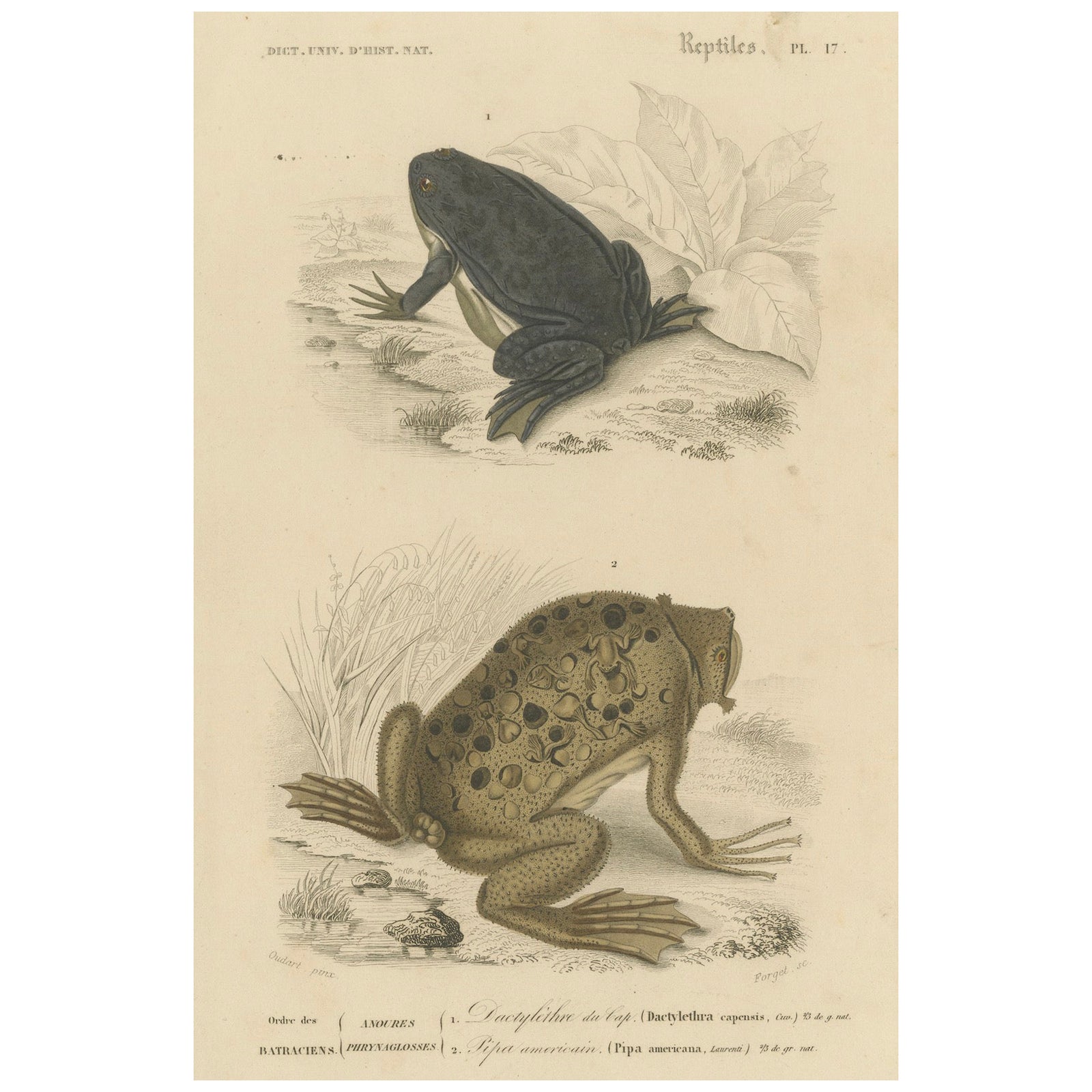
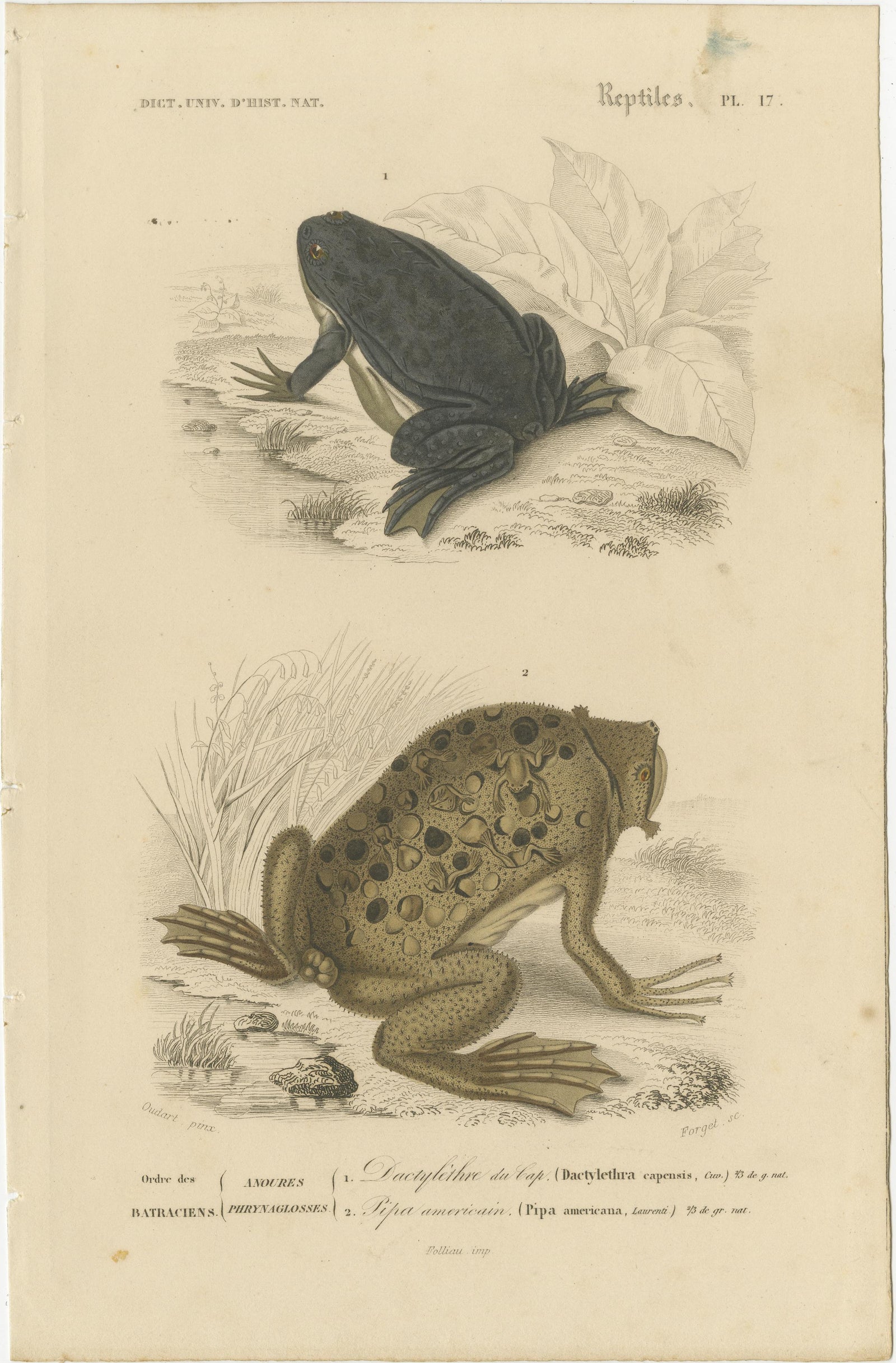
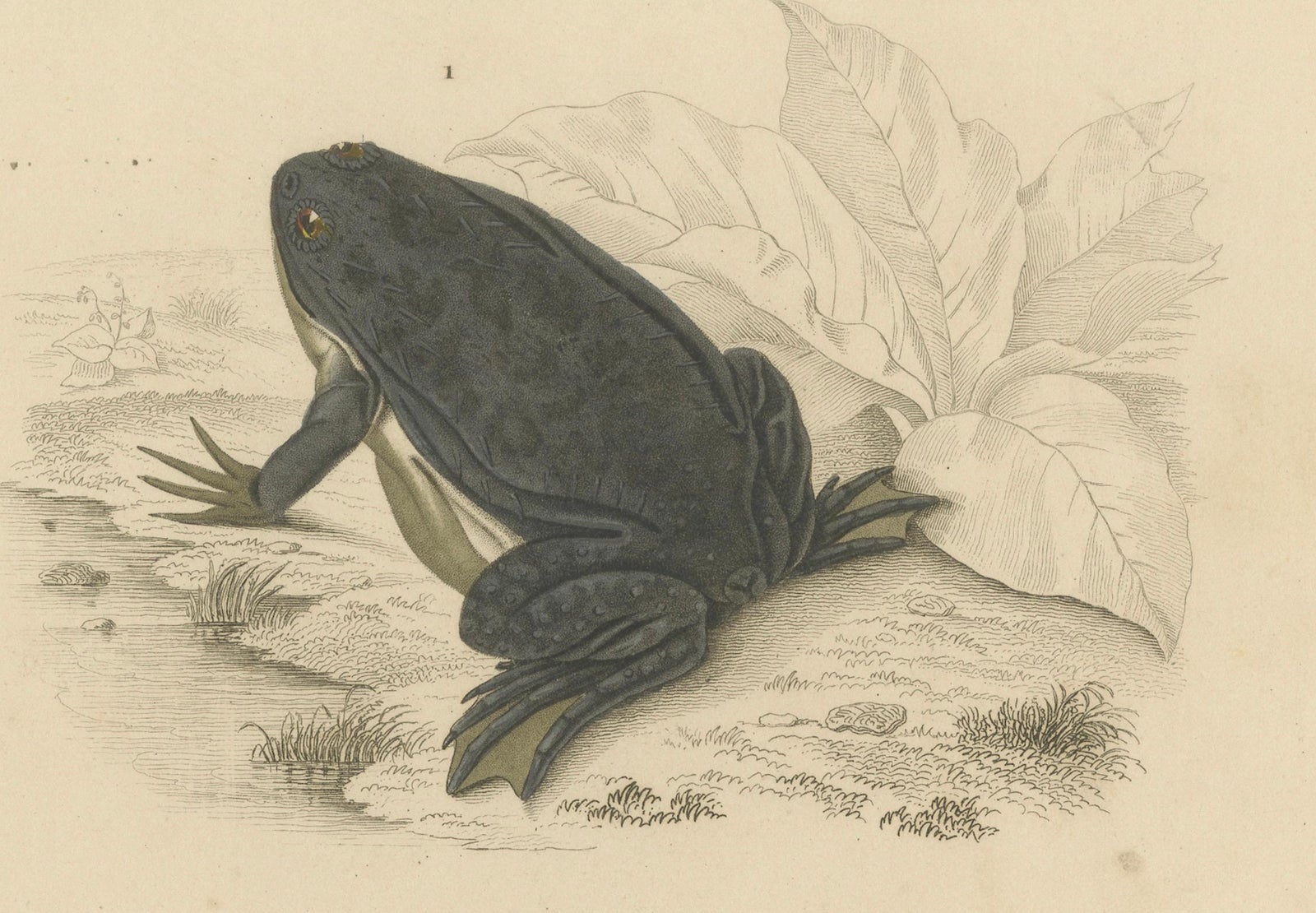
The Surinam toad and an African clawed frog on one plate, "Reptiles Pl. 17," an original hand-colored engraving from the Dictionnaire universel d'histoire naturelle, edited by Charles d'Orbigny and published in Paris around 1850. The plate was drawn by Oudart and engraved by Forget.
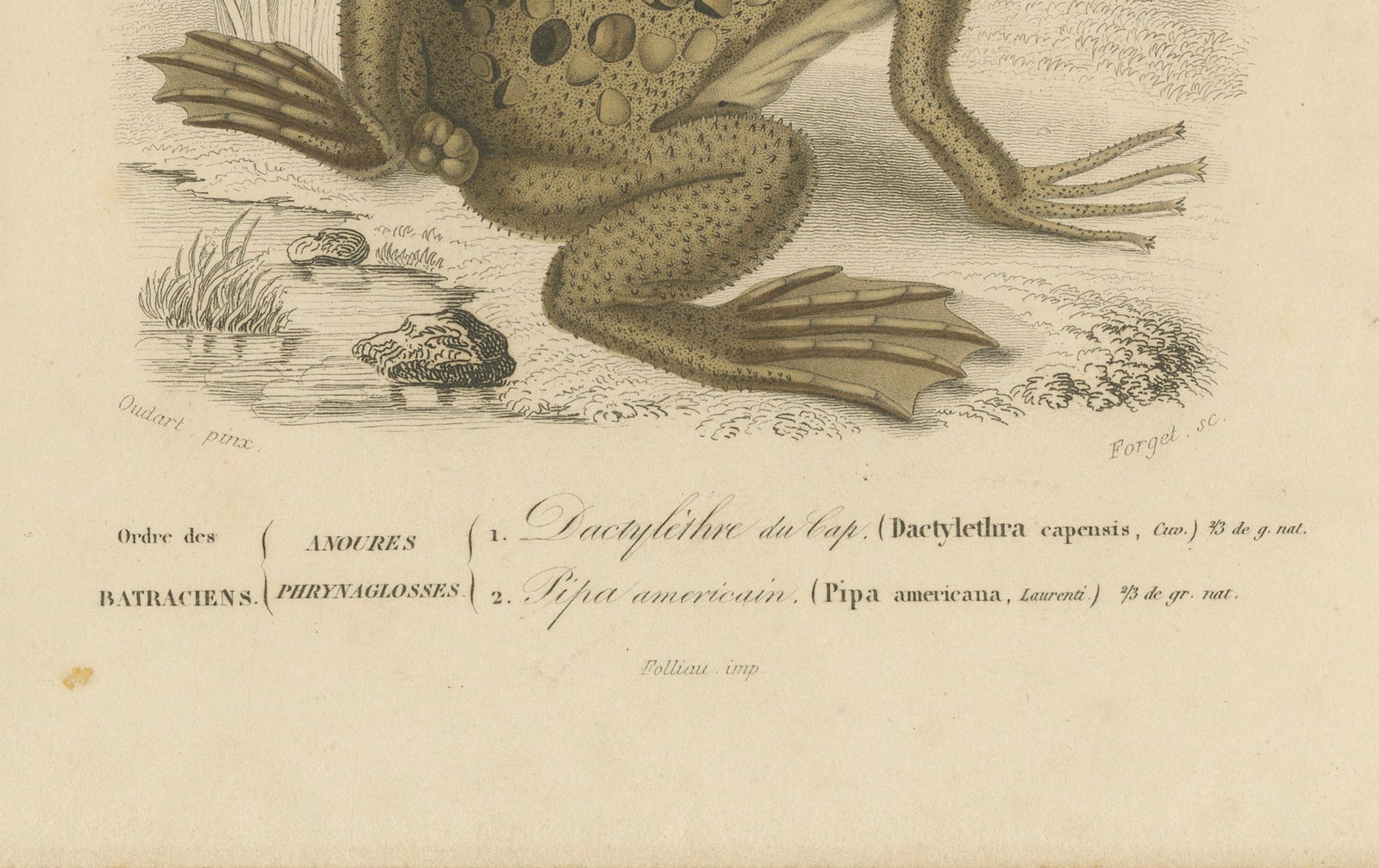
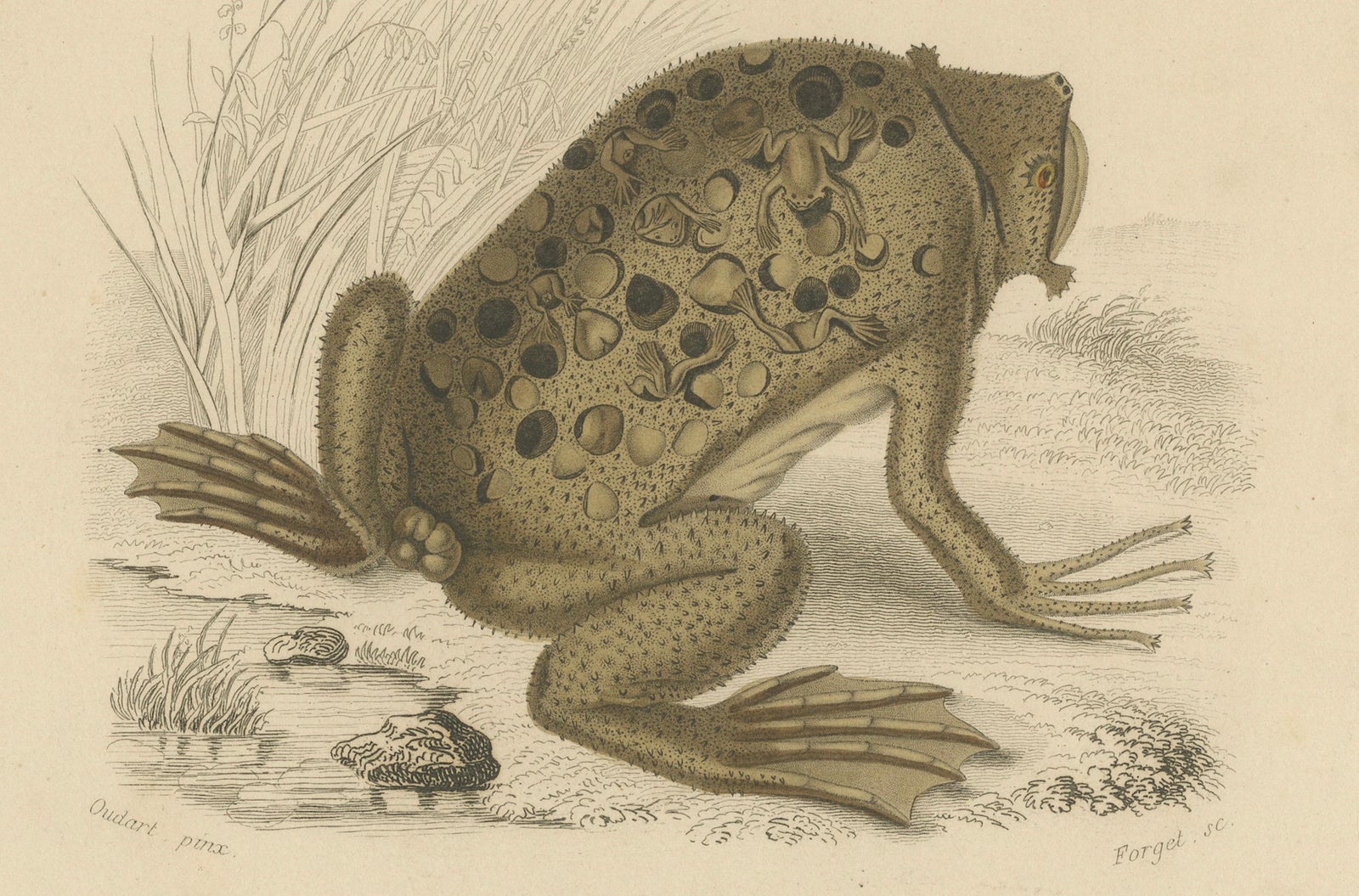
The upper figure is "Dactylèthre du Cap (Dactylethra capensis)," a dark gray-blue frog crouched at the edge of a pool, with a large pale leaf behind it. The lower figure is "Pipa americana," the Surinam toad, seen from the side and slightly above, a flat, broad-bodied animal in ochre and brown, its back covered with a pattern of dark pits and its forefeet ending in fine, fringed fingers; it sits in reeds at the water's edge. Both are named at the foot of the sheet under the heading "Ordre des Batraciens," with the groups Anoures and Phrynaglosses indicated.
The Surinam toad, now called Pipa pipa, is a South American species whose females carry their eggs in pockets in the skin of the back. The Cape frog in the upper figure is African, so the sheet combines a New World and an Old World amphibian.