

Floral Elegance of the Americas: A Botanical Print of a Spigelia Species, c.1821
$270 (£205, €240)
Period original, not a reproduction.
Shipped from the Netherlands, flat, insured and tracked, worldwide. Returns accepted within 14 days.
- Date
- 1821
- Size
- 11.9 × 8.8 in (30.3 × 22.3 cm)
- Condition
- Fair. Age-related toning. Minor wear, blank verso. Please study image carefully.
- Period
- Early 19th century
- Section
- Botanical
- Reference
- f_38353552
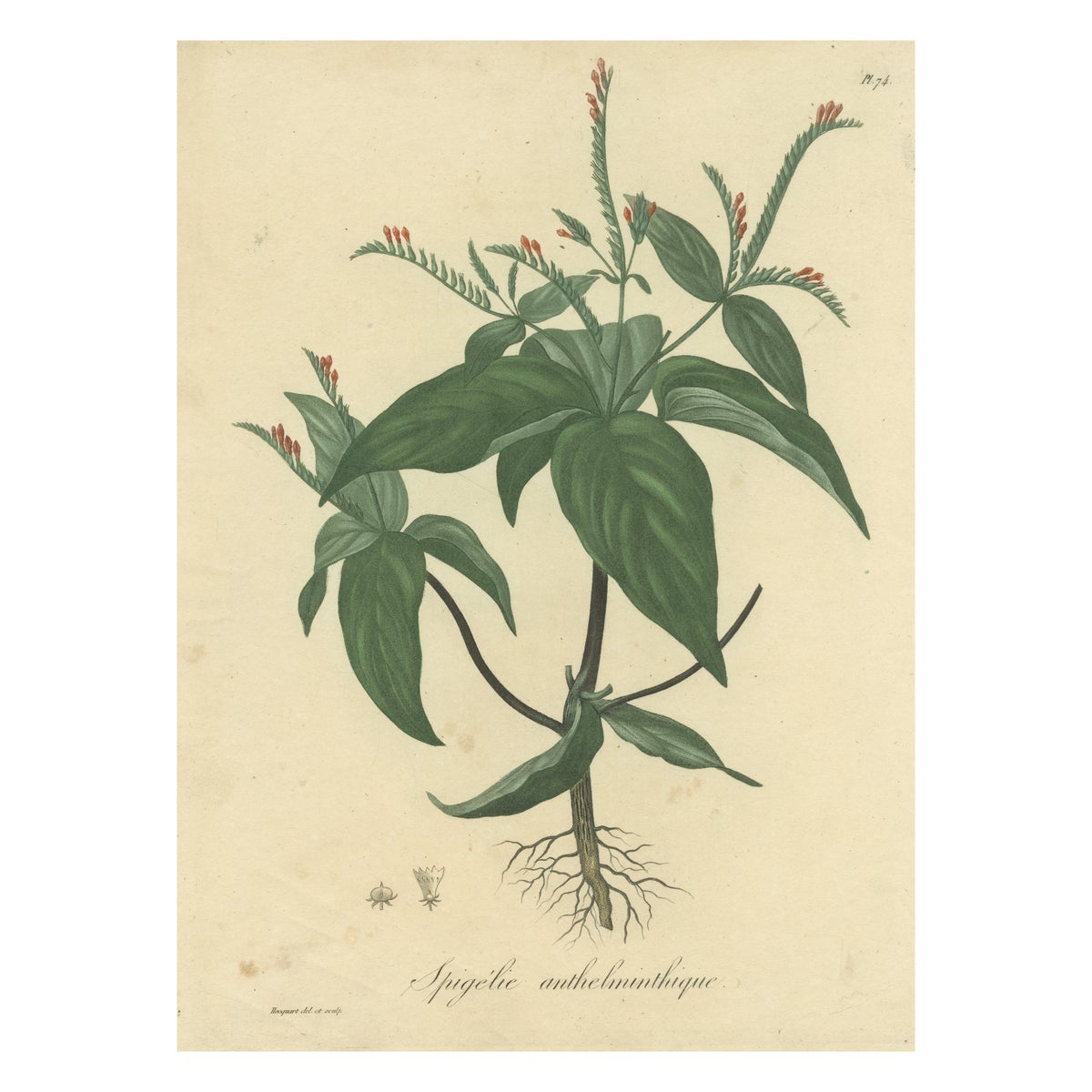
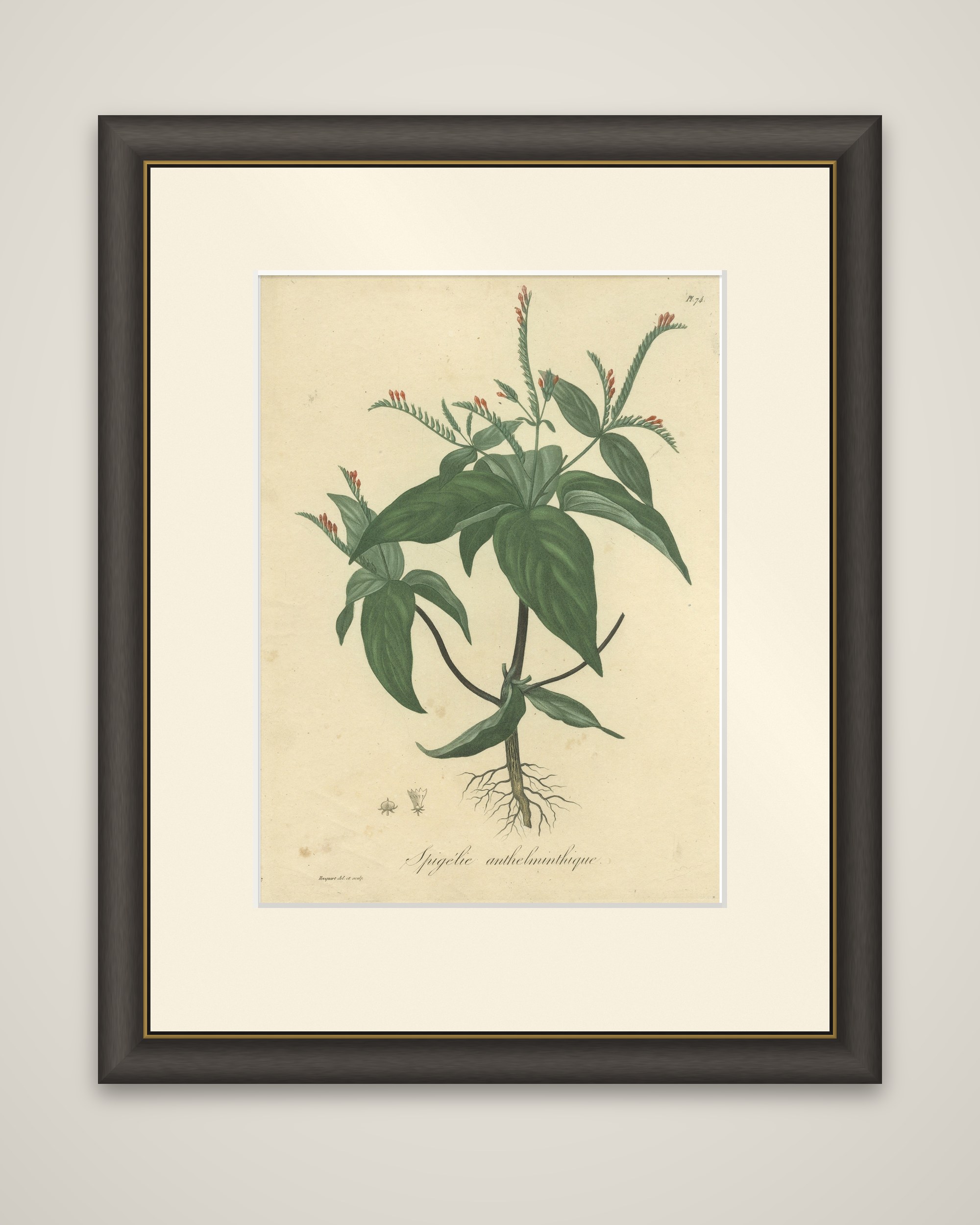
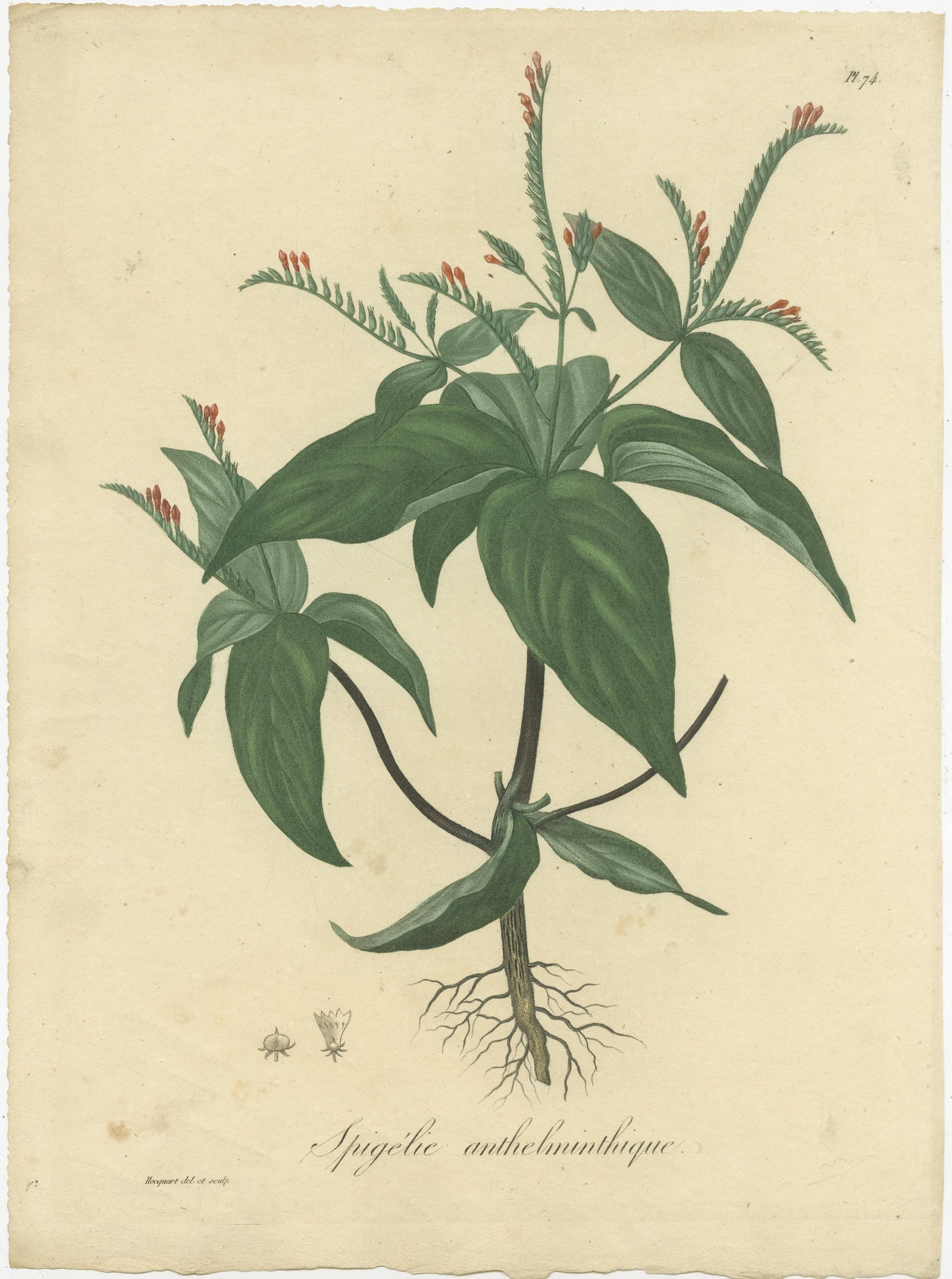
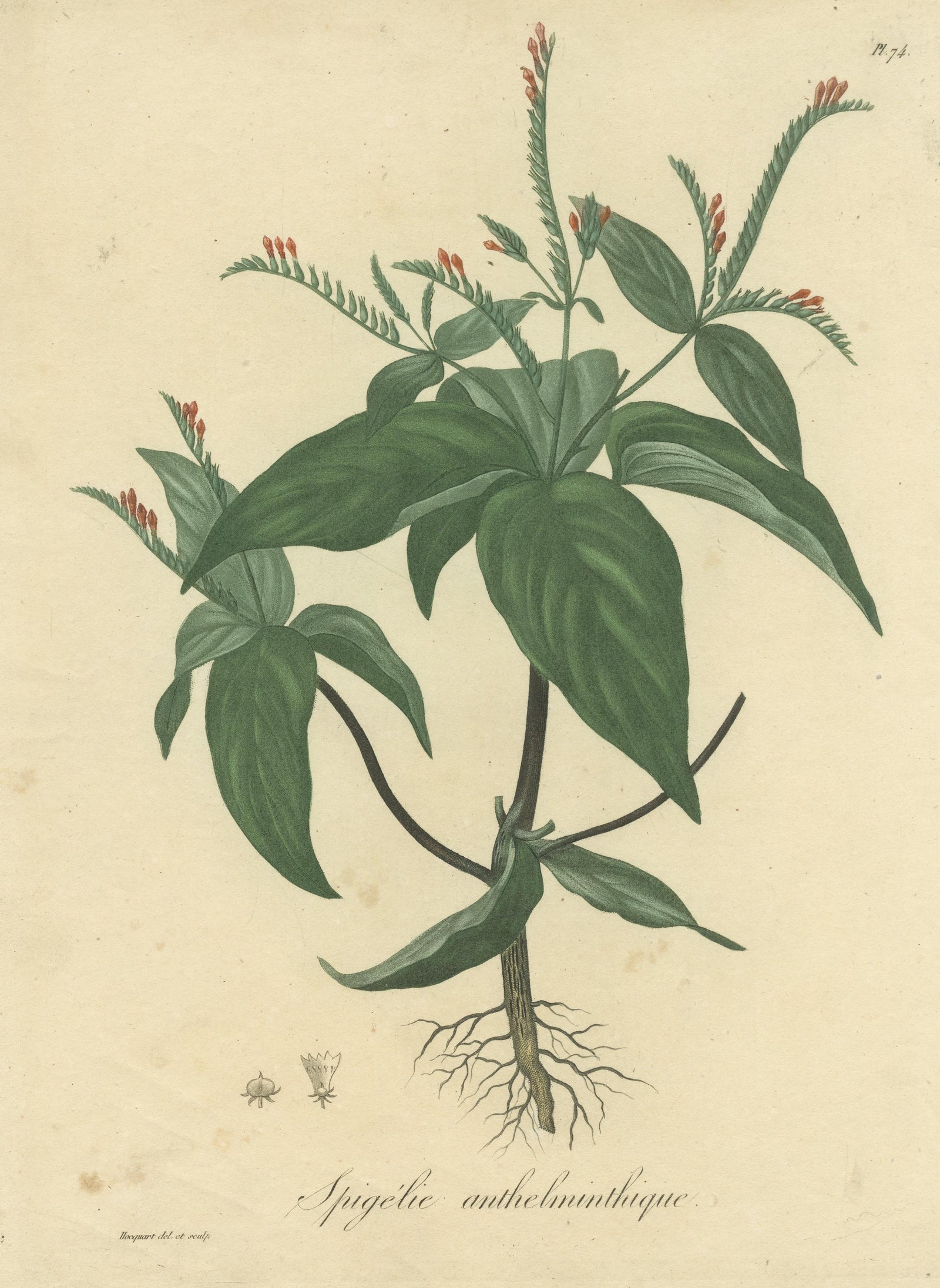
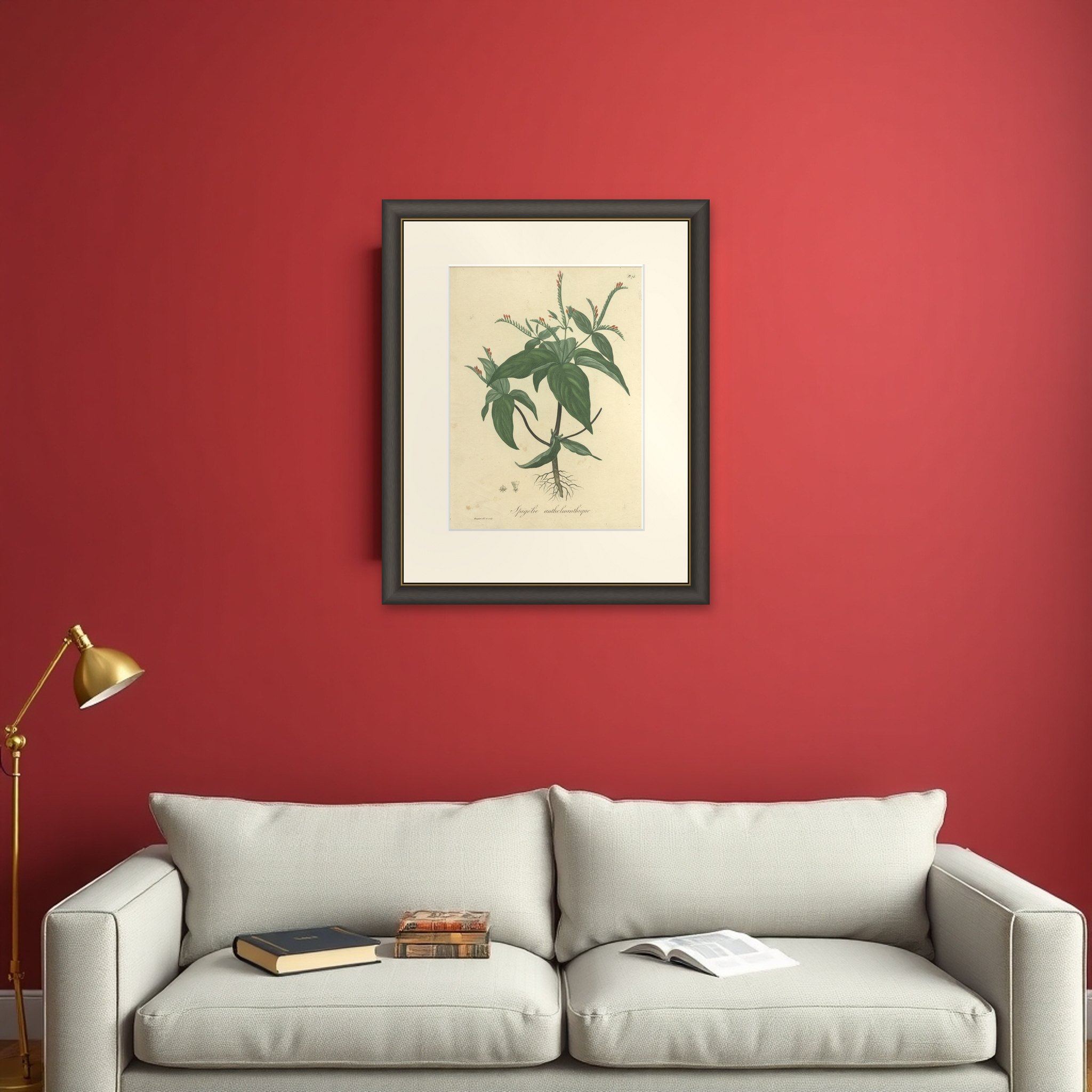
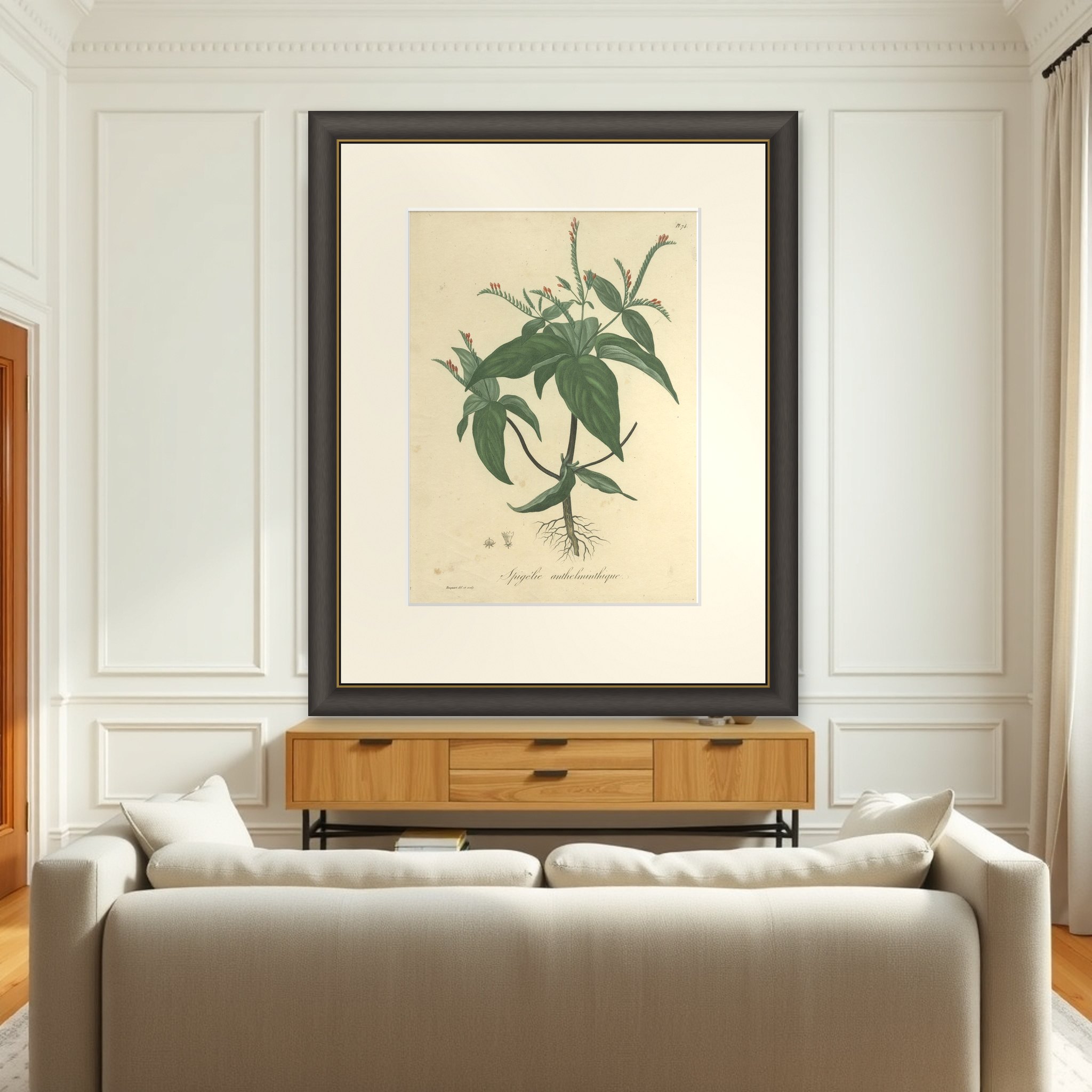
Spigelia anthelmintica, the pinkroot, a hand-colored copper engraving titled "Spigélie anthelminthique", from Phytographie médicale by Joseph Roques, engraved by Édouard Auguste Patrice Hocquart and published about 1821. The plate number appears at the upper right of the sheet.
A single leafy plant fills the sheet, drawn with its root system exposed at the foot. Pairs of broad, pointed green leaves are set around an upright stem, and slender spikes of small red flowers curve out from the tops, opening to pale green at the base of each spike. Two small enlarged details of a flower and a seed capsule sit at the lower left, and the botanical name is engraved in script below.
The genus Spigelia, of the family Loganiaceae, grows in the warmer parts of the Americas, and species were used in European medicine as a worm remedy, hence the name anthelmintic. Roques's book, issued in 1821 and 1824, described medicinal plants and was illustrated with color plates by Hocquart.