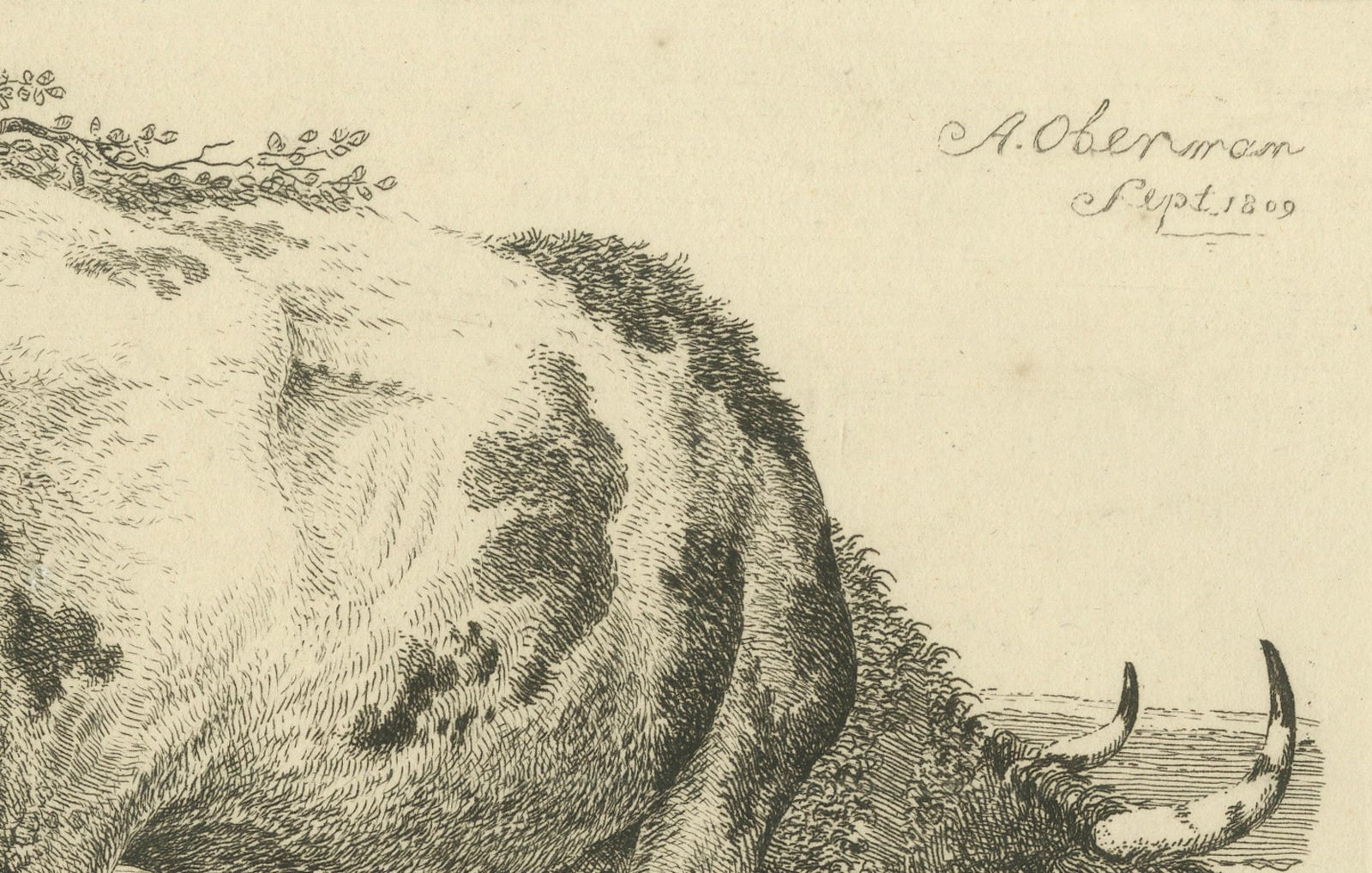
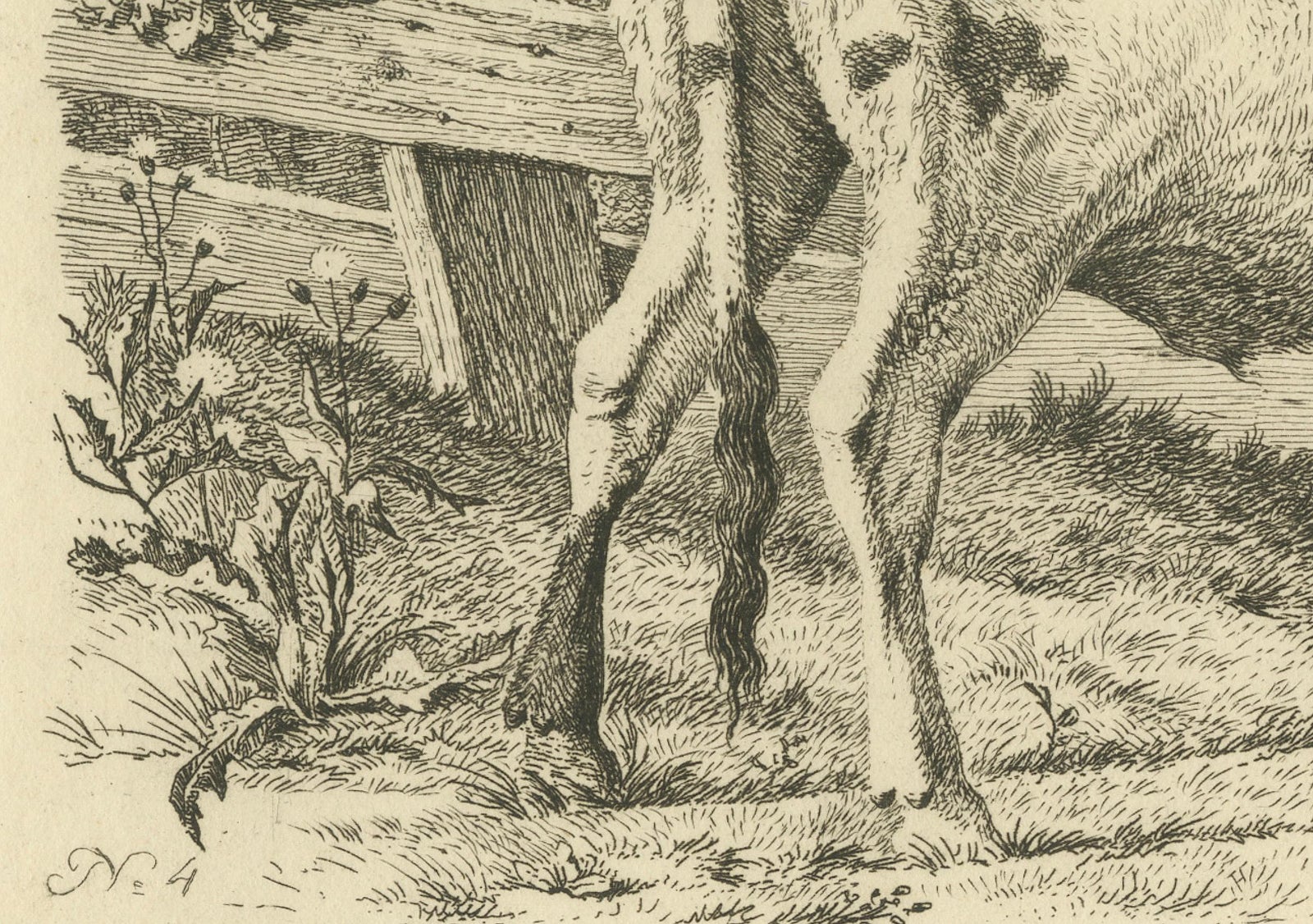
Close-ups
Framed and on the wall
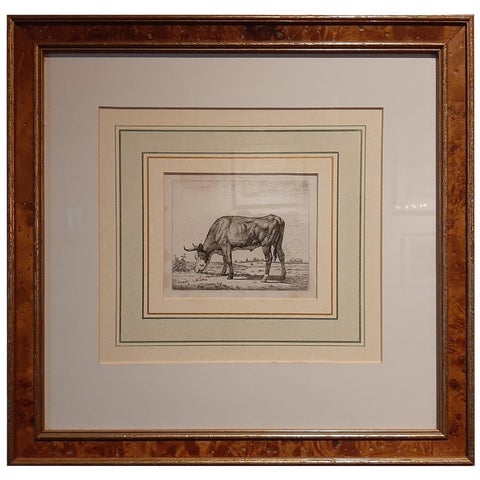
Frame and rooms are illustrations of how the print could look; the description says what is included.
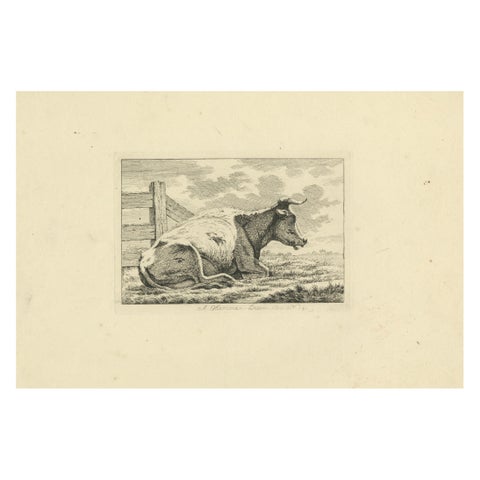
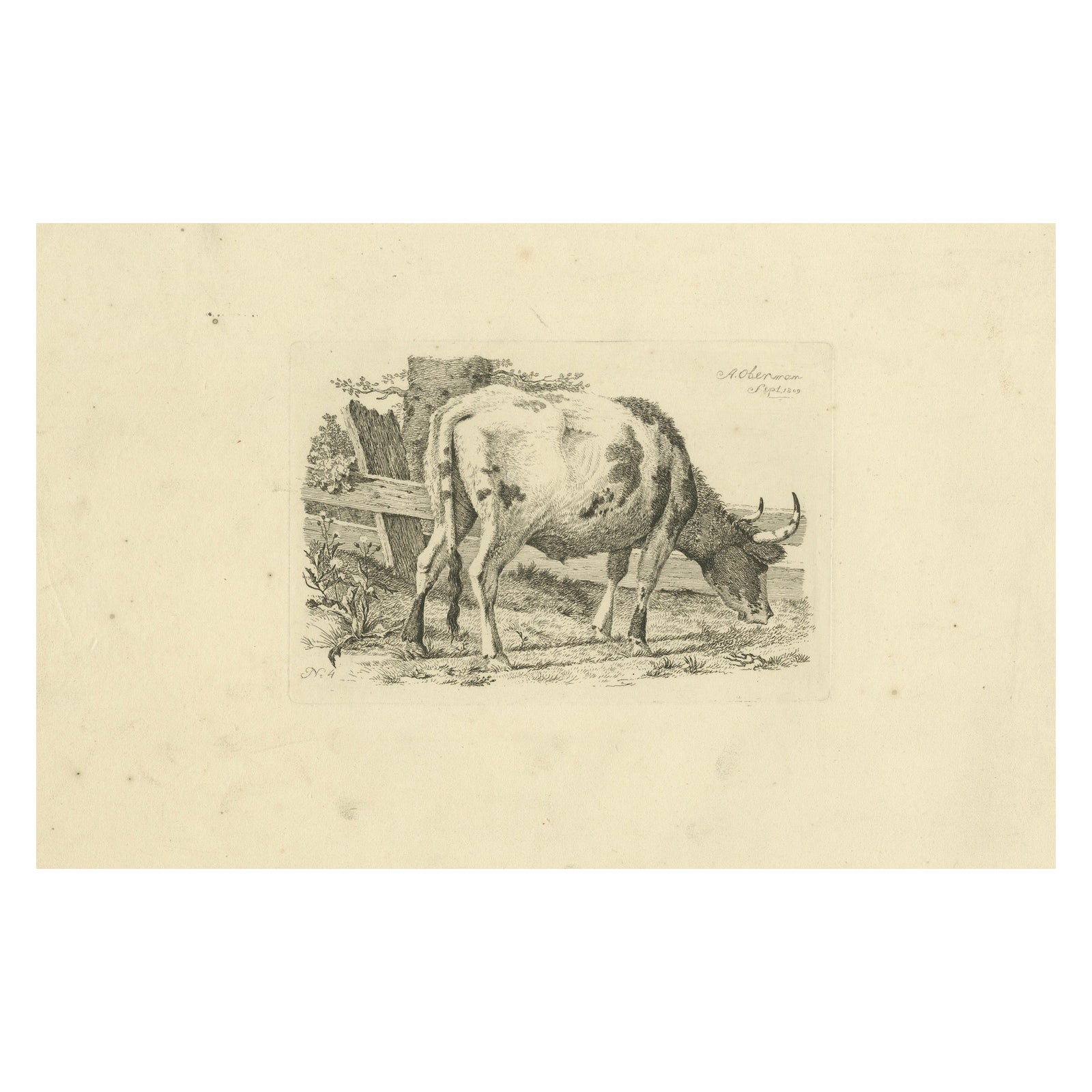
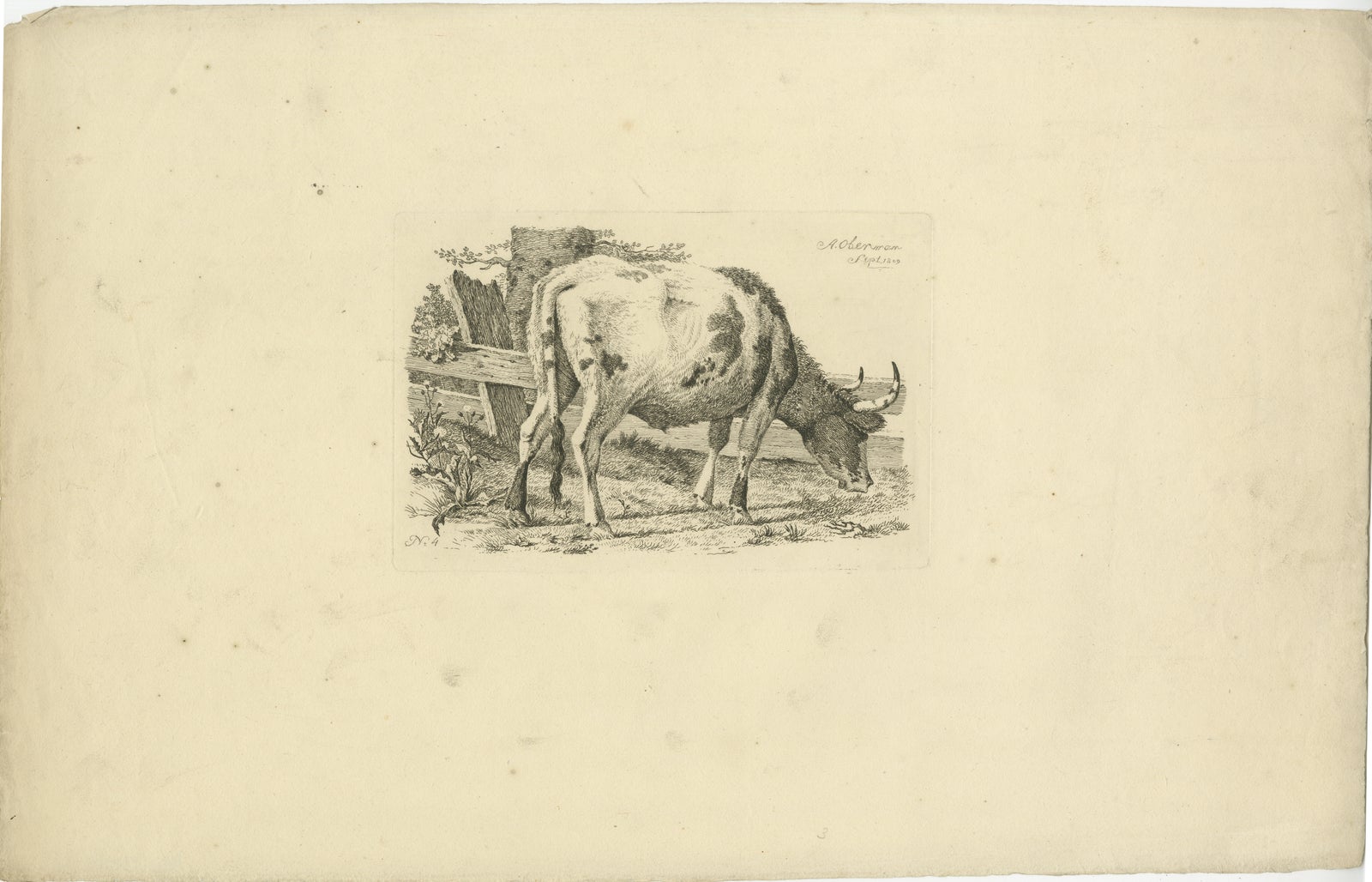
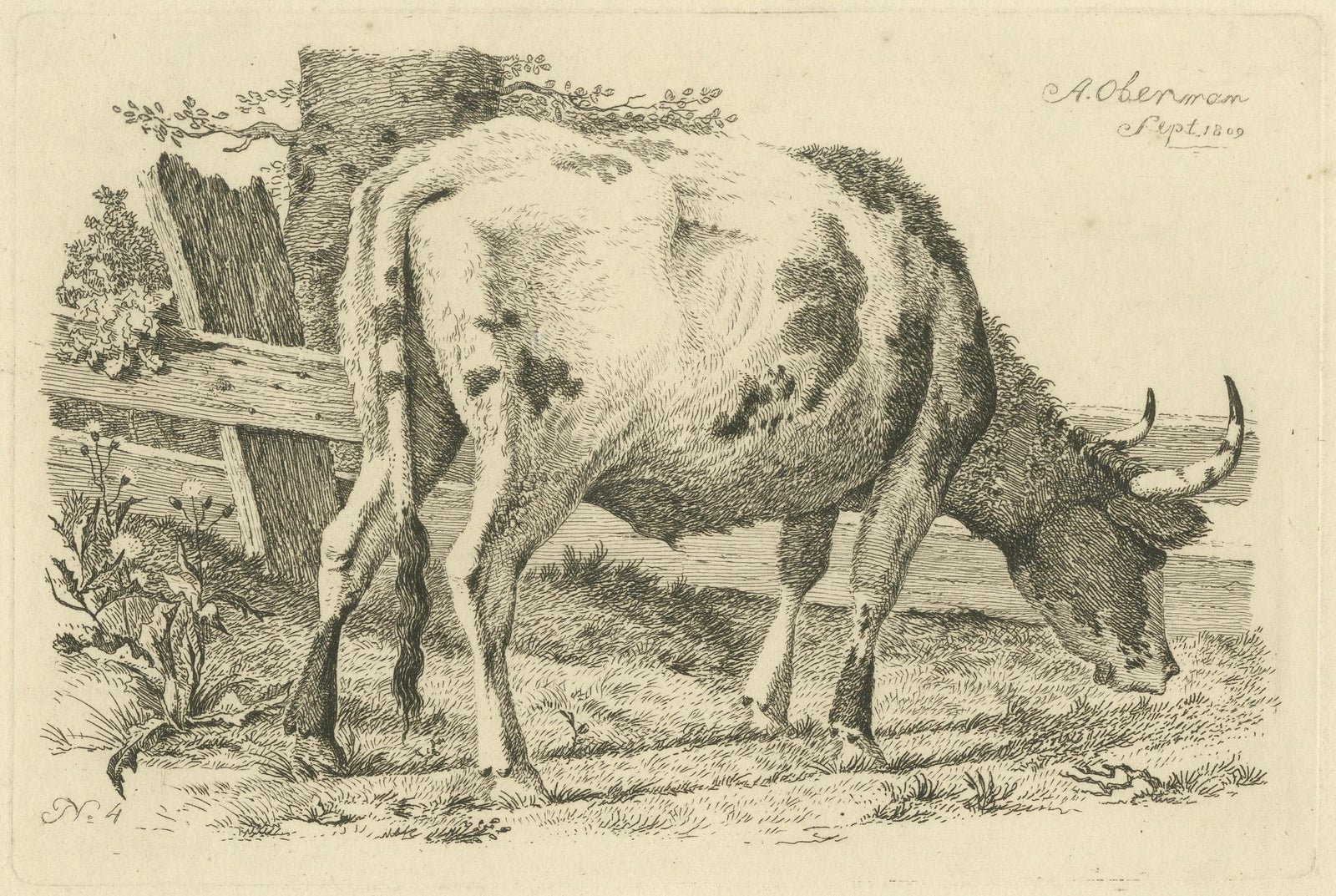
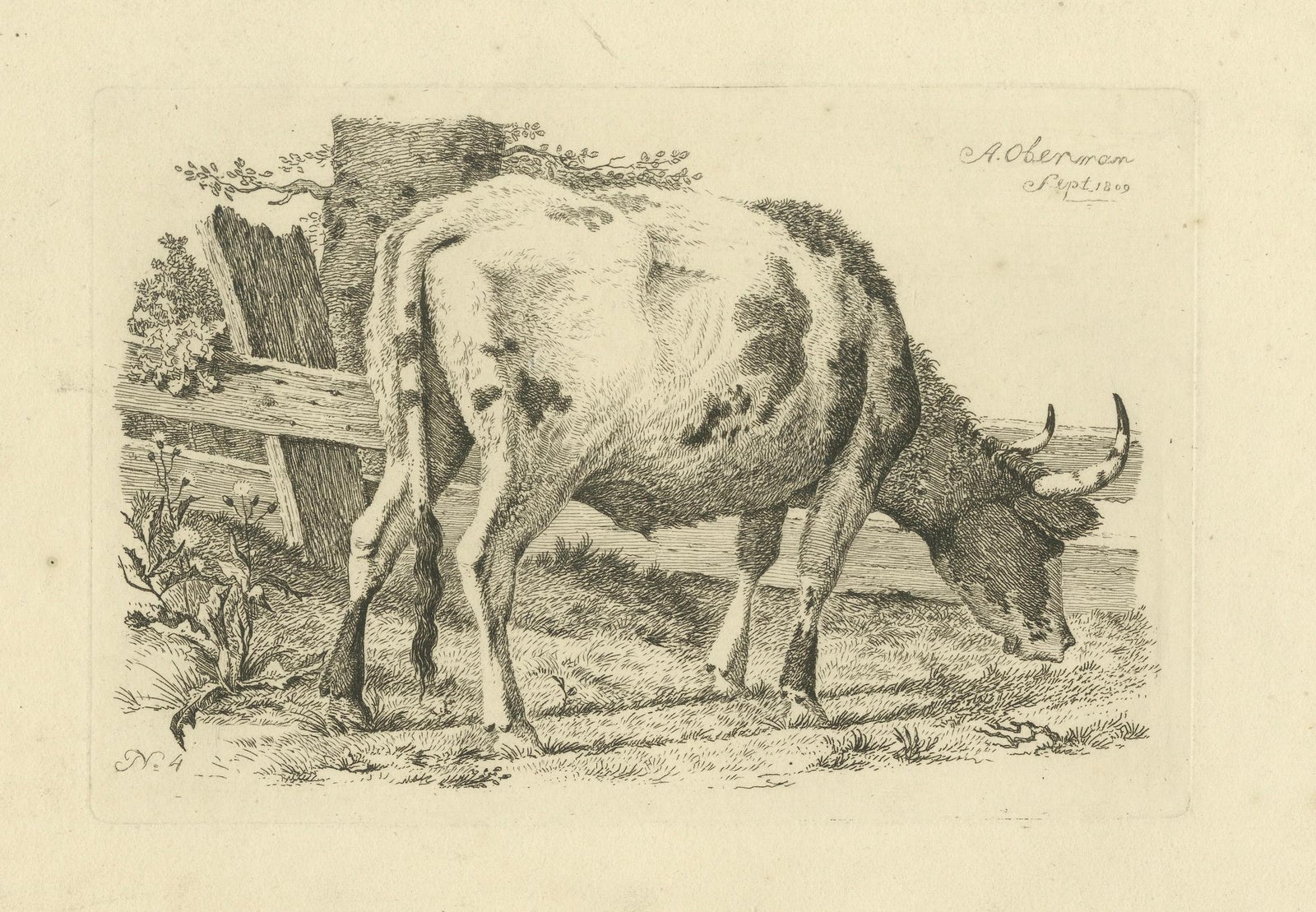
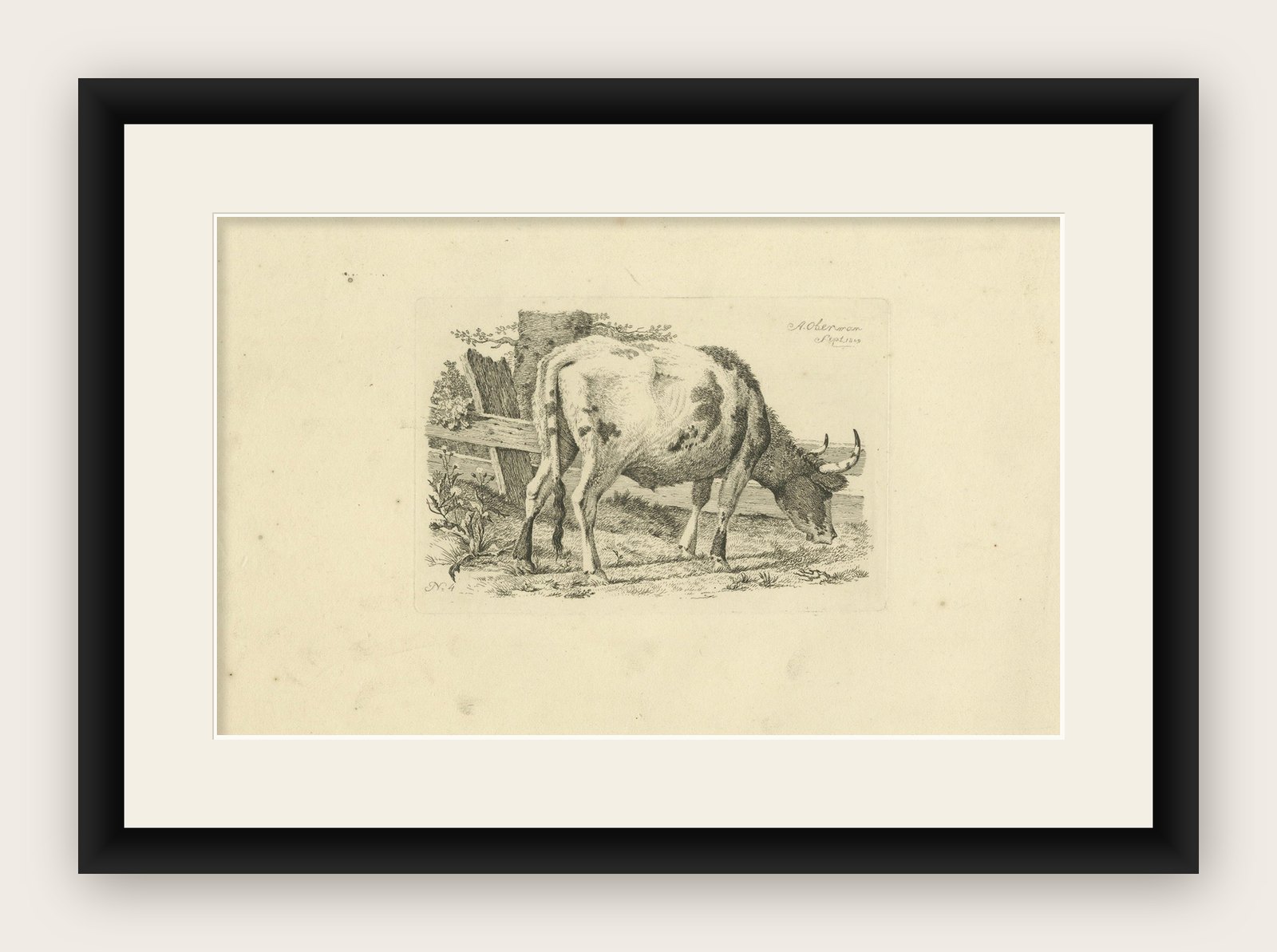
Etching of Grazing Cow by Fence: Farm Scene, Produced by A.Oberman in 1809
€470 ($525, £400, €470)
Period original, not a reproduction.
Shipped from the Netherlands, flat, insured and tracked, worldwide. Returns accepted within 14 days.
- Date
- 1809
- Size
- 10.6 × 16.9 in (27 × 43 cm)
- Condition
- Good. Good, with some signs of aging, including one tiny pinhole, hardly visible and minor spots, which are typical for prints of this age. The edges of the paper are mostly intact with some minor wear and small tears. Study the images carefully.
- Period
- Early 19th century
- Section
- Mammals
- Reference
- f_40593292
What the condition grades mean
- Excellent
- Bright and clean, with no faults worth mentioning.
- Very good
- Only light signs of age, such as faint toning.
- Good
- Normal signs of age for a sheet of this period: toning, some foxing, small marks or neat old repairs.
- Fair
- Clear faults such as staining, tears or repairs, priced to match.
Every fault we see is written in the condition note, and the whole sheet is shown uncropped in the photos.
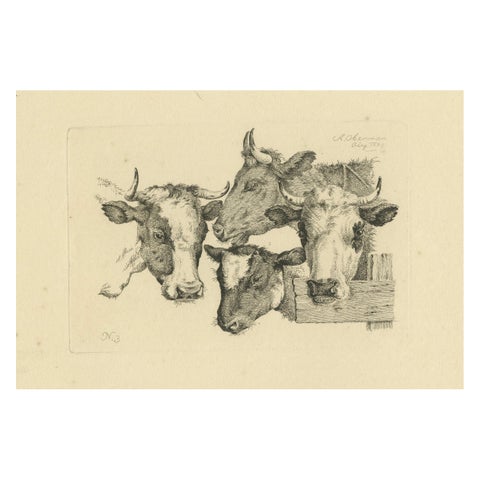
This print by Anthony Oberman depicts a single cow grazing near a fence.
Here is a detailed description of the etching:
Composition:
1. Grazing Cow:
- The central subject of the print is a cow standing and grazing in a pastoral setting. The cow's body is turned slightly away from the viewer, showcasing its side profile with its head lowered to the ground as it grazes.
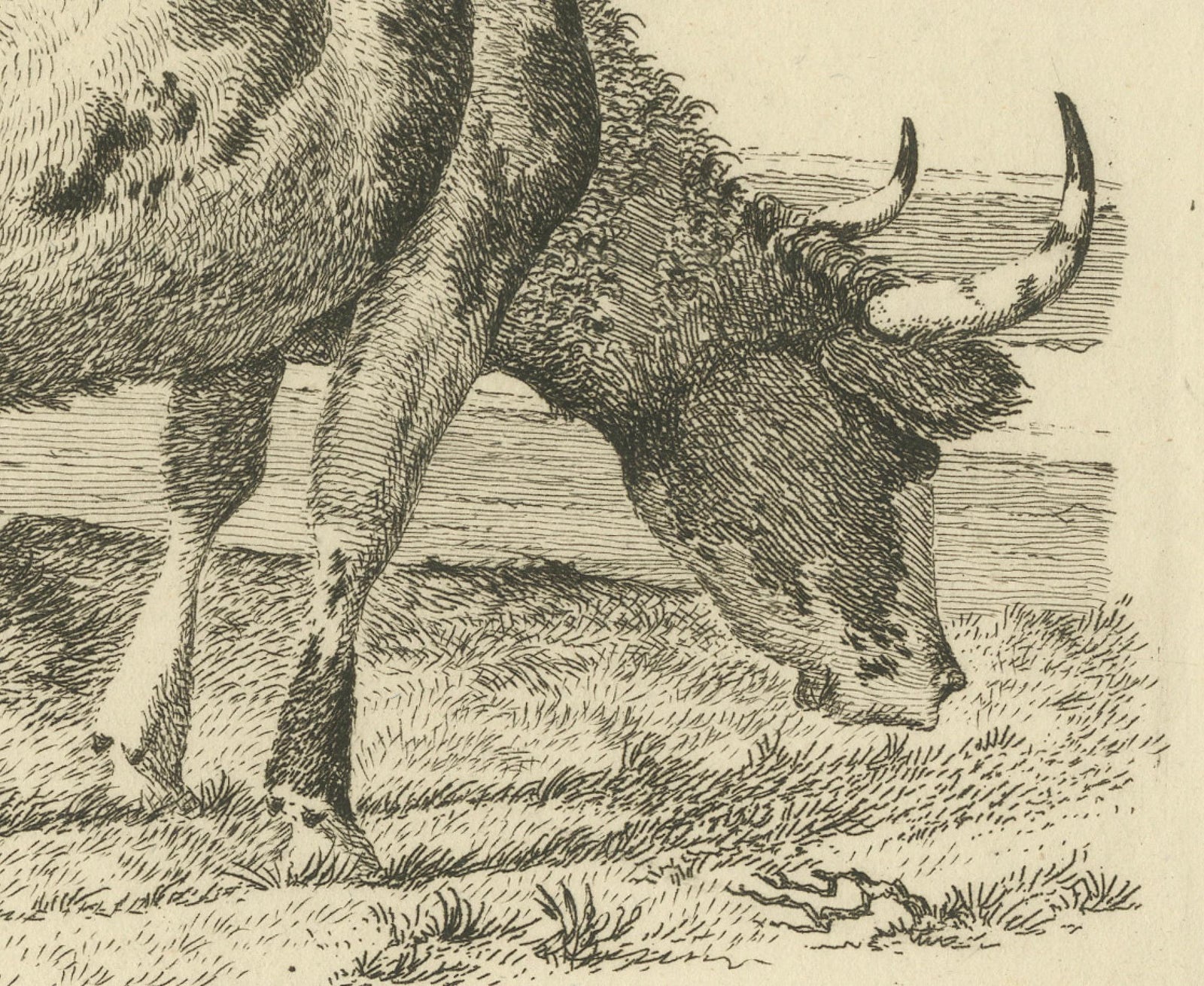
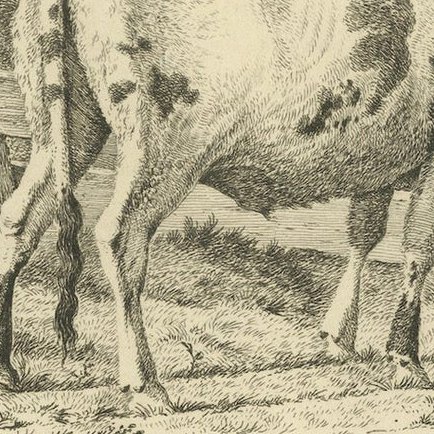
- The cow is detailed with spots and visible musculature, emphasizing Oberman's skill in capturing the natural anatomy and texture of the animal.
2. Background Elements:
- The cow stands near a rustic wooden fence that runs diagonally across the scene, creating a sense of depth and perspective.
- There are some plants and foliage near the fence, adding to the naturalistic setting of the print. The background features a simple, gently rolling landscape with minimal detail, keeping the focus on the cow.
Artistic Elements:
- **Technique**: The etching showcases Oberman's fine line work and attention to detail, particularly in the texture of the cow's coat and the structure of the fence. The use of shading adds depth and dimension to the scene.
- **Composition**: The composition is balanced, with the cow positioned slightly off-center to the right, allowing the fence and foliage to create a harmonious background.
- **Background**: The simplicity of the background ensures that the viewer's attention remains focused on the cow, while still providing enough context to establish the rural setting.
Condition:
- The paper shows signs of aging, such as slight yellowing and minor spots, which are typical for prints of this age.
- The edges of the paper are mostly intact, with some minor wear and slight creases, particularly noticeable in the corners.
Anthony Oberman (1781-1845) was a Dutch artist known for his detailed paintings and etchings, primarily focusing on animals, landscapes, and still lifes. Born and baptized in Amsterdam, he studied at the Stadstekenacademie (drawing academy) and became a member of the Koninklijke Academie in Amsterdam in 1833.
Oberman's work is notable for its precision and attention to detail, particularly in his depictions of horses, which were popular among Amsterdam collectors. He also created portraits of horses for notable figures, such as the banker Adriaan van der Hoop, with some works now held in the Rijksmuseum in Amsterdam. In his later years, Oberman specialized more in painting flower and fruit pieces, reflecting a shift in his artistic focus.
His artworks have been sold at various auctions, with prices ranging from a few hundred to several thousand euros, depending on the piece. For example, his still life paintings have fetched significant sums at Sotheby's and Christie's, illustrating his continued recognition and appreciation in the art world.
Oberman's contributions to art, particularly his detailed studies of animals and rural scenes, have left a lasting impact, making his works valuable to collectors and art historians alike..