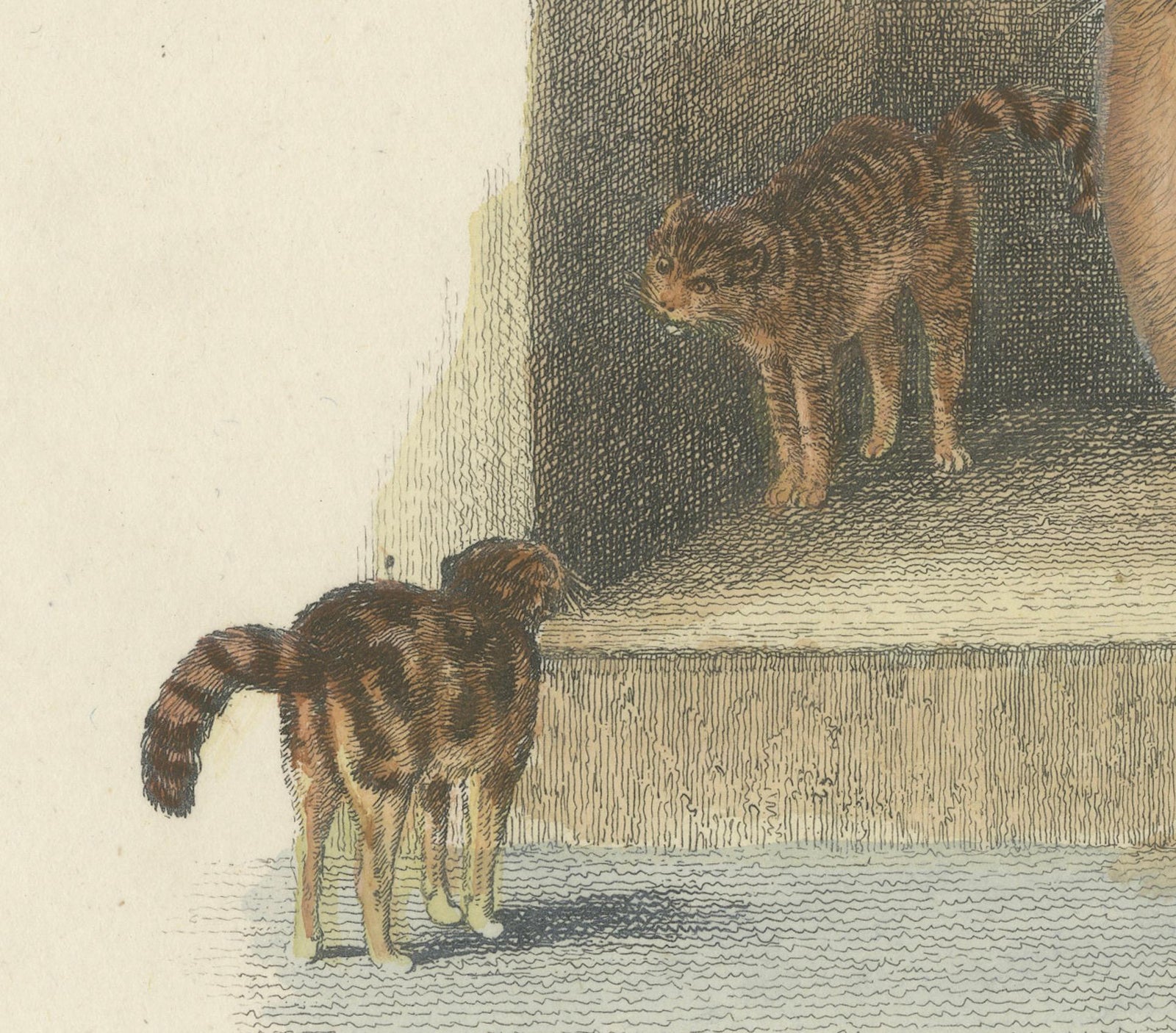
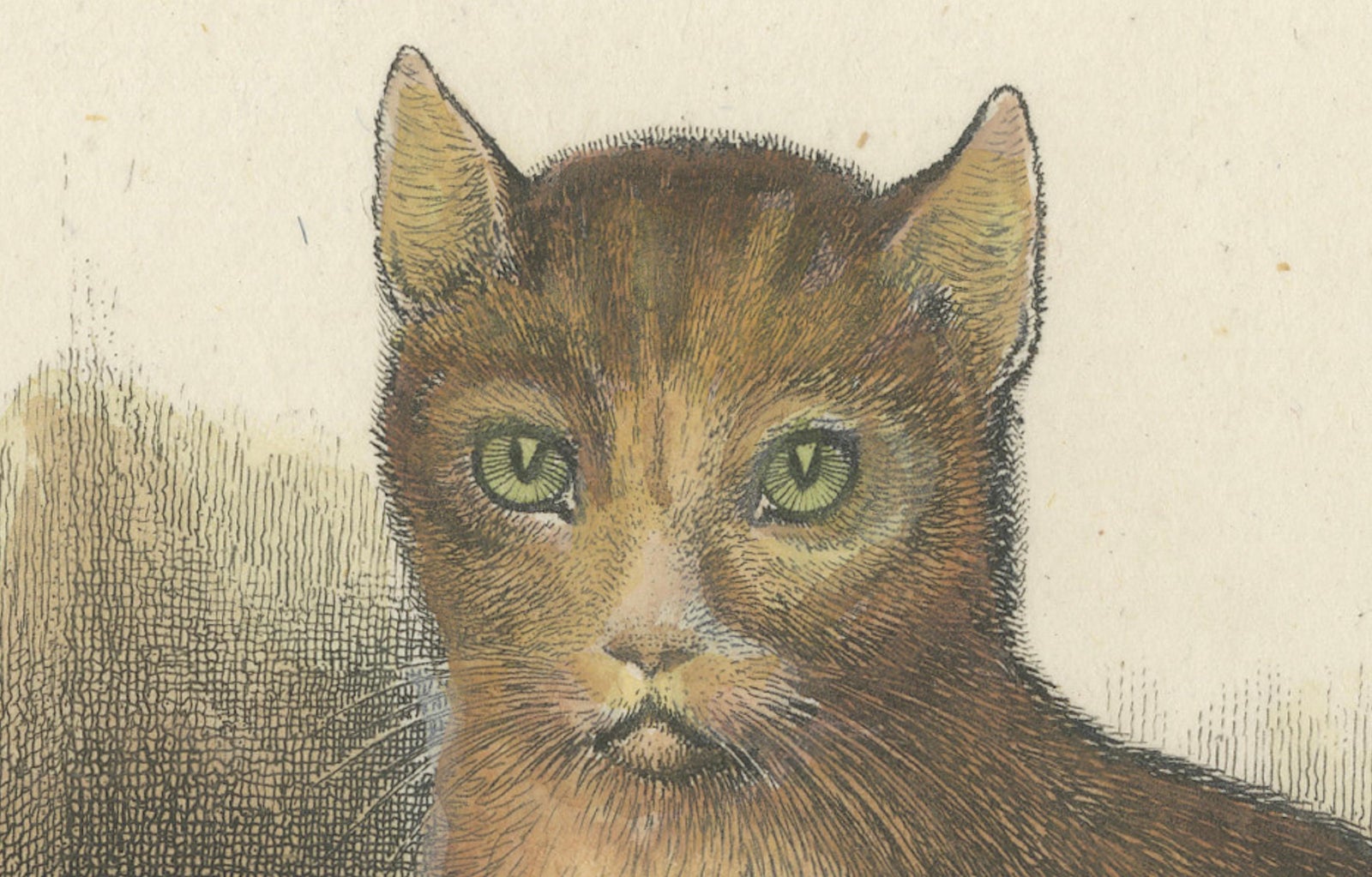
Close-ups
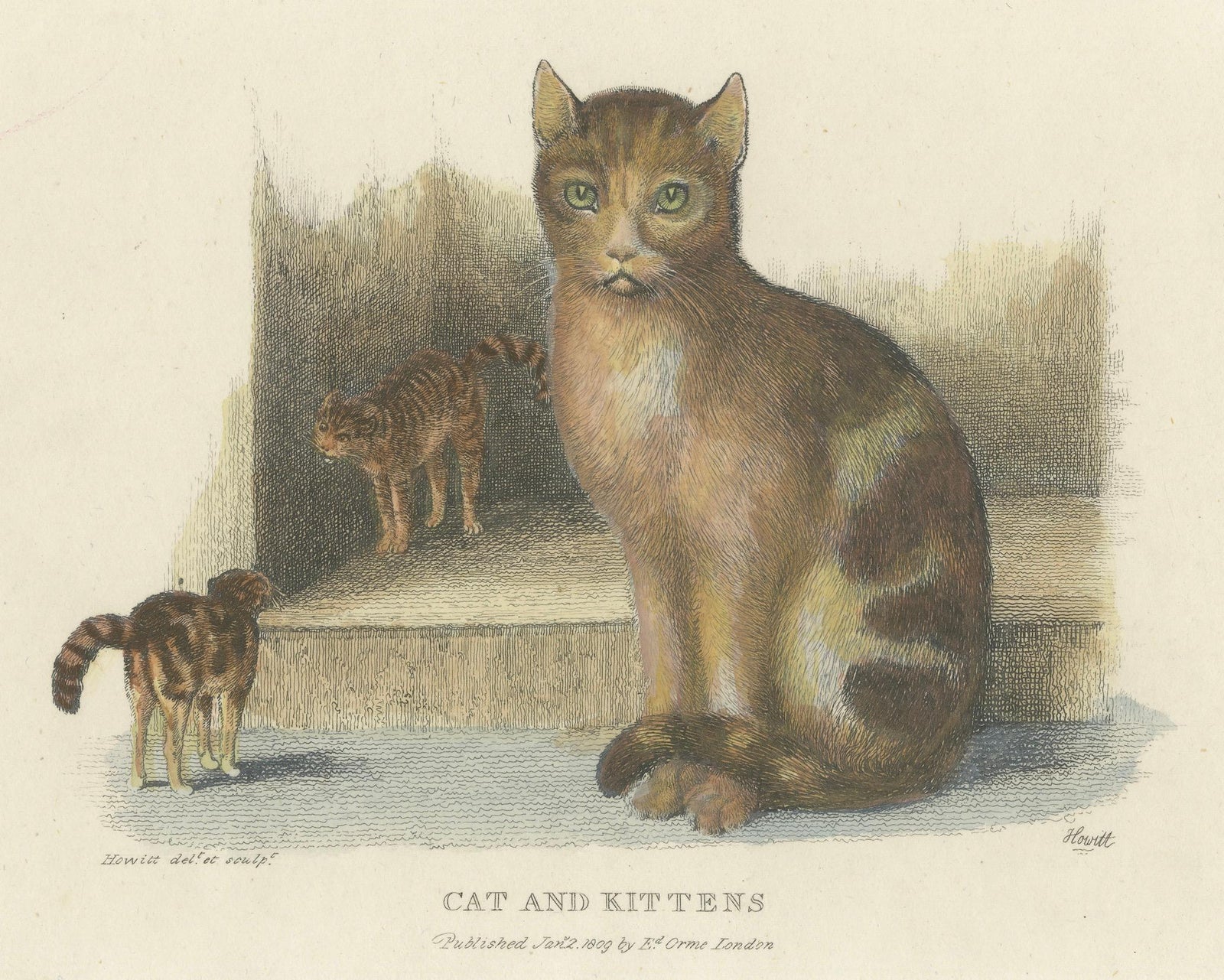
Framed and on the wall
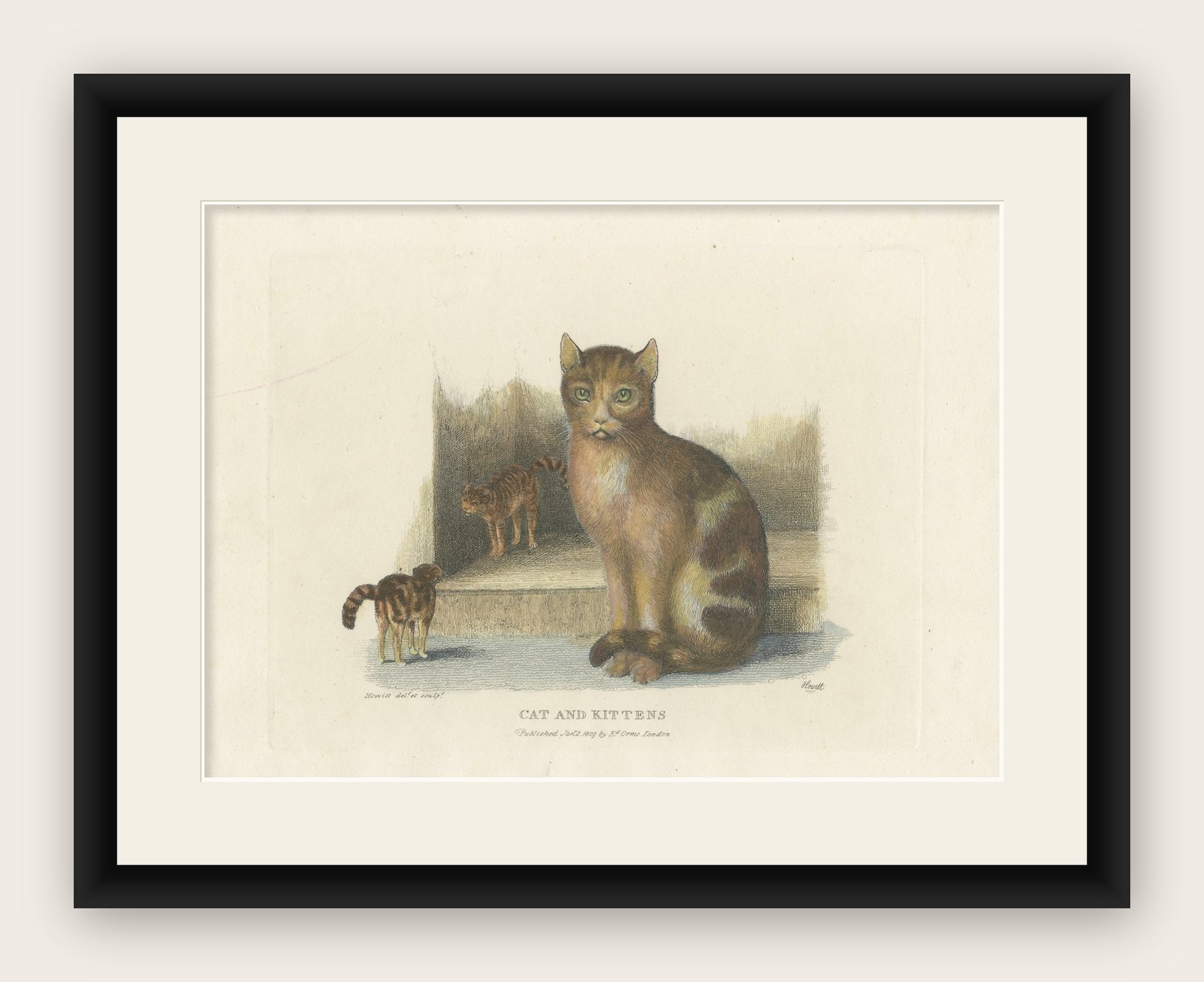
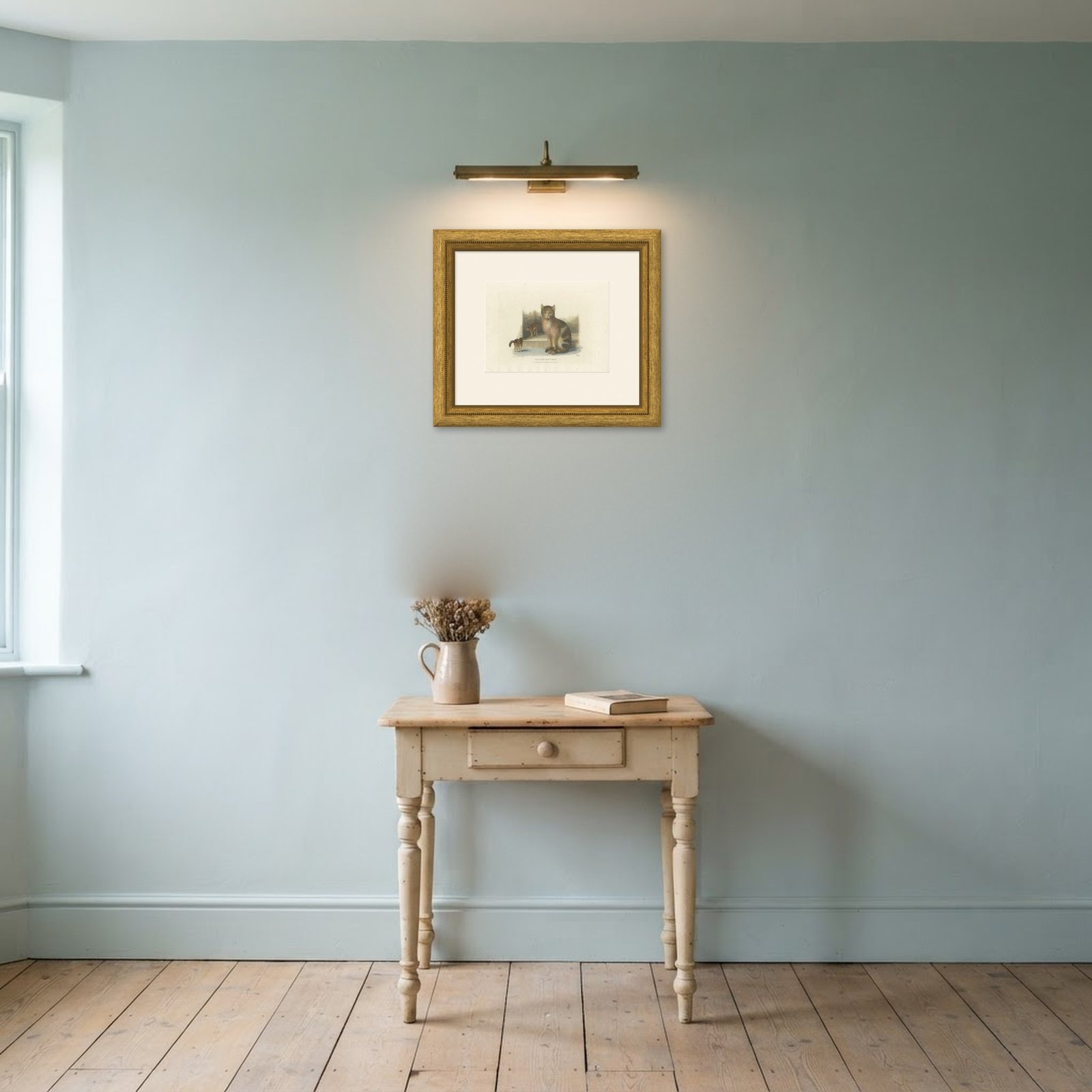
Frame and rooms are illustrations of how the print could look; the description says what is included.
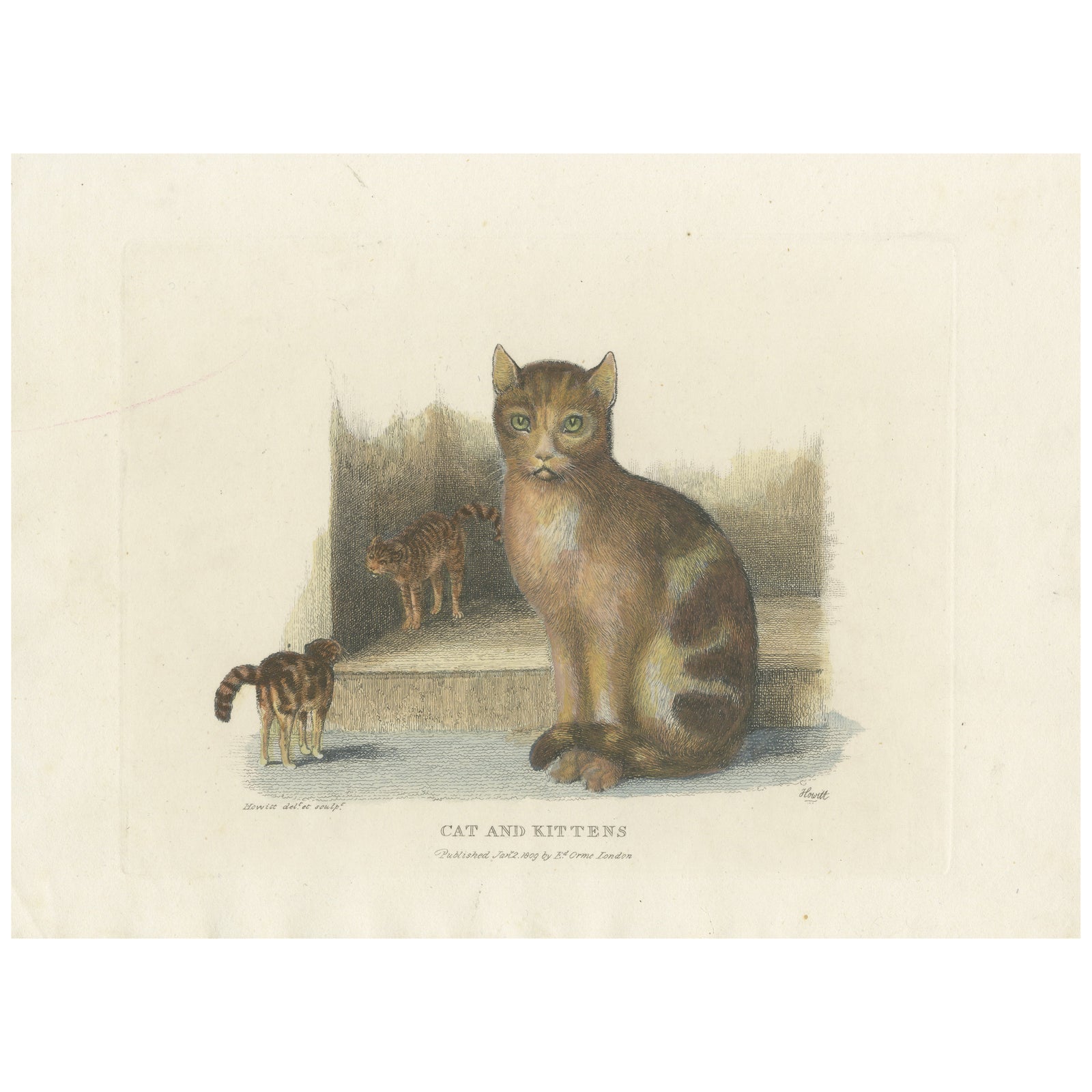
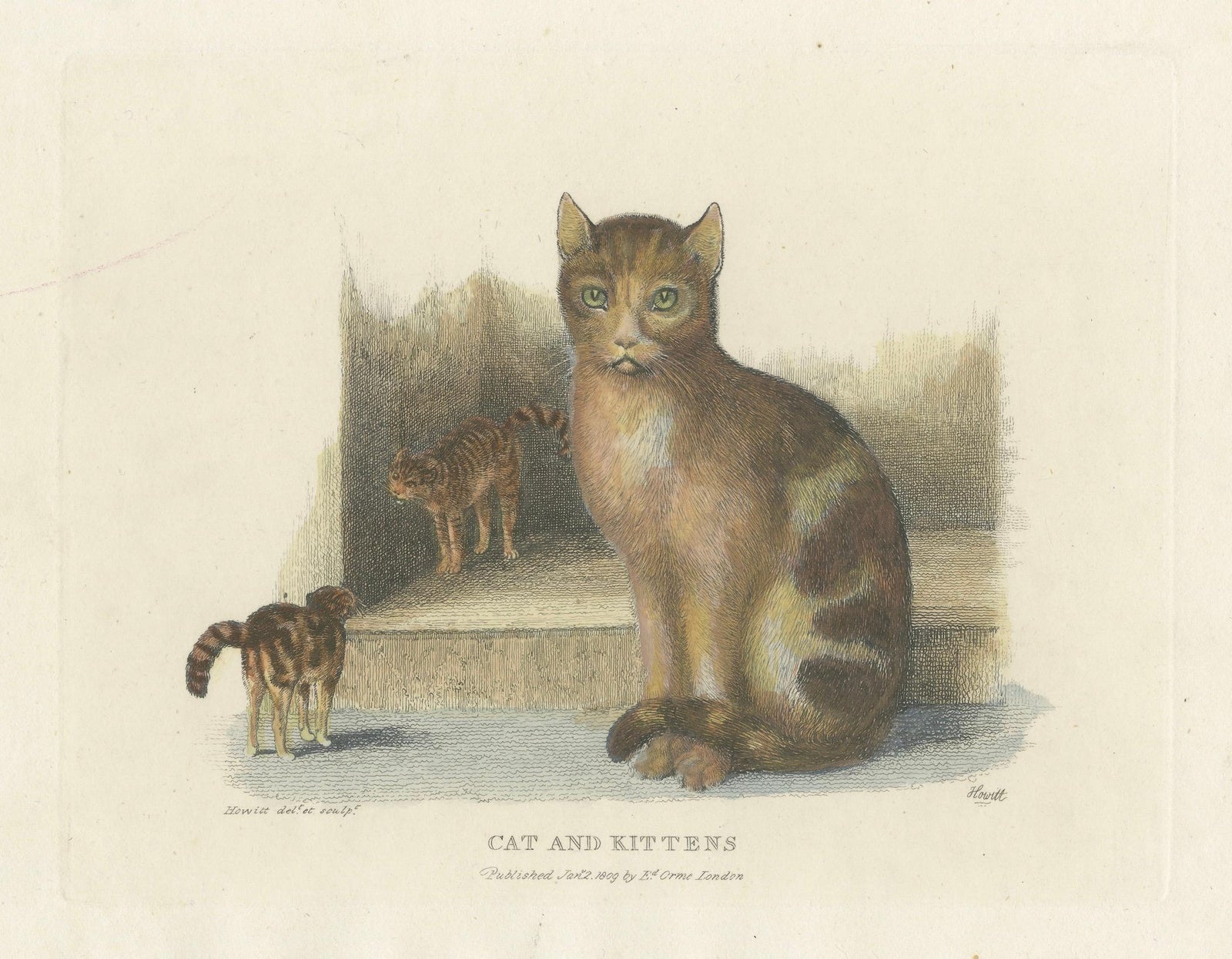
Cat and Kittens, 1809 Hand-Colored Etching by Samuel Howitt
$230$16030% off (£125, €147)
Period original, not a reproduction.
Shipped from the Netherlands, flat or rolled, insured and tracked, worldwide. Returns accepted within 14 days.
- Date
- 1809
- Size
- 8.1 × 11 in (20.5 × 28 cm)
- Condition
- Good, given age. Later Hand-coloring. General age-related toning and/or occasional minor defects from handling. Please study scan carefully.
- Period
- Early 19th century
- Section
- Mammals
- Reference
- f_42379132
- Color
- Hand colored
What the condition grades mean
- Excellent
- Bright and clean, with no faults worth mentioning.
- Very good
- Only light signs of age, such as faint toning.
- Good
- Normal signs of age for a sheet of this period: toning, some foxing, small marks or neat old repairs.
- Fair
- Clear faults such as staining, tears or repairs, priced to match.
Every fault we see is written in the condition note, and the whole sheet is shown uncropped in the photos.
Title: "Cat and Kittens, 1809 Hand-Colored Etching by Samuel Howitt"
Description: This hand-colored etching, titled "Cat and Kittens," was created by Samuel Howitt and published in 1809 by Edward Orme, London, as part of Groups of Animals, a collection of 44 exquisite etched plates.
The print depicts a serene domestic scene featuring a mother cat seated attentively while her playful kittens explore their surroundings. The detailed texture of their fur and the lifelike setting reflect Howitt's masterful skill in capturing the behavior and essence of animals.
Samuel Howitt, a prominent British artist of the early 19th century, was known for his remarkable ability to combine scientific accuracy with artistic elegance. This engraving highlights his dedication to portraying animals in naturalistic poses, making it both a scientific and decorative work. Published by Edward Orme, this print exemplifies the Georgian era’s fascination with natural history and domestic life. It remains a charming representation of animal art from the period.