
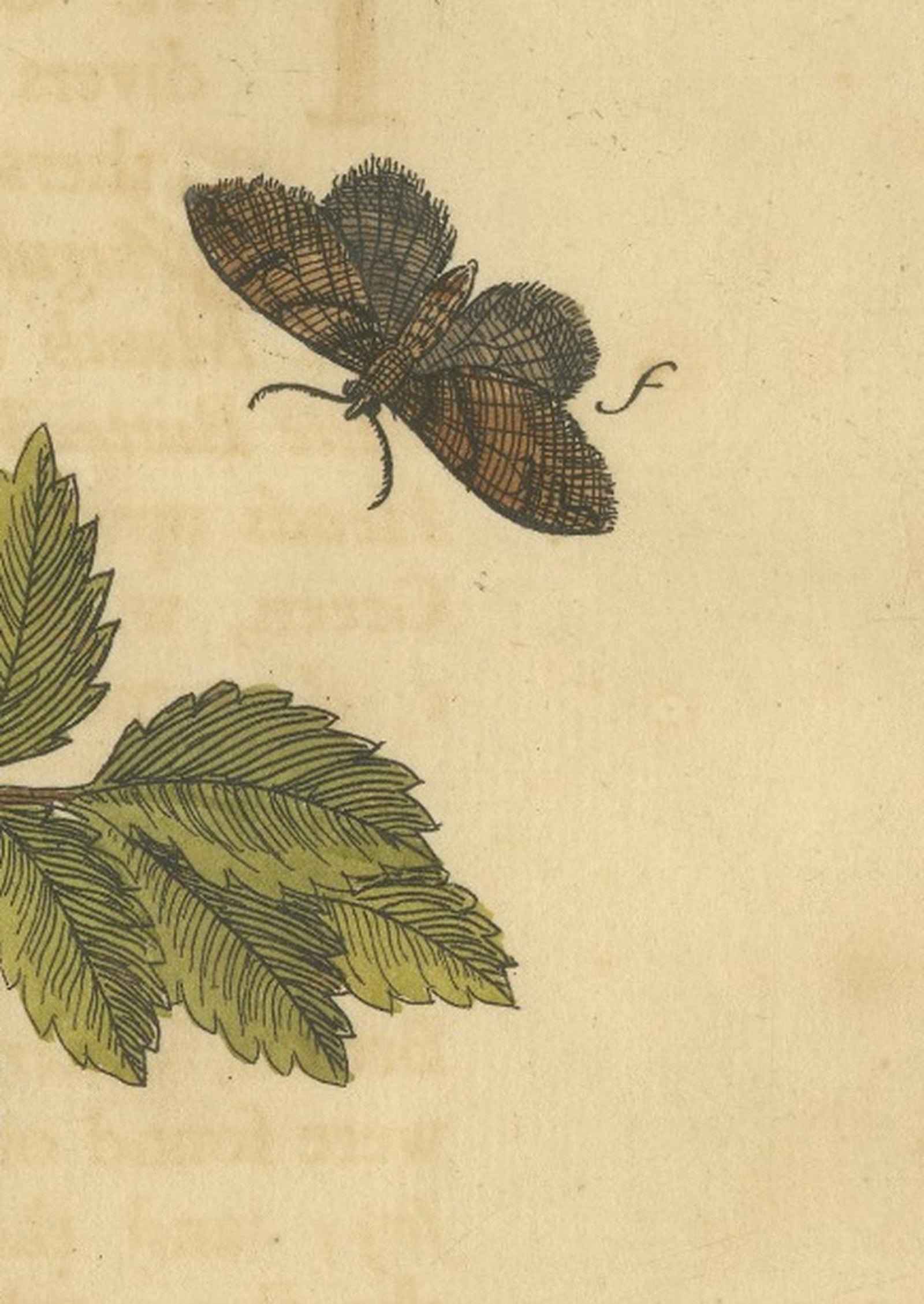
English Moths and Caterpillars on Oak and Rose, Antique Insect Engraving, 1720
$390 (£295, €350)
Period original, not a reproduction.
Shipped from the Netherlands, flat, insured and tracked, worldwide. Returns accepted within 14 days.
- Date
- 1720
- Size
- 11.1 × 8.7 in (28.3 × 22.1 cm)
- Condition
- Good. Light to moderate age-related toning consistent with age. Minor edge wear from original binding. The impression is strong and the original hand coloring remains clear and well preserved.
- Period
- 18th century
- Section
- Insects and butterflies
- Reference
- f_48603032
English Moths and Caterpillars on Oak and Rose, Antique Insect Engraving, 1723
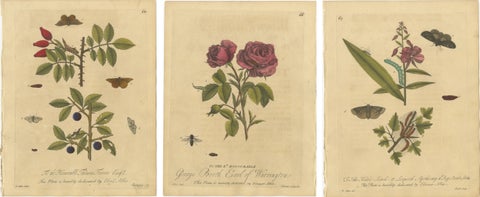
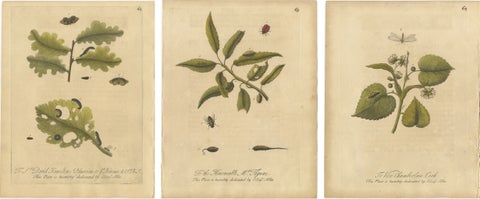
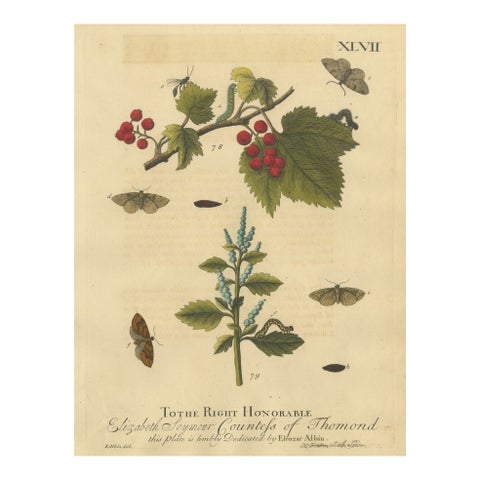
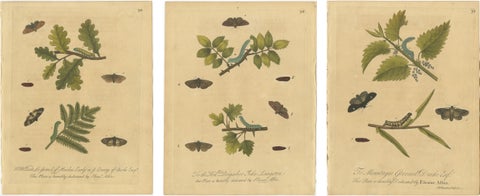
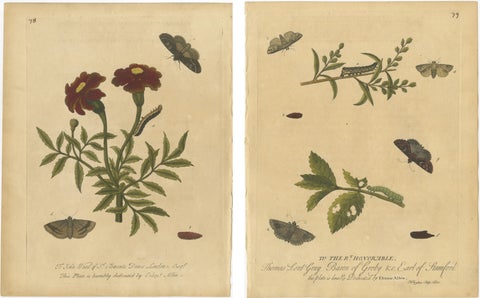
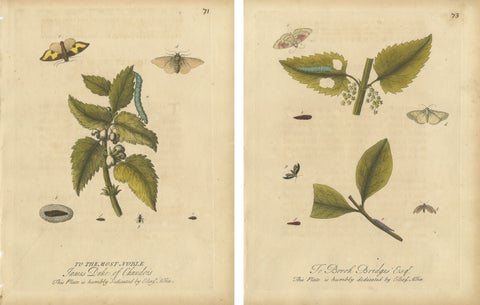
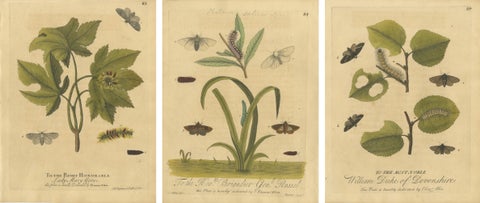
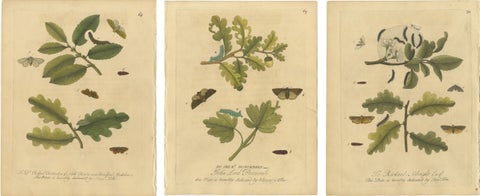
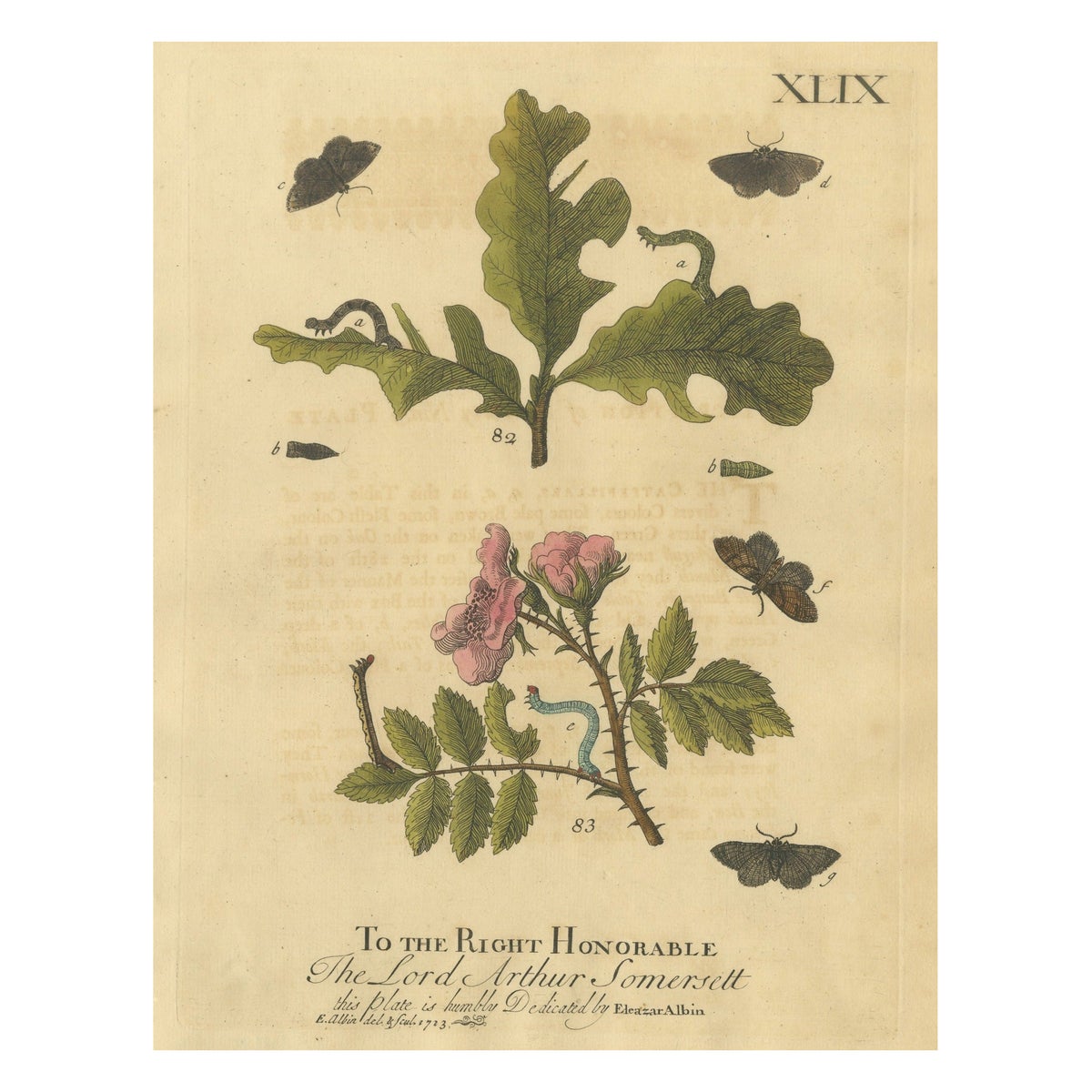
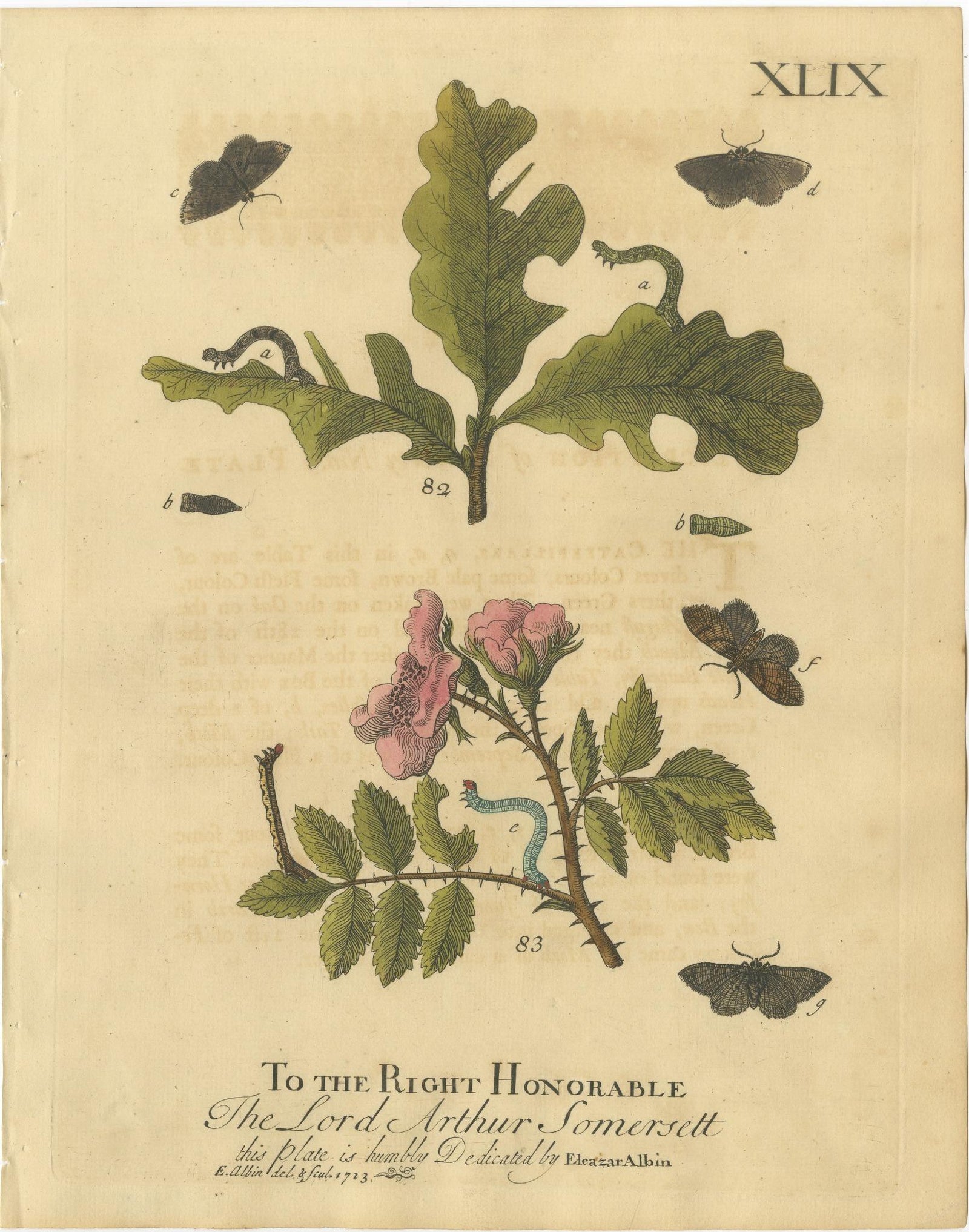
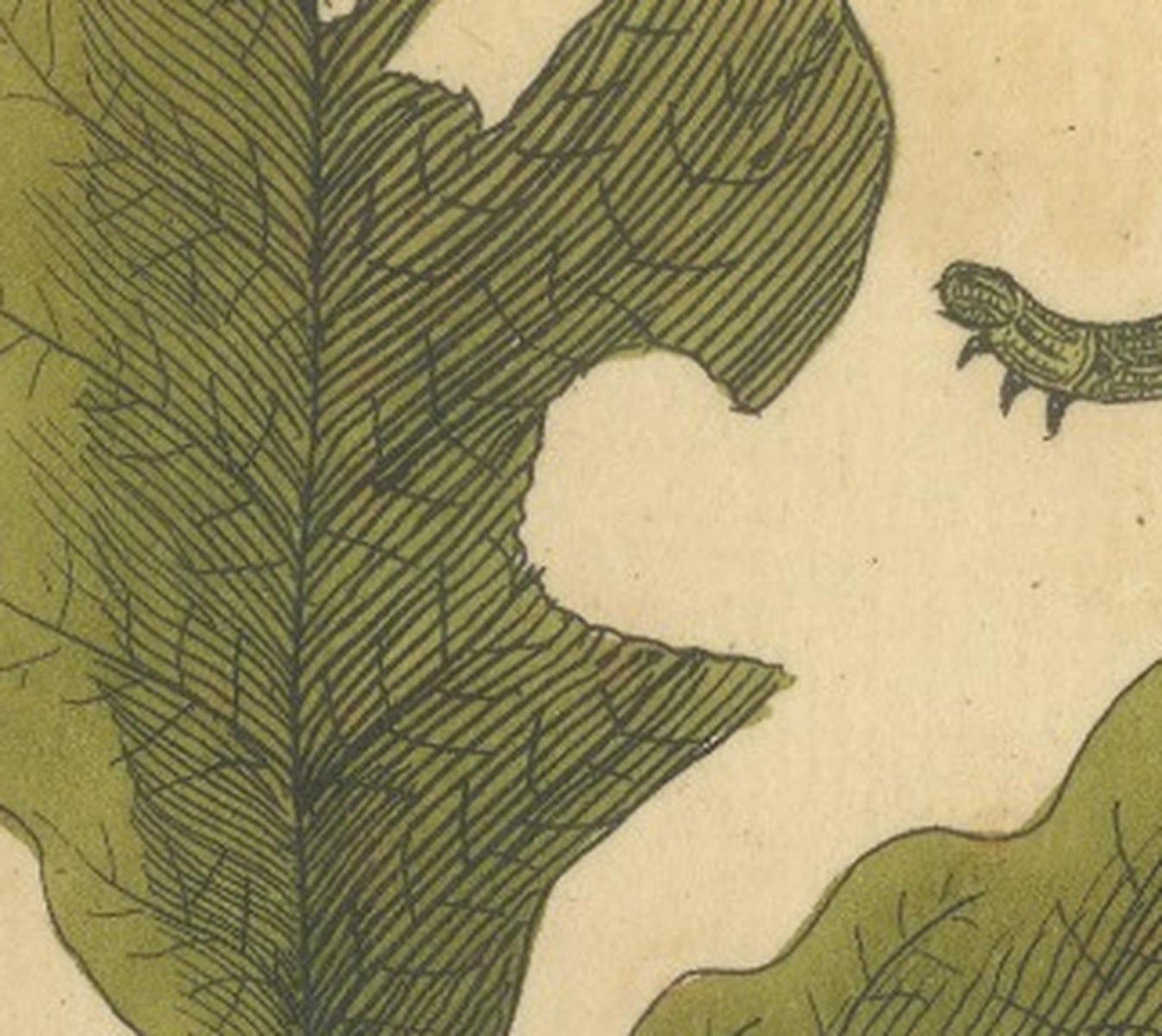
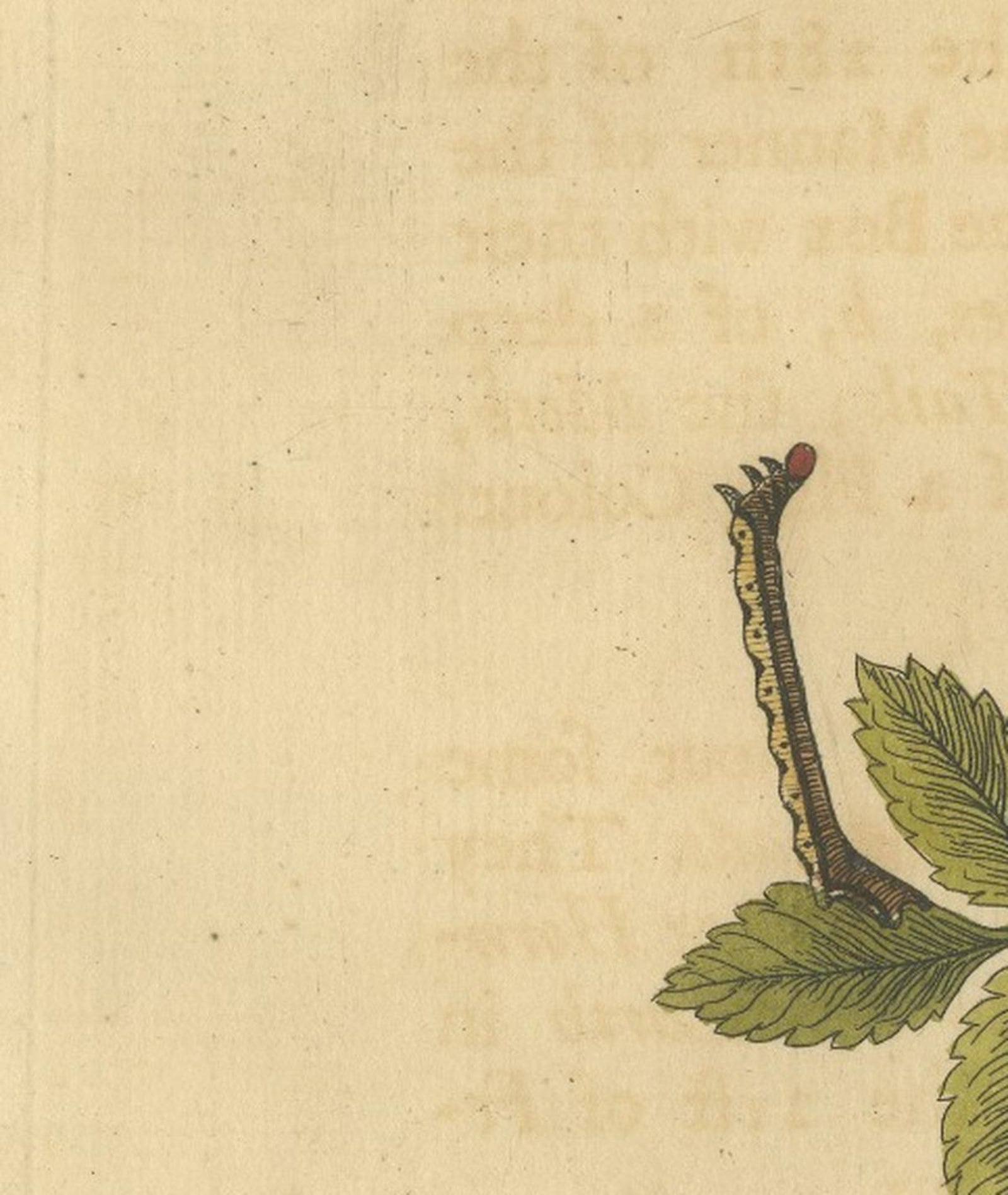
Published in London in 1723, this original hand-colored copper engraving forms part of Eleazar Albin’s A Natural History of English Insects, one of the most important early works of British entomology. The plate presents moths, caterpillars, and pupae shown in direct relation to their host plants, combining scientific observation with refined decorative composition.
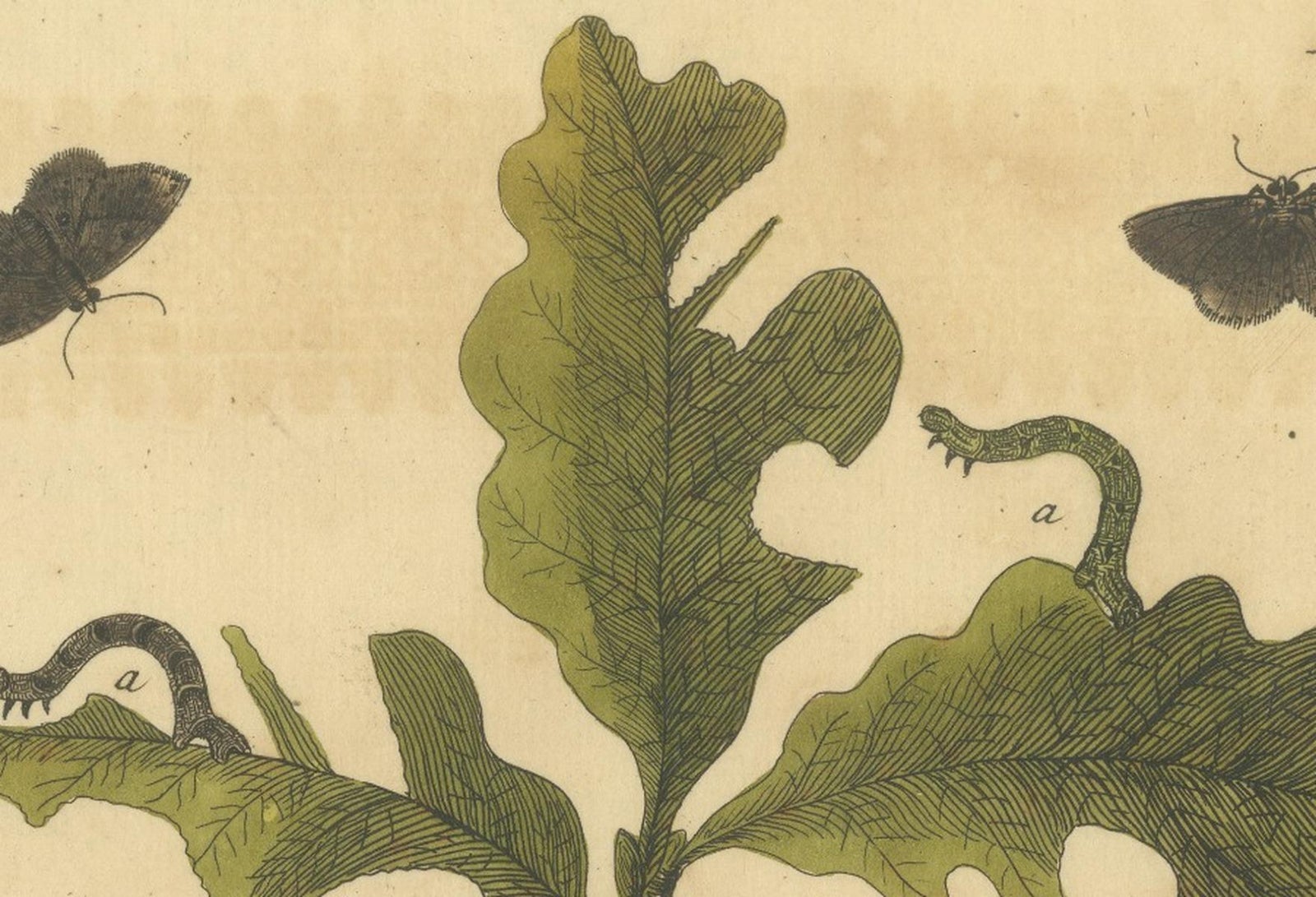
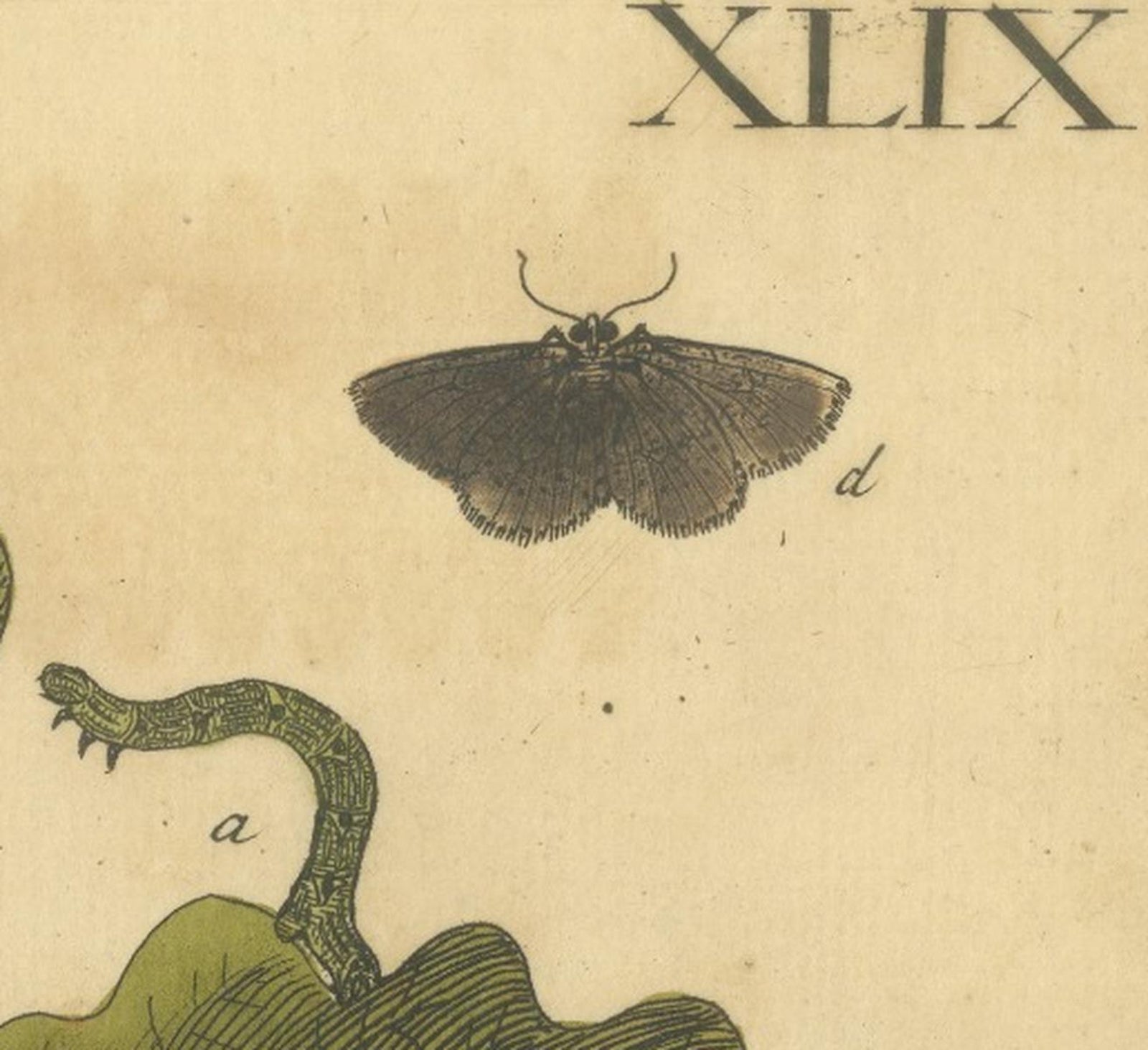
The upper section depicts insects associated with oak leaves, including feeding caterpillars, pupae, and winged moths shown in different poses. Below, a flowering rose branch with serrated foliage supports additional larvae and adult moths, offering a comparative view of insect life cycles across two distinct host plants. This dual composition is characteristic of Albin’s method, allowing the viewer to observe metamorphosis while maintaining a balanced and visually engaging design.
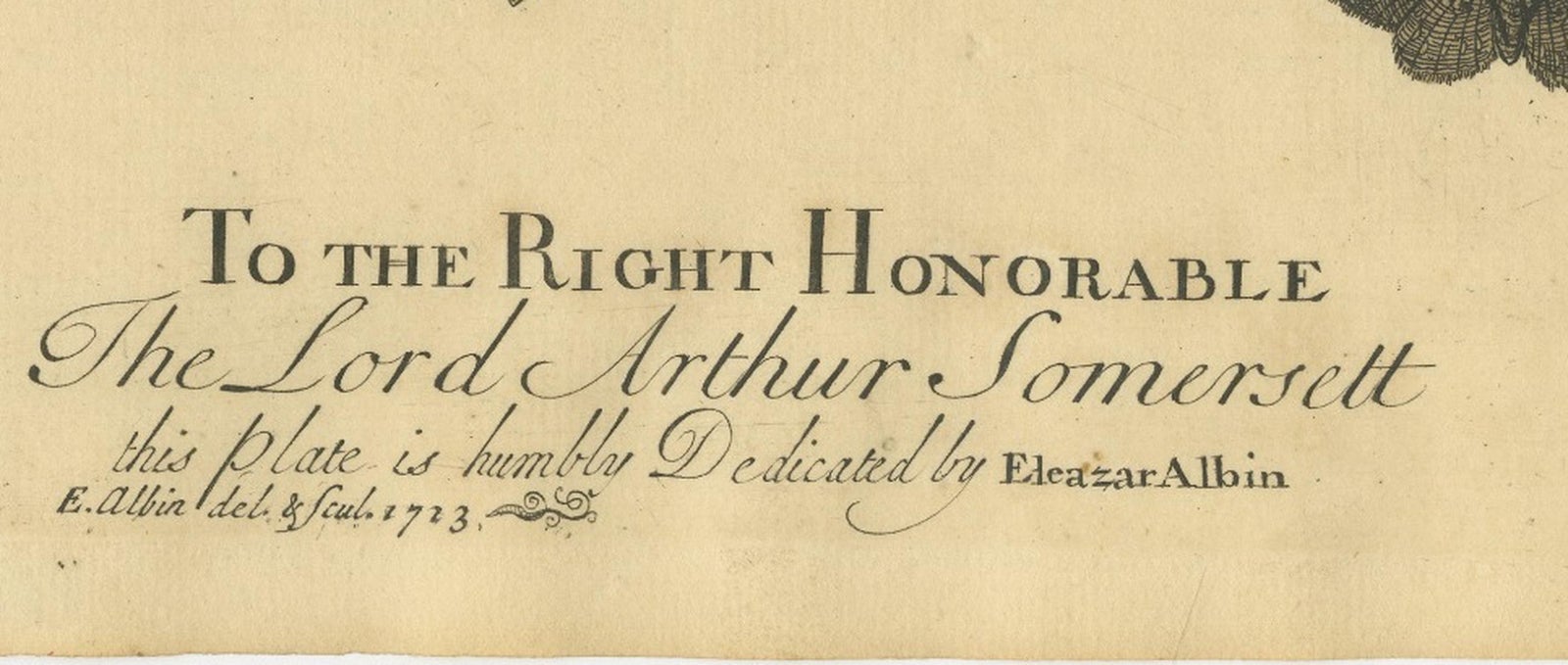
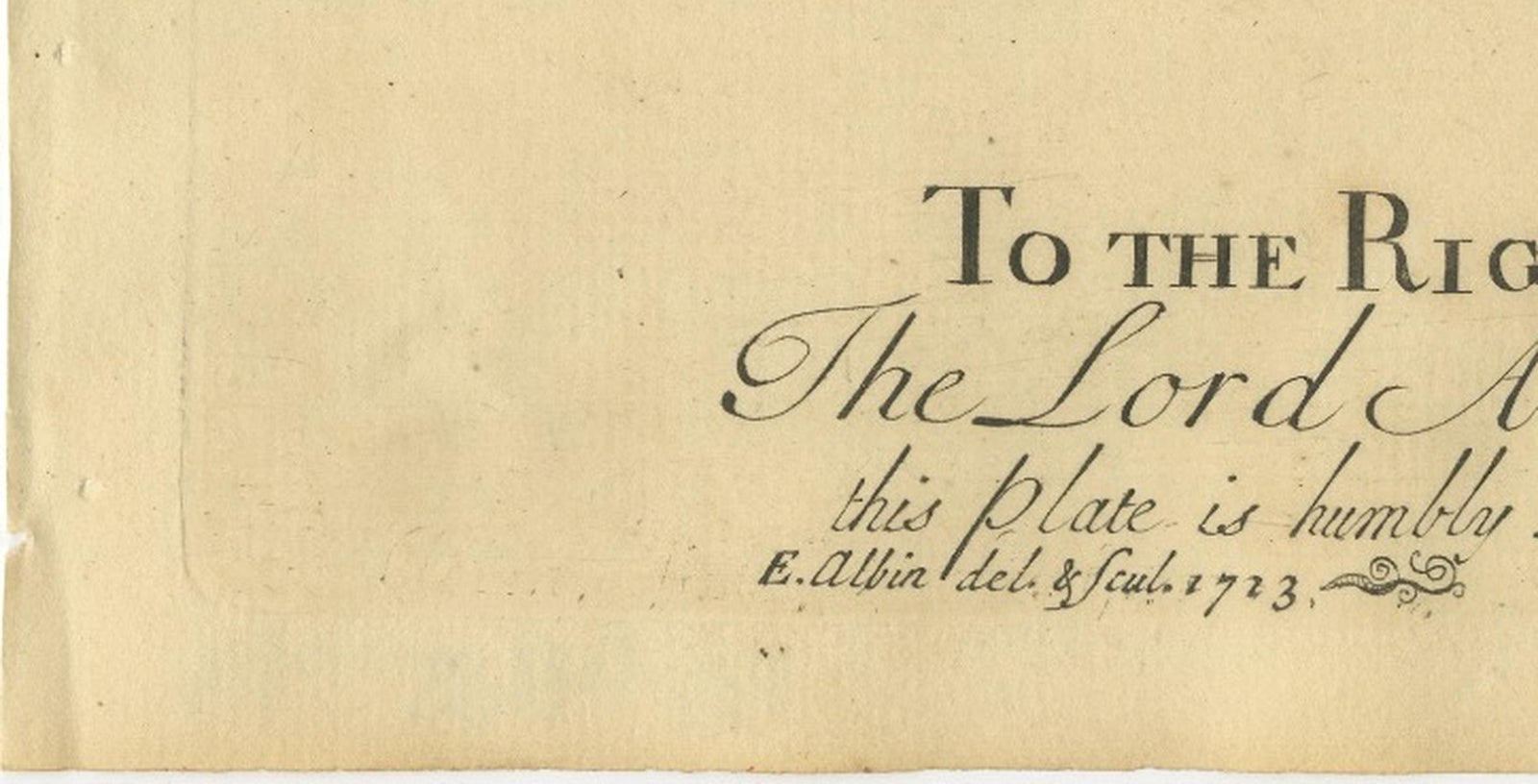
The plate is dedicated “To the Right Honorable The Lord Arthur Somerset,” reflecting the aristocratic patronage that supported the publication of natural history works in early 18th-century England. Such dedications add historical depth and illustrate the close connection between science, art, and elite society during the Georgian period.
The engraving retains its original hand coloring, with fresh green foliage, warm pink tones in the rose blossoms, and subtly shaded insects. Fine engraved linework remains clearly visible throughout, giving the sheet both documentary importance and strong decorative appeal. Albin’s insect plates are highly regarded by collectors of early natural history, entomology, and botanical illustration, and are equally prized by interior designers seeking authentic 18th-century decorative prints.
Condition
Light to moderate age-related toning consistent with age. Minor edge wear from original binding. The impression is strong and the original hand coloring remains clear and well preserved.
Framing tips
Dark walnut or ebonized frames with ivory or warm off-white matting emphasize the engraving’s antique character. For lighter or contemporary interiors, natural oak or pale wood frames with museum-white matting are recommended. UV-protective glazing advised. Sold unframed.
Technique: Copper engraving with original hand coloring
Maker: Eleazar Albin, London, 1723