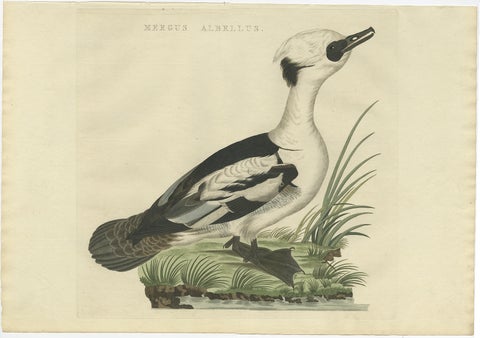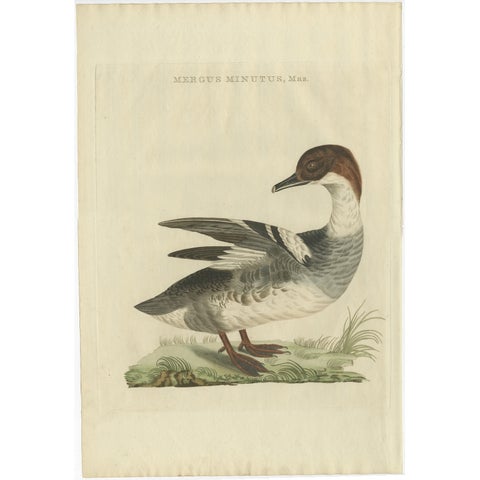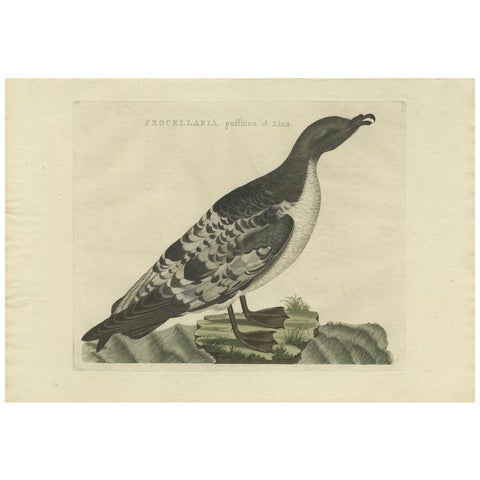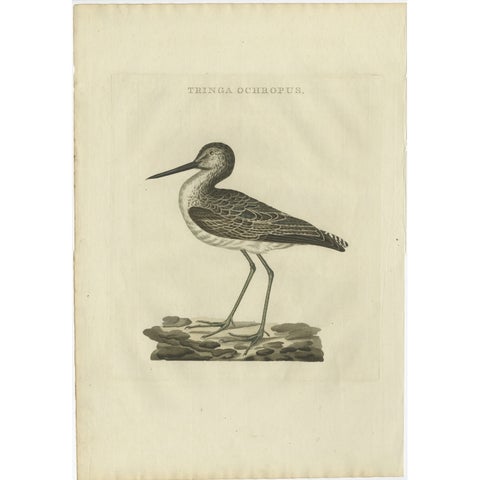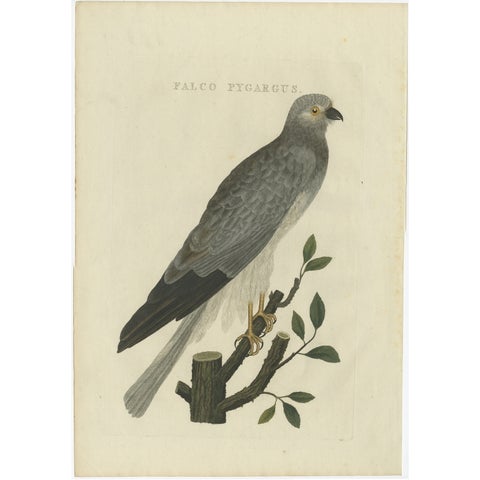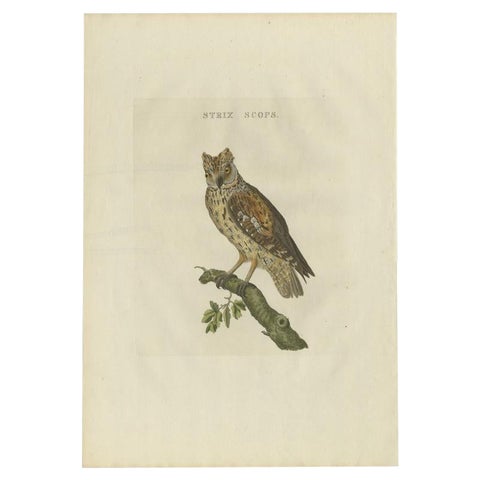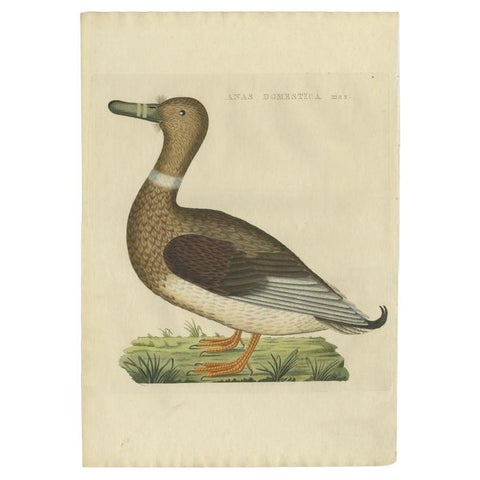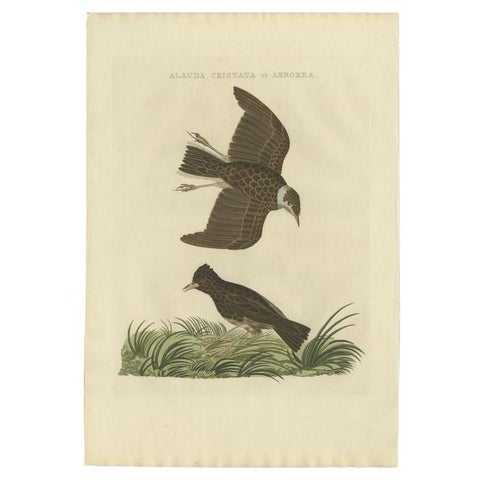
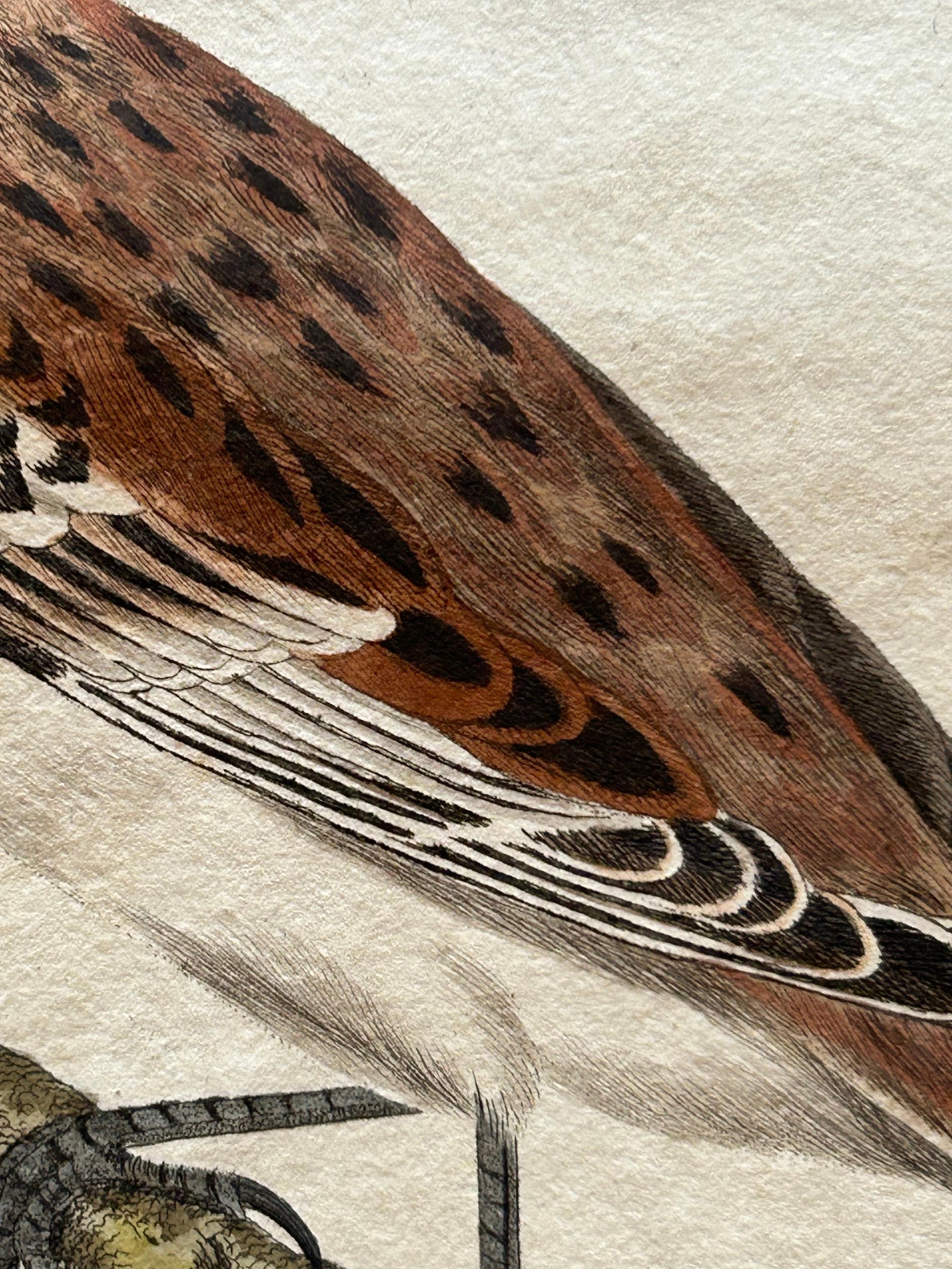
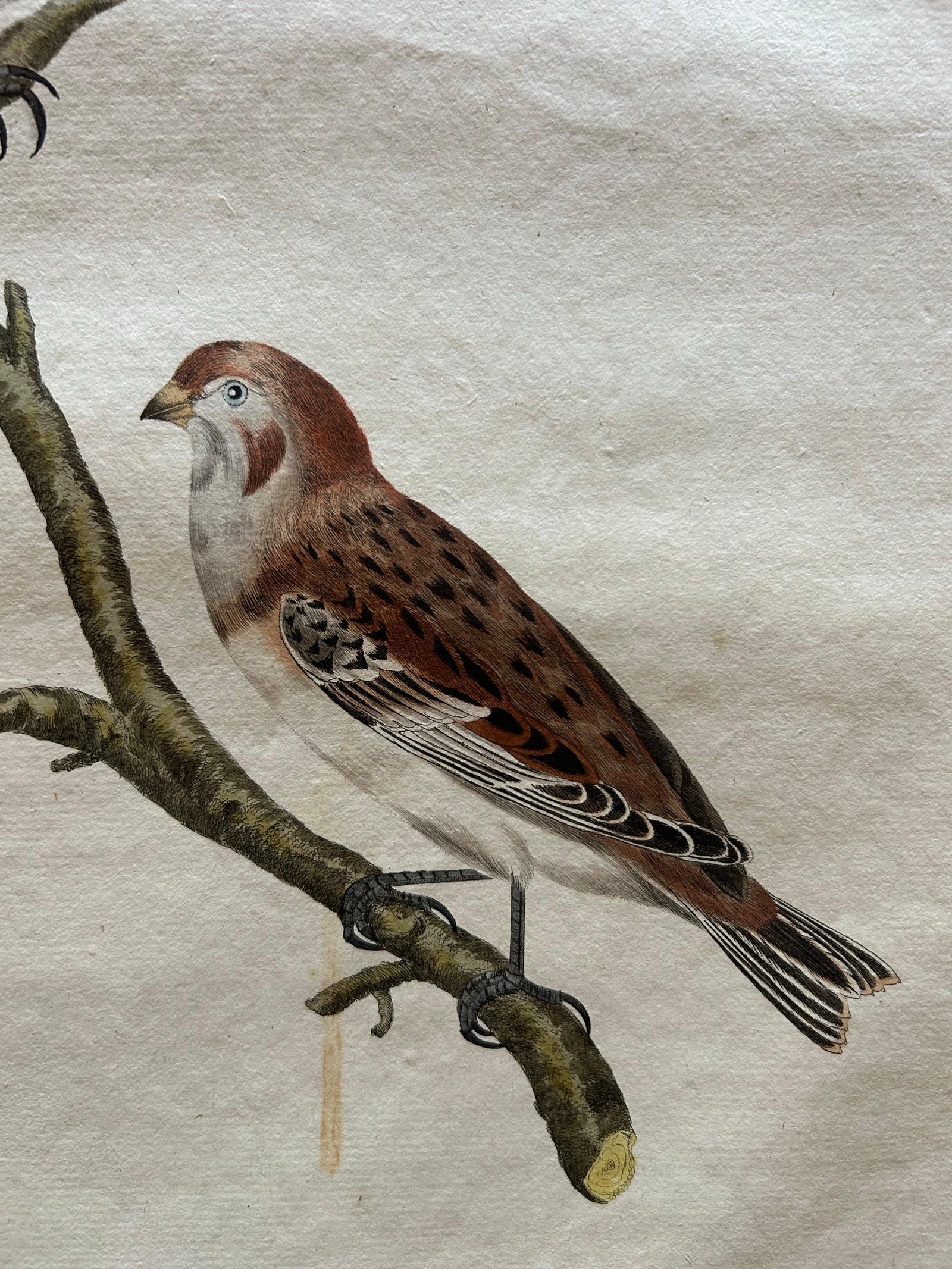
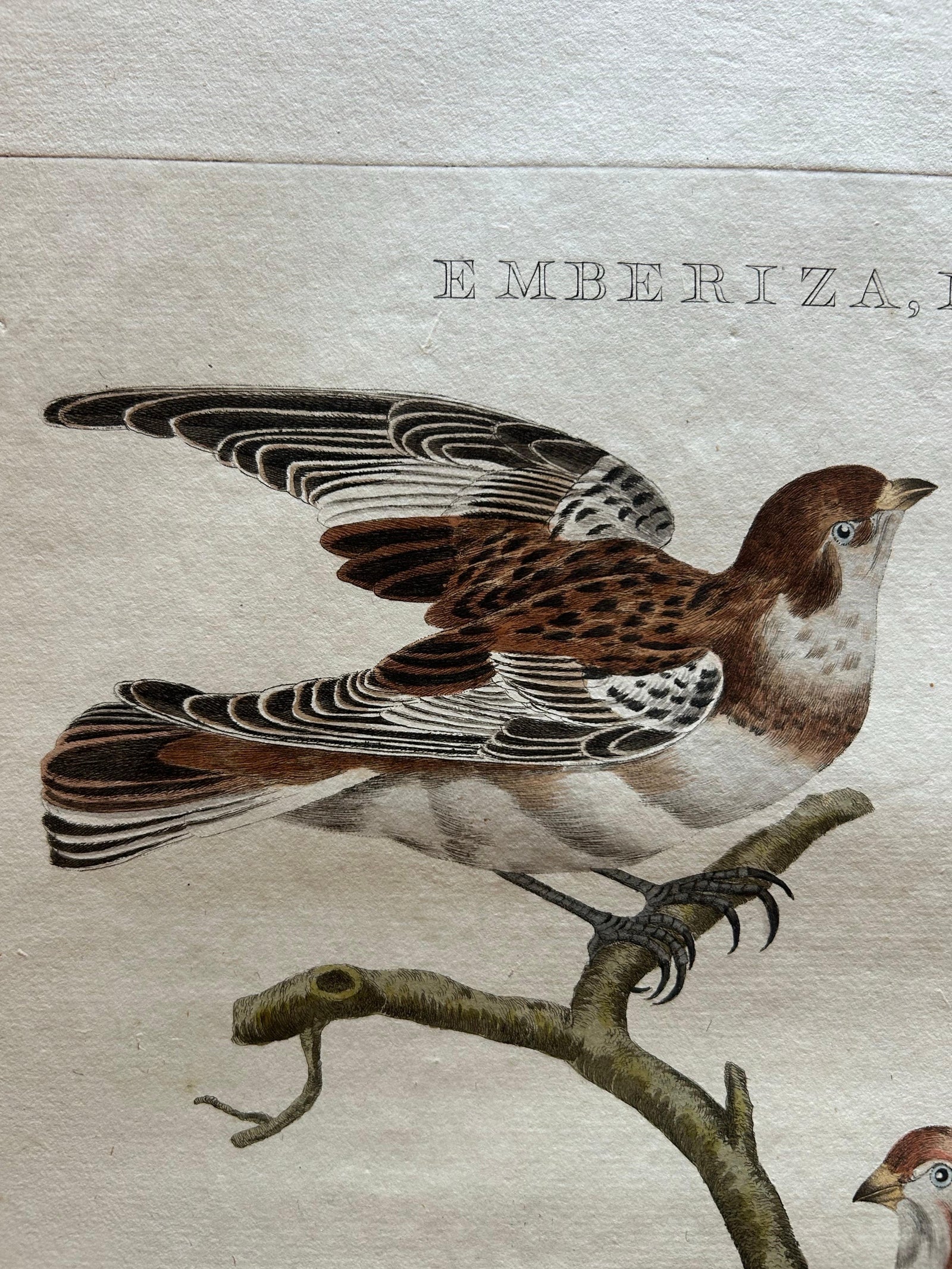
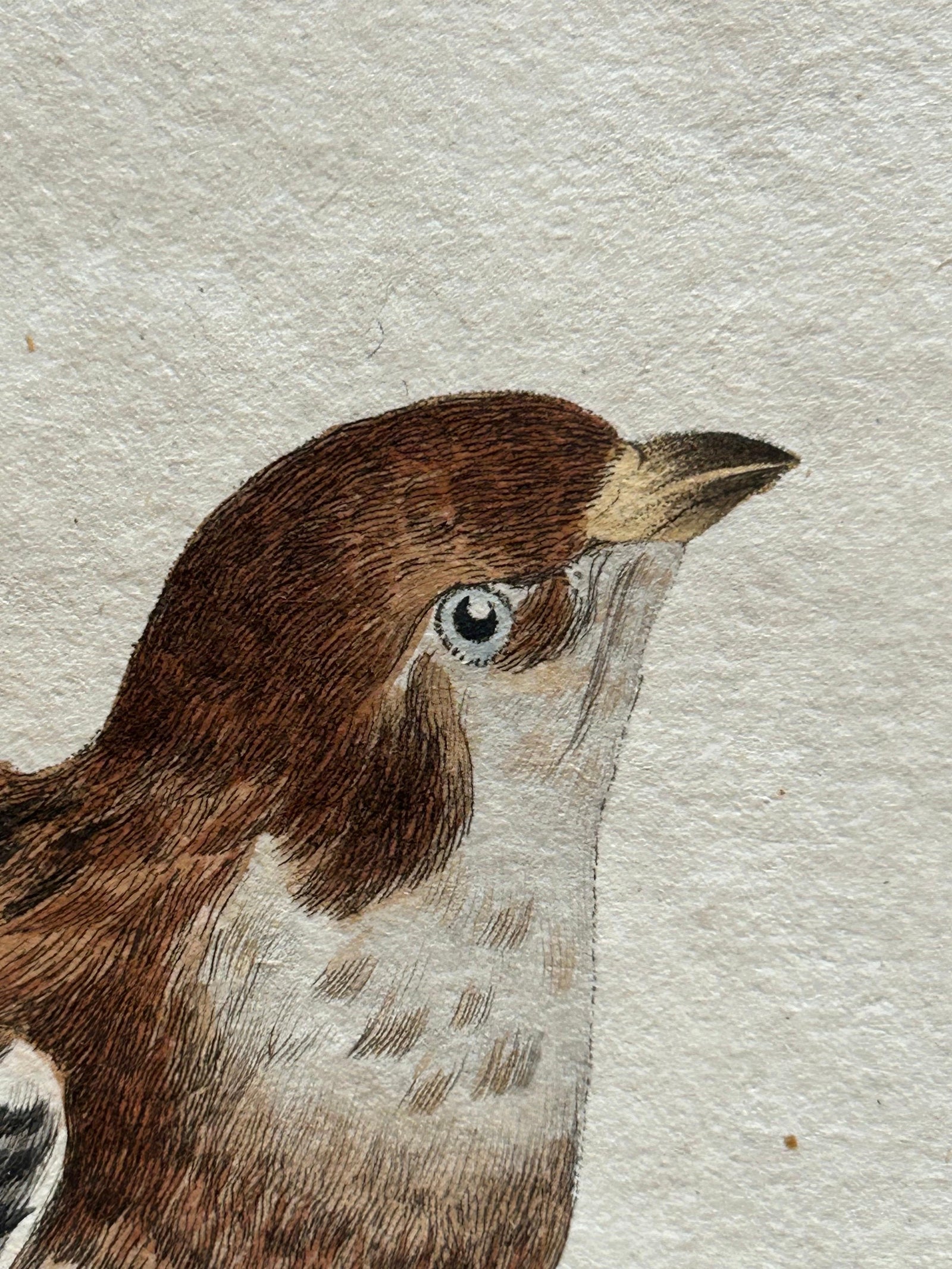
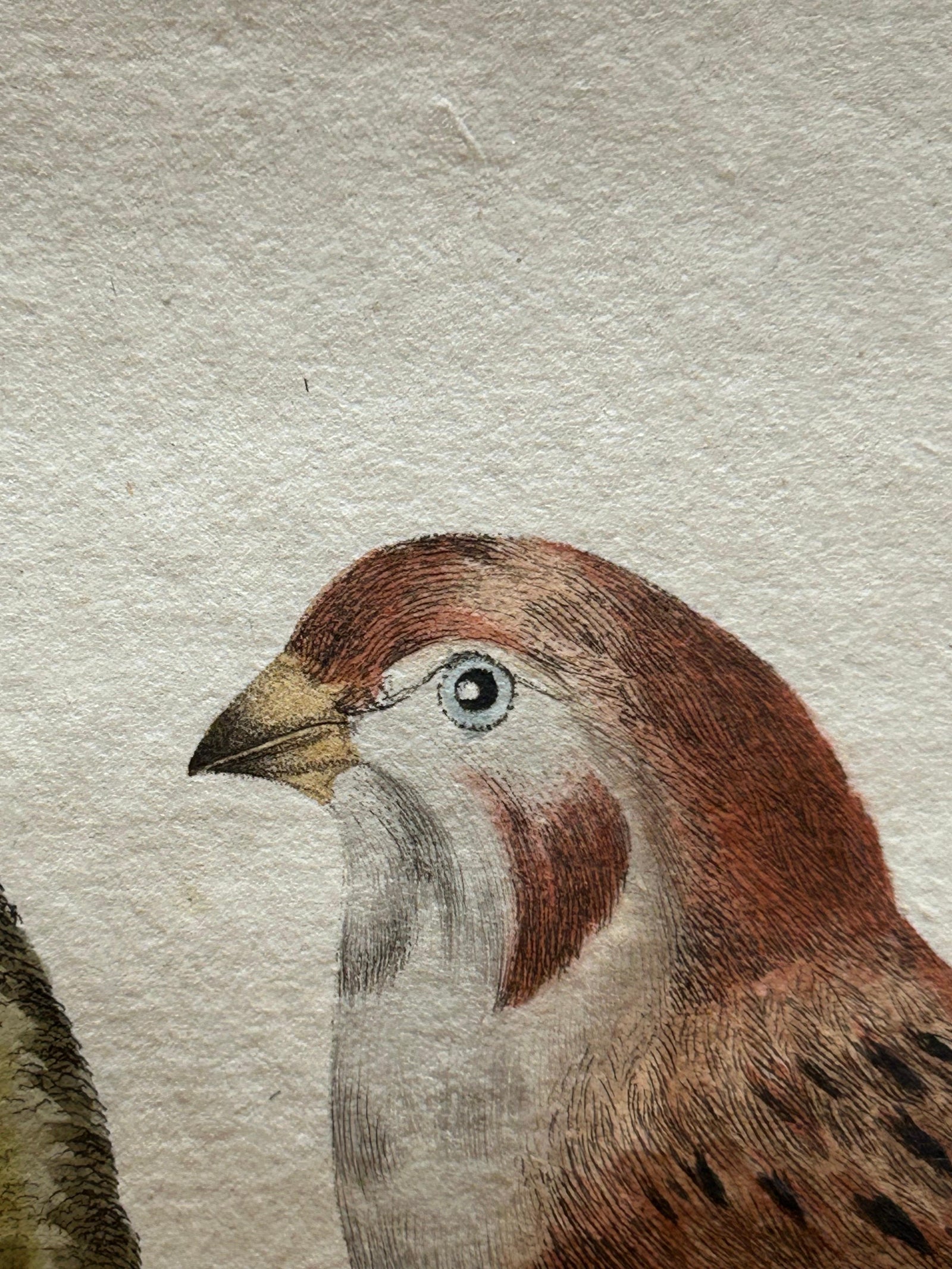
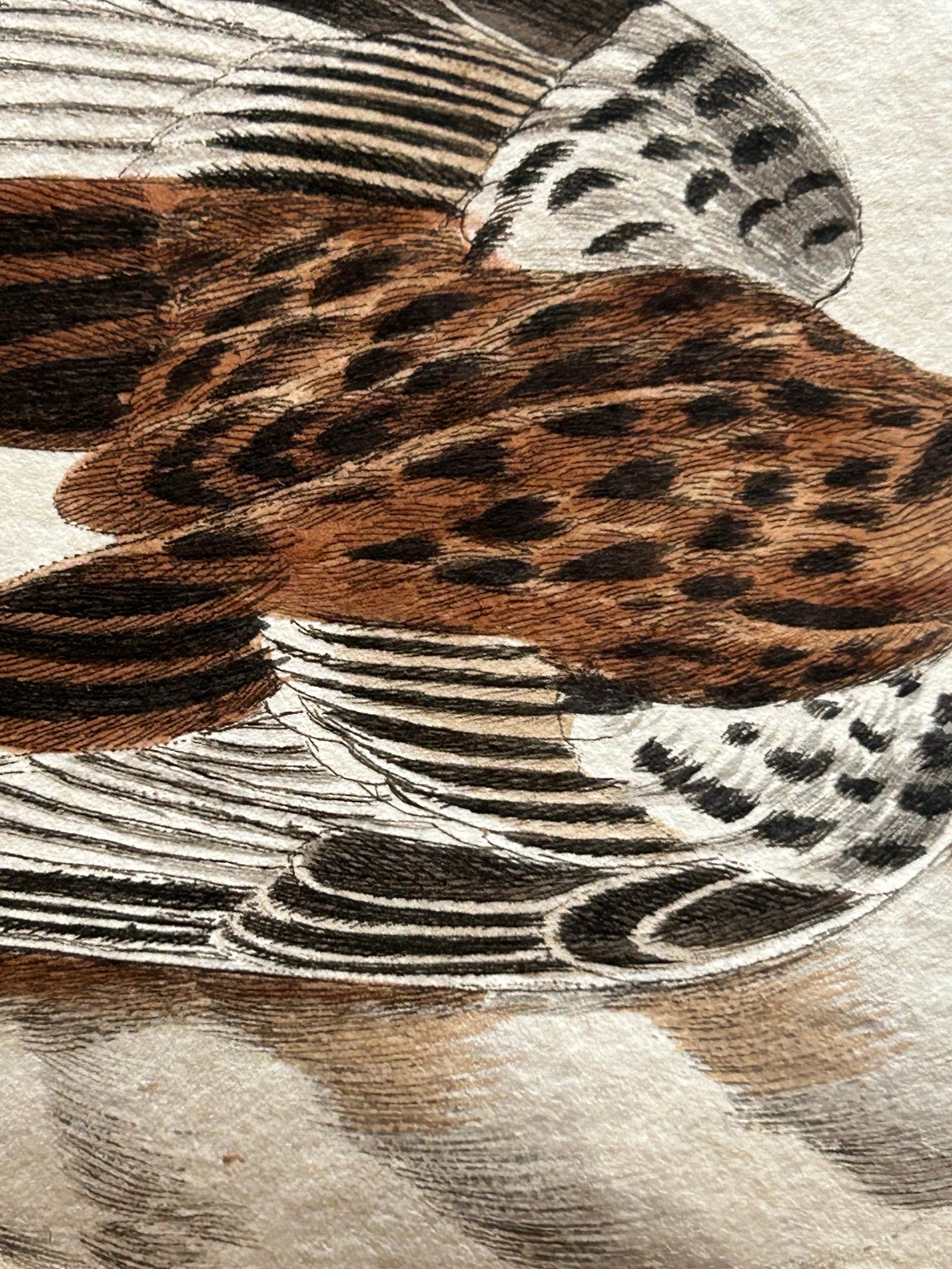
Close-ups
Framed and on the wall
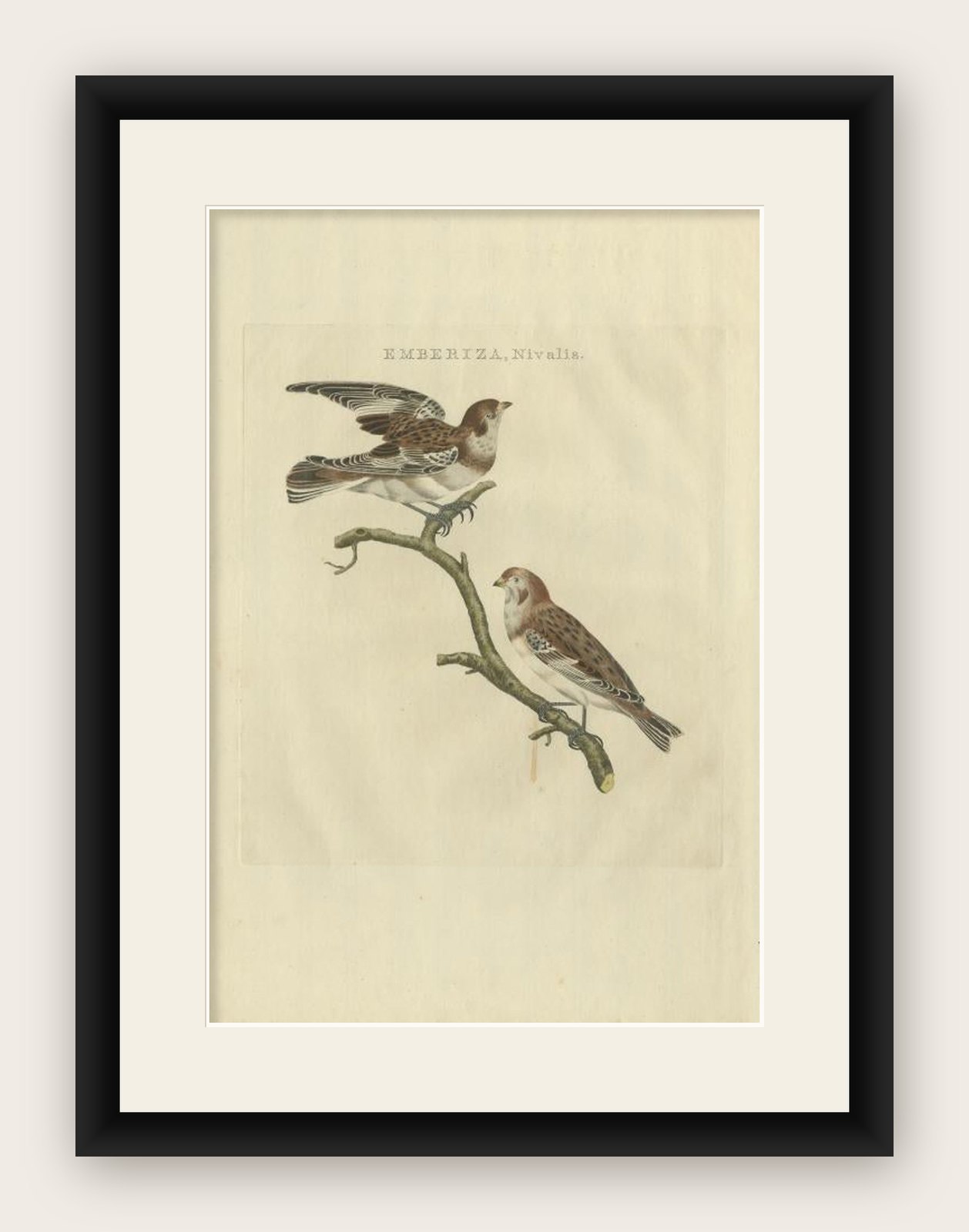
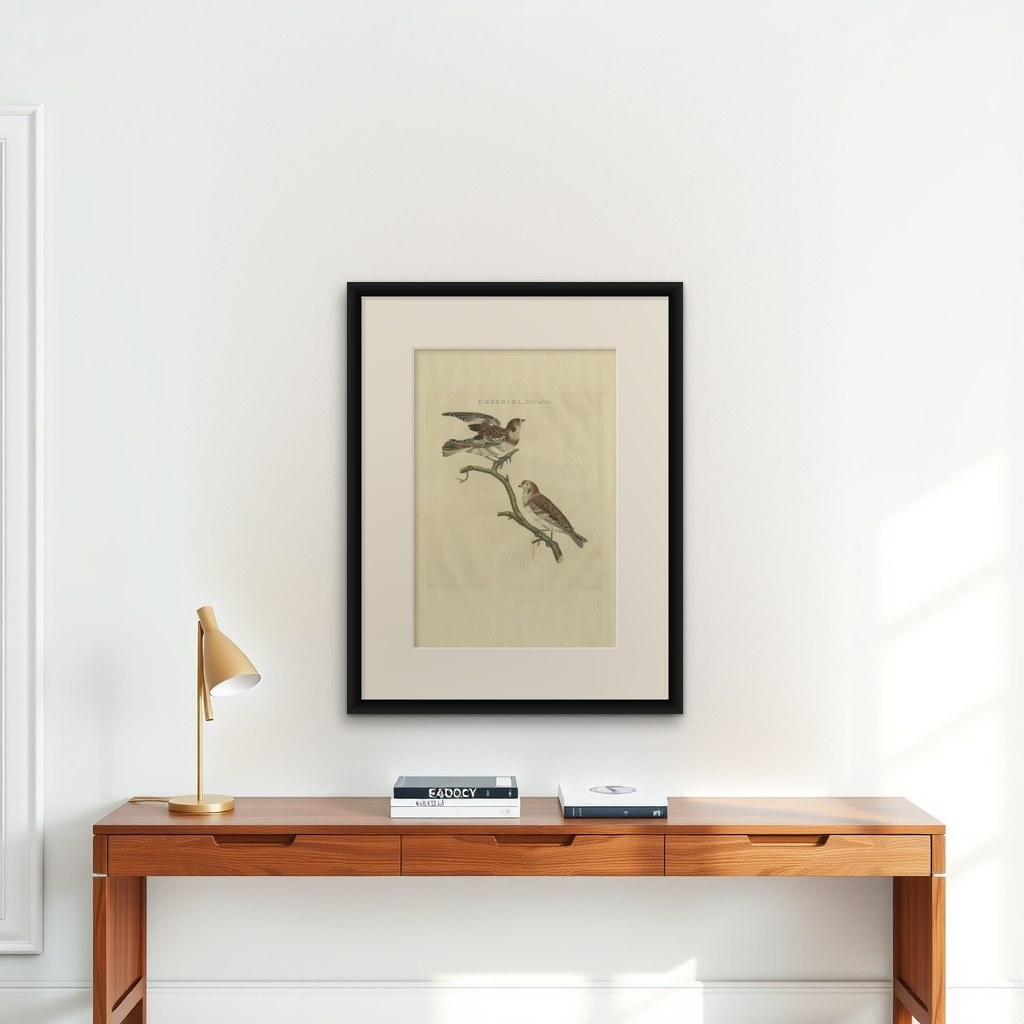
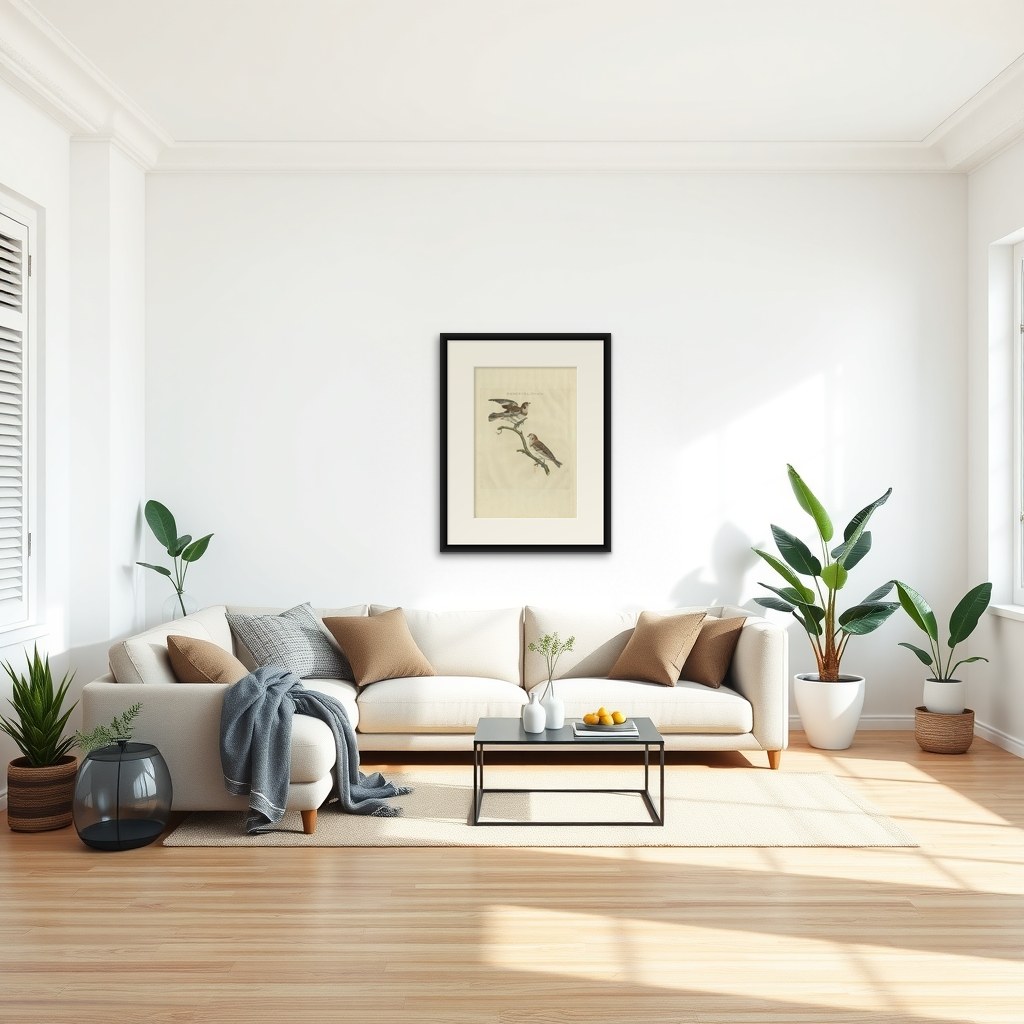
Frame and rooms are illustrations of how the print could look; the description says what is included.
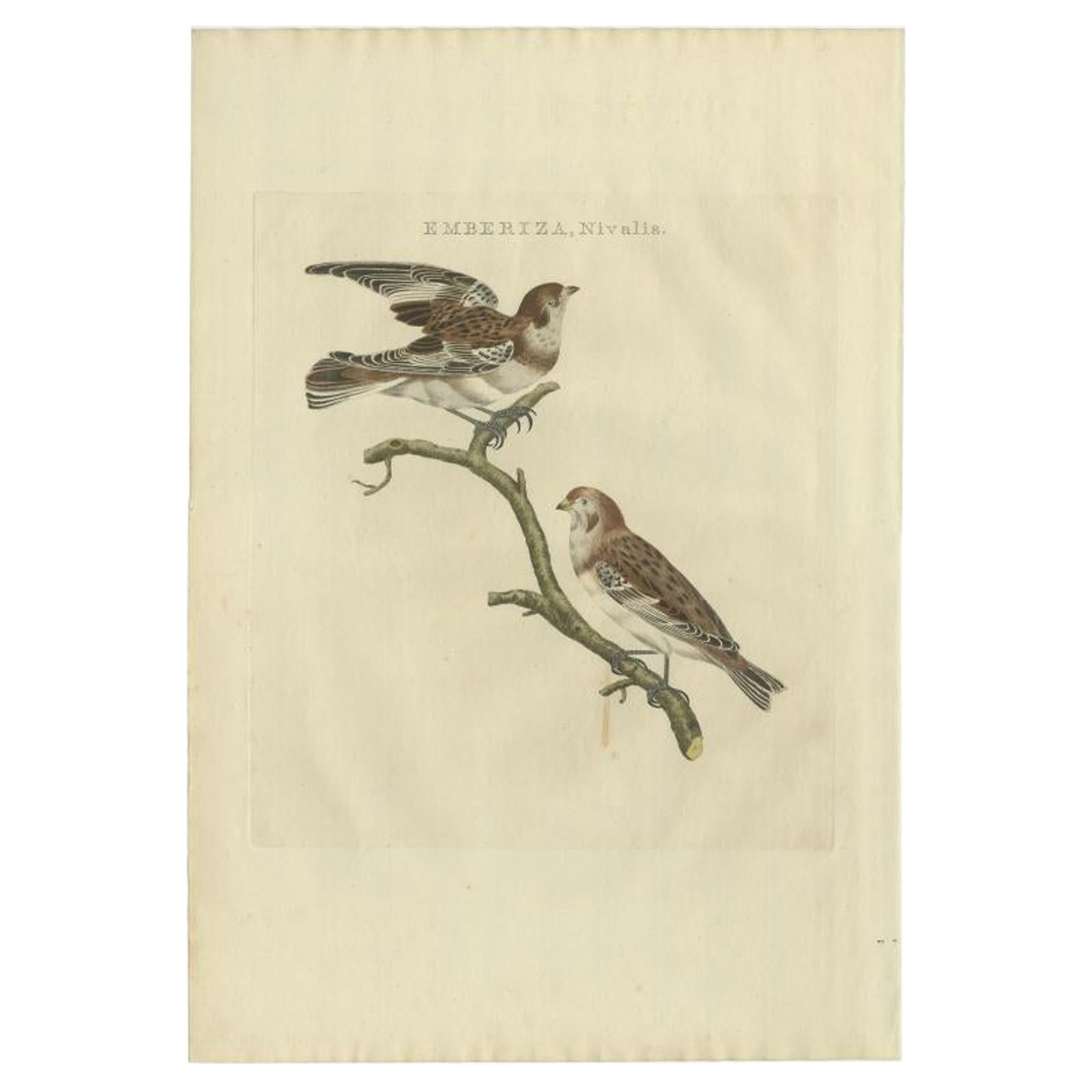
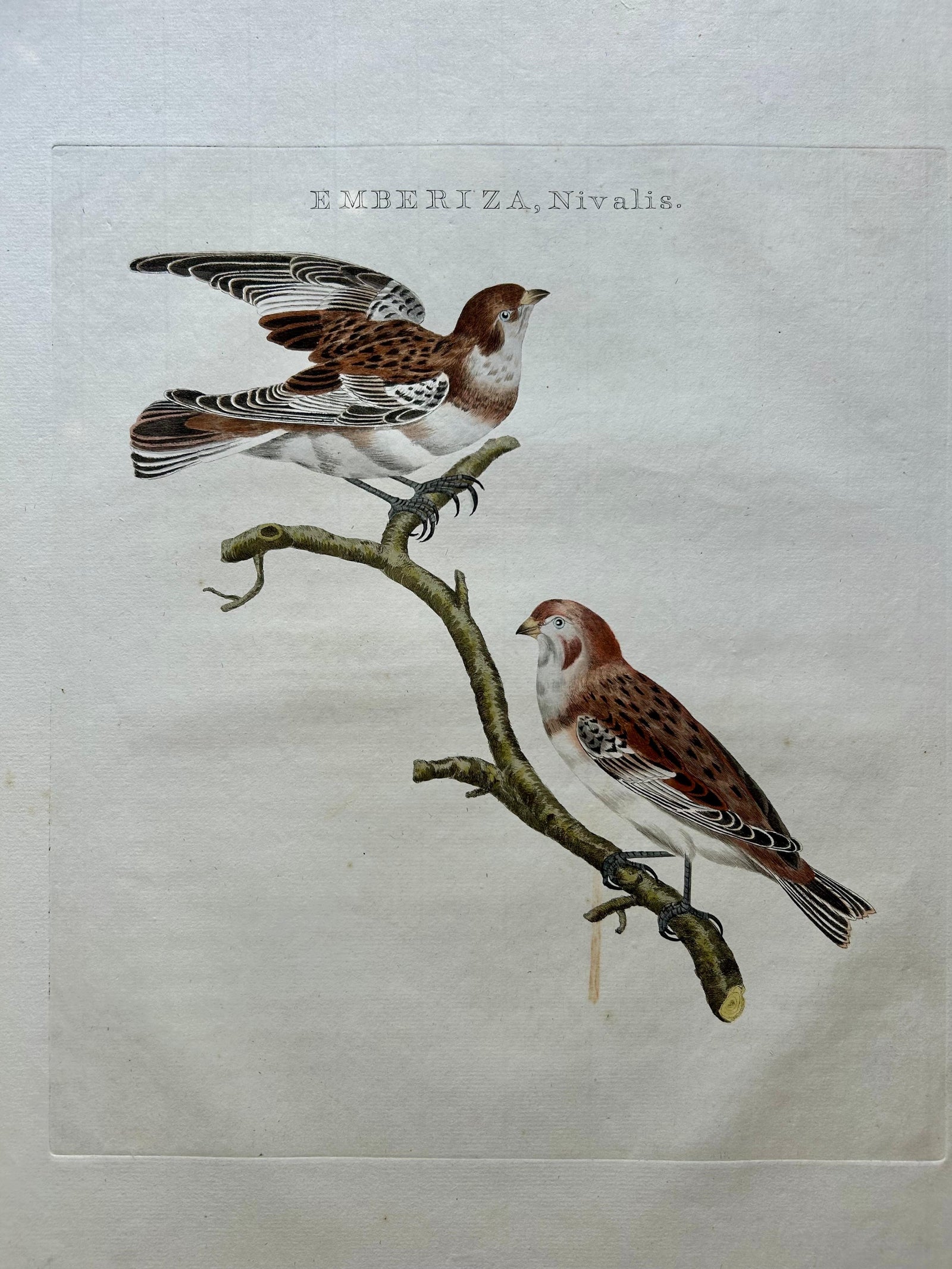
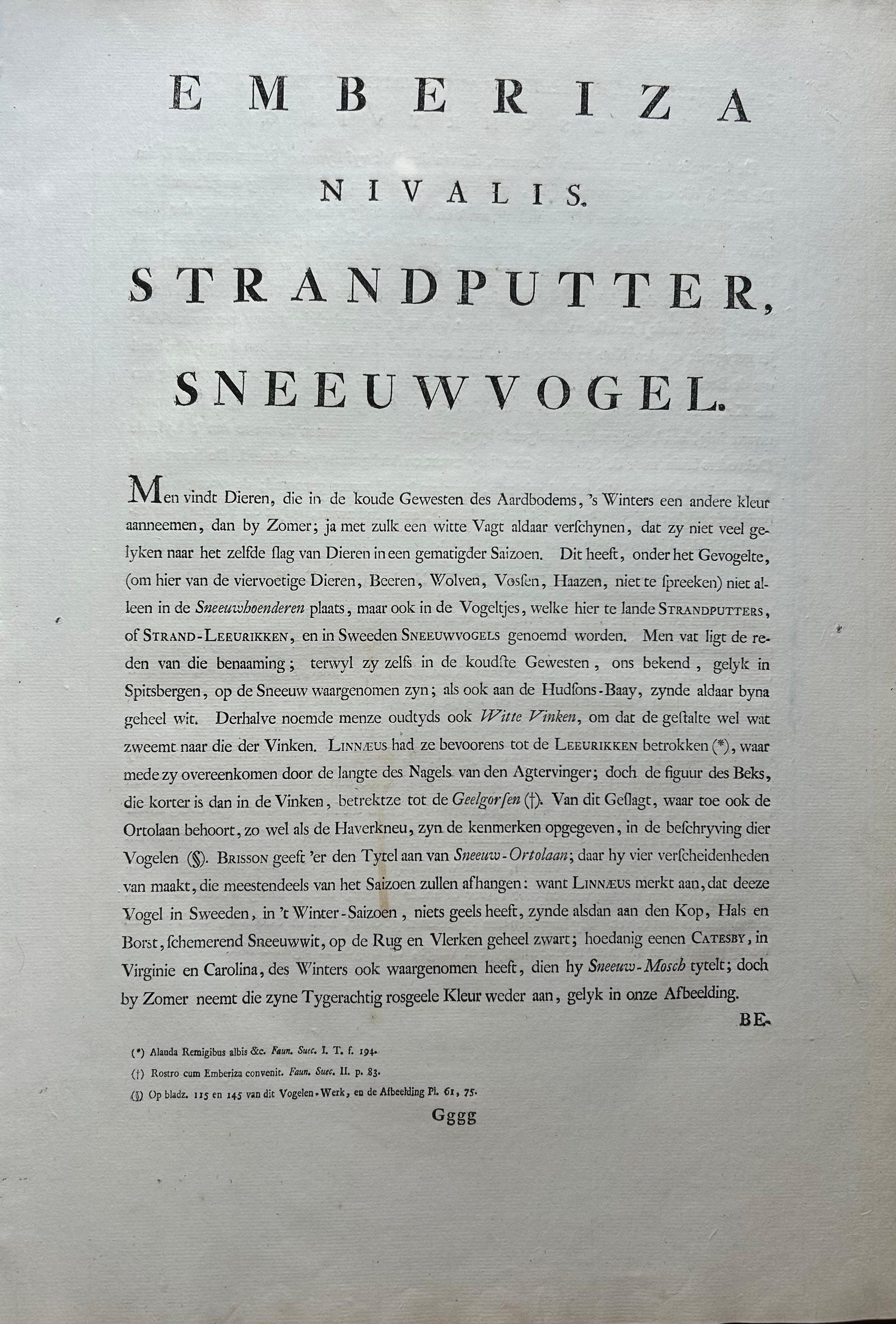
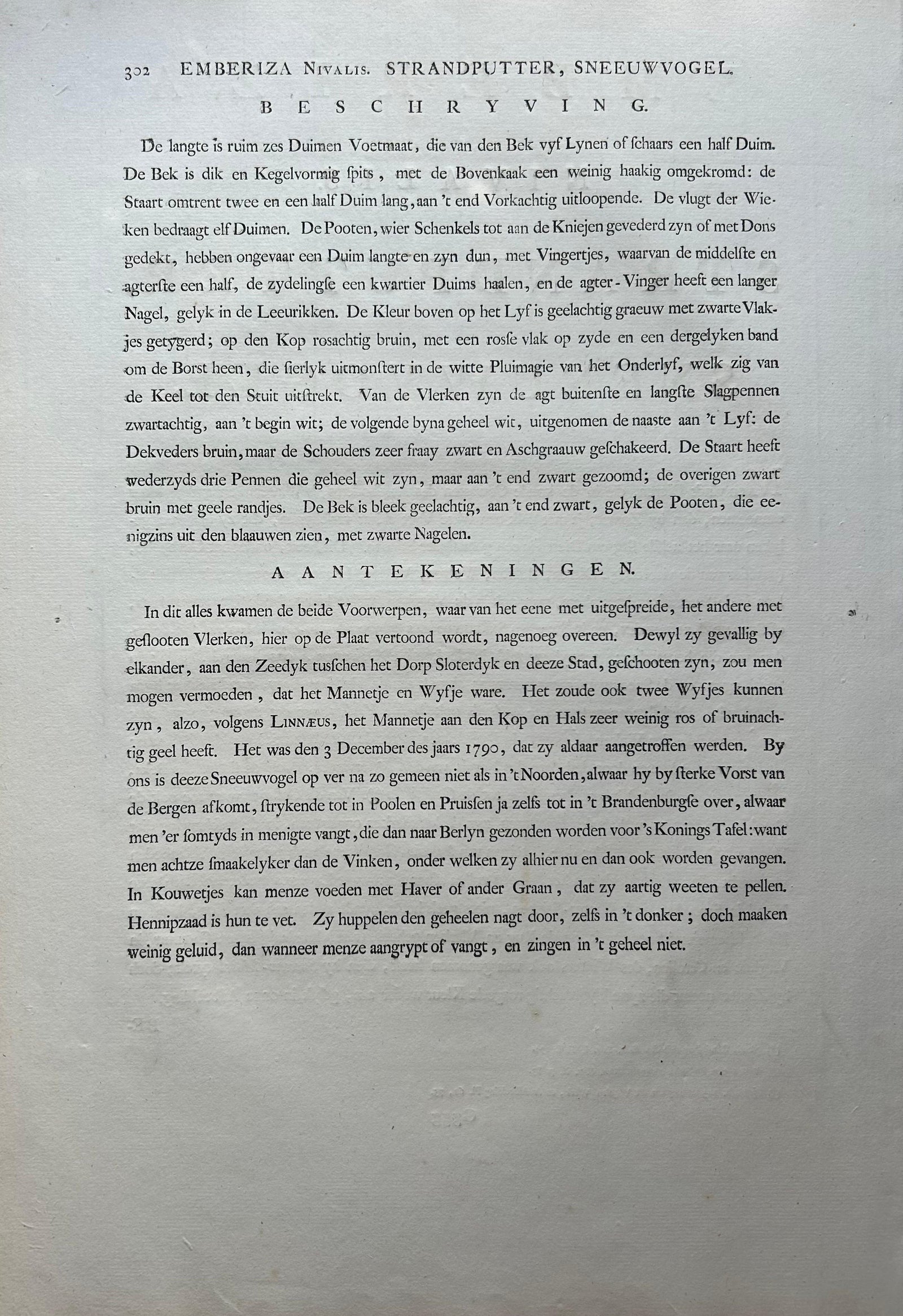
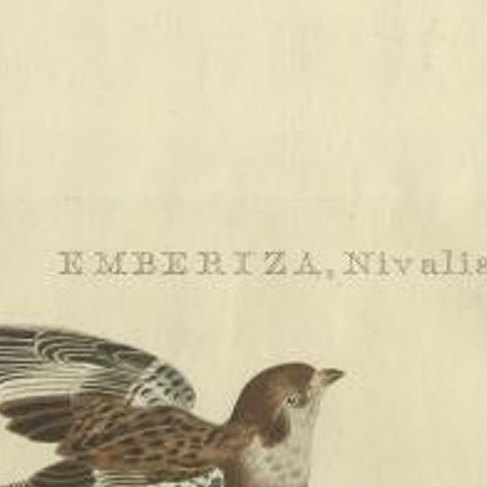
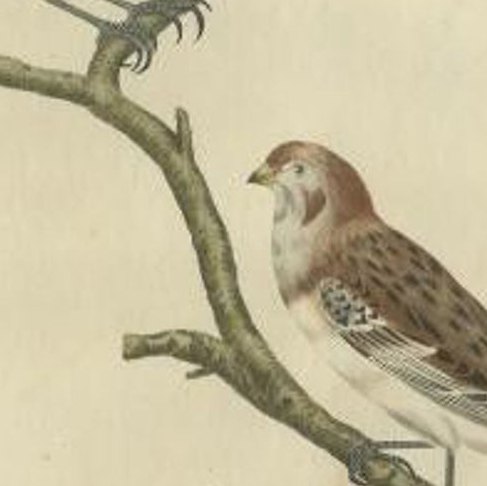
Emberiza nivalis, Antique Snow Bunting Print by Nozeman & Sepp, 1809
£465 ($620, €550)
Period original, not a reproduction.
Shipped from the Netherlands, flat, insured and tracked, worldwide. Returns accepted within 14 days.
- Date
- 1809
- Size
- 20.9 × 14.6 in (53 × 37 cm)
- Technique
- Engraved
- Condition
- Good. Good impression with general age-related toning; one small stain within the image (see photos). Original Dutch text page included; sound and clean with light, even toning.
- Period
- Early 19th century
- Artist or book
- Nozeman and Sepp
- Section
- Birds
- Reference
- f_25878102
Emberiza nivalis, Antique Snow Bunting Print by Nozeman & Sepp, 1809
This finely hand-coloured engraving shows the snow bunting (Plectrophenax nivalis), known in Dutch as the “sneeuwgors.” Two birds perch on a sinuous branch, their crisp brown-and-white plumage and neat conical bills rendered with scientific precision. An Arctic specialist, the snow bunting nests on tundra cliffs and rocky ground and winters farther south along coasts and open fields, including the Low Countries.
The plate comes from Nederlandsche Vogelen; volgens hunne huisdouding, aert, en eigenschappen beschreeven (Amsterdam, 1770–1829), the first comprehensive study of Dutch birds by Cornelis Nozeman, Martinus Houttuyn, and Jan Christiaan Sepp, renowned for accurate natural-history plates printed on fine laid paper and finished by hand. The accompanying Dutch text pages offer historical and scientific notes on the species, its behaviour, nesting, and characteristics as understood in the late 18th and early 19th centuries, with Dutch names "strandputter, sneeuwvogel" noted.
Condition: Good impression with general age-related toning; one small stain within the image (see photos). Original Dutch text page included; sound and clean with light, even toning.
Framing tips: A warm ivory mount will lift the white plumage; pair with a slim ebonised or dark oak frame for a classic natural-history look. A double mount with a narrow buff inner line nicely echoes the bird’s rufous tones. Use UV-protective glazing to preserve the hand-colour.