Close-ups
Framed and on the wall
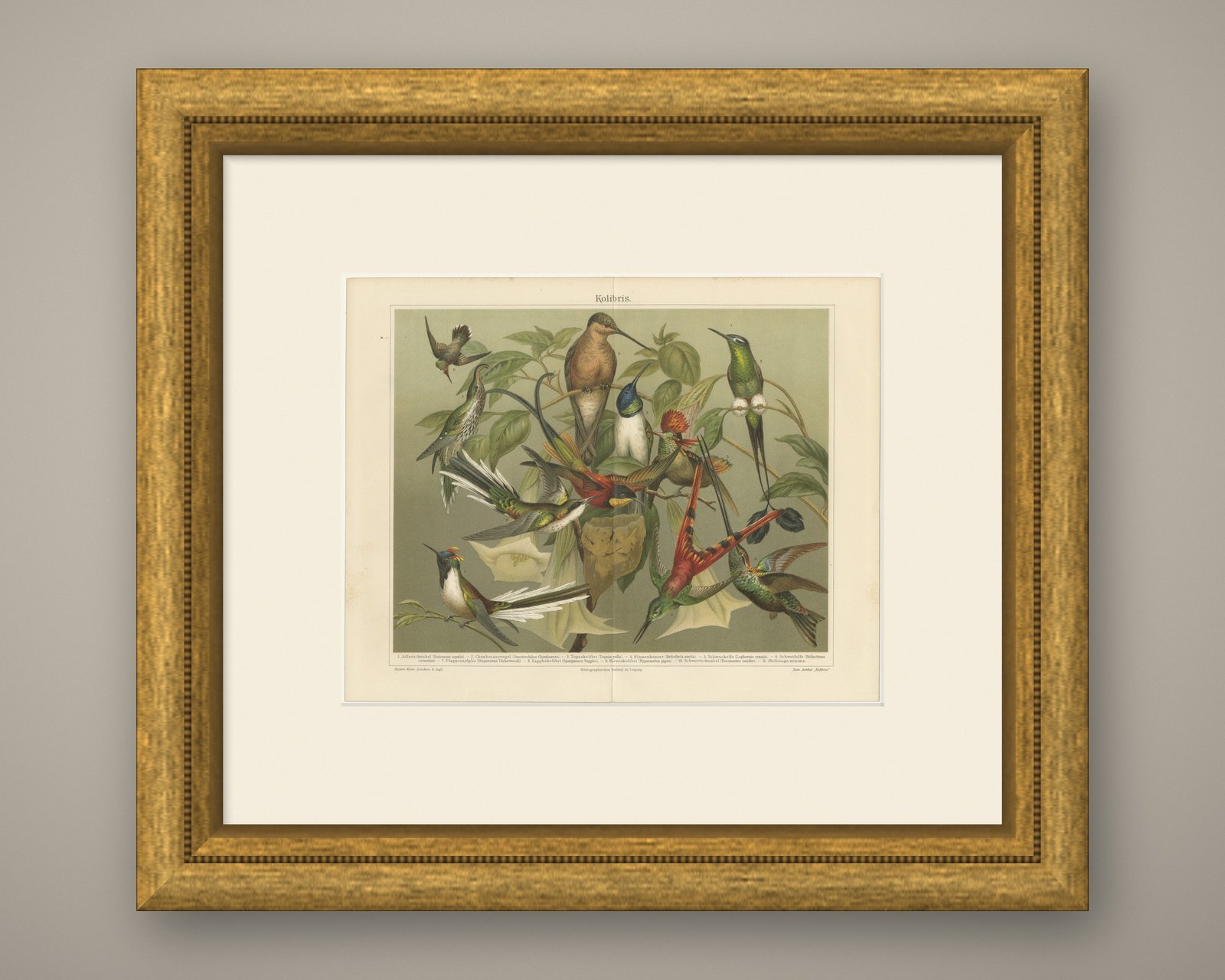
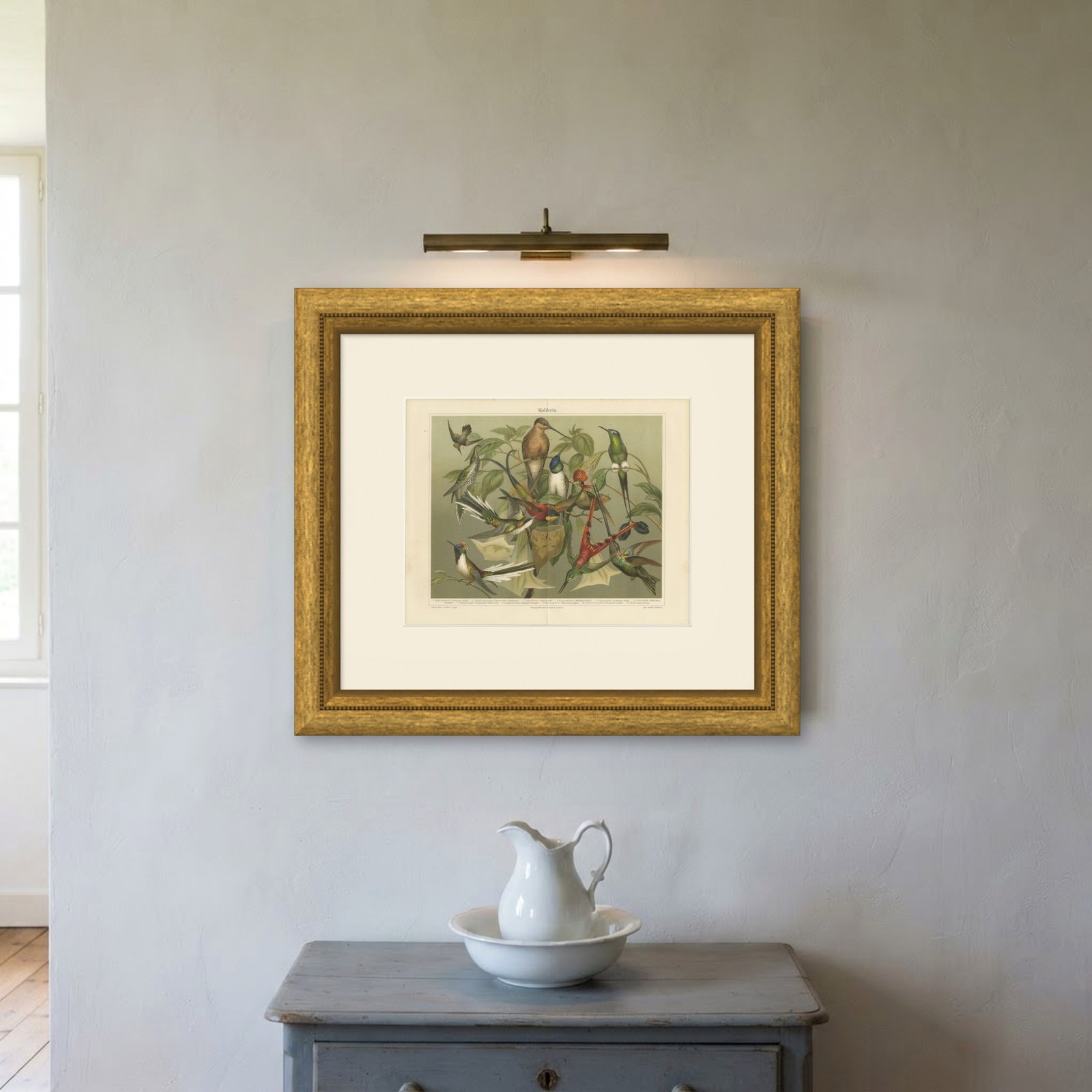

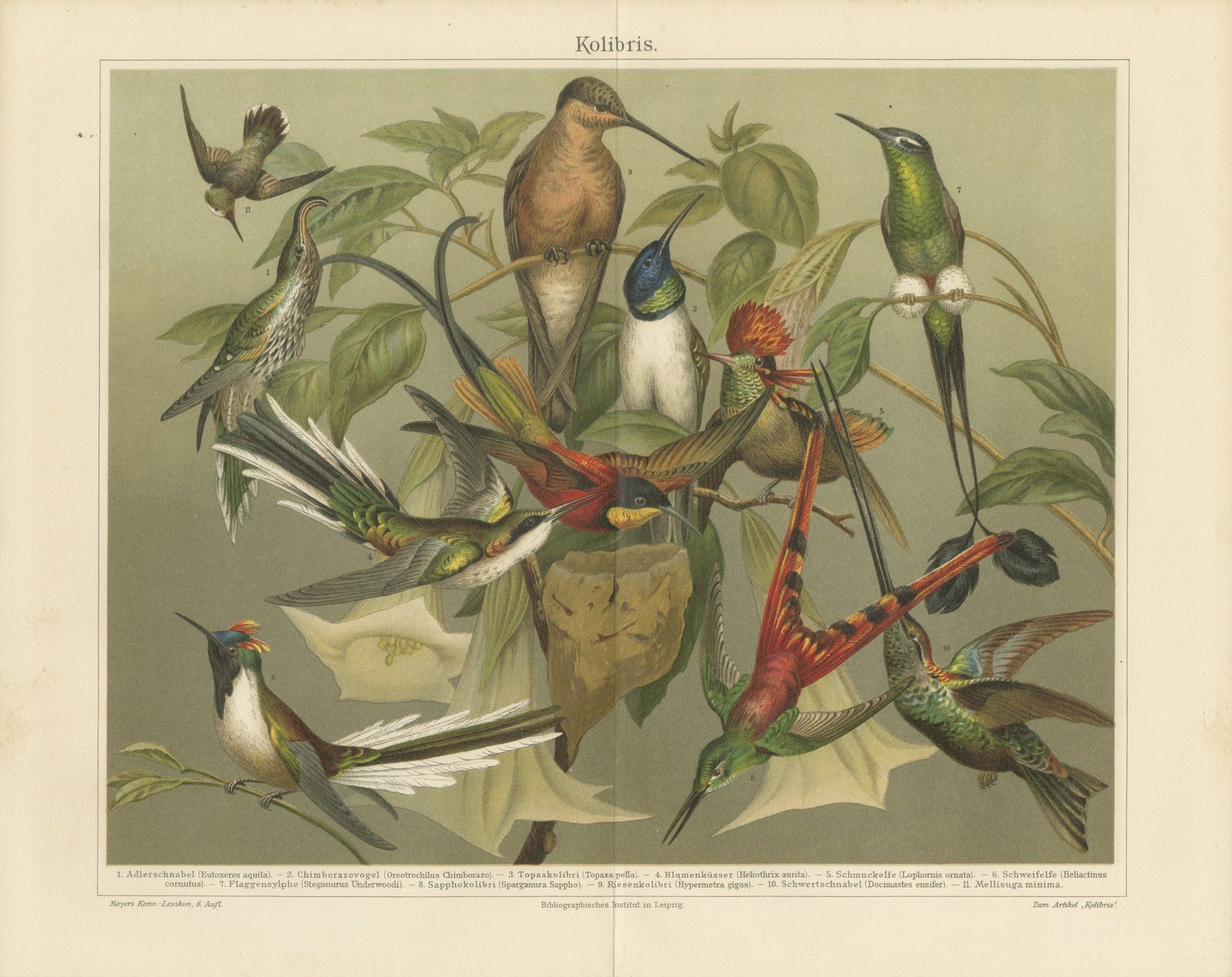
Frame and rooms are illustrations of how the print could look; the description says what is included.
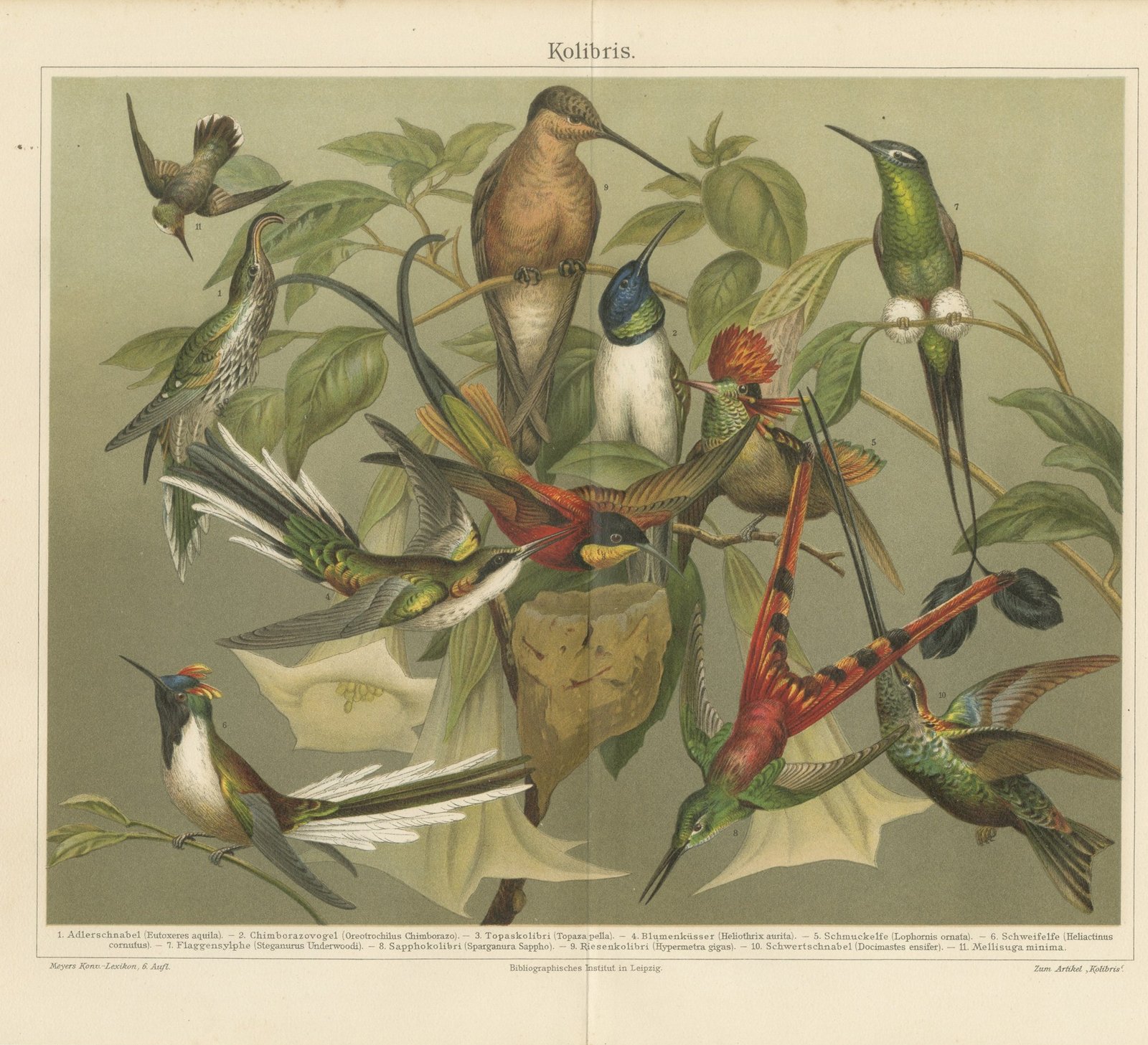
Eleven Hummingbirds, Decorative Antique Meyers Plate, circa 1910
$155 (£115, €140)
Period original, not a reproduction.
Shipped from the Netherlands, flat or rolled, insured and tracked, worldwide. Returns accepted within 14 days.
- Date
- 1906-1912
- Size
- 9.6 × 12.2 in (24.5 × 31 cm)
- Technique
- Chromolithograph
- Coloring
- Printed color
- Condition
- Good. Even age toning. Handling soiling along the top edge. All four corners complete. Center fold, as issued.
- Period
- 20th century
- Section
- Birds
- Reference
- BG-12952-32
What the condition grades mean
- Excellent
- Bright and clean, with no faults worth mentioning.
- Very good
- Only light signs of age, such as faint toning.
- Good
- Normal signs of age for a sheet of this period: toning, some foxing, small marks or neat old repairs.
- Fair
- Clear faults such as staining, tears or repairs, priced to match.
Every fault we see is written in the condition note, and the whole sheet is shown uncropped in the photos.
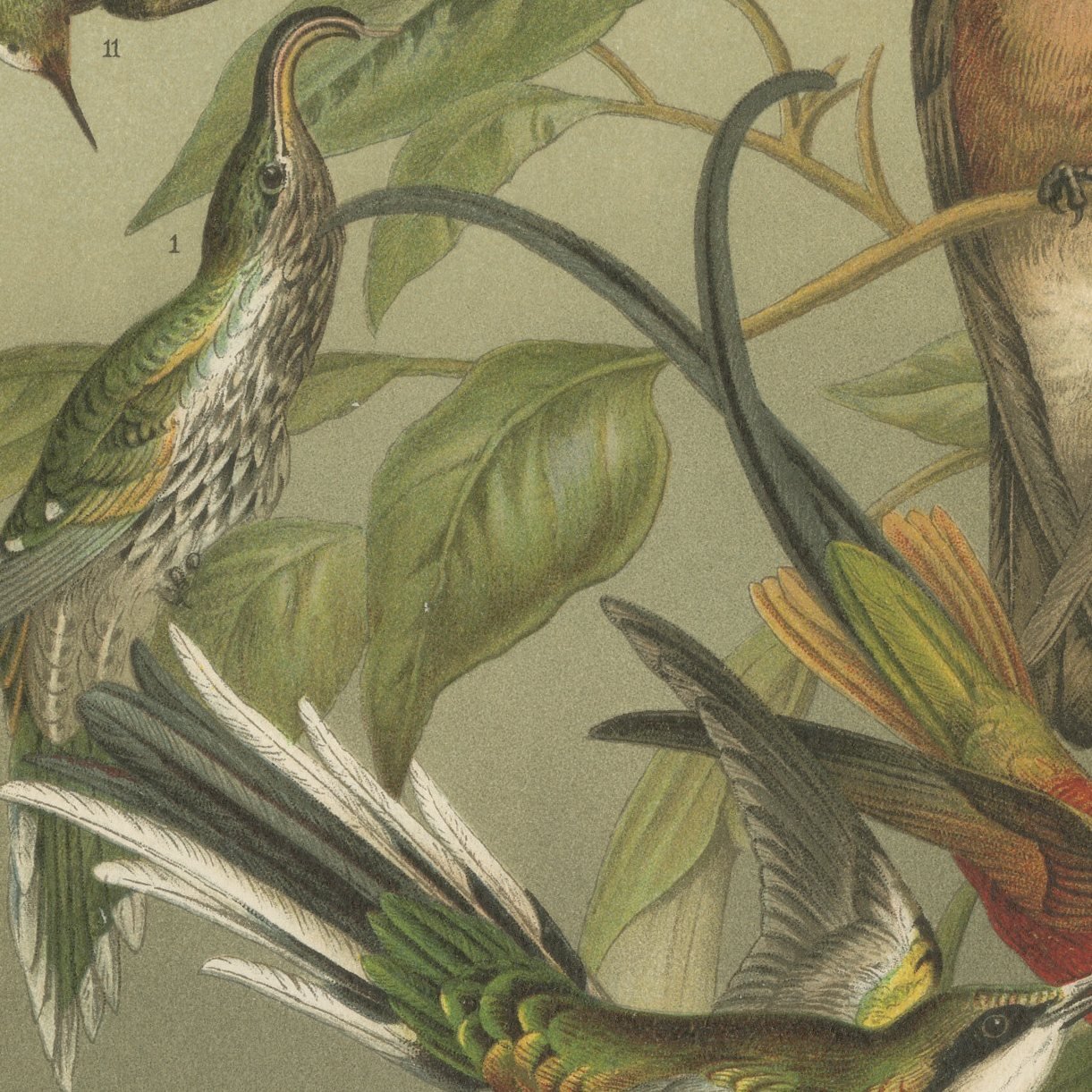
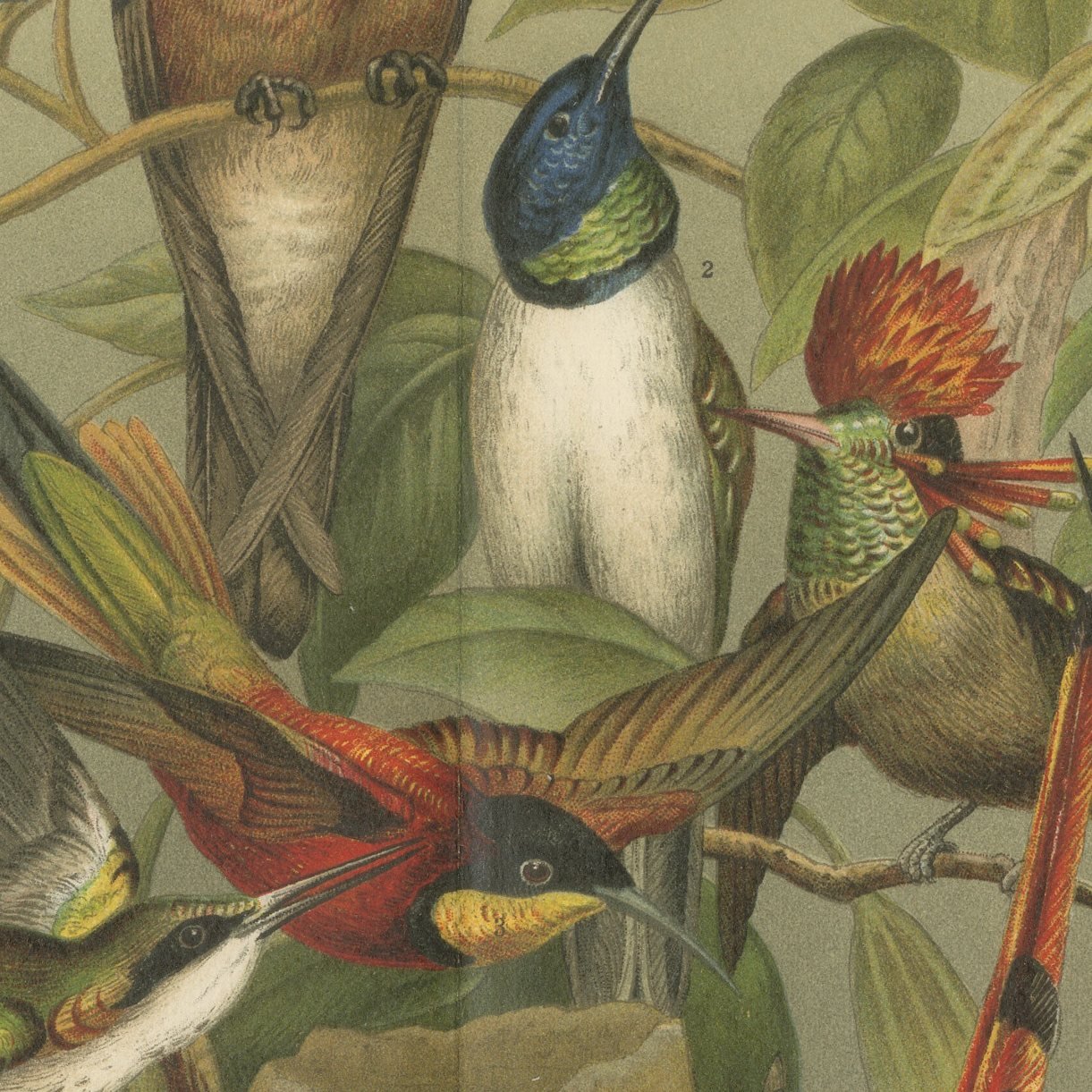
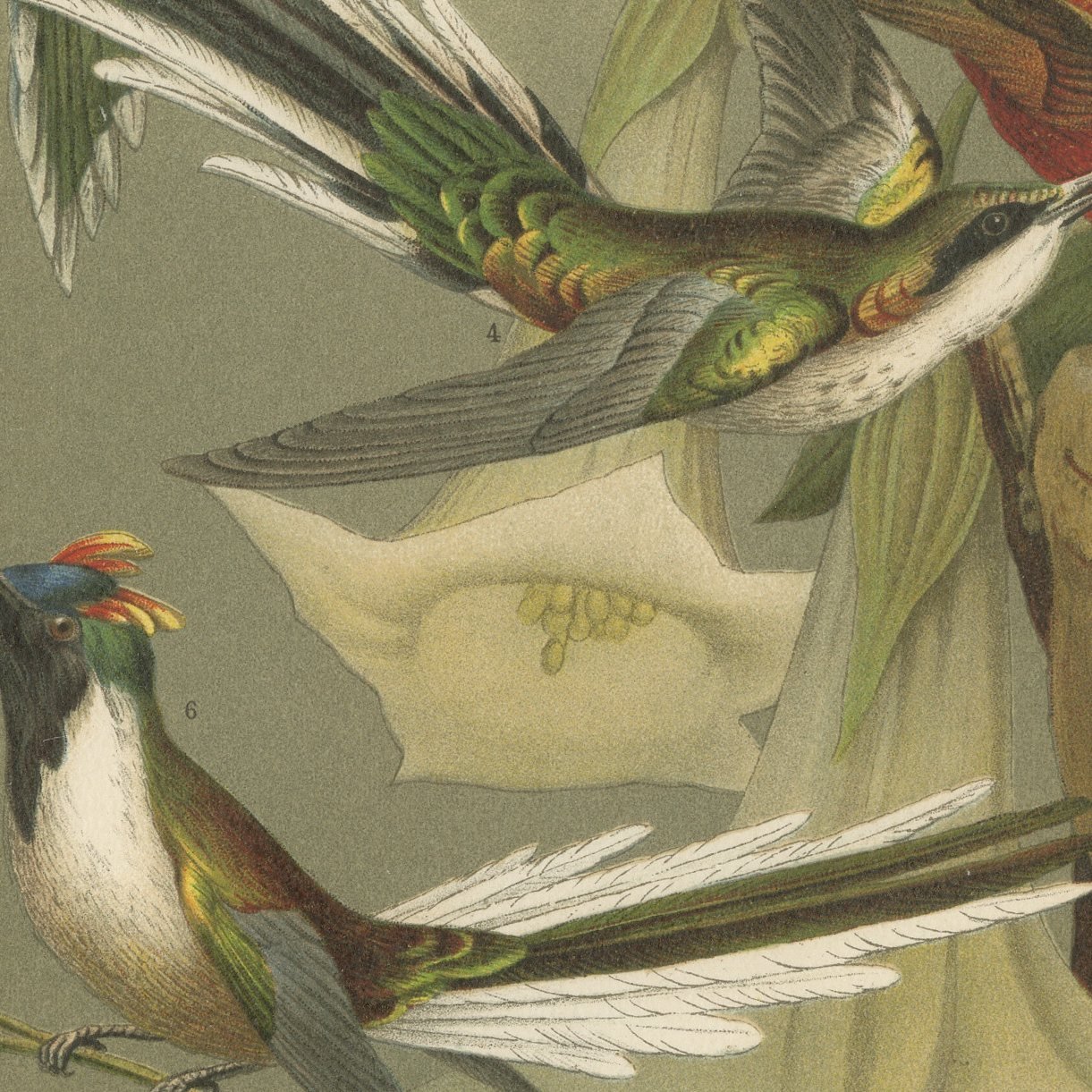
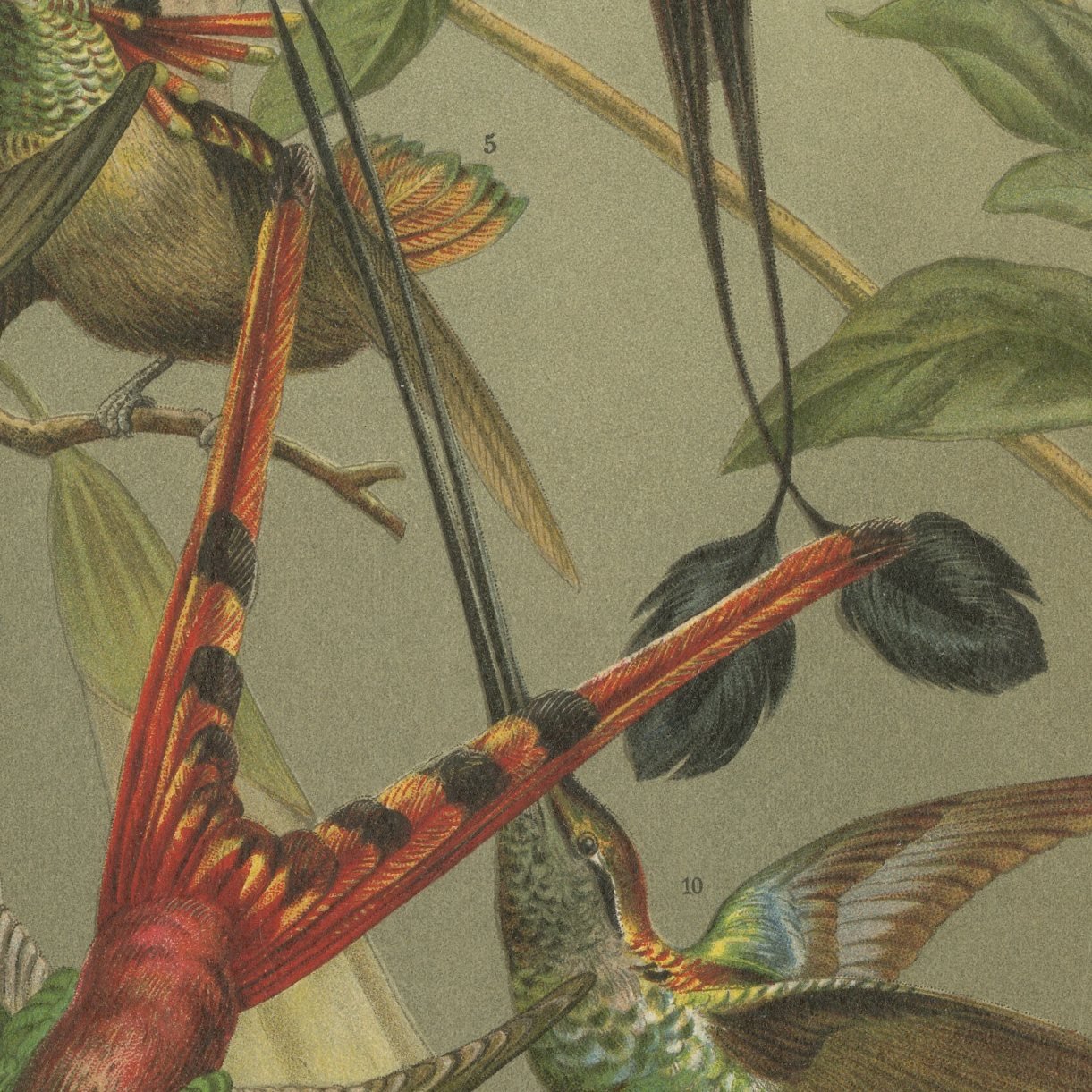
Eleven hummingbirds among foliage and flowers. This original antique natural history plate was printed in color by the Bibliographisches Institut for Meyers Grosses Konversations-Lexikon, the sixth edition of the great German encyclopedia, published in Leipzig and Vienna by the Bibliographisches Institut between 1906 and 1912, and it is lettered on the sheet with its German title, Kolibris. The plate shows the white tipped sicklebill, the Chimborazo hillstar, the crimson topaz, the black eared fairy, the tufted coquette, the horned sungem, the booted racket tail, the red tailed comet, the giant hummingbird, the sword billed hummingbird and the vervain hummingbird. It carries the imprint of the house at the foot together with the article it belongs to, Zum Artikel Kolibris.
The sixth edition of Meyers ran to more than twenty volumes and several hundred plates, and its colored plates were the showpiece of the whole undertaking. The Bibliographisches Institut had been founded in 1826 and by this date ran one of the largest lithographic printing works in Europe, with its own staff of draftsmen and its own color presses in Leipzig. The plates were drawn from specimens and from the collections of the day by named specialists, printed from a separate stone for each color, and bound in at the article they illustrate. That is why a Meyers plate holds its color so well after more than a century and why the fine lettering is still crisp.
Encyclopedia plates of this quality are collected now for exactly the reason they were made, which is that they set out a subject completely and clearly on a single sheet. This one belongs to the German article Kolibris, and it is the kind of image that rewards close looking as well as working at a distance. The modest sheet size suits a simple frame with a wide mat, and plates from the same edition group very well because they share a format, a palette and a typeface. A pair or a group of three hung together in a study, a kitchen, a consulting room or a hallway reads as a deliberate collection rather than as a single decorative print.
Even age toning. Handling soiling along the top edge. All four corners complete. Center fold, as issued.
This is an original antique print, not a modern reproduction. This item is sold unframed.