Close-ups
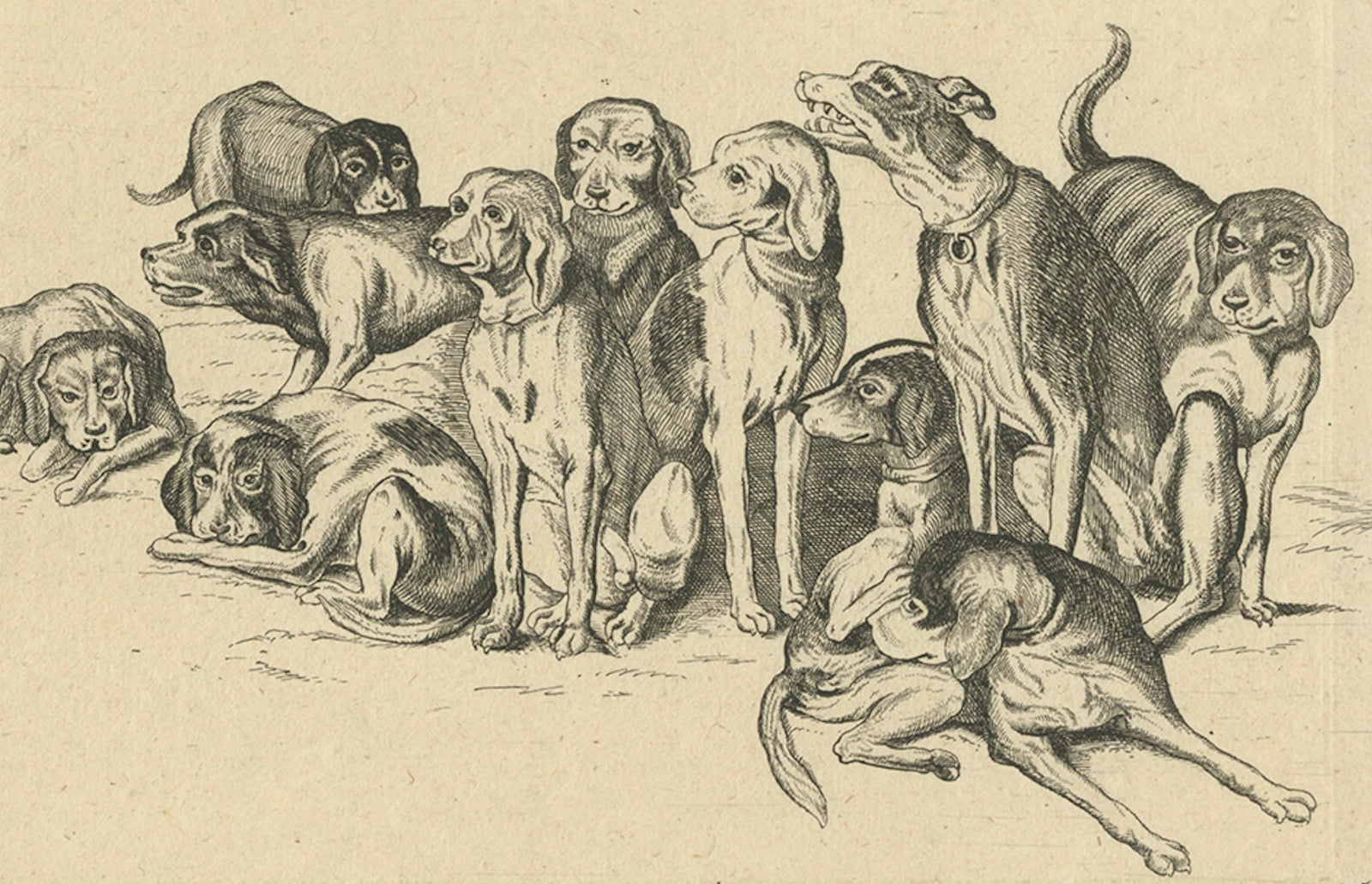
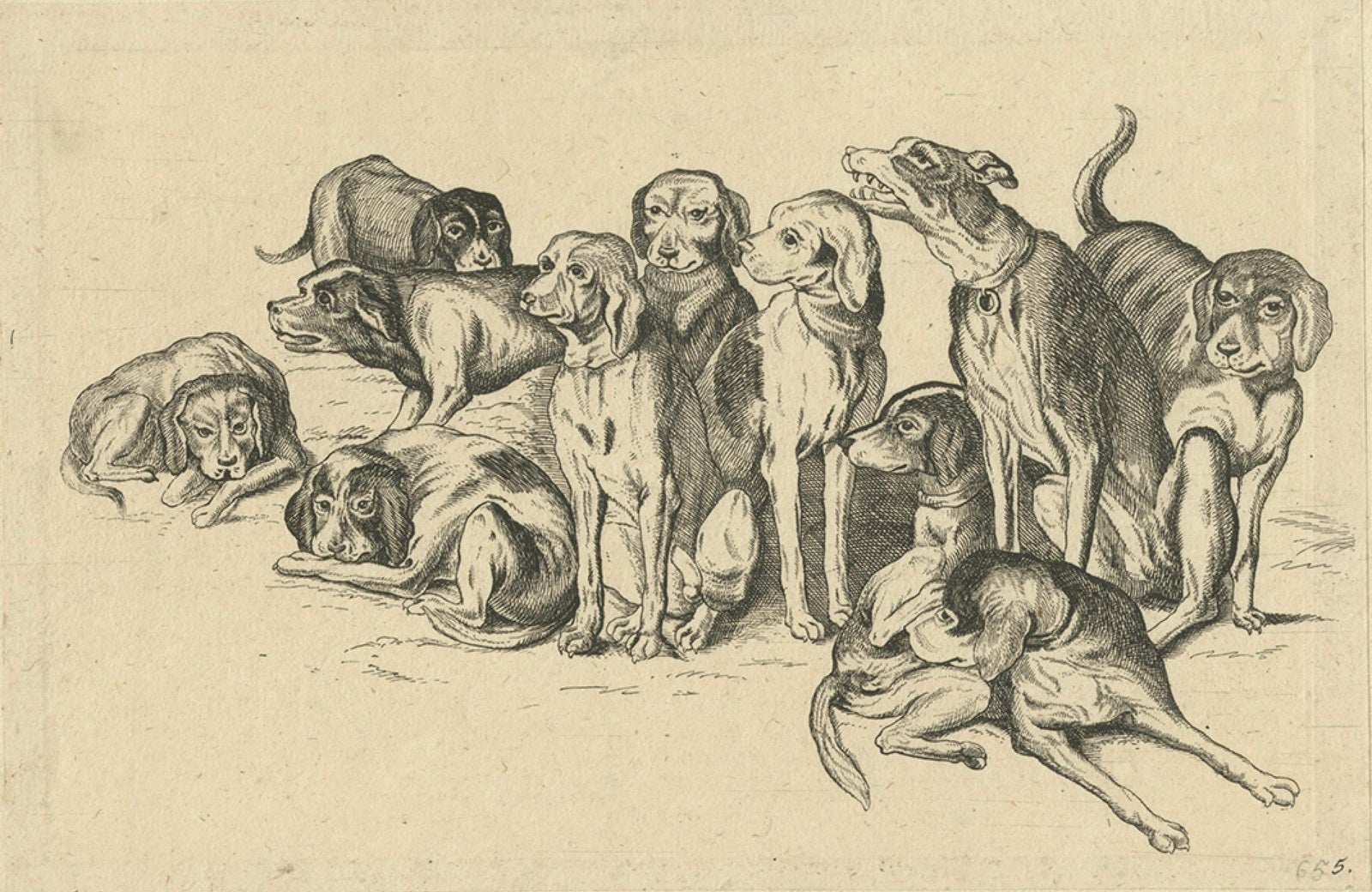
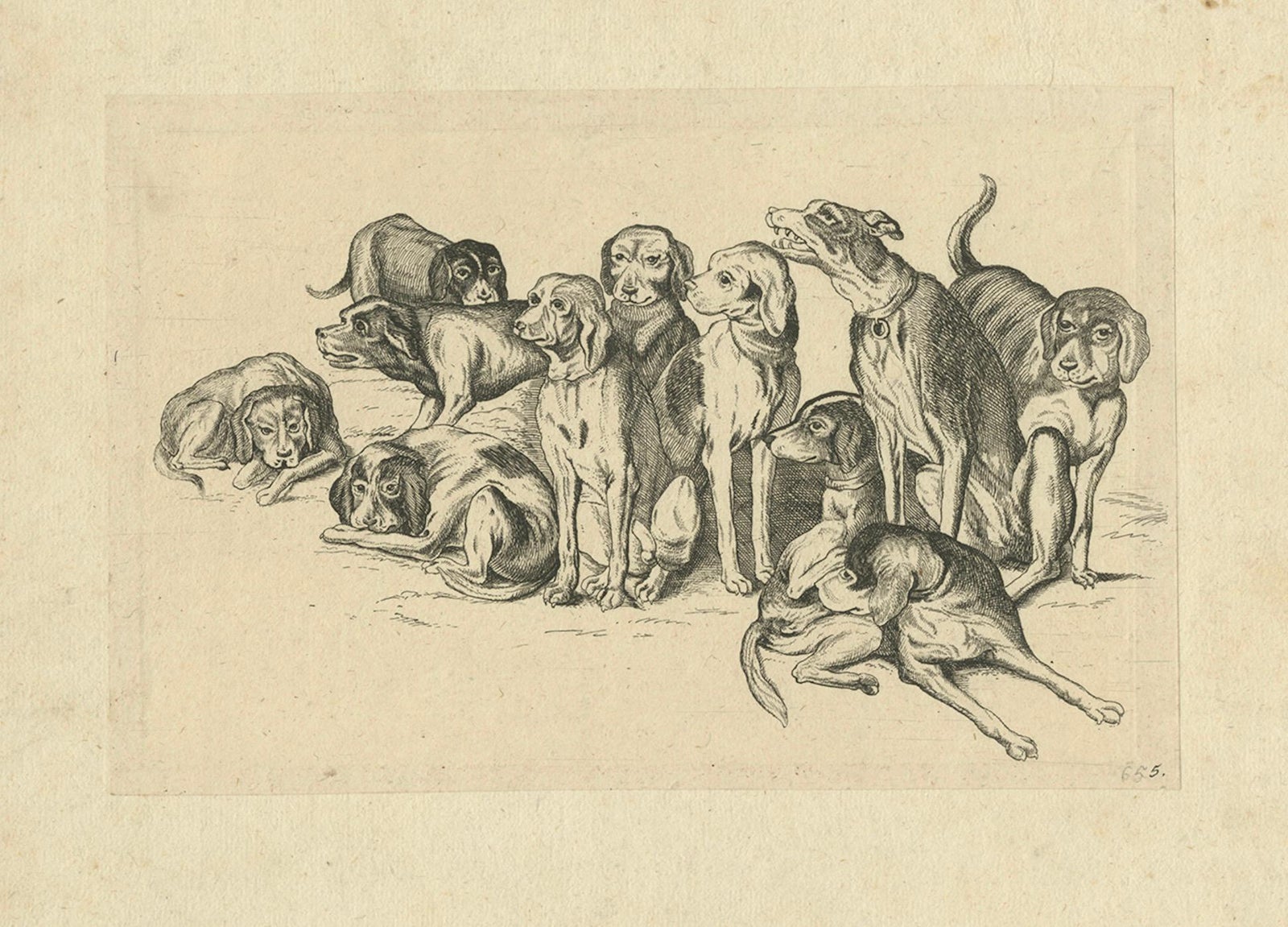
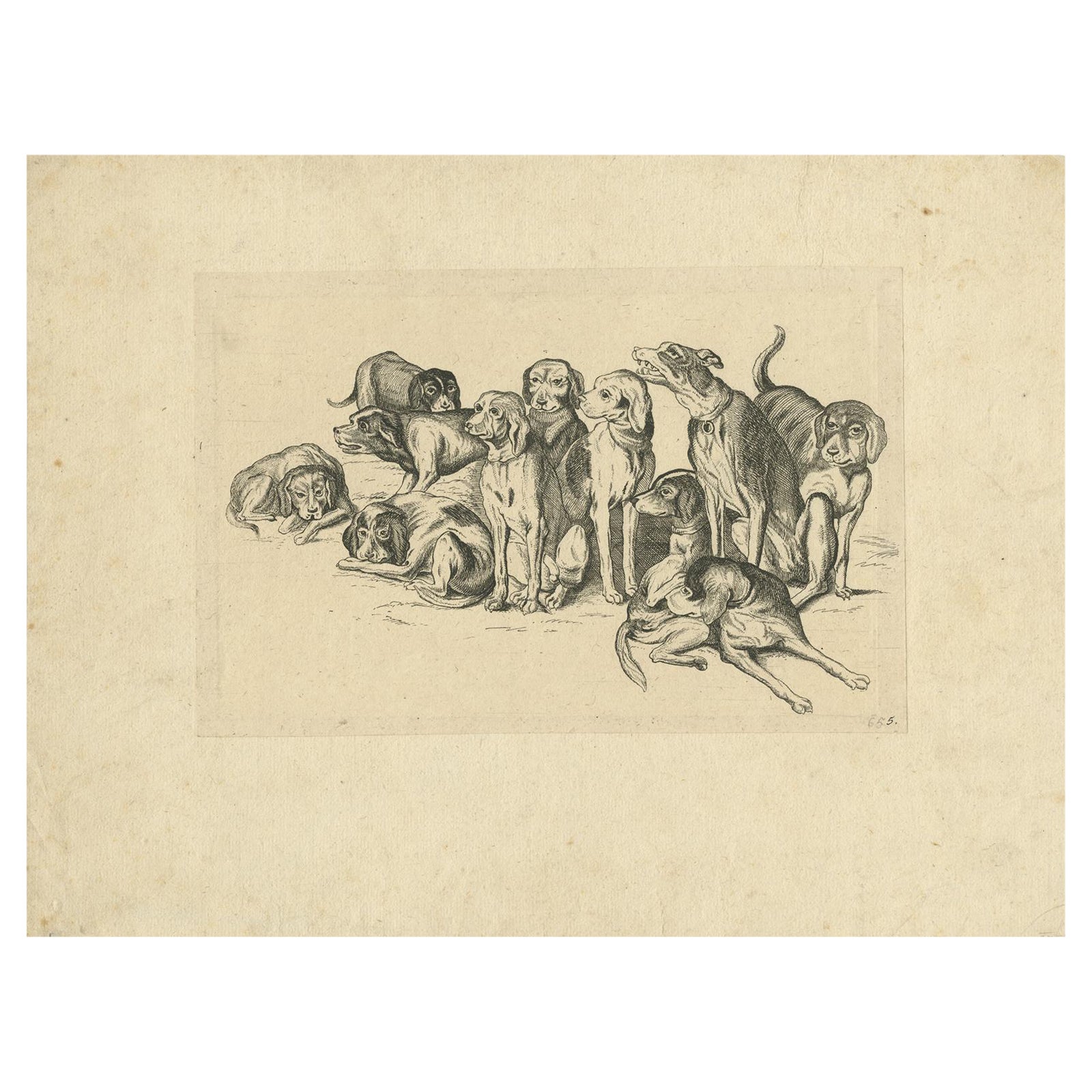
Eleven Hounds, Reversed 17th-Century Etching After Wenceslaus Hollar, c.1646
€590 ($660, £500, €590)
Period original, not a reproduction.
Shipped from the Netherlands, flat, insured and tracked, worldwide. Returns accepted within 14 days.
- Date
- 1646
- Size
- 4.7 × 8.1 in (12 × 20.5 cm)
- Condition
- Good. Very good for age. Minimal handling marks. Mounted to chain-laid paper. Sheet retains visible laid lines and a period watermark. Rare reversed orientation compared to the standard Hollar Eleven Hounds, indicating a possible early counterproof or copy.
- Period
- Before 1700
- Section
- Mammals
- Reference
- f_46234402
Eleven Hounds, Reversed 17th-Century Etching After Wenceslaus Hollar, c.1646
This fine 17th-century etching depicts a group of eleven hounds in various resting and alert poses, rendered with remarkable attention to anatomy and expression. The composition is reversed in orientation compared to the well-known Eleven Hounds by Wenceslaus Hollar (1607–1677), the celebrated Bohemian etcher who worked extensively in Antwerp and London. In this variant, the dogs face to the right, and the sheet bears the number “655” in the lower right corner, likely a later collector’s reference mark.
The image captures the distinctive character of each animal, from the watchful gaze of the standing hounds to the relaxed demeanor of those lying in the foreground. The work’s fine lines, careful shading, and naturalistic detail reflect the influence of Hollar’s mastery in translating texture and form through the etching needle.
The reversed composition and presence of a period laid-paper watermark featuring small leaves suggest that this impression may be a contemporary counterproof or an early copy after Hollar, produced in the 17th century for connoisseurs and collectors. Counterproofs, created by pressing a freshly printed image onto another sheet while still damp, result in softer lines and a mirrored image, offering a rare and intimate view of the artist’s work in reverse.
This piece is printed on laid paper with visible chain lines and a watermark consistent with period papermaking. Its well-preserved condition, attractive subject, and connection to Hollar’s animal studies make it a desirable addition for collectors of early prints, canine imagery, or 17th-century graphic art.
Condition: Very good for age. Light toning to sheet, minimal handling marks, generous margins. Mounted to chain-laid paper. Sheet retains visible laid lines and a period watermark. Number “655” in lower right corner in pencil. Rare reversed orientation compared to the standard Hollar Eleven Hounds, indicating a possible 17th-century counterproof or early copy.
Framing tips: A warm-toned mount (ivory or pale cream) in a narrow, dark-stained wood or ebonized frame will complement the print’s age and subject while drawing attention to the fine linework.
Technique: Etching
Maker: After Wenceslaus Hollar, Bohemia/Netherlands/England, c.1646