Close-ups
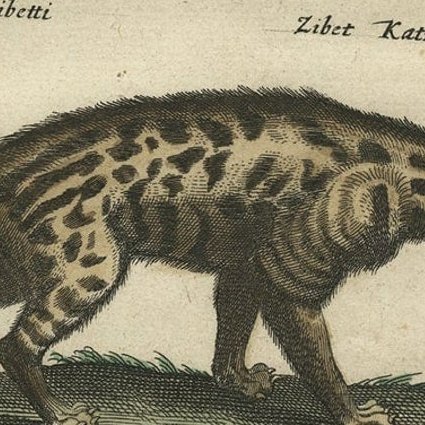
Framed and on the wall
Frame and rooms are illustrations of how the print could look; the description says what is included.
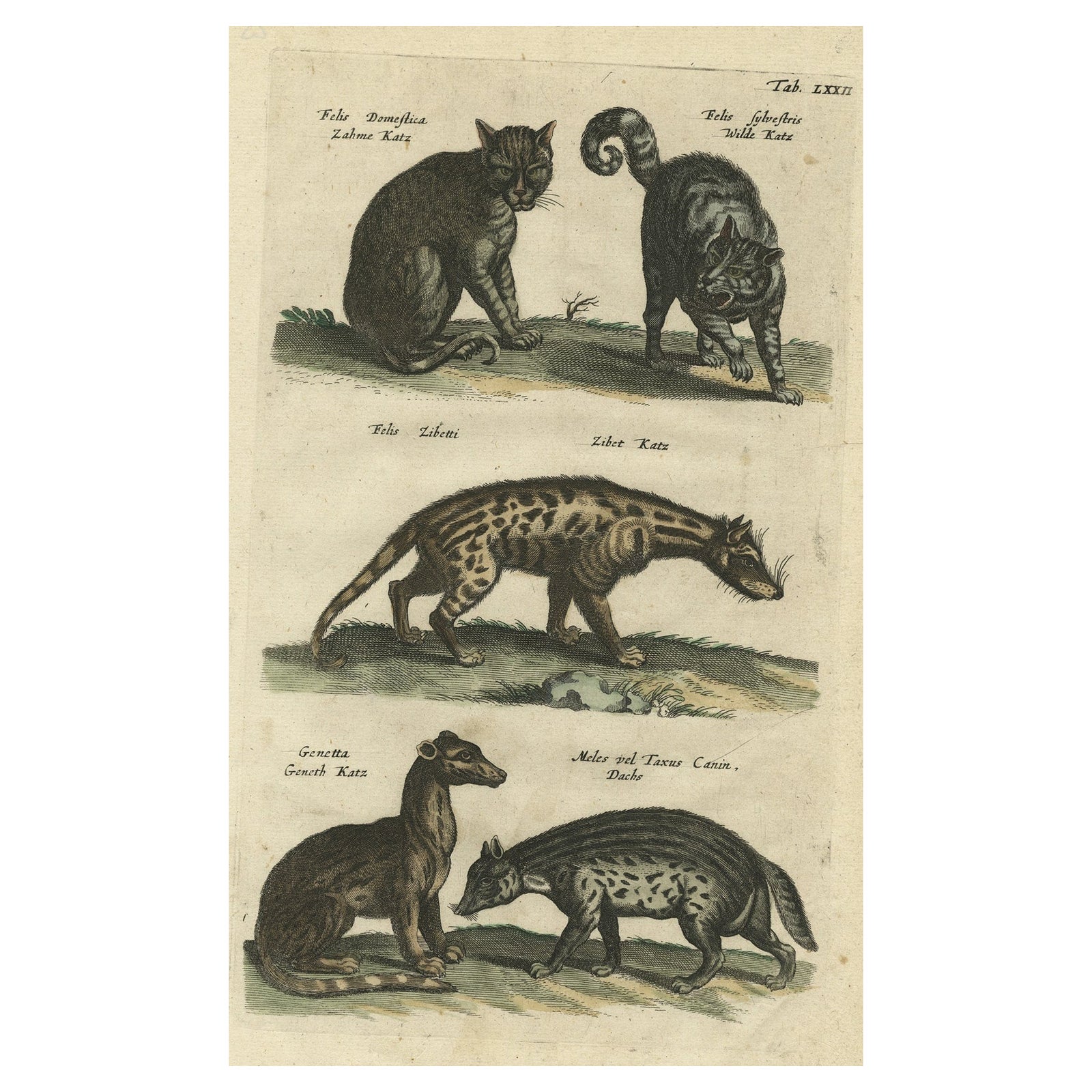
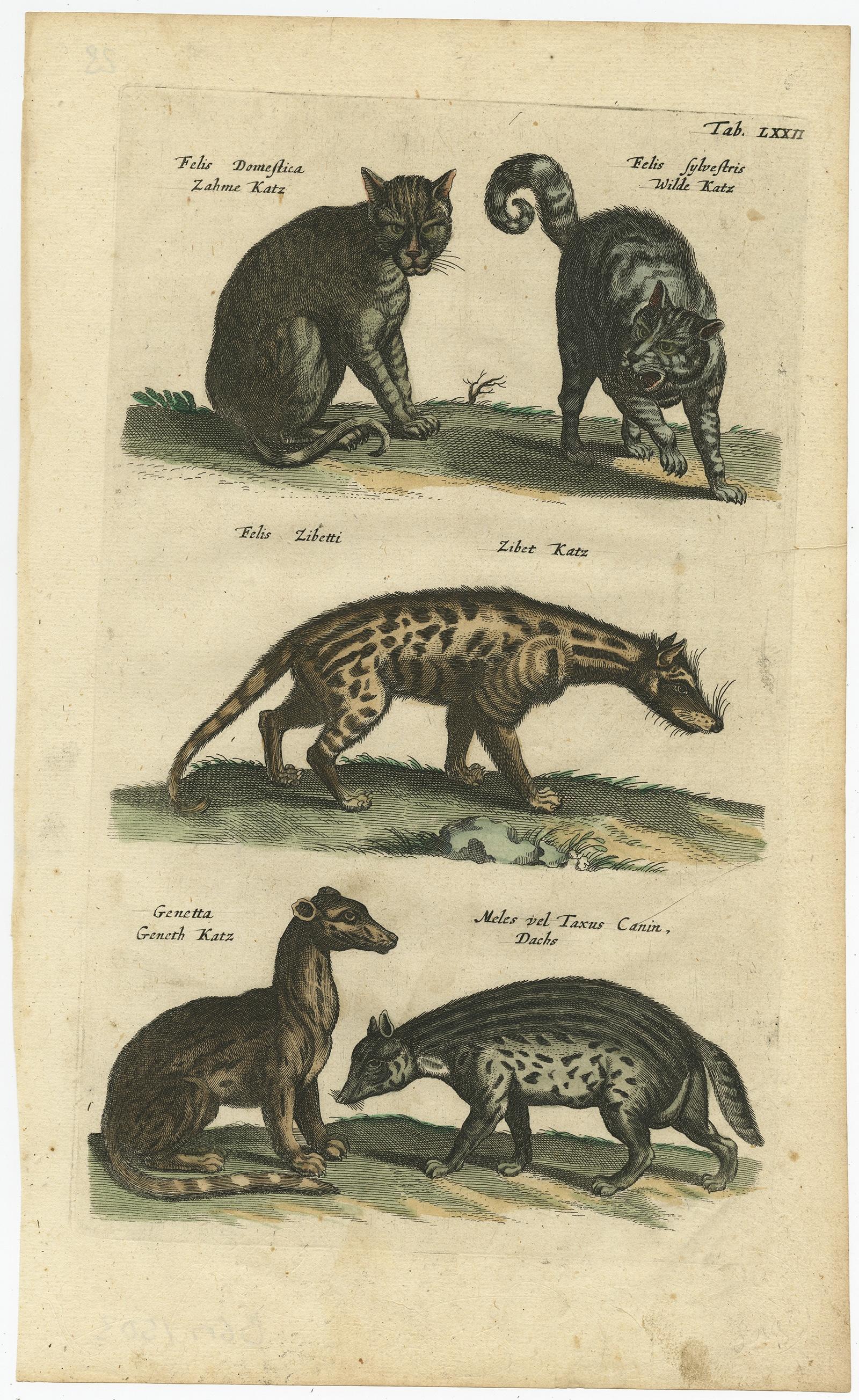
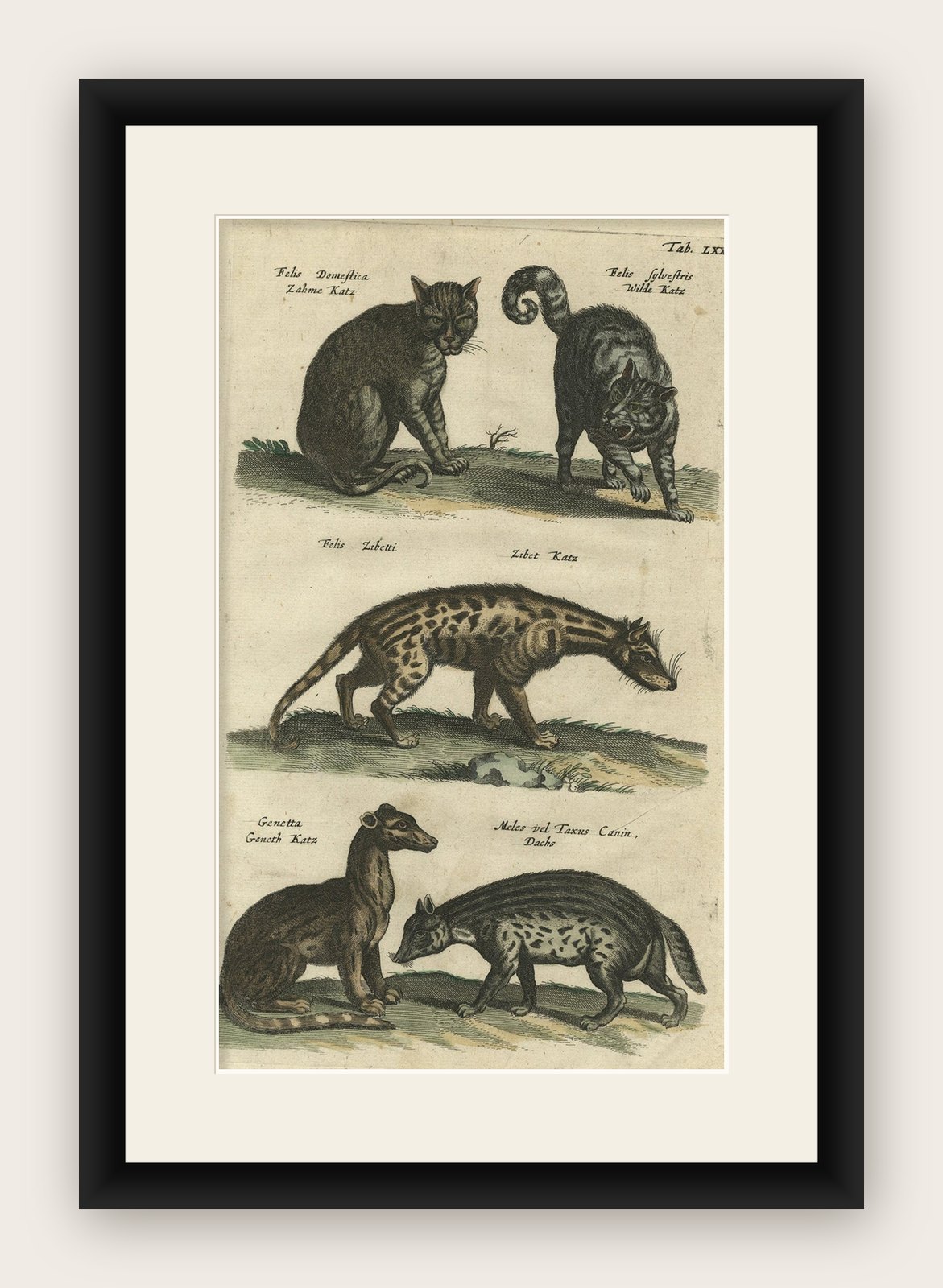
Antique Print of Domestic and Wild Cat Species, incl The Civet, 1657
$325 (£245, €290)
Period original, not a reproduction.
Shipped from the Netherlands, flat, insured and tracked, worldwide. Returns accepted within 14 days.
- Date
- 1657
- Size
- 13.7 × 8.3 in (34.8 × 21 cm)
- Condition
- Good. Given age. A few small spots. General age-related toning and/or occasional minor defects from handling. Please study image carefully.
- Period
- Before 1700
- Artist or book
- Maria Sibylla Merian
- Section
- Mammals
- Reference
- f_27357602
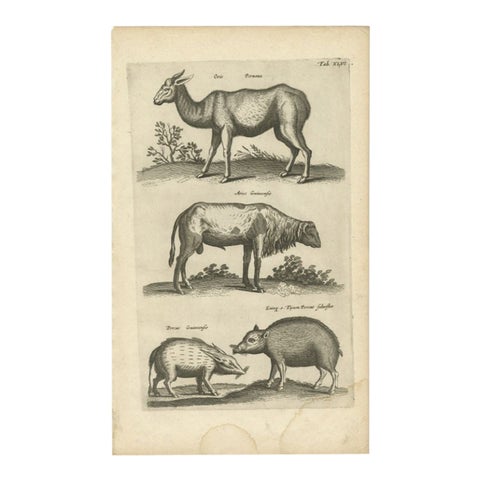
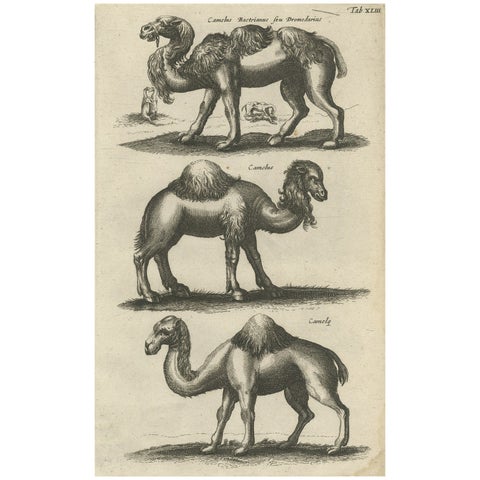
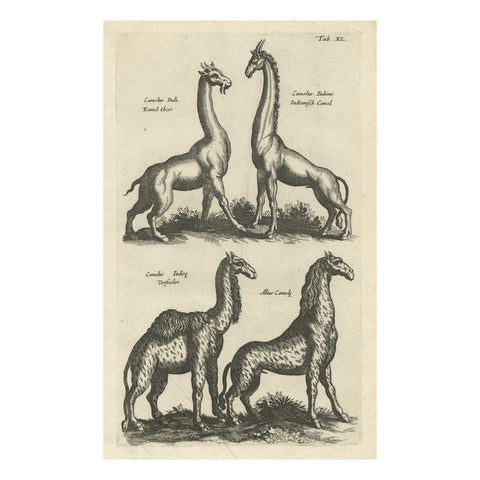
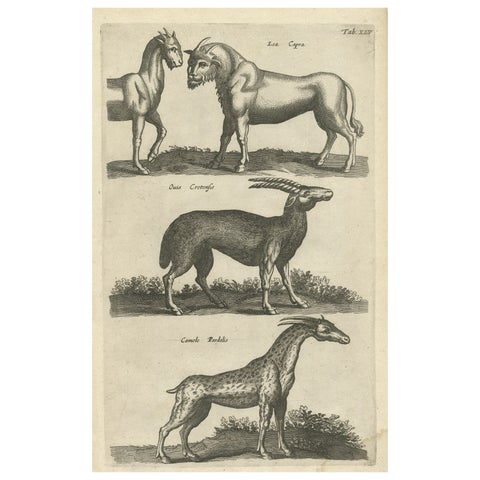
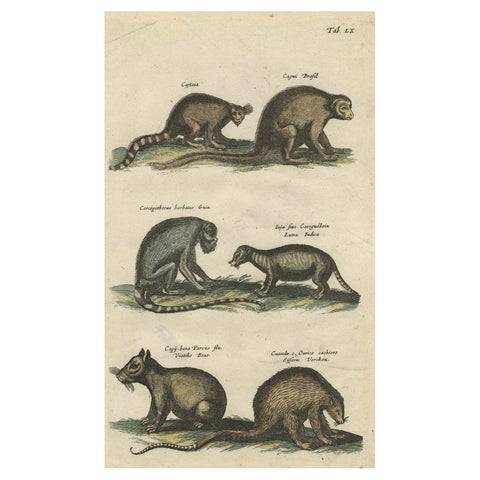
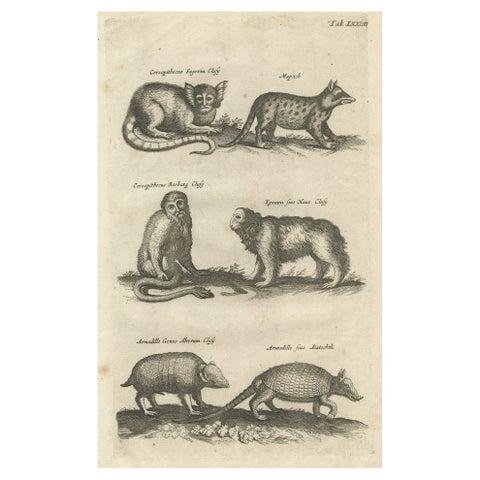
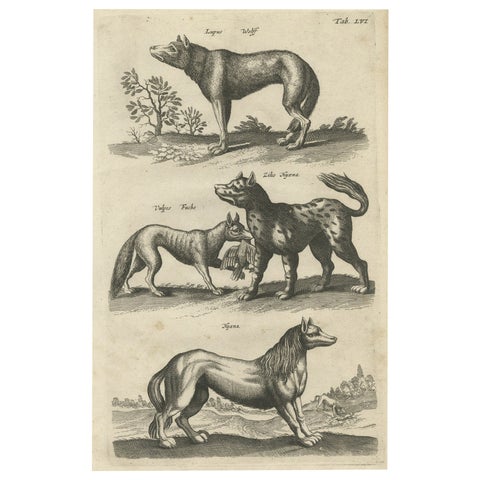
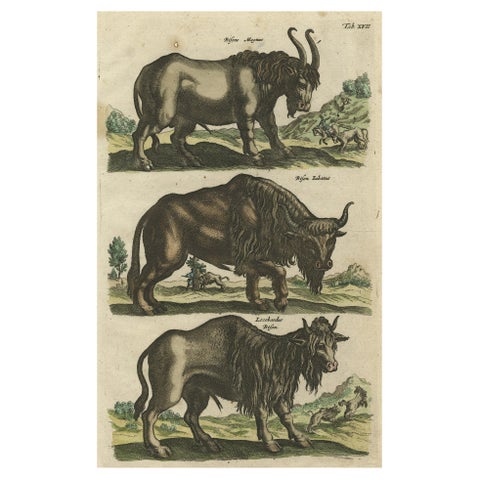
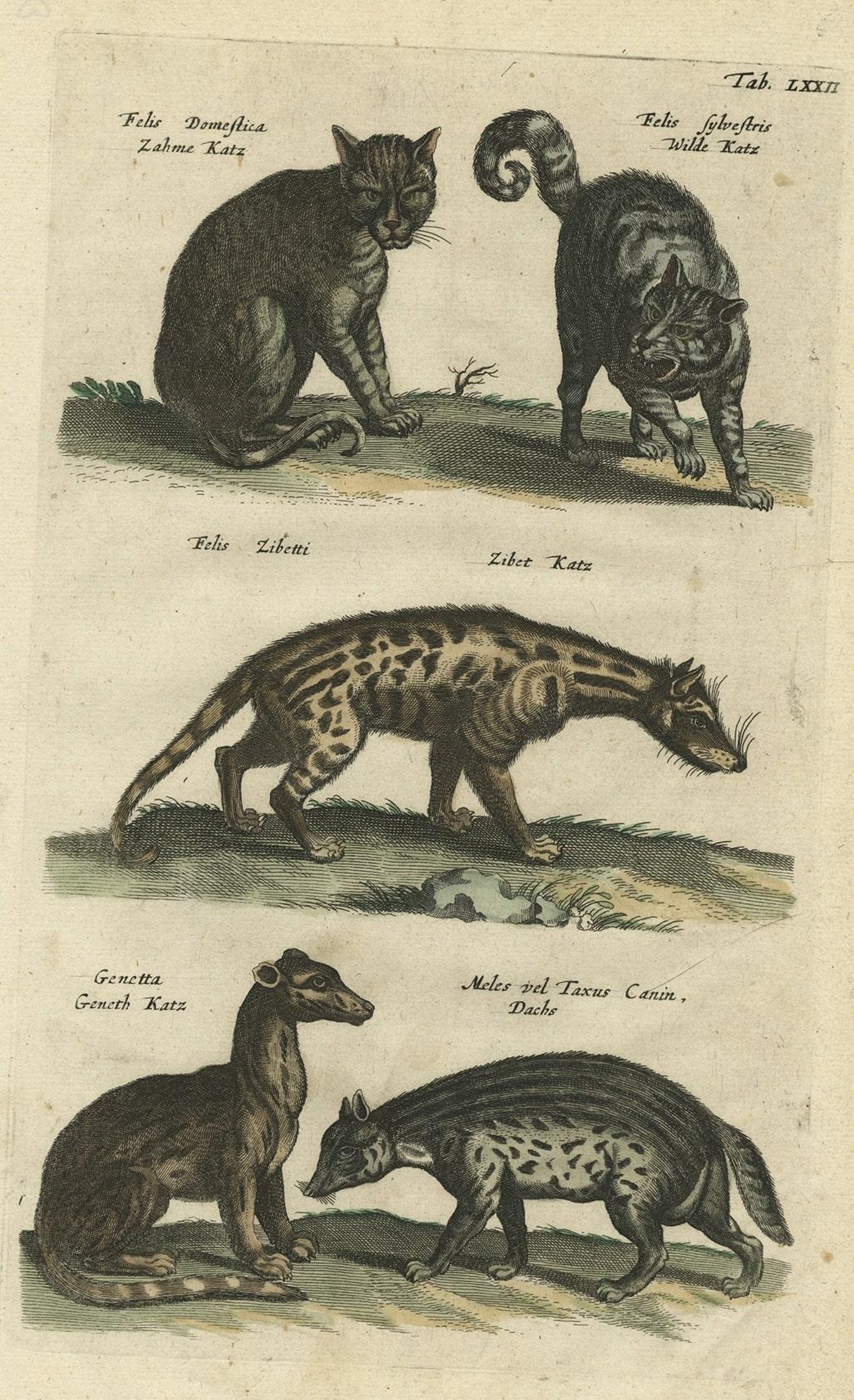
Antique print of domestic and wild cat species; Felis domestica, Zahme Katz (Domestic cat) - Felis sylvestris, Wilde Katz (Wild Cat) - Felis Zibetti, Zibet Katz (Civet cat) - Genetta, Geneth Katz (Genet) - Meles vel Taxus Canin, Dachs (Badger). This print originates from 'Historiae Naturalis De Piscibus Et Cetis Libri V' by John Johnston, published by Matthias Merian in 1657.
The Civet:
Kopi luwak (also called caphe cut chon (fox-dung coffee), in Vietnam, and kape alamid, in the Philippines) is coffee that is prepared using coffee cherries that have been eaten and partly digested by the Asian palm civet, then harvested from its fecal matter. The civets digest the flesh of the coffee cherries but pass the pits (beans) inside, where stomach enzymes affect the beans, which adds to the coffee's prized aroma and flavor. 0.5 kg (1 lb) can cost up to $600 in some parts of the world and about $100 a cup in others. This demand has led to civet farms on which the civets are fed a diet composed almost exclusively of such cherries, causing them to become severely malnourished. Farm conditions are also routinely described as deplorable. Filipino and Vietnamese oversight of these farms is non-existent.
Artists and Engravers: John Johnston (or Johnstone, 1603-1675) was a descendant of a Scottish family. Born in Sambter, Poland, he studied extensively at the famous universities of the day, including St. Andrews, Scotland, Cambridge & Leiden. After many years traveling in Europe, he settled in Silesia. Matthaus Merian was a leading German engraver of the day, from a prominent family of engravers and artists, and the father of Maria Merian.