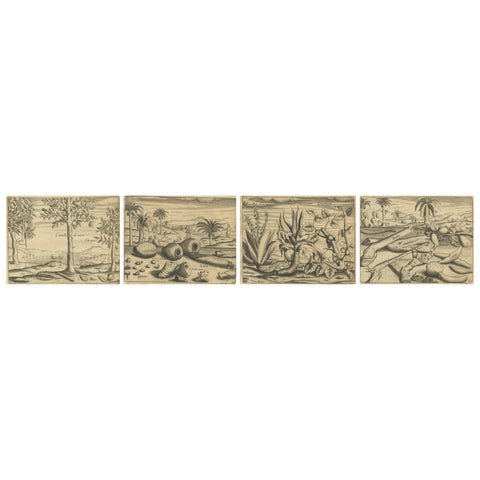
Close-ups
Framed and on the wall


Frame and rooms are illustrations of how the print could look; the description says what is included.
De Bry Indian Botanical Engravings, Coconut, Bamboo & Cashew Trees, c.1598
£1,205£96520% off ($1,265, €1,152)
Period original, not a reproduction.
Shipped from the Netherlands, flat or rolled, insured and tracked, worldwide. Returns accepted within 14 days.
- Date
- 1598
- Size
- 12 × 7.9 in (30.5 × 20 cm)
- Condition
- Very good, with sharp impressions and full margins. Some age toning and light foxing typical of 16th-century paper. Binding traces to the left margin. Overall clean and well-preserved examples.
- Period
- Before 1700
- Section
- Botanical
- Reference
- f_46963882
What the condition grades mean
- Excellent
- Bright and clean, with no faults worth mentioning.
- Very good
- Only light signs of age, such as faint toning.
- Good
- Normal signs of age for a sheet of this period: toning, some foxing, small marks or neat old repairs.
- Fair
- Clear faults such as staining, tears or repairs, priced to match.
Every fault we see is written in the condition note, and the whole sheet is shown uncropped in the photos.
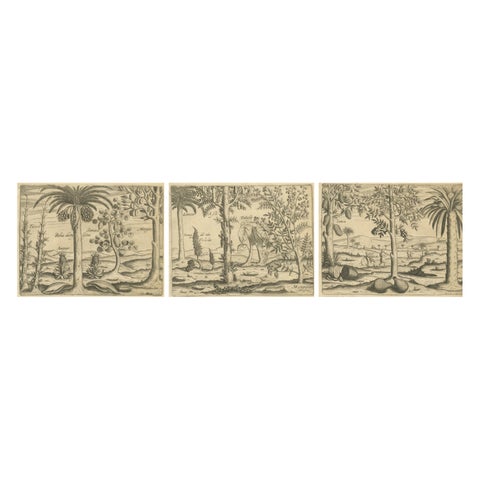
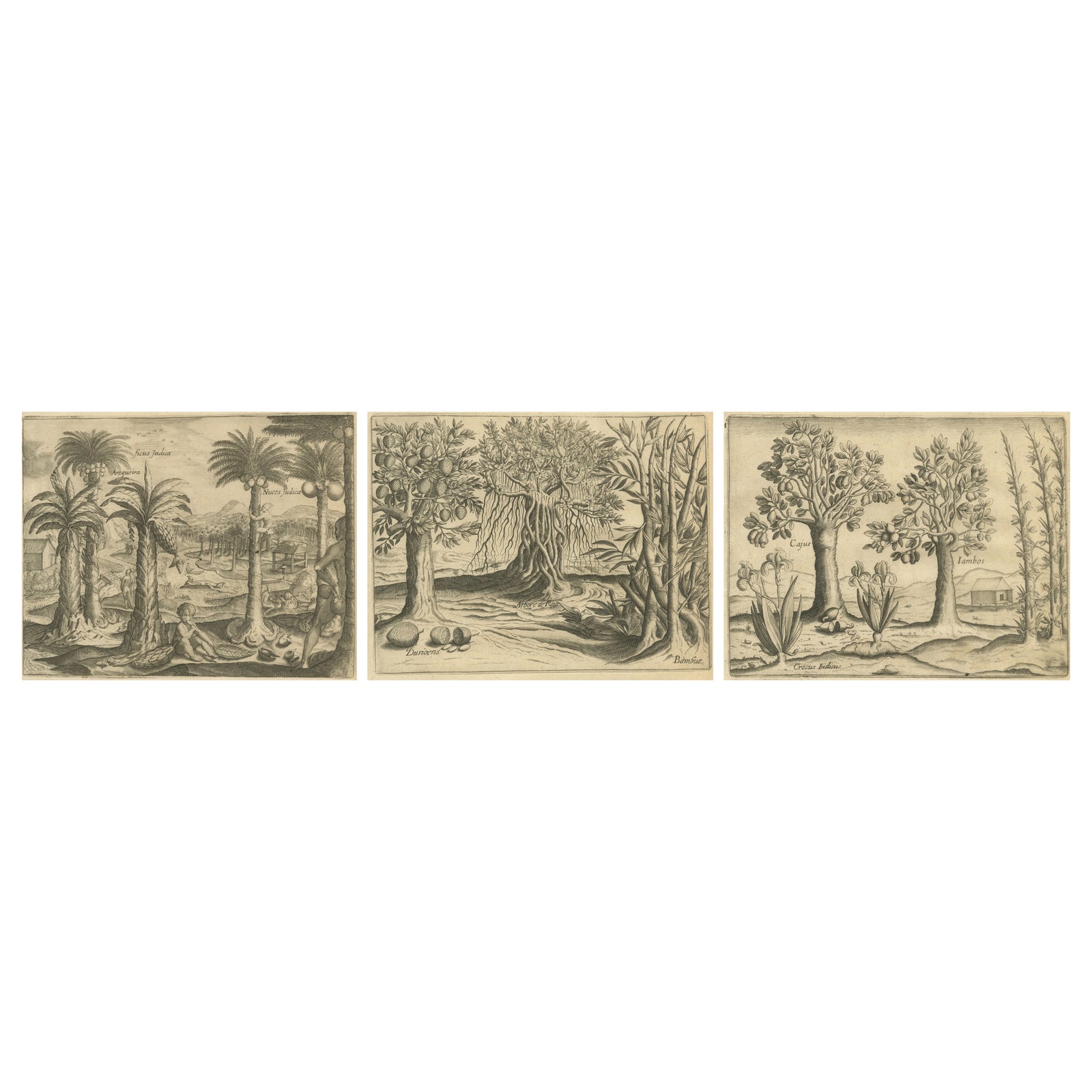
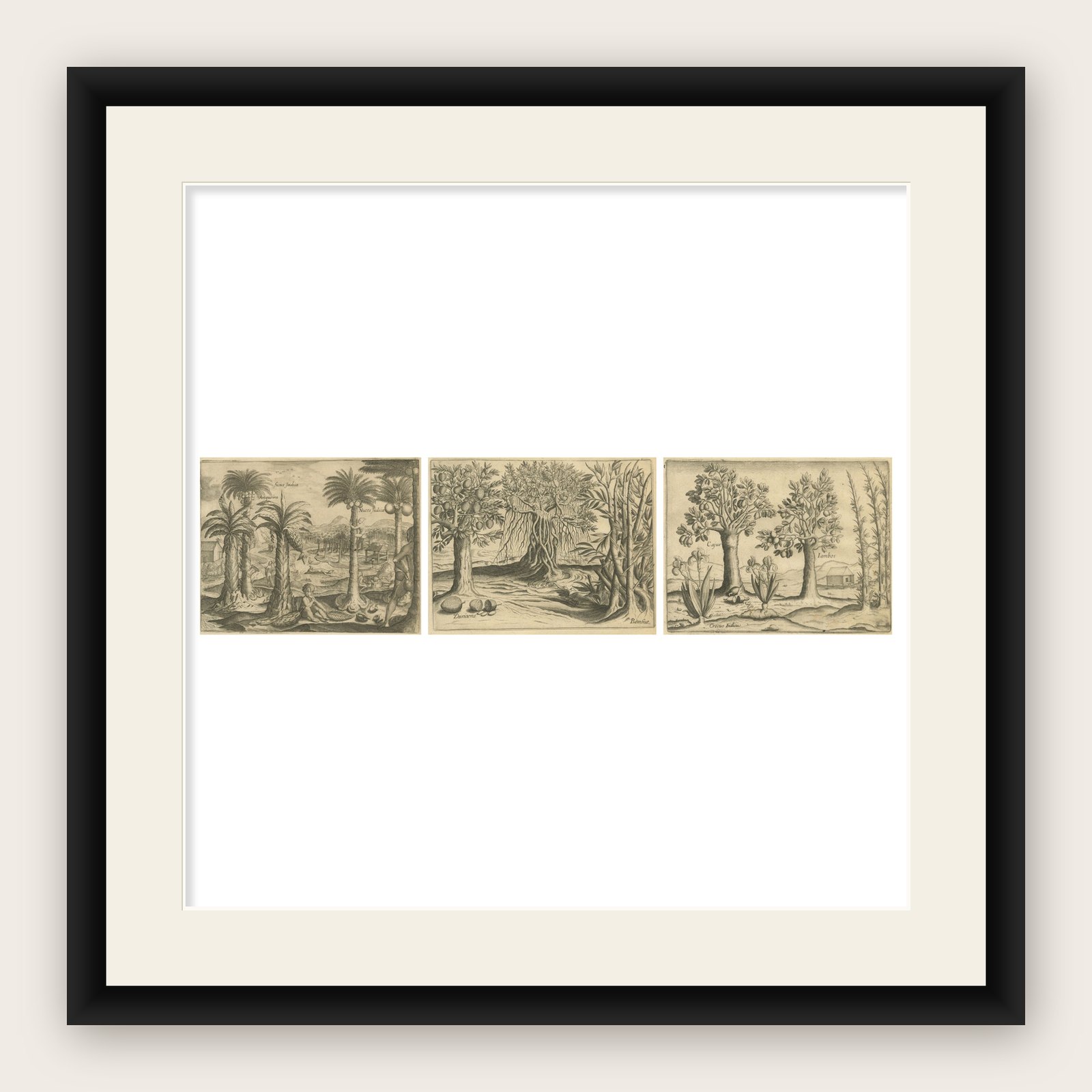
Set of Three De Bry Botanical Engravings of Indian Trees and Fruits, c.1598, Coconut, Bamboo, and Cashew
Description:
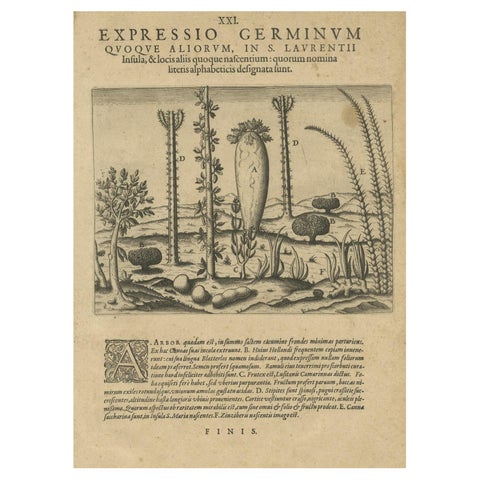
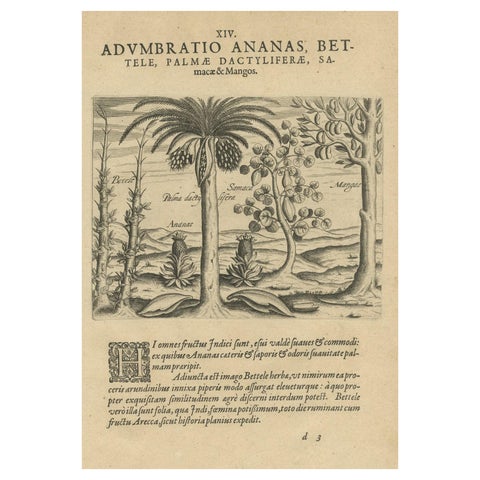
A rare and beautifully matching set of three original copper engravings from Theodor de Bry’s Petits Voyages (Frankfurt am Main, circa 1598–1601), each accompanied by its full Latin letterpress text. These remarkable plates illustrate early European observations of the exotic flora of India and Southeast Asia, combining documentary precision with the elegance typical of De Bry’s engravings.
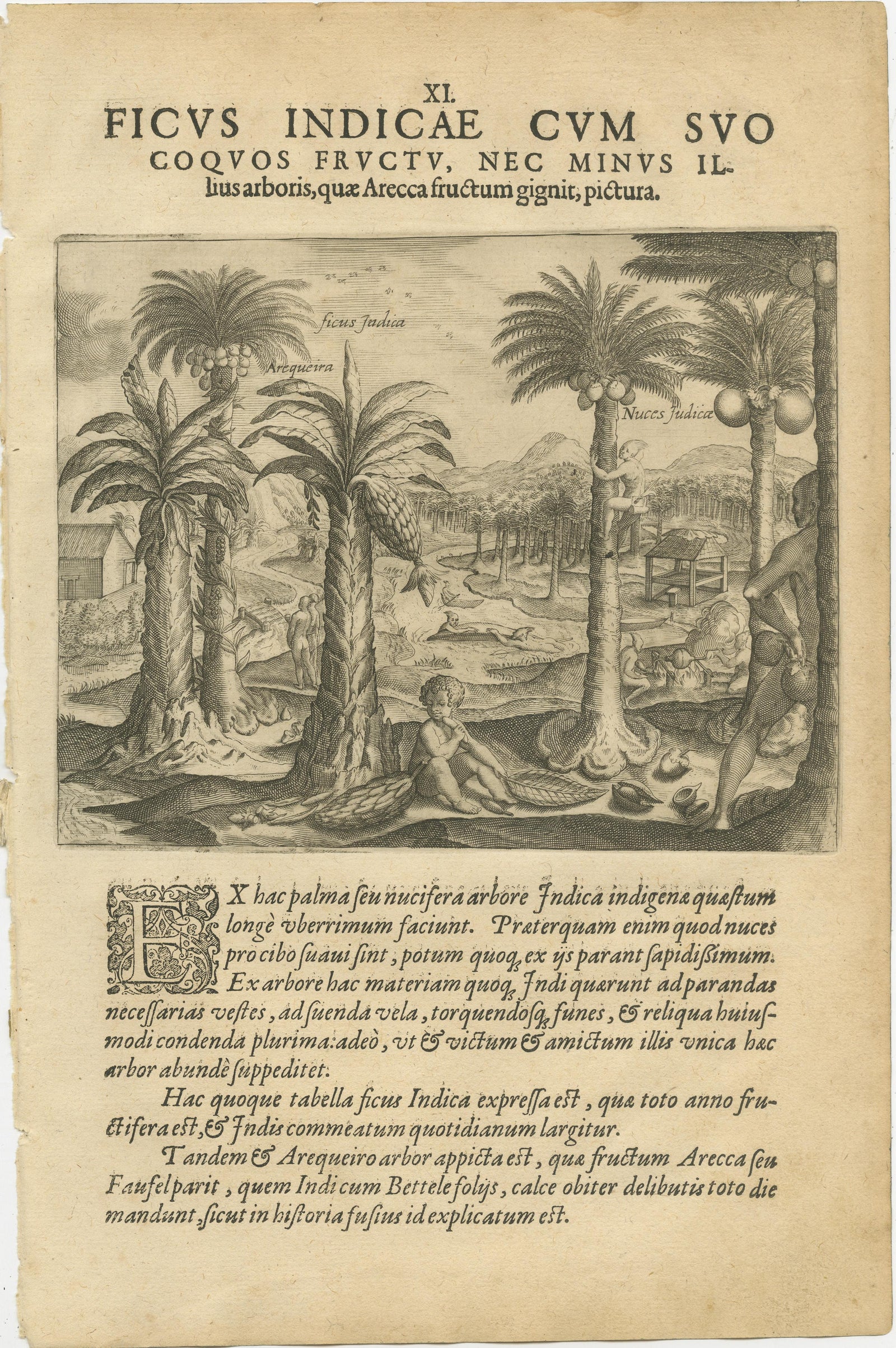
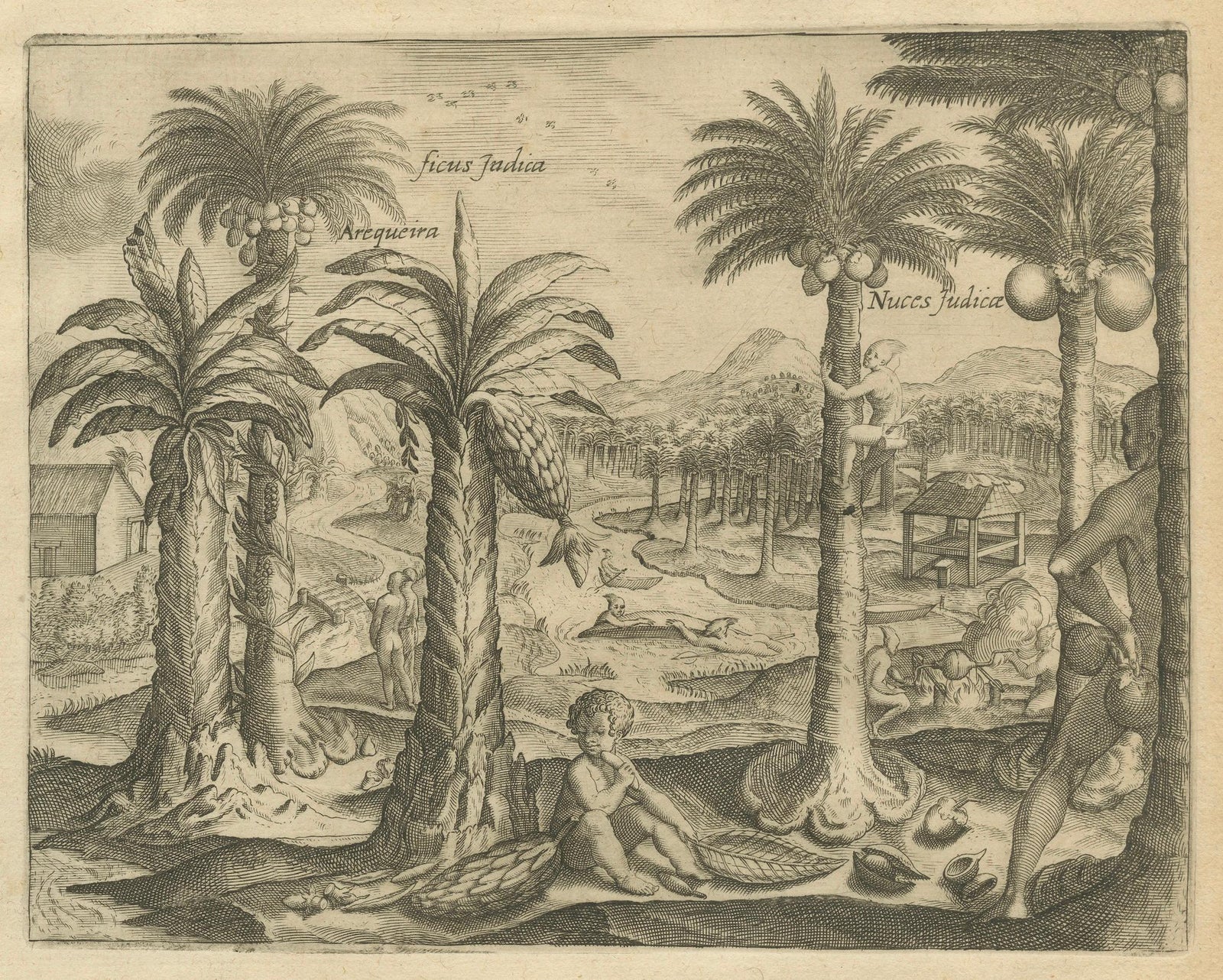
1. Ficus Indicae cum suo Coquos Fructu, nec minus illius arboris quae Arecca fructum gignit, pictura
Depicts several tropical palm and fig species, including the coconut and the Areca palm. In the foreground, people collect coconuts, prepare them for food and drink, and use the palm for shelter and tools. The text praises the palm as a “gift of nature” vital for sustenance, construction, and commerce in India, describing also the Areca nut chewed with betel leaves as a cultural habit.
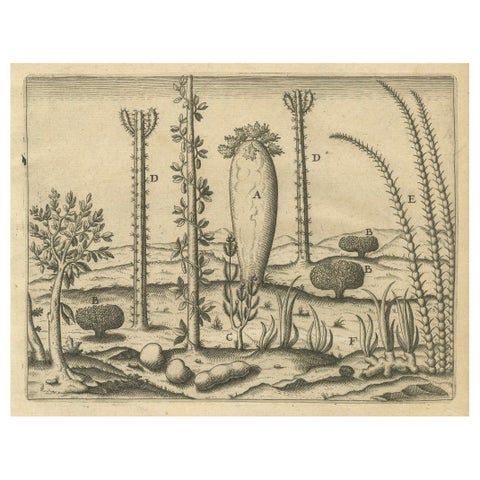
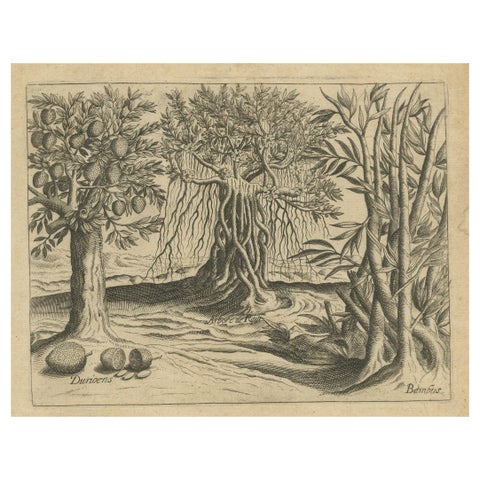
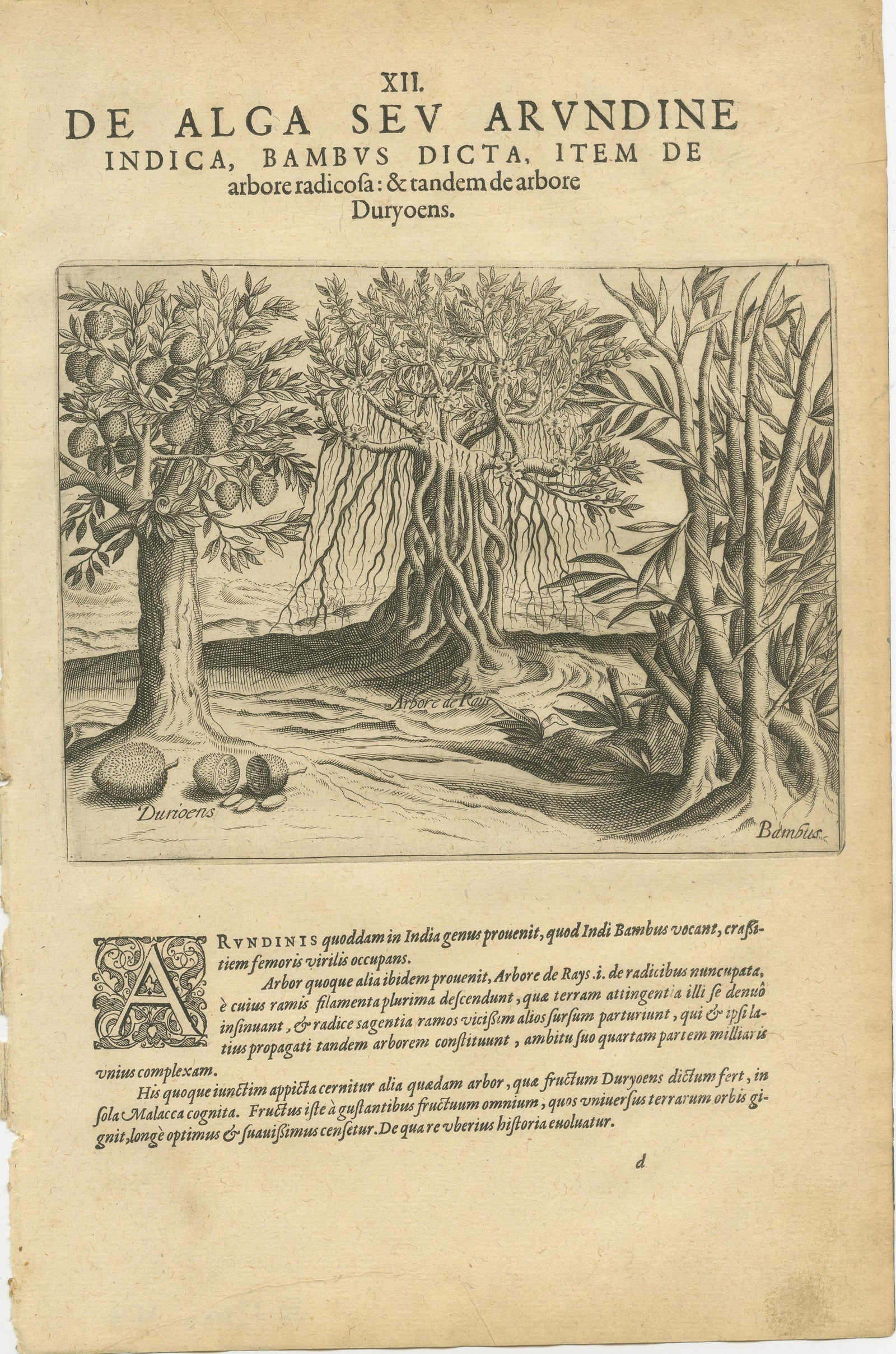
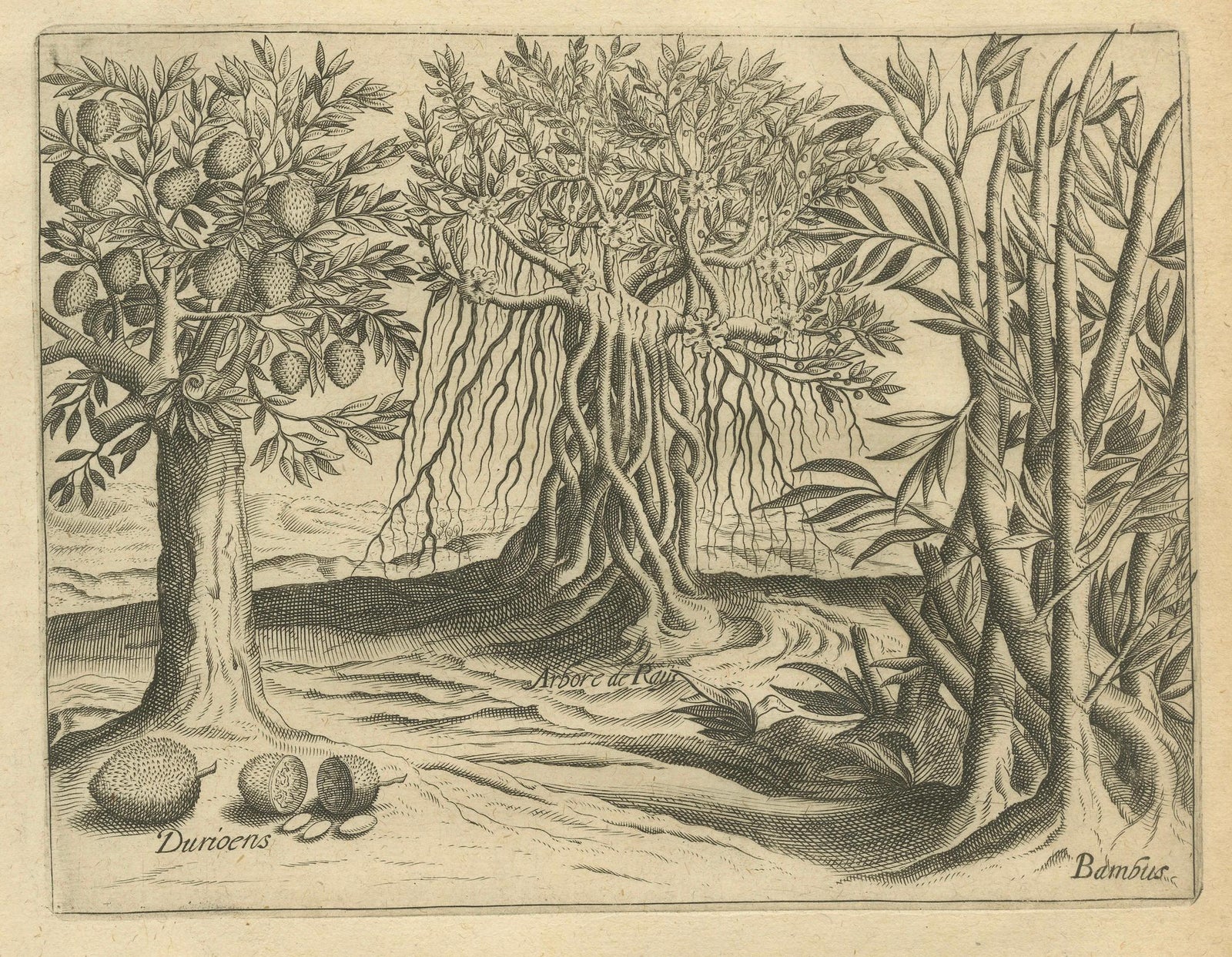
2. De Alga seu Arundine Indica, Bambus dicta, item de arbore radicosa, et tandem de arbore Duryoens
Shows the great Indian bamboo, the banyan tree (“Arbor de Rays”), and the durian tree. The engraving beautifully contrasts the strong bamboo stems with the complex aerial roots of the banyan. On the left, the durian fruit is seen both on the tree and on the ground. The text highlights their extraordinary growth and use by the inhabitants for tools, structures, and food.
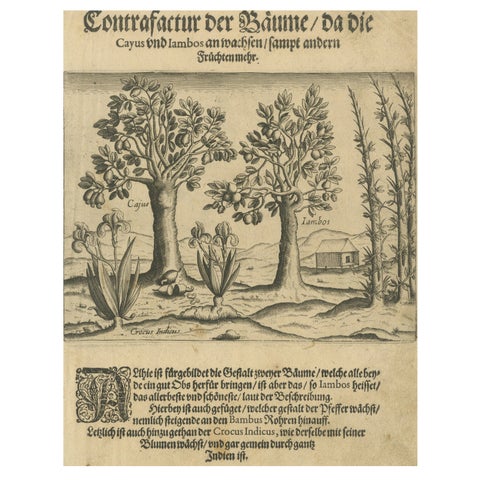
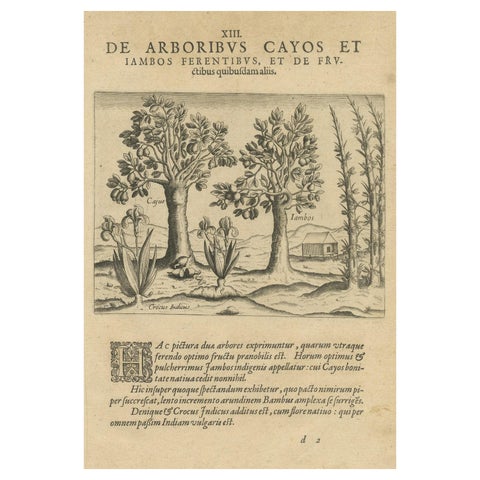
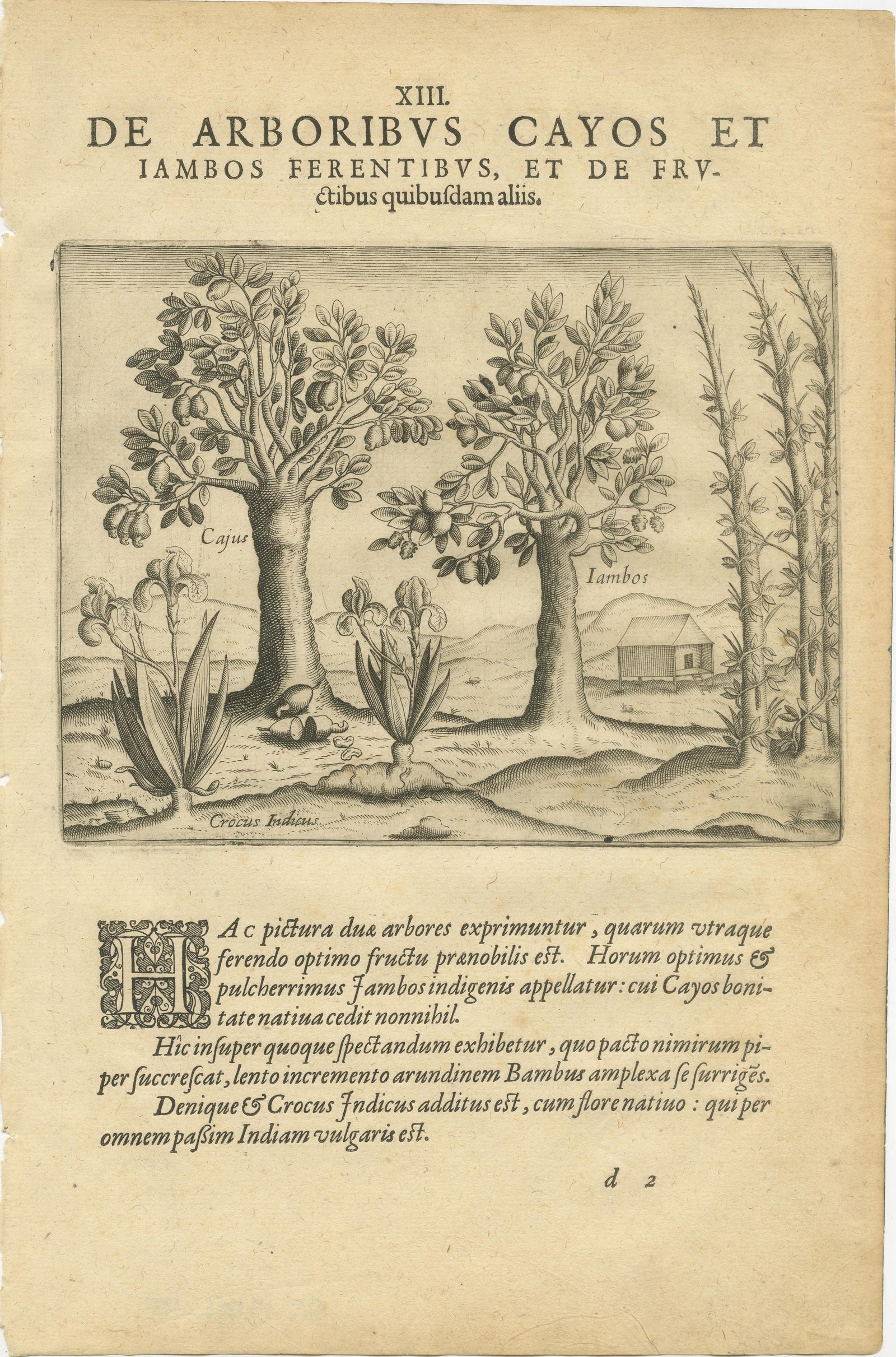
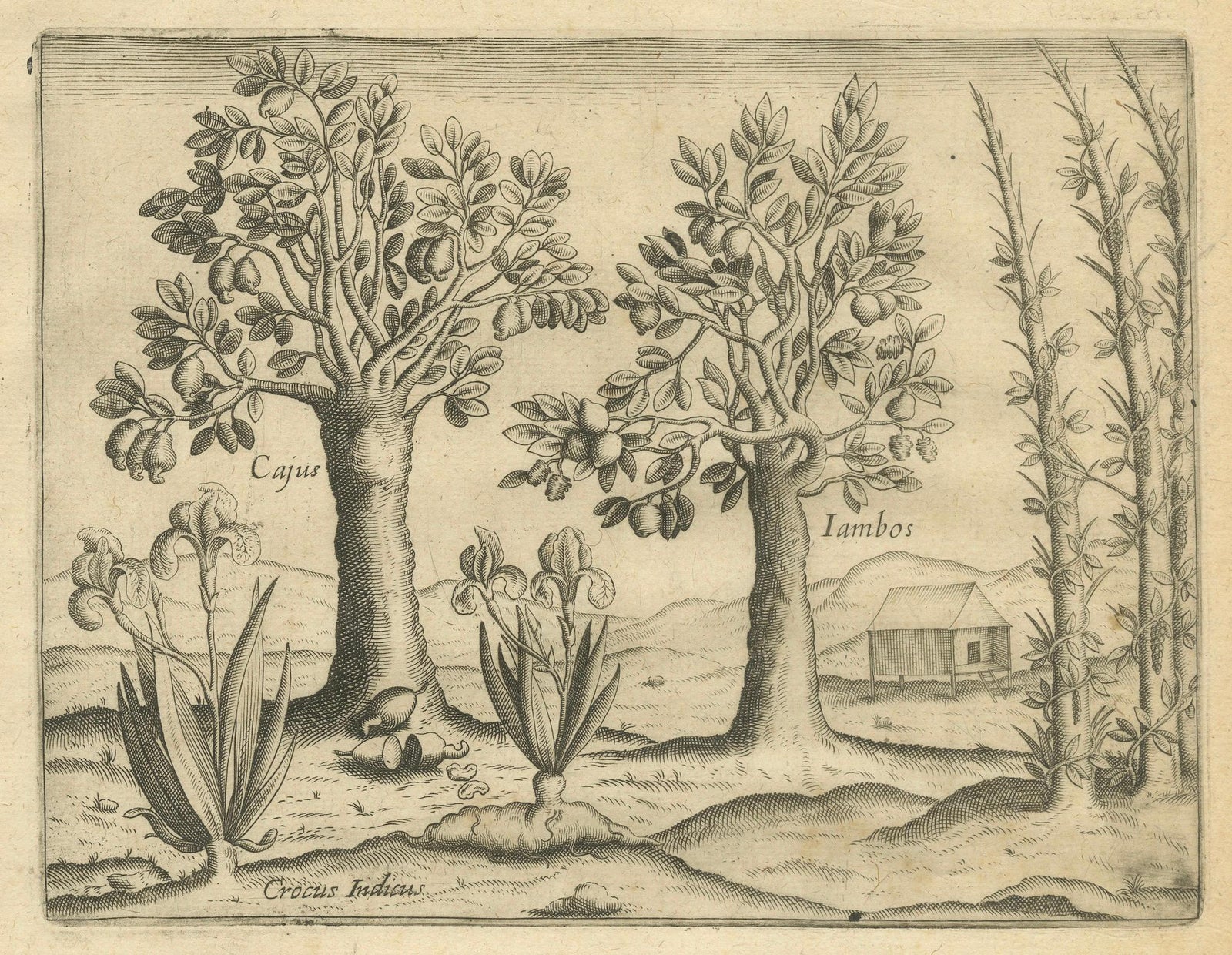
3. De Arboribus Cayos et Iambos Ferentibus, et de Fructibus Quibusdam Aliis
Illustrates two tropical fruit trees, the cashew (Cajus) and the rose apple (Iambos), together with Crocus Indicus (Indian saffron). The text extols their taste and perfume, describing the cashew as a precious fruit of the Indies and the jambos as a delicate and refreshing delicacy.
As a group, these three botanical engravings represent some of the earliest printed visual records of tropical plants seen by European explorers. They reveal both scientific curiosity and the fascination with the exotic that defined late Renaissance travel literature.
Framing tips: These three engravings make a striking ensemble when framed together in matching dark walnut or gilt frames with ivory mats. The refined Latin typography and delicate engraving lines harmonize beautifully in a natural history or classical interior.
Technique: Copper engraving with Latin letterpress text on laid paper
Maker: Theodor de Bry (1528–1598), Frankfurt am Main, circa 1598–1601
Estimated value: €1,800–€2,400 retail