Close-ups
Framed and on the wall
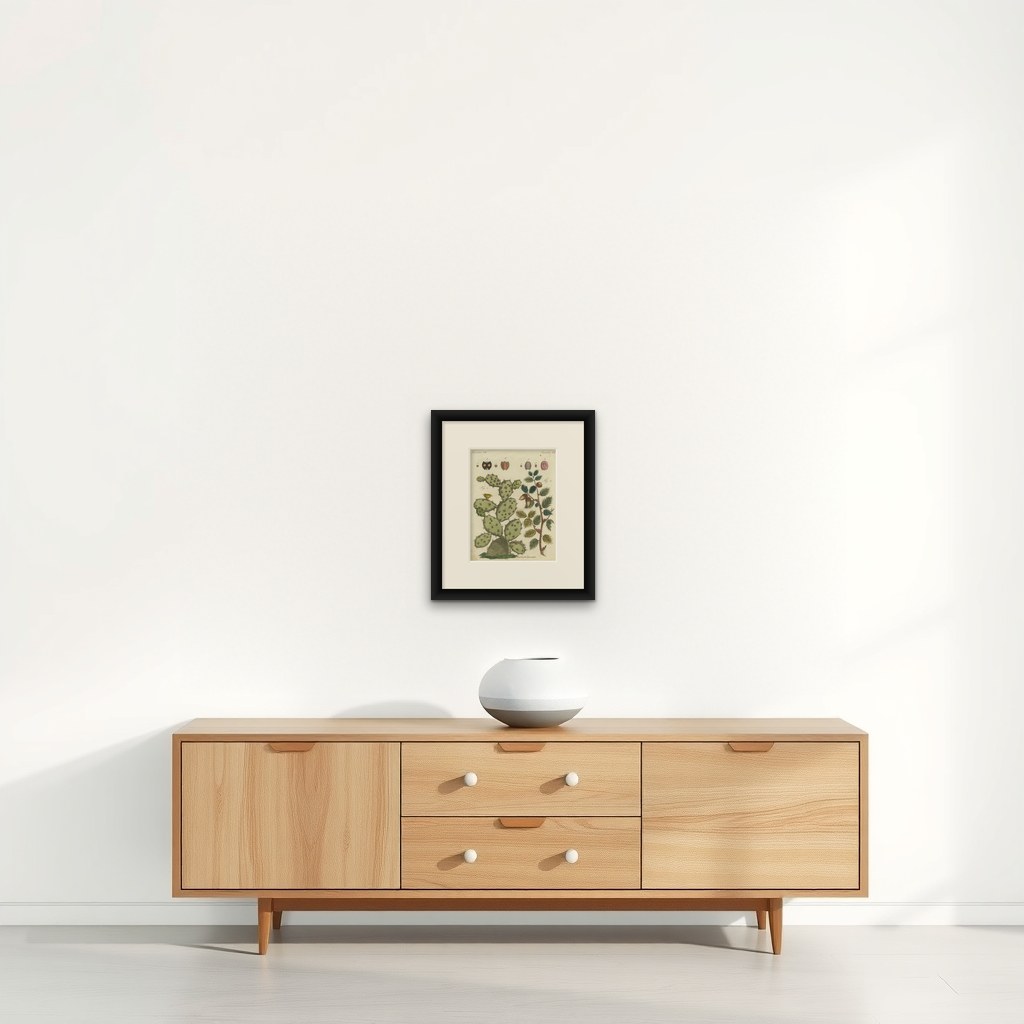

Frame and rooms are illustrations of how the print could look; the description says what is included.
Cochineal Cactus and Kermes Oak: Hand-Colored Engraving from 1798
$200 (£150, €180)
Period original, not a reproduction.
Shipped from the Netherlands, flat, insured and tracked, worldwide. Returns accepted within 14 days.
- Date
- 1798
- Size
- 10.1 × 7.8 in (25.7 × 19.7 cm)
- Condition
- Very good, with vibrant colors, sharp details, and intact edges. Slight age-toning and minimal foxing are present but typical for its age. A remarkable piece, ideal for collectors or as a unique decorative element.
- Period
- 18th century
- Artist or book
- Bertuch
- Section
- Botanical
- Reference
- f_43324042
Title: Cochineal Cactus and Kermes Oak: Hand-Colored Engraving from Bertuch's "Bilderbuch für Kinder" (1795)
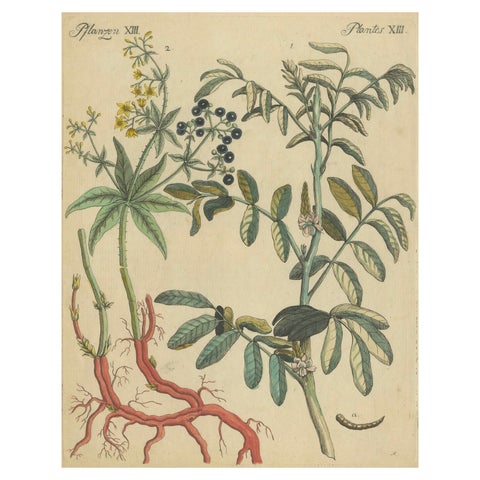
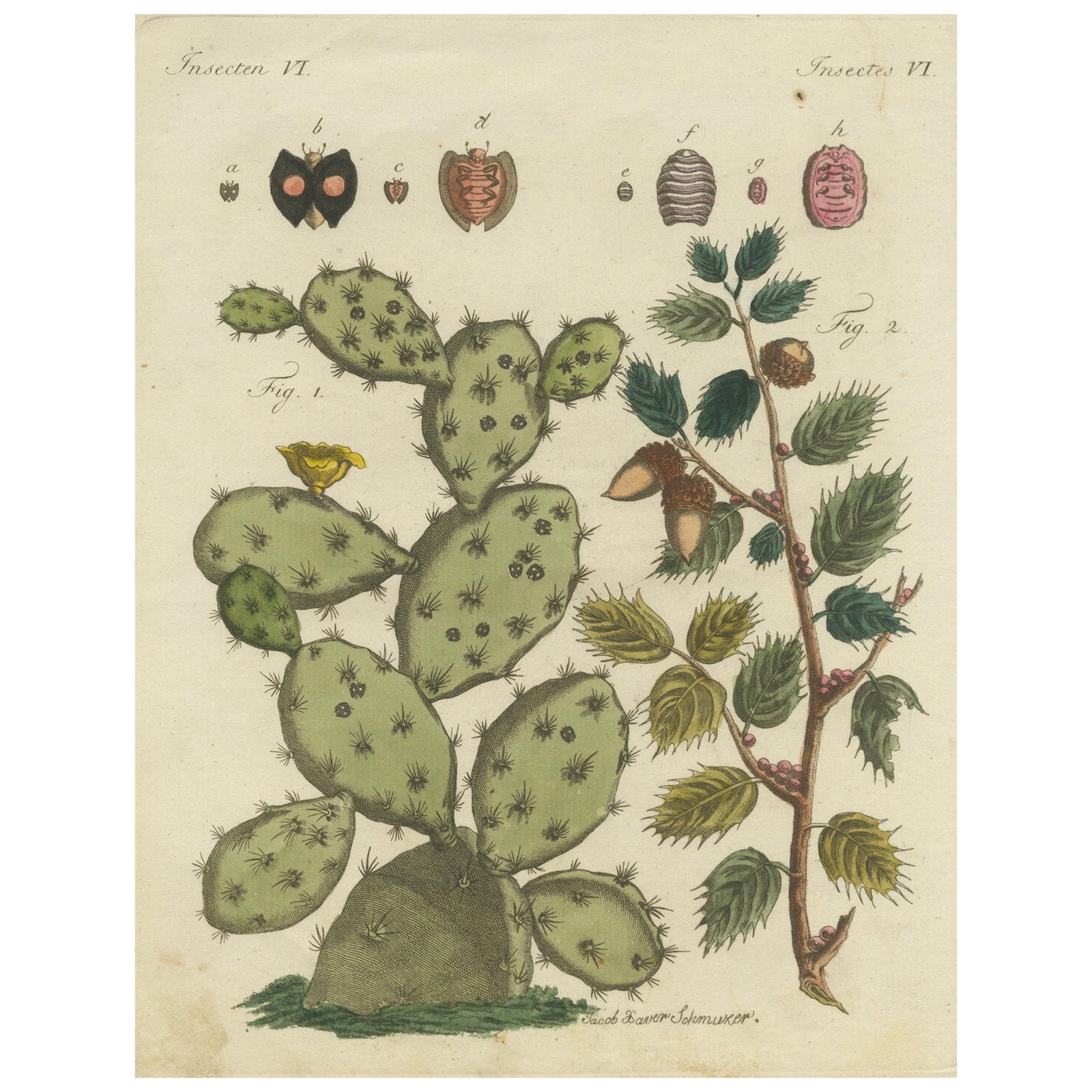
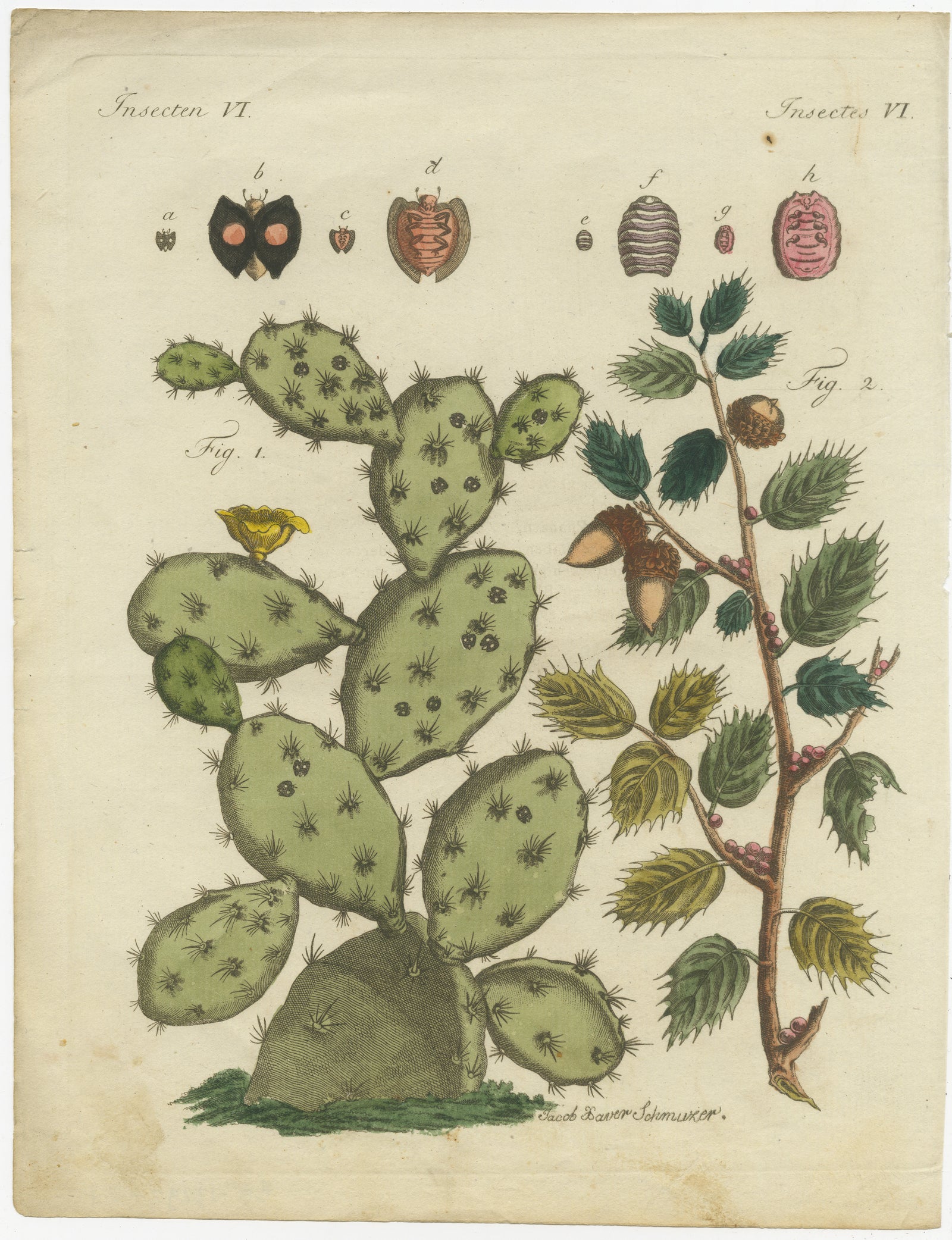
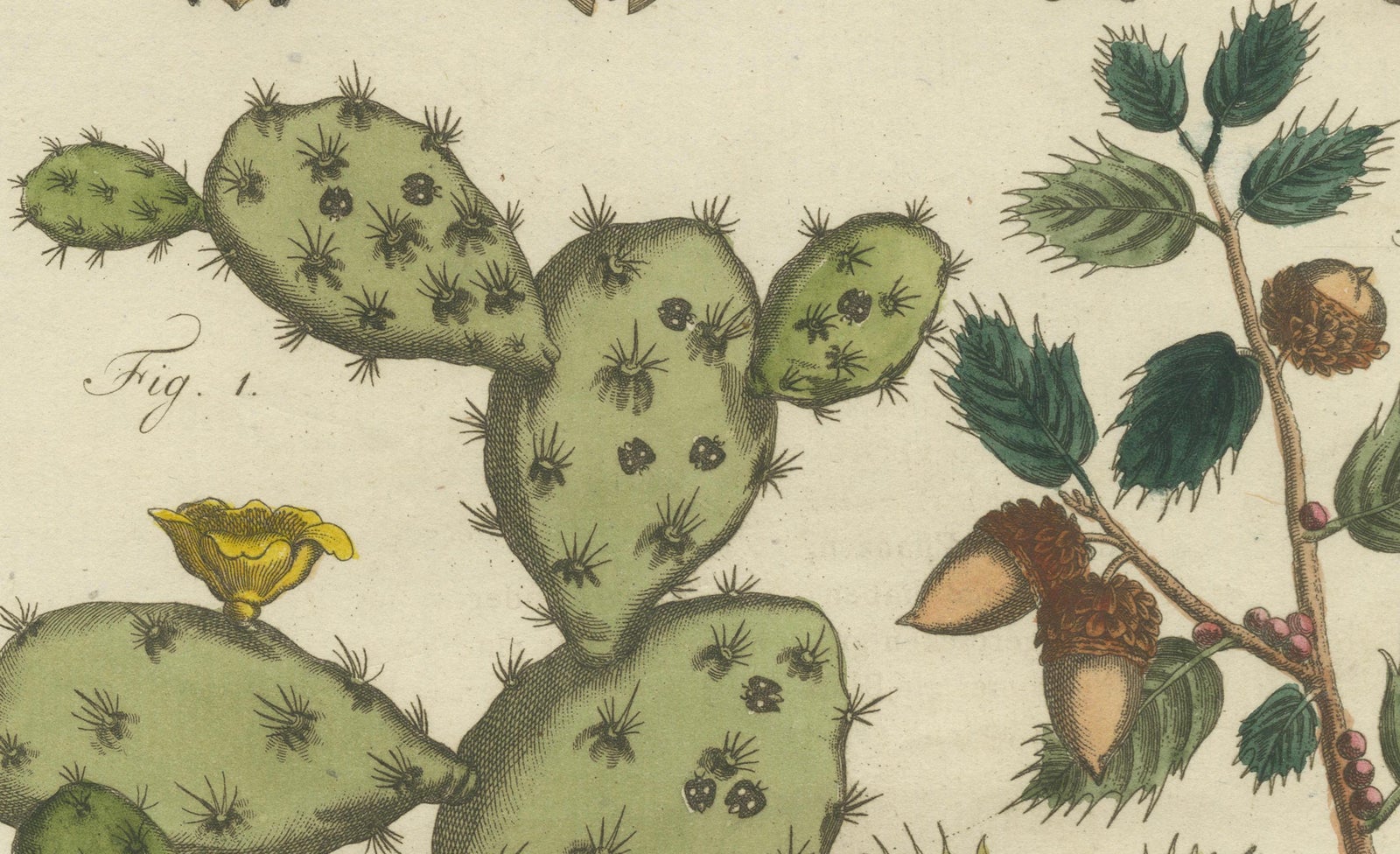
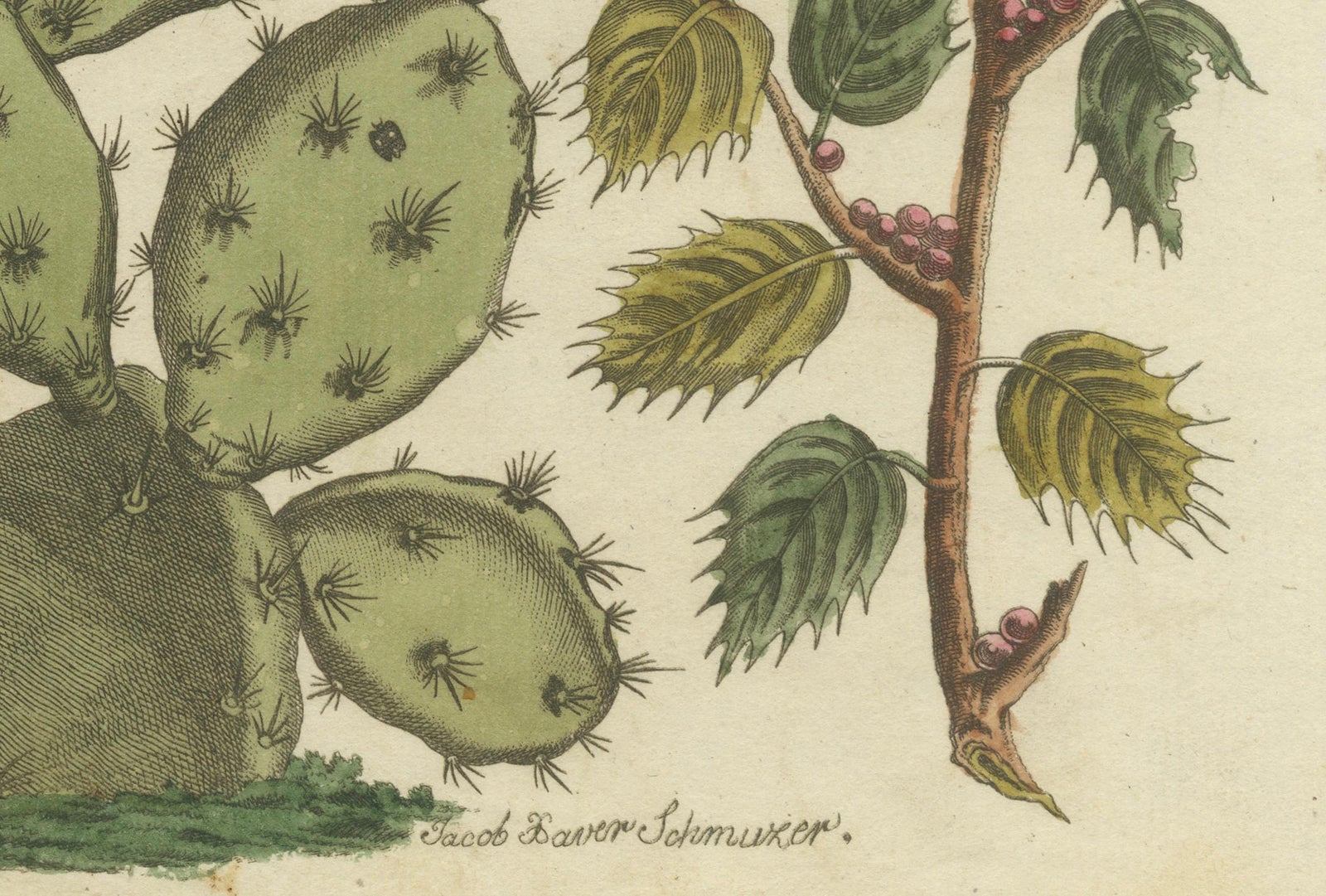
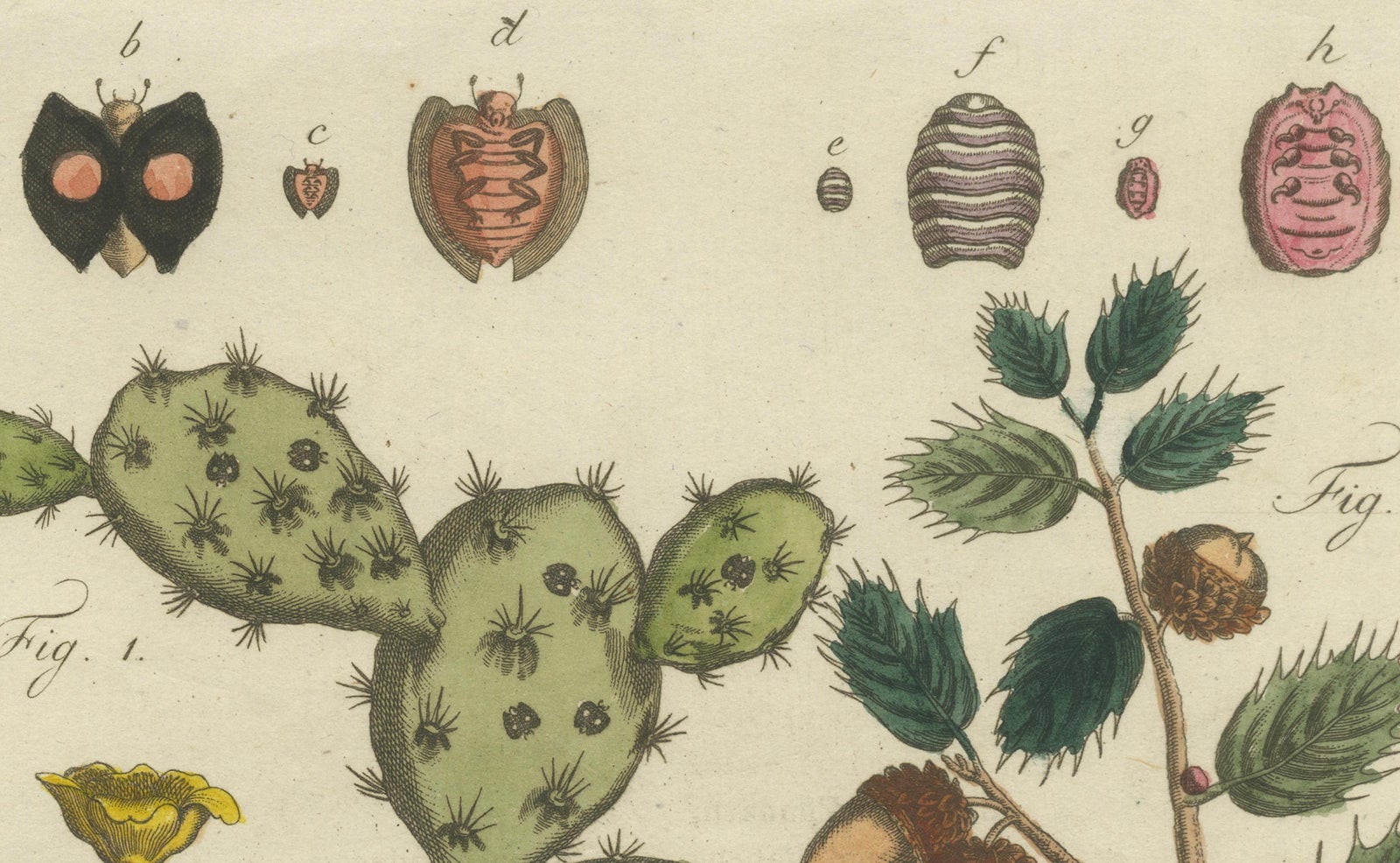
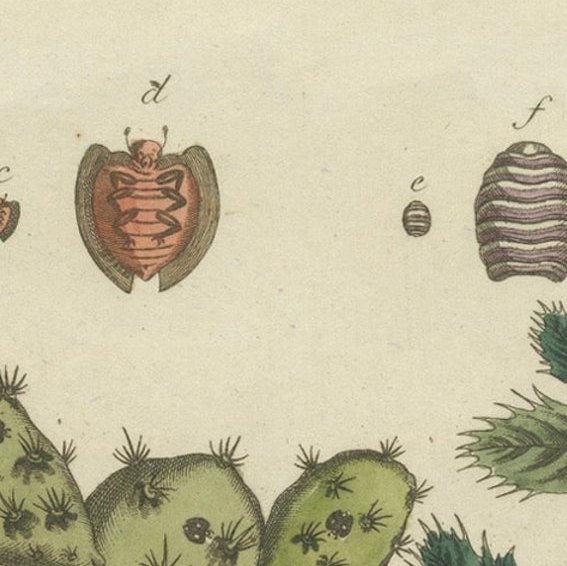
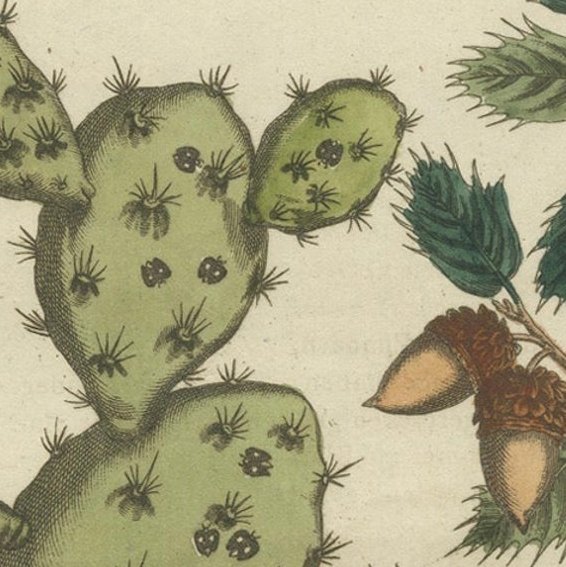
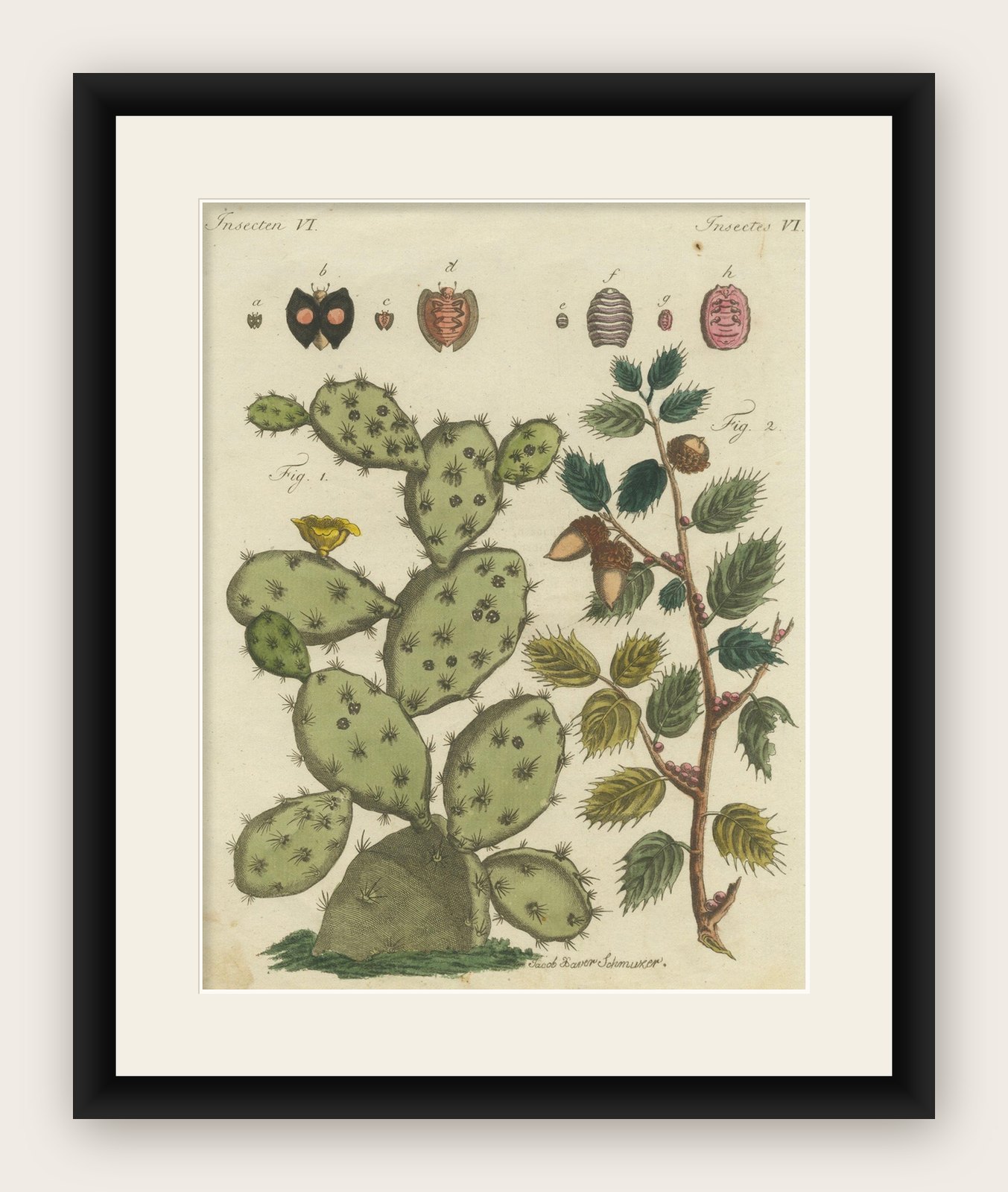
Description: This vibrant hand-colored copperplate engraving from Friedrich Johann Bertuch's "Bilderbuch für Kinder" (1795) highlights the cochineal cactus (*Opuntia ficus-indica*) with the cochineal beetle (*Dactylopius coccus*), alongside the Kermes oak (*Quercus coccifera*) and Kermes beetle (*Kermes vermilio*). Both species were historically significant for producing natural red dyes used in textiles and art.
The detailed depiction includes the life stages of these beetles and their host plants, blending scientific accuracy with artistic beauty. Part of Bertuch's celebrated 12-volume encyclopedia, this plate offers a fascinating insight into 18th-century studies of natural history and industry.
Condition: Very good, with vibrant colors, sharp details, and intact edges. Slight age-toning and minimal foxing are present but typical for its age. A remarkable piece, ideal for collectors or as a unique decorative element.