Close-ups
Framed and on the wall
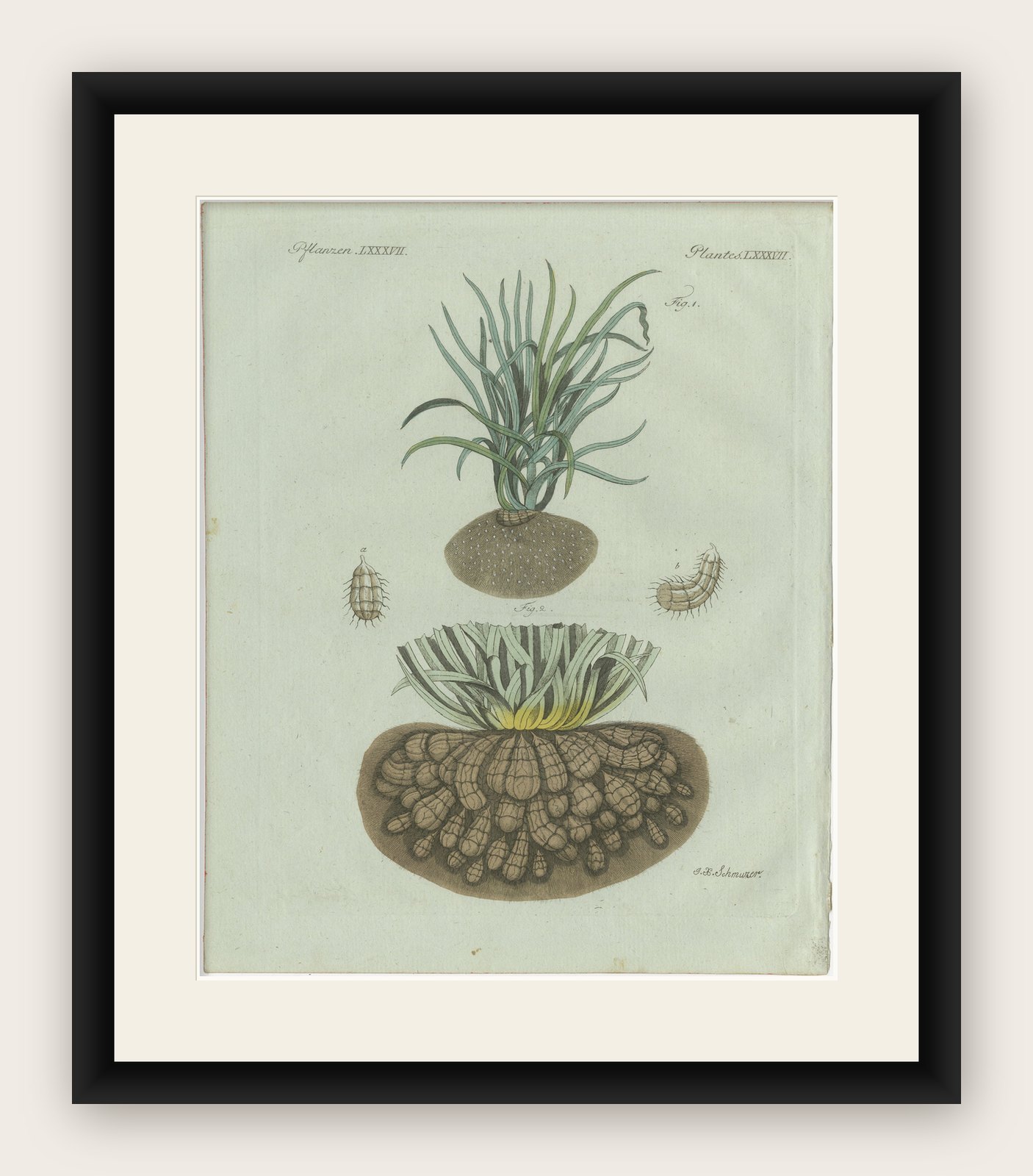



Frame and rooms are illustrations of how the print could look; the description says what is included.
Original Antique Botanical Print of Tiger Nut by Bertuch, 1800
£200£14030% off ($185, €168)
Period original, not a reproduction.
Shipped from the Netherlands, flat or rolled, insured and tracked, worldwide. Returns accepted within 14 days.
- Date
- 1800
- Size
- 9.6 × 7.7 in (24.4 × 19.5 cm)
- Condition
- Good. Wear consistent with age and use. Good. Wear consistent with age and use. Light age-related toning and scattered minor spotting and marks. Some marginal wear and small edge imperfections. Original hand coloring remains attractive. Please refer to the photographs for further details.Seller Locati
- Period
- Early 19th century
- Artist or book
- Bertuch
- Section
- Botanical
- Reference
- f_51383062
- Color
- Hand colored
What the condition grades mean
- Excellent
- Bright and clean, with no faults worth mentioning.
- Very good
- Only light signs of age, such as faint toning.
- Good
- Normal signs of age for a sheet of this period: toning, some foxing, small marks or neat old repairs.
- Fair
- Clear faults such as staining, tears or repairs, priced to match.
Every fault we see is written in the condition note, and the whole sheet is shown uncropped in the photos.
Original Antique Botanical Print of Tiger Nut by Bertuch, 1800
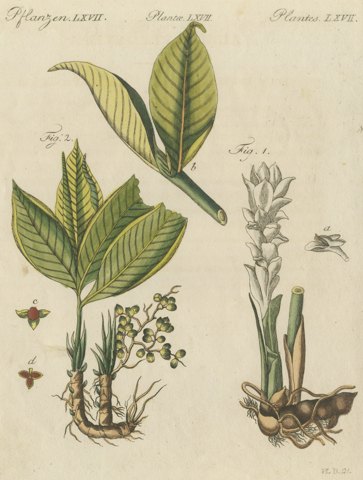
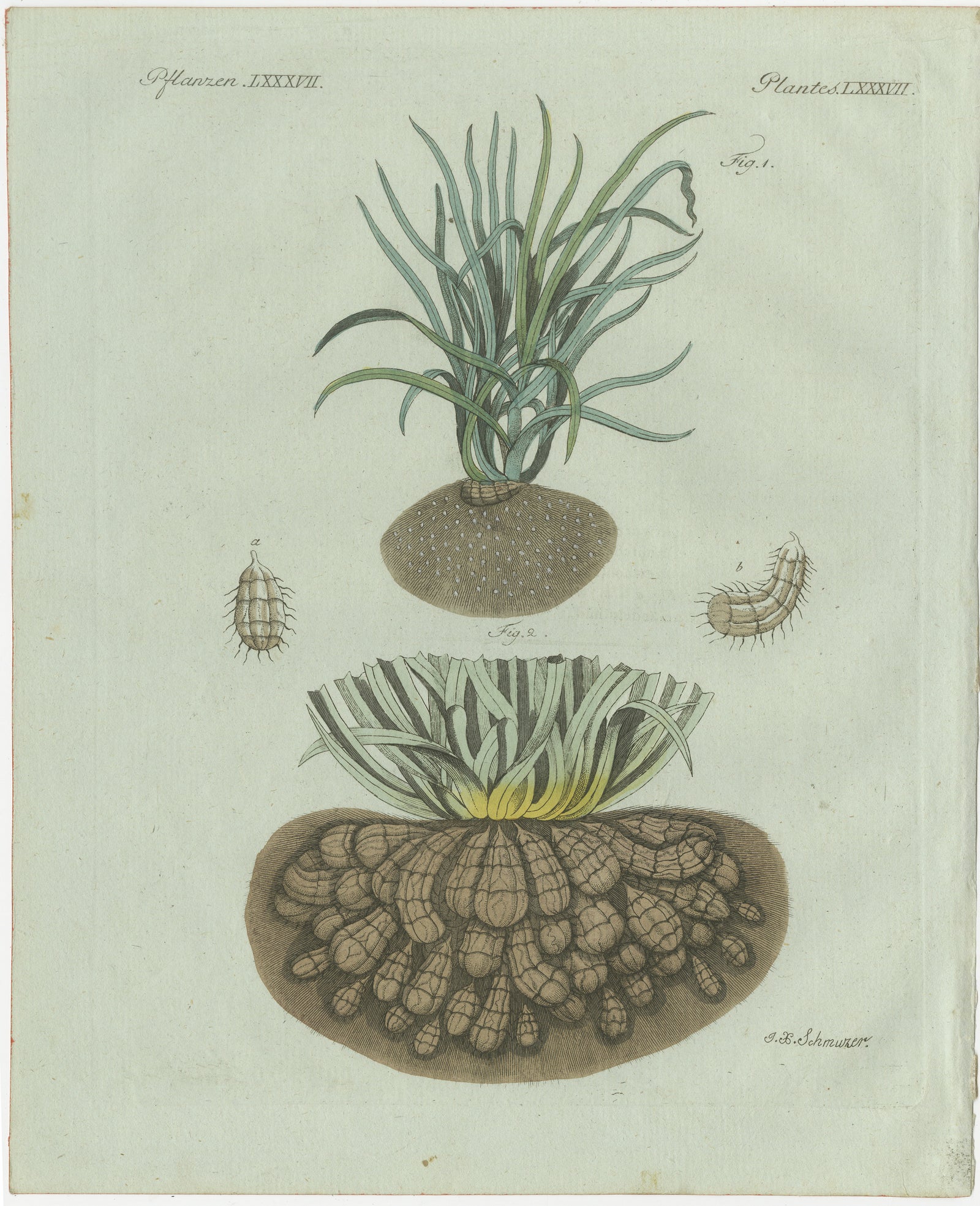
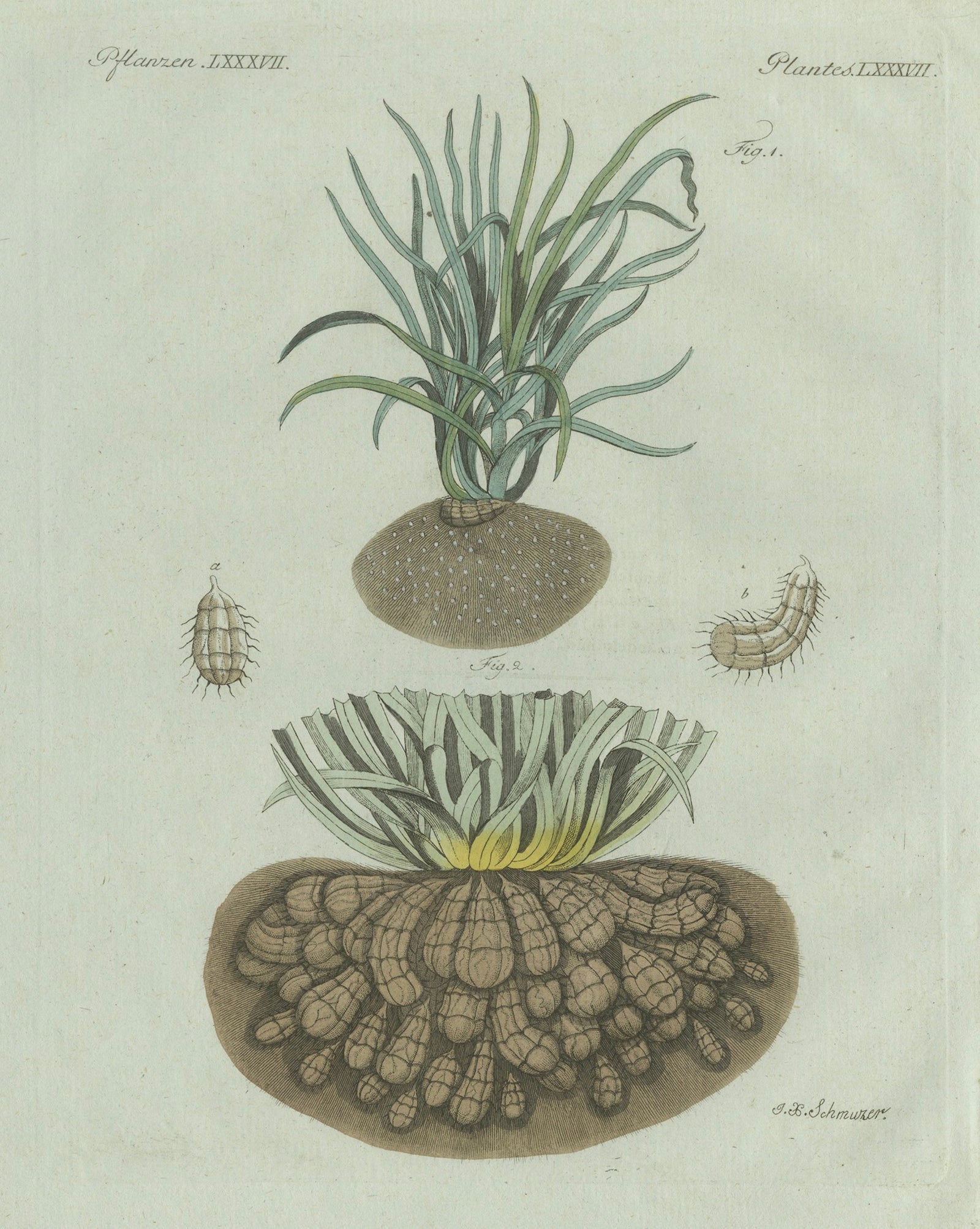
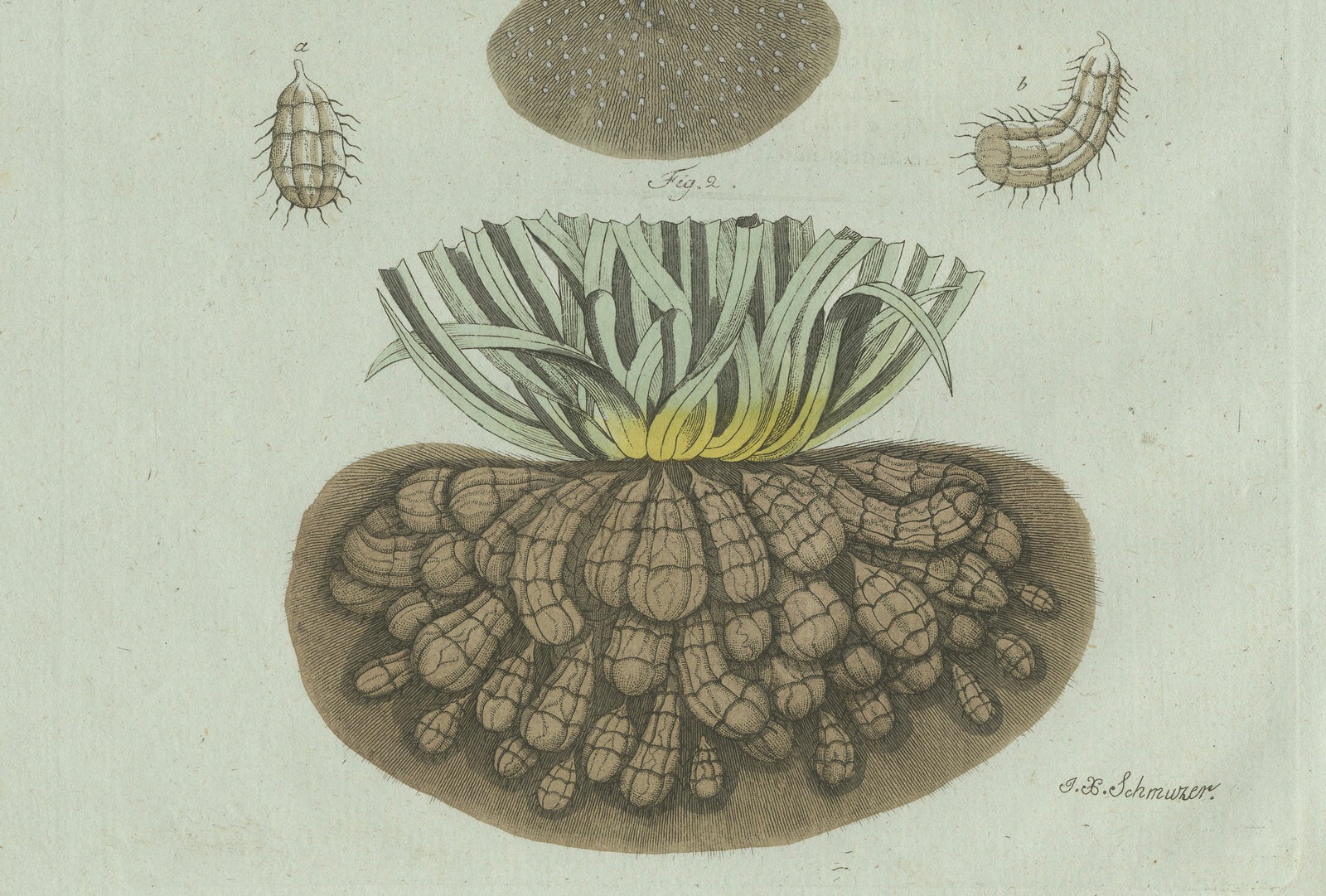
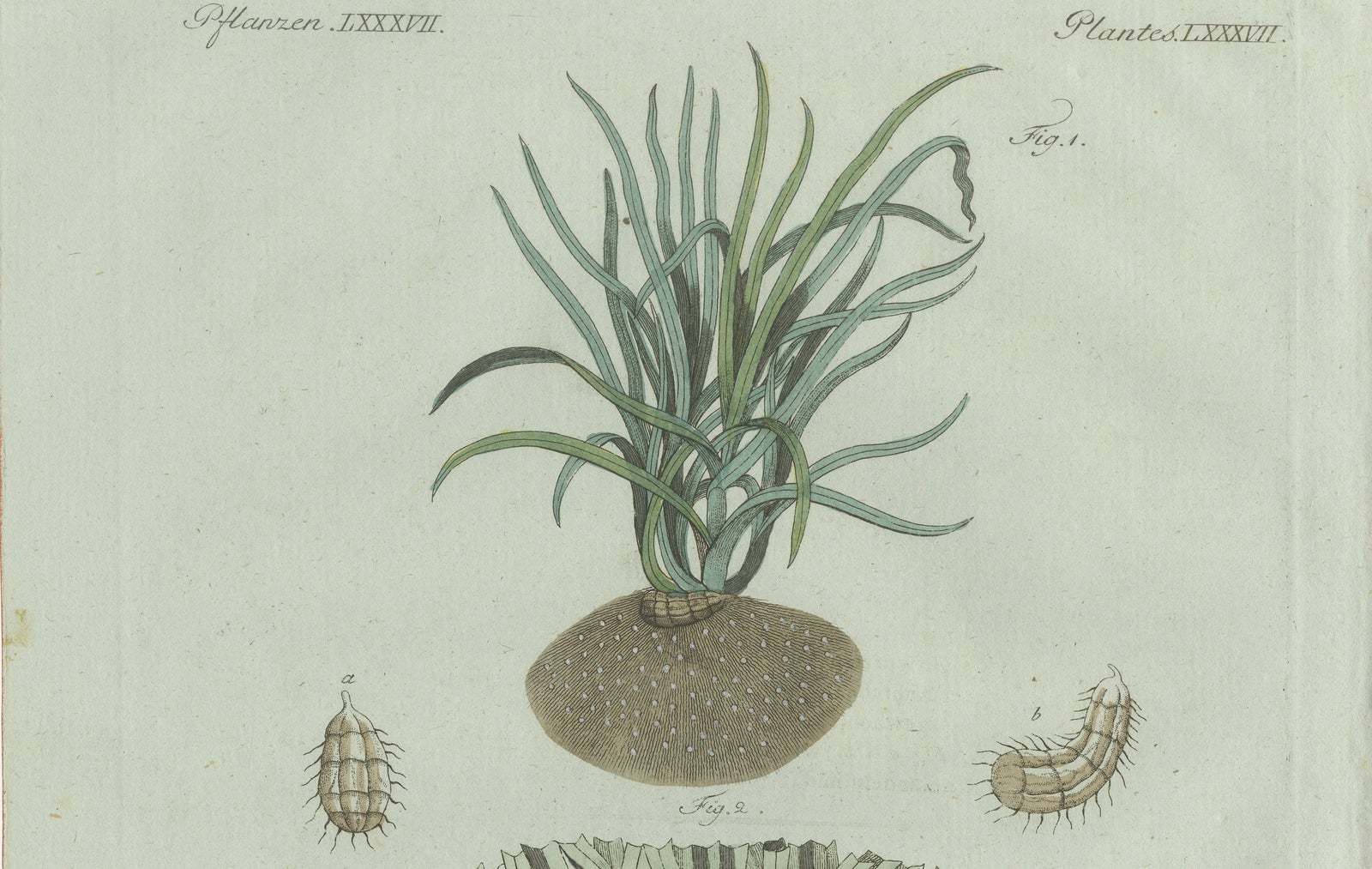
Original antique hand-colored copper engraving depicting the Tiger Nut or Earth Almond (Cyperus esculentus), published in Friedrich Justin Bertuch’s celebrated “Bilderbuch für Kinder” in Weimar around 1800.
The plate is titled “Pflanzen LXXXVII / Plantes LXXXVII” and was described by Bertuch as “Die Erdmandel,” literally the Earth Almond.
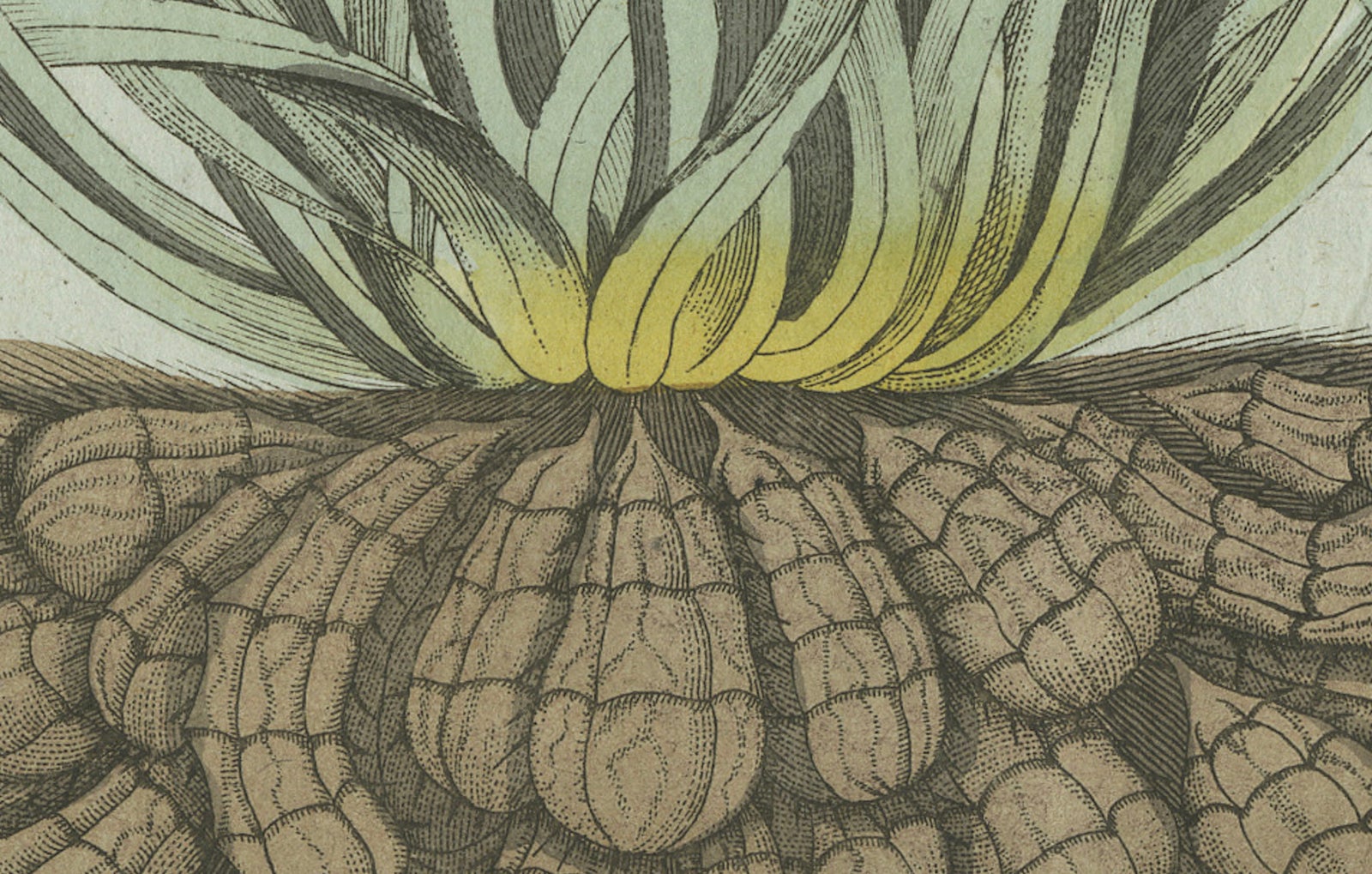
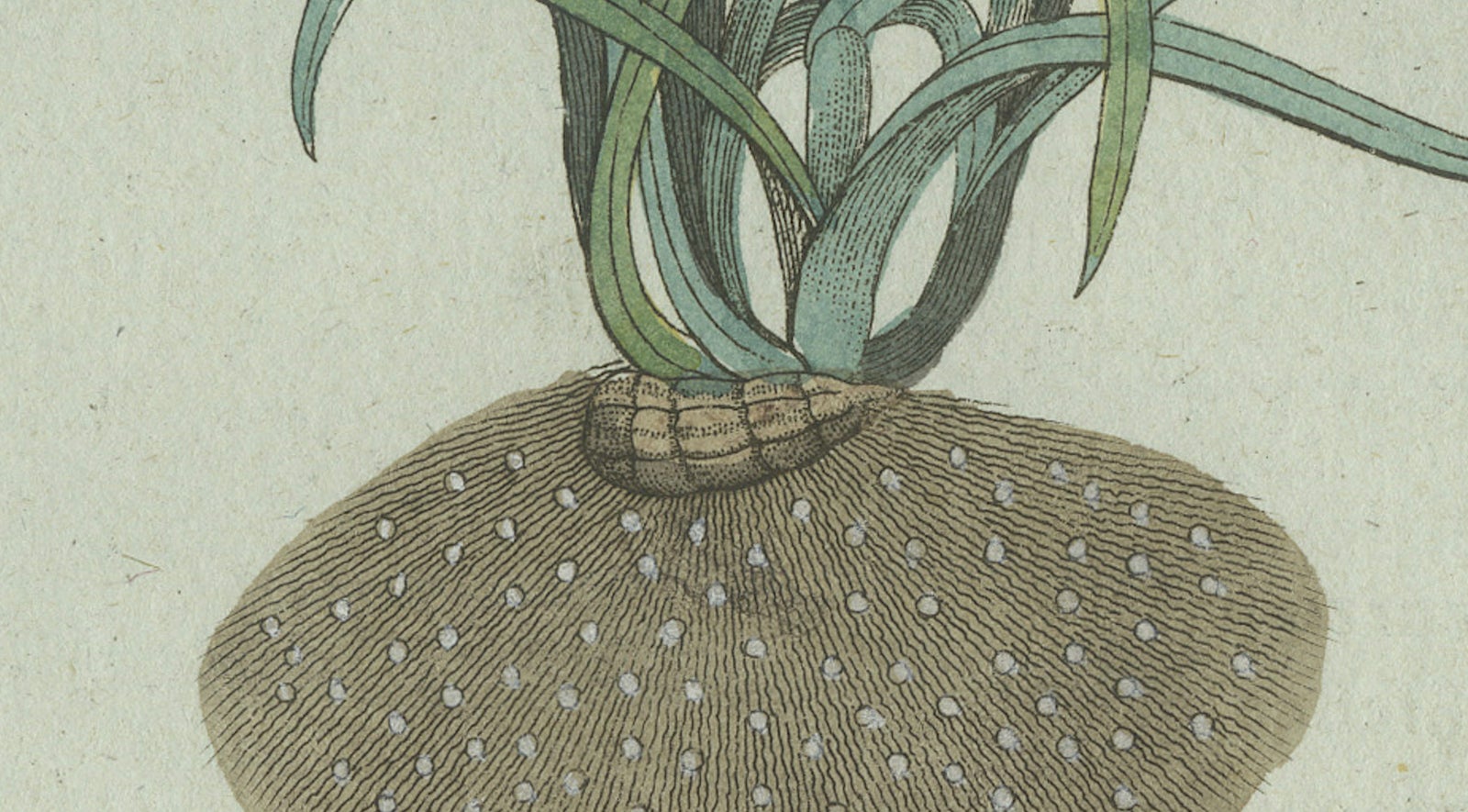
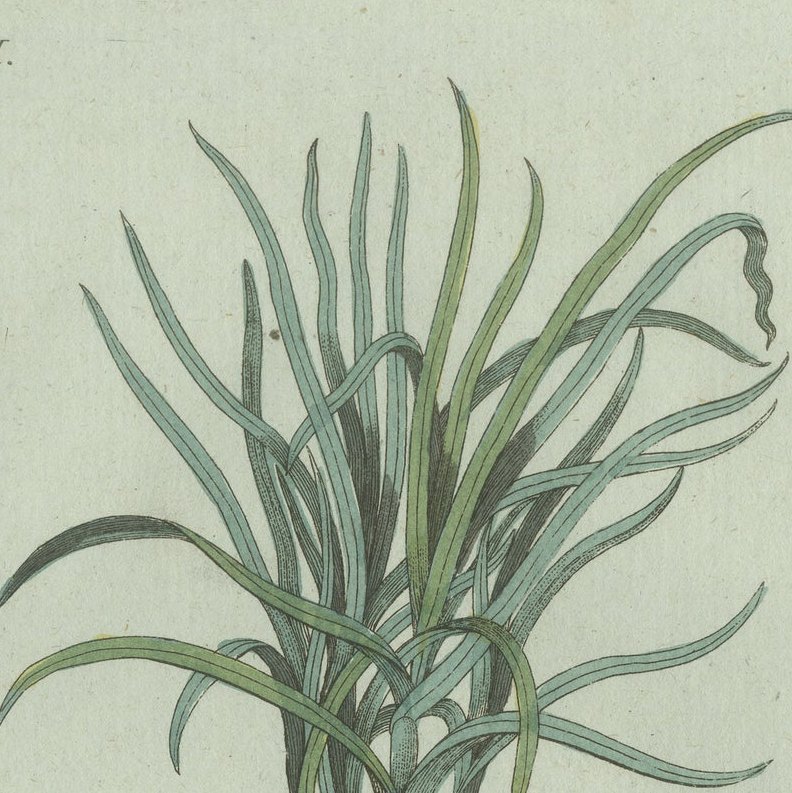
The illustration presents the unusual plant both above and below ground. Fig. 1 shows the complete plant growing from its rounded underground root mass, while Fig. 2 provides a fascinating cutaway view revealing the numerous small edible tubers developing beneath the plant. Two individual tubers are additionally illustrated at the sides.
Cyperus esculentus, commonly known as tiger nut, earth almond, yellow nutsedge or chufa, is not actually a nut but a species of sedge that produces small edible underground tubers. These have been cultivated and consumed since antiquity and remain particularly well known today as the traditional ingredient used to make Spanish horchata de chufa.
The combination of elegant foliage and the extraordinary botanical cross-section showing the underground tubers makes this a particularly interesting example of early botanical and agricultural illustration.
The engraving bears the signature “J. H. Schmuzer” at lower right.
Friedrich Justin Bertuch (1747–1822) was a German publisher, writer and patron of the arts. His monumental “Bilderbuch für Kinder” (Picture Book for Children) was one of the great illustrated educational encyclopedias of the late 18th and early 19th centuries. Published in Weimar from 1790 onward, it contained hundreds of finely engraved and hand-colored plates covering natural history, geography, science, technology, antiquity, costumes and numerous other subjects.
Creator:
Friedrich Justin Bertuch (1747–1822)
Engraver:
J. H. Schmuzer
Source:
Bilderbuch für Kinder
Plate:
Pflanzen LXXXVII / Plantes LXXXVII, Die Erdmandel
Subject:
Tiger Nut / Earth Almond (Cyperus esculentus)
Place of Publication:
Weimar, Germany
Date of Manufacture:
1800
Period:
Early 19th Century
Style:
Neoclassical, In the Period of
Medium:
Original hand-colored copper engraving on paper
Good. Wear consistent with age and use. Light age-related toning and scattered minor spotting and marks. Some marginal wear and small edge imperfections. Original hand coloring remains attractive. Please refer to the photographs for further details of condition.
Please note:
This is an original antique print from circa 1800, not a modern reproduction. The print is sold unframed.