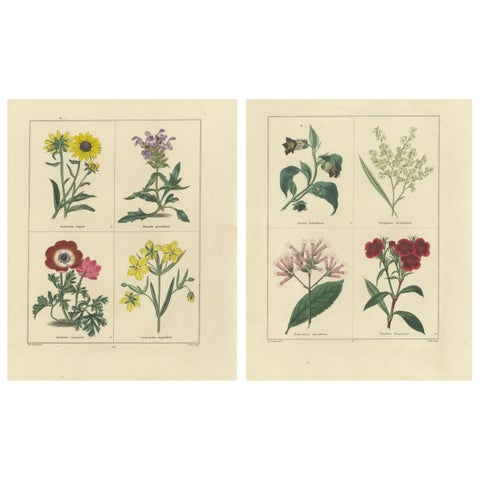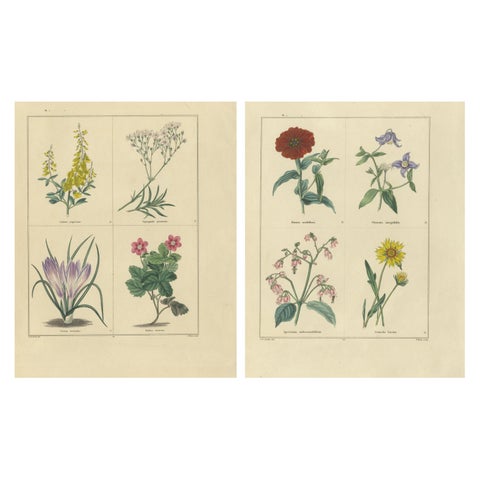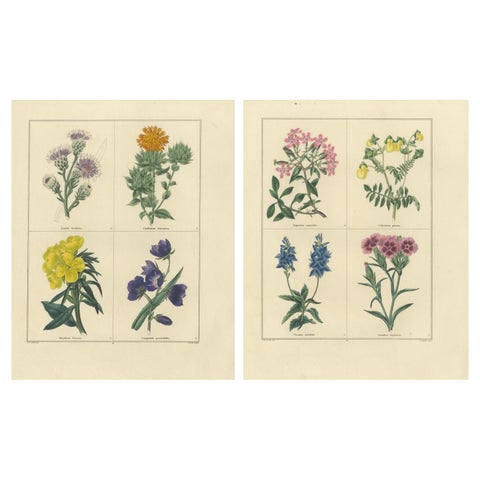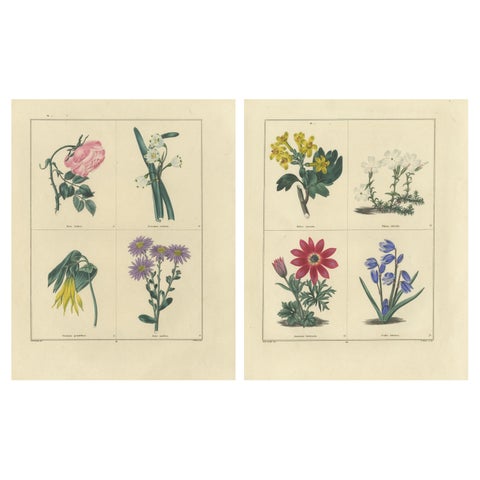
Close-ups
Framed and on the wall
Frame and rooms are illustrations of how the print could look; the description says what is included.
Charming Pair of Antique Floral Engravings for Wall Décor, 1828
$380 (£290, €340)
Period original, not a reproduction.
Shipped from the Netherlands, flat, insured and tracked, worldwide. Returns accepted within 14 days.
- Date
- 1828
- Size
- 8.3 × 6.7 in (21 × 17 cm)
- Condition
- Good. Condition report: Excellent, with rich original coloring and crisp impressions. Light, even toning and minimal handling marks consistent with age. Wide margins with distinct plate marks; verso blank.
- Period
- Early 19th century
- Section
- Botanical
- Reference
- f_47449042
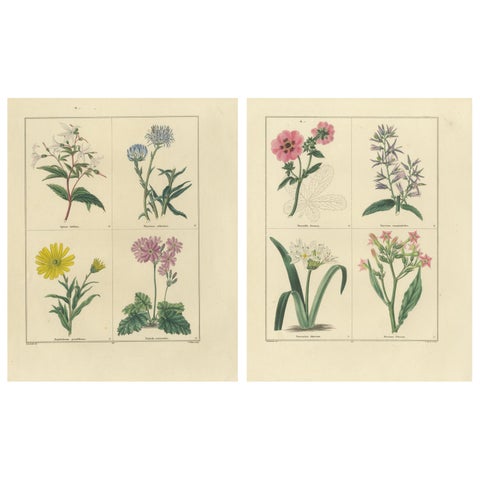
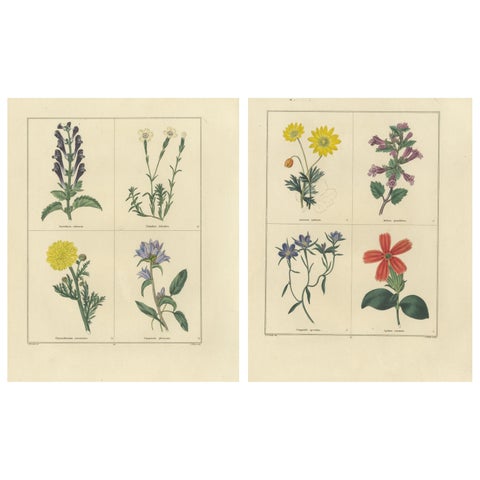
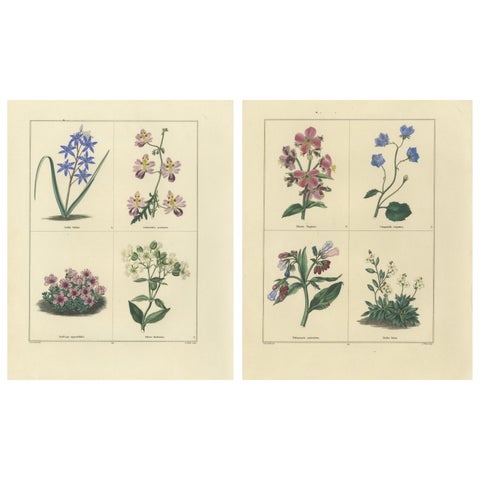
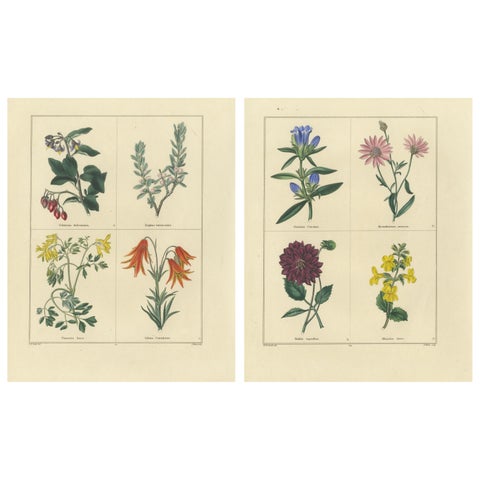
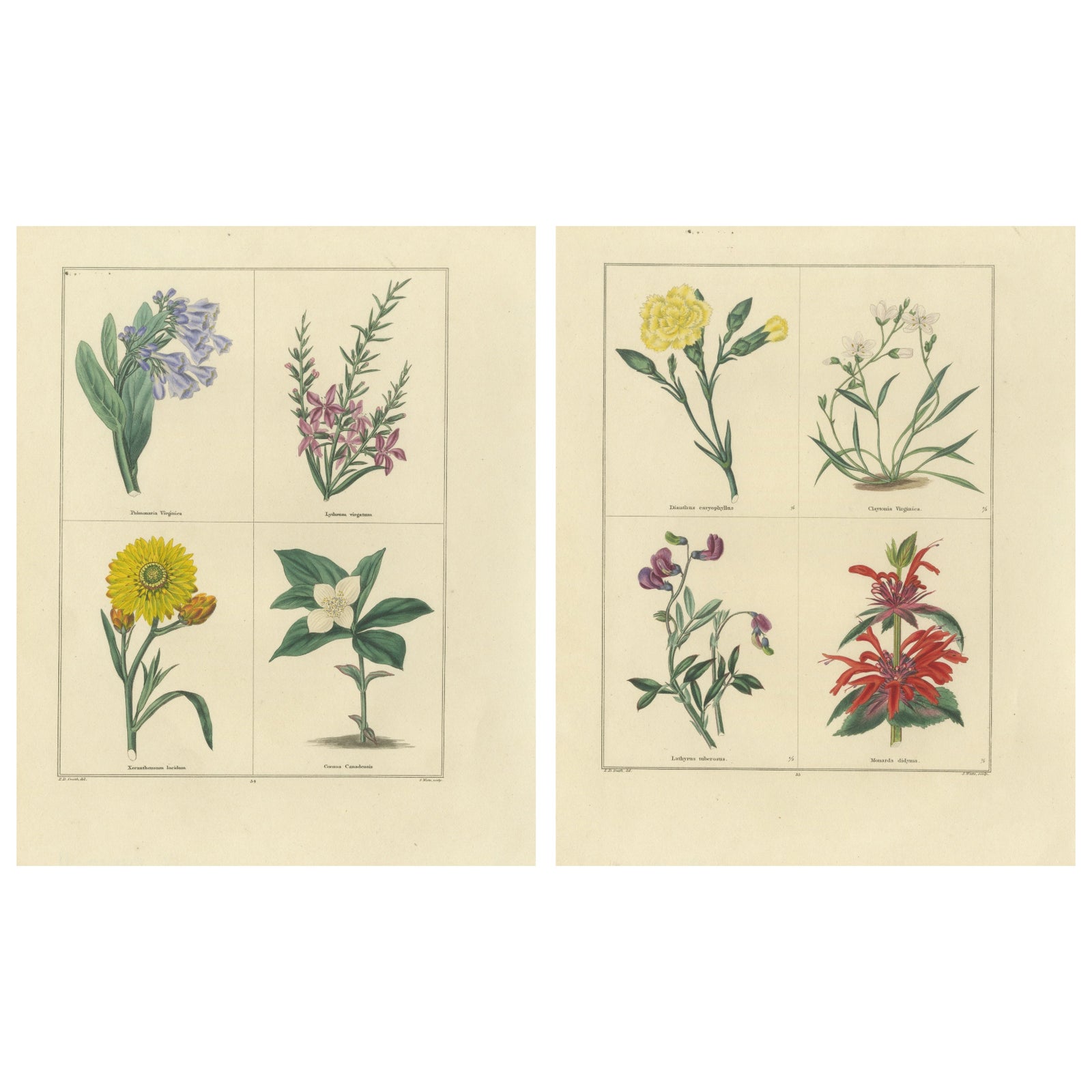
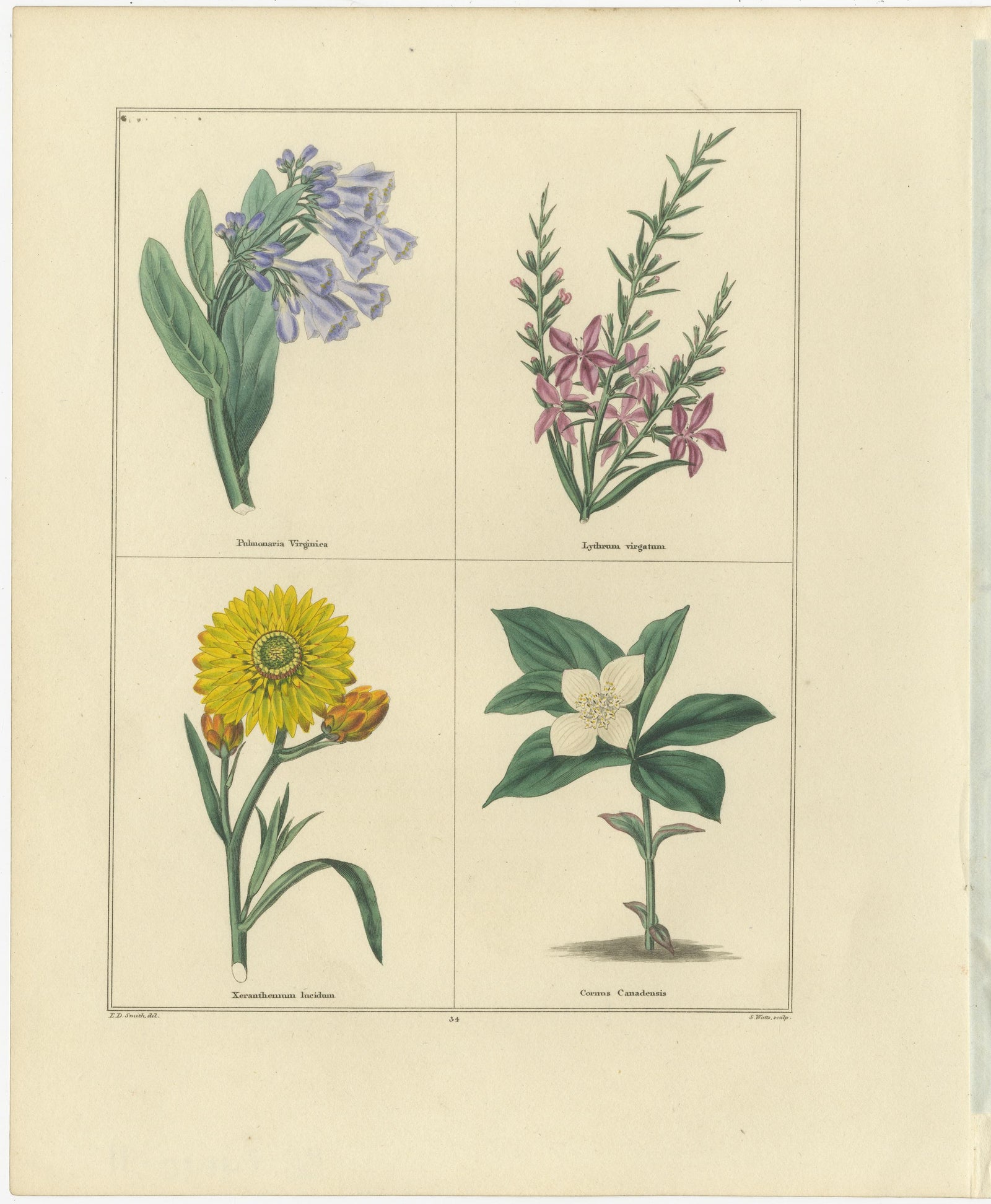
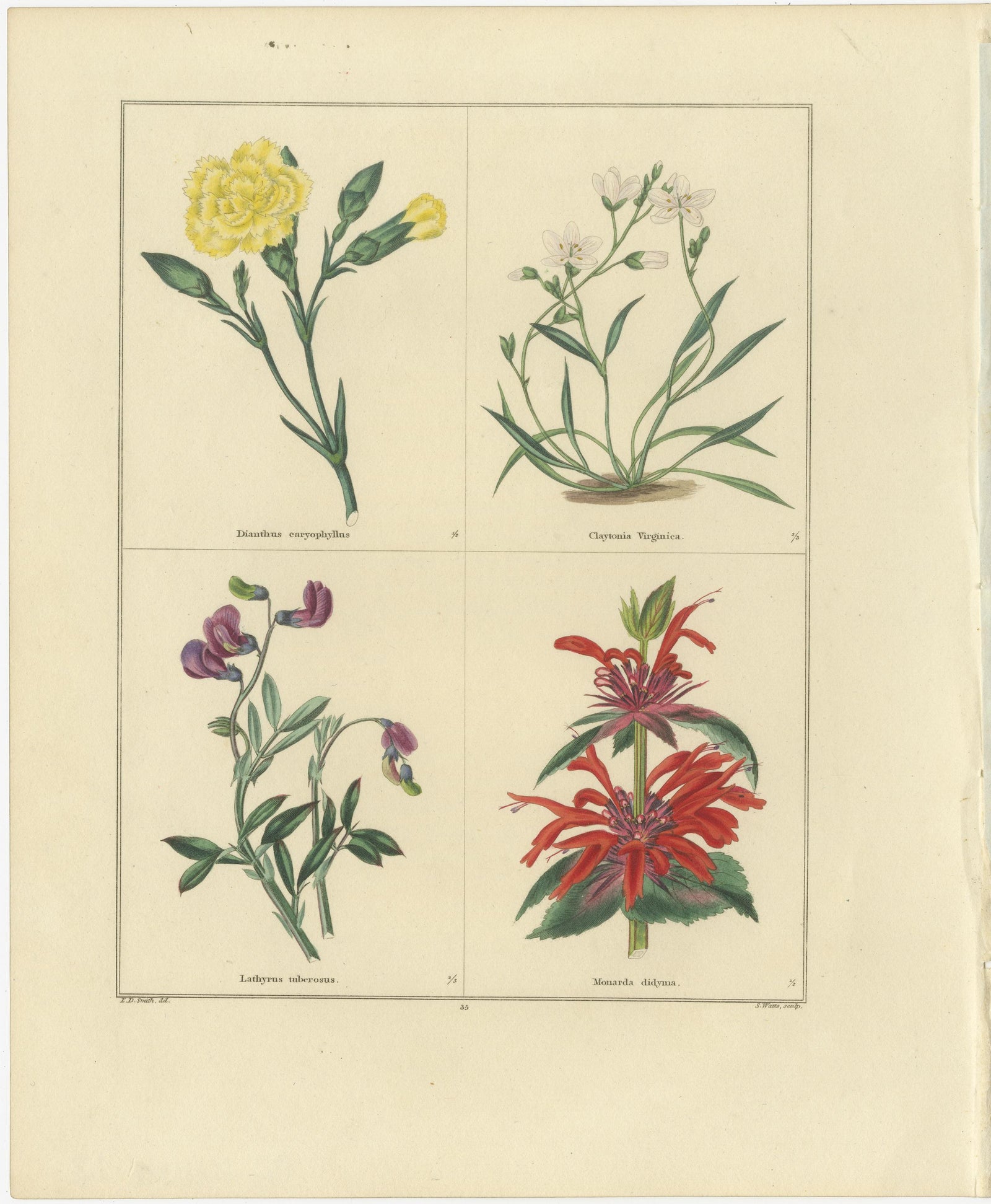
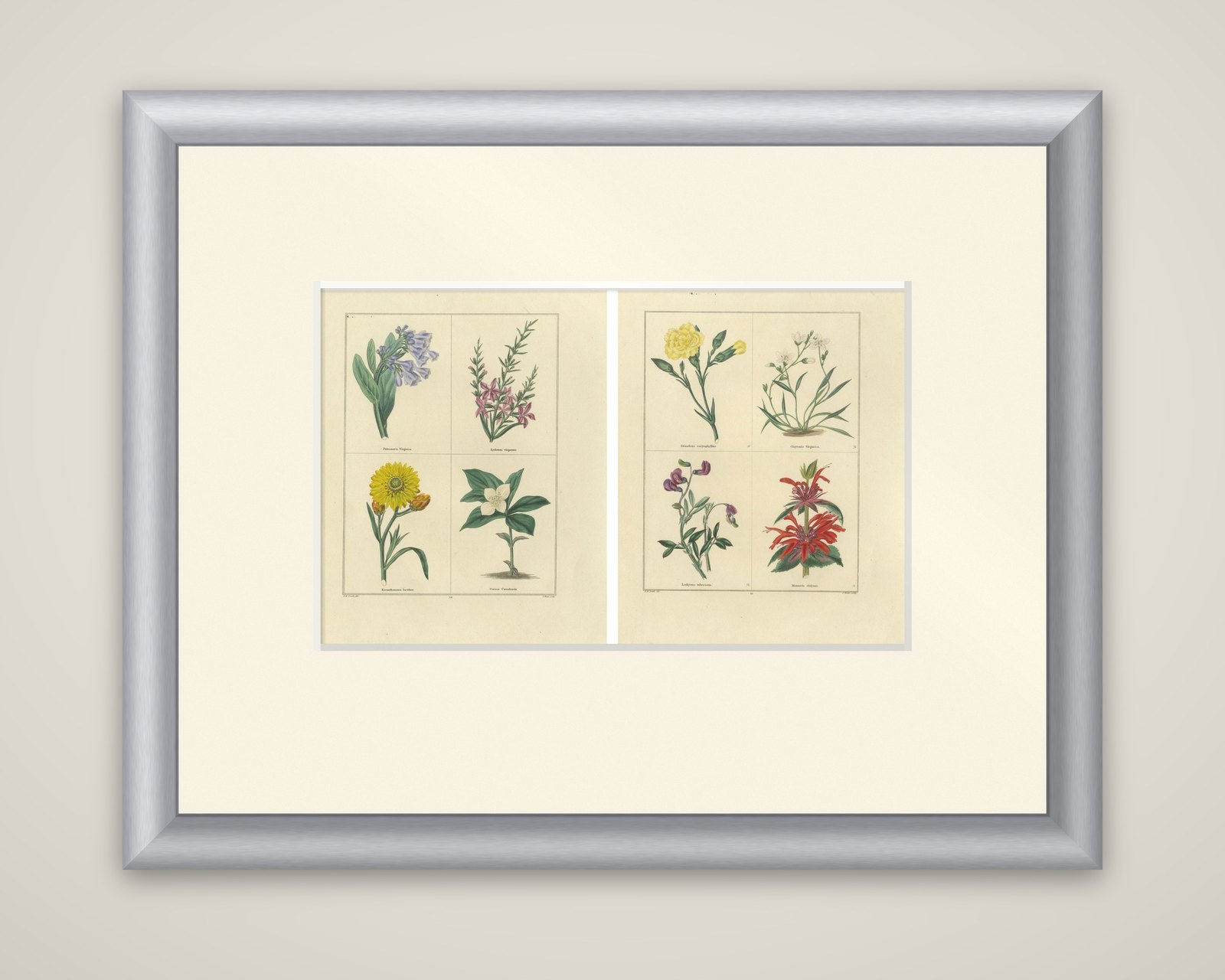
Two botanical plates from Benjamin Maund's The Botanic Garden, issued in London in 1828, each an original copper engraving with hand coloring. Every sheet is divided into four ruled compartments, with one plant drawn full length in each and its Latin name engraved beneath.
The left plate shows Mertensia virginica (Virginia bluebell, drooping clusters of blue flowers), Lythrum virgatum with spikes of magenta blooms, a yellow daisy-like Xeranthemum, and Cornus canadensis (Canadian bunchberry), with white bracts above a whorl of leaves. The right plate shows Dianthus caryophyllus (the yellow carnation), Claytonia virginica (Virginia spring beauty) with small white flowers, Lathyrus tuberosus (tuberous pea) with purple blossoms, and Monarda didyma (scarlet bee balm), whose red whorled flower heads stand at the lower right. The paper is toned cream, and the plates are numbered in the margins.
The Botanic Garden presented hardy ornamental plants cultivated in Great Britain, and it included many eastern North American natives that had been introduced to English gardens, among them the Virginia bluebell, spring beauty, bunchberry and bee balm shown here.