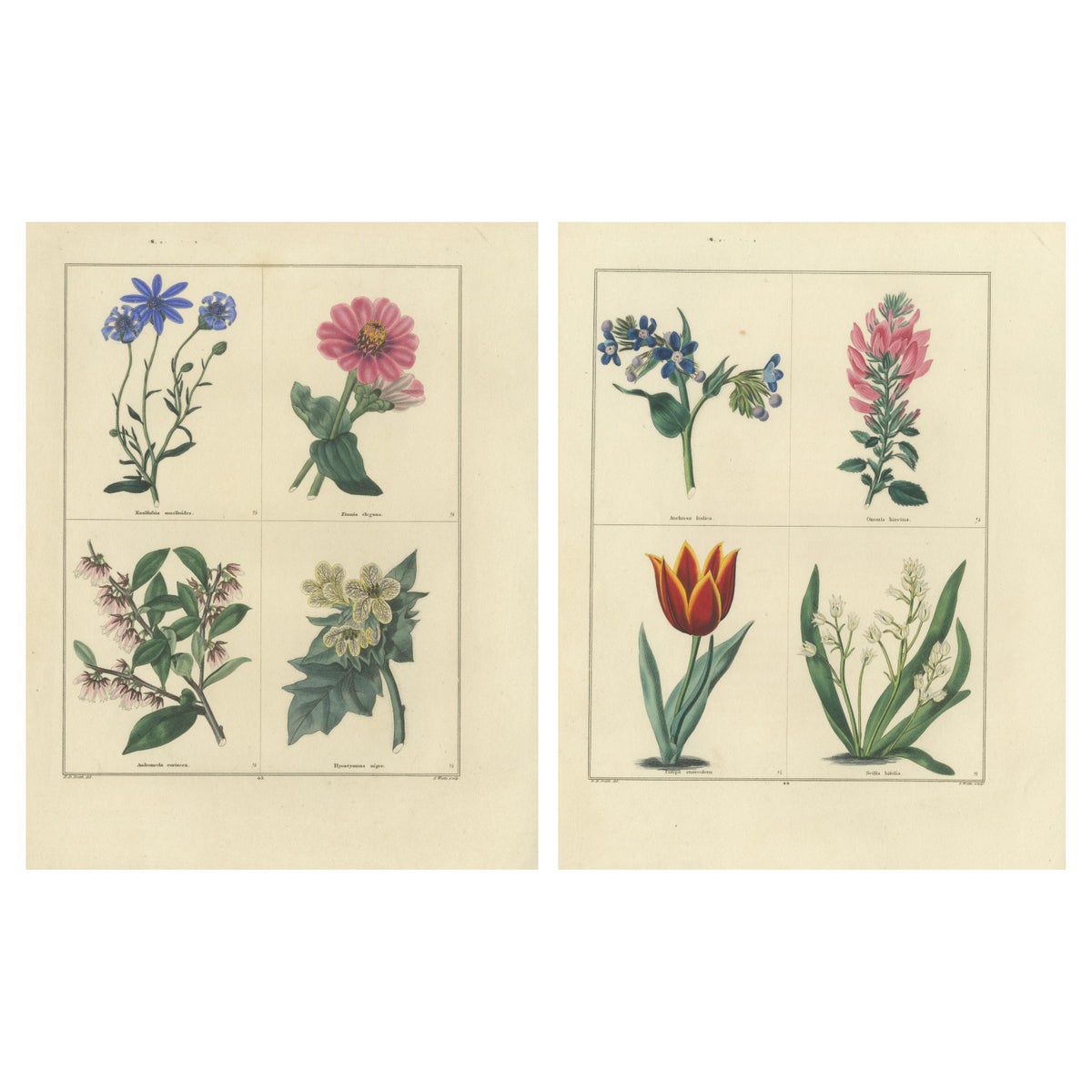


Beautiful Pair of Vintage Botanical Flower Prints, incl a Flame Tulip, 1828
$380 (£290, €340)
Period original, not a reproduction.
Shipped from the Netherlands, flat, insured and tracked, worldwide. Returns accepted within 14 days.
- Date
- 1828
- Size
- 8.3 × 6.7 in (21 × 17 cm)
- Condition
- Good. Condition report: Excellent condition with rich, original hand coloring and crisp impressions. Light toning and minimal handling marks consistent with age. Plate marks clearly visible on all sides; verso blank.
- Period
- Early 19th century
- Artist or book
- Benjamin Maund
- Section
- Botanical
- Reference
- f_47449112
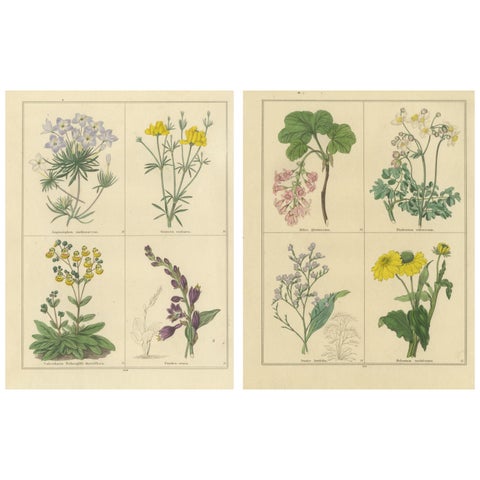
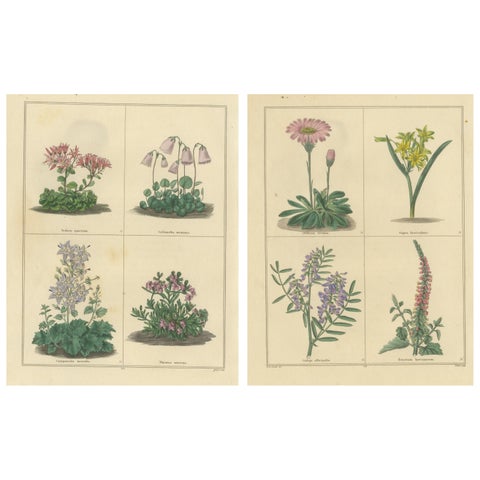
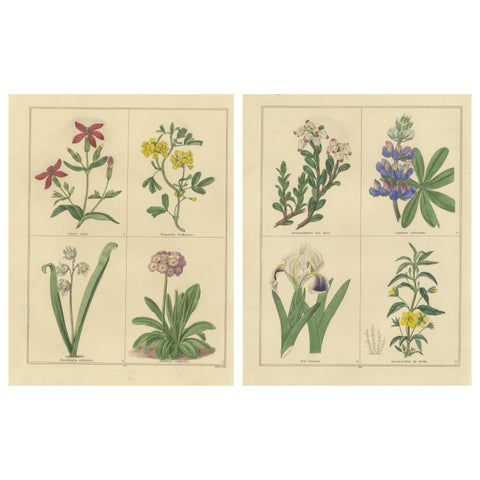
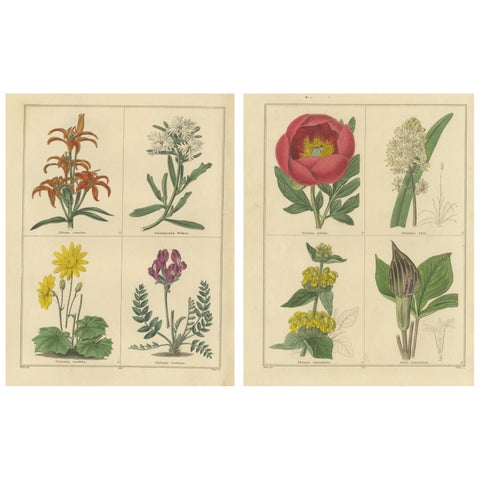
Pair of Hand-Colored Botanical Engravings of Garden Flowers, London 1828
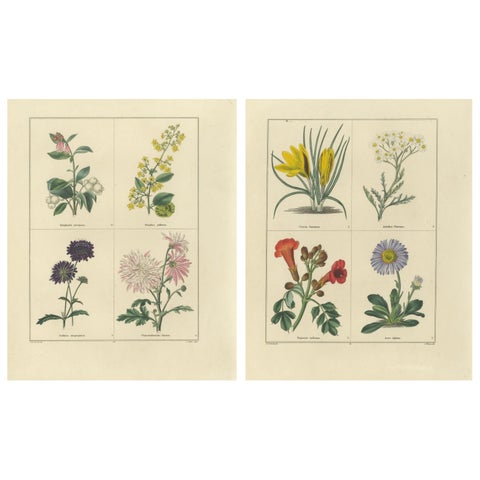
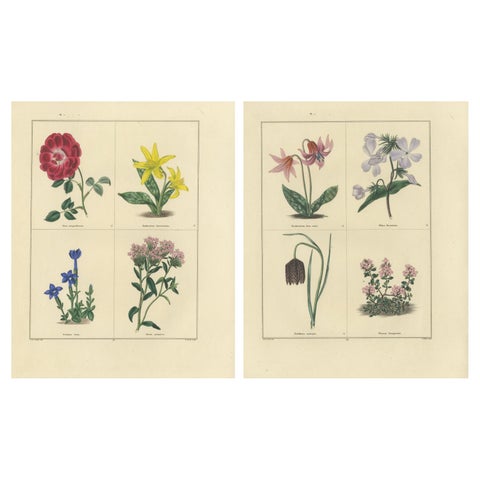
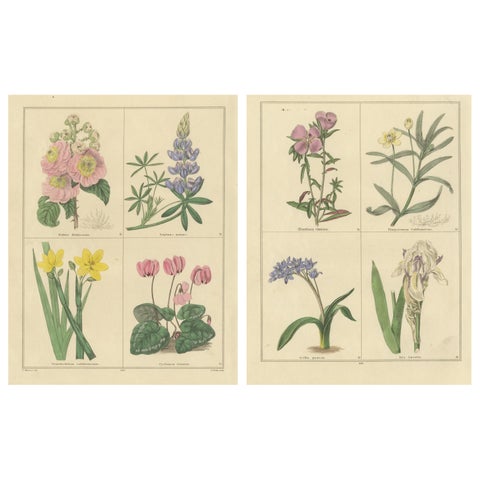
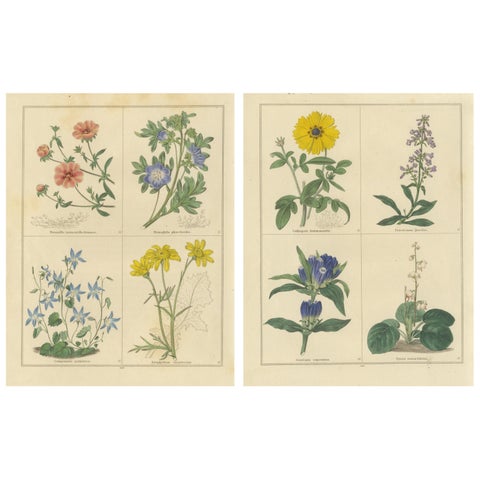
This exquisite pair of early 19th-century botanical engravings exemplifies the precision and grace of English natural history art during the Georgian period. Published in London in 1828 as part of The Botanic Garden, these beautifully hand-colored plates present a variety of ornamental flowering plants admired in both domestic gardens and botanical collections of the time. The engravings display the combination of fine linework, delicate shading, and subtle watercolors that made Benjamin Maund’s publication one of the most celebrated horticultural works of its era.
The left plate features the Blue Daisy (Xerothrix candollei), Zinnia (Zinnia elegans), Evergreen Daphne (Daphne sericea), and Yellow Henbane (Hyoscyamus albus). The right plate depicts the Indian Alkanet (Anchusa indica), Pink Restharrow (Ononis hircina), Flame Tulip (Tulipa gesneriana), and White Squill (Scilla italica). Each species is drawn with exceptional accuracy, its color harmonies delicately balanced to reveal the natural variety of form and tone. The tulip’s deep vermilion petals contrast beautifully with the pale blossoms of the white squill, while the pink zinnia and blue daisy provide a pleasing symmetry across the pair.
The Botanic Garden was designed not only as a reference for botanists but also as a source of aesthetic pleasure for collectors and gardeners. Each plant was chosen for its beauty and significance, representing both exotic introductions and familiar European species. The engravings reflect the era’s fascination with cataloguing the natural world through art, a blend of science, craftsmanship, and taste that continues to captivate collectors today.
Condition report: Excellent impressions with bright, original hand coloring. Light, even toning and faint handling marks consistent with age. Plate marks clearly visible on all sides; verso blank.
Framing tips: A beautifully balanced pair ideal for interior display, best framed in matching antique gold, dark wood, or ebonized frames with off-white or pale green acid-free mats. Their blend of blue, red, and pink tones makes them a striking focal point for a study, conservatory, or library wall.
Technique: Hand-colored engraving
Maker: Benjamin Maund, London, 1828