Close-ups
Framed and on the wall
Frame and rooms are illustrations of how the print could look; the description says what is included.
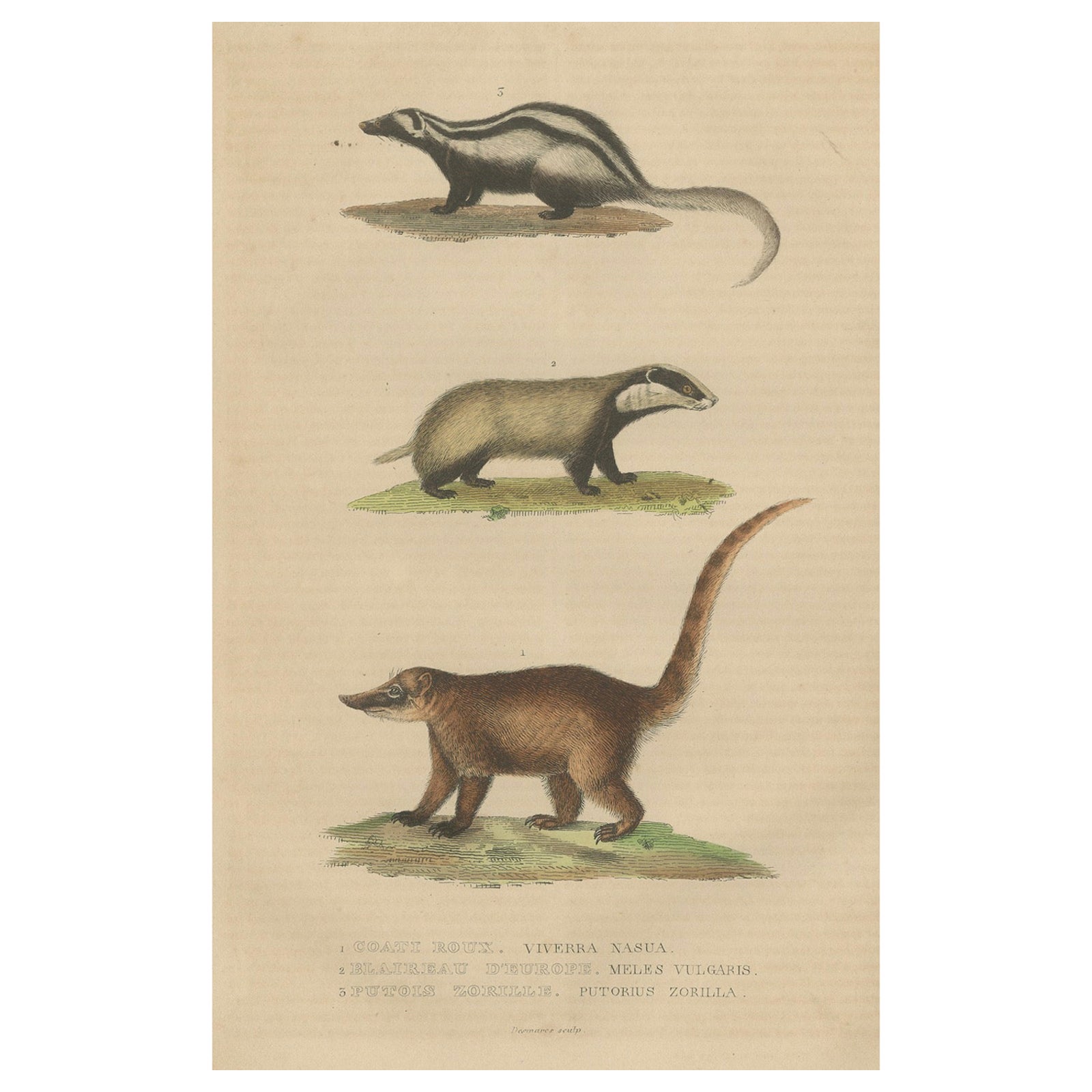
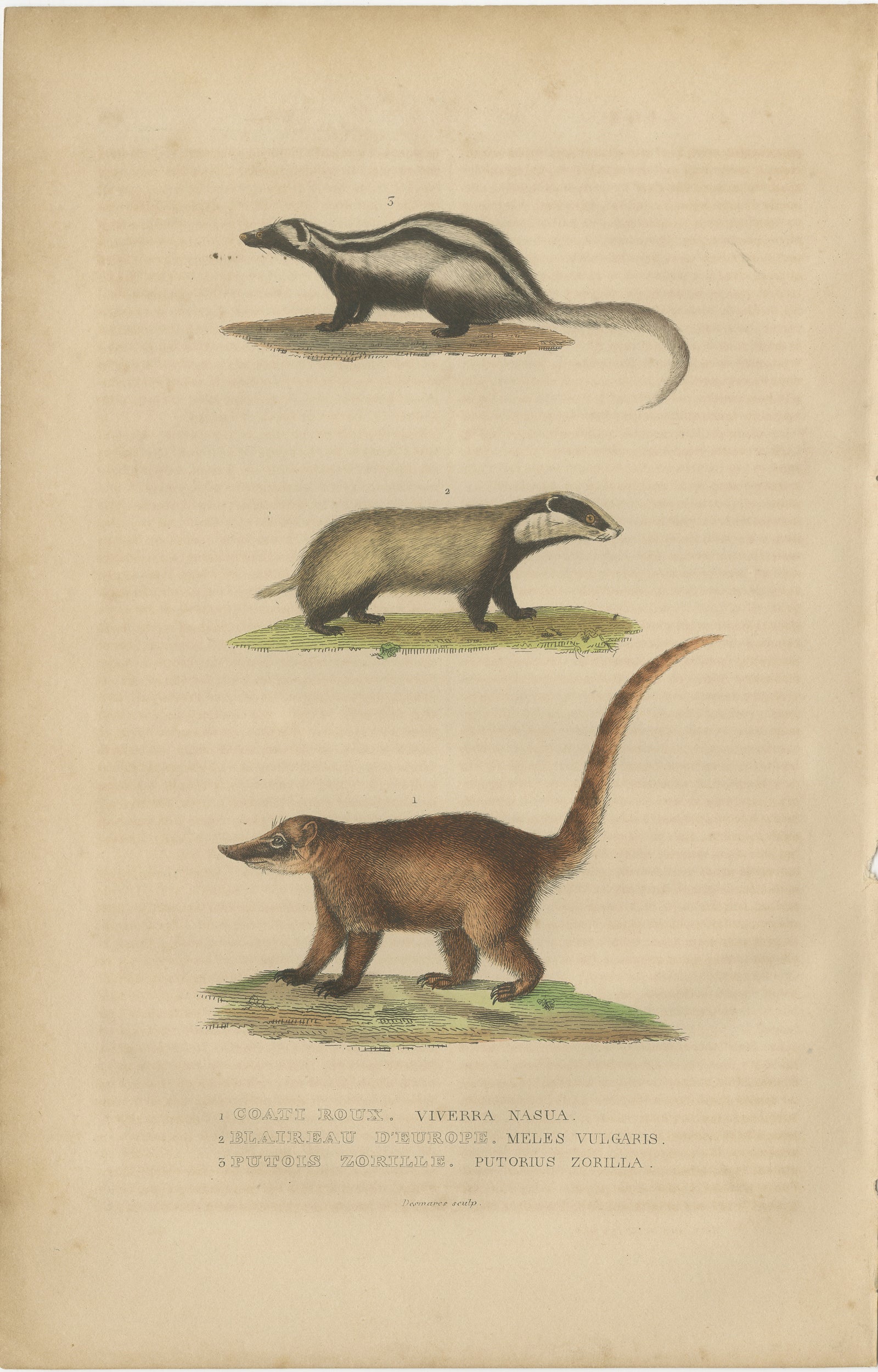
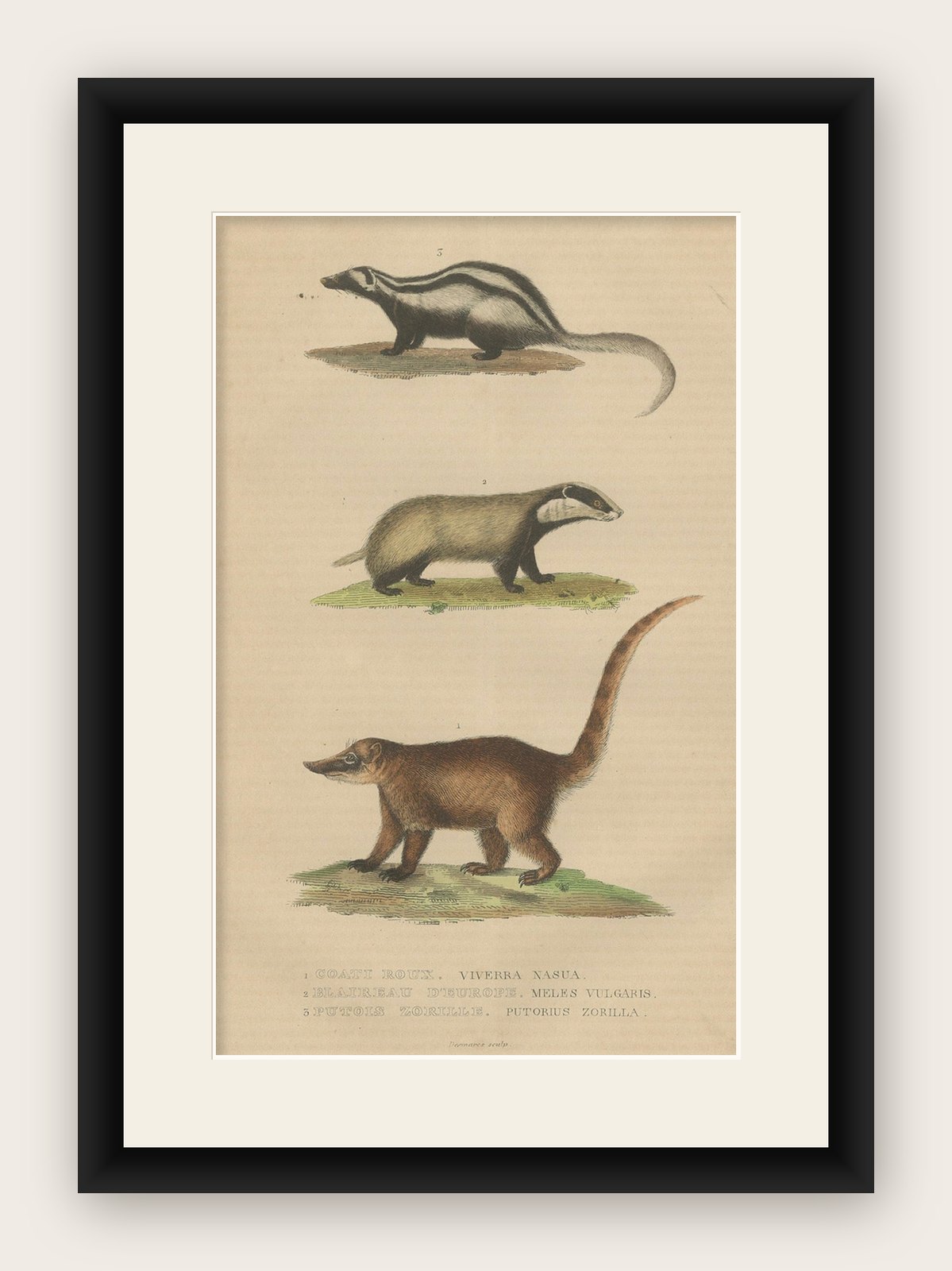
Carnivores of Field and Forest: Coati, European Badger and Striped Polecat, 1845
£290 ($380, €340)
Period original, not a reproduction.
Shipped from the Netherlands, flat, insured and tracked, worldwide. Returns accepted within 14 days.
- Date
- 1845
- Size
- 10.4 × 6.7 in (26.5 × 17 cm)
- Condition
- Good. Good. Strong paper. Edge on the right side roughly cut. Very light offsetting and some soiling or browning around the edges. Please study the image carefully.
- Period
- Early 19th century
- Section
- Mammals
- Reference
- f_37842412
The image is a hand-colored engraving from the 'Dictionnaire Classique des Sciences Naturelles' by Pierre Auguste Joseph Drapiez, published in 1845. It features three species of small to medium-sized mammals:
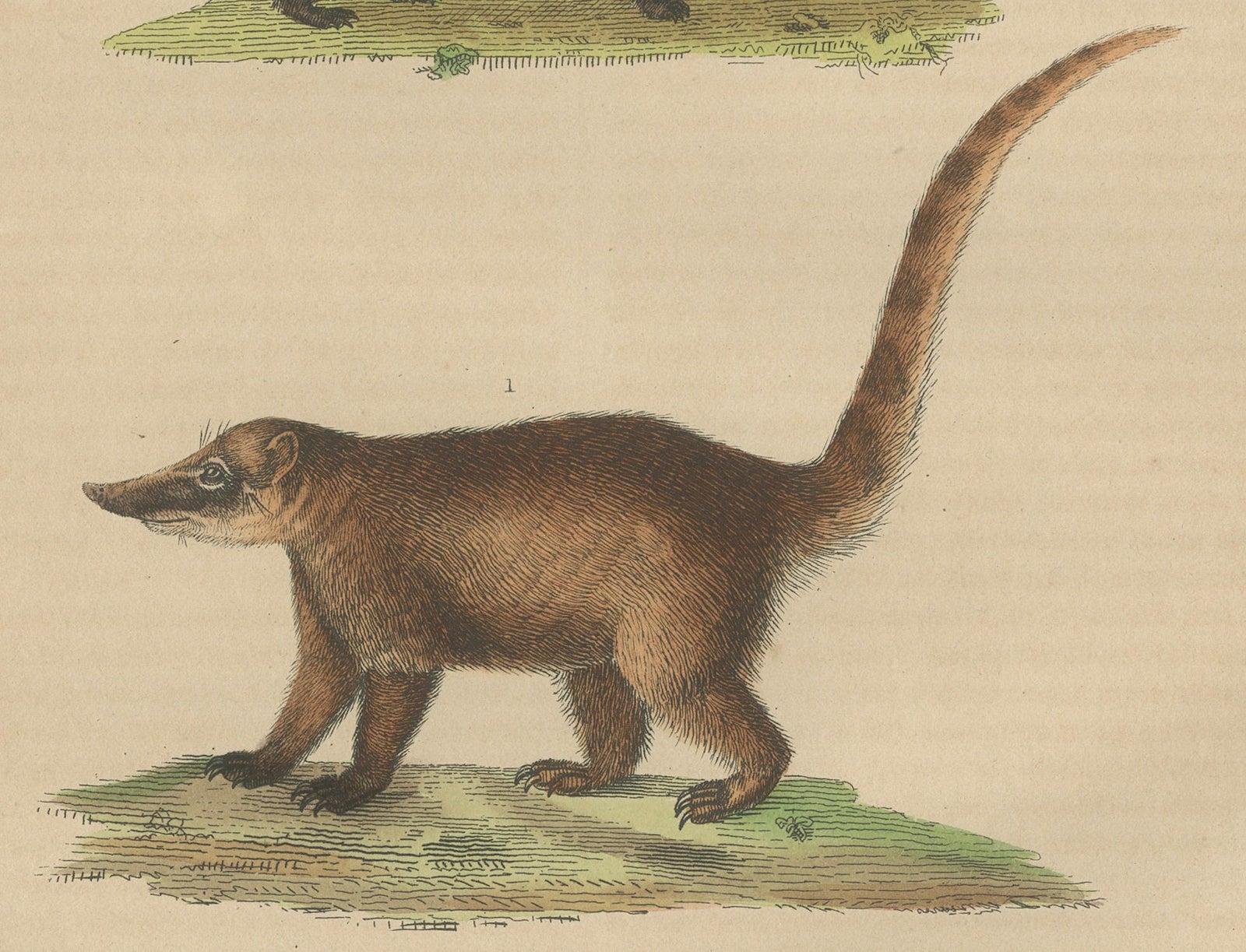
1. **Viverra nasua** - This is likely intended to be the South American coati, part of the raccoon family, known for its elongated snout and ringed tail. However, the scientific name given here seems to be a mix-up, as "Viverra" usually refers to a genus of civets, and "nasua" is indeed part of the scientific name for coatis (Nasua nasua).
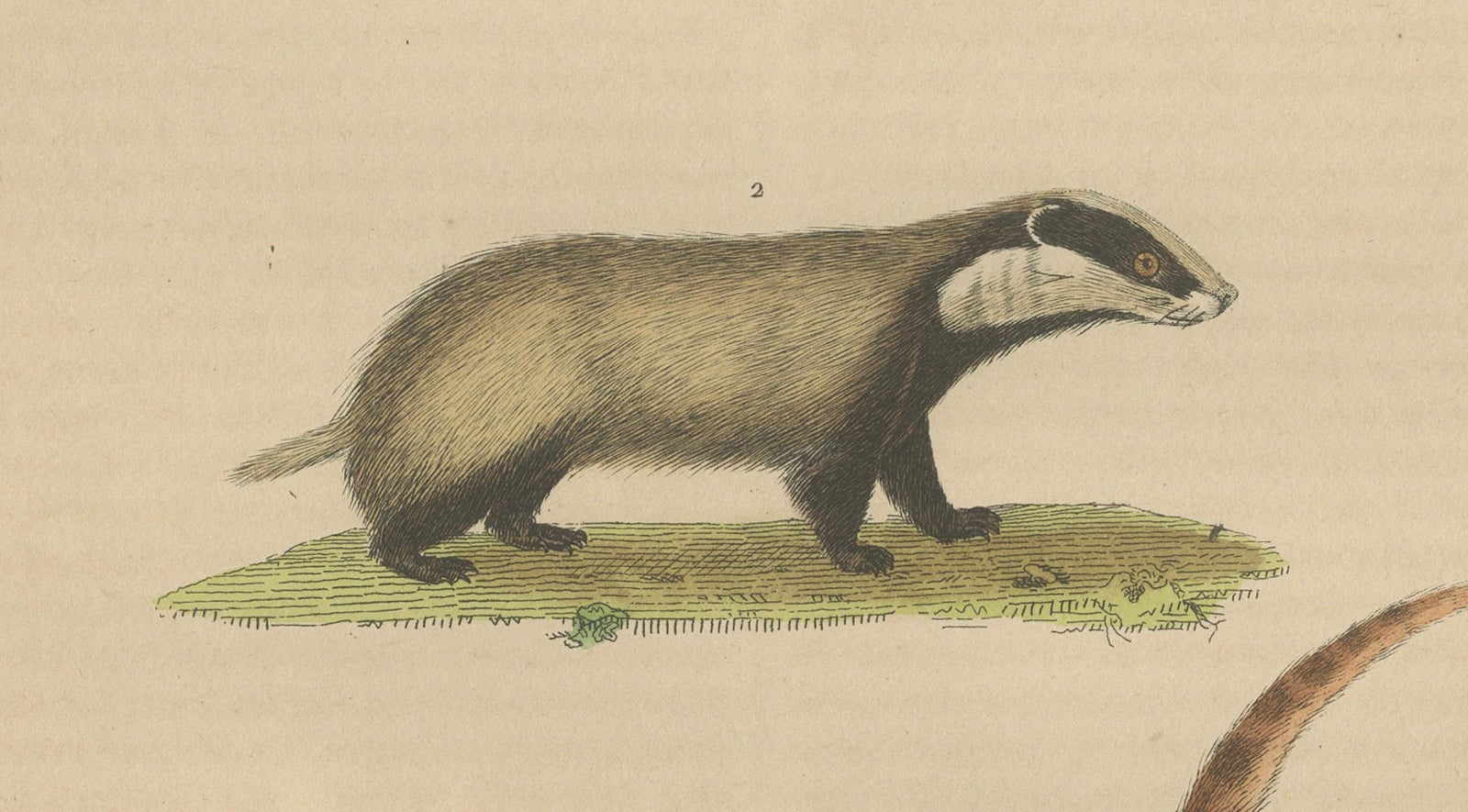
2. **Meles vulgaris** - Also known as the European badger, it is easily recognized by its distinctive striped face, grey body, and short, sturdy legs. The badger is depicted in profile with its characteristic shuffling gait.
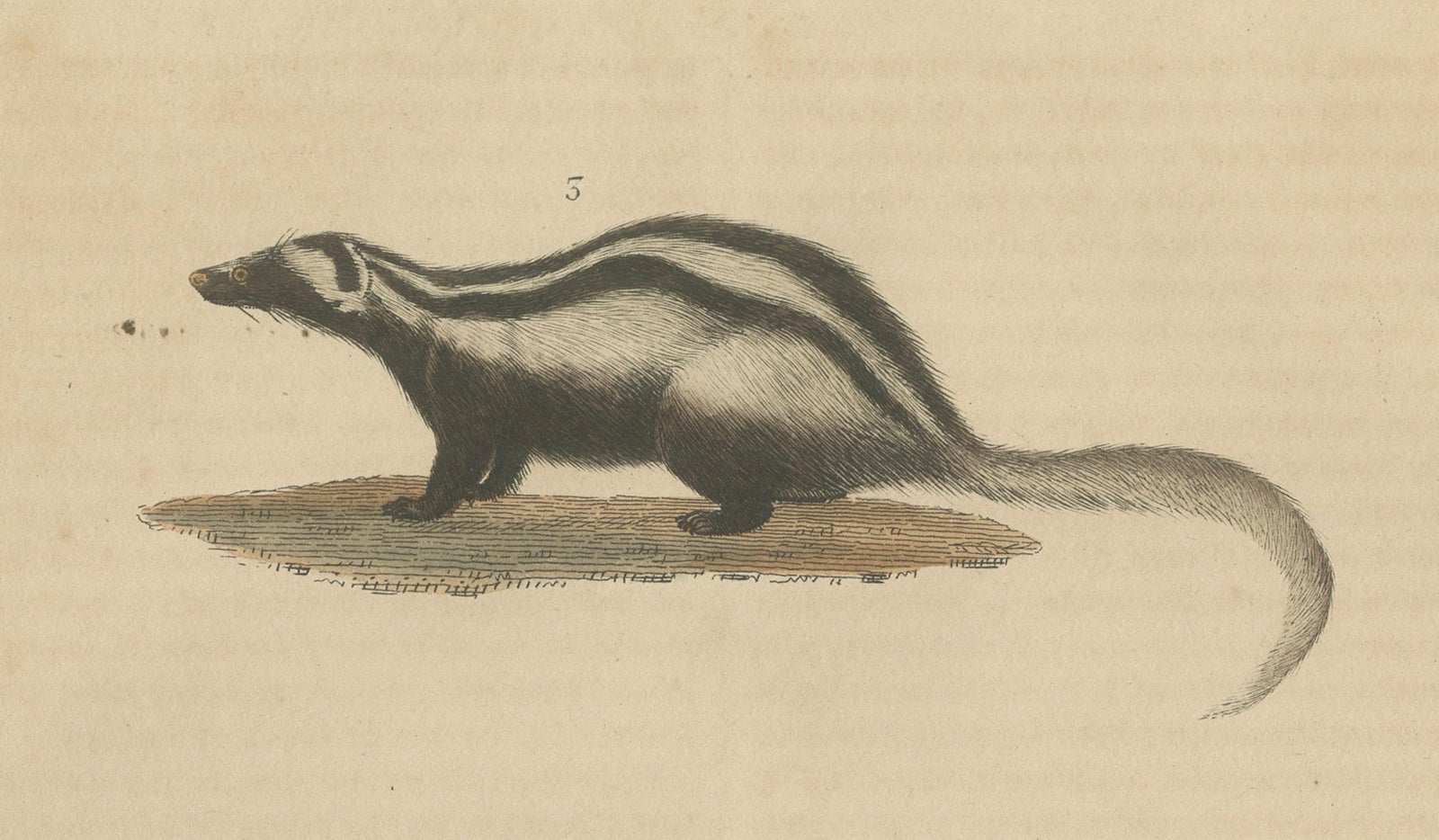
3. **Putorius zorilla** - This likely refers to the striped polecat, also known as the African polecat or zorilla. It is recognized for its striking black and white markings, long body, and bushy tail. The name "Putorius" is more commonly associated with weasels.
The print itself is delicately hand-colored, a common practice of the time to bring life to the engravings. The animals are presented on a neutral background with a hint of their natural habitats suggested at their feet. The precision of the engravings, coupled with the hand coloring, would have made these illustrations both a valuable scientific tool and a work of art.