Framed and on the wall
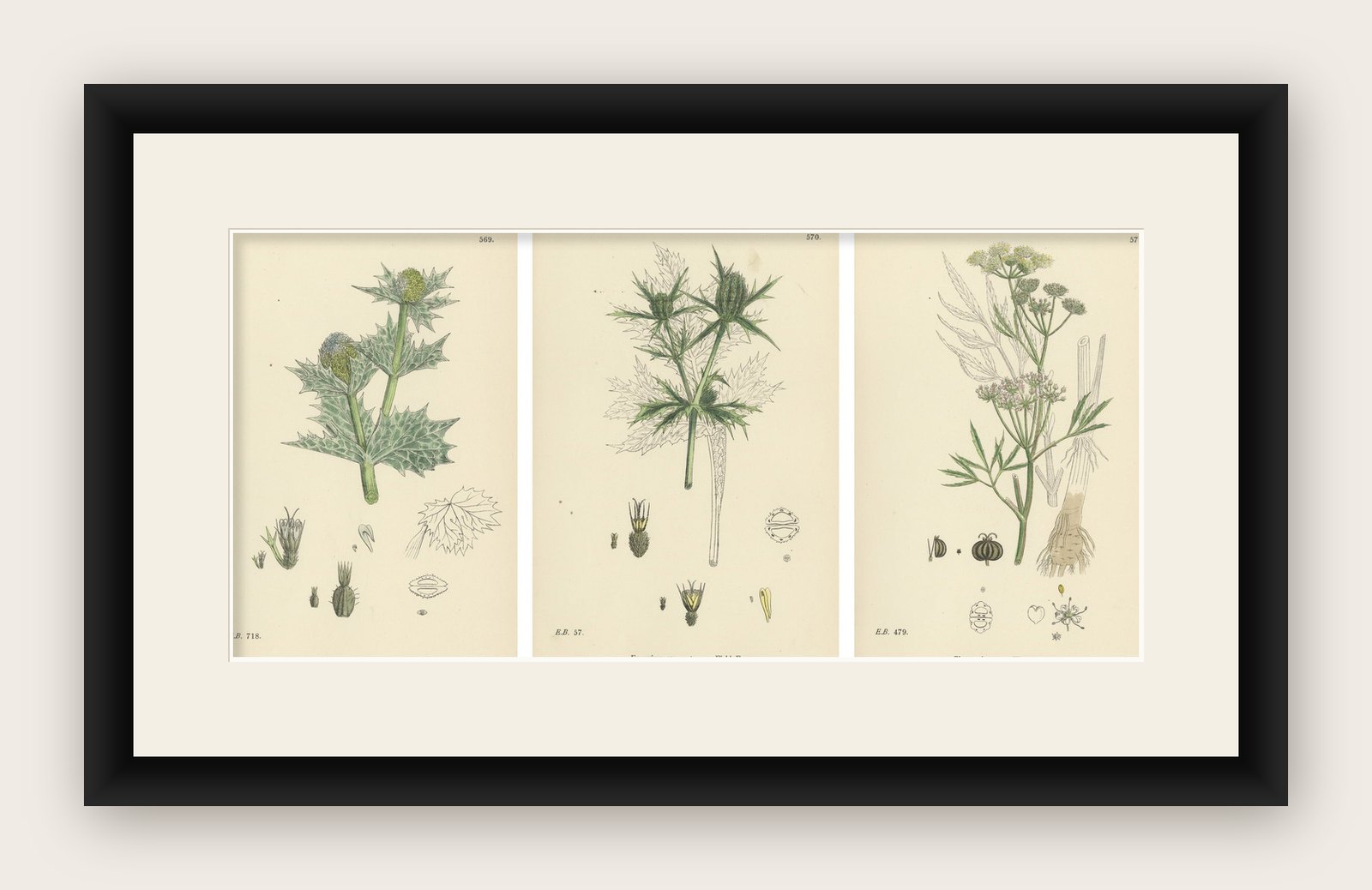
Frame and rooms are illustrations of how the print could look; the description says what is included.
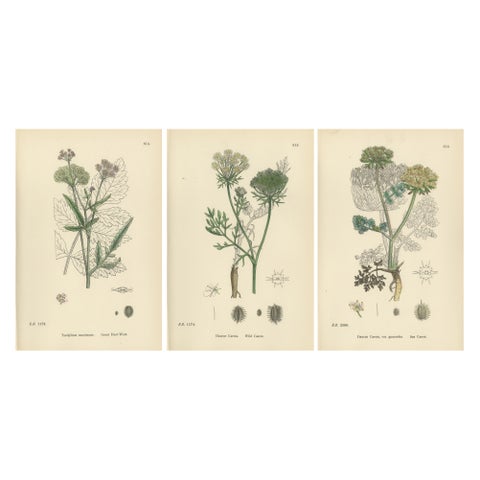
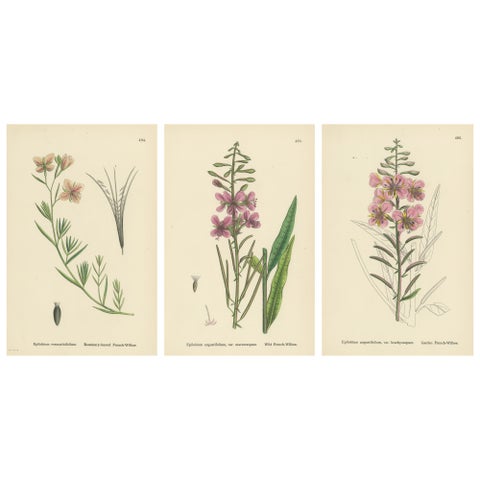
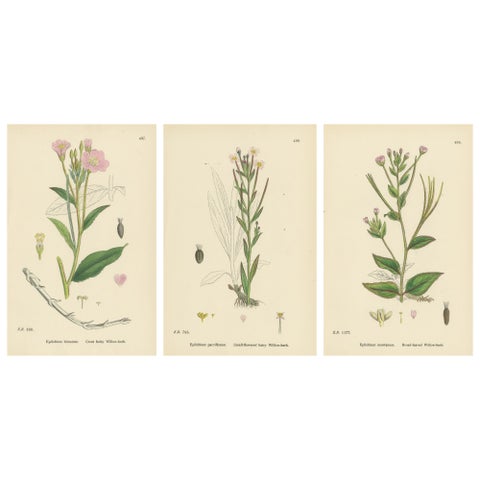
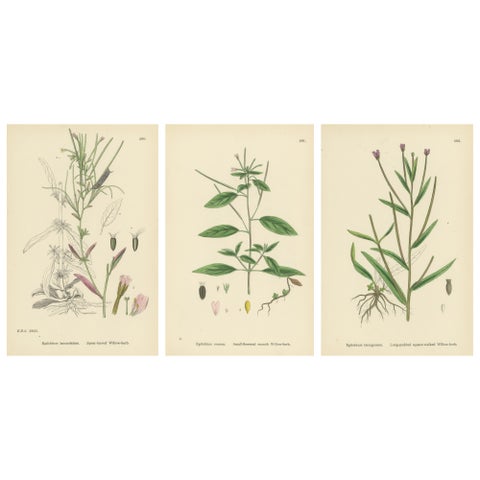
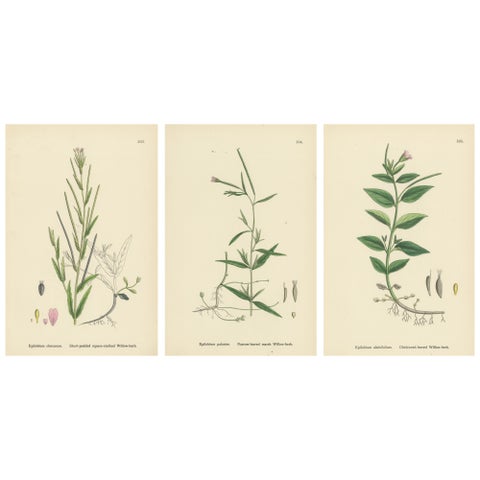
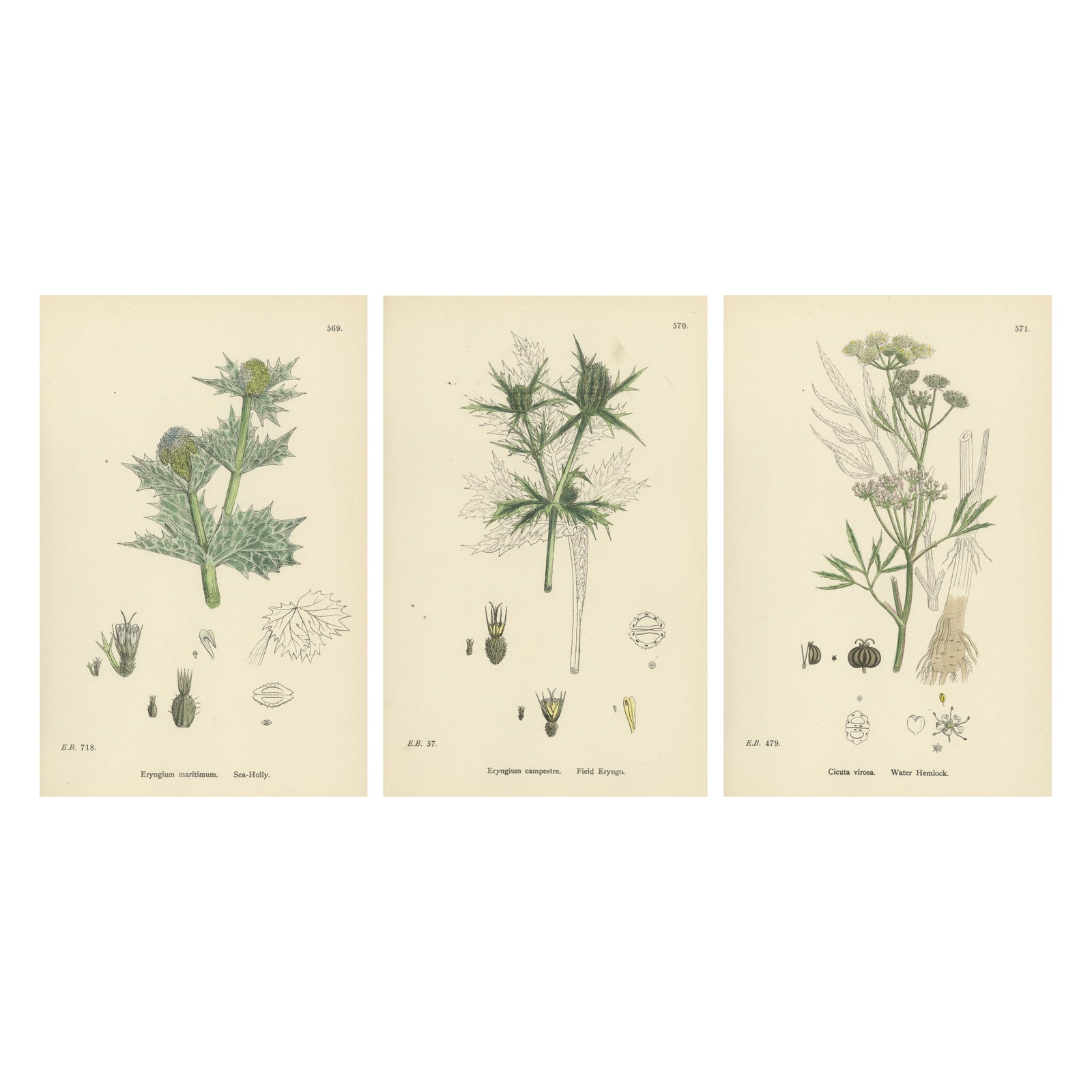
Botanical Engravings of Sea-Holly, Field Eryngo, and Water Hemlock, 1902
£290 ($380, €340)
Period original, not a reproduction.
Shipped from the Netherlands, flat, insured and tracked, worldwide. Returns accepted within 14 days.
- Date
- 1902
- Size
- 10.2 × 6.7 in (26 × 17 cm)
- Condition
- Good. Condition report: Excellent condition with clear plate marks, strong impressions, and delicate original coloring. Very minor toning consistent with age; no significant blemishes.
- Period
- 20th century
- Section
- Botanical
- Reference
- f_47478452
Hand-Colored Botanical Engravings of Sea-Holly, Field Eryngo, and Water Hemlock, 1902
Description:
This striking trio of hand-colored botanical engravings from 1902 presents three remarkable speciesEryngium maritimum (Sea-Holly), Eryngium campestre (Field Eryngo), and Cicuta virosa (Water Hemlock), each rendered with scientific precision and artistic finesse. Together, they capture a fascinating range of botanical forms, from the sculptural beauty of coastal flora to the delicate menace of poisonous wetland plants.
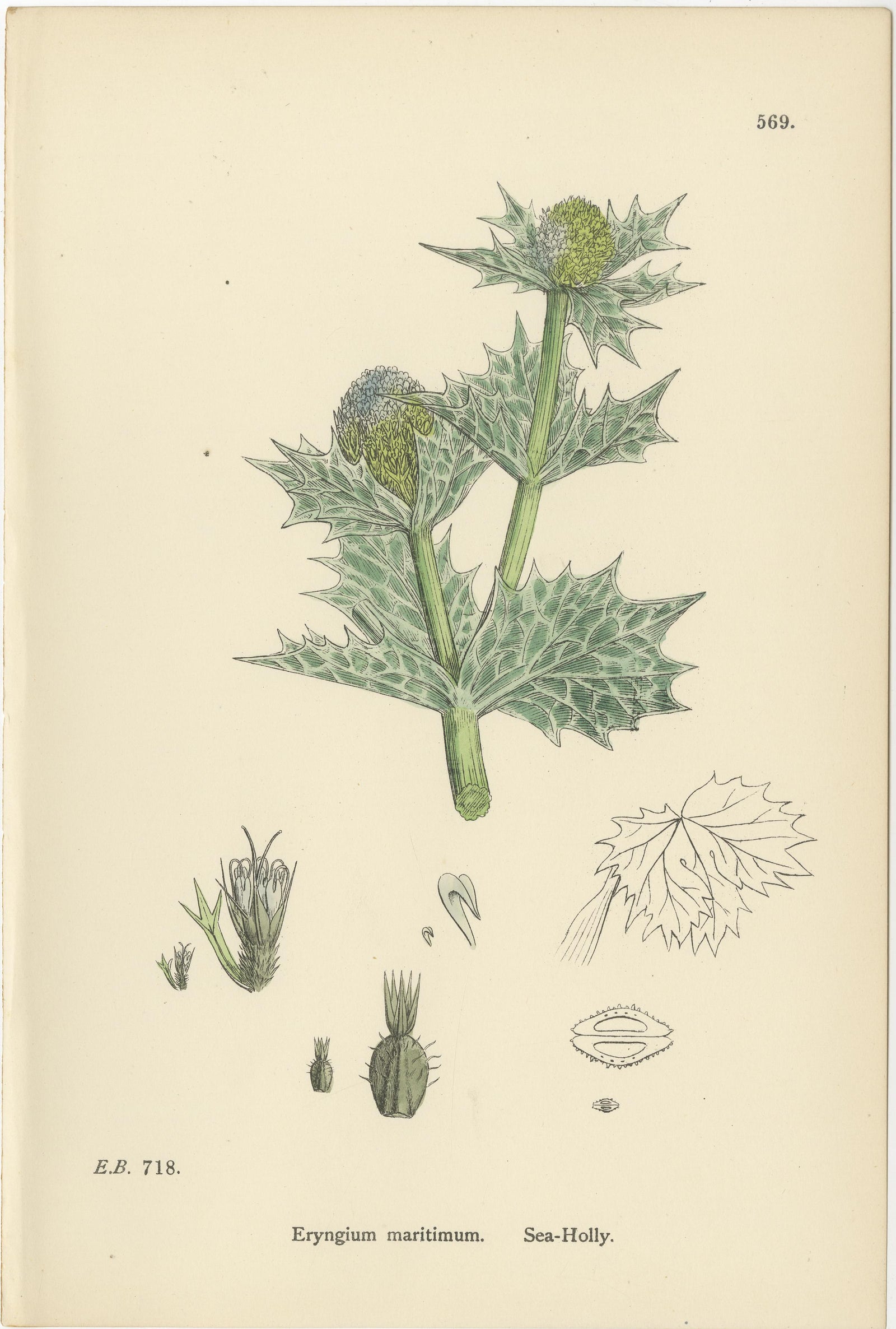
The first plate, Eryngium maritimum, depicts the iconic Sea-Holly, a striking coastal plant with silvery-blue, spiny leaves and thistle-like flower heads. Its rigid geometry and metallic hue made it a favorite subject of 18th- and 19th-century botanical artists. The engraver has captured its architectural form and subtle gradations of color with great delicacy, highlighting its natural adaptation to sandy shores and sea breezes.
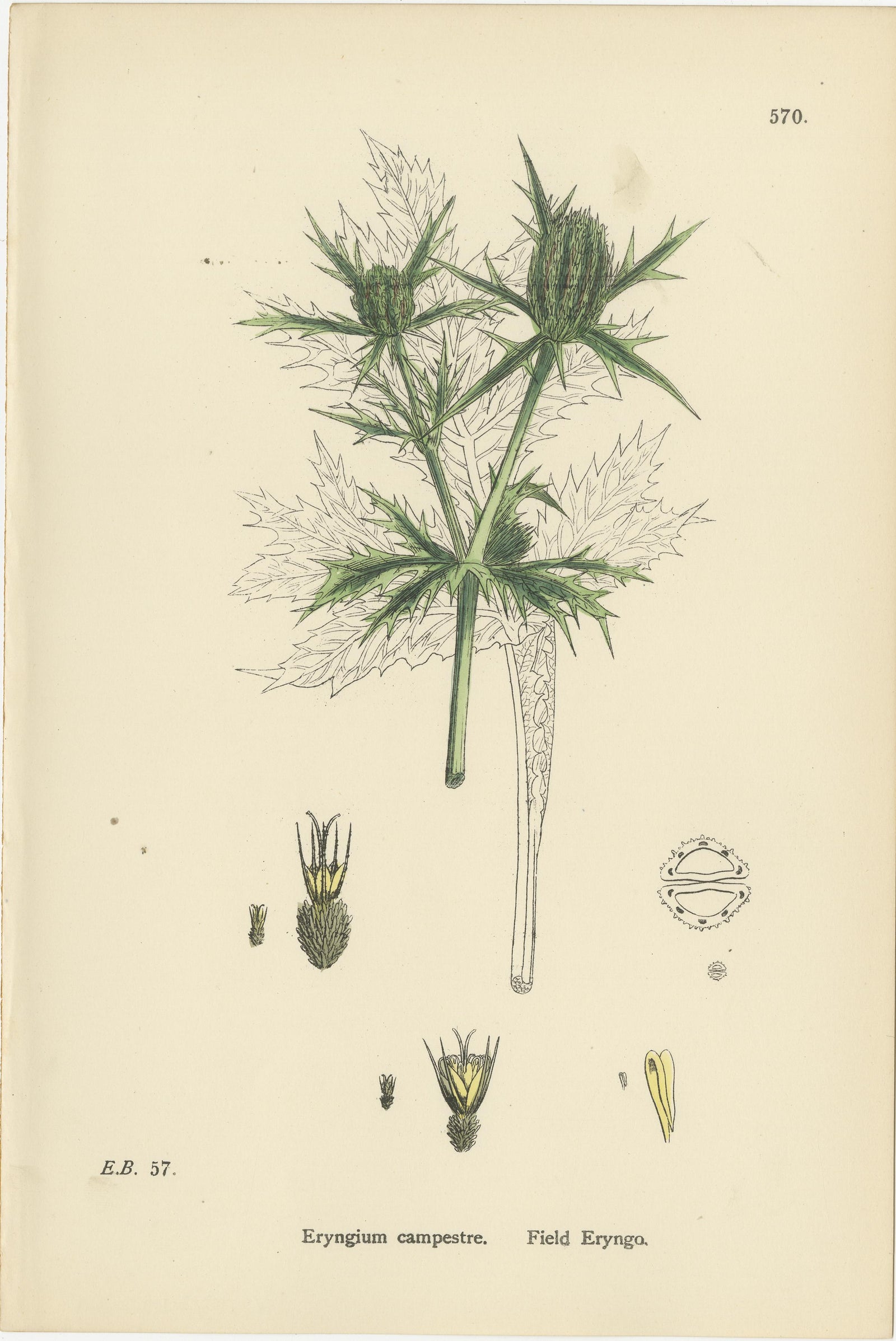
In the central engraving, Eryngium campestre (Field Eryngo) presents a more terrestrial relative, less blue in tone but equally intricate. Its finely divided leaves and spherical inflorescences reflect the same hardy structure but adapted to dry meadows and open fields. The artist’s inclusion of detailed dissections beneath the main image demonstrates the botanical thoroughness characteristic of the period’s natural history studies.
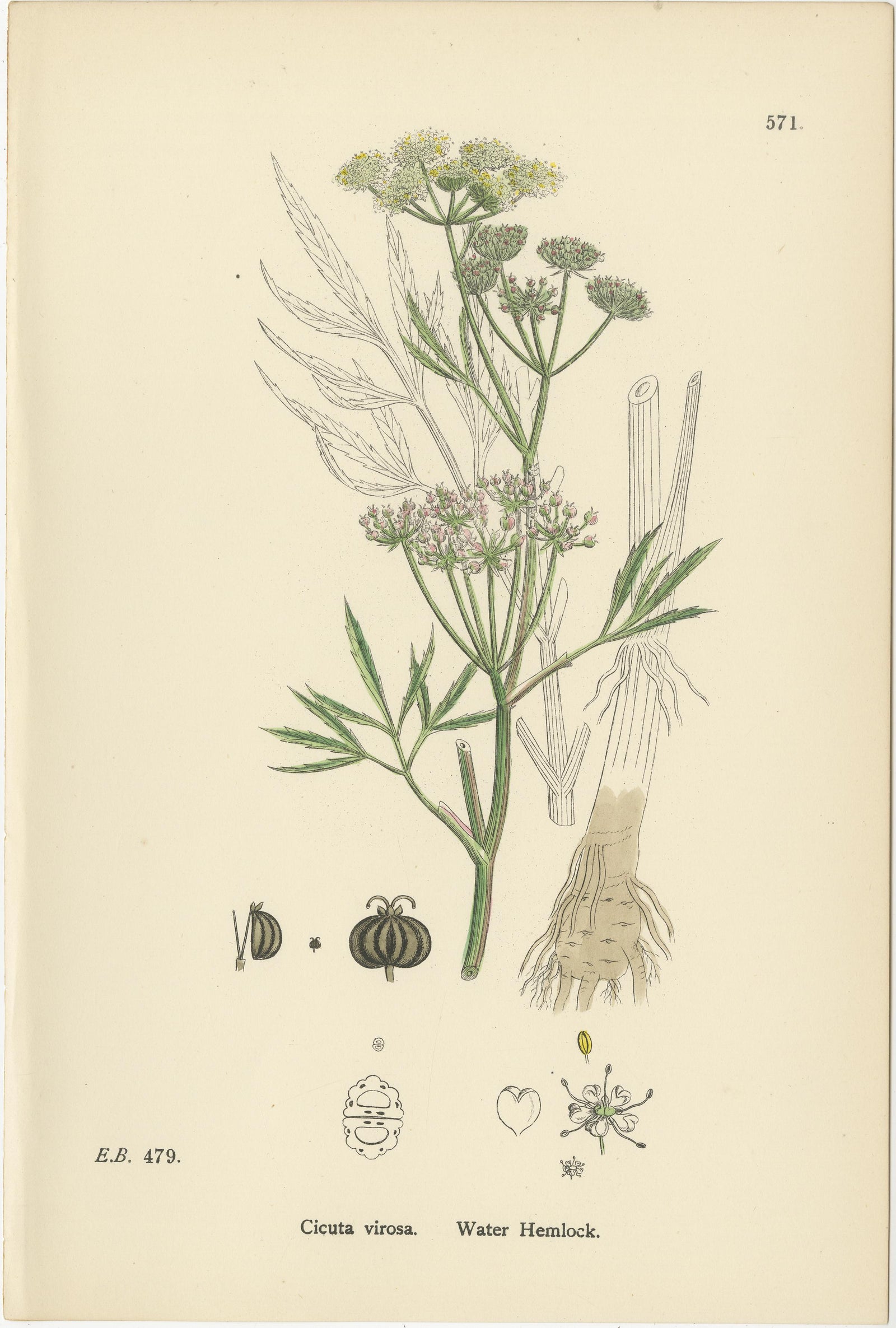
The final plate, Cicuta virosa (Water Hemlock), contrasts sharply with its companions in form and character. A tall, slender plant with delicate umbels of white flowers, Cicuta is known as one of Europe’s most poisonous species. Its inclusion here is both educational and cautionary, beautifully drawn yet deadly in nature. The finely engraved rootstock and seed pods illustrate the precision of Victorian-era botanical documentation.
Condition report: Excellent condition with clear plate marks, strong impressions, and delicate original coloring. Very minor toning consistent with age; no significant blemishes.
Framing tips: A dramatic and educational set when displayed together. Best framed in dark wood or black frames with off-white or grey mounts to emphasize the structural contrasts between the plants. Perfect for libraries, studies, or nature-themed interiors.
Technique: Hand-colored engraving
Maker: British, published London, 1902