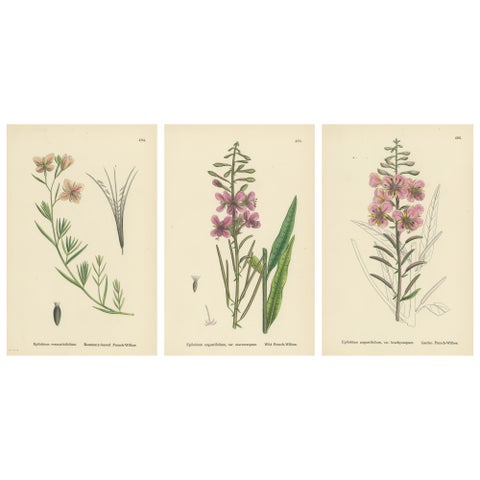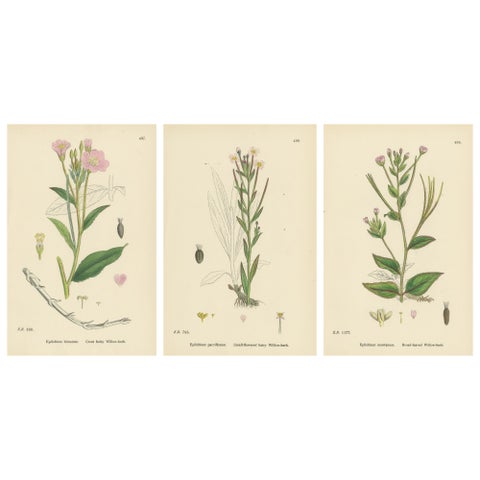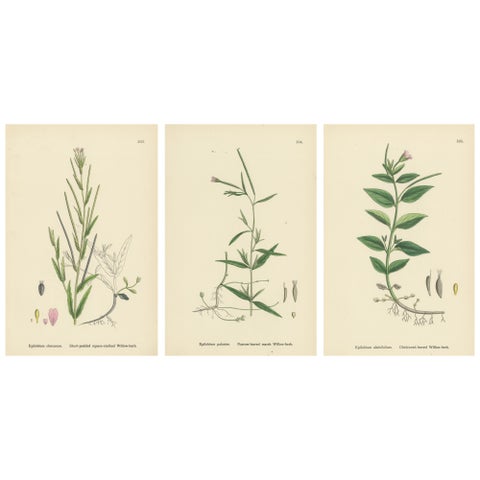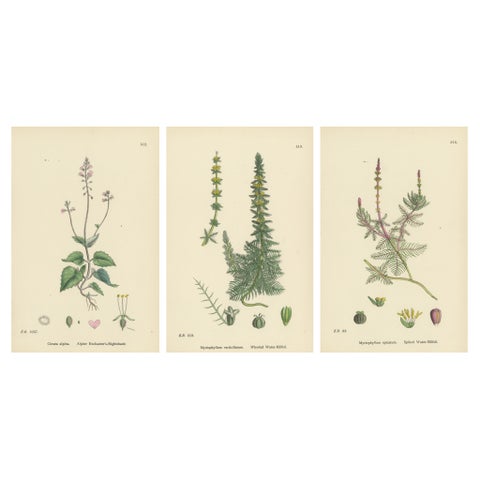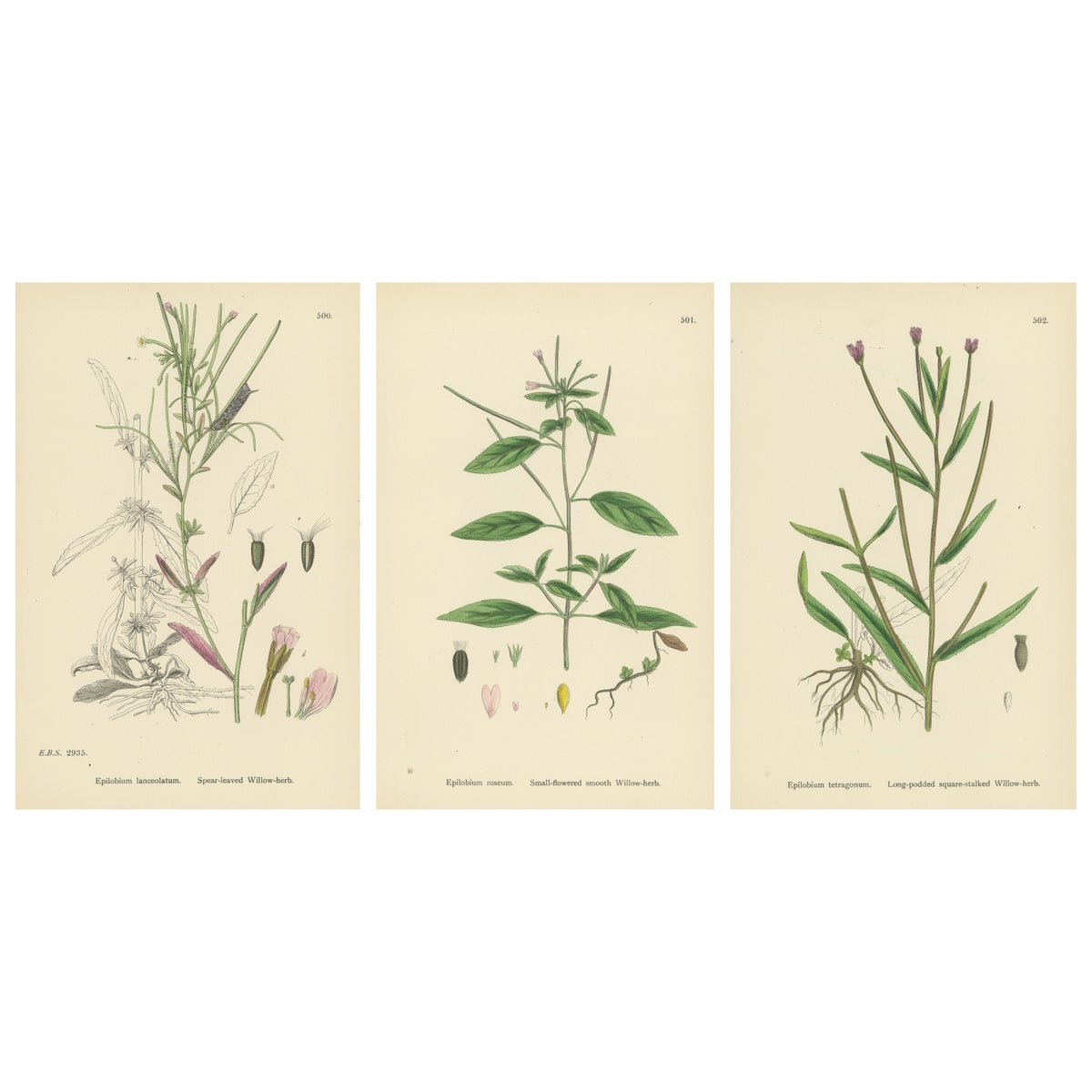


Hand-Colored Botanical Engravings of Willow-Herb Varieties, 1902
$380 (£290, €340)
Period original, not a reproduction.
Shipped from the Netherlands, flat, insured and tracked, worldwide. Returns accepted within 14 days.
- Date
- 1902
- Size
- 10.2 × 6.7 in (26 × 17 cm)
- Condition
- Good. Condition report: Excellent for age. Very light age toning and minimal specks in the margins. Clear plate marks visible, with crisp impressions and generous borders intact. No tears or stains.
- Period
- 20th century
- Section
- Botanical
- Reference
- f_47476562
Title: Hand-Colored Botanical Engravings of Willow-Herb Varieties, 1902
Description:
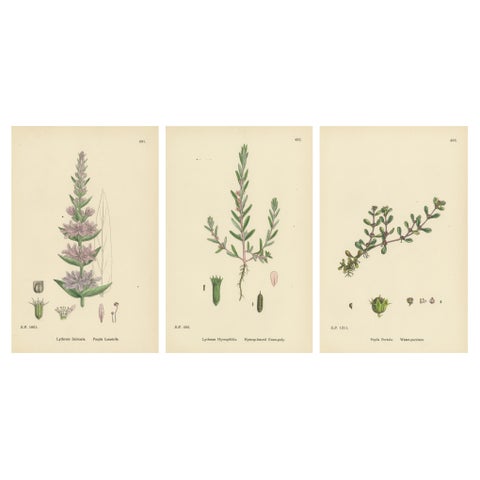
This elegant trio of hand-colored botanical engravings from 1902 features three related species of the Willow-herb (Epilobium) family, beautifully illustrating the diversity and subtle charm of these native British wildflowers. The plates depict Epilobium lanceolatum (Spear-leaved Willow-herb), Epilobium roseum (Small-flowered Smooth Willow-herb), and Epilobium tetragonum (Long-podded Square-stalked Willow-herb). Together they form a refined and instructive set, combining scientific accuracy with the delicate artistry characteristic of early 20th-century natural history illustration.
The first plate, Spear-leaved Willow-herb, presents slender stems and pointed foliage with pink-tinted blossoms. Fine line engraving highlights the plant’s upright habit and the intricate seed structures at the base. The central image, Small-flowered Smooth Willow-herb, contrasts with broader leaves and a smoother texture, emphasizing the plant’s graceful simplicity. The final composition, Long-podded Square-stalked Willow-herb, captures the species’ distinctive angular stems and elongated seed pods, its subtle mauve flowers rendered with understated elegance.
Each engraving balances aesthetic refinement with botanical precision. The inclusion of enlarged flower parts, seed capsules, and root details below each specimen demonstrates the educational intent of the series, while the soft hand coloring lends warmth and natural vibrancy. Printed on fine cream wove paper, these plates remain beautifully preserved, embodying the timeless appeal of English botanical art at the turn of the century.
Condition report: Excellent for age. Very light age toning and minimal specks in the margins. Clear plate marks visible, with crisp impressions and generous borders intact. No tears or stains.
Framing tips: This trio makes a lovely coordinated display when mounted in matching frames with off-white or pale green mats. Their vertical composition and delicate color palette suit both classic and contemporary interiors, perfect for a study, botanical-themed room, or hallway gallery. Displayed in a row, the progression of form and flower creates a serene natural rhythm.
Technique: Hand-colored engraving
Maker: British, published London, 1902