Close-ups
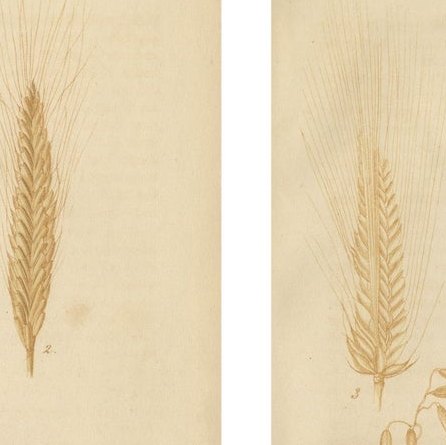
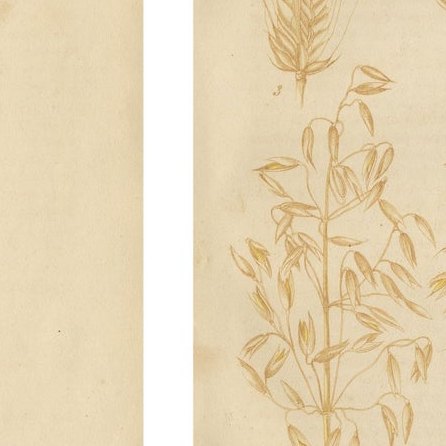
Framed and on the wall
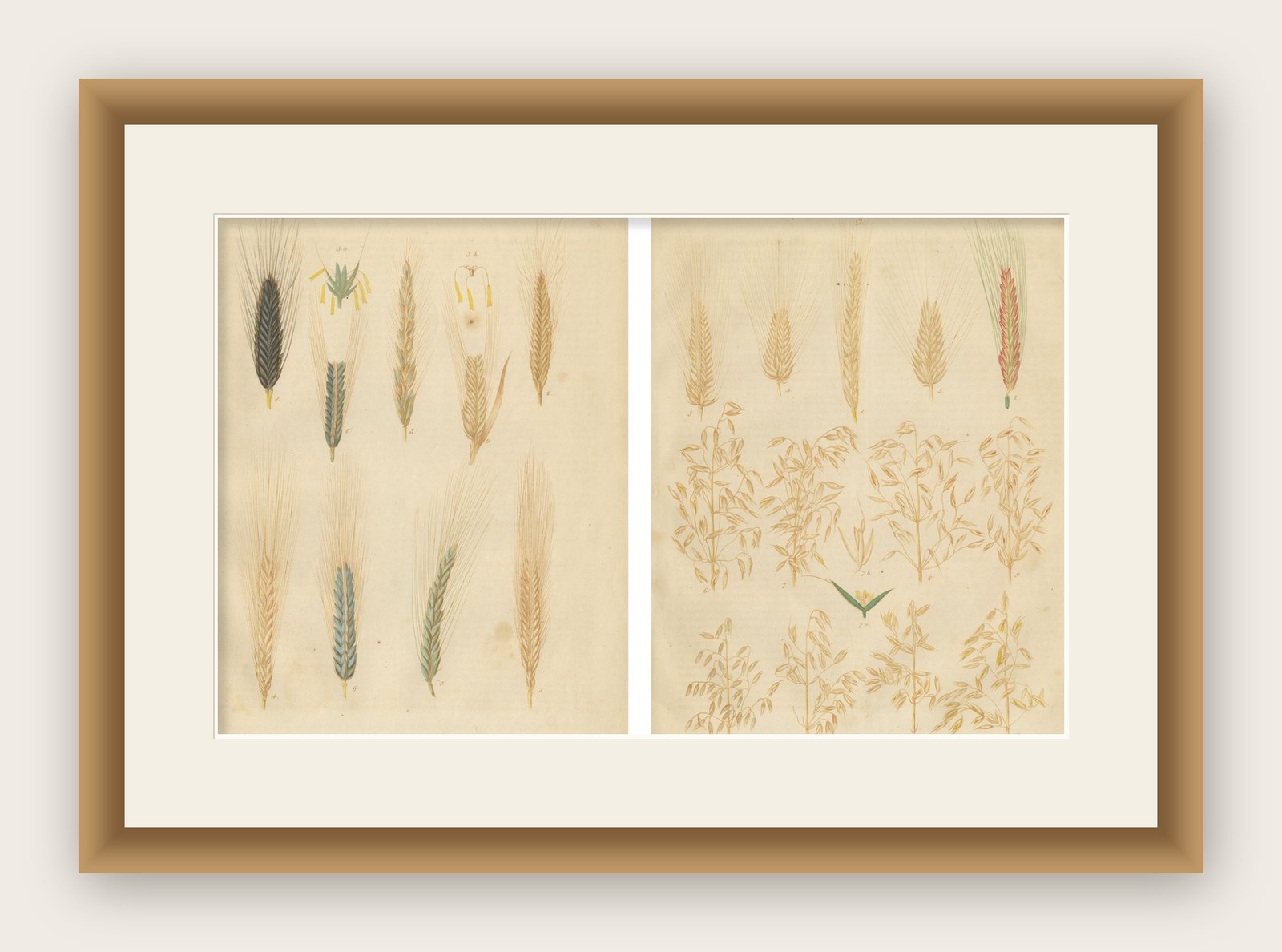

Frame and rooms are illustrations of how the print could look; the description says what is included.
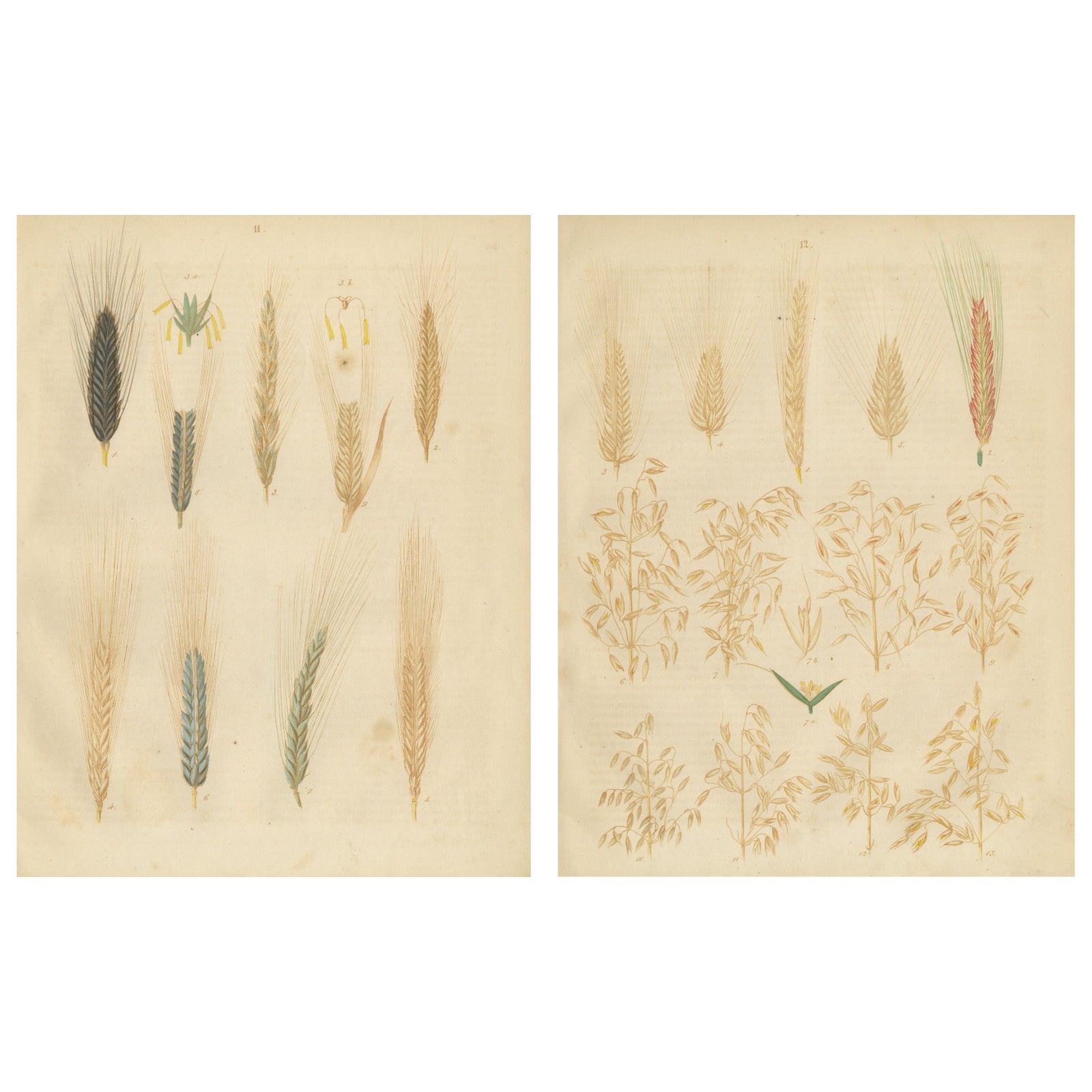
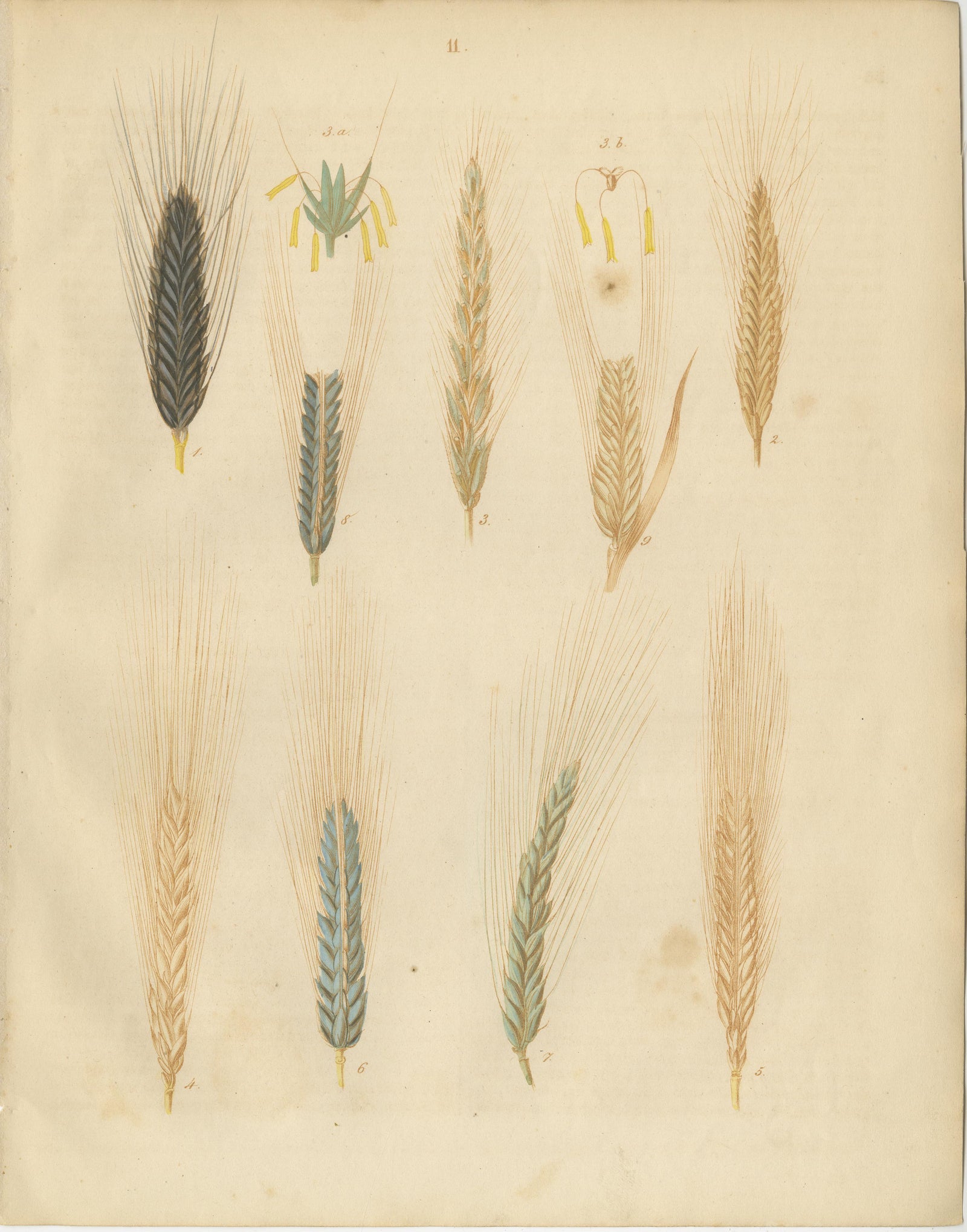
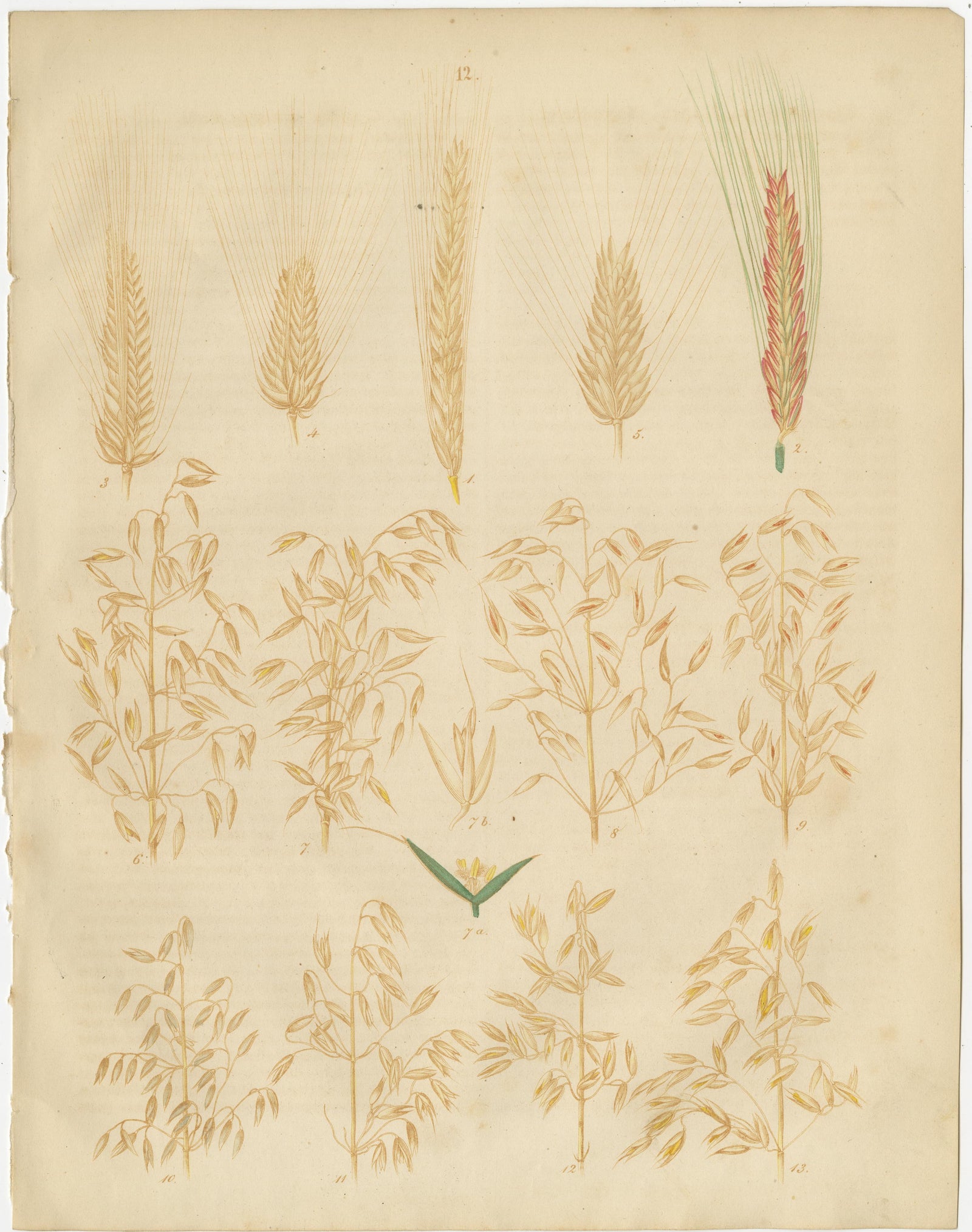
Antique Wheat and Rye Botanical Prints, Agricultural Study, Germany 1852
£185£13030% off ($170, €154)
Period original, not a reproduction.
Shipped from the Netherlands, flat or rolled, insured and tracked, worldwide. Returns accepted within 14 days.
- Date
- 1852
- Size
- 10.4 × 8.3 in (26.5 × 21 cm)
- Condition
- Good. Wear consistent with age and use. Condition report: Moderate age-related toning with light foxing, mainly in margins. Hand coloring remains clear and even. From a bound volume.
- Period
- Late 19th century
- Artist or book
- Calwer's Käferbuch
- Section
- Botanical
- Reference
- f_48105042
- Color
- Hand colored
What the condition grades mean
- Excellent
- Bright and clean, with no faults worth mentioning.
- Very good
- Only light signs of age, such as faint toning.
- Good
- Normal signs of age for a sheet of this period: toning, some foxing, small marks or neat old repairs.
- Fair
- Clear faults such as staining, tears or repairs, priced to match.
Every fault we see is written in the condition note, and the whole sheet is shown uncropped in the photos.
Antique Wheat and Rye Botanical Prints, Agricultural Study, Germany 1852
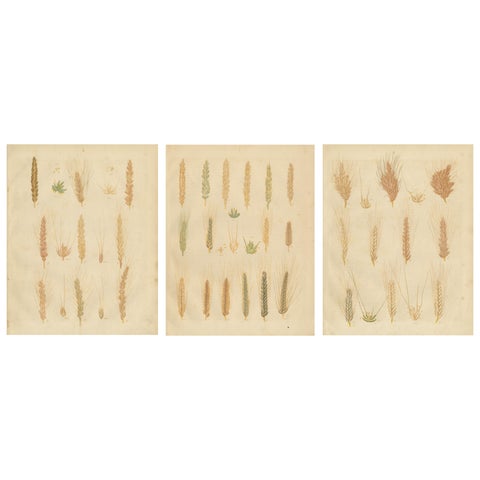
This refined set of two original hand-colored lithographs depicts wheat and rye varieties as illustrated in Landwirthschaftliche und technische Pflanzenkunde by Carl Gustav Calwer, published in Stuttgart in 1852 by Krais & Hoffmann. The plates originate from Volume I, Deutschlands Feld- und Gartengewächse, and focus on economically important cereal crops fundamental to 19th-century European agriculture.
Rendered with scientific precision, the ears are shown in multiple forms and stages, emphasizing structural differences essential for identification and cultivation. The restrained palette of soft ochres, pale blues, and warm straw tones gives the images a calm, architectural quality that feels surprisingly modern.
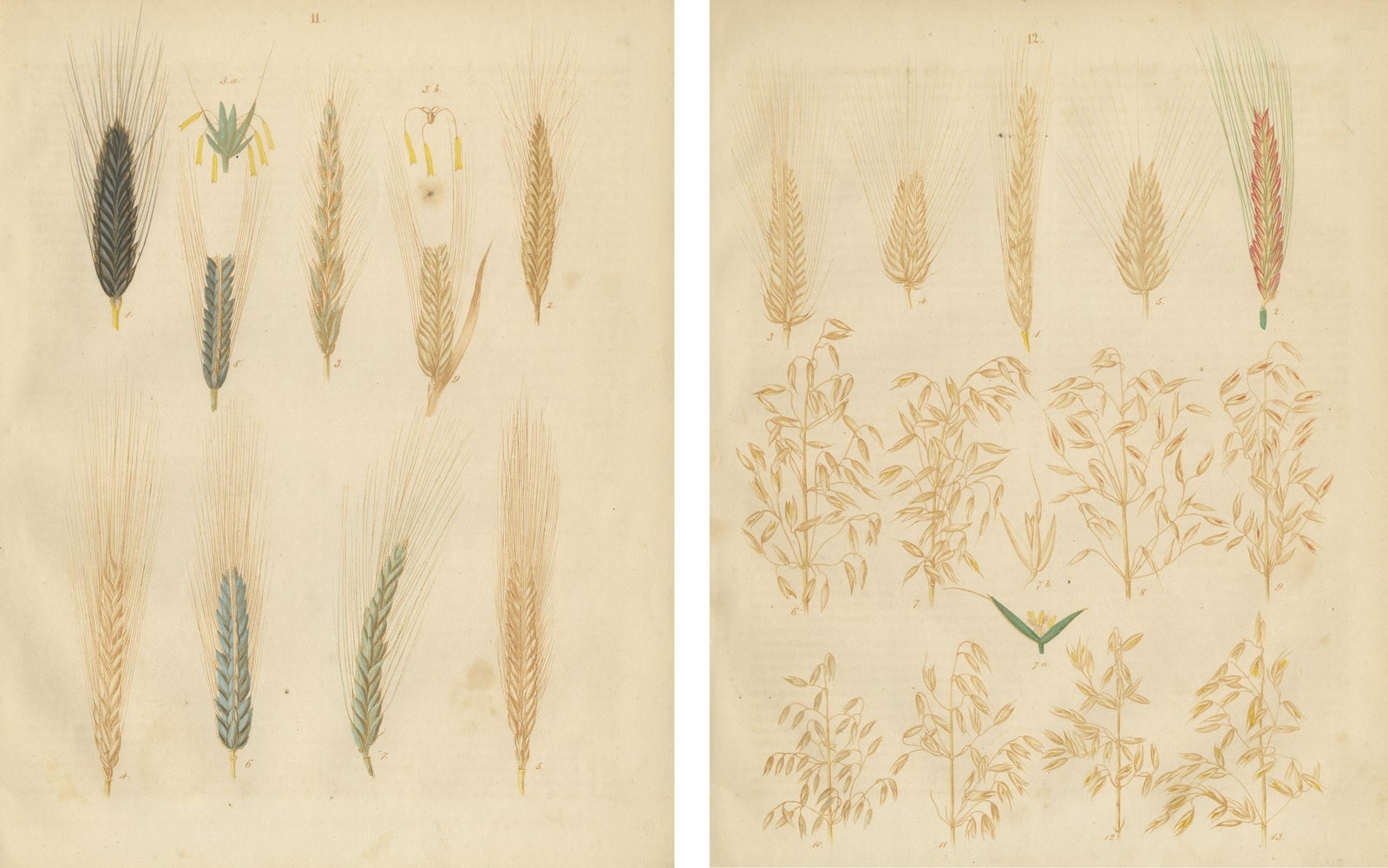
These prints bridge agricultural science and decorative design. They are equally suitable for contemporary interiors, studies, libraries, or educational environments, where their vertical rhythm and clarity create a balanced visual presence.
As a matched pair, the plates offer a cohesive and historically grounded view of cereal cultivation during a formative period of agronomic research.
Condition report: Moderate age-related toning with light foxing, mainly in margins. Hand coloring remains clear and even. From a bound volume.
Framing tips: Frame as a vertical pair with generous off-white mats. Natural oak, ash, or matte black frames enhance the graphic quality.
Technique: Hand-colored lithograph
Maker: Carl Gustav Calwer, Stuttgart, 1852