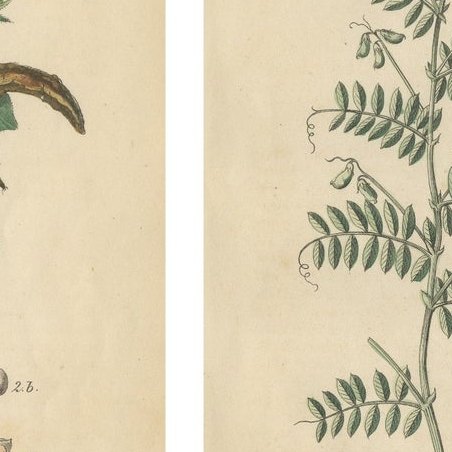
Close-ups
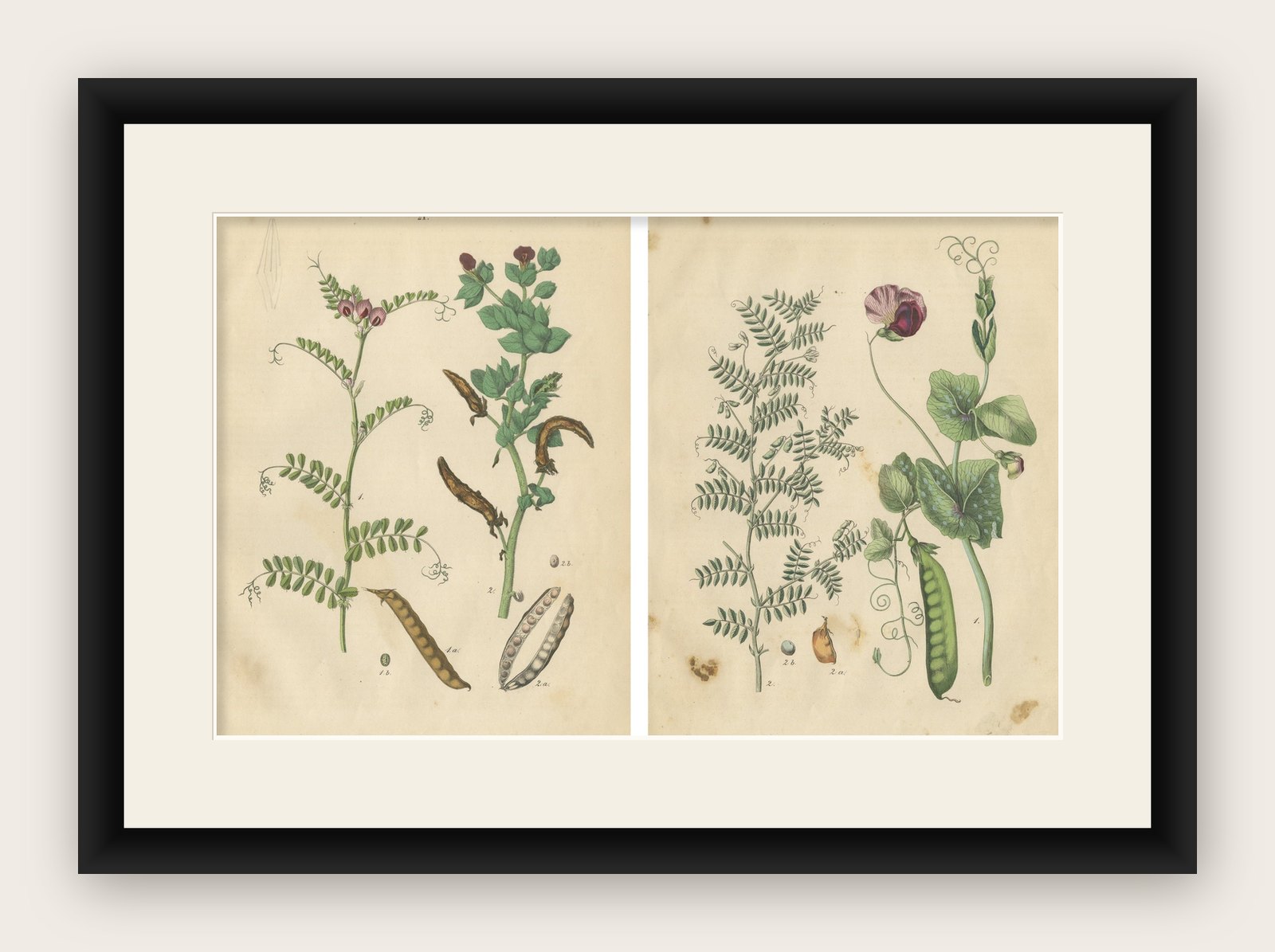
Framed and on the wall
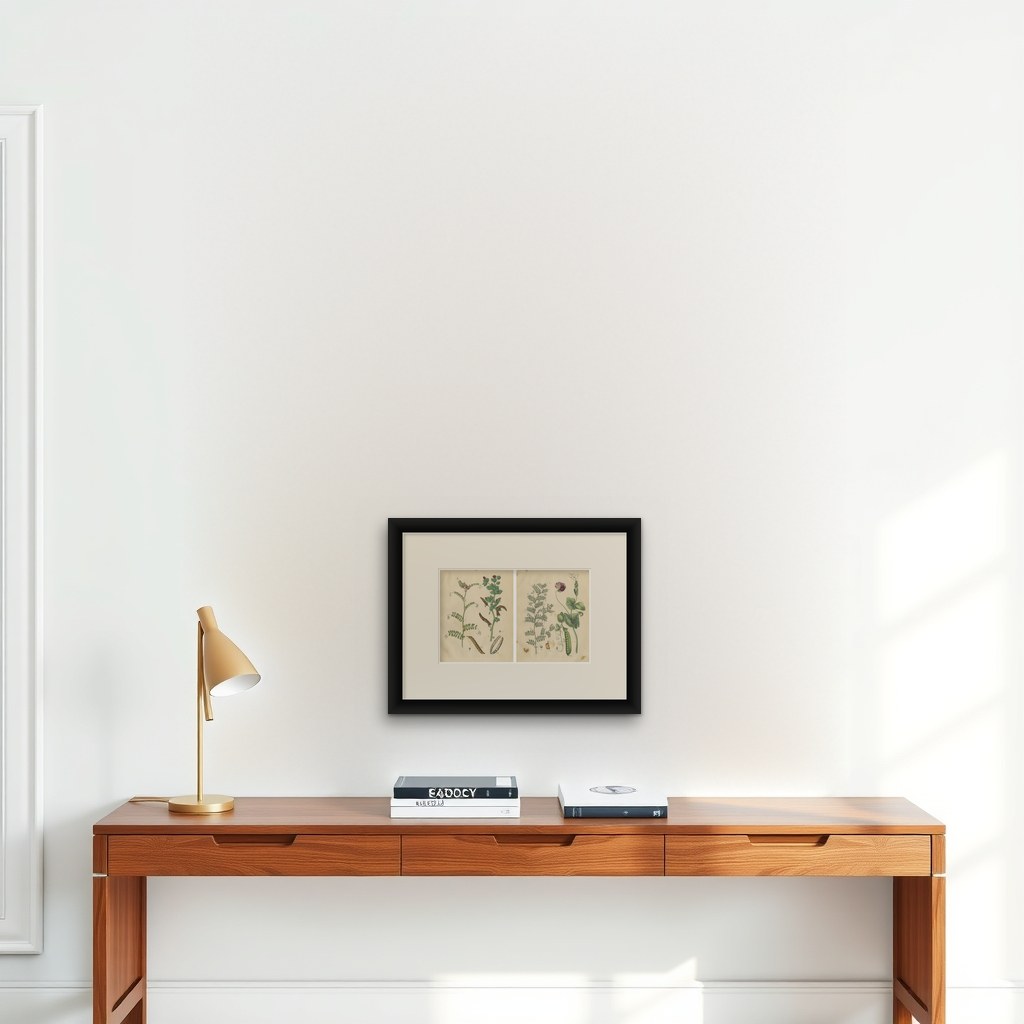

Frame and rooms are illustrations of how the print could look; the description says what is included.
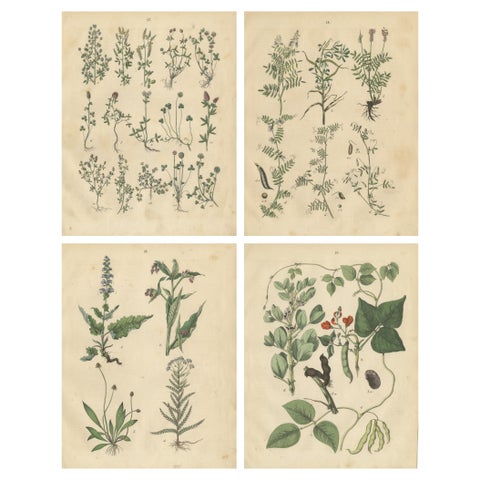
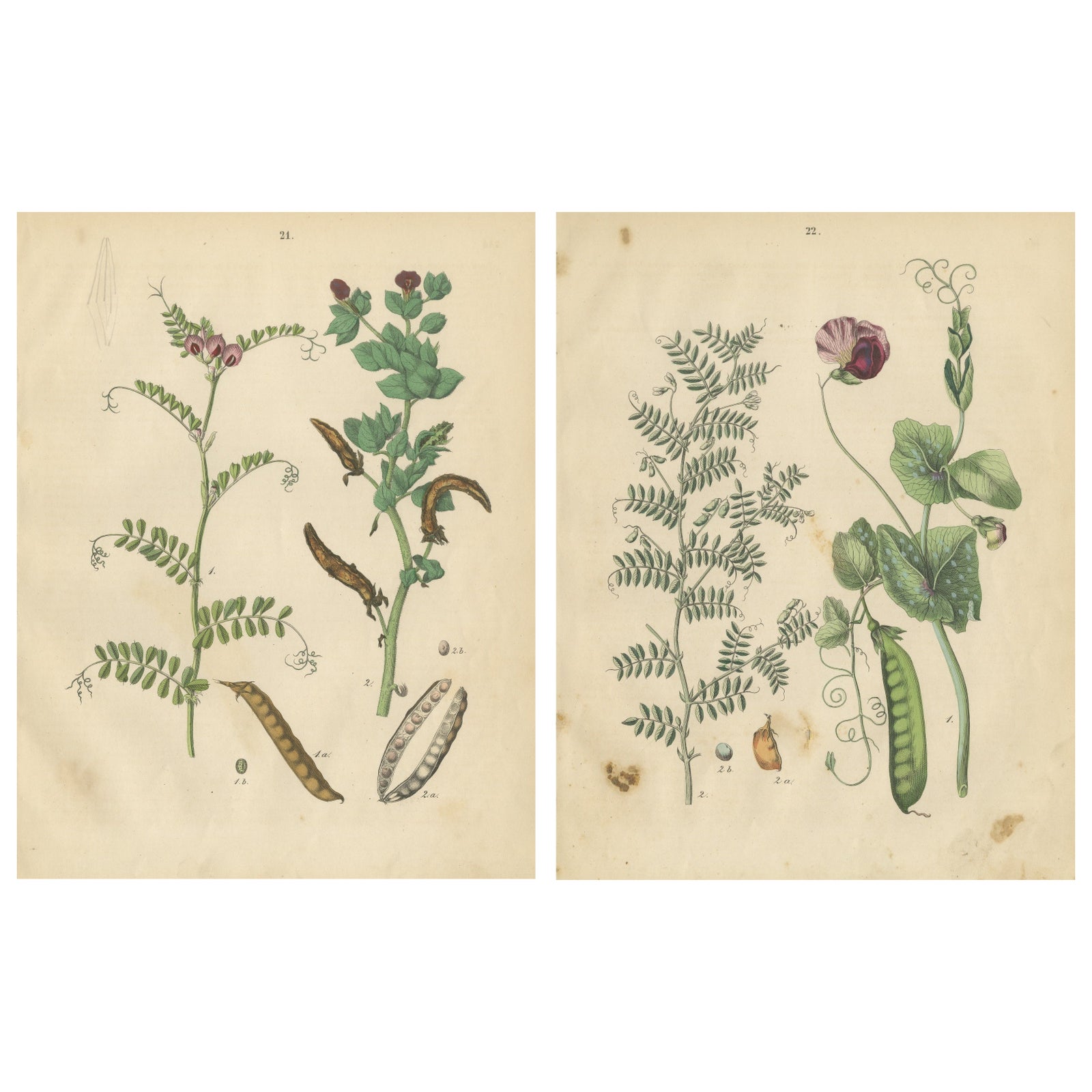
Antique Peas and Beans Botanical Prints, Legumes Study, Germany 1852
£180 ($235, €210)
Period original, not a reproduction.
Shipped from the Netherlands, flat, insured and tracked, worldwide. Returns accepted within 14 days.
- Date
- 1852
- Size
- 10.4 × 8.3 in (26.5 × 21 cm)
- Condition
- Fair. Moderate age-related toning with scattered foxing, more noticeable in margins. Hand coloring remains clear. From a bound volume.
- Period
- Late 19th century
- Artist or book
- Calwer's Käferbuch
- Section
- Botanical
- Reference
- f_48105222
Antique Peas and Beans Botanical Prints, Legumes Study, Germany 1852
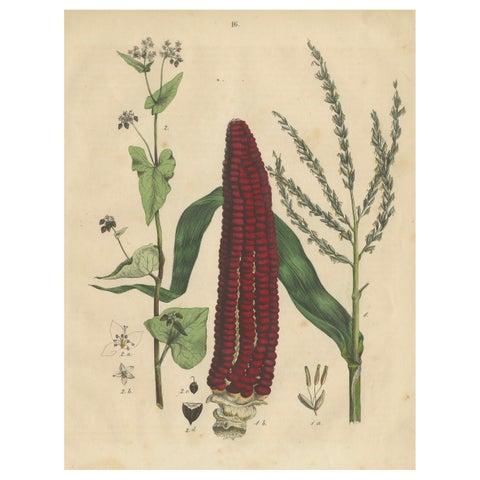
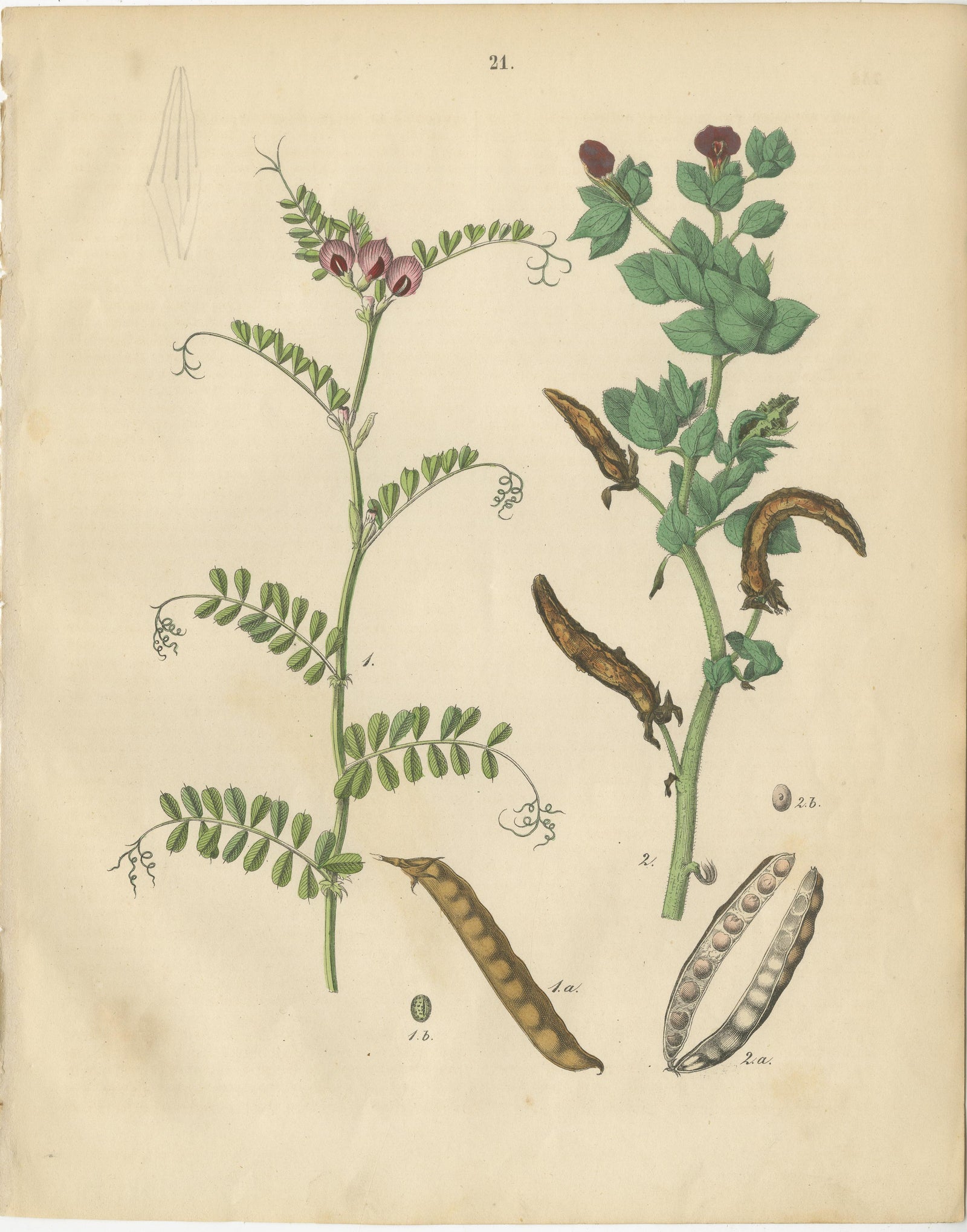
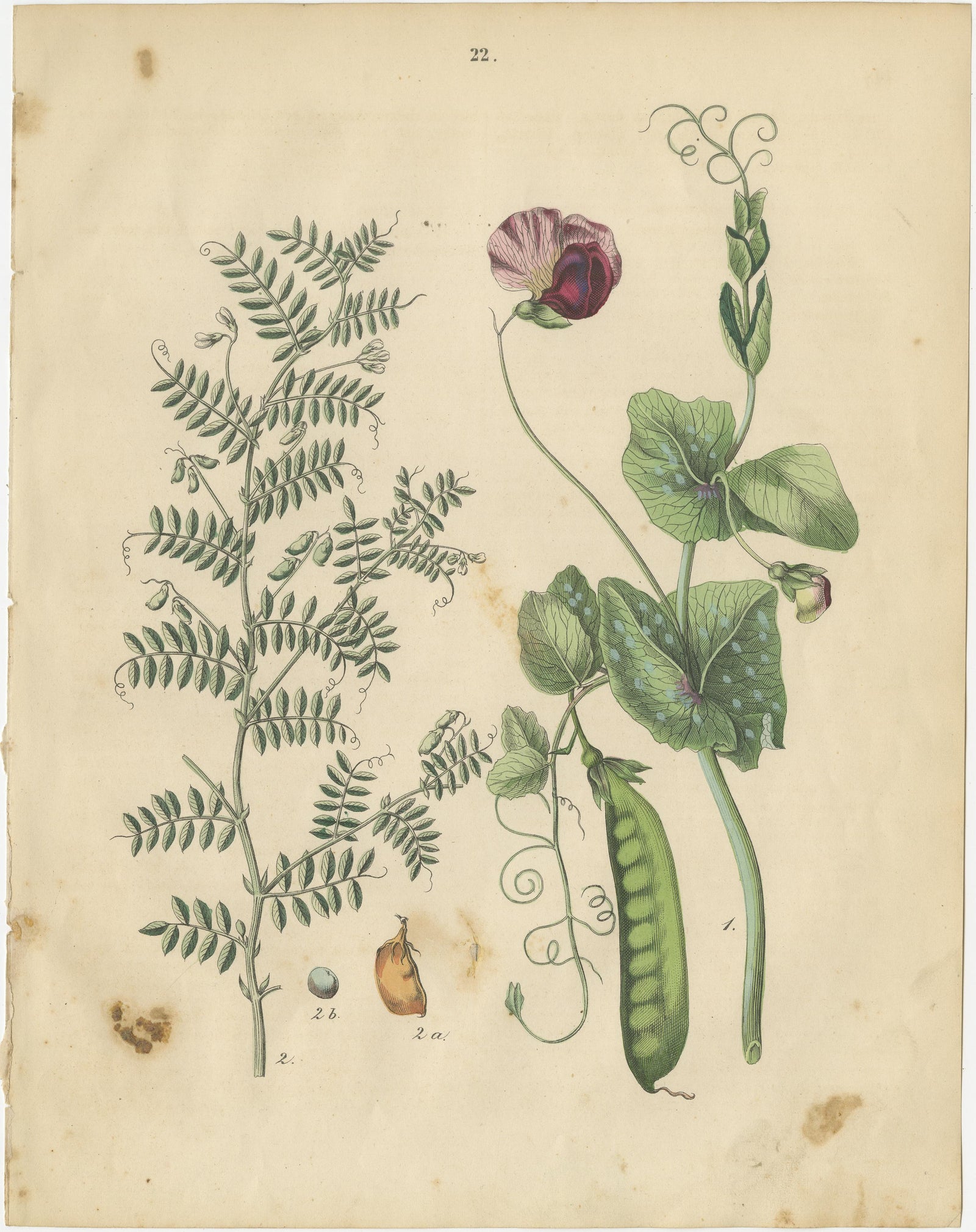
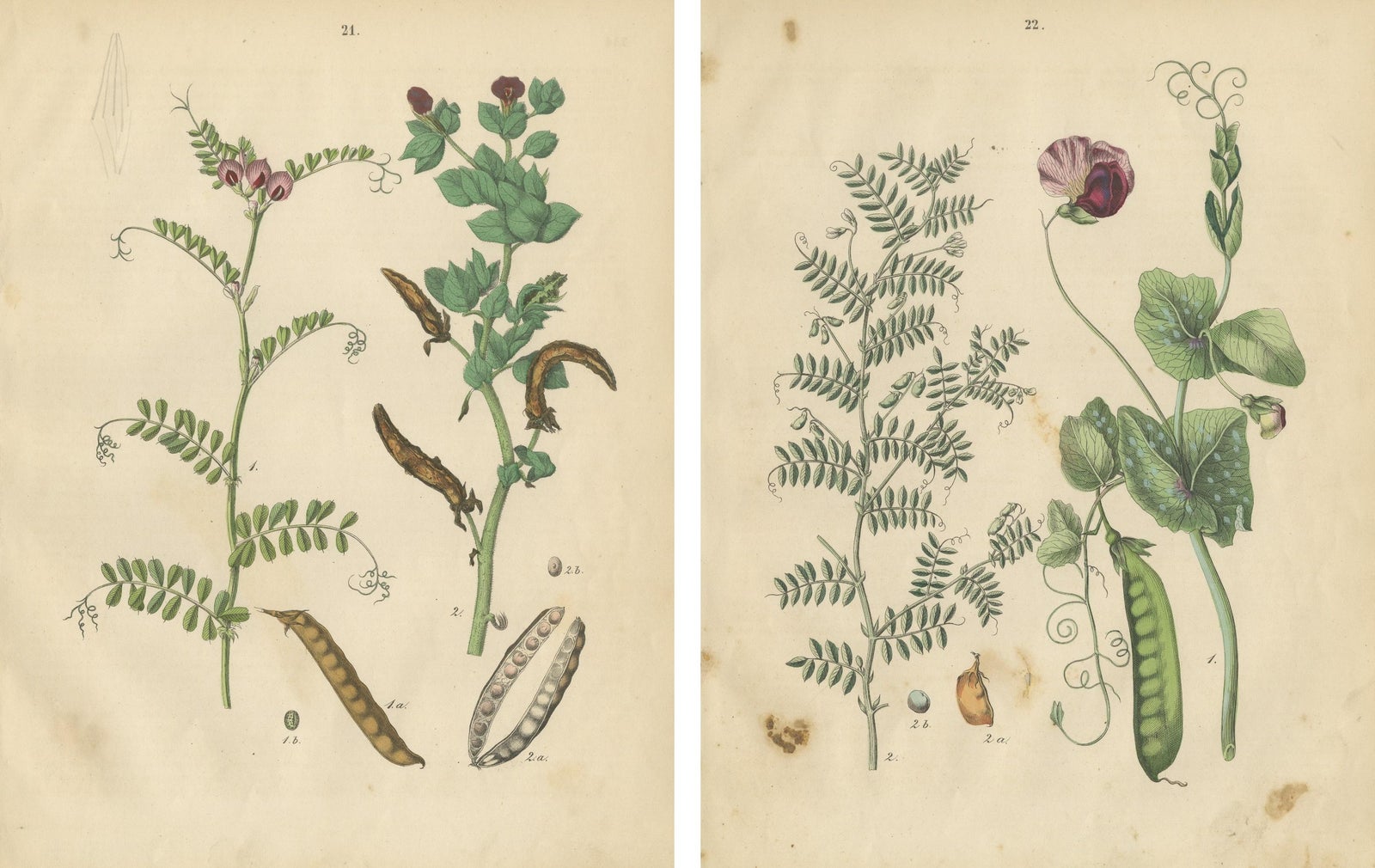
This attractive two-plate set illustrates peas and beans as documented in Landwirthschaftliche und technische Pflanzenkunde by Carl Gustav Calwer, published in Stuttgart in 1852. The plates present climbing plants with leaves, flowers, pods, and seeds, shown at different stages of development.
Calwer’s approach combines botanical accuracy with a strong sense of composition. The curling tendrils and hanging pods create elegant movement across the page, while the soft hand coloring emphasizes natural texture and form. These plates were originally intended for agricultural education, yet today they function beautifully as decorative works.
This set is particularly well suited for kitchen walls, dining spaces, or interiors focused on food provenance and sustainability. Together, the two plates form a balanced and historically grounded visual narrative of 19th-century legume cultivation.
Condition report
Fair. Moderate age-related toning with scattered foxing, more noticeable in margins. Hand coloring remains clear. From a bound volume.
Framing tips
Frame side-by-side with warm ivory mats. Natural wood or muted green frames complement the palette.
Technique: Hand-colored lithograph
Maker: Carl Gustav Calwer, Stuttgart, 1852