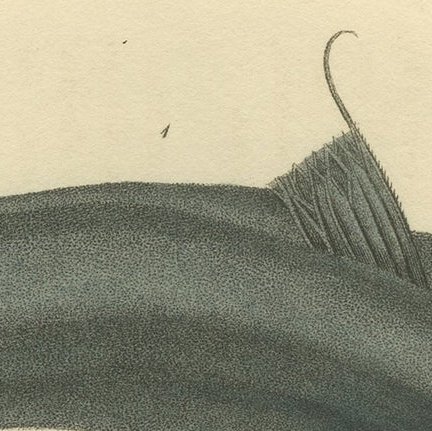
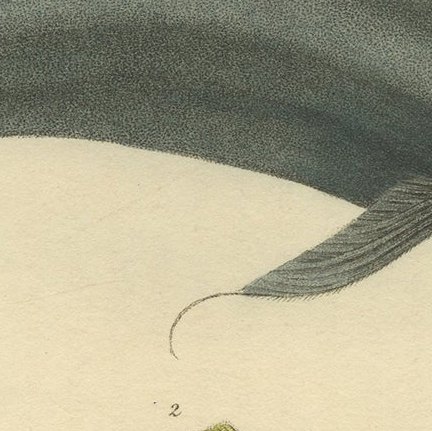
Close-ups
Framed and on the wall
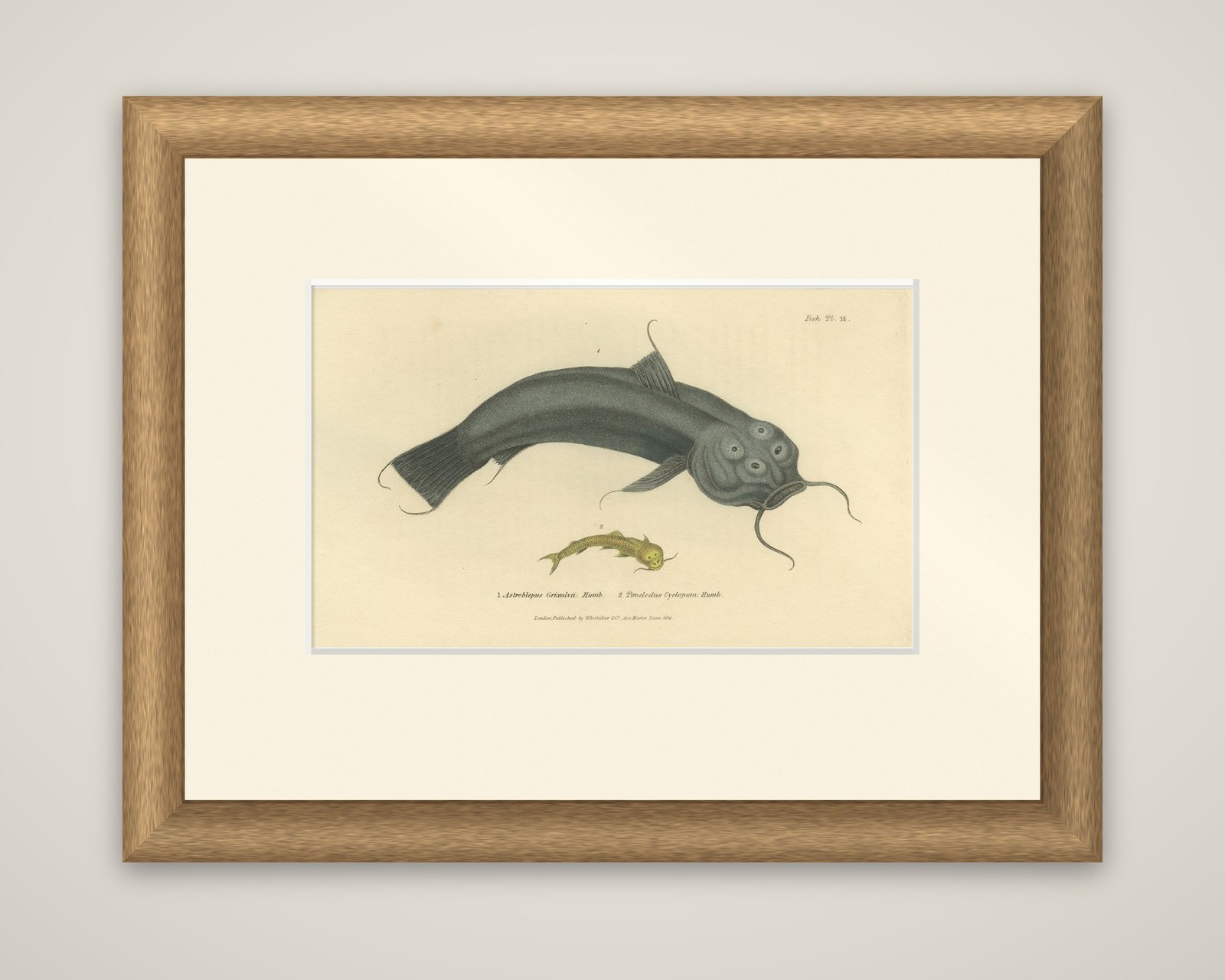
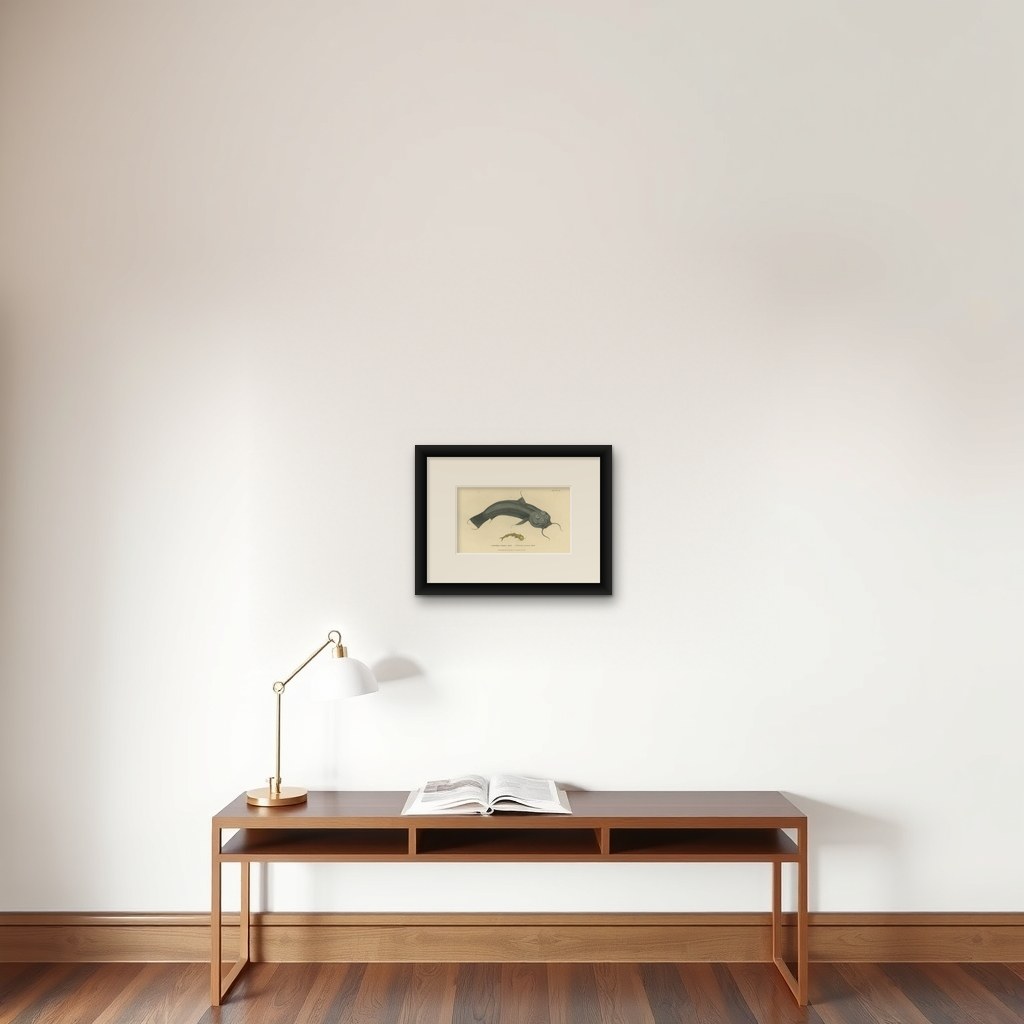

Frame and rooms are illustrations of how the print could look; the description says what is included.
Antique Print with Hand Coloring of Catfish species
$295 (£220, €260)
Period original, not a reproduction.
Shipped from the Netherlands, flat, insured and tracked, worldwide. Returns accepted within 14 days.
- Date
- Not stated
- Size
- 5.8 × 9.6 in (14.7 × 24.3 cm)
- Condition
- Good. General age-related toning. Minor wear and soiling. Blank verso. Please study image carefully.
- Section
- Fish and shells
- Reference
- f_38713192
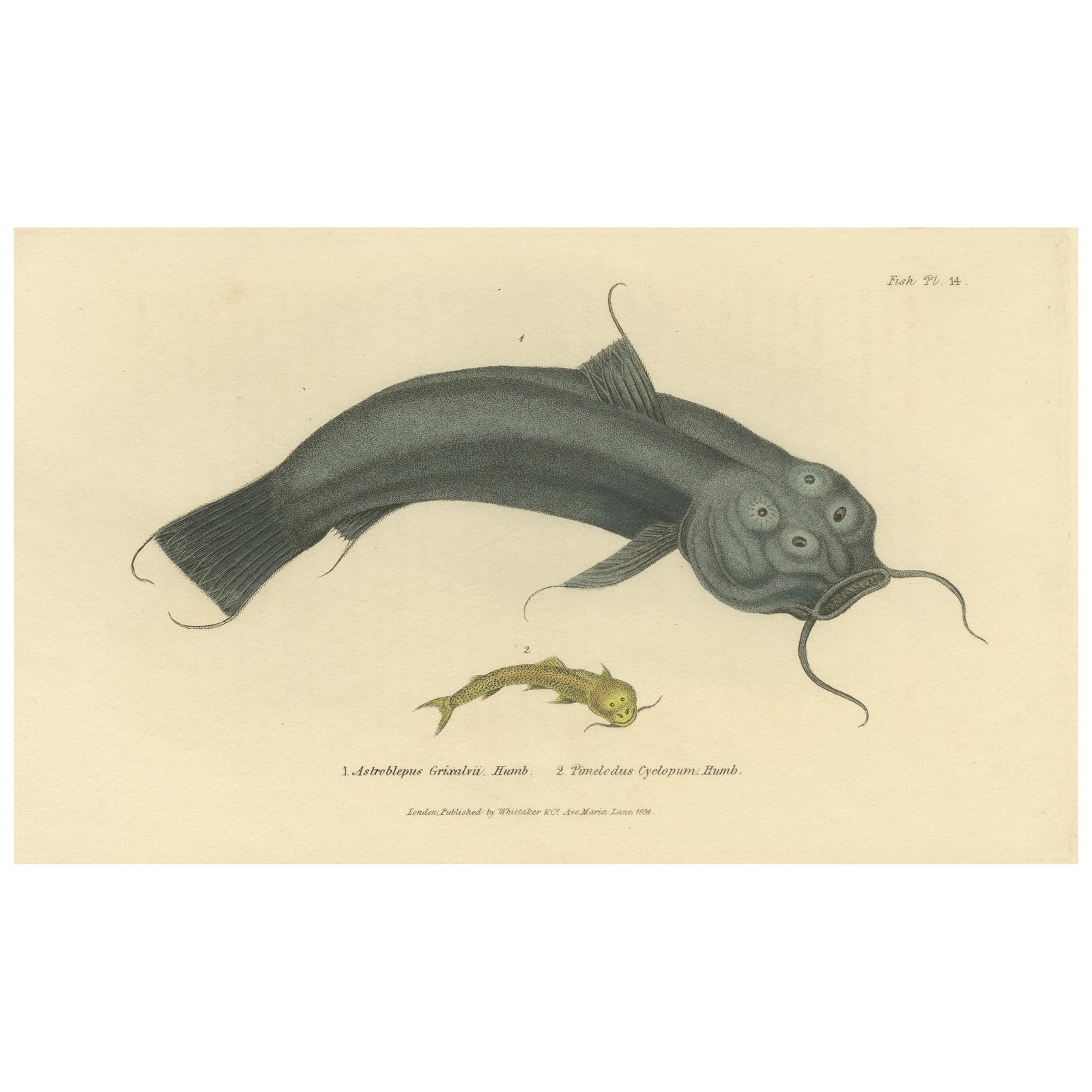
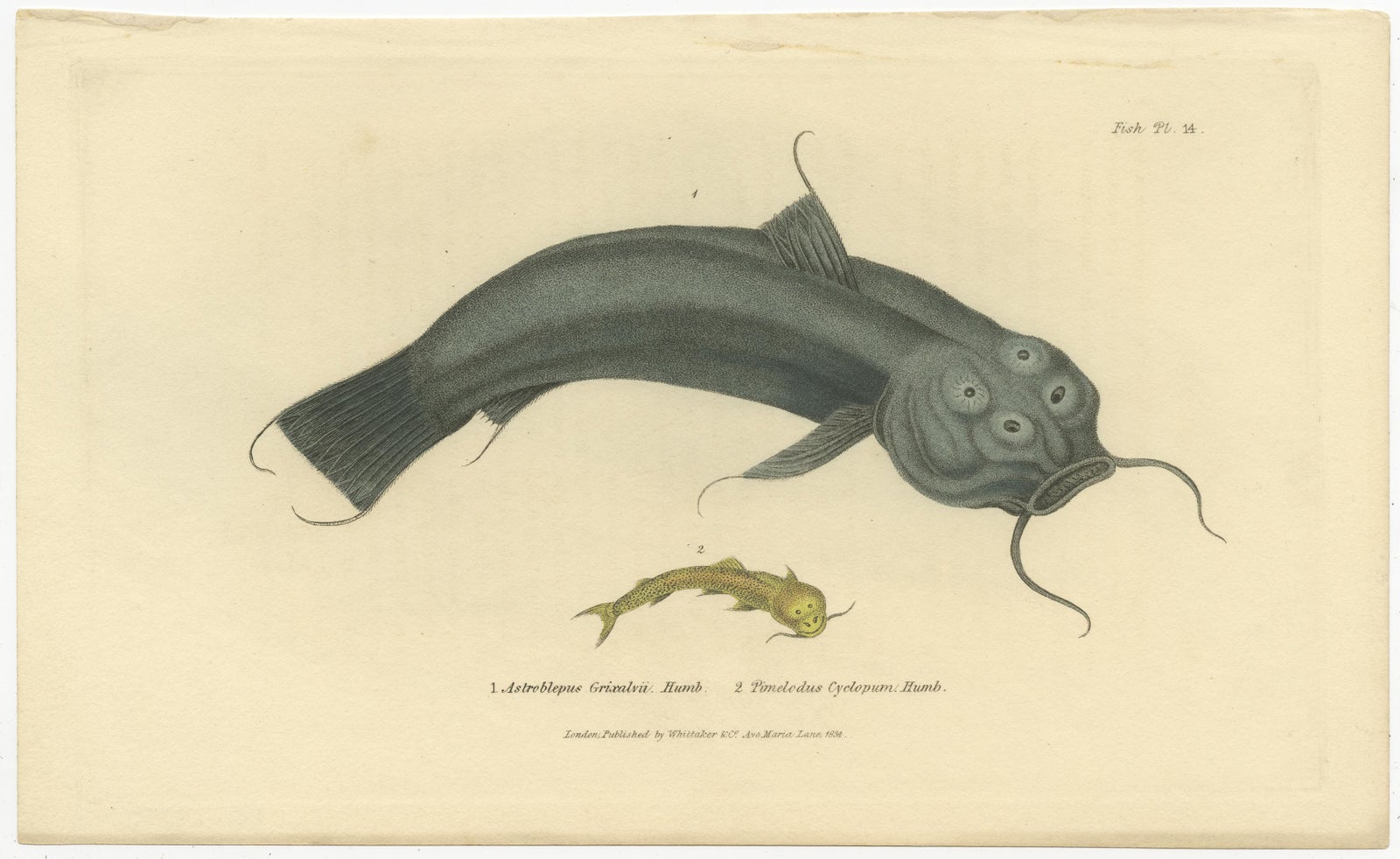
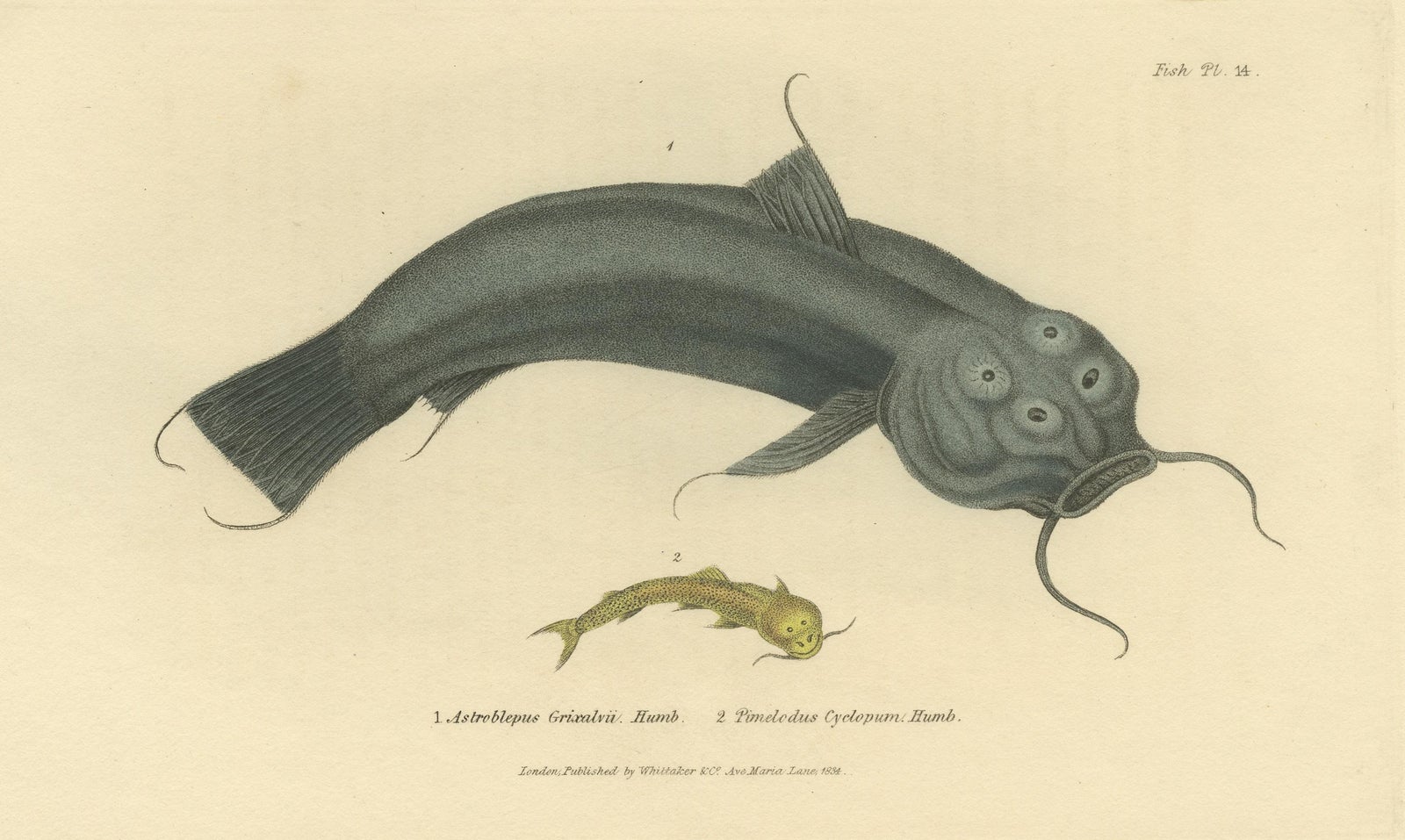
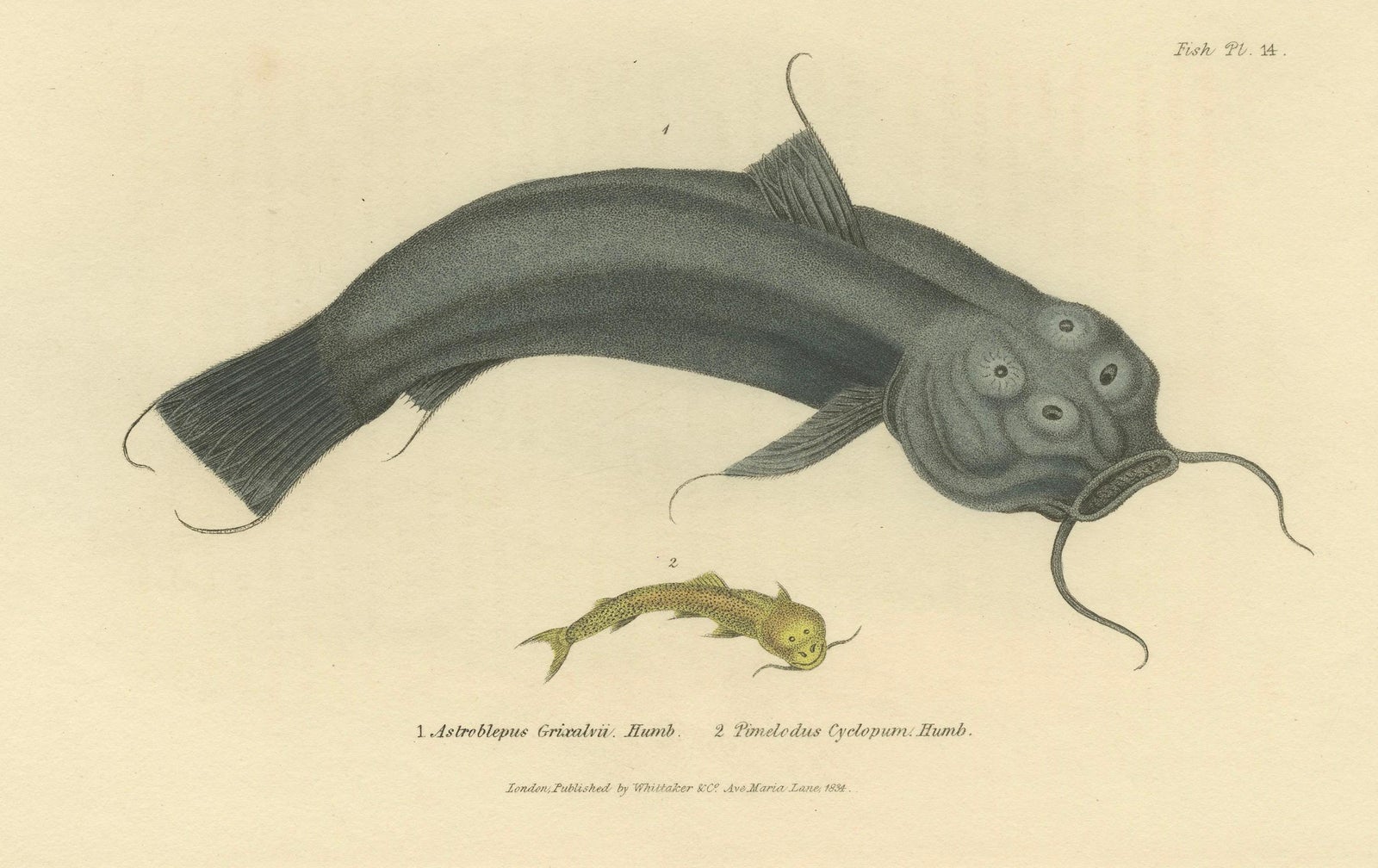
Two catfish of the Andes, an original hand-colored engraving from Fish plate 14, published in London by Whittaker & Co., Ave Maria Lane, in 1824. The plate number "Fish. Pl. 14" is engraved at the upper right, and the caption beneath reads "1 Astroblepus Grixalvii. Humb. 2 Pimelodus Cyclopum. Humb.", with the publisher's imprint below it.
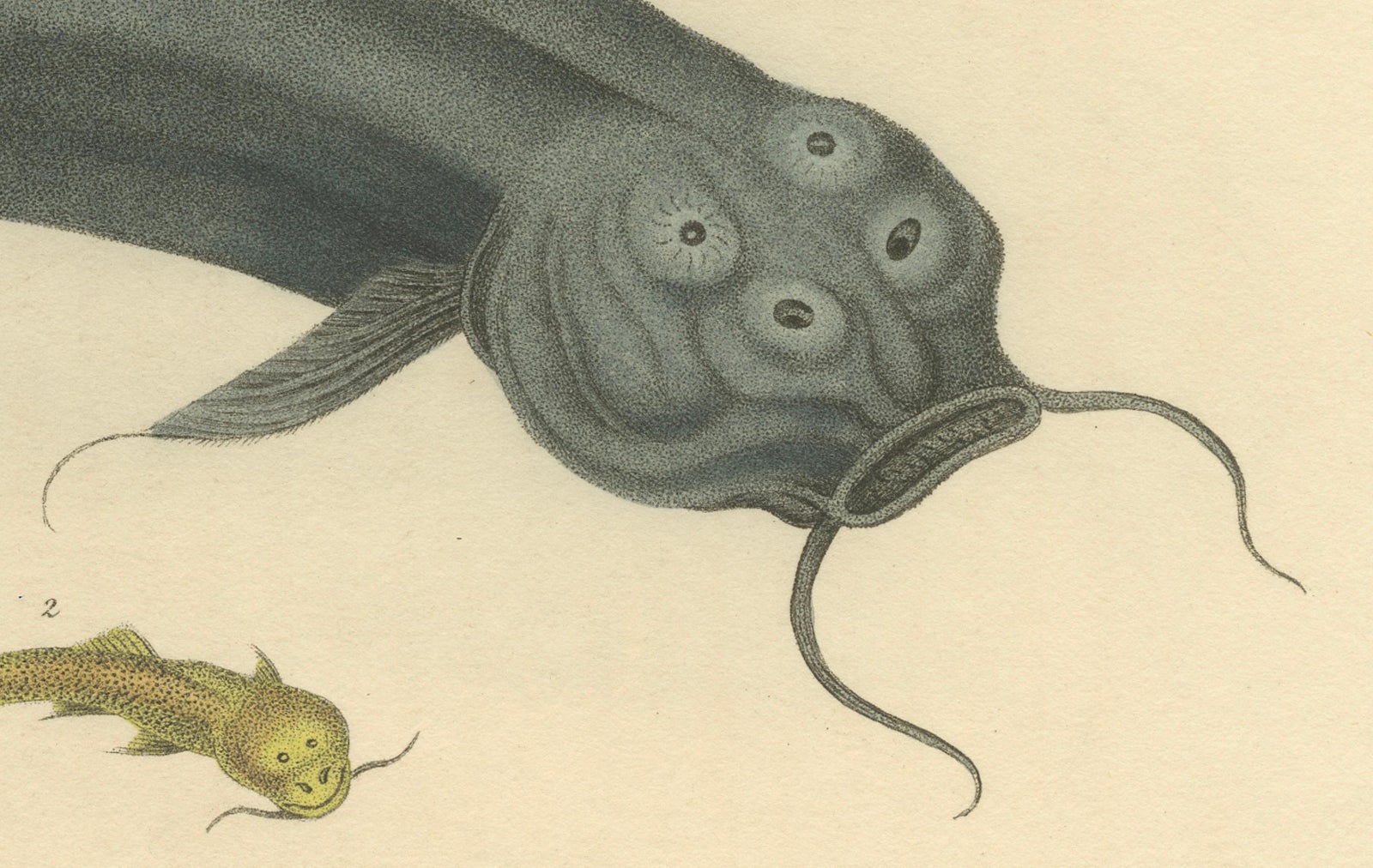
The larger fish, number 1, fills most of the sheet. It is shown arching across the page in muted gray, with a flat head bearing four rounded spots, a broad mouth with thick barbels trailing downward and long whiskers at the sides. The smaller number 2 is drawn below it in green-yellow with brown markings, with a similar flattened head and a pair of short barbels.
The abbreviation Humb. credits both species to Alexander von Humboldt, who described fishes collected during his South American travels in the early 1800s.