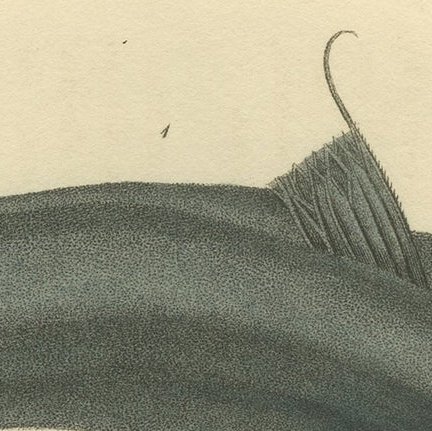
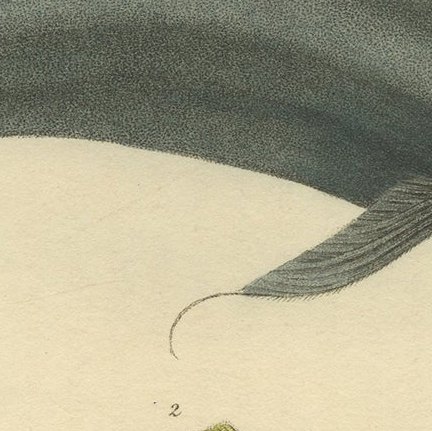
Close-ups
Framed and on the wall
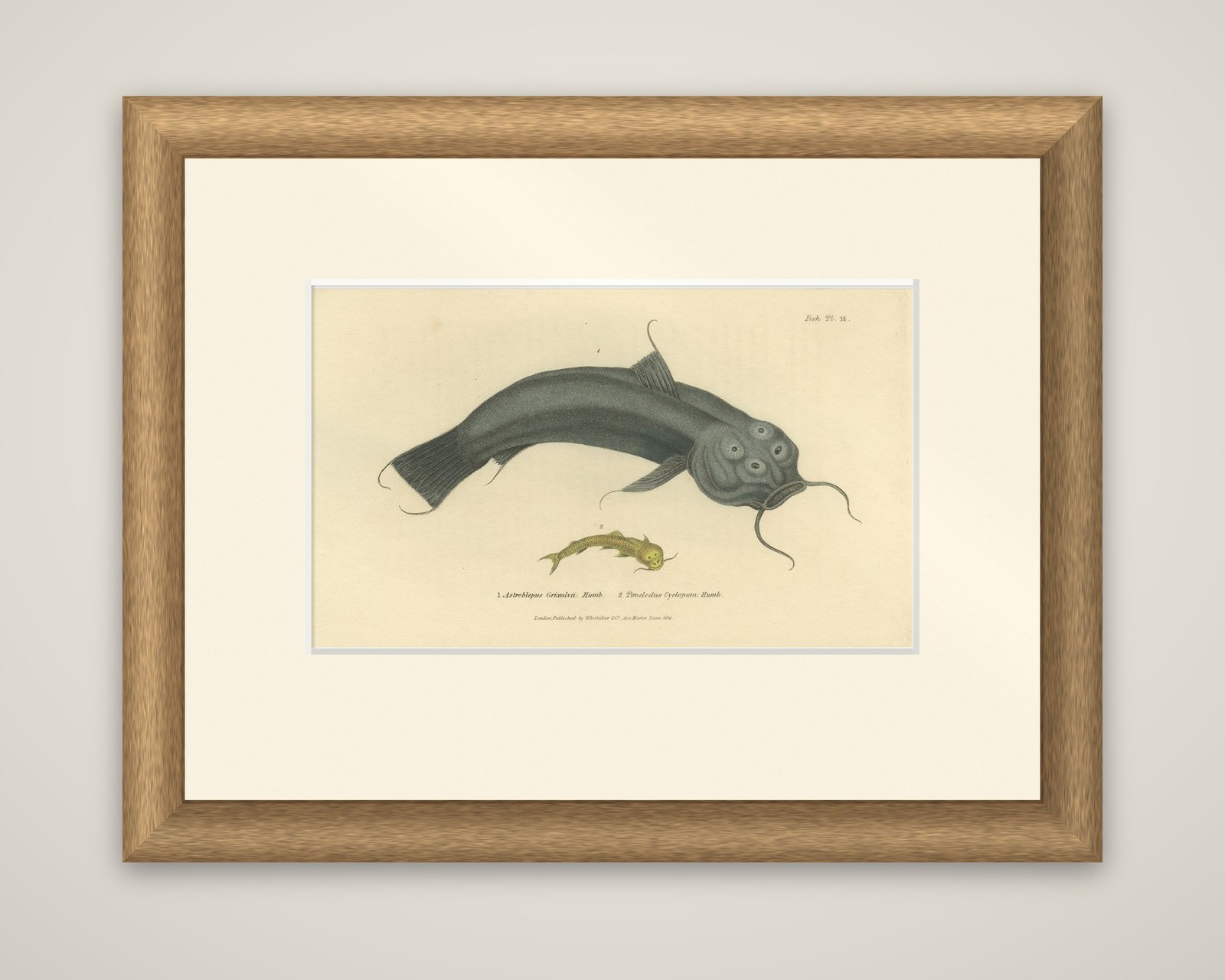
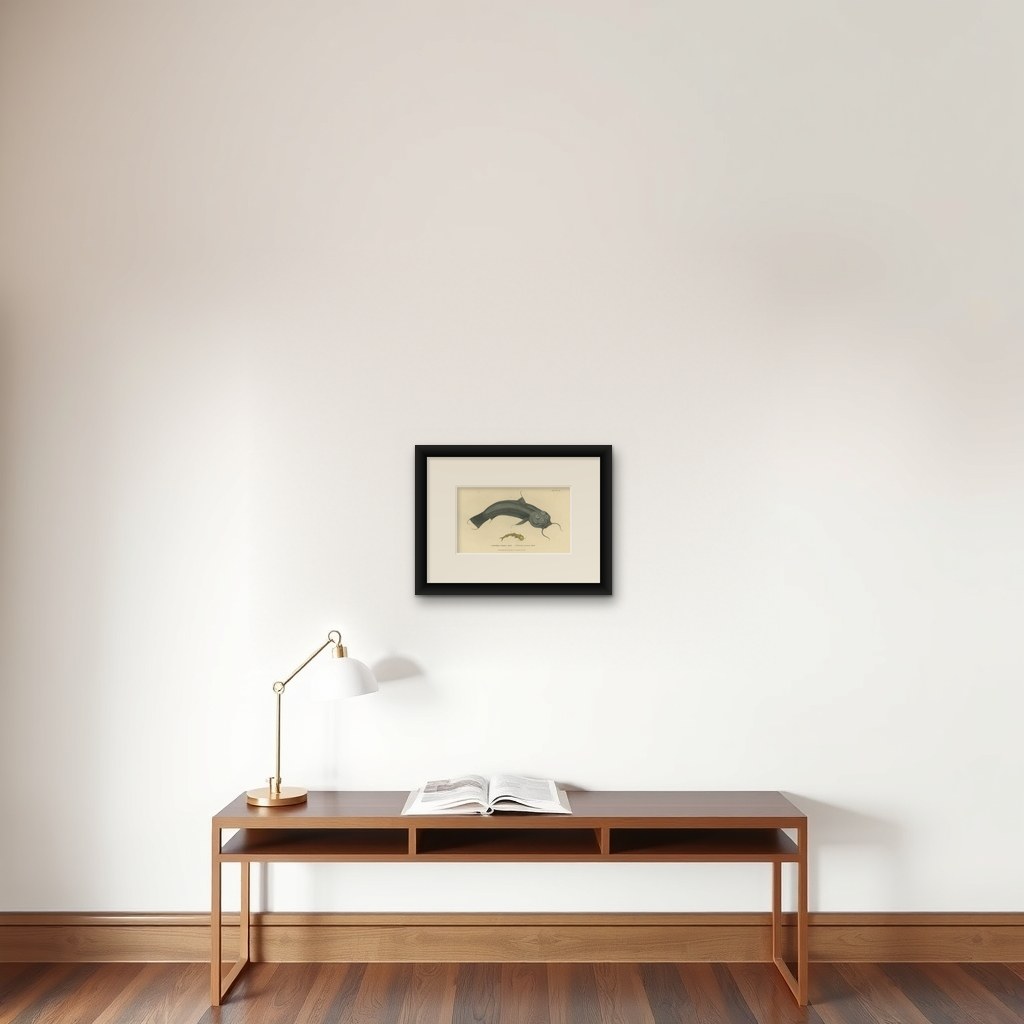

Frame and rooms are illustrations of how the print could look; the description says what is included.
Antique Print with Hand Coloring of Catfish species
€260 ($290, £220, €260)
Period original, not a reproduction.
Shipped from the Netherlands, flat, insured and tracked, worldwide. Returns accepted within 14 days.
- Date
- Not stated
- Size
- 5.8 × 9.6 in (14.7 × 24.3 cm)
- Condition
- Good. General age-related toning. Minor wear and soiling. Blank verso. Please study image carefully.
- Section
- Fish and shells
- Reference
- f_38713192
- Colour
- Hand coloured
What the condition grades mean
- Excellent
- Bright and clean, with no faults worth mentioning.
- Very good
- Only light signs of age, such as faint toning.
- Good
- Normal signs of age for a sheet of this period: toning, some foxing, small marks or neat old repairs.
- Fair
- Clear faults such as staining, tears or repairs, priced to match.
Every fault we see is written in the condition note, and the whole sheet is shown uncropped in the photos.
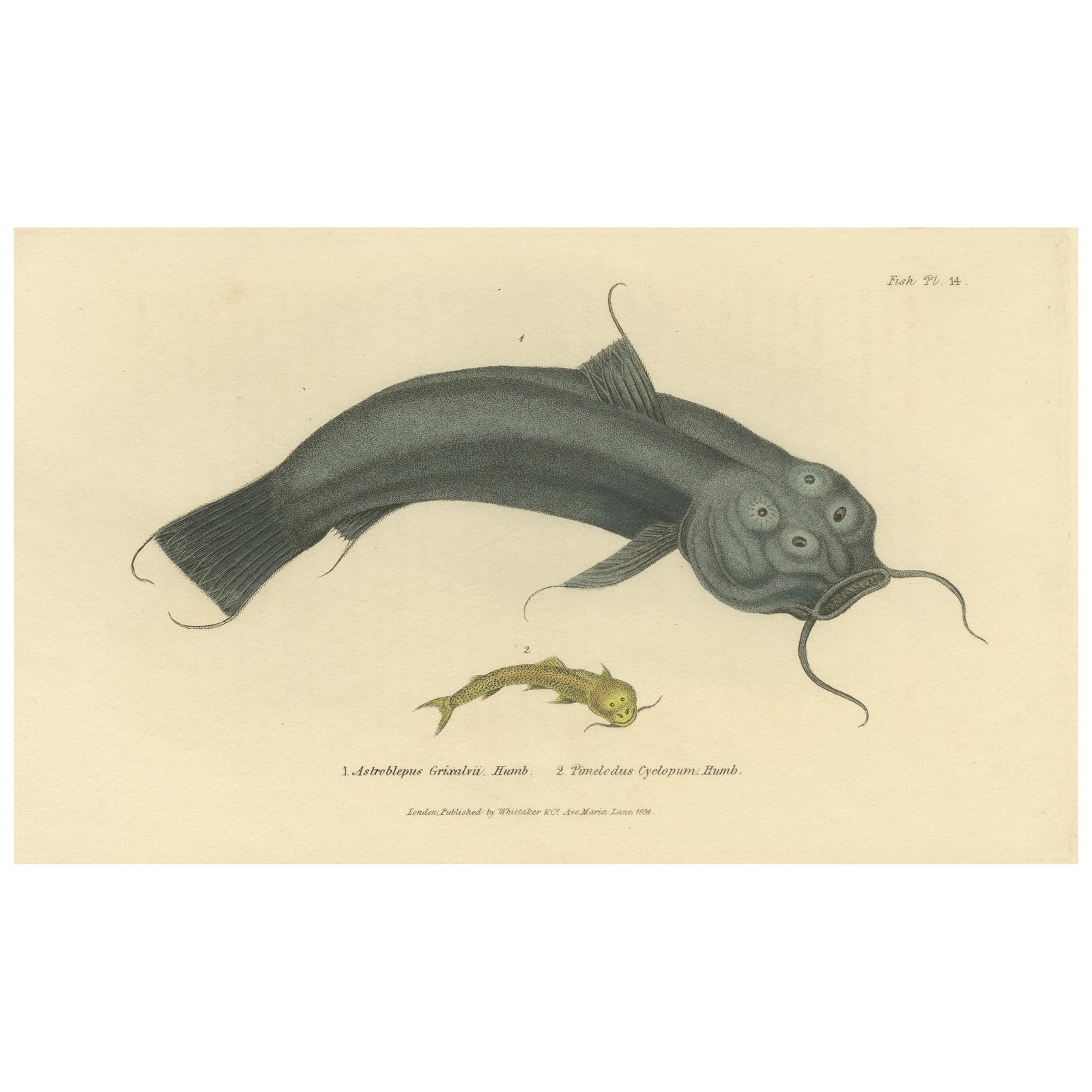
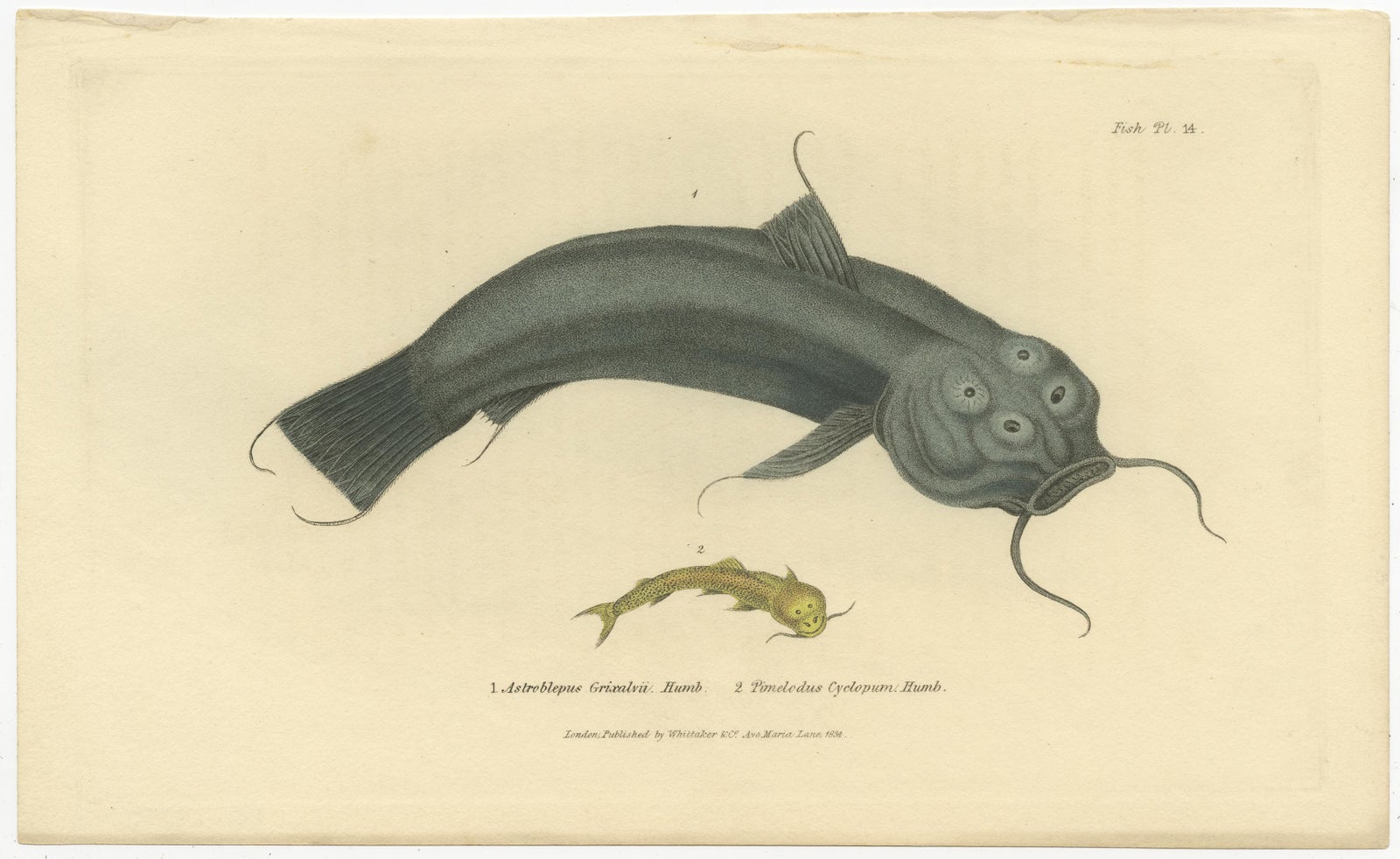
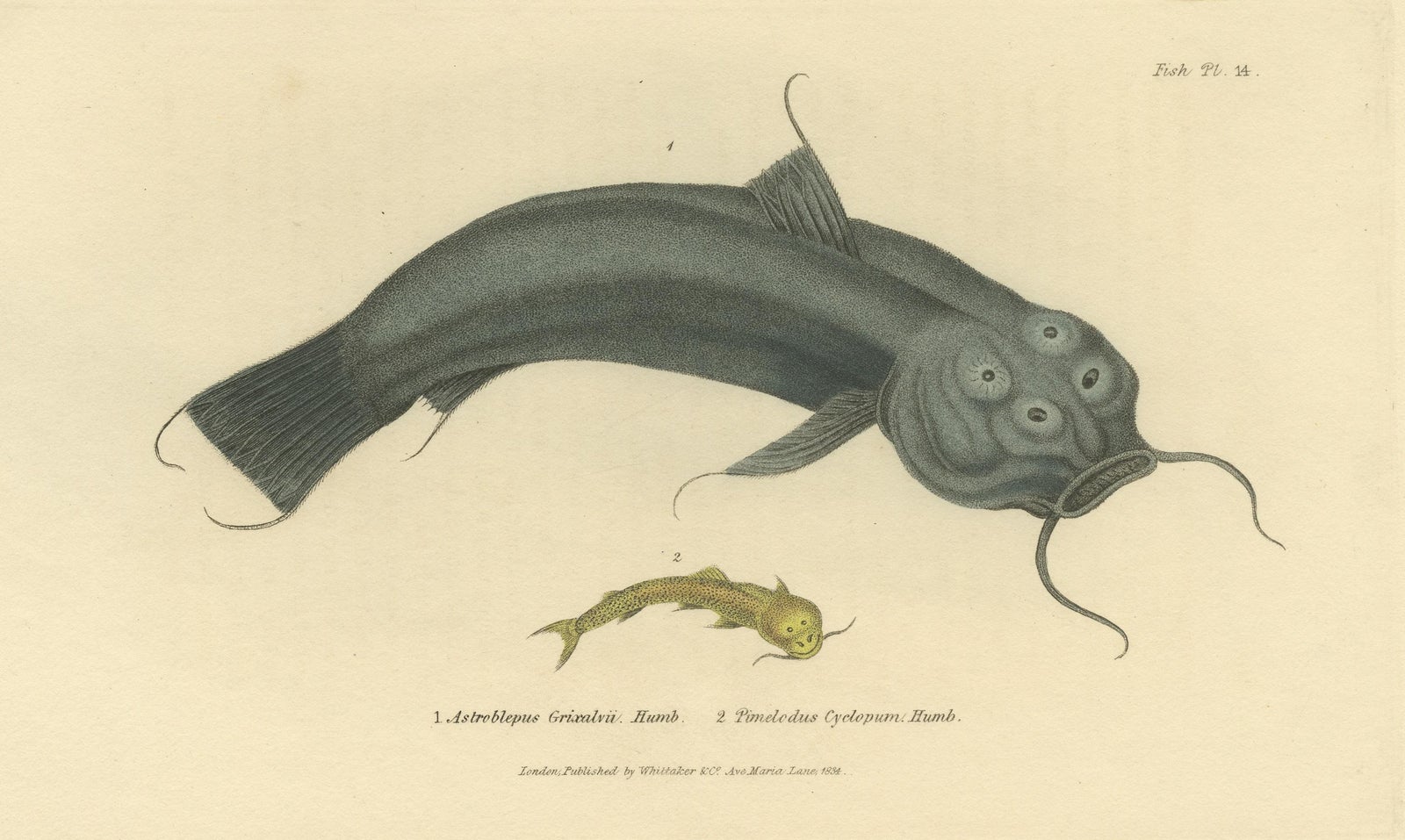
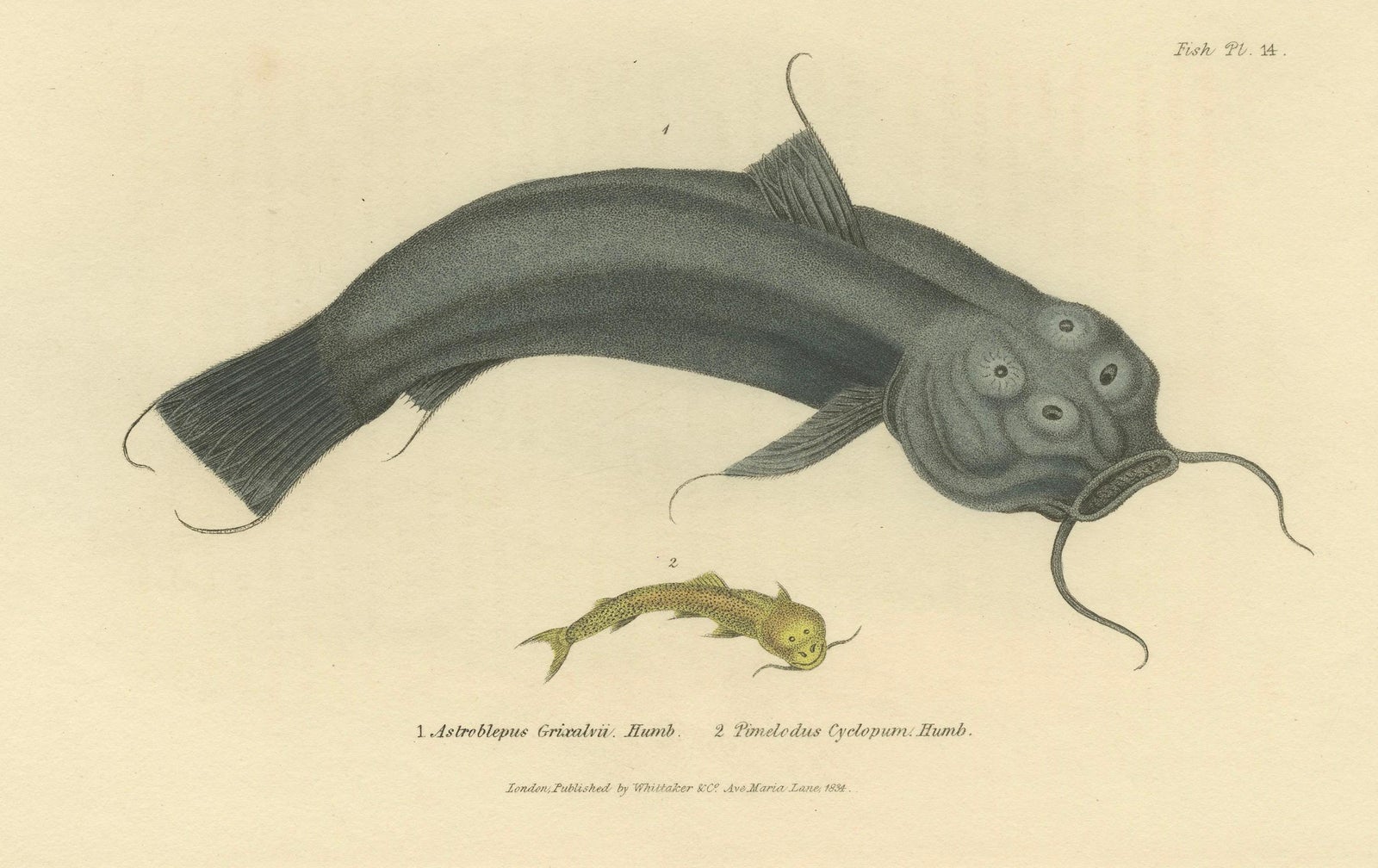
Two catfish of the Andes, an original hand-colored engraving from Fish plate 14, published in London by Whittaker & Co., Ave Maria Lane, in 1824. The plate number "Fish. Pl. 14" is engraved at the upper right, and the caption beneath reads "1 Astroblepus Grixalvii. Humb. 2 Pimelodus Cyclopum. Humb.", with the publisher's imprint below it.
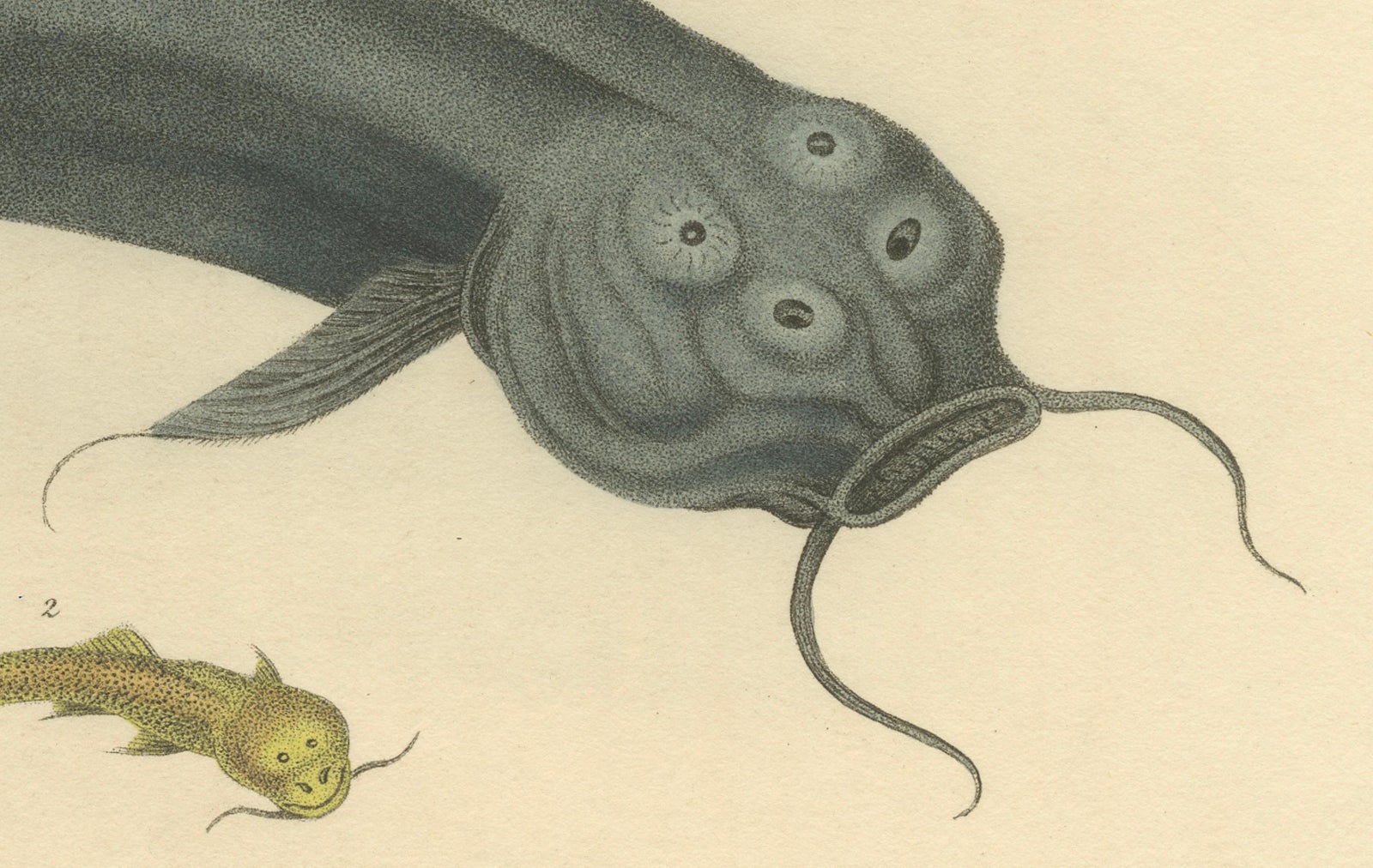
The larger fish, number 1, fills most of the sheet. It is shown arching across the page in muted gray, with a flat head bearing four rounded spots, a broad mouth with thick barbels trailing downward and long whiskers at the sides. The smaller number 2 is drawn below it in green-yellow with brown markings, with a similar flattened head and a pair of short barbels.
The abbreviation Humb. credits both species to Alexander von Humboldt, who described fishes collected during his South American travels in the early 1800s.