Close-ups
Framed and on the wall

Frame and rooms are illustrations of how the print could look; the description says what is included.
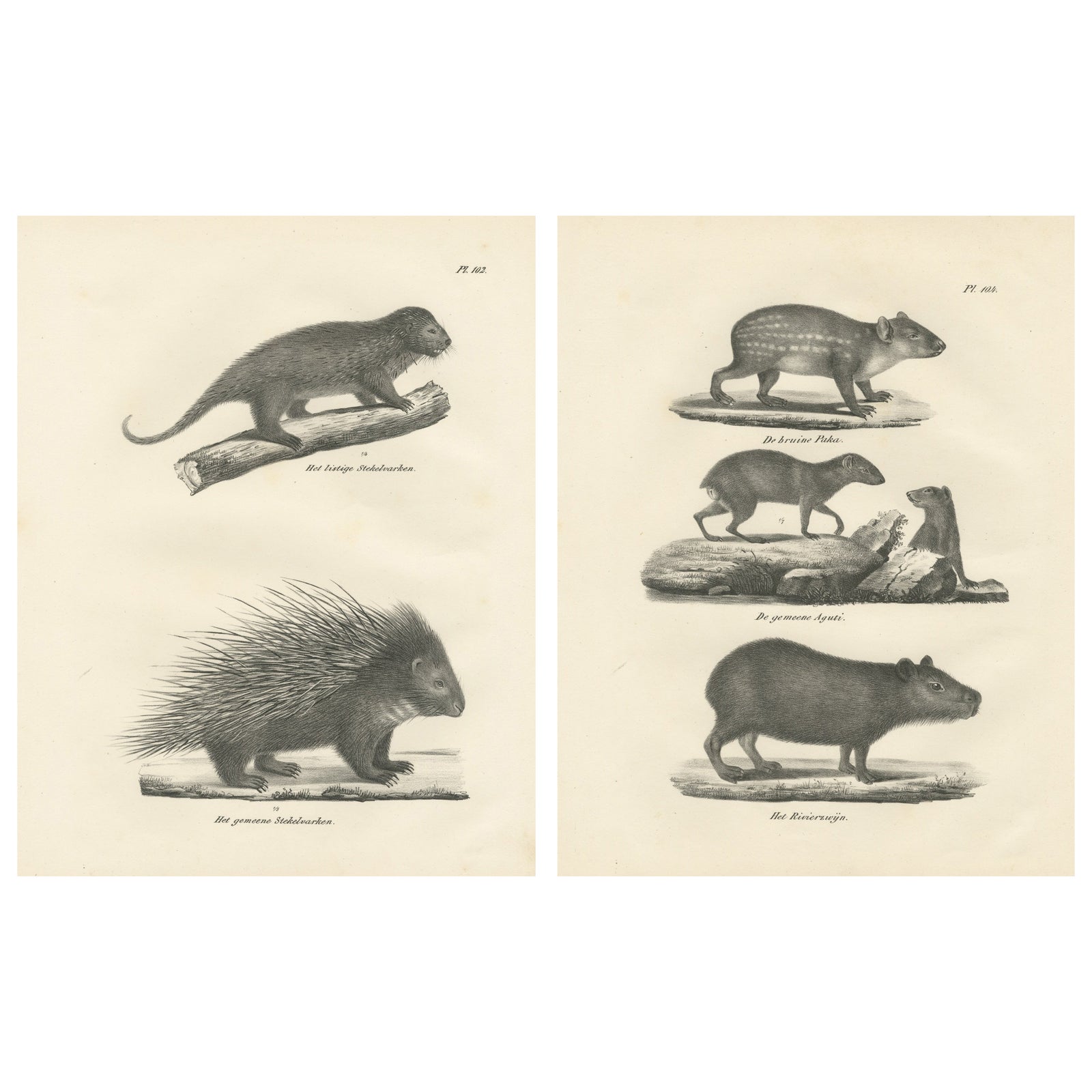
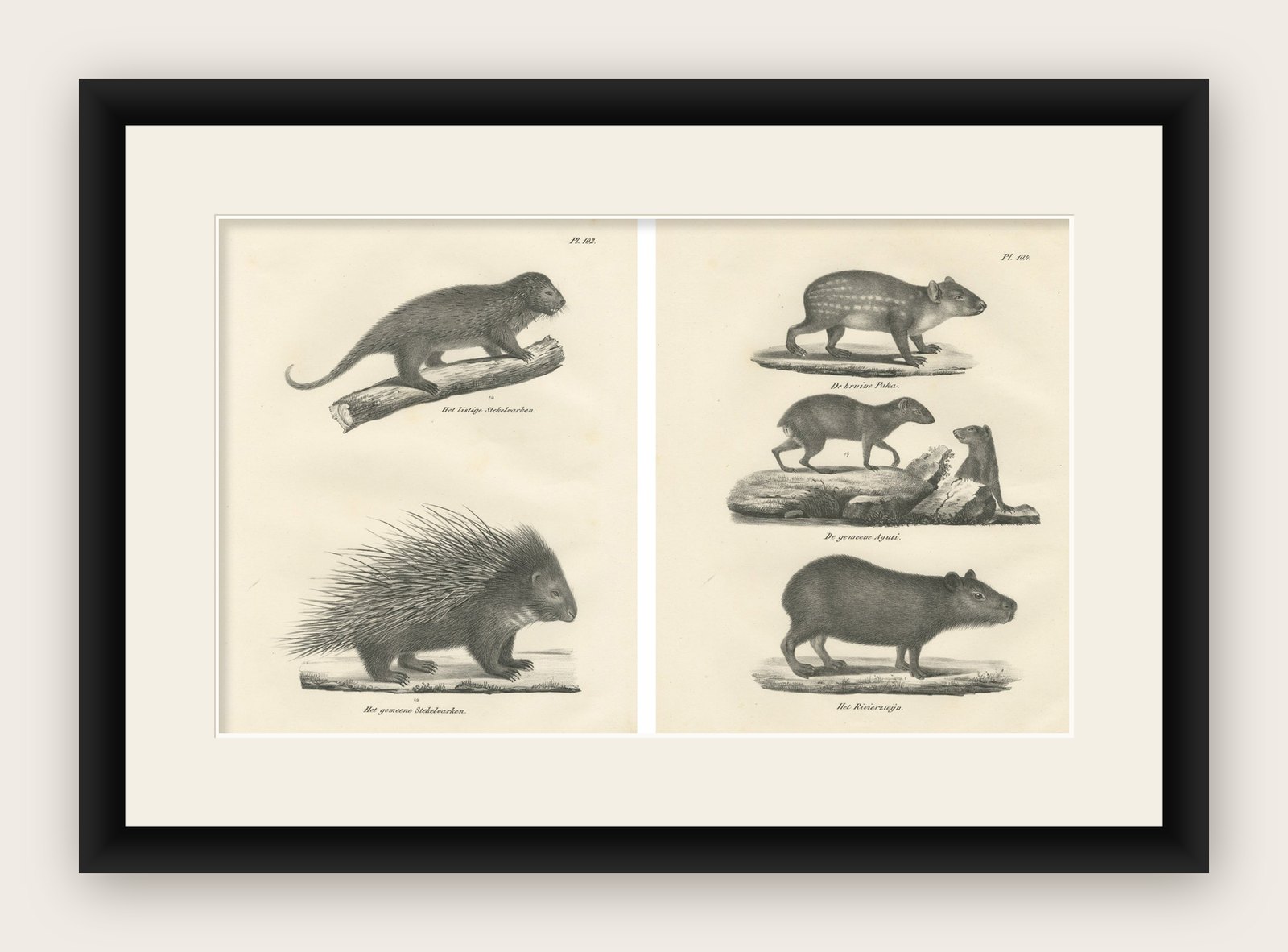
Antique Porcupine, Agouti & Tapir Lithographs, Brodtmann after Schinz c.1830
£320£22530% off ($290, €266)
Period original, not a reproduction.
Shipped from the Netherlands, flat or rolled, insured and tracked, worldwide. Returns accepted within 14 days.
- Date
- 1830
- Size
- 12.7 × 10.2 in (32.2 × 26 cm)
- Condition
- Good. Overall good antique condition. Light foxing and scattered age-related spotting visible, consistent with lithographs from circa 1830. No major tears or losses observed.
- Period
- Early 19th century
- Section
- Mammals
- Reference
- f_48134232
What the condition grades mean
- Excellent
- Bright and clean, with no faults worth mentioning.
- Very good
- Only light signs of age, such as faint toning.
- Good
- Normal signs of age for a sheet of this period: toning, some foxing, small marks or neat old repairs.
- Fair
- Clear faults such as staining, tears or repairs, priced to match.
Every fault we see is written in the condition note, and the whole sheet is shown uncropped in the photos.
Antique Porcupine, Agouti & Tapir Lithographs, Brodtmann after Schinz c.1830
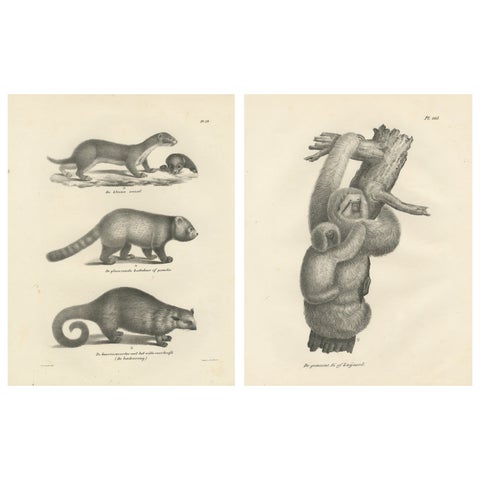
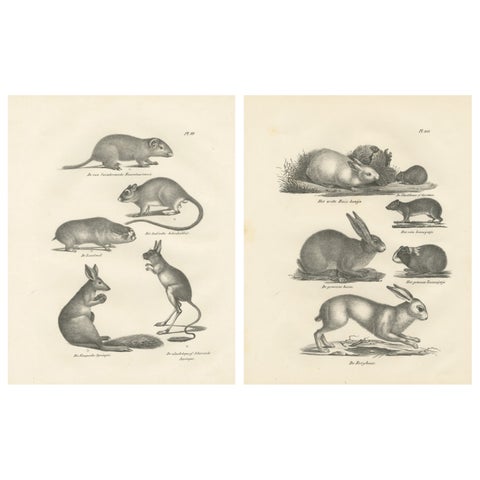
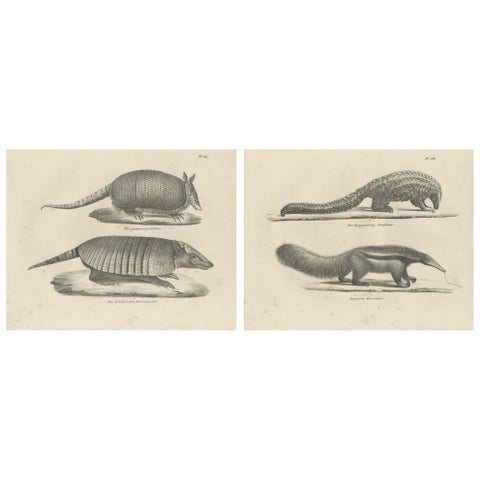
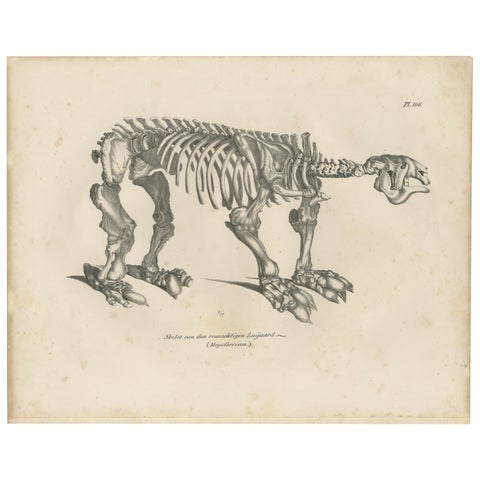
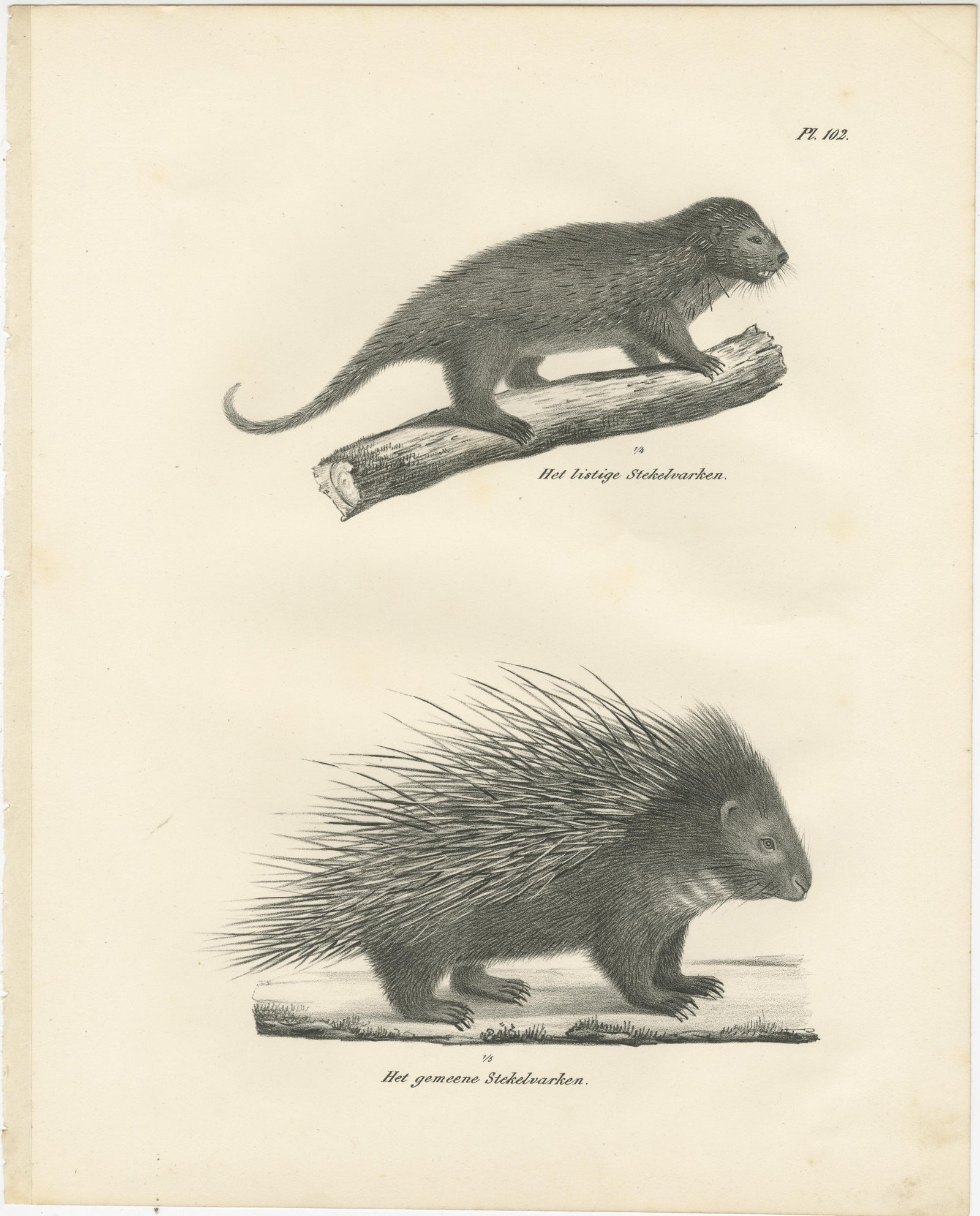
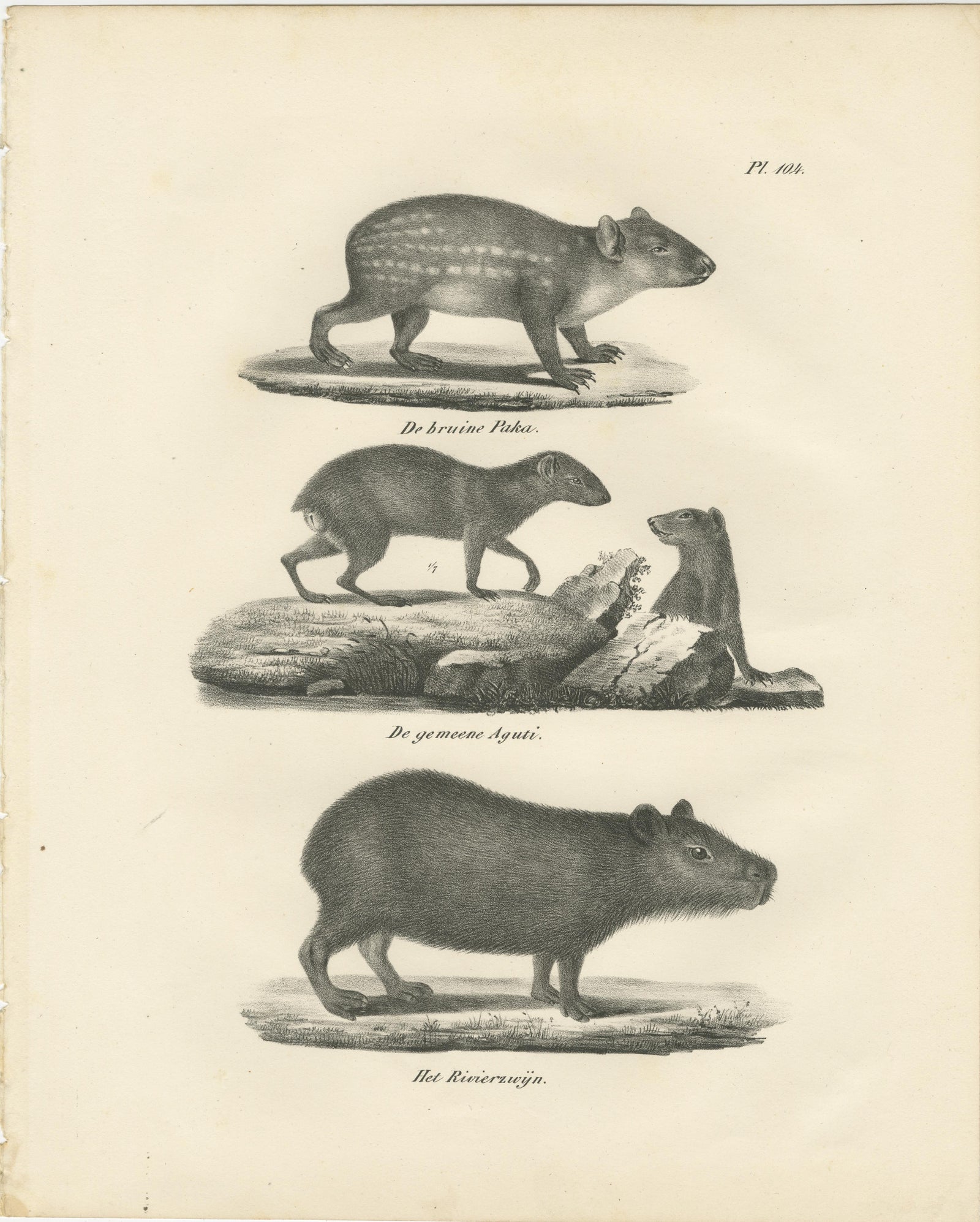
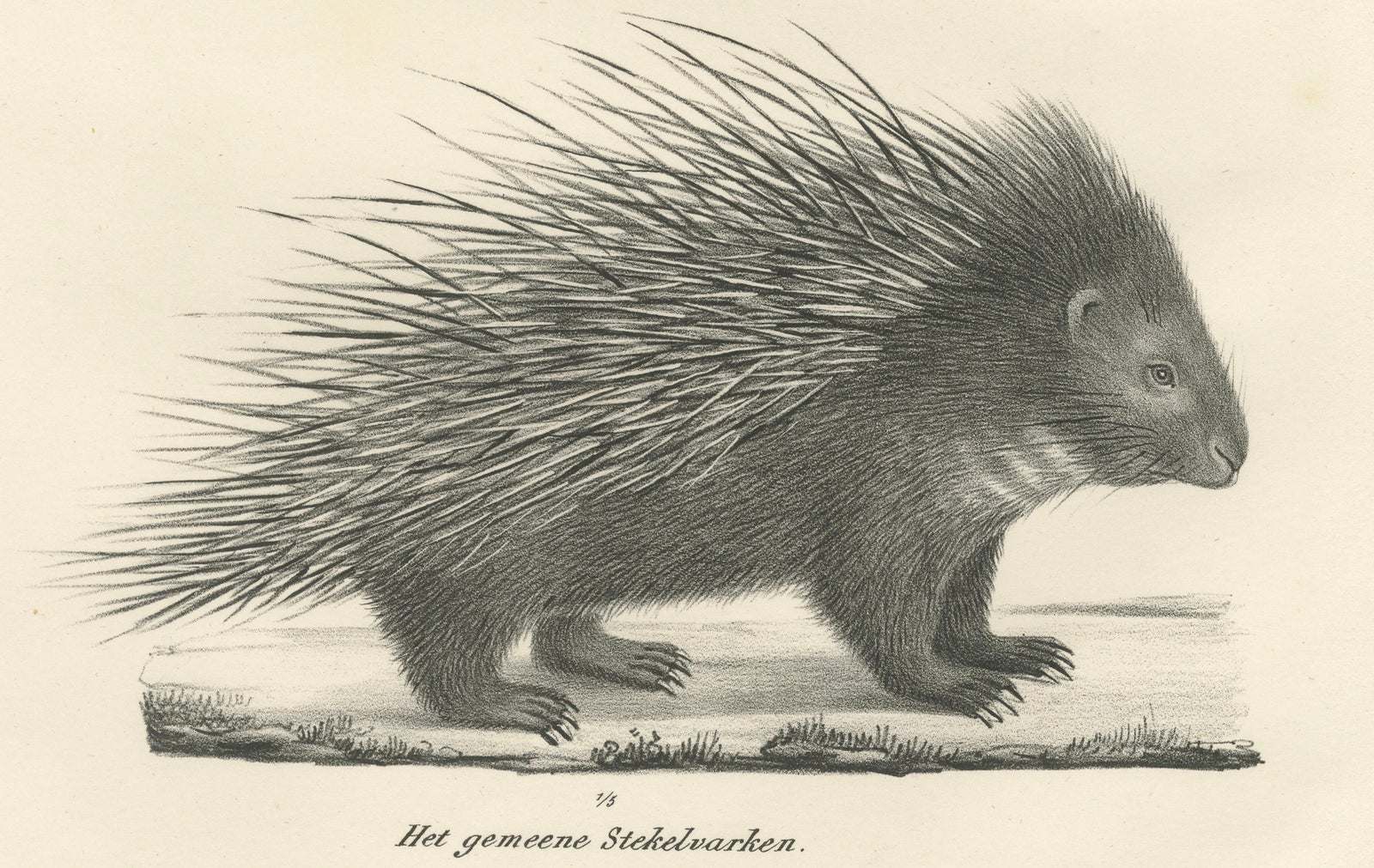
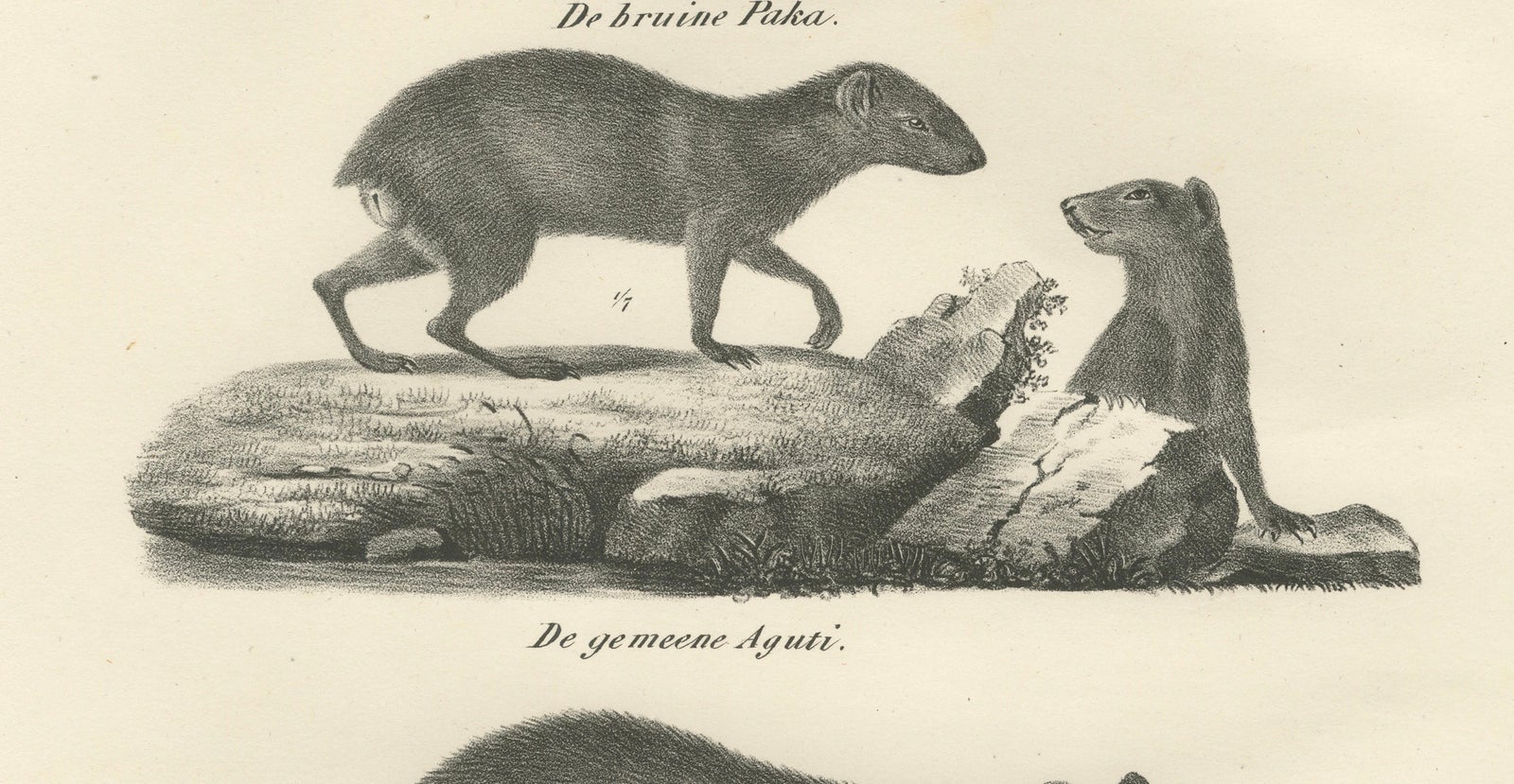
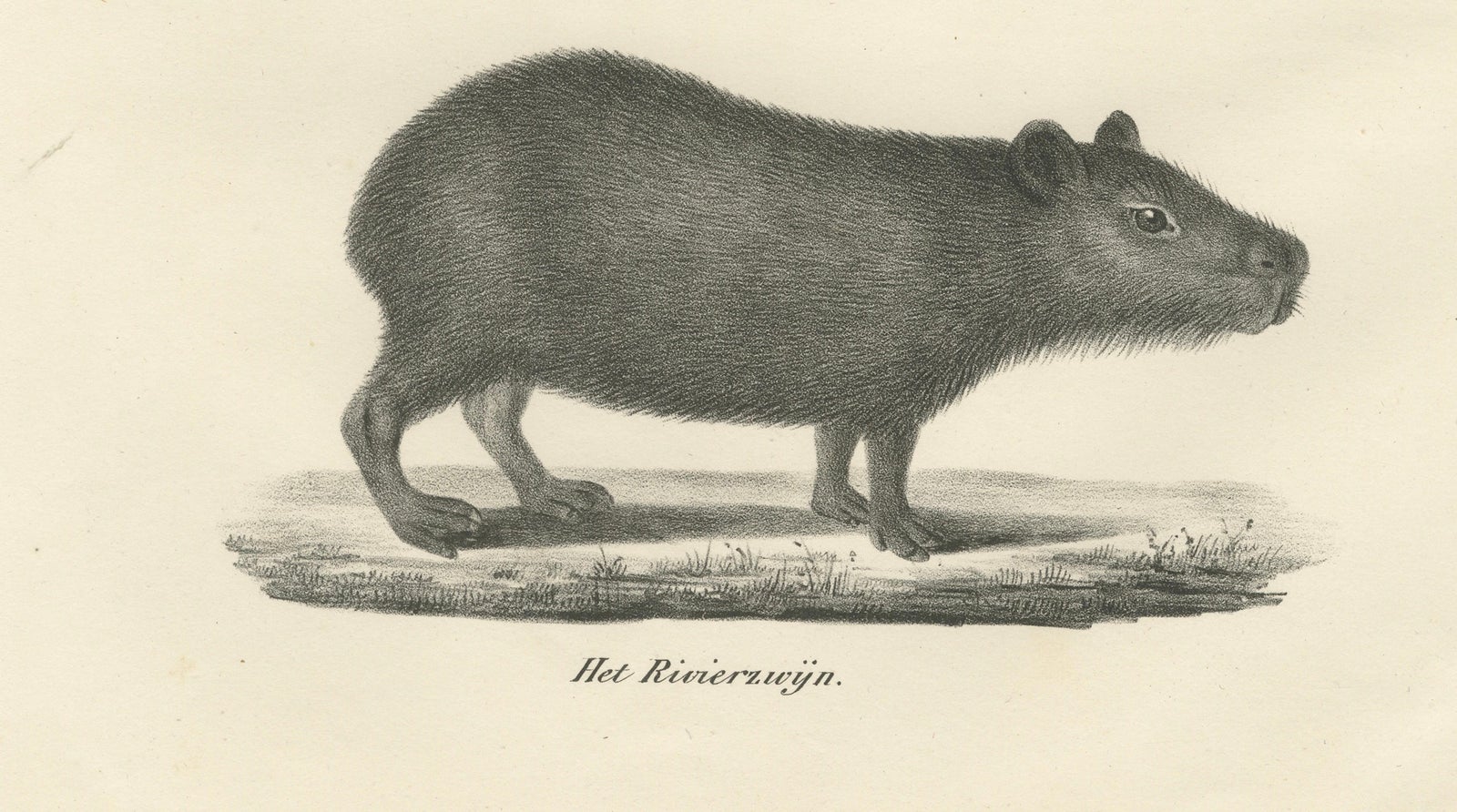
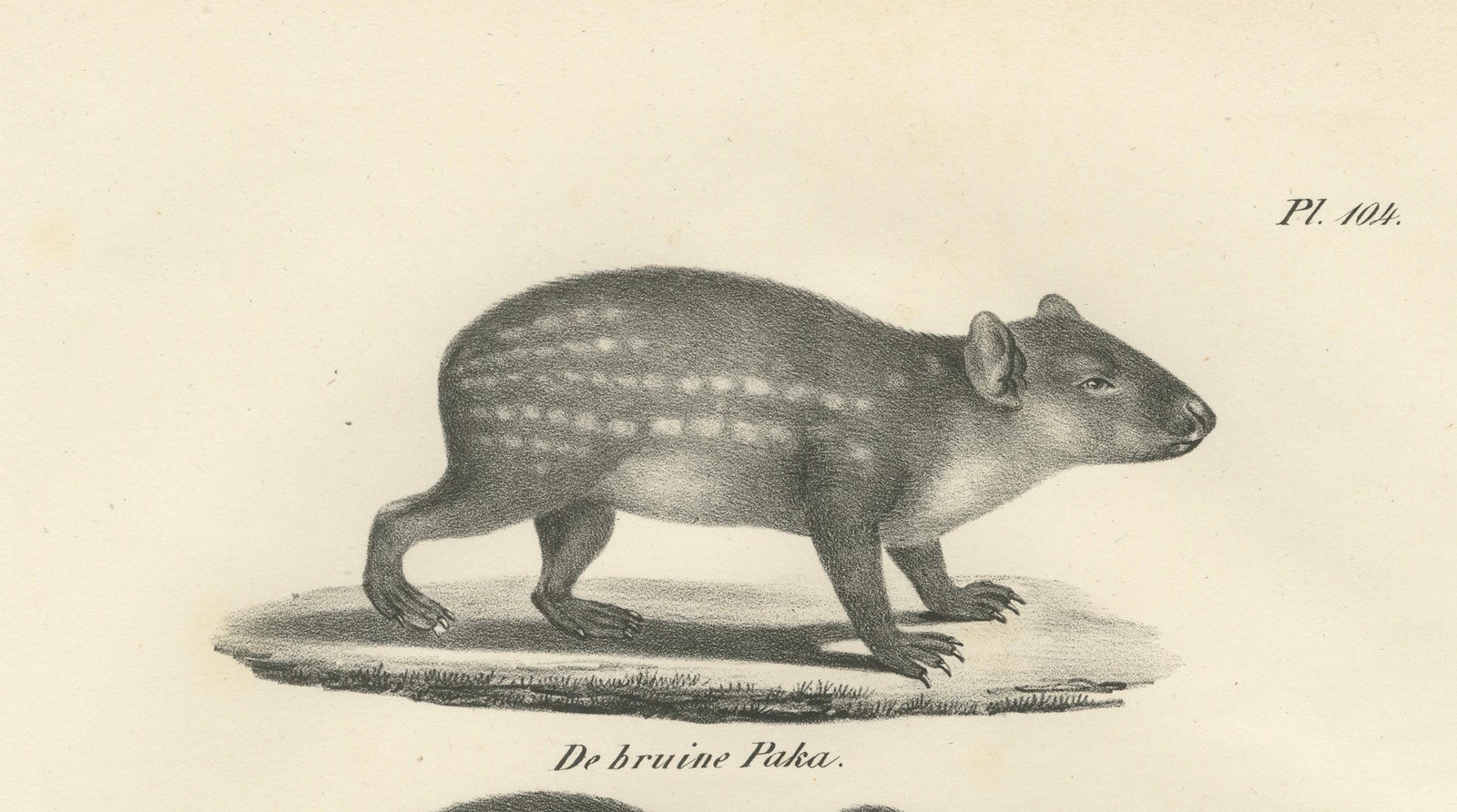
This finely executed pair of early 19th-century zoological lithographs was produced circa 1830 by the Swiss artist and lithographer Karl Joseph Brodtmann, after the scientific studies of Heinrich Rudolf Schinz. The plates originate from Schinz’s Geïllustreerde Natuurlijke Geschiedenis van Menschen en Dieren, a landmark publication that helped introduce both familiar and exotic mammals to a European readership through accurate and visually refined illustration.
The left plate is devoted to porcupines. At the top is the crested porcupine (Hystrix cristata), historically referred to as the “bristly porcupine,” shown climbing over a fallen branch with its coarse quills rendered in fine tonal strokes. Below is the common porcupine, sometimes nicknamed the “spike hog” in older European sources, depicted in profile with its impressive array of defensive quills clearly emphasized. The contrast between the two animals highlights differences in posture, quill length, and texture, making the plate both scientifically instructive and visually striking.
The right plate presents a group of South and Central American mammals. At the top appears the brown paca (Cuniculus paca), recognizable by its rounded body and distinctive rows of pale spots along the flanks; it was often known historically as the “spotted cavy.” In the center is the common agouti (Dasyprocta aguti), shown in two poses and frequently described in early literature as the “jungle hare” because of its long legs and alert stance. At the bottom is the river tapir (Tapirus terrestris), sometimes called the Brazilian tapir or lowland tapir, a species that fascinated European naturalists for its pig-like body combined with a short, flexible snout.
Together, these two plates form a visually rich and coherent set illustrating mammals adapted for defense, speed, and forest life. The combination of porcupines, agoutis, and tapir makes this pairing particularly appealing to collectors of natural history prints and to interior designers seeking unusual, conversation-starting imagery with genuine scientific pedigree.
Condition report:
Overall good antique condition. Light foxing and scattered age-related spotting visible, consistent with lithographs from circa 1830. No major tears or losses observed.
Framing tips:
These prints present beautifully as a pair with wide off-white or soft gray mats and simple black, dark walnut, or ebonised frames to highlight the subtle shading and engraved textures.