Close-ups
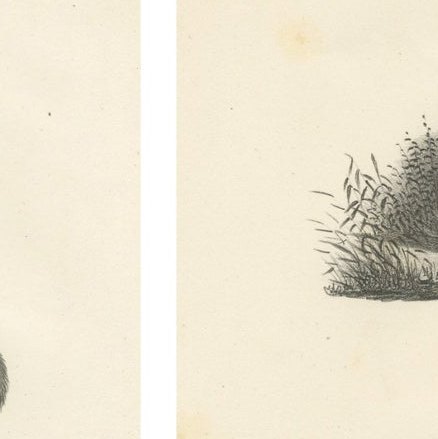
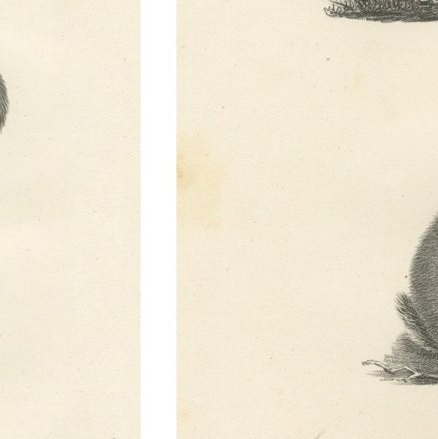
Framed and on the wall
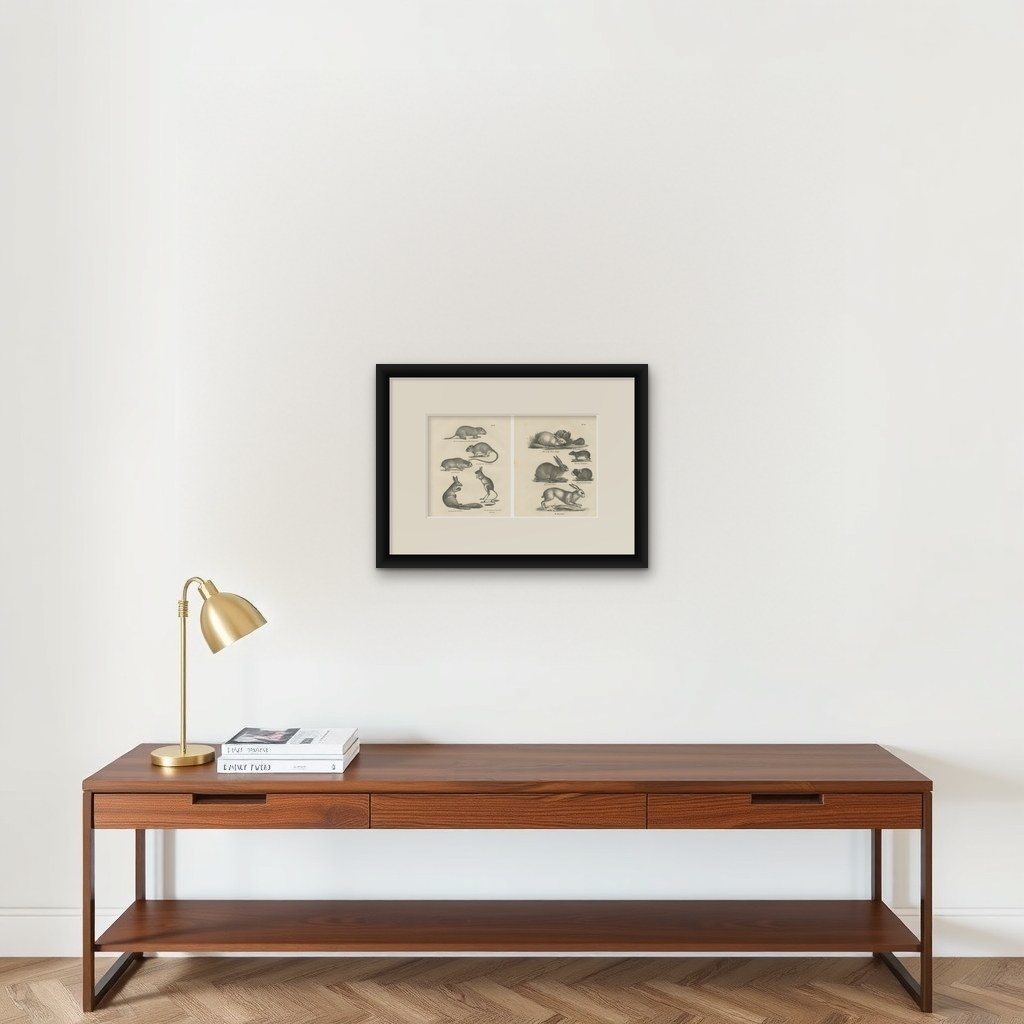

Frame and rooms are illustrations of how the print could look; the description says what is included.
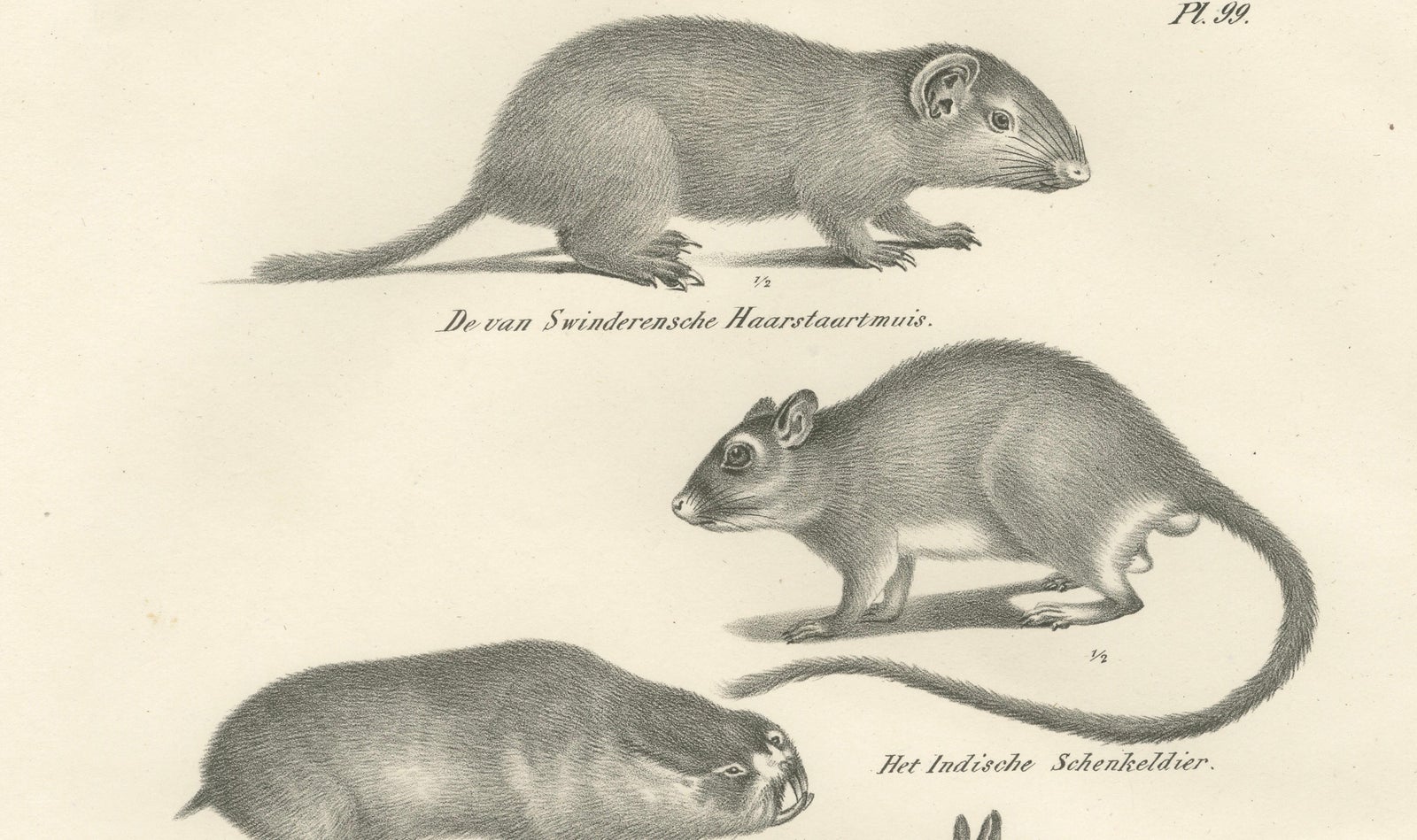
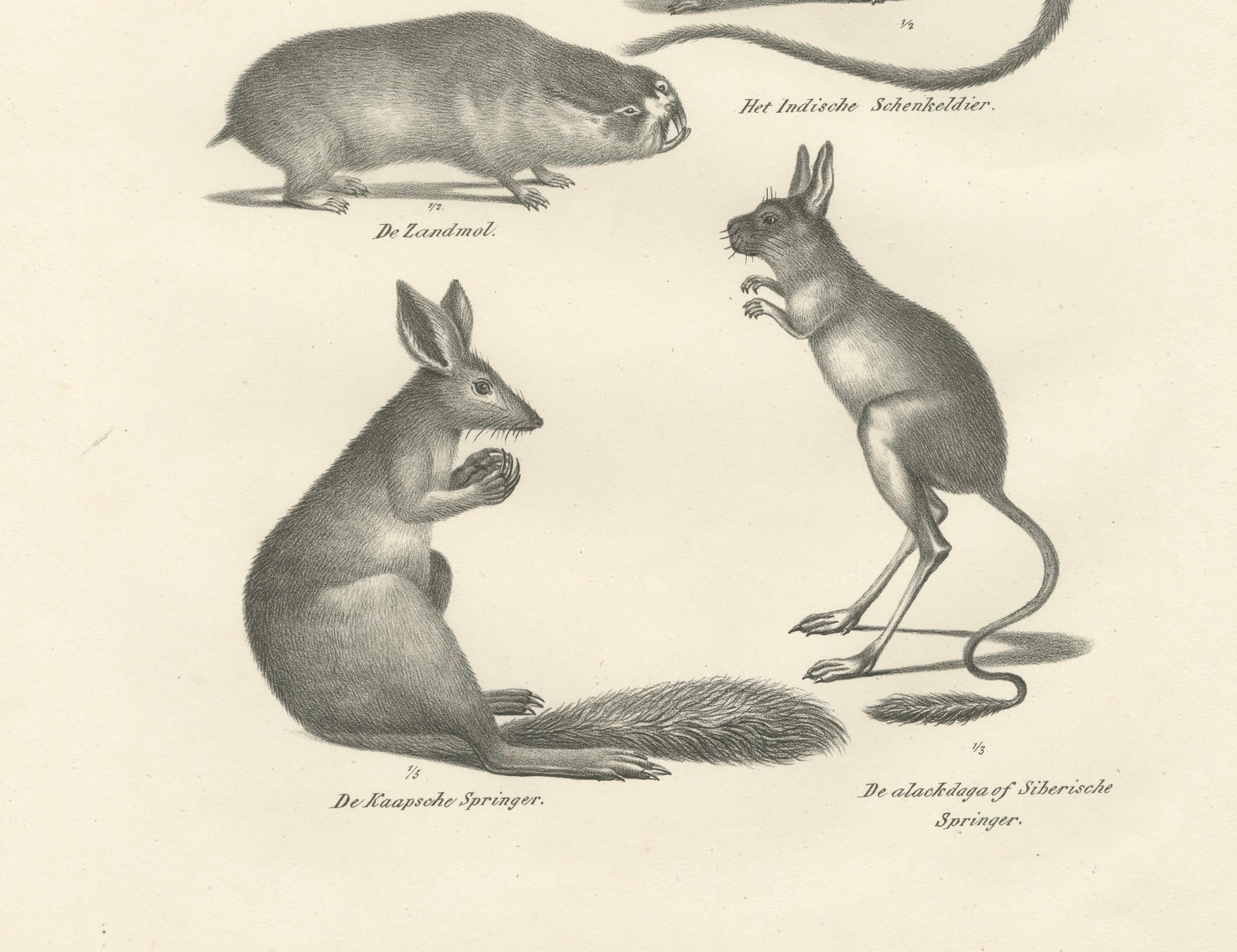
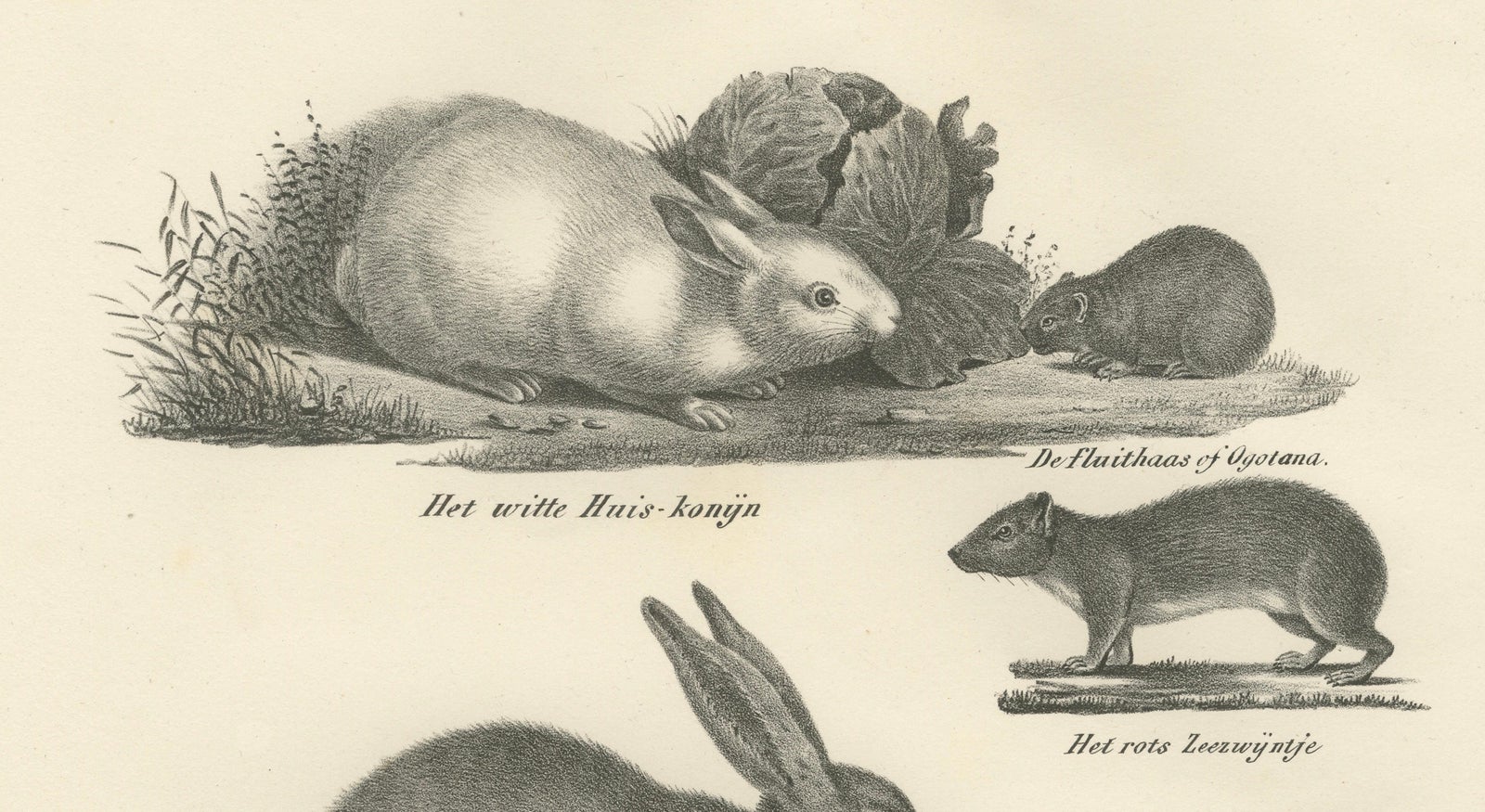
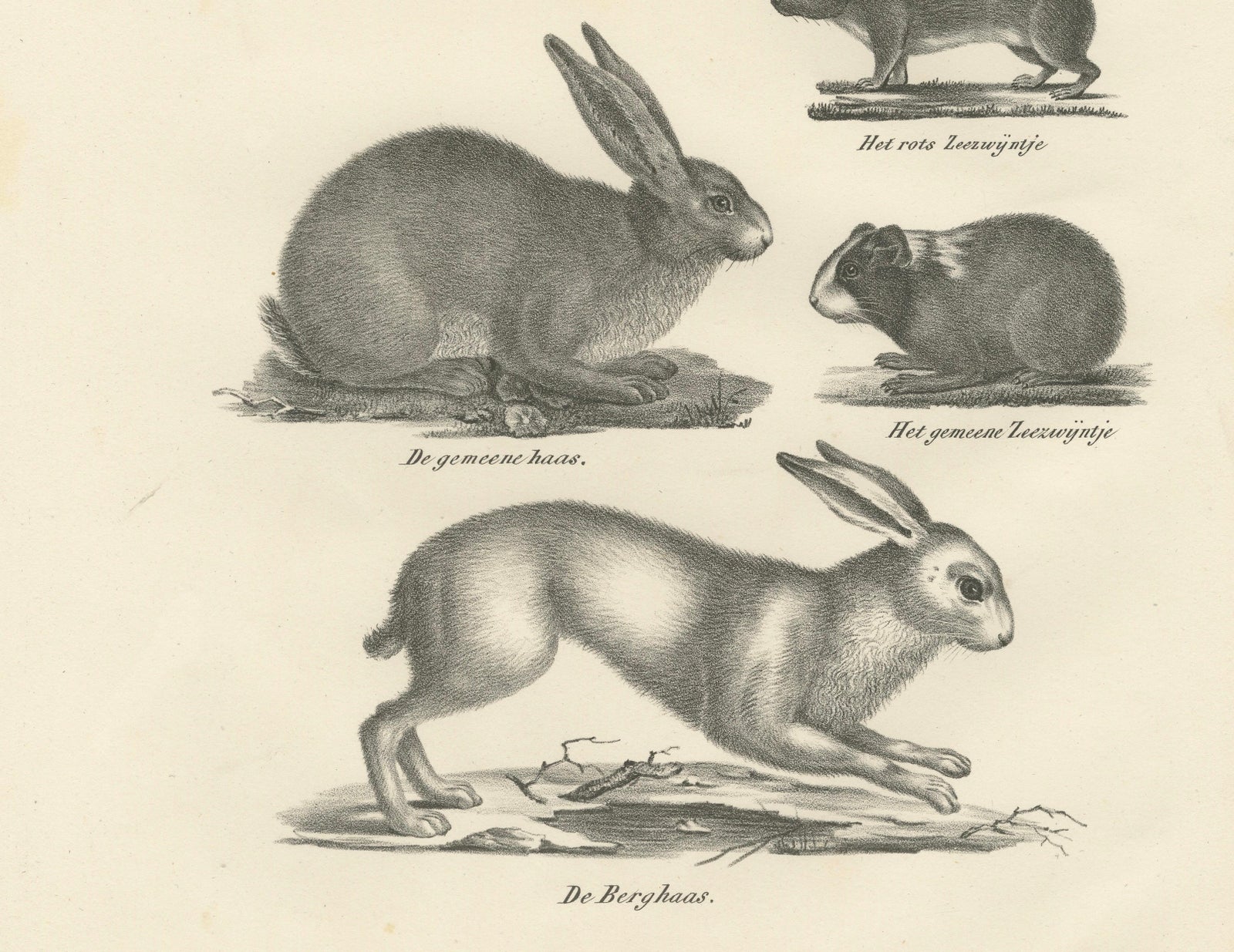
Antique Rodents & Hares Lithographs, Rabbits, Guinea Pig & Jerboa c.1830
£330 ($440, €390)
Period original, not a reproduction.
Shipped from the Netherlands, flat, insured and tracked, worldwide. Returns accepted within 14 days.
- Date
- 1830
- Size
- 12.7 × 10.2 in (32.2 × 26 cm)
- Condition
- Good. Overall good antique condition. Light foxing and mild age-related spotting visible, consistent with lithographs from circa 1830. No major tears or losses observed.
- Period
- Early 19th century
- Section
- Mammals
- Reference
- f_48134132
Antique Rodents & Hares Lithographs, Rabbits, Guinea Pig & Jerboa c.1830
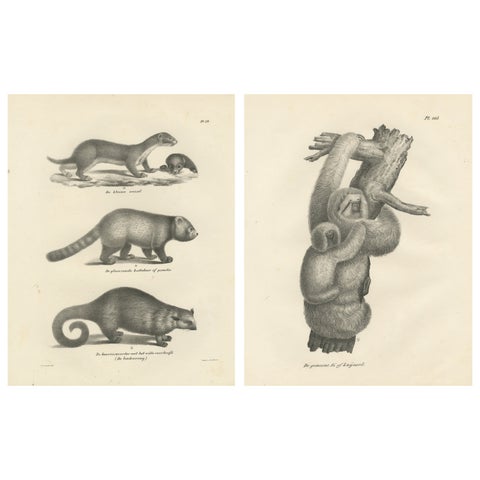
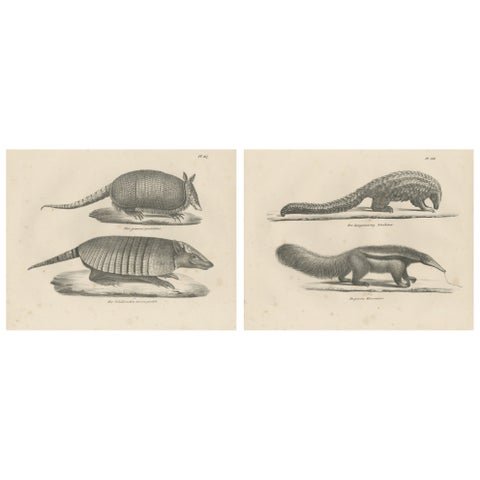
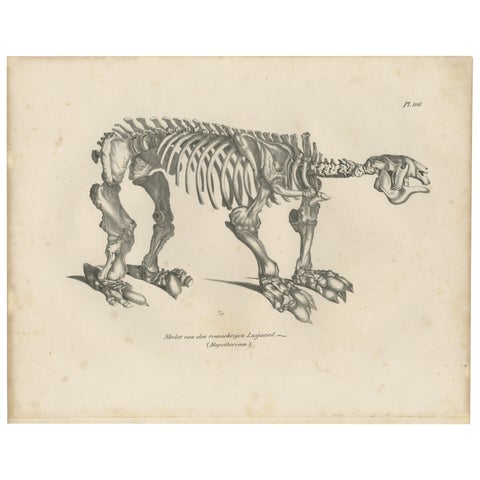
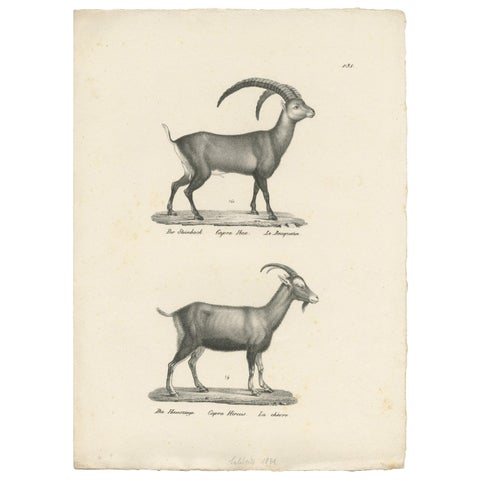
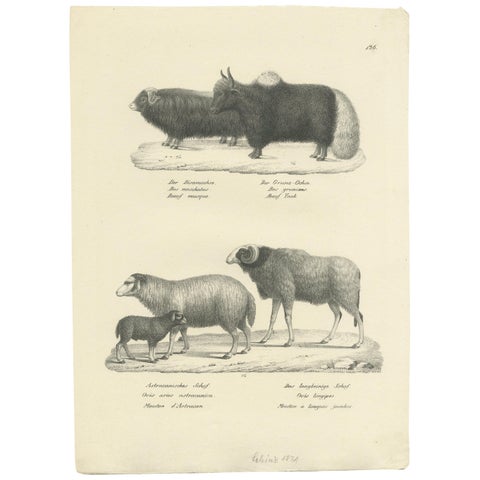
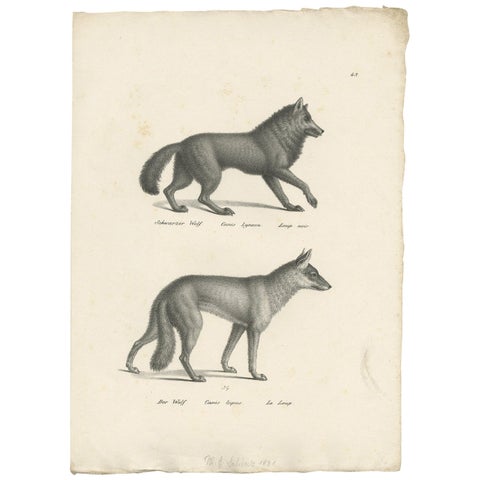
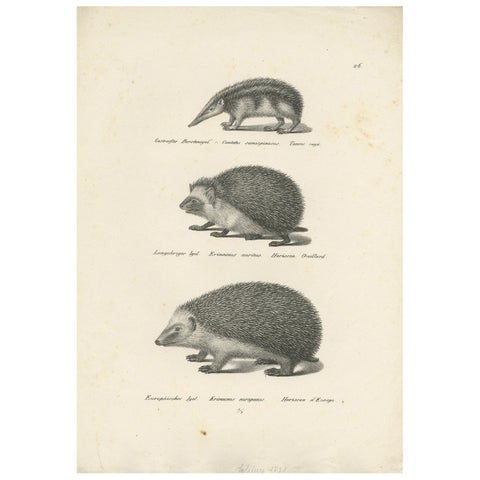
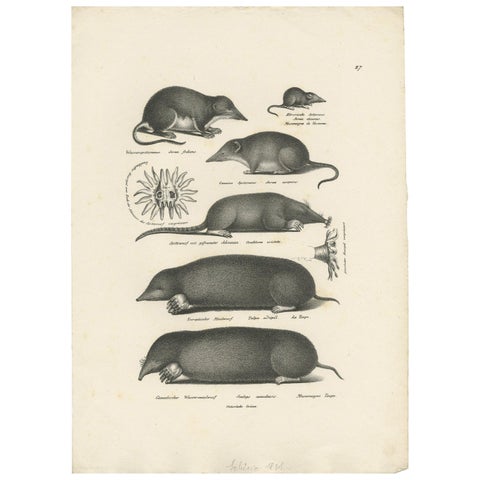
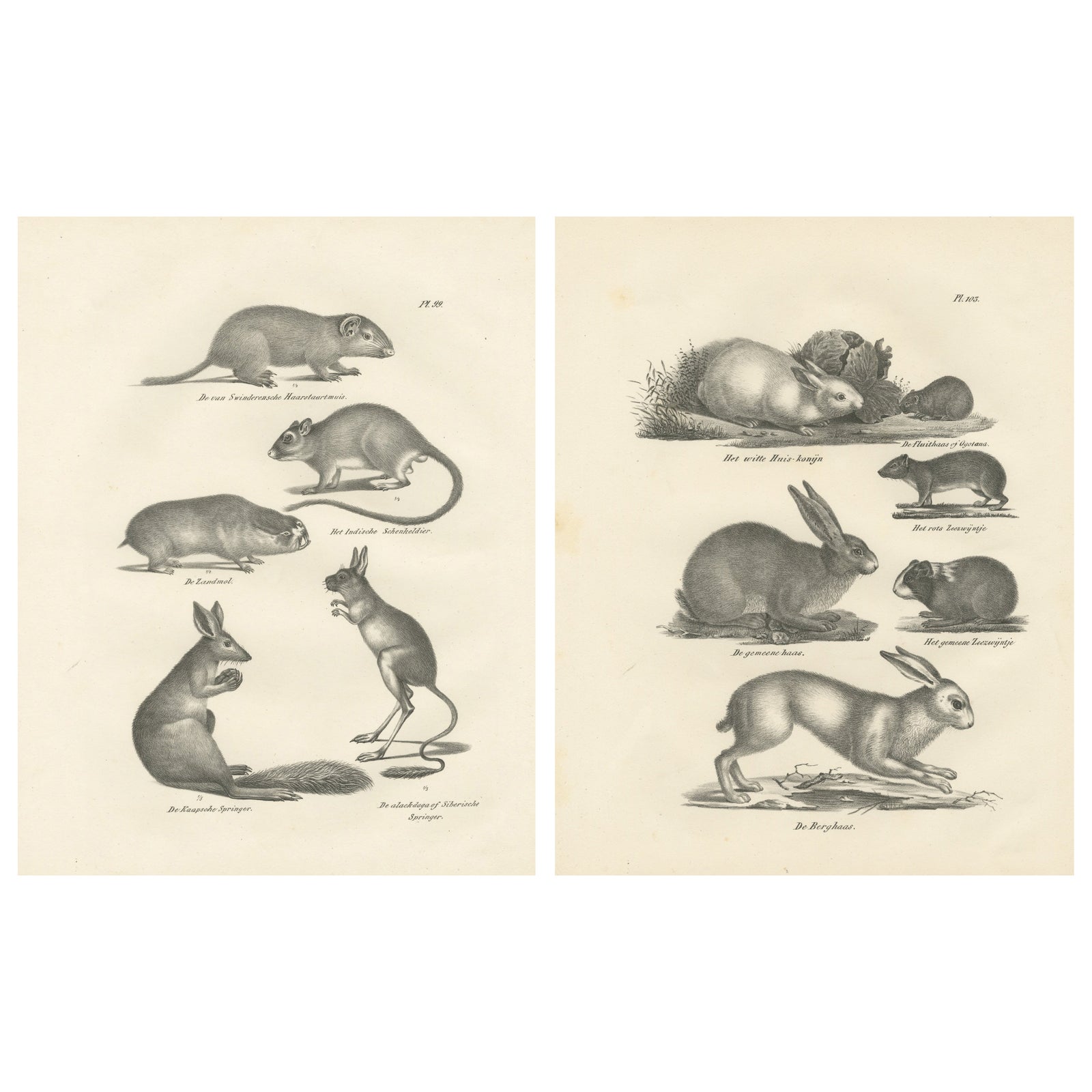
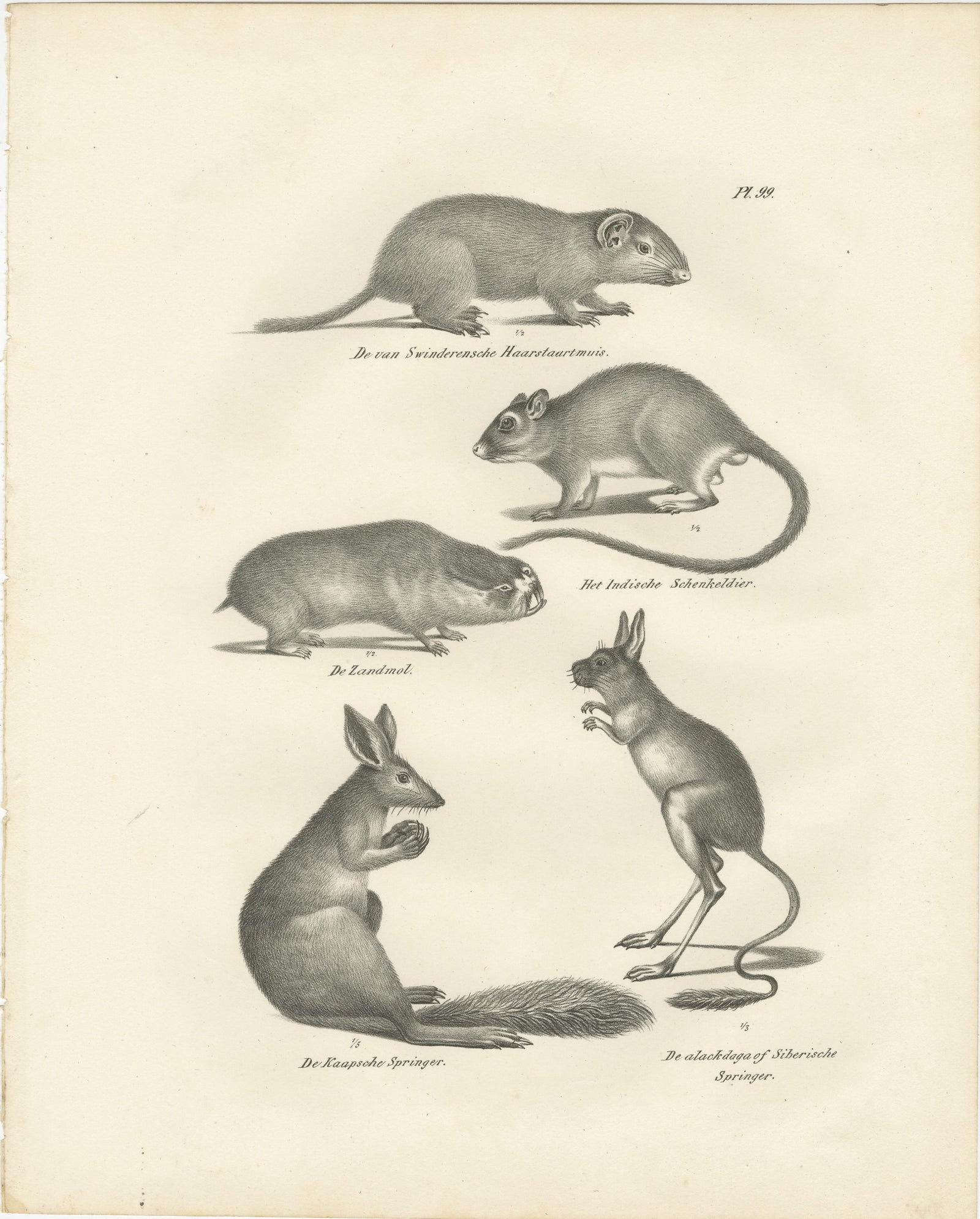
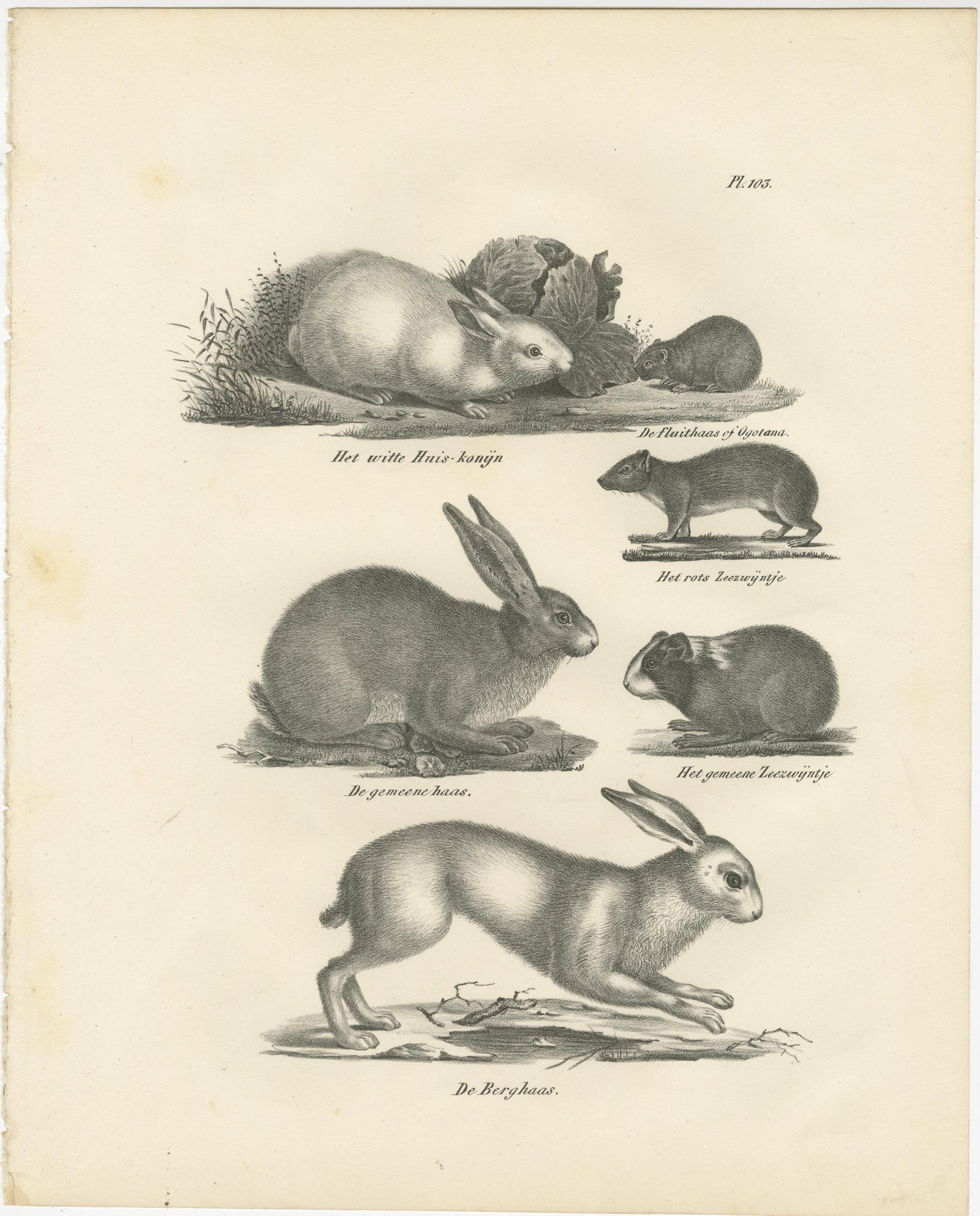
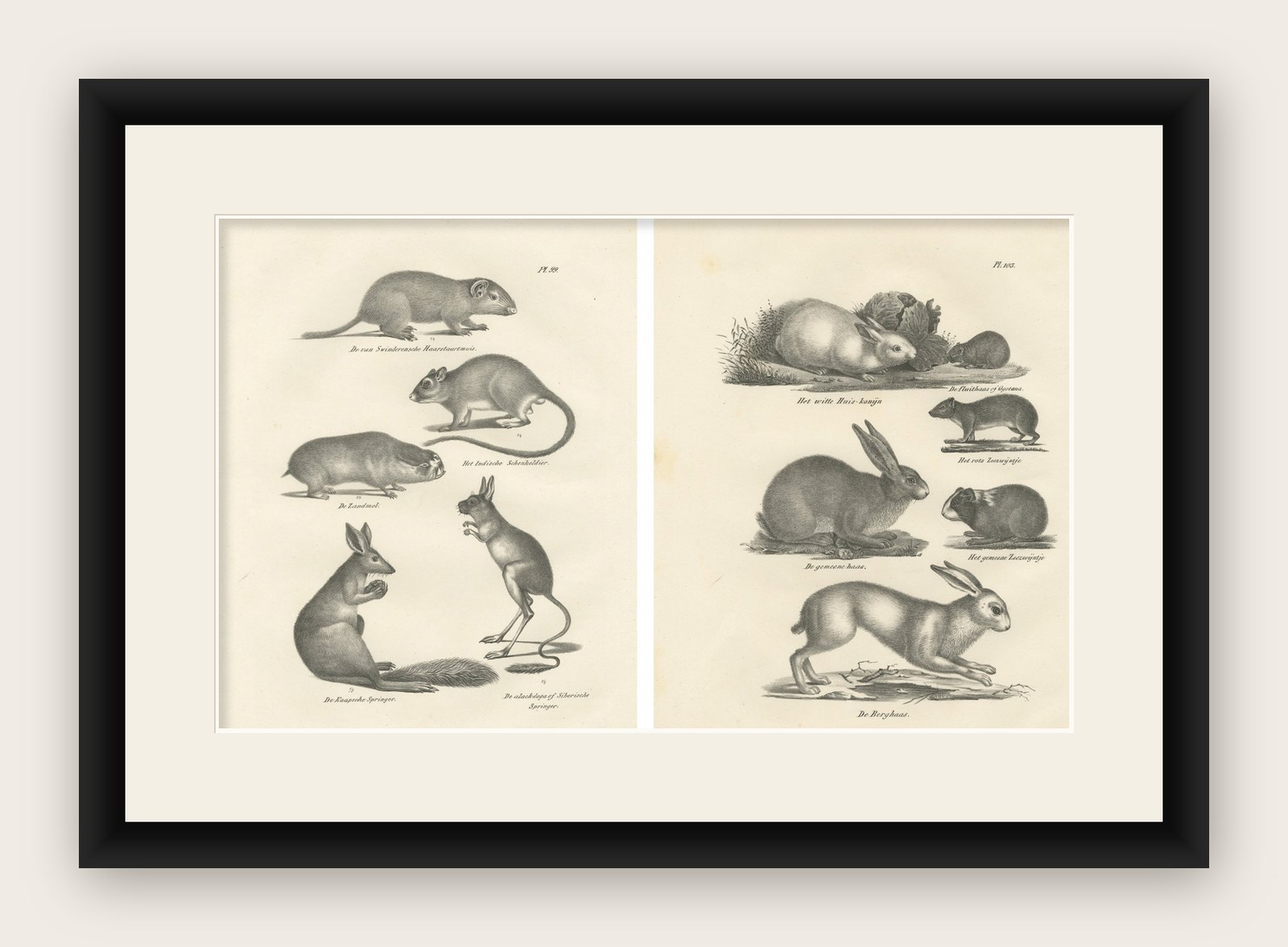
This finely engraved pair of early 19th-century zoological lithographs was created around 1830 by the Swiss artist and lithographer Karl Joseph Brodtmann, after the scientific work of the naturalist Heinrich Rudolf Schinz. The plates originate from Schinz’s illustrated natural history publications, issued in German and Dutch editions, and are characteristic of the period’s ambition to catalogue the animal world with clarity, accuracy, and visual appeal.
The left plate focuses primarily on rodents and small mammals. It includes several mouse- and rat-like species, among them early depictions of field mice and exotic rodents from Asia. Particularly striking is the jerboa, instantly recognisable by its elongated hind legs and upright posture; this animal was often nicknamed the “jumping mouse” or “desert jumper” in early European literature due to its kangaroo-like movement. Also shown are squirrel-like rodents and burrowing mammals, each carefully rendered with attention to fur texture, body proportions, and characteristic stance.
The right plate is devoted to lagomorphs and related small mammals. Prominently featured are the common hare (Lepus europaeus), also known as the European hare, shown both seated and in motion, and the mountain hare (Lepus timidus), sometimes called the “blue hare” for its winter coat. In addition, the plate includes domestic and wild rabbits (Oryctolagus cuniculus), as well as guinea pigs (Cavia porcellus), historically referred to as “guinea hogs” or “Indian rabbits” in older sources. The grouping allows for direct visual comparison between species, highlighting differences in ear length, body mass, and movement.
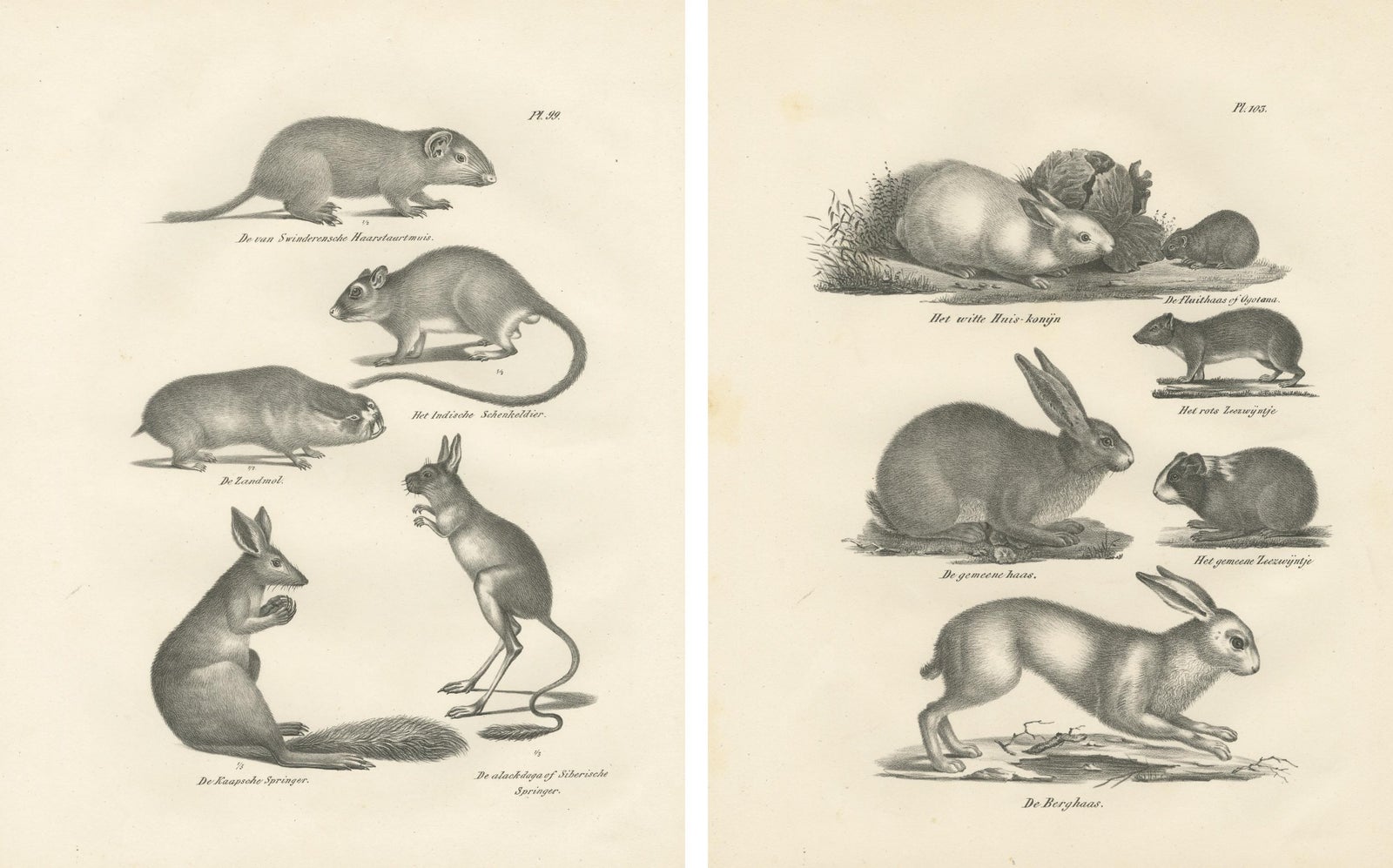
Together, these two plates form a coherent and visually rich set that illustrates early 19th-century zoological classification. They appeal equally to collectors of natural history prints and to interior designers seeking authentic scientific imagery with warmth and character. Displayed side by side, the prints create a balanced composition that works beautifully in libraries, studies, hallways, or nature-inspired interiors.
Condition report:
Overall good antique condition. Light foxing and mild age-related spotting visible, consistent with lithographs from circa 1830. No major tears or losses observed.
Framing tips:
Best presented as a matching pair with soft off-white or warm grey mats and simple black, dark walnut, or ebonised frames to emphasize the fine tonal detail.
Keywords:
antique animal print, rodent lithograph, hare and rabbit print, jerboa, jumping mouse, guinea pig, cavia, European hare, mountain hare, rabbit illustration, 19th century natural history, Brodtmann lithography, Schinz zoology, scientific animal art, antique zoological engraving, animal prints for interior
Technique: Lithography
Maker: Karl Joseph Brodtmann, Switzerland, circa 1830