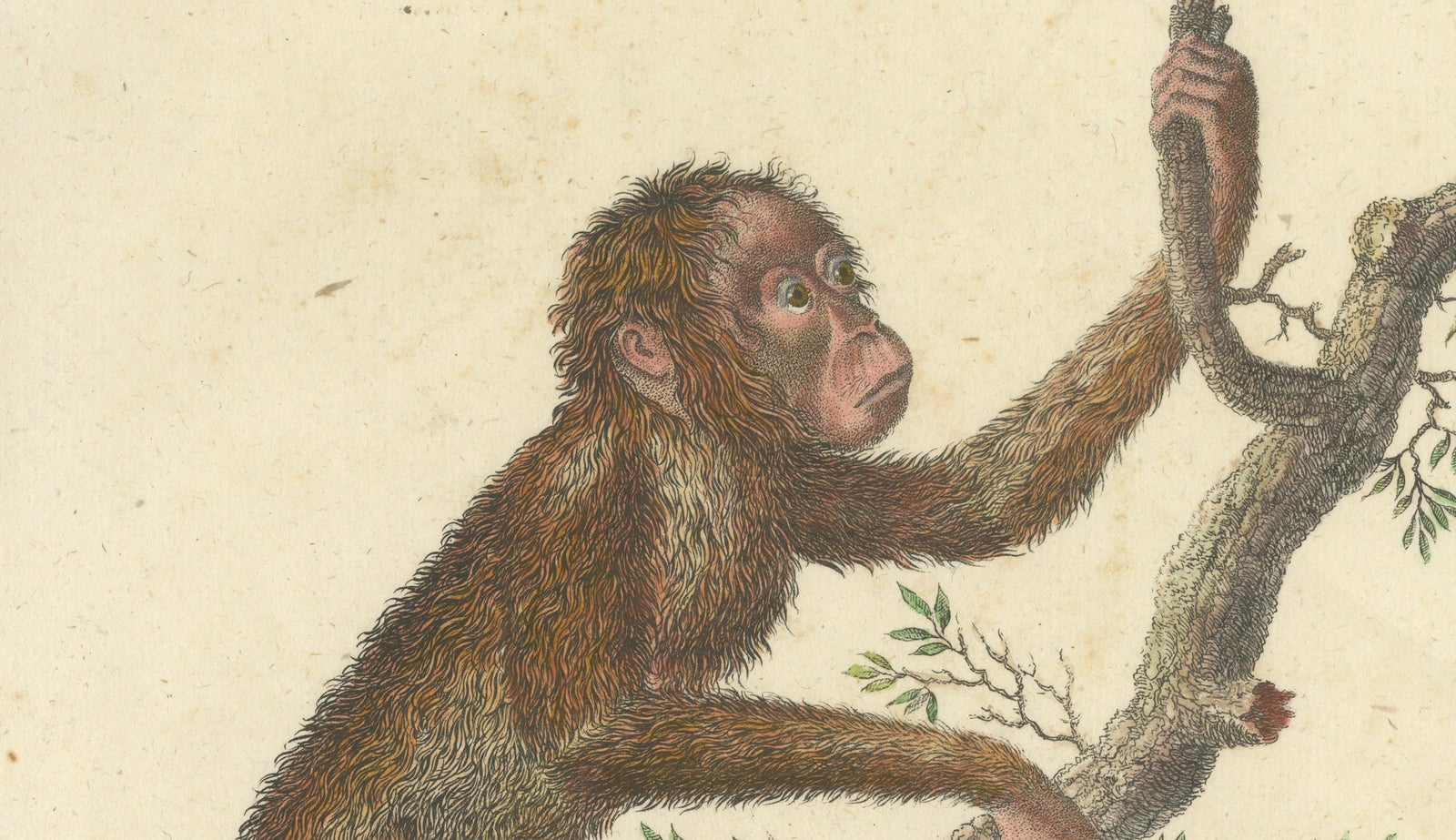
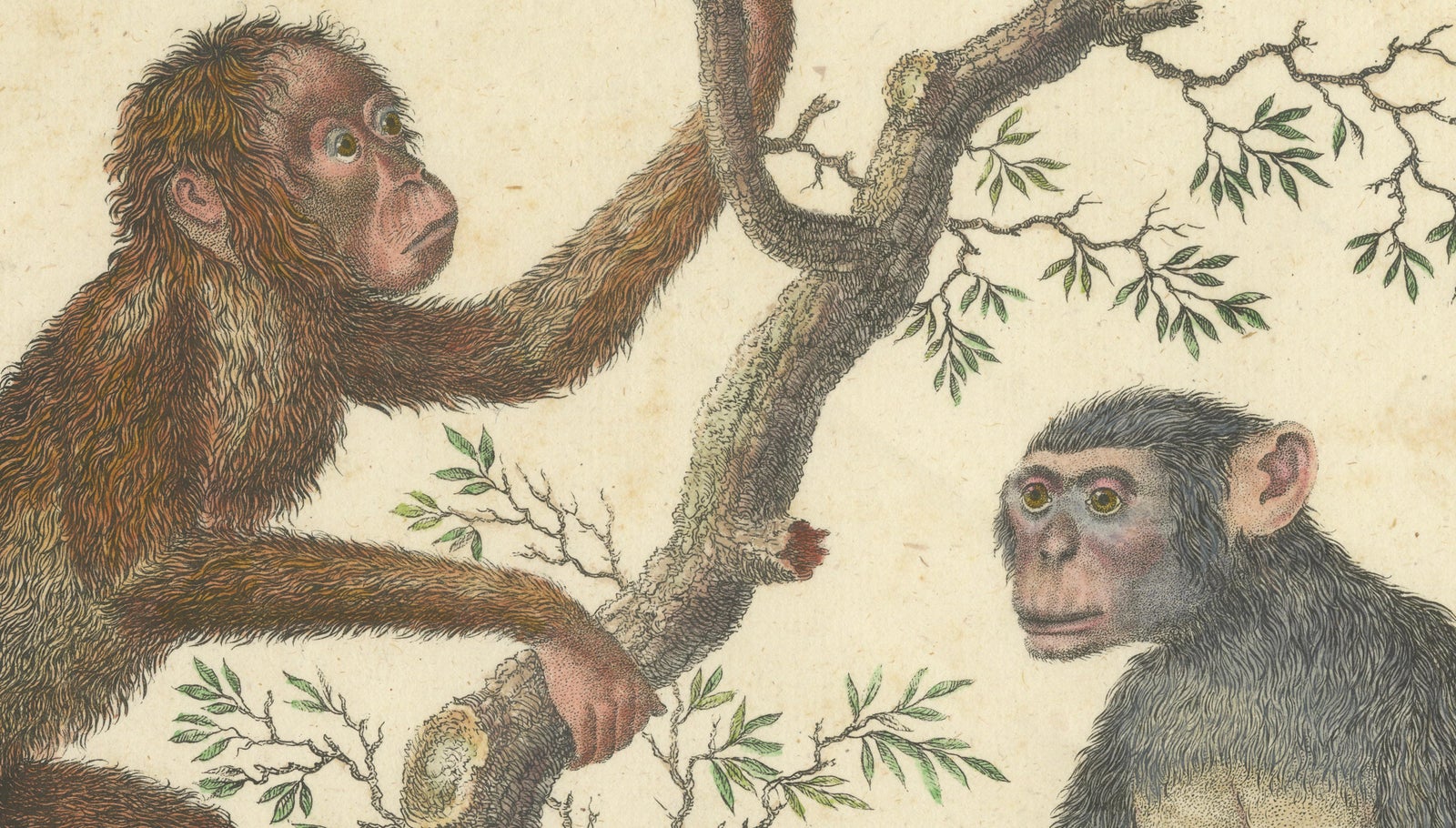
Close-ups
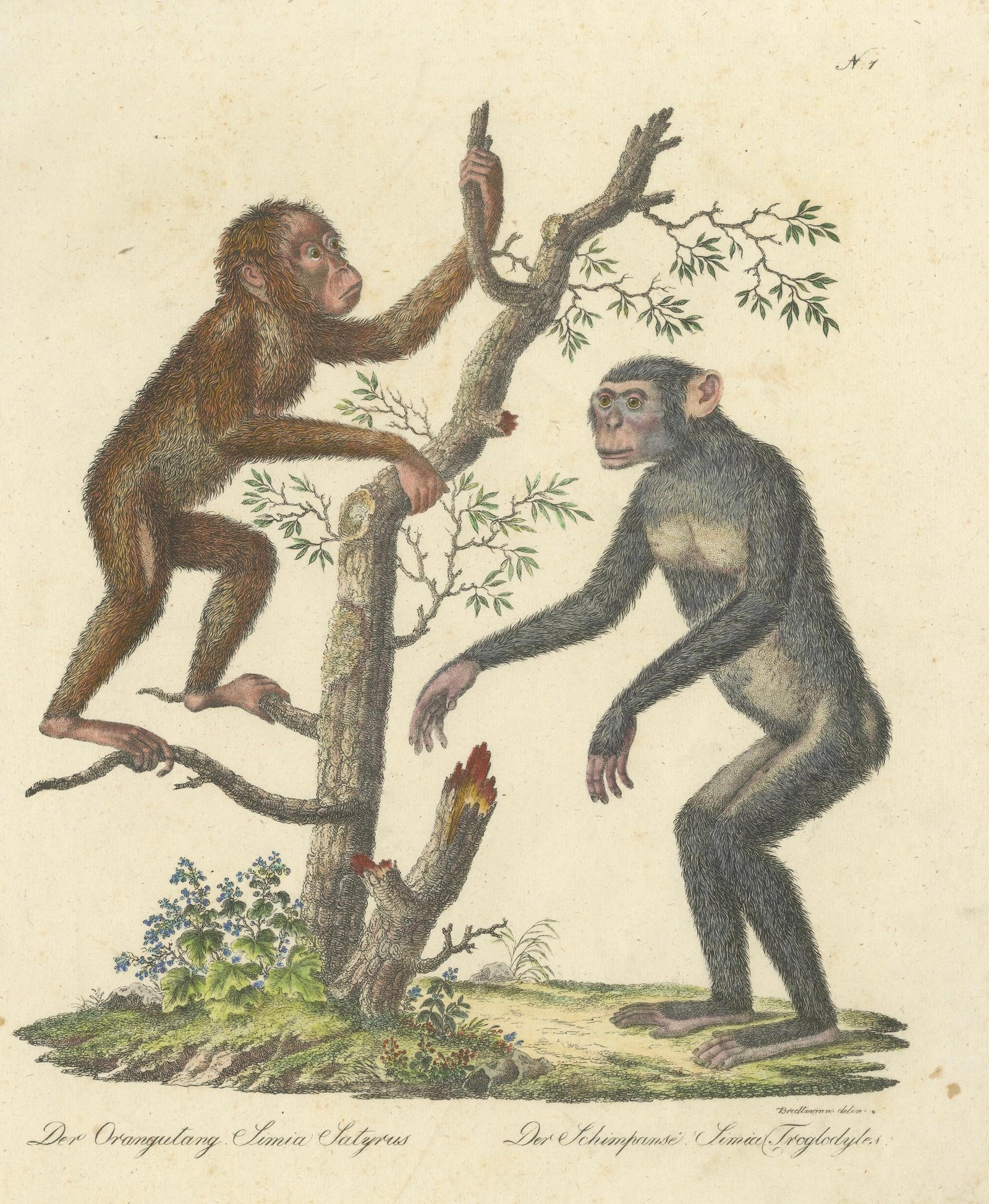
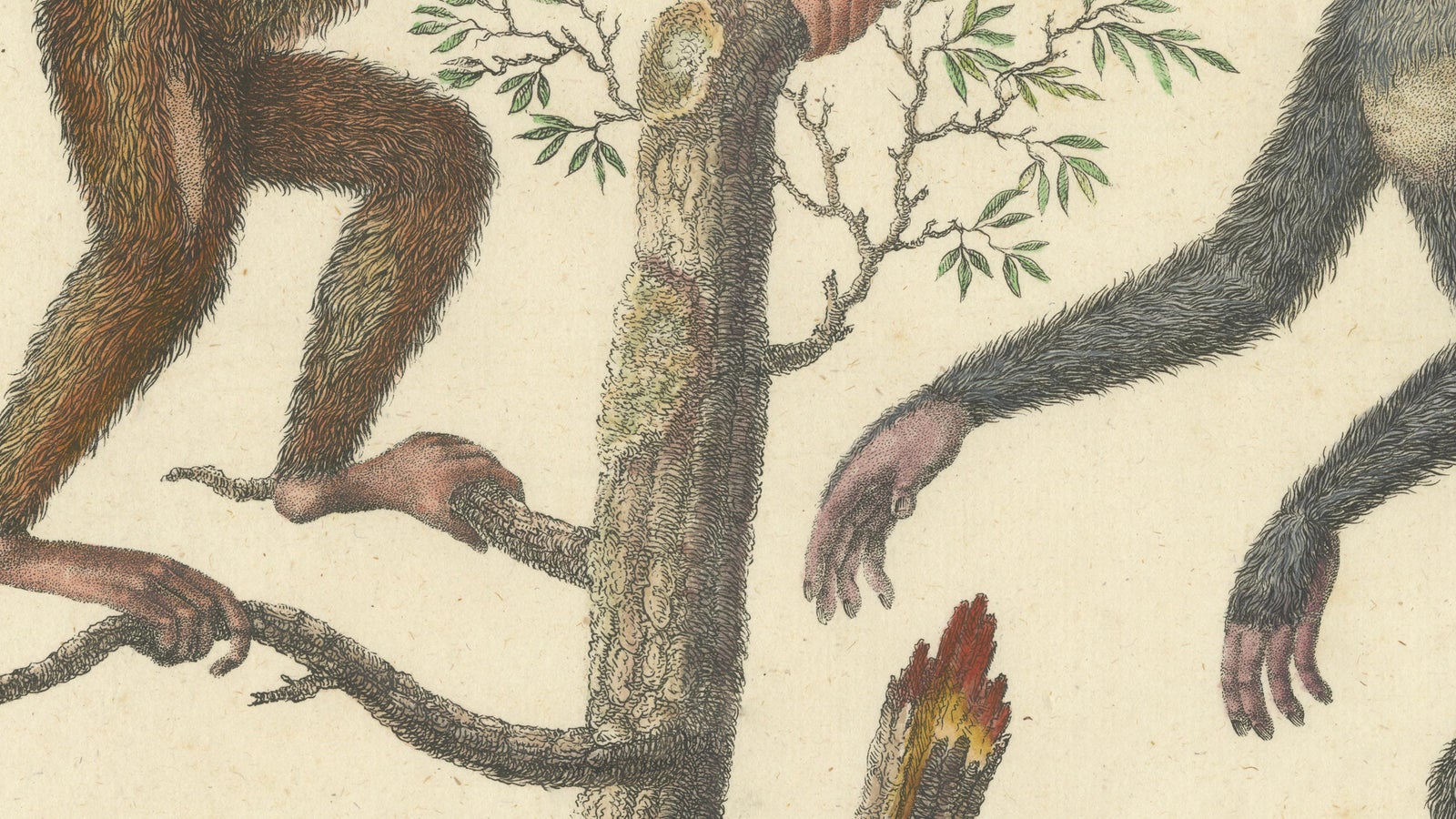
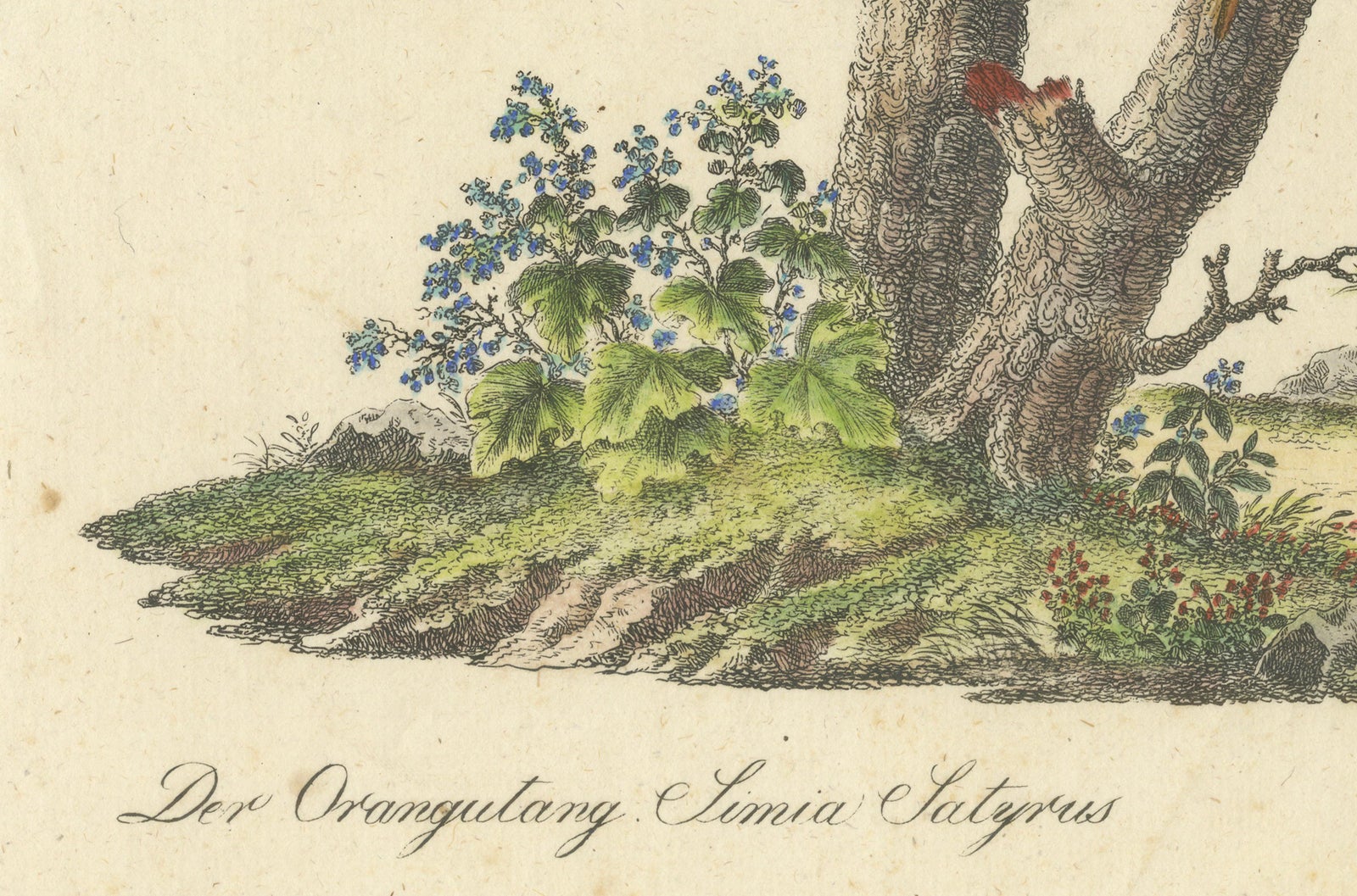
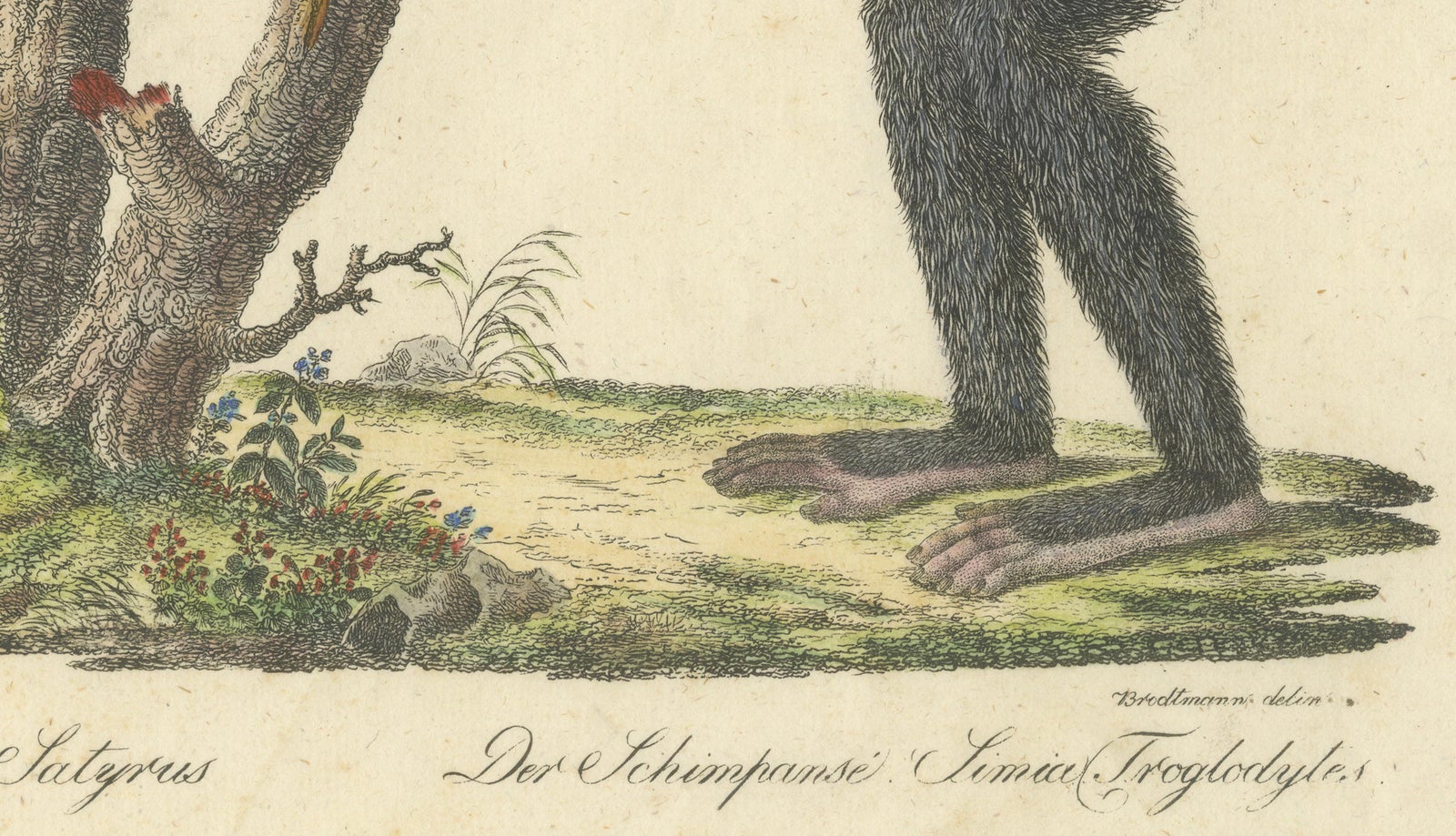
Framed and on the wall
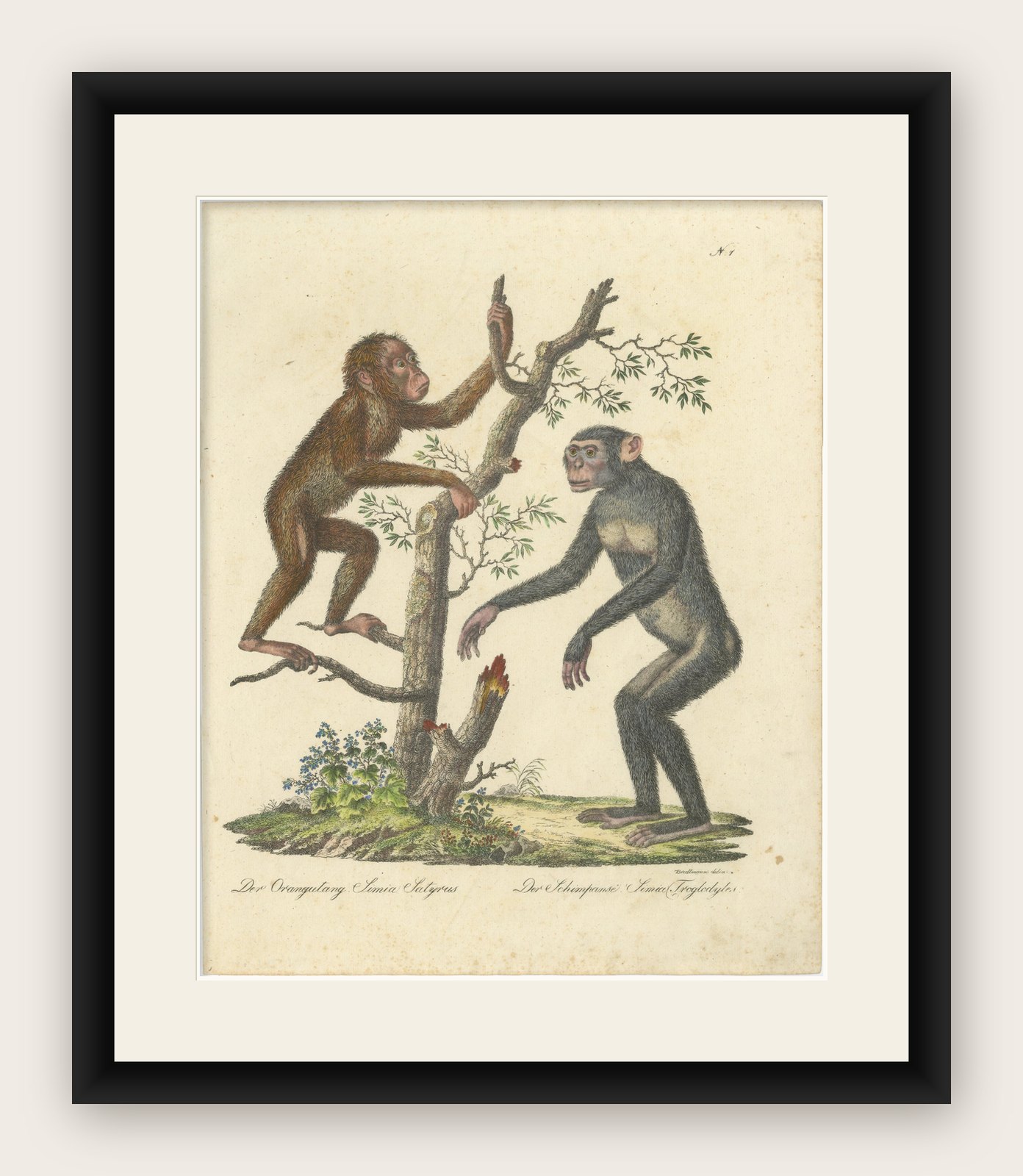
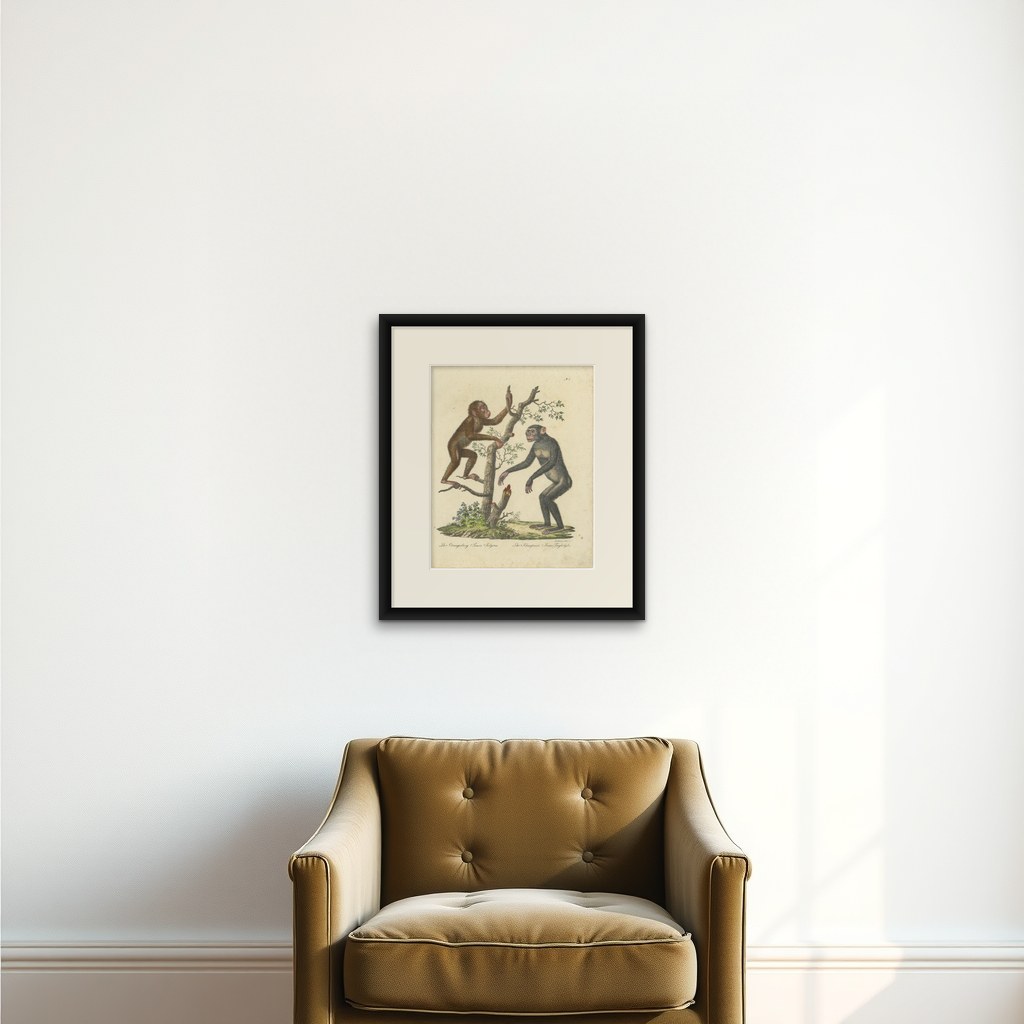
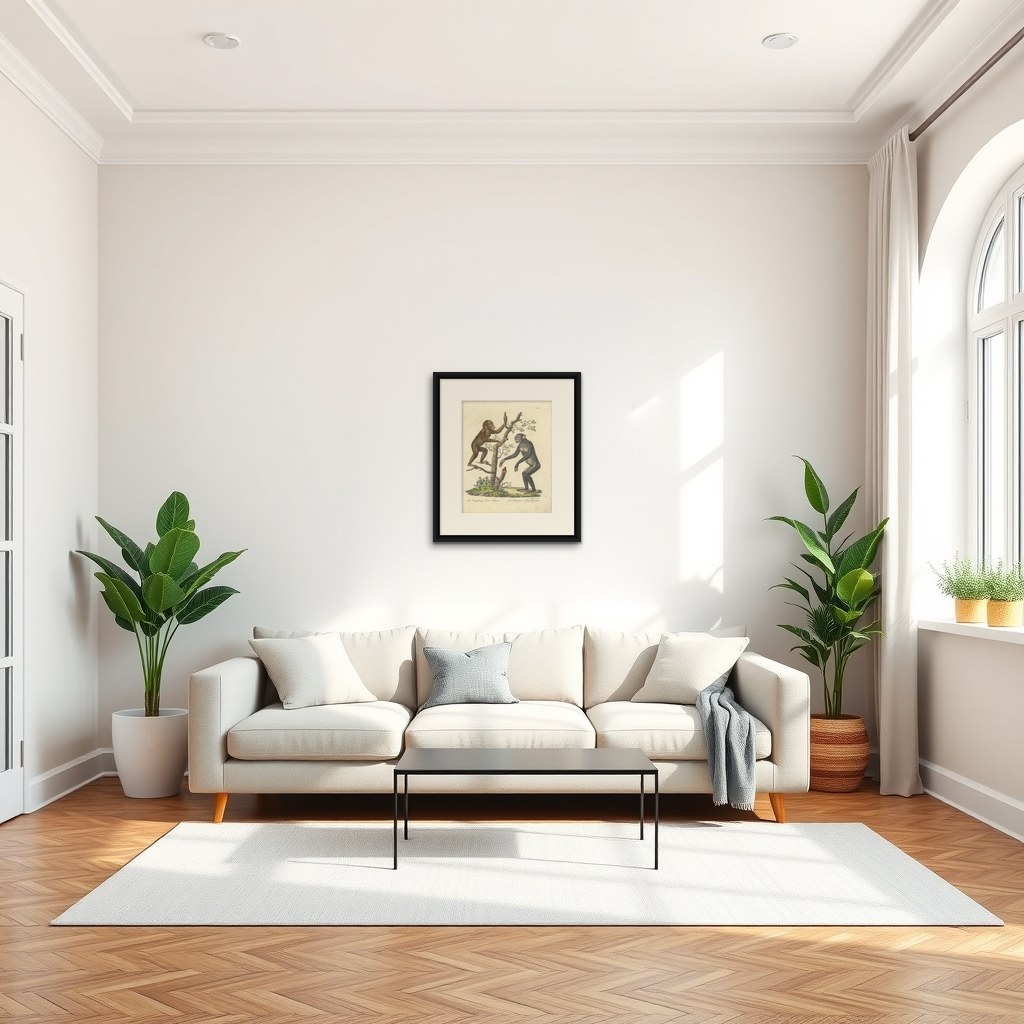
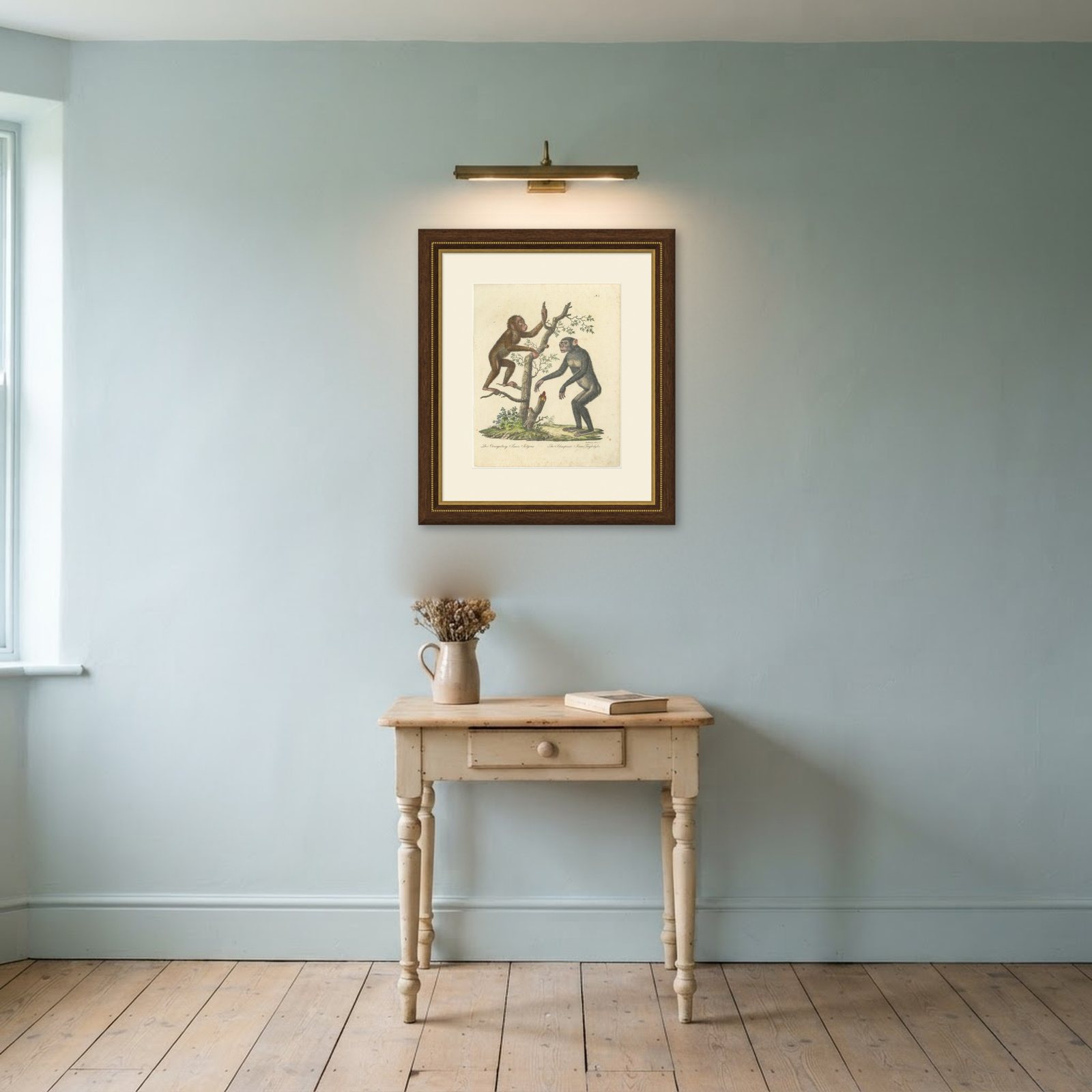
Frame and rooms are illustrations of how the print could look; the description says what is included.
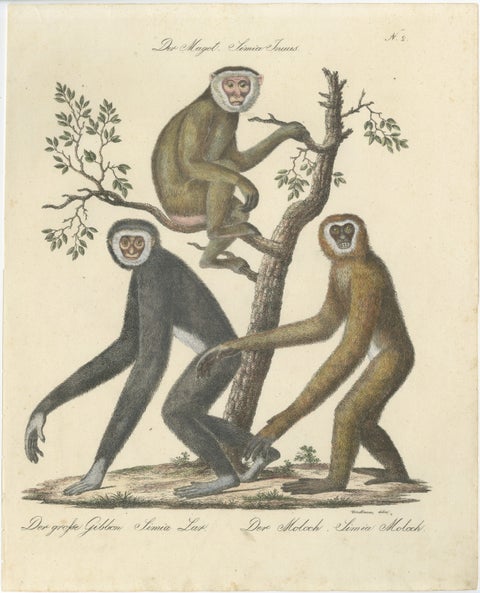
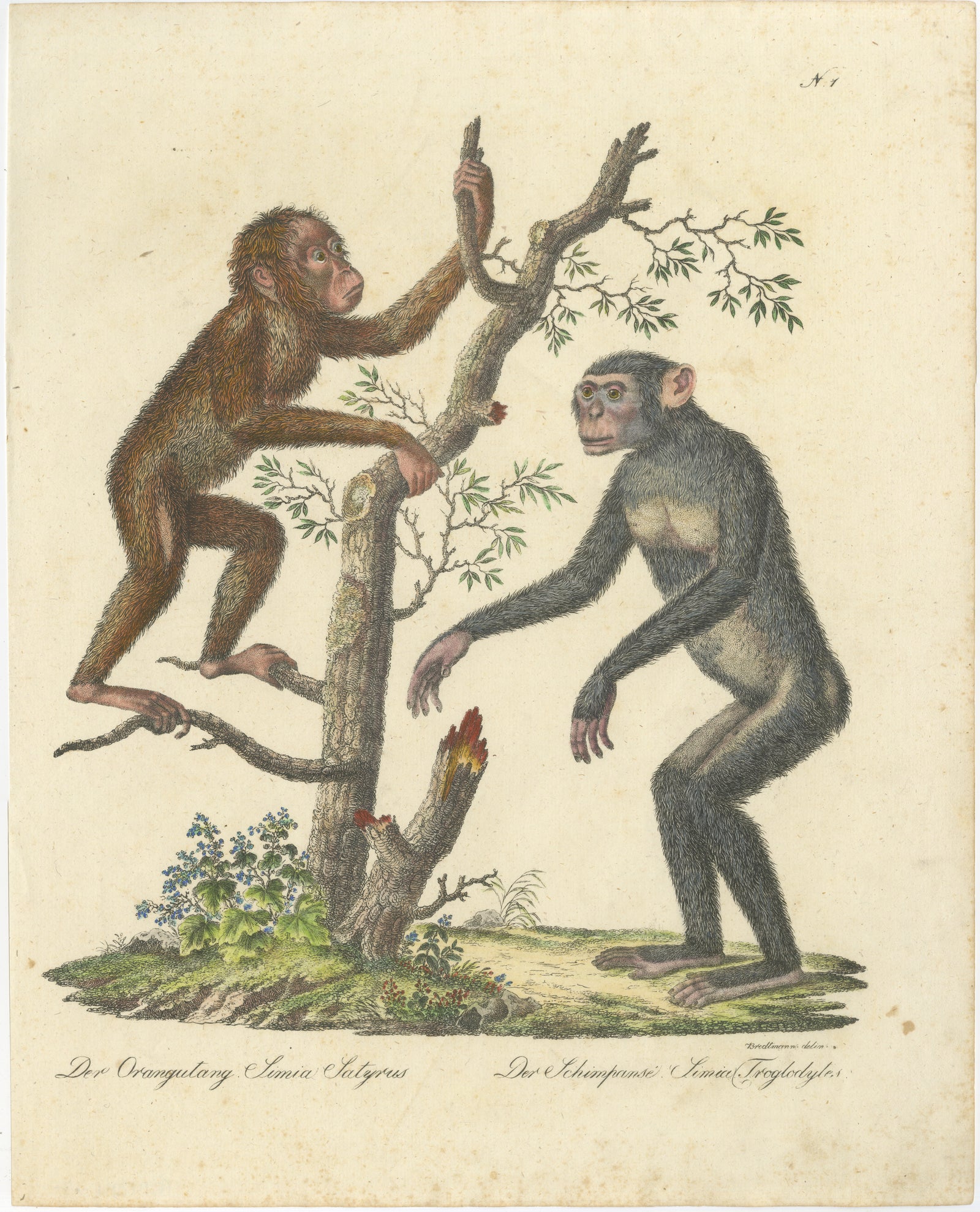
Antique Orangutan & Chimpanzee Lithograph by Karl Joseph Brodtmann, 1816
€570€39930% off ($440, £335, €399)
Period original, not a reproduction.
Shipped from the Netherlands, flat or rolled, insured and tracked, worldwide. Returns accepted within 14 days.
- Date
- 1816
- Size
- 16.5 × 13.4 in (42 × 34.1 cm)
- Condition
- Good. Good antique condition with age-related toning, scattered foxing, and minor marginal wear consistent with age. Original hand coloring remains attractive and well preserved.
- Period
- Early 19th century
- Section
- Mammals
- Reference
- f_50192012
- Color
- Hand colored
What the condition grades mean
- Excellent
- Bright and clean, with no faults worth mentioning.
- Very good
- Only light signs of age, such as faint toning.
- Good
- Normal signs of age for a sheet of this period: toning, some foxing, small marks or neat old repairs.
- Fair
- Clear faults such as staining, tears or repairs, priced to match.
Every fault we see is written in the condition note, and the whole sheet is shown uncropped in the photos.
Antique Orangutan & Chimpanzee Lithograph by Karl Joseph Brodtmann, 1816
This exceptional early 19th-century hand-colored lithograph by the celebrated Swiss natural history artist Karl Joseph Brodtmann depicts an orangutan and a chimpanzee rendered with remarkable liveliness and scientific sophistication. Produced in 1816, the print reflects Europe’s fascination with exotic primates, zoological discovery, and the expanding scientific study of the natural world during the Enlightenment and Romantic periods.
The composition features an orangutan climbing a delicate tree while a chimpanzee stands attentively beside it, creating a remarkably engaging and almost narrative scene. The expressive faces, elongated limbs, and carefully detailed fur textures give the animals an unusual sense of personality and movement rarely encountered in early zoological illustration. The elegant tree, flowering plants, and subtle landscape elements further enrich the composition without distracting from the primates themselves.
Karl Joseph Brodtmann was among the pioneering masters of natural history lithography in Europe and remains admired for combining scientific precision with refined decorative elegance. His works possess a painterly and atmospheric quality that distinguishes them from many more rigid natural history illustrations of the period. The subtle hand coloring and warm aged paper tones give this composition exceptional visual richness.
Primate subjects from the early 19th century are especially desirable within antique natural history due to their rarity, historical importance, and strong decorative appeal. Orangutans and chimpanzees were still relatively mysterious to European audiences at the time, making these images highly evocative examples of early zoological curiosity and exploration.
This lithograph works exceptionally well in libraries, studies, eclectic interiors, Wunderkammer displays, gentleman’s clubs, dark academia spaces, boutique hotel interiors, safari-inspired rooms, and sophisticated gallery walls focused on exploration and natural history themes.
The visual presentation matters enormously with this piece. Framed in dark walnut with wide oatmeal matting, the lithograph takes on a rich museum-quality appearance with warmth and depth. Black lacquer or lightly gilt frames also complement the exotic zoological subject beautifully while enhancing the dramatic composition.
The print is an original antique lithograph from 1816, not a reproduction.
Condition report:
Good antique condition with age-related toning, scattered foxing, and minor marginal wear consistent with age. Original hand coloring remains attractive and well preserved.
Framing tips:
This lithograph displays exceptionally well in dark walnut, black lacquer, or lightly gilt frames paired with a wide ivory or oatmeal mat. Its dramatic zoological subject and warm natural palette make it particularly suitable for libraries, studies, Wunderkammer displays, gentleman’s clubs, safari-inspired interiors, or sophisticated gallery walls.
Technique: Hand-colored lithograph
Maker: Karl Joseph Brodtmann, Switzerland, 1816