Close-ups
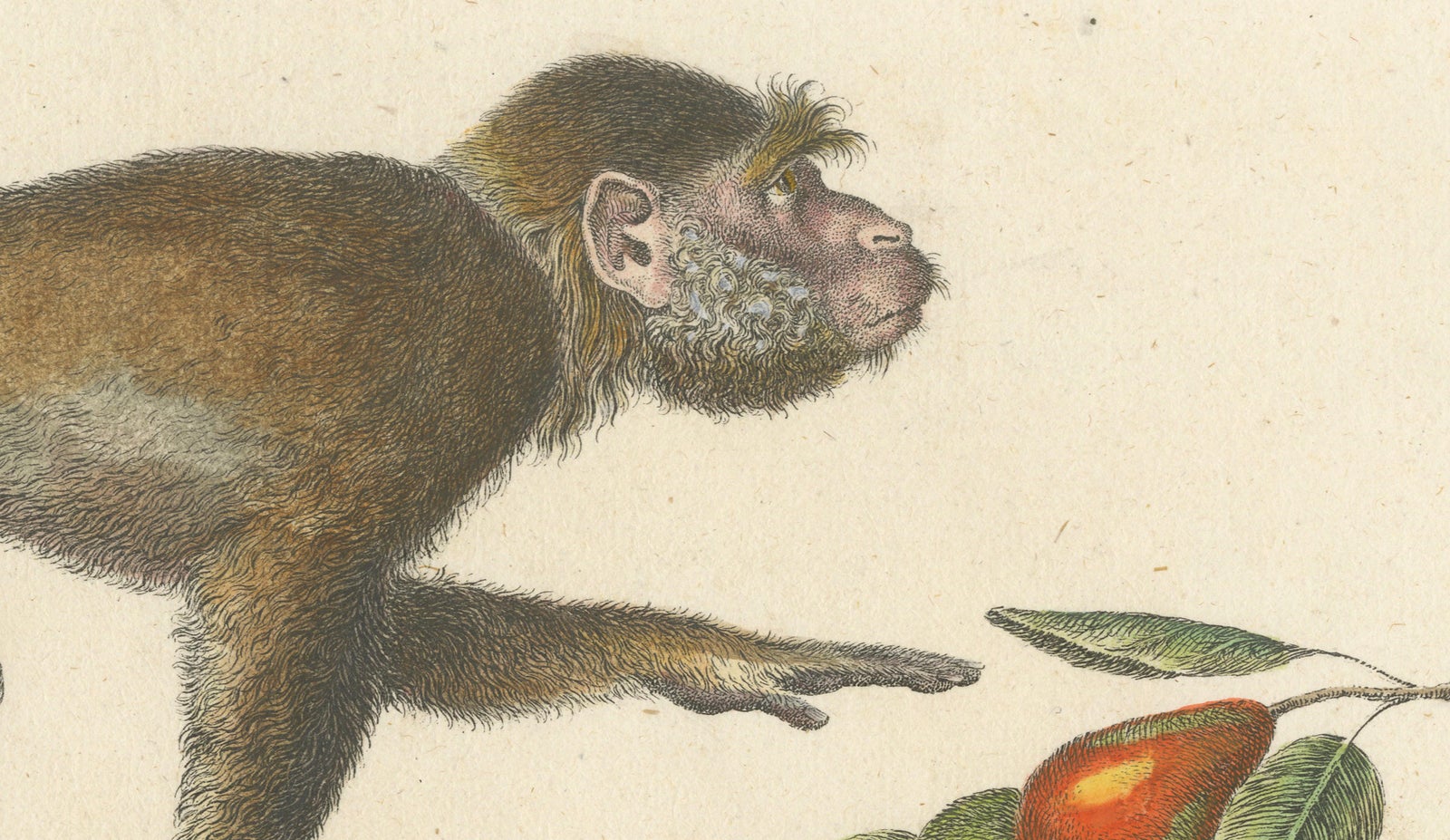
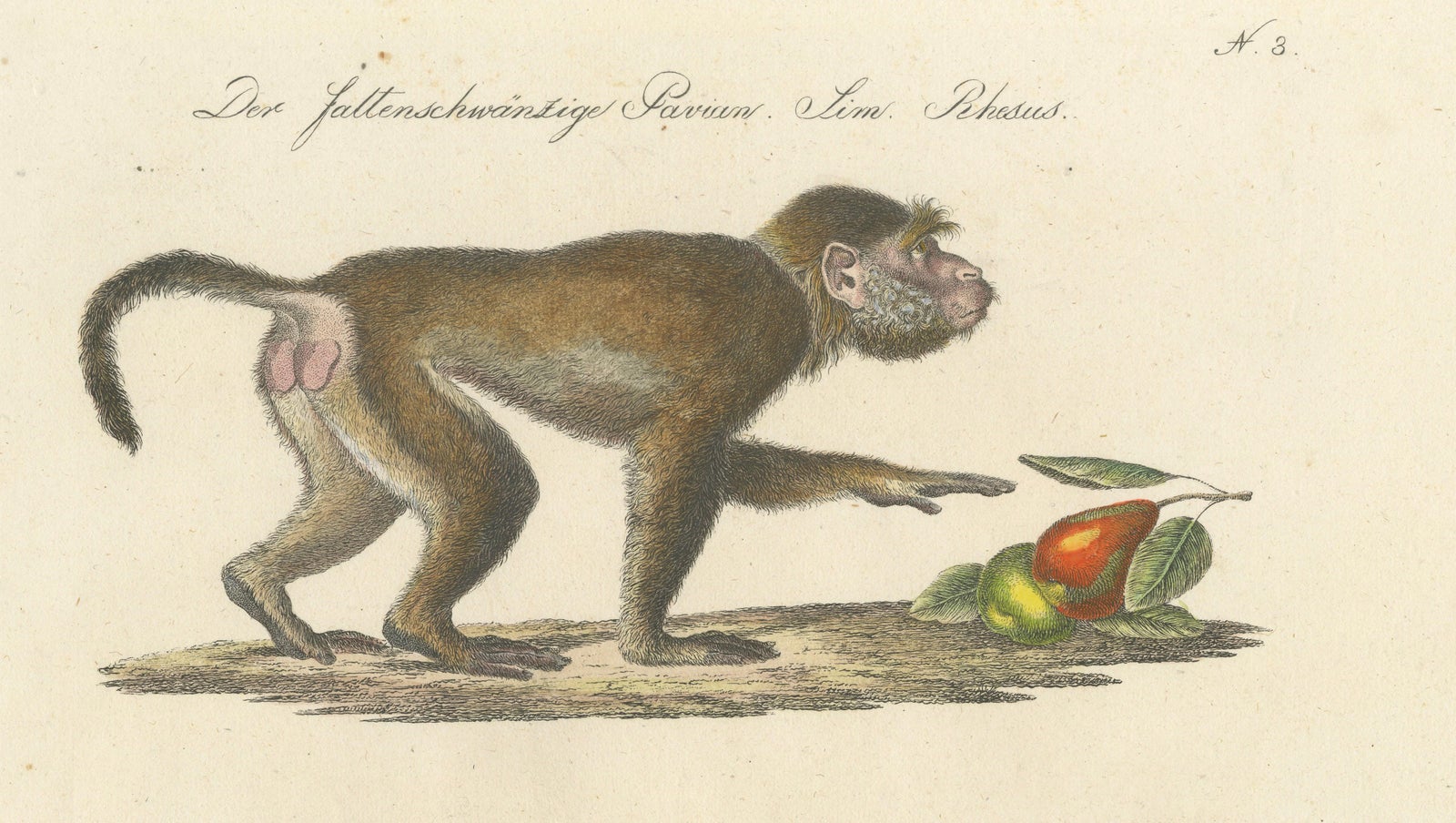
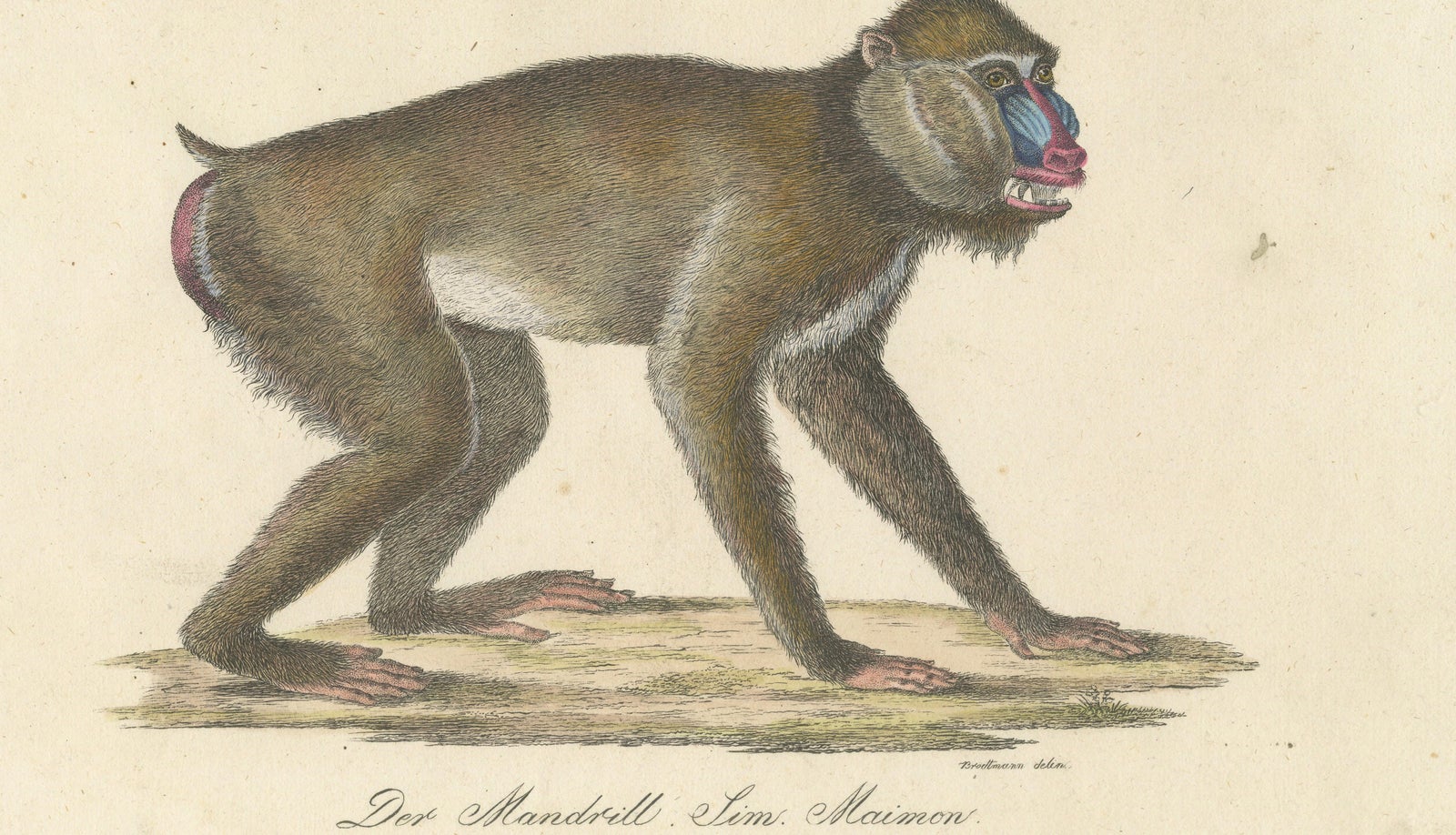
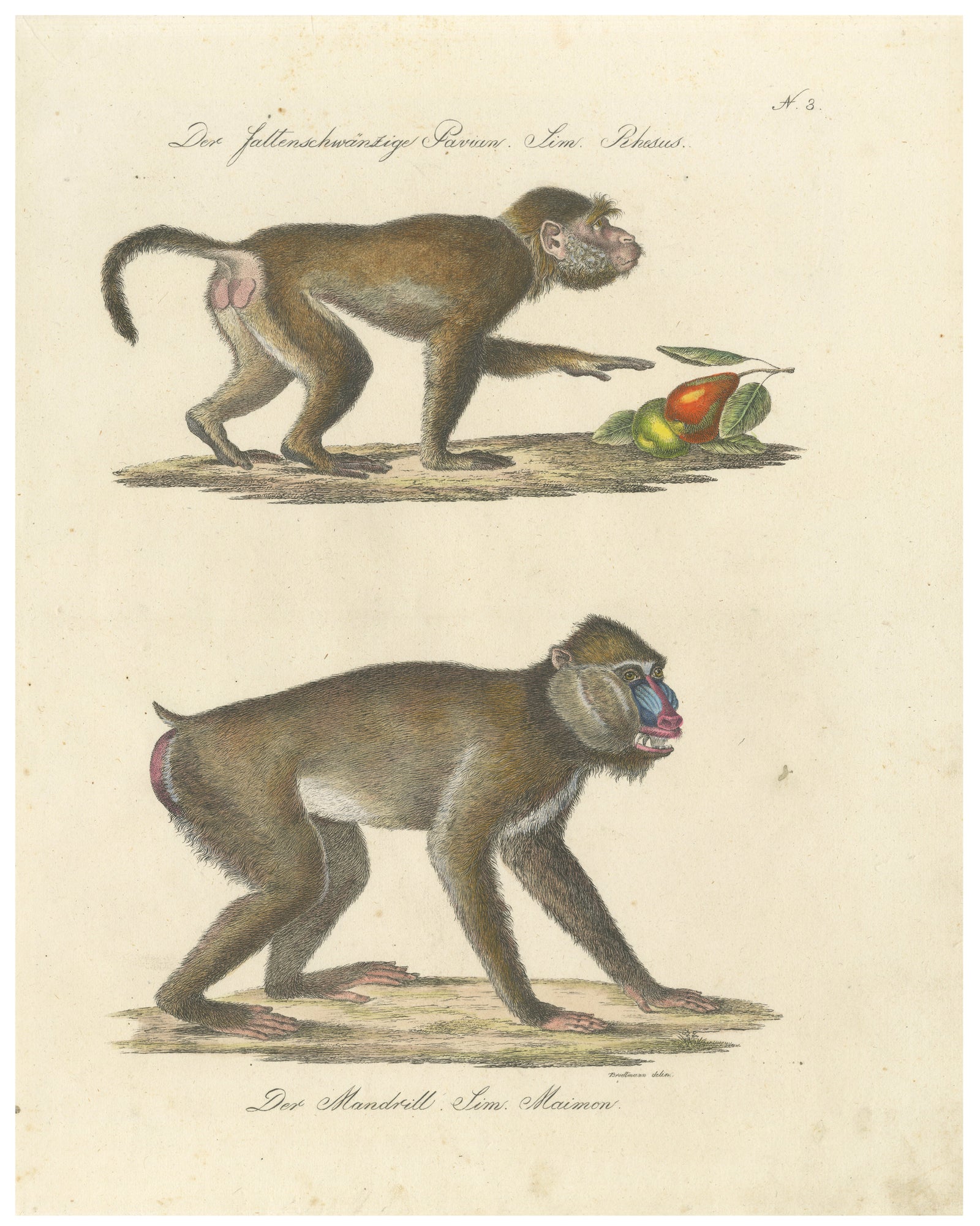
Antique Mandrill & Baboon Lithograph by Karl Joseph Brodtmann, 1816
£570 ($750, €670)
Period original, not a reproduction.
Shipped from the Netherlands, flat, insured and tracked, worldwide. Returns accepted within 14 days.
- Date
- 1816
- Size
- 17.6 × 13.8 in (44.7 × 35.1 cm)
- Condition
- Good. Good antique condition with age-related toning, scattered light foxing, and minor marginal wear consistent with age. Original hand coloring remains attractive and well preserved.
- Period
- Early 19th century
- Section
- Mammals
- Reference
- f_50191112
Antique Mandrill & Baboon Lithograph by Karl Joseph Brodtmann, 1816
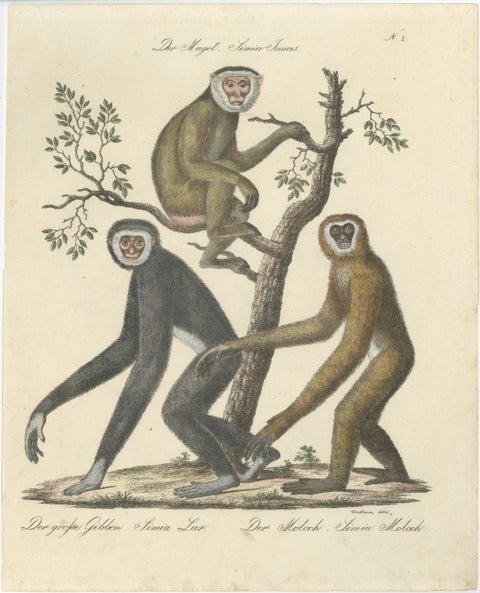
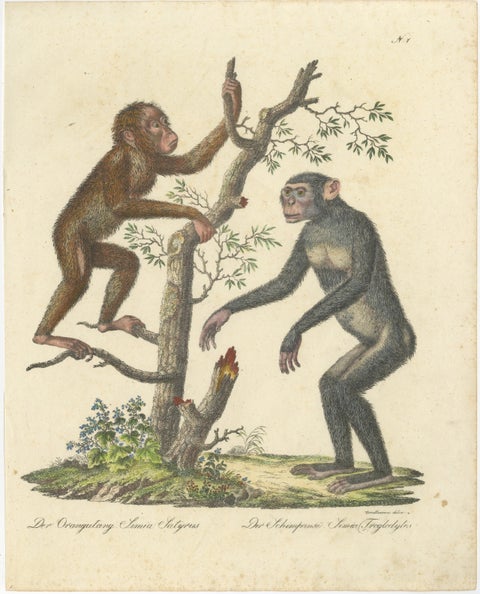
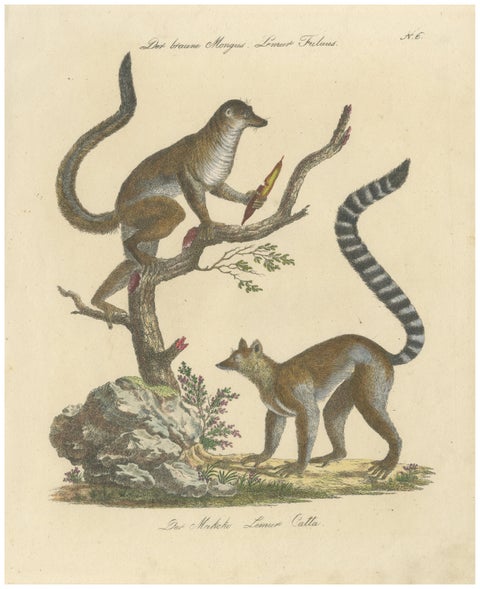
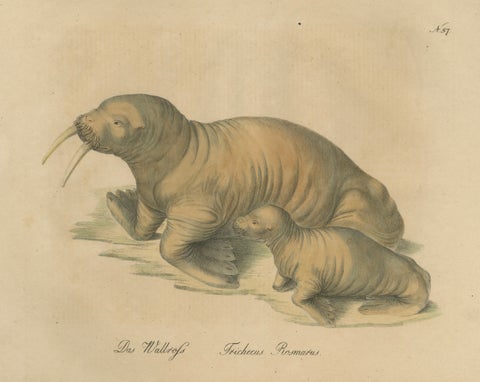
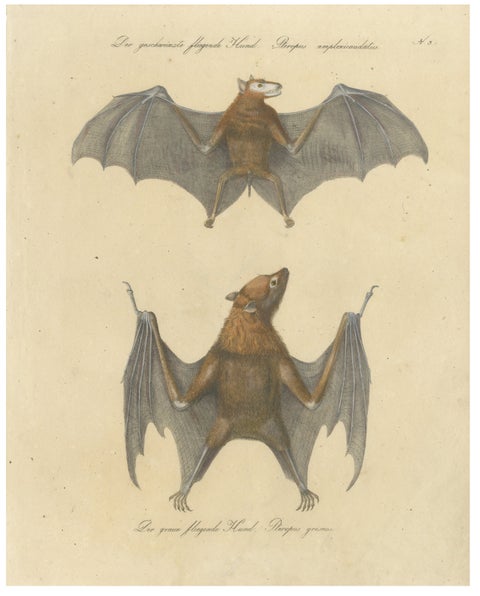
This striking early 19th-century hand-colored lithograph by the celebrated Swiss natural history artist Karl Joseph Brodtmann depicts two exotic primates: a baboon above and a vividly colored mandrill below. Produced in 1816, the print exemplifies the fascination with zoology, exploration, and exotic animals that characterized the scientific and artistic culture of the Enlightenment and Romantic periods.
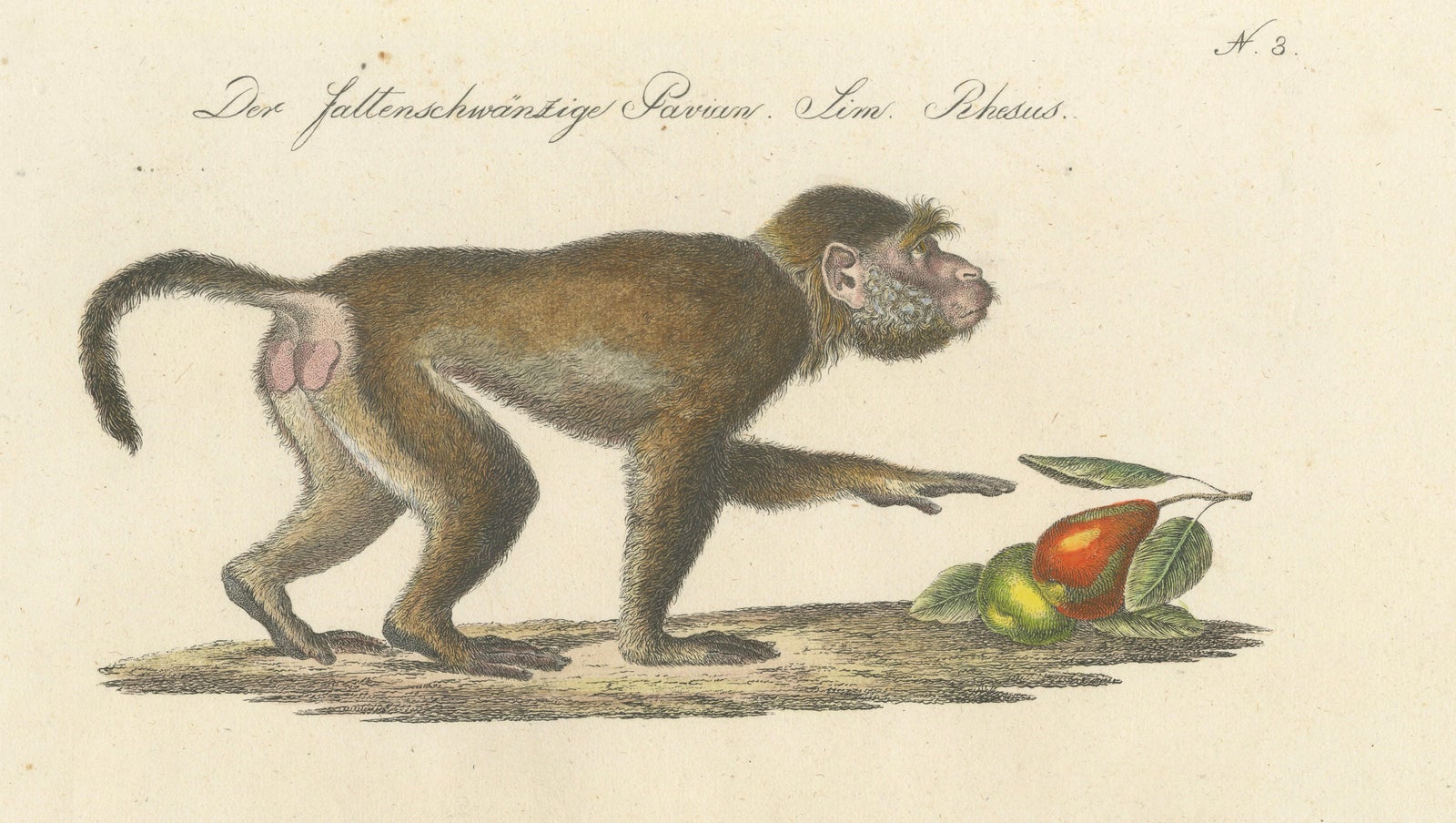
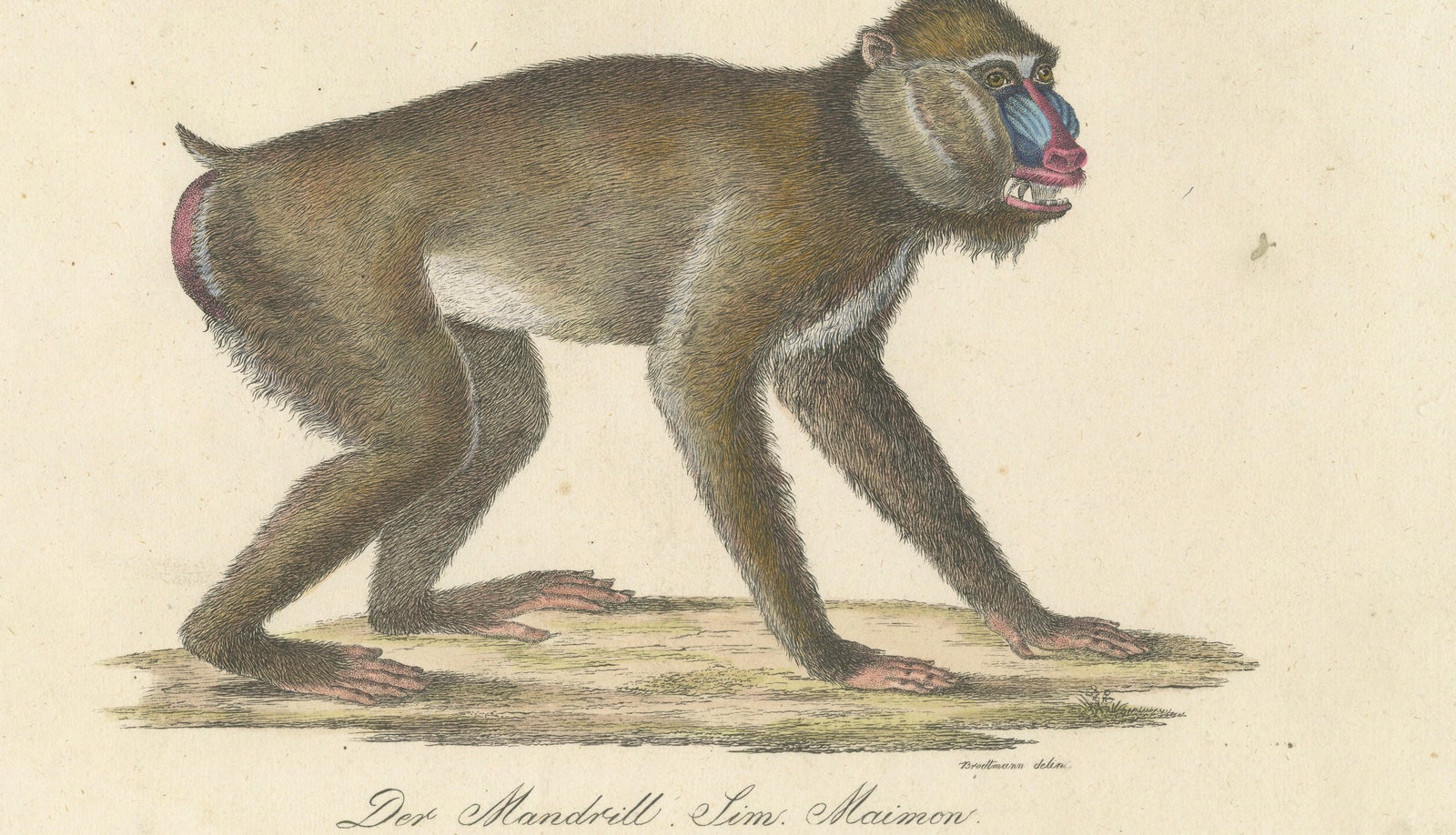
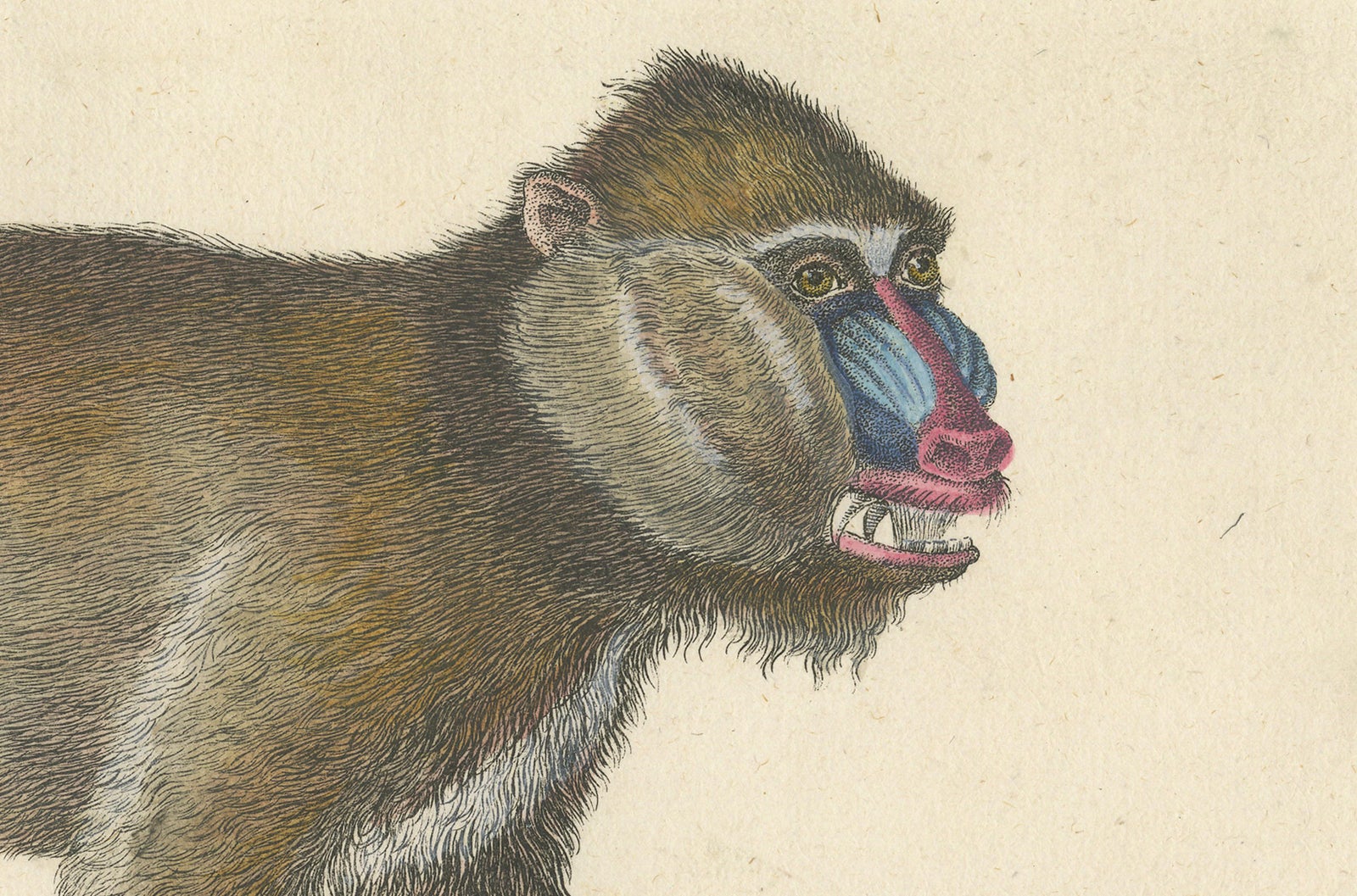
The composition is exceptionally decorative, combining scientific observation with artistic elegance. The upper figure, identified as a baboon, is shown reaching toward fruit in a quietly narrative scene, while the lower mandrill dominates the composition with its muscular form and remarkable facial coloration. The vivid blue and red tones of the mandrill’s face create an immediate visual focal point and contrast beautifully against the warm earth-toned palette of the sheet.
Karl Joseph Brodtmann was among the pioneers of natural history lithography in Europe and remains highly regarded for his refined zoological illustrations. His works combine accurate anatomical rendering with a strong decorative sensibility, making them increasingly sought after by collectors of natural history, cabinet-of-curiosities material, and early lithographic art.
Primate subjects are especially desirable within the field of antique zoological prints due to their expressive personalities and strong visual presence. This example works exceptionally well in sophisticated interiors, particularly dark academia spaces, gentleman’s clubs, eclectic luxury apartments, safari-inspired interiors, and Wunderkammer displays. The print possesses a refined theatrical quality that becomes even more dramatic when professionally framed.
The visual presentation is extremely important here. Framed in dark walnut with wide oatmeal matting, the piece takes on a rich museum-like appearance ideally suited to libraries, studies, and curated gallery walls. The warm coloration and detailed fur textures become considerably more striking once framed and illuminated in an interior setting.
The print is an original antique lithograph from 1816, not a reproduction. All items we offer are authentic period works of art over 100 years old. The piece is sold unframed; any framed images are shown for presentation and interior inspiration only and may not always be to scale with the original.
Condition report:
Good antique condition with age-related toning, scattered foxing, and minor wear consistent with age. Original hand coloring remains attractive and well preserved.
Framing tips:
This lithograph displays beautifully in dark walnut, black lacquer, or lightly gilt frames paired with a wide ivory or oatmeal mat. Its dramatic zoological subject and warm palette make it particularly suitable for libraries, studies, gentleman’s clubs, dark academia interiors, eclectic luxury spaces, or sophisticated gallery walls.
Technique: Hand-colored lithograph
Maker: Karl Joseph Brodtmann, Switzerland, 1816